
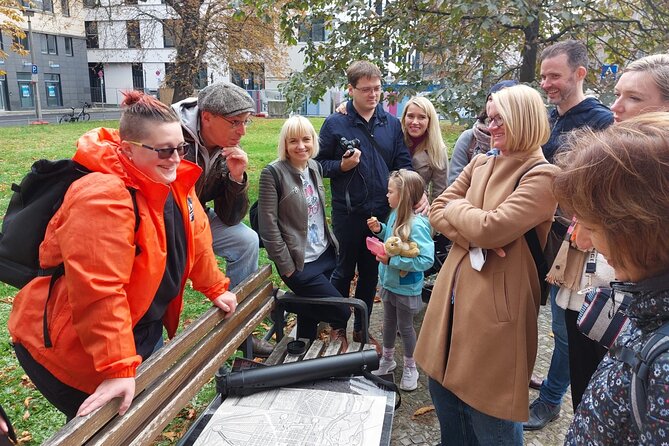
Reviewed · GUIDED WALKS IN BERLIN
Charité Hospital Walking Tour: Exploring Berlin’s Medical History
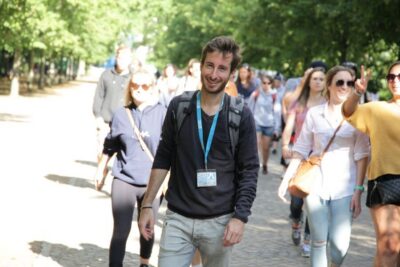
A walk through Berlin’s medical turning points feels a bit like time travel. You’ll get medical history with real names and a small-group route that stays focused, and I especially like how the guide ties breakthroughs to what that changed on the ground. The main thing to consider is that you will not go inside active clinical or university buildings, so expect an outdoor, story-led tour rather than a museum day.
You can do this even if your schedule is tight. The whole experience runs about 2 hours, it’s led in English, and the group is capped at 15, so questions do not get lost in the crowd. One more practical note: it depends on good weather, and the stops are spread out on foot from Robert-Koch-Platz to Alexanderufer.
In This Review
- Charité Hospital as a Berlin “open textbook” for medicine
- Key moments you will walk past in 2 hours
- Robert-Koch-Platz and the Robert-Koch Denkmal: where breakthroughs and warnings meet
- Tieranatomisches Theater: an 18th-century stage for animal disease study
- Rudolf Virchow’s monument: modern pathology and the idea of social medicine
- Albrecht von Graefe’s monument: ophthalmology’s first major city spotlight
- Charité Campus Mitte: neogothic red brick, and the ethical cost of medicine
- Humboldthafen canal stories at Design Offices Berlin: escape attempts and hospital life across eras
- Walking logistics: where to start, how long, and what to wear
- Price and value: is $30.12 a fair deal for 2 hours?
- Who should book this Charité Hospital medical history walk?
- Should you book this tour?
- FAQ
- How long is the Charité Hospital walking tour?
- How much does the tour cost?
- Is the tour offered in English?
- How big is the group?
- What is included, and what is not?
- Where do I meet the tour, and where does it end?
- What if the weather is bad?
Charité Hospital as a Berlin “open textbook” for medicine
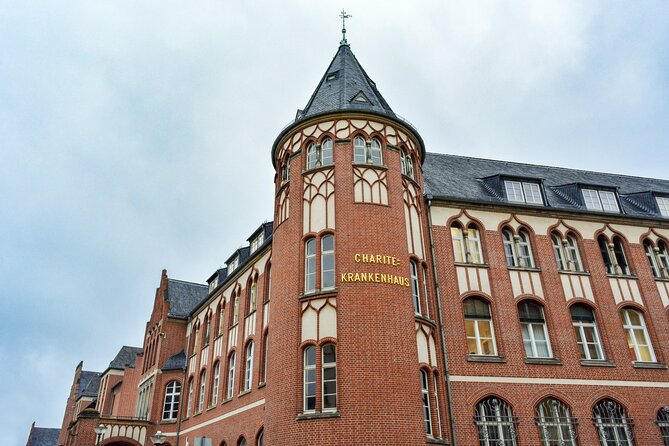
Charité Hospital is one of those Berlin institutions you keep hearing about, even if you did not plan to. This walk uses the hospital’s surroundings like an outdoor reading room. You connect science, public health, and ethics as you move from monument to monument.
The tone is factual, but not cold. You’ll hear how medical ideas were shaped by the 18th century and how, later, doctors faced extreme political pressure during the Third Reich. You’ll also learn how the hospital world looked during the socialist era and after the Berlin Wall fell, including a human story tied to the nearby canal.
If you like your travel with context, this works. The guide brings the “why” behind what you see, from Robert Koch’s work to Rudolf Virchow’s push for modern pathology and social medicine.
Key moments you will walk past in 2 hours
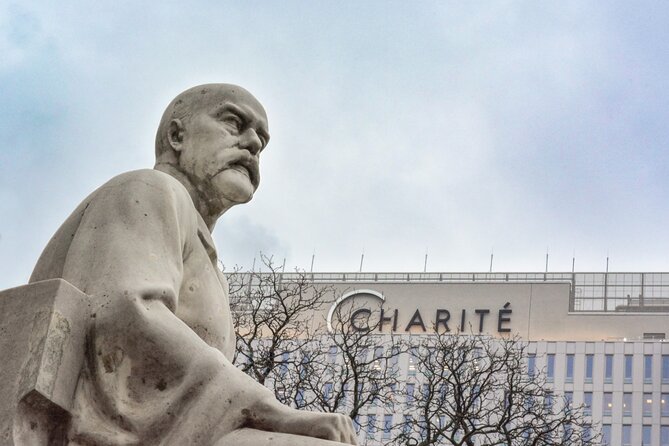
- Robert-Koch-Platz to the Robert-Koch Denkmal, linked to Koch’s discoveries and even an early scandal in pharmaceuticals
- Tieranatomisches Theater, the oldest surviving academic building in Berlin and a window into veterinary study before modern science
- Monuments to Rudolf Virchow and Albrecht von Graefe, highlighting modern pathology and landmark ophthalmology
- Charité Campus Mitte, a neogothic red-brick campus with both medical progress and moral failure in its story
- Humboldthafen canal area at Design Offices Berlin, where escape attempts and Cold War hospital life come into focus
More Guided Walks in Berlin
- Discover Berlin Half-Day Walking Tour
★ 5.0 · 9,624 reviews - Berlin City walk Government District and Places of Democracy
★ 4.7 · 8,467 reviews - Berlin: Third Reich & Cold War Guided Walking Tour
★ 4.9 · 8,378 reviews
Robert-Koch-Platz and the Robert-Koch Denkmal: where breakthroughs and warnings meet
Your walk starts at Robert-Koch-Platz, near the city’s transit flow and about a 10-minute walk from Berlin Central Station via the Humboldthafen canal. That is helpful because you can plug this into a day with other sights without a big detour.
Stop 1 is the Robert-Koch Denkmal. It marks why Charité, described here as the oldest hospital in Berlin, was established in the 18th century. This is where the tour starts doing something clever: it doesn’t treat medicine as a clean, linear march forward. It introduces the idea that medical progress brings complexity, including how institutions can get things dangerously wrong.
Robert Koch is the key name. You’ll learn he won the Nobel Prize and that he discovered the causes of tuberculosis, anthrax, and cholera. The story also includes an early pharmaceutical scandal tied to him, which is a reminder that medicine has always had side stories, not just miracles.
What I like for your planning: This stop sets the “medical detective” mood fast, so even if you know almost nothing about Charité, you start with clear anchors.
Possible drawback: If you are hoping for deep inside-details on lab work, this is a monument stop, so the emphasis stays on context rather than technical methods.
Tieranatomisches Theater: an 18th-century stage for animal disease study
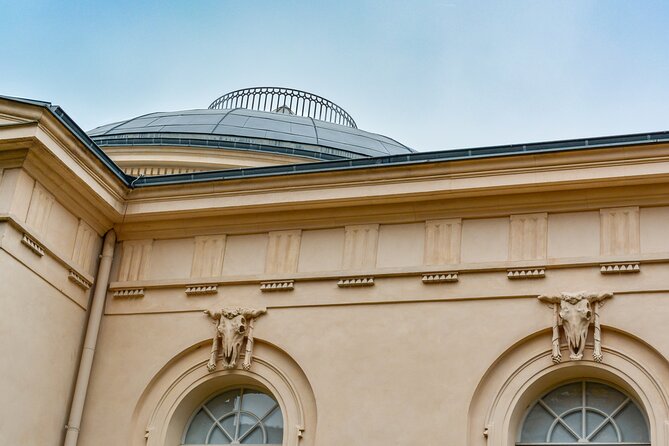
Next comes Tieranatomisches Theater, and it is one of the most interesting stops on the walk because it flips your expectations. You might assume a hospital-focused tour means human anatomy only. Here, veterinarians trained for animal diseases in an academic setting.
You’ll see an 18th-century neoclassical building, described as the oldest surviving academic building in Berlin. The word theater is literal enough to make you picture a lecture space, not a modern classroom. But the content is even more useful than the architecture, because it gives you a sense of how disease understanding worked before scientific medicine had its current form.
The guide’s angle is practical: you’ll hear about how diseases were treated before the tools of science caught up. It helps you understand why later breakthroughs felt so revolutionary, because earlier approaches were often guesswork or tradition mixed with observation.
Why this matters to you: If you enjoy history, this stop shows medicine as part of education and public life, not just hospital corridors.
How to enjoy it more: Take 30 seconds to look at the building’s structure. Even without going inside, the theater shape and classic style make it easier to imagine how lessons were delivered.
Rudolf Virchow’s monument: modern pathology and the idea of social medicine
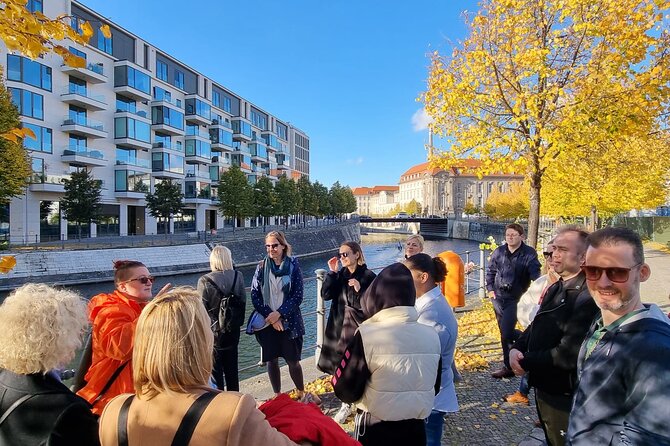
Stop 3 brings you to Denkmal Rudolf Virchow. This is a big-name stop, but the value is how it translates the name into meaning you can carry.
Rudolf Virchow is described here as the father of modern pathology and the founder of social medicine. Those phrases can feel like textbook labels until you hear them explained in plain travel terms. Pathology is about understanding disease at a deeper level. Social medicine is about recognizing that health is tied to society: living conditions, fairness, and access, not only biology.
This stop is also a good moment to reflect on the overall tour theme. Charité’s story is not just labs and breakthroughs. It includes public health thinking and the push to treat health as a broader responsibility.
Small-group advantage: Because the group is capped at 15, you can ask quick questions about what those terms mean in everyday life, not just in academic language.
Albrecht von Graefe’s monument: ophthalmology’s first major city spotlight
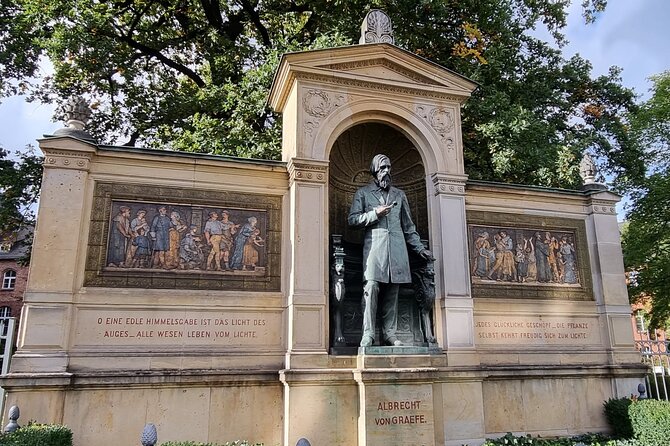
Stop 4 is Denkmal Albrecht von Graefe, the monument dedicated to an ophthalmologist, Albrecht von Graefe. The tour frames this as the first monument in Berlin dedicated to a scientist, which adds extra weight to why you’re standing here rather than simply walking past.
If you care about specific medical specialties, this stop gives you one. Eye medicine matters because it affects quality of life in a direct way, and von Graefe’s breakthroughs are part of the story of how Charité contributed to scientific medicine as a practice, not just a concept.
This is also a good checkpoint for your brain. After learning about germs and disease mechanisms with Koch and Virchow, you get a shift toward a focused medical specialty. It helps the day feel balanced instead of one-note.
More German cities at walking speed:




Charité Campus Mitte: neogothic red brick, and the ethical cost of medicine
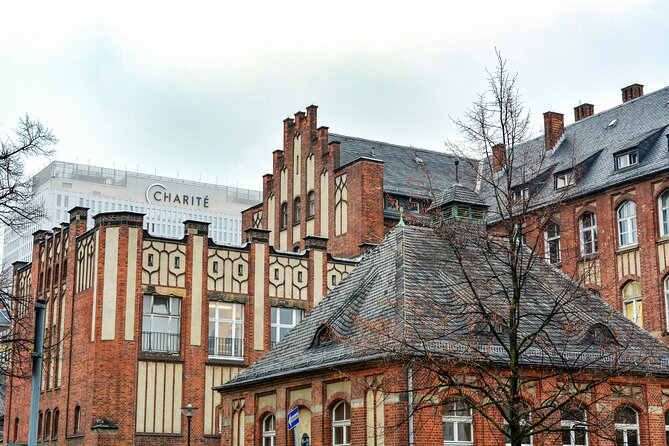
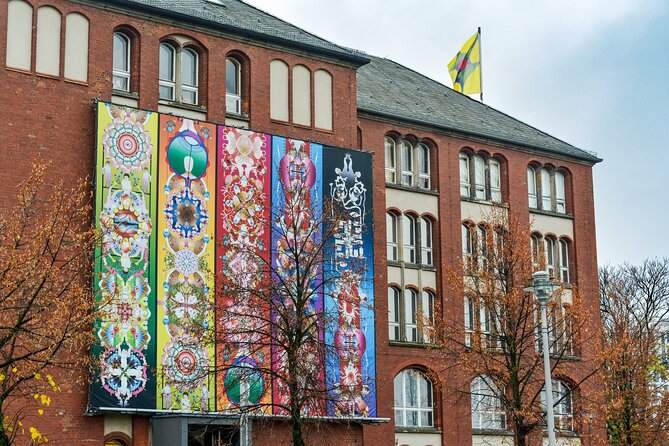
Stop 5 is where the tour leans heavier. You’ll explore Charité Campus Mitte, described as a beautiful neogothic red-brick campus. The architecture gives you that classic Berlin campus feel, but the story under it is not decorative.
You’ll learn that some doctors abused medicine during the Third Reich, while others helped everyone indiscriminately until the last days of WWII. That contrast is the tour’s way of making you think. Medicine can be used for harm when power and ideology take over. Medicine can also be used to protect people without picking and choosing.
This is the stop where the guide’s storytelling style matters, and it tends to be the moment people remember. The tour is designed so you do not just “see a campus.” You understand why it carries moral weight.
How to handle this emotionally: If you are sensitive to WWII history, give yourself a minute before moving on. The campus has a calm look, but the human decisions behind it were brutal.
What you should not expect: You’re not visiting active university or clinical operations. Think of this as an exterior-focused walk with guided framing.
Humboldthafen canal stories at Design Offices Berlin: escape attempts and hospital life across eras
Stop 6 is at Design Offices Berlin Humboldthafen. On paper it sounds like an office area. In practice, the tour uses its location to tell a very human Cold War story.
Here, you’ll hear about several East Berliners who attempted escape to the West by swimming across the city canal just outside the Charité campus. That detail is stark, and it fits the tour’s broader goal: medicine and society are tangled. Even when you are not inside a hospital, the hospital’s place in the city affects real lives.
The guide then ties the setting to hospital life during the socialist era and after the fall of the Berlin Wall. So you leave this last stop with a sense of how institutions adapt across political systems, not just how they adapt scientifically.
Why this ending works: The tour starts with a scientist’s discoveries and it ends with people making desperate choices. That shift keeps the day from feeling like a lecture only about famous names.
Walking logistics: where to start, how long, and what to wear
The meeting point is Robert-Koch-Platz, 10115 Berlin, and the tour ends at Alexanderufer, 10117 Berlin. The route is on foot, so comfortable shoes matter. You’ll be moving between outdoor stops, mostly standing and listening, with time per stop around 20 minutes.
This is also the kind of tour that fits Berlin well because the area is very transit-friendly. The start is near public transportation and the meeting point is about a 10-minute walk from Berlin Central Station via the Humboldthafen canal.
One more practical detail: you’ll receive a mobile ticket. That’s handy for a city like Berlin where plans change and you don’t want to manage paper.
Price and value: is $30.12 a fair deal for 2 hours?
At $30.12 per person for about 2 hours, this tour is priced like a focused, guided experience. You also get something that is hard to guarantee on DIY walking tours: a guide who connects the monuments to medical history, not just dates and names.
The value really comes from three things you can feel immediately:
- Small-group size (max 15), which keeps the storytelling interactive instead of broadcast-only.
- Multiple landmark stops packed into a short walking window, so you get good density of information.
- No museum fatigue, because you are outdoors and the narrative carries you stop to stop.
If you love medical history, the price is easy to justify. If you mainly want building interiors, you might feel the mismatch, since visiting active clinical or university areas is not included.
Who should book this Charité Hospital medical history walk?
I think this fits best if you are the kind of traveler who likes:
- science and public health stories with real people behind them
- a clear route that works even when you have limited time
- history that includes ethics and the consequences of power
It’s also a good match for first-time Berlin visitors who want something different from the standard landmarks. Charité is central to Berlin’s identity, but it is not always the first thing on a typical sightseeing list.
If you are traveling with kids, you might find it depends on the child’s interest in science and history. The tour is short, but the topics can get serious, especially around WWII.
Should you book this tour?
Book it if you want a high-signal walk through Berlin’s medical legacy, with names like Robert Koch, Rudolf Virchow, and Albrecht von Graefe placed where they belong in the city story. I also think it’s worth it for the ethical layer, because it treats medical progress and medical abuse as part of the same human system.
Skip it only if you were expecting interior access to hospital or university spaces. This is an exterior walk, guided by context, architecture, and monuments. If that is exactly what you want, this tour is a strong use of two hours.
FAQ
How long is the Charité Hospital walking tour?
It runs for about 2 hours.
How much does the tour cost?
The price is $30.12 per person.
Is the tour offered in English?
Yes, it is offered in English.
How big is the group?
The tour has a maximum of 15 travelers.
What is included, and what is not?
The tour includes the guide and all fees and taxes. It does not include visiting buildings where clinical or university operations take place.
Where do I meet the tour, and where does it end?
The meeting point is Robert-Koch-Platz, 10115 Berlin, and the tour ends at Alexanderufer, 10117 Berlin.
What if the weather is bad?
This experience requires good weather. If it is canceled due to poor weather, you will be offered a different date or a full refund.
Centuries Per Block
- Berlin: Natural History Museum Entrance Ticket
★ 4.6 · 3,382 reviews - Berlin: 3-Hour World Heritage Cruise to Potsdam
★ 4.5 · 1,569 reviews - Berlin: History of the Third Reich Guided Walking Tour
★ 4.7 · 791 reviews - Berlin: Berlin Charité Guided History Tour
★ 4.4 · 660 reviews
Fresh on the arrivals board for Berlin




Guided Walks in Berlin, compared.

Berlin City walk Government District and Places of Democracy
Read our review →

Berlin’s Best: 2 Hour Walking Tour Third Reich and the Cold War
Read our review →
Third Reich Berlin: Hitler and WWII Walking Tour
Read our review →
Browse the lists this tour appears in