
Reviewed · CYCLING TOURS IN BERLIN
Alternative Berlin Bike Tour – Off the Beaten Tracks in Small Groups
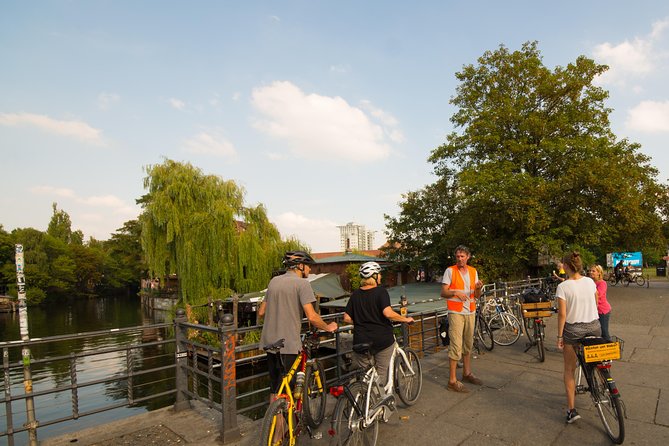
Berlin changes when you pedal off the main streets. This Alternative Berlin Bike Tour trades museum crowds for everyday neighborhoods, parks, and wall-adjacent art, guided by a real Berlin voice. I especially like the small group feel and the fact that bikes and helmets are included, so you can just show up and ride. The only real watch-out is traffic, because some stretches mix bikes, cars, and everyday street life.
You’ll get a guided route that makes the DDR past and today’s creative Berlin sit side by side, without turning it into a lecture. I love the way the tour balances riding time with real stops where you can look, breathe, and listen. If you’re traveling with a kid who gets nervous around traffic, plan for that, and keep an extra calm pace with the group.
In This Review
- Key moments worth planning for
- Entering East Berlin by bike, not by bus
- Meeting at KulturBrauerei and getting rolling
- KulturBrauerei to Volkspark Friedrichshain, calm before the edge
- Karl-Marx-Allee, Soviet-era architecture you can actually feel
- From Oberbaum Bridge to the East Side Gallery area
- RAW Tempel: art, projects, and nightlife energy
- Görlitzer Park, where the ride gets a breather
- Price and value at about $43.54
- The road reality: traffic and comfort
- Who should book, and who might skip it
- Should you book Alternative Berlin Bike Tour
- FAQ
- FAQ
- How long is the Alternative Berlin Bike Tour?
- What time does the tour start?
- Where do you meet and where does the tour end?
- Is the tour in English?
- Are bikes and helmets included?
- What fitness level do you need?
- Does the tour run in bad weather?
Key moments worth planning for
- Small group, easy pace: A max group size of 14 helps the ride stay relaxed and conversational.
- Helmet and bike included: No rental stress, and you can focus on the ride.
- DDR-era to today in one loop: You pass mid-century architecture and current art scenes in the same outing.
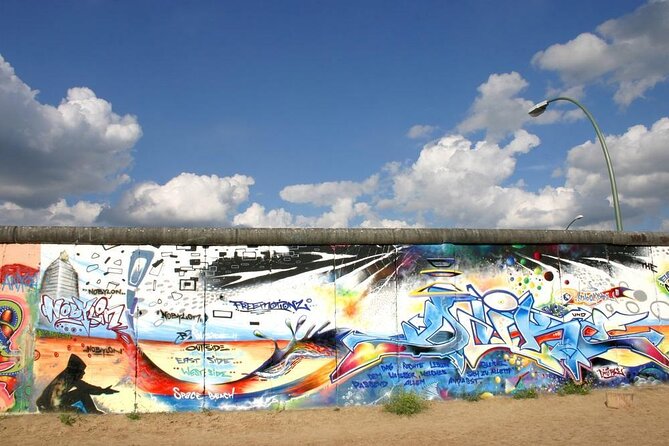
- Wall art and waterfront stops: You get time near the East Side Gallery area and the Spree.
- Parks that matter historically: Volkspark Friedrichshain and Görlitzer Park add green space with context.
Entering East Berlin by bike, not by bus
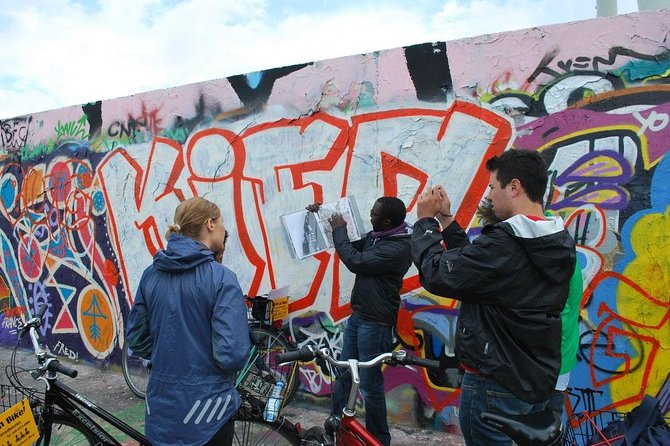
This is a great option when you want Berlin to feel like Berlin, not like a checklist. The idea is simple: you cycle local streets at a pace where you can actually notice buildings, graffiti, courtyards, and the small signs of daily life that you miss on foot or by bus.
You also get what I think is the big value of a guided ride like this: a guide who can explain why a place feels the way it does. Guides on this tour can bring personal energy to the DDR-to-modern story, with names like Anna, Paul, Marcus, Edgar, and Maria showing up in past groups. You’re not just learning facts, you’re learning how people connect them.
The tour runs about 3 hours 30 minutes and starts at 3:00 pm, with a morning-free day ahead of you. That late afternoon timing matters, because it often gives you more daylight for outdoor stops and better city energy for riding.
More Cycling Tours in Berlin
- Berlin: Sights and Highlights Bike Tour with a Local Guide
★ 4.8 · 2,698 reviews - Berlin Highlights 3-Hour Bike Tour
★ 5.0 · 948 reviews - Berlin City Bike Tour with Beer Garden Stop
★ 5.0 · 917 reviews
Meeting at KulturBrauerei and getting rolling
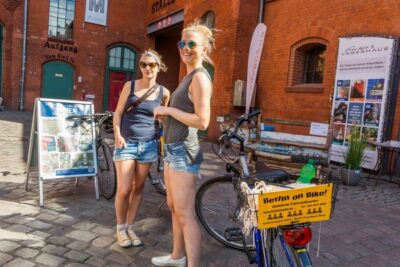
You start and finish at Berlin on Bike, at Knaackstraße 97, 10435 Berlin, with the opening stop at Berlin on Bike – Tours & Rental near KulturBrauerei. The start point being near public transportation is practical, especially if you are coming in from a museum day or an earlier neighborhood.
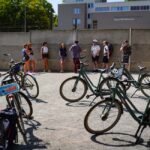
Once you check in, the tour keeps things efficient. Bikes are provided, and helmets are included, so you do not waste time figuring out rentals or waiting around for equipment. That seems small until you are tired from travel. Here, you get moving quickly and you spend your time on the route, not on logistics.
KulturBrauerei is also a smart first visual. You’re stepping into a preserved industrial complex built across about 25,000 m², with courtyards and distinctive architecture. It’s been a listed building since 1974, and that helps set the tone: this isn’t a ride that pretends Berlin is only monuments. It’s also about reuse, repurposing, and how old structures shape what people do now.
KulturBrauerei to Volkspark Friedrichshain, calm before the edge
After the bike setup, you begin moving into more local rhythm. KulturBrauerei gives you a strong opening contrast: you’re in an area that reads “history,” but it’s not sealed off in the way some sights are. Courtyards and architectural detail give you something to look at without turning the first part into a big climb or a long stop.
Then you reach Volkspark Friedrichshain, a recreation area in Friedrichshain. What’s useful here is the framing: it was built in 1846, and it was the first municipal green area in Berlin. That means you’re not just getting a park break, you’re seeing how Berlin made space for people long before modern parks became a standard.
This stop helps in two ways. First, it gives your legs a chance to reset if you start feeling the stiffness that comes with an afternoon ride. Second, it gives context for why green space matters in the DDR and post-DDR story, especially in neighborhoods that have seen major shifts.
Karl-Marx-Allee, Soviet-era architecture you can actually feel
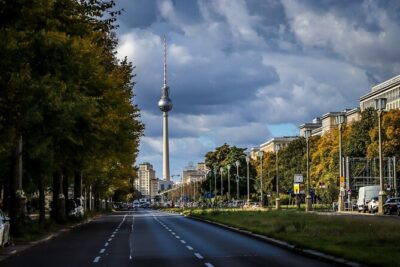
Next comes one of the route’s big “look up, pay attention” stretches: Karl-Marx-Allee. The standout detail here is the architectural mix, shaped by apartment blocks and towers, with styles tied to Socialist Classicism and the Prussian Schinkel School.
Cycling along a wide boulevard like Karl-Marx-Allee changes how you understand it. You’re not viewing it only from a distance like a postcard. You’re moving along it at street level, which makes it easier to read the scale of the buildings and the planning behind them.
If you like architecture, this part is a clear win. Even if you are not an architecture person, you’ll likely notice how the street “holds” the block shapes. You’ll also get a feel for how East Berlin was built to project order and identity, and how that identity still shows in the built environment today.
A practical note: this kind of major street can mean more traffic around you. The guide’s job is to keep the group together and manage crossings and speed. Just stay mentally prepared that you’re in city traffic, not a closed-off bike path.
From Oberbaum Bridge to the East Side Gallery area
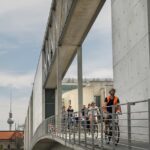
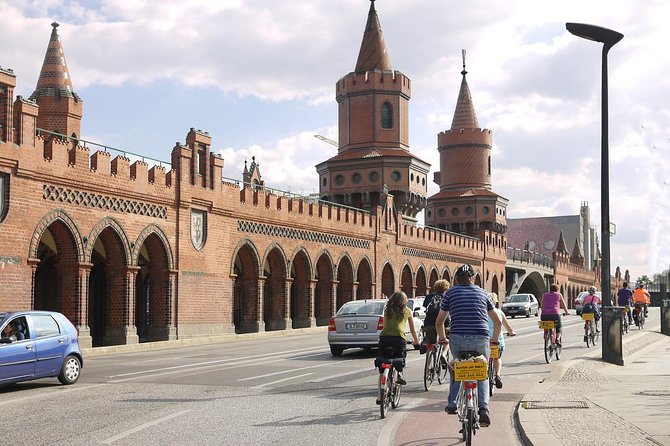
As you ride deeper into the Friedrichshain-Kreuzberg connection, you’ll come across the Oberbaum Bridge, spanning the Spree and linking Friedrichshain with Kreuzberg. It’s known as a landmark of the district connection, and it’s the kind of bridge where you naturally slow down because the surroundings pull your attention.
Then there’s the wall-adjacent stop: the tour includes a visit to the permanent open-air gallery on the longest remaining section of the Berlin Wall in Mühlenstraße, between Ostbahnhof and Oberbaumbrücke.
This matters more than it sounds. The East Side Gallery area works best when you can see it in context, not just as a single famous photo. Cycling lets you understand the wall segment as part of the neighborhood edge, with the river and the streets around it. You can look closely at what artists painted, but you also understand the stubborn fact that this is still a visible boundary in the city’s structure.
If you’re the kind of visitor who likes to connect art to politics, this is a strong moment. You’ll also likely appreciate that the tour doesn’t treat the wall like a sealed chapter. It treats it like a living piece of Berlin’s identity that people keep engaging with.
More flat kilometres by bike:
RAW Tempel: art, projects, and nightlife energy
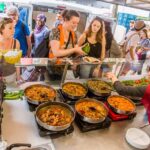
One of the most talked-about stops on this style of tour is RAW Tempel. This area is described as space for intercultural projects, exhibitions, markets, and also home to many clubs and bars.
Even if you are not there to party, this place is worth your attention because it’s a living example of how post-DDR Berlin uses space. It’s not only about what happened historically, it’s about what people built afterward, and how creative communities found ways to keep moving.
The best way to experience RAW Tempel on a bike tour is to treat it as a visual pause. Look around, notice how the space functions, and listen to the guide’s framing of why an area like this matters to Berlin’s identity now.
One more reason this stop works for most people: it breaks up the more formal architecture stops. After Karl-Marx-Allee and wall-adjacent viewing, RAW Tempel gives you permission to see Berlin’s alternative side as normal, not as a special museum theme.
Görlitzer Park, where the ride gets a breather
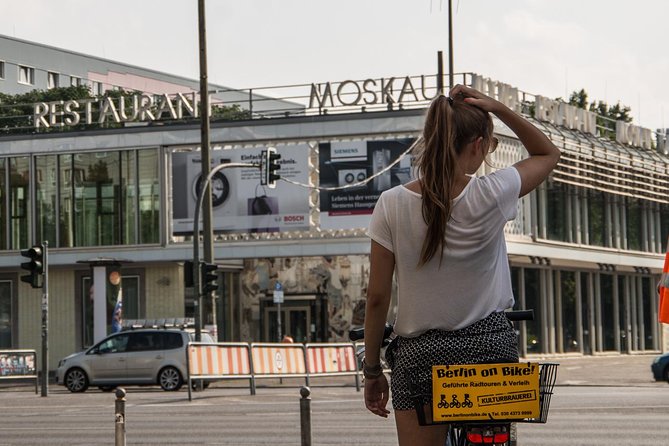
Finally, the tour includes Görlitzer Park, one of the large parks and local hangout zones in Kreuzberg. It was laid out in the late 1980s and early 1990s after the removal of the old Görlitzer Bahnhof rail tracks.
That timing turns the park into more than a green pause. It’s an example of urban change: where infrastructure and movement once dominated, people gained a place to rest and gather.
On a practical level, this is the kind of stop that helps you end the ride without feeling worn out. Parks help your eyes reset after city streets and artwork walls. You also get a chance to take photos or just people-watch without feeling rushed.
Price and value at about $43.54
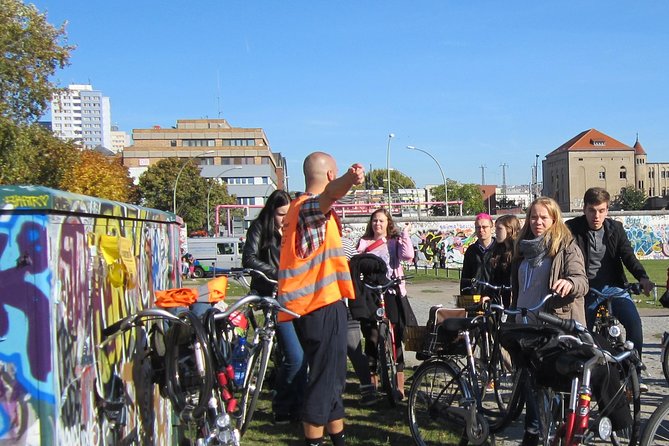
At $43.54 per person for roughly 3.5 hours, the value mostly comes from what’s included. You are paying for a local guide plus a bike plus a helmet. That bundle matters, especially if you would otherwise need to rent a bike, then hunt down helmet options, then pay for a guide separately.
Also, the tour is capped at 14 travelers, which usually helps the guide give context instead of constantly rushing. The pace, plus short stop lengths, keeps you seeing a lot without turning it into a “stand here, listen, then race to the next spot” style.
What you should know: food and drinks are not included, so you’ll want a snack plan. If you can, eat before you go, or bring something small for later. Since the tour starts at 3:00 pm, you’re close to pre-dinner time.
The road reality: traffic and comfort
This tour is built around riding local streets. That’s the point, and it’s also the main consideration.
Berlin can be bike-friendly, but it is still city traffic. One of the most consistent themes in the guidance for families is that the mix of bikes and cars can feel intense, especially for younger riders or anyone who dislikes close passing.
If you are bringing a child, think about comfort level, not just physical ability. You can do two simple things: make sure your child stays attentive to the guide, and follow the group closely. Also, because the tour operates in all weather conditions, dress for what you will actually feel on the bike.
Who should book, and who might skip it
This tour is for you if you want:
- Alternative Berlin scenes and street-art type areas, not only the most famous monuments
- A mix of DDR-era architecture and modern creative life in one loop
- A ride where you can ask questions and get more than one-paragraph answers
You might skip it if:
- You prefer traffic-free routes and would feel stressed by mixed street conditions
- You want a tour where everything is focused on interiors or indoor museums
- You’d rather spend your time on a single neighborhood with fewer transitions
Should you book Alternative Berlin Bike Tour
I think this is an easy yes when your goal is to see Berlin the way people actually experience it, by bike. The combination of a local guide, small group size, and included bike and helmet makes it feel like a practical shortcut to neighborhoods you might not pick on your own.
If you are comfortable with city riding and you like street-level culture, this is a strong value for an afternoon of real discovery. If traffic makes you tense, plan for that ahead of time, pick the right time of day for your comfort, and keep expectations focused on local street riding rather than calm bike lanes.
FAQ
FAQ
How long is the Alternative Berlin Bike Tour?
It lasts about 3 hours 30 minutes.
What time does the tour start?
The start time is 3:00 pm.
Where do you meet and where does the tour end?
You start at Berlin on Bike – Radtouren & Fahrradverleih, Knaackstraße 97, 10435 Berlin and the tour ends back at the same meeting point.
Is the tour in English?
Yes, the tour is offered in English.
Are bikes and helmets included?
Yes. Use of bicycle and use of helmet are included.
What fitness level do you need?
You need moderate physical fitness level.
Does the tour run in bad weather?
It operates in all weather conditions, and you should dress appropriately. If it is canceled due to poor weather, you are offered a different date or a full refund.
Fresh on the arrivals board for Berlin

Cycling Tours in Berlin, compared.
Sights and Highlights Bike Tour with a Local Guide
Read our review →
Berlin Highlights Sightseeing Bike Tour in Small Groups
Read our review →
Alternative Bike Tour of Kreuzberg & Friedrichshain
Read our review →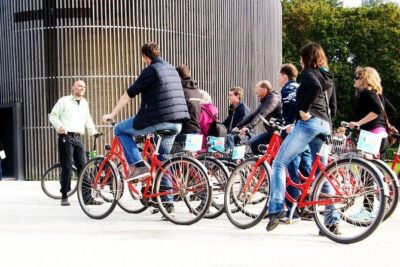
Browse the lists this tour appears in