
Reviewed · NUREMBERG TOURS & ACTIVITIES
3rd Reich Tour Nuremberg
Nuremberg history hits fast. This compact tour strings together four key Nazi-era rally sites in just over two hours, then explains how the story is handled in Germany today. You get the essential layout of the former Nazi Party rally grounds without feeling lost, and the pacing suits short schedules.
What I love most is the English-speaking local guide, and how clearly they connect each stone and shape to what it was used for. Second, I like that the route is built for first-timers, so you leave with a mental map of Nuremberg’s 20th-century legacy.
One thing to consider is that it is a quick overview. At this length, you will not have time for museum-style wandering or long reflection stops, so if you want a slower, deeper look, you may need an additional visit on your own.
In This Review
- Key points to know before you go
- What You’ll See on This 3rd Reich Tour of Nuremberg in Just 2 Hours 15 Minutes
- Price and Value: Getting Major Sites for $3.60 Per Person
- Meeting Point and Getting Around the Former Rally Grounds
- Kongresshalle Nürnberg: From Nazi Ambition to Education
- Hall of Honour at the Luitpoldarena: WWI Remembrance Rewritten
- Große Straße: Albert Speer’s 1.5-Mile Axis for Marches
- Zeppelinfeld: The Grandstand Where Mass Power Was Performed
- The Tour Guide Factor: Why Tom’s Delivery Makes This Easier
- Who This Tour Fits Best (and Who Might Want More Time Elsewhere)
- Should You Book This Nuremberg 3rd Reich Tour?
- FAQ
- How long is the 3rd Reich Tour Nuremberg?
- What is the meeting point for the tour?
- Is the tour offered in English?
- Are the sites on the tour included with admission?
- Is a mobile ticket provided?
- How big are the groups?
- What should I do about tips?
- Can I cancel for a full refund?
- What happens if the minimum number of travelers is not met?
Key points to know before you go
- 4 major rally-ground stops in about 2 hours 15 minutes, with on-site context as you walk
- English local guide who keeps the story clear and easy to follow, including for children
- Free admission tickets listed for all four stops, so your main cost is the tour itself
- Smaller group size (up to 25), which helps you ask questions and stay together
- Moderate walking level around outdoor sites, great for getting bearings without a long trek
What You’ll See on This 3rd Reich Tour of Nuremberg in Just 2 Hours 15 Minutes
This tour is designed for people who want the big picture quickly. You meet at Flieger-Denkmal an der Ehrenhalle, then head to a set of major former rally structures: Kongresshalle, the Hall of Honour area (within the Luitpoldarena), Große Straße, and Zeppelinfeld.
The timing is tight but not rushed. Each stop is about 20 minutes, with time to walk between them and get the key context from your guide. You should expect mostly outdoor groundcover and open spaces, plus a bit of standing and looking while explanations happen.
Because the tour stays compact, it works well if you are doing other Nuremberg sights the same day. It also helps you build a framework for later reading or a separate museum visit, since you understand what each site was meant to do.
Also holding a platform in Nuremberg
- Nuremberg: City Tour with the Bimmelbahn Train
★ 4.4 · 2,475 reviews - Nuremberg: Old Town Guided Walking Tour
★ 4.6 · 2,416 reviews - Nuremberg: Tunnels and Secret Passages in the City Wall Tour
★ 4.8 · 2,334 reviews
Price and Value: Getting Major Sites for $3.60 Per Person
The price is surprisingly low for what you get: a guided walk through sites that were central to Nazi mass events. At $3.60 per person, you are mostly paying for expert interpretation and coordination, not for museum entry. All four stops are listed with ticket-free admission for this experience, so you are not stacking extra paid entries on top of the tour cost.
If you compare that to typical city walking tours, the value comes from two things. First, you get a structured route through meaningful locations, which is hard to do alone without missing the connections. Second, the guide helps you understand why the architecture and layout mattered, not just what happened there.
One caution on value: because this is priced like a budget-friendly intro, the emphasis stays on overview. If you are hoping for deep museum time or a long, slow pace, plan a second stop elsewhere. The guide will help you interpret what you see, but the tour will not replace a full day of study.
Meeting Point and Getting Around the Former Rally Grounds
You start at Flieger-Denkmal an der Ehrenhalle in 90478 Nürnberg, and the tour ends back at the meeting point. That round-trip setup matters. You are not left wandering across the rally grounds trying to find your way back.
The group size is capped at 25 people, and that makes a difference here. These sites are spread out, and a small group keeps the momentum. It also helps if your guide wants to stop frequently to point out orientation details like sightlines, building shapes, and where crowds were meant to gather.
You are told the tour is near public transportation, and the experience allows service animals. The physical requirement is listed as moderate, which fits the reality of this kind of sightseeing: expect walking on outdoor areas and moving between viewpoints. Wear comfortable shoes and plan for standing.
Kongresshalle Nürnberg: From Nazi Ambition to Education
Your first stop is the Kongresshalle, part of the former Nazi Party Rally Grounds. The structure was designed in the 1930s by Ludwig Ruff and Franz Ruff and inspired by Rome’s Colosseum style. That sounds odd until you understand the point. The Nazis wanted their future to look like it was built on ancient authority, so they borrowed familiar imperial imagery.
The plan was massive, aiming to host 50,000 people, but it was never completed because World War II changed everything. Today, the building is a powerful example of unfinished ideology: huge forms, clear intent, and a sense of plans cut short.
After the war, the Kongresshalle was left largely untouched, and it now houses the Documentation Center. This is one of the reasons the tour feels different from a typical photo walk. You are not only looking at the architecture. You are also seeing how the site is used to teach, preserving the location as a reminder of how propaganda can shape public life.
What to watch for here:
- The scale and horseshoe shape that made crowds feel funneled and controlled
- The way classical references were used to make Nazi messaging feel inevitable or historic
Possible drawback: since the stop is about 20 minutes, you will get orientation and key ideas, not full museum depth. If you want longer reading time, you can plan to return later.
Hall of Honour at the Luitpoldarena: WWI Remembrance Rewritten
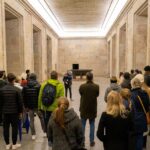
Next is the Hall of Honour area within the Luitpoldarena, another large rally ground built in the 1930s for Nazi Party rallies. The capacity is listed at over 100,000 people, which tells you how designed this space was for mass spectacle.
The site has a specific layer tied to WWI. It was built around Ehrenhalle, a Hall of Honour for WWI veterans. That detail matters, because you are seeing how a place meant for remembrance can be repurposed for a different political story.
Here is the uncomfortable twist your guide focuses on. The Nazis used it to honor the fallen old comrades of the Hitlerputsch. That is a specific example of how regimes change the meaning of public monuments, not by erasing history completely, but by reinterpreting it for their own agenda.
Today, the Luitpoldarena is used as a public park, and remnants are preserved as a somber reminder of what totalitarianism can do. The outdoor park setting can feel calm, which makes the historical context even more important. With the guide’s explanation, you understand the calm is not neutral. It is layered on top of real intent and manipulation.
Practical note: this stop is also around 20 minutes, so you will likely spend most of your time absorbing the location and symbolism rather than roaming.
Onward connections from Nuremberg:

Große Straße: Albert Speer’s 1.5-Mile Axis for Marches
Große Straße, or the Great Street, is where you see the rally grounds as a machine for movement. This road stretches about 1.5 miles and was designed by Albert Speer as a central axis for marches and parades.
Speer’s role is a recurring theme on this tour. He understood that the street, the buildings, and the crowd flow all work together. The guide explains that the road was oriented toward the imperial city of Nuremberg, linking the Nazi regime to Germany’s historic past. In other words, the direction of the axis was part of the message.
You can also appreciate the “grand stage” thinking. The street was intended for military formations and huge processions during rallies. But it was barely used before WWII disrupted everything. Seeing a road built for spectacle that never fully had its intended role is a reminder of how the original plan was cut short and how history still moved forward.
What to watch for:
- The long, straight viewpoint that supports the feeling of an engineered crowd corridor
- The “axis” idea, meaning the layout was meant to align symbolic targets and places
Because this stop is short, the value is in understanding the design logic, not in trying to walk the whole road. Let the guide point out the key direction and how it would have worked during events.
Zeppelinfeld: The Grandstand Where Mass Power Was Performed
The final stop is Zeppelinfeld, a major Nazi Party rally site designed by Albert Speer in the 1930s. Here, the architecture shifts toward a grandstand built for maximum visibility and effect.
The grandstand is described as being inspired by ancient Greek and Roman architecture, again showing the same tactic: borrow revered styles to lend weight and legitimacy to a modern political movement. The guide will likely connect that to how speeches and ceremonies were staged for impact.
At Zeppelinfeld, there was a central platform where Hitler addressed crowds of up to 200,000 people. That number is hard to hold in your head, and the value of a guided stop is that you can translate “big” into a sense of where people would have stood and how the site would funnel attention.
You also hear about one of the most famous post-war images tied to the swastika. The huge swastika at Zeppelinfeld was blown up by Allied forces after WWII. That detail is not just an anecdote. It shows how the physical symbol of power was targeted, while the rest of the built environment could still be reused or recontextualized.
The site’s lesson for you is about the difference between architecture as art and architecture as a tool. The design here is not “just” impressive. It was built to make control feel normal and mass politics look grand.
The Tour Guide Factor: Why Tom’s Delivery Makes This Easier
One of the biggest strengths of this tour is how it is taught. In the best moments, your guide can do two things at once: keep the topic clear and keep the group engaged. The tour’s standout guide for this experience is Tom.
From the feedback, Tom is described as informative and clear, and he keeps explanations understandable even when the material is heavy. He is also noted for being engaging with children in the group, with humor when appropriate. That balance is not about making light of the subject. It is about helping people stay with the story long enough to learn from it.
If you do this tour, pay attention to how Tom helps you connect each site to the next. That is where the “intro” value really shows up. Instead of four separate stops, you start to see a connected system: architecture, crowd movement, and propaganda messaging working together.
Who This Tour Fits Best (and Who Might Want More Time Elsewhere)
This works best for:
- First-time visitors who want a fast orientation to Nuremberg’s Nazi-era rally grounds
- People who prefer a guided structure when the subject matter is intense
- Families or mixed-age groups where a guide can keep children engaged without losing clarity
It may not fit as well if:
- You want long museum time or deep reading at each site
- You are looking for a slow walk with lots of unanswered questions and time to think privately
A smart approach is to treat this tour as your foundation. Then, if something hits you especially hard, you can plan extra time later on your own. That way, you control how much time you spend with each part of the story.
Should You Book This Nuremberg 3rd Reich Tour?
I think you should book it if you want a clear, guided overview of key Nazi-era rally sites in a short window. For $3.60, you get a structured route, free-listed access for all stops, and an English guide who makes the details understandable, including for children. With a small group cap and a guide like Tom who delivers information clearly, you are not just touring buildings, you are learning how the sites were designed for control and how Germany keeps teaching the lessons today.
Skip it only if you already know the architecture and events well and you want deeper time, or if you prefer a longer itinerary that allows more self-guided wandering. For most people visiting Nuremberg on a tight schedule, this is a strong, practical way to get your bearings fast.
FAQ
How long is the 3rd Reich Tour Nuremberg?
The tour duration is about 2 hours 15 minutes.
What is the meeting point for the tour?
The tour starts at Flieger-Denkmal an der Ehrenhalle, 90478 Nürnberg, Germany.
Is the tour offered in English?
Yes, the tour is offered in English.
Are the sites on the tour included with admission?
The stops listed for the tour are marked as admission ticket free.
Is a mobile ticket provided?
Yes, the tour uses a mobile ticket.
How big are the groups?
The tour has a maximum of 25 travelers.
What should I do about tips?
Tips are not included.
Can I cancel for a full refund?
Yes, you can cancel up to 24 hours in advance for a full refund. If you cancel less than 24 hours before the start time, you will not get a refund.
What happens if the minimum number of travelers is not met?
If the tour is canceled because the minimum is not met, you will be offered a different date or a full refund.
Fresh on the arrivals board for Nuremberg


Nuremberg Tours & Activities, compared.
Tunnels and Secret Passages in the City Wall Tour
Read our review →
Walking Tour of Former Nazi Party Rally Grounds
Read our review →
Browse the lists this tour appears in