
Reviewed · GUIDED WALKS IN BERLIN
Small Group Walking Tour: “Wild Kreuzberg”
Kreuzberg feels like a story on the move. This small-group walk clicks into place fast, because you start at Kottbusser Tor where daily life and nightlife rub shoulders, and you keep moving through places like Oranienstraße where the guide explains why this neighborhood looks the way it does today.
I like the way the route balances street scenes with human details, not just big landmarks. The only catch is pacing: you cover a lot in 2.5 hours, so bring shoes you can walk in comfortably, and expect the tour to run in all weather.
In This Review
- Key moments that make Wild Kreuzberg worth your time
- Street-level Berlin at human speed
- Finding the group: Skalitzer Straße and Kottbusser Tor orientation
- Kottbusser Tor to Adalbertstraße: big structures and the neighborhood’s split personality
- Oranienstraße and SO36: coffee stops, culture shifts, and why punk-era place still matters
- Museum of Objects to Bethanien: from mass production to how spaces get new lives
- Fontane-Apotheke, churches, and the human details that anchor the route
- Görlitzer Park, Oberbaumbrücke, and the East Side Gallery finish
- Price and pacing: is 24 dollars for 2.5 hours good value?
- Who should book Wild Kreuzberg?
- Should you book Wild Kreuzberg? My practical verdict
- FAQ
- FAQ
- What is the duration of the Wild Kreuzberg walking tour?
- How much does the tour cost?
- Where do I meet the guide?
- Which public transit stop is closest?
- What is included in the price?
- Is food included?
- What language is the tour guide speaking?
- What should I bring, and does the tour run in bad weather?
- Is there a minimum number of participants?
Key moments that make Wild Kreuzberg worth your time
- Kottbusser Tor and the U1 rails split the square, creating a very Berlin kind of contrast between crowds and trains
- Oranienstraße’s SO36 energy, including punk-era context and stops that feel personal, not scripted
- Museum of Objects, focused on the history of mass production, which makes everyday things easier to read
- Bethanien and the Rauchhaus, former hospital and squat-site traces that explain how spaces change roles
- Fontane-Apotheke, a well-known pharmacy stop that adds character to the route
- Oberbaumbrücke to East Side Gallery, a visual link from Berlin’s division to its later story
Street-level Berlin at human speed
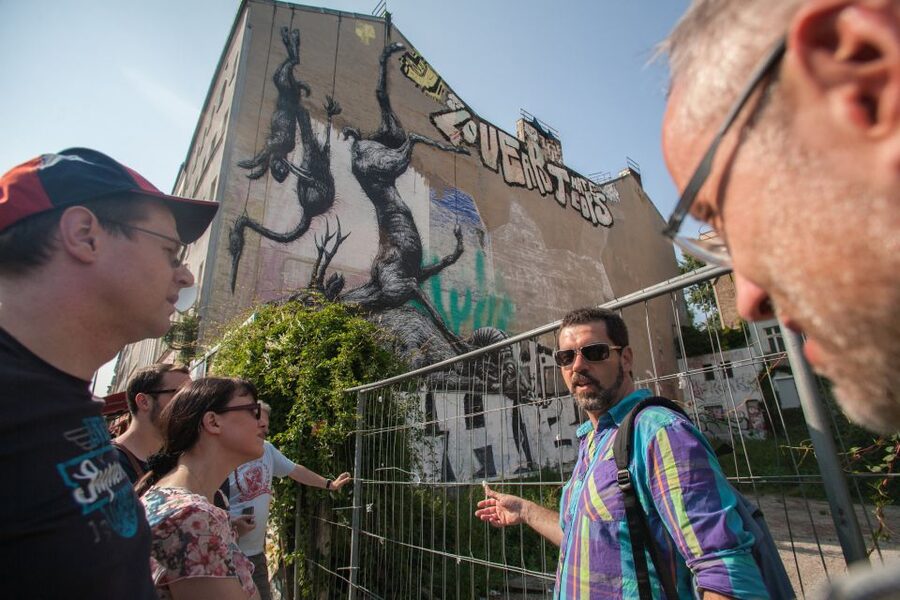
This tour works because it keeps your eyes moving and your brain engaged. Kreuzberg can feel like a patchwork if you wander alone, but on this walk you get a guided “why” for what you see, from changing architecture to shifting neighborhoods. The result is that you finish with a clearer map in your head, not just a list of places.
I also like the format: it is short enough to stay energetic, but long enough to connect themes. You will start in the middle of the action near the rail tracks, then gradually shift into calmer pockets like parks and church areas before you end near the big visual payoff by Oberbaumbrücke. If you are the type who wants context but hates sitting through lectures, this hits the sweet spot.
And yes, it runs in all weathers. On rainy days, you get a rain poncho. That matters here because the route is mostly outside, and Kreuzberg wind can make you feel like the weather is part of the story.
More Guided Walks in Berlin
- Discover Berlin Half-Day Walking Tour
★ 5.0 · 9,624 reviews - Berlin City walk Government District and Places of Democracy
★ 4.7 · 8,467 reviews - Berlin: Third Reich & Cold War Guided Walking Tour
★ 4.9 · 8,378 reviews
Finding the group: Skalitzer Straße and Kottbusser Tor orientation
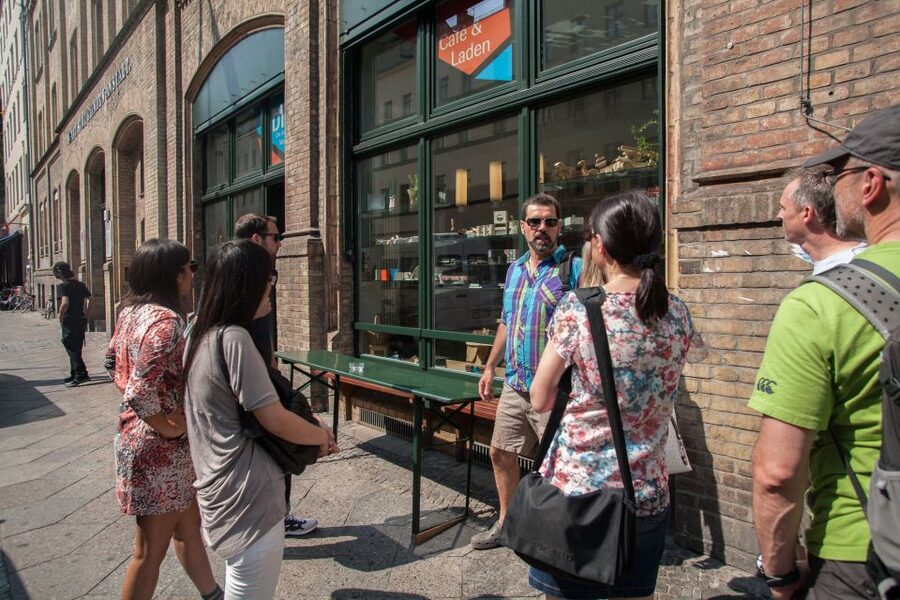
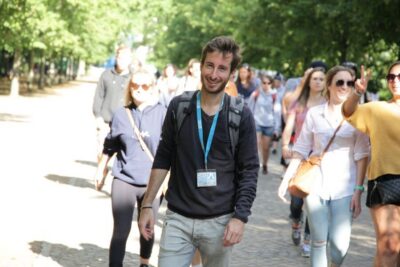
You meet at 137 Skalitzer Straße, in front of Gold Exchange and next to REWE. Your guide carries a sign with the tour operator’s logo, so you can spot the group without playing guess-and-check in street traffic.
The nearest U-Bahn station is Kottbusser Tor (lines U1 and U8), using the Skalitzer Straße exit. This is a practical choice because Kottbusser Tor sits right where multiple sides of Kreuzberg meet: busy sidewalks, food options, and the rail line cutting through the space above.
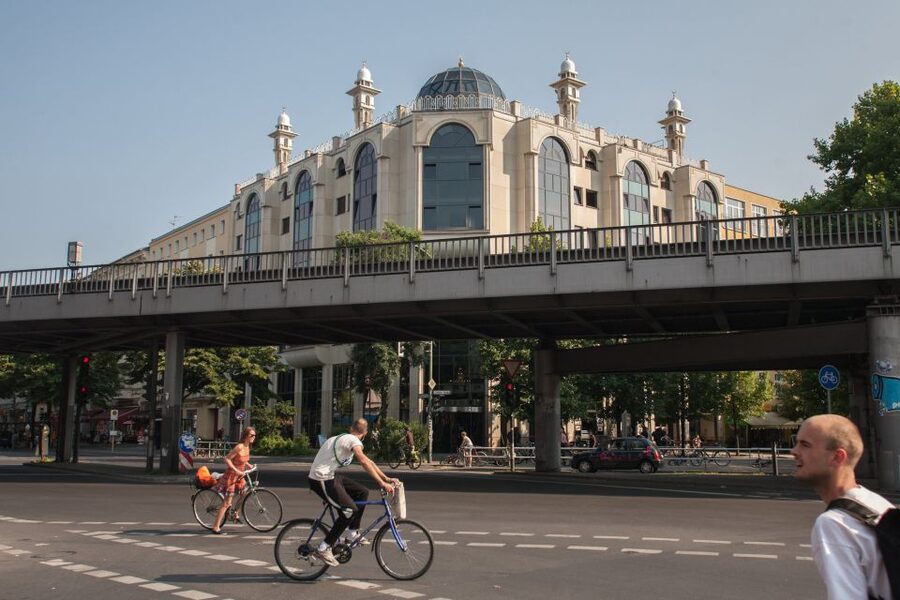
Once you are at the start, you get an immediate visual thesis for the tour. The square feels divided, partly by motion, partly by infrastructure. You will see everyday scenes like a Turkish market and a mix of restaurants and bistros, but you will also notice the other side of Kreuzberg culture that shows up after hours. It is a good way to understand why Kreuzberg feels layered even on a first visit.
Tip for you: if you want photos, stand where the rail line lines up with building facades, because the U1 track gives you a natural frame. It can also make a quick selfie look more cinematic than it should.
Kottbusser Tor to Adalbertstraße: big structures and the neighborhood’s split personality
From Kottbusser Tor, the walking portion takes you past imposing early-20th-century houses and toward the Adalbertstraße area, including the Adalbertstraße skyscrapers and the Sozialpalast. These stops are not there just to say you saw notable architecture. They help you understand how Kreuzberg has long been a place of contrasts, where long-standing buildings coexist with newer cultural energy.
You then reach the Kreuzberg Museum area on the route. Even if museums are not your main travel thing, a neighborhood museum stop can be useful because it anchors what you hear to the local setting. You get a sense of how the area records itself, not just how it is recorded by outsiders.
One drawback to keep in mind: this part is more about observation than resting. If your plan includes a lot of museum time later in the day, you will want to pace yourself, because the walking keeps coming.
But if you enjoy “read the street” travel, this stretch pays off. It gives you a baseline for the rest of the tour, when the tone shifts toward community institutions, alternative culture, and space reuse.
Oranienstraße and SO36: coffee stops, culture shifts, and why punk-era place still matters
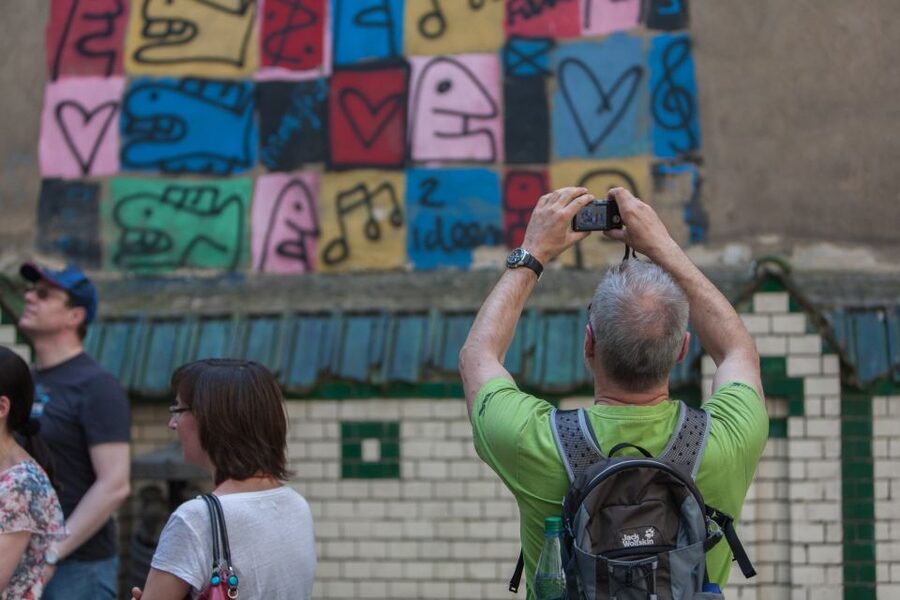
When the tour reaches Oranienstraße, you feel the neighborhood personality change. This street is often described as the heart of the former SO36 postal district, and you can see why. The mixture of restaurants, bars, and shops comes with an undercurrent that is still part of how people talk about Kreuzberg today.
Here you also get a stop at the Berlin Home for the Blind. This is the kind of place that adds real-world meaning to the walk. Instead of turning Kreuzberg into only a nightlife story, the guide helps you connect the neighborhood’s institutions and community life to what you are seeing on the sidewalks.
You then move toward Oranienhöfen, where you get a chance to relax over coffee. This is not just a break, it is a practical reset. Kreuzberg walking is best when you pause at moments like this, because it keeps you from rushing the story. Use it to look around and notice how casual conversation, storefront life, and the architecture all blend together.
Also along the way, the tour references the kind of blend that makes this area distinctive: comic shops, boutique-style shopping, and the same street holding different styles of leisure. That mix is not random. It is part of the neighborhood’s identity, and the guide helps you see the pattern rather than treating it like background noise.
If you are hoping for only famous sights, know this tour gives you more local texture than photo-ops. That is a plus for many people, and a minus for others.
Museum of Objects to Bethanien: from mass production to how spaces get new lives
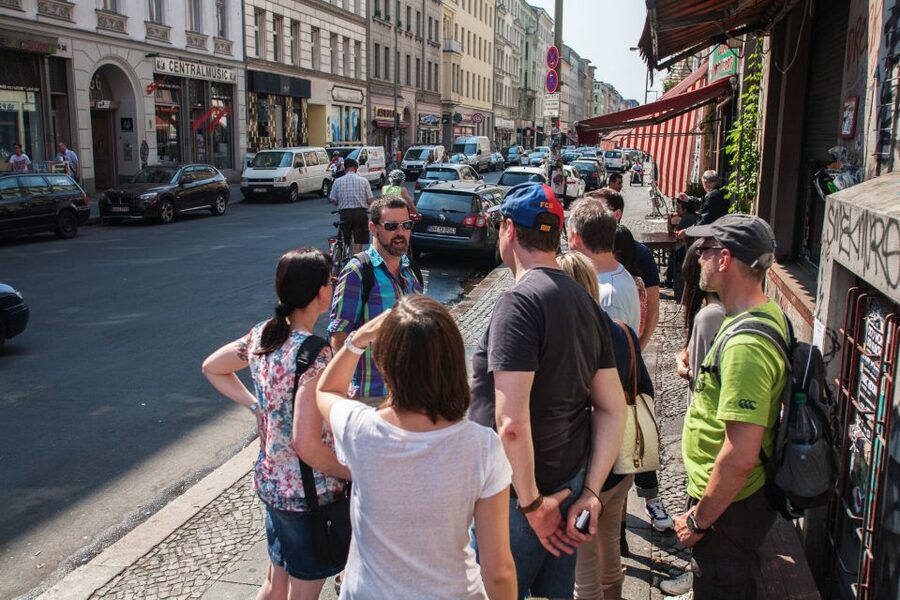
One of my favorite stops on this walk is the Museum of Objects. The theme is mass production and the history of how goods became standard and widely available. That sounds abstract until you put it in a neighborhood like Kreuzberg, where you can look around at everyday objects, storefronts, and consumer culture and start asking better questions.
This is exactly why the stop matters. Instead of treating stuff as just stuff, you learn a lens for reading your surroundings. You start to notice how industrial thinking shaped what people owned, wore, and used, and how that trickles into design and street-level life.
Next comes Mariannenplatz, and here the tour shifts into space and reuse. You will see Bethanien, an art squat in a former hospital. The value of that context is huge if you care about cities as living systems. You are not just looking at a building, you are learning what it became and why artists and communities would take it on.
Next door, you also encounter the Rauchhaus and traces of squatters’ life from days gone by. This is the kind of stop where the guide’s storytelling turns graffiti-level visuals into something you can understand. It helps you appreciate how Kreuzberg’s alternative spaces grew from specific historical pressures, not just from romantic ideas.
One consideration: Bethanien and Rauchhaus are about ideas and atmosphere as much as specific sights. If you prefer tightly timed, only-icon stops, you might need to lean in during the explanation. But if you like walking while thinking, this section is a highlight.
More German cities at walking speed:
Fontane-Apotheke, churches, and the human details that anchor the route
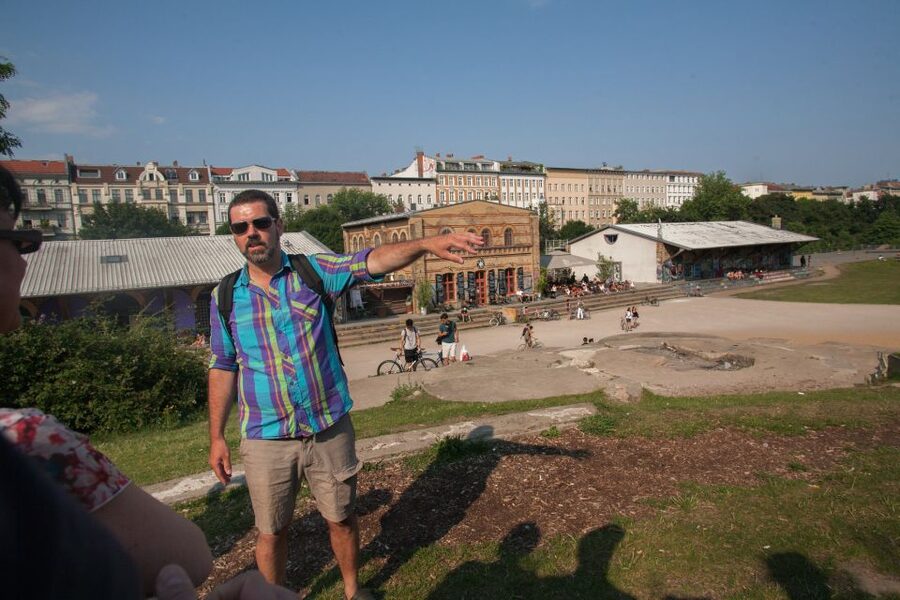
The tour includes the Fontane-Apotheke, a well-known pharmacy. It might look small compared with big monuments, but these everyday landmarks are often where the neighborhood’s memory sits. A pharmacy tells you something about daily routines, local presence, and how long a place can feel part of people’s lives.
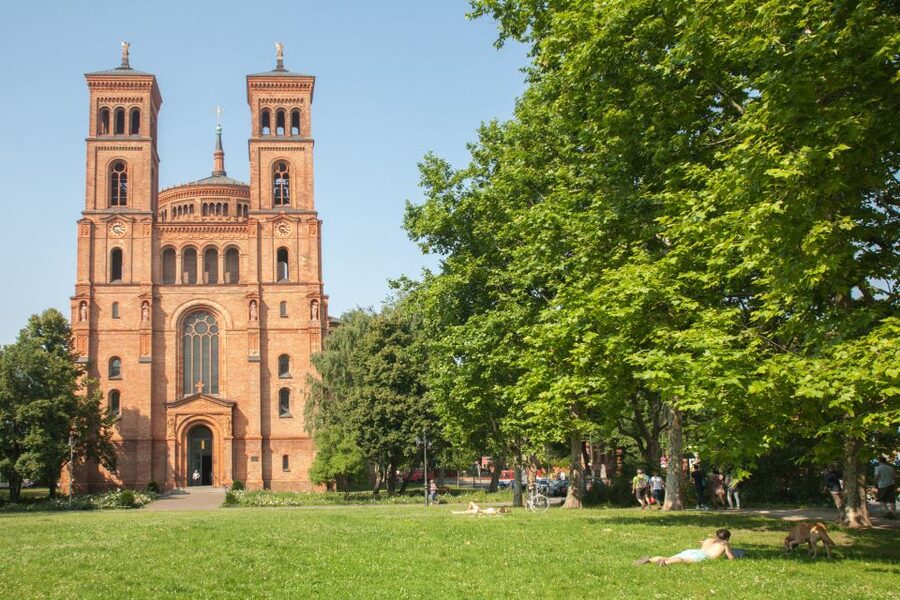
As you keep moving, you will pass areas like Wrangelkiez and stop near St. Thomas Church, Berlin. There is also a stop called out around Feuerwehrbrunnen. These points help slow the route just enough to let you notice how religious and civic features sit alongside the more alternative cultural threads.
This is also where you see why Kreuzberg can feel like a series of neighborhoods stacked in one. Even without going inside every building, the guide helps you keep track of what kind of place you are in, and what that implies about the past.
Practical tip for you: keep your water handy. The coffee stop helps, but you still have a lot of walking ahead, and Kreuzberg sidewalks do not let you sit down long for free.
Görlitzer Park, Oberbaumbrücke, and the East Side Gallery finish
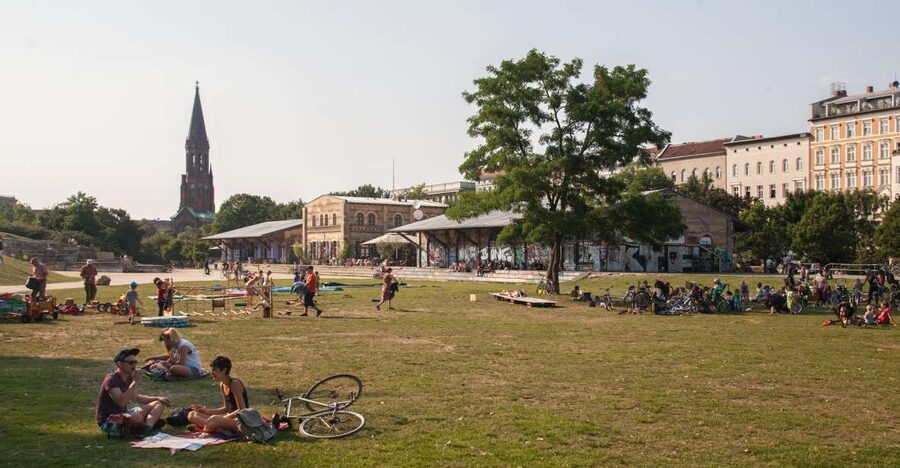
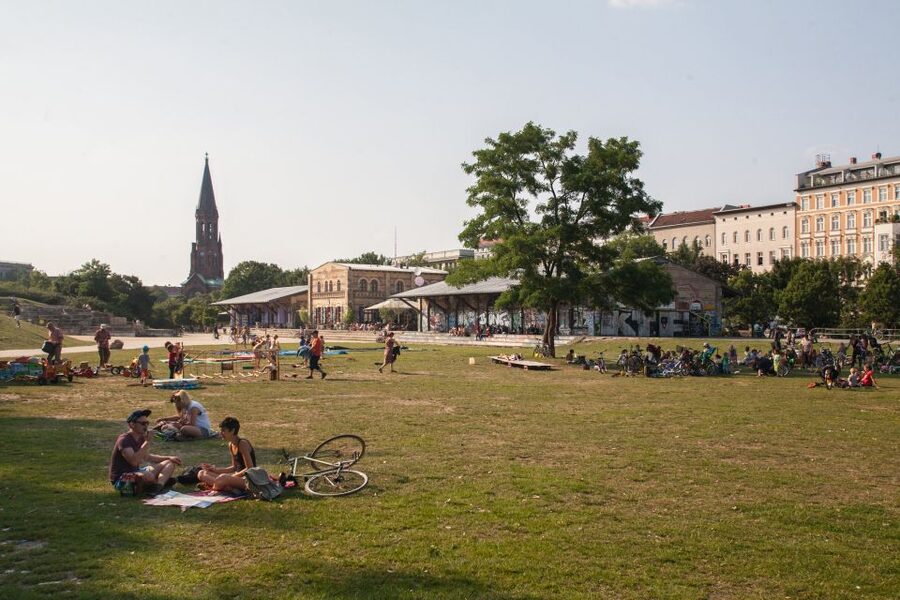
Later, the route takes you to Görlitzer Park, which was previously a train station. This transformation is a perfect example of Berlin’s talent for changing function over time. You get to see how a space designed for movement becomes a place for stillness and strolling.
Then the walk heads toward Oberbaumbrücke, which symbolically links East and West Berlin. Standing in that corridor of meaning is different from reading it in a guidebook. The bridge connects two realities, and the guide frames it so you understand why the symbolism matters even if you are not a history buff.
From there, the tour reaches the East Side Gallery area. This is your visual closing chapter, where the neighborhood story connects back to Berlin’s larger story about division and change.
Finally, you finish at Görlitzer Bahnhof, so you are not trapped in the middle of nowhere at the end. It is a good way to keep your day flexible, because you can continue exploring or head to your next stop without feeling like you timed your outing poorly.
Price and pacing: is 24 dollars for 2.5 hours good value?
At about $24 per person for a 2.5-hour walking tour, the value depends on one thing: how much you enjoy being guided through street-level context.
You get a live city guide, and on rainy days you also get a rain poncho. You are not paying extra for food, and that is fine because Kreuzberg is full of places to eat on your own terms. The key is that you are paying for interpretation, not admission to a single museum.
This is also why the tour length feels right. A shorter walk can leave you with disconnected glimpses. A longer one can turn into fatigue. At 2.5 hours, you get enough time to connect Kottbusser Tor, Oranienstraße, the museum and art-squat stops, and the finish near Oberbaumbrücke.
Based on guide feedback you can look out for a strong emphasis on storytelling and history woven into what you see right now. Ferenz, for example, is praised for making the information feel both entertaining and well paced, with references to older photos and the more recent past. That is exactly what makes value feel real.
If you speak only a little German, note that the tour is run in German. The route still looks great, but the full payoff depends on following the guide’s explanations.
Who should book Wild Kreuzberg?
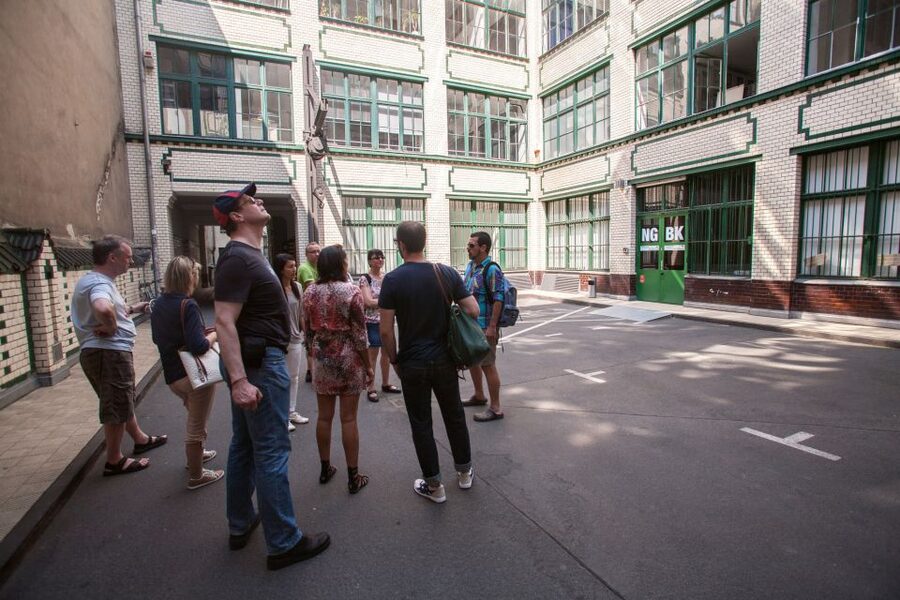
Book this if you want:
- A street-level Kreuzberg introduction that does not treat the area like a theme park
- A route that blends institutions, everyday landmarks, and the shift from division-era symbolism to later city life
- A guide-driven pace where the stops help you connect themes, not just tick boxes
Skip it (or keep expectations realistic) if:
- You want mostly indoor attractions and long sit-down time
- You prefer tours with lots of public transit breaks, because this is a walking tour with steady movement
- You do not feel comfortable in mixed weather, even with a poncho option
Should you book Wild Kreuzberg? My practical verdict
Yes, if you are planning to spend your time in Berlin learning how neighborhoods work, not just snapping pictures. This tour is a smart first-or-second-day option because it starts at Kottbusser Tor, builds through Oranienstraße and the SO36 atmosphere, and ends with big visual anchors by the bridge and East Side Gallery.
Your best bet is to wear comfortable shoes, dress for weather, and go in ready to listen. If you do that, the walk will feel like it connects dots you would otherwise miss in Kreuzberg’s noisy, beautiful mix of old buildings, alternative spaces, and everyday life.
FAQ
FAQ
What is the duration of the Wild Kreuzberg walking tour?
The tour lasts 2.5 hours.
How much does the tour cost?
It costs $24 per person.
Where do I meet the guide?
Meet at 137 Skalitzer Straße, in front of Gold Exchange and next to REWE.
Which public transit stop is closest?
The nearest U-Bahn station is Kottbusser Tor (lines U1 and U8), using the Skalitzer Straße exit.
What is included in the price?
The price includes a city guide and duties, and a rain poncho if necessary.
Is food included?
No. Food and drink are not included.
What language is the tour guide speaking?
The live tour guide speaks German.
What should I bring, and does the tour run in bad weather?
Bring comfortable shoes. The tour runs in all weather, and rain ponchos are distributed on rainy days.
Is there a minimum number of participants?
Yes, a minimum of 2 persons is required for the tour. If that minimum is not reached, the operator can cancel short notice and notify you.
Fresh on the arrivals board for Berlin


Guided Walks in Berlin, compared.
Berlin City walk Government District and Places of Democracy
Read our review →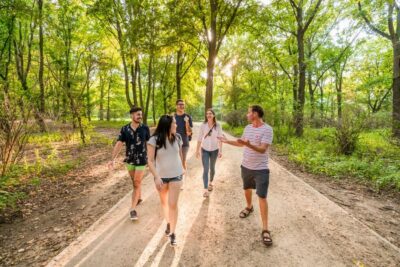
Berlin’s Best: 2 Hour Walking Tour Third Reich and the Cold War
Read our review →
Third Reich Berlin: Hitler and WWII Walking Tour
Read our review →
Browse the lists this tour appears in