
Reviewed · GUIDED WALKS IN MUNICH
Small-Group 2-Hour Munich and The Third Reich Walking Tour
Munich has a way of looking calm. Under the surface, this tour maps the Nazi rise street by street. I like that it is small-group and fact-led, and I also like how it ties famous buildings to real decisions from WWII.
The best part is the way Alun Evans Personal Tour Guiding Munich sets context so the places mean something. You will walk from Marienplatz through the city’s key sites, hearing how power was built and enforced.
One possible drawback: this is not a soft, general-history stroll. It stays focused on the Third Reich and you should expect steady walking with limited chances to sit and talk at length.
In This Review
- Key Highlights You Will Notice Fast
- Munich’s Nazi-Era Landmarks, Explained Without the Shortcut
- Timing, Meeting Point, and How the 2 Hours Works
- Stop 1: Marienplatz, the Town Hall Decision, and 1938
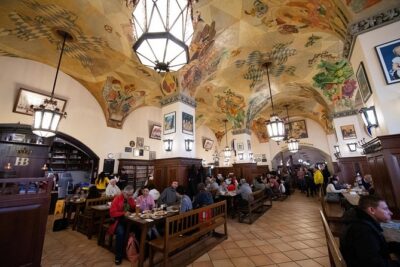
- Stop 2: Hofbräuhaus, Hitler’s Speeches, and the Power of Public Rooms
- Stop 3: Odeonsplatz and the 1923 Beer Hall Coup Gun Battle
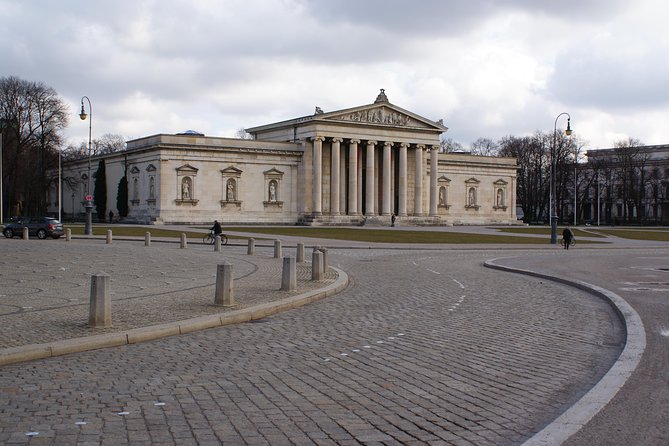
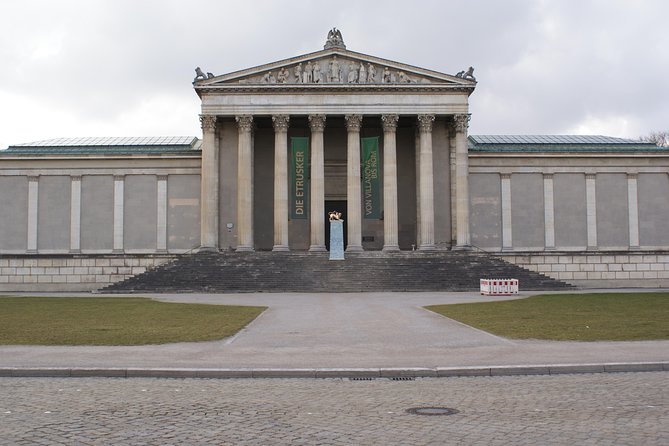
- Stop 4: Königsplatz, the Munich Agreement, and the Documentation Centre Option
- The Guide: Sensitive, Animated, and Built for Questions
- Walking Tour Value: Is $60.07 Worth It?
- Who This Tour Is Best For
- What to Bring for a Weather-Proof Walk
- Final Call: Should You Book This Munich Nazi Landmarks Walk?
- FAQ
- How long is the Small-Group 2-Hour Munich and The Third Reich Walking Tour?
- What language is the tour offered in?
- Where do I meet, and when does it start?
- How big is the group?
- Does the tour run in bad weather?
- Is there free cancellation?
Key Highlights You Will Notice Fast
- Small group, up to 15 people, for questions and pace that feels human.
- Marienplatz to Königsplatz route, so you see the story unfold across the center.
- Four major WWII-era stops tied to specific events in 1923 and 1938.
- Professional guide, Alun Evans, known for being sensitive and animated.
- Free sight stops listed for each stop, so you pay for the tour, not the doors.
- All-weather operation, so dressing for wind or cold matters.
Munich’s Nazi-Era Landmarks, Explained Without the Shortcut
If you only look at Munich as beer halls and pretty squares, this tour corrects that picture. You walk past places that were part of propaganda and political turning points, then you connect them to what happened next. It is a “see it, understand it” kind of outing.
The real value is that you are not just memorizing names. You are learning how events took shape in public spaces. That is what makes the route more than a checklist: you start to recognize how ideology, crowds, and authority used the city as a stage.
Also, the tone matters here. Reviews point to a guide who keeps things appropriately serious, while still keeping you engaged. You get the feeling that the story is told with care, not shock value.
More Guided Walks in Munich
- Munich: Third Reich & WWII Walking Tour
★ 4.6 · 6,181 reviews - Third Reich Walking Tour Munich
★ 4.5 · 4,291 reviews - Munich: Old Town & Viktualienmarkt City Walk in German
★ 4.7 · 2,304 reviews
Timing, Meeting Point, and How the 2 Hours Works
This tour runs for about 2 hours and starts at 3:00 pm. The meeting point is at Landeshauptstadt München Stadtkämmerei, Marienplatz 8, 80331 München, Germany, and the tour ends back at the central meeting area.
You should plan for a solid walk across central Munich. It is best for moderate physical fitness, so if you need frequent breaks, you will want to build that into your expectations. The group size cap is 15, which helps the guide move at a pace where questions do not get lost.
One practical note: this is offered in English, and the tour uses a mobile ticket. Confirmation comes at booking, so keep an eye on your email after you reserve.
Stop 1: Marienplatz, the Town Hall Decision, and 1938
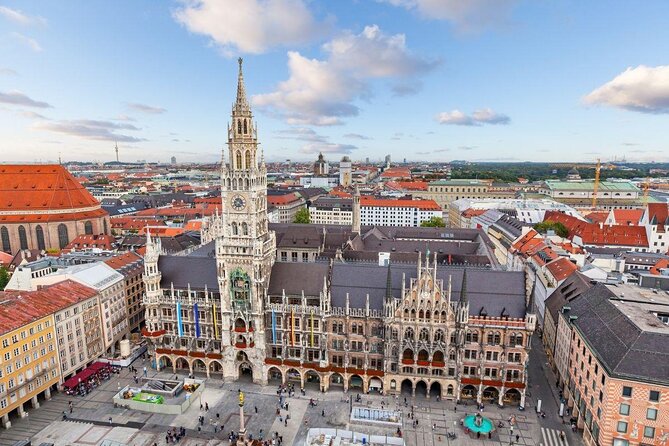
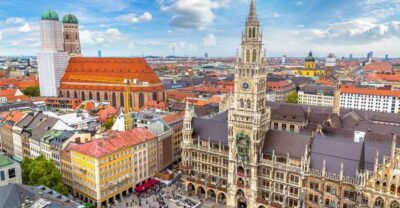
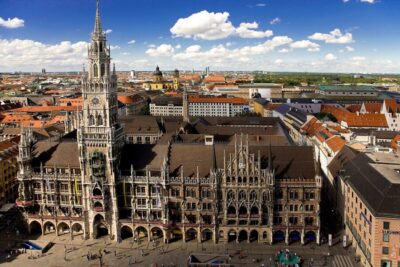
The tour starts in and around Marienplatz, Munich’s historic core. This square works well as an opening because it is easy to find, and it sets the scene immediately. The guide points out major references tied to Adolf Hitler and the Nazi Party.
A key moment at this first stop is connected to the old town hall on the square. This is described as where the decision was taken to carry out a pogrom against the Jewish population of Germany in 1938. That is heavy material, but the payoff is that you understand why this square is not just pretty architecture. It was part of how the Nazi regime translated ideology into action.
Why this stop is so useful:
- You start with the center of public life, not a museum label.
- You get a clear thread for how 1938 connects to earlier Nazi power plays later in the route.
- The guide’s sensitivity helps you process the subject without rushing.
A consideration: you may feel the emotional weight of this start. That is normal. If you prefer a gentler on-ramp, mentally plan for the tour to begin firmly.
Stop 2: Hofbräuhaus, Hitler’s Speeches, and the Power of Public Rooms
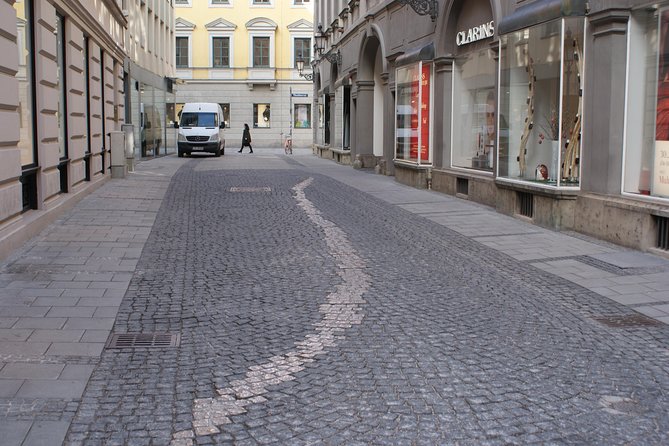
Next you head toward the Staatliches Hofbräuhaus area. Even from the outside, you hear how Hitler regularly gave speeches here. That detail is important because it shows how political theater used existing gathering spaces.
The tour frames this stop in relation to the Nazi Party and the SS presence you are learning about. You walk past the location after discovering the founding location tied to the Nazi Party and its organizations.
Why it matters:
- Speech spaces are not neutral. They can help convert followers from watchers into participants.
- Beer halls and public rooms explain how mass politics worked in real life, not just in posters or pamphlets.
One small drawback for some people: because this is a walking format, you do not always get long pauses to process what you are hearing. If you need frequent sitting breaks, you should be ready to stand and listen more than you would on a slower sightseeing loop.
Stop 3: Odeonsplatz and the 1923 Beer Hall Coup Gun Battle
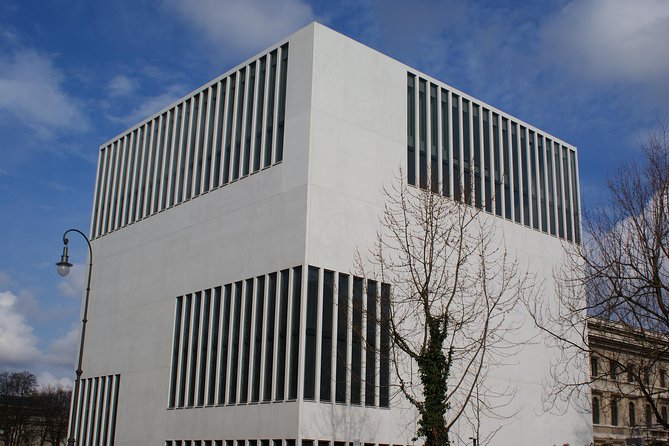
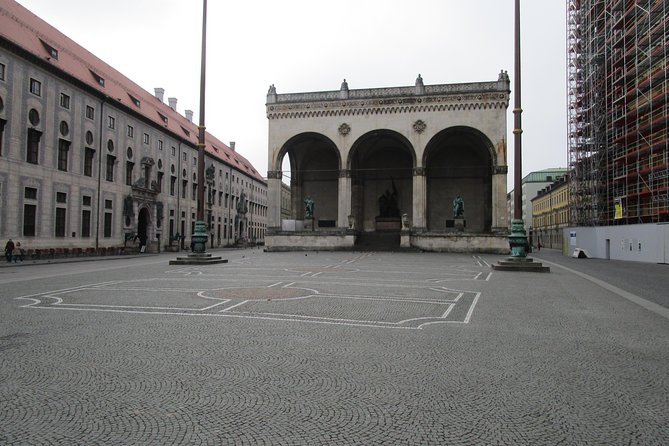
At Odeonsplatz, the story shifts from speeches to violence. You see the location of a gun battle between Nazis and the Bavarian police, tied to the beer hall coup of 1923.
This stop helps you understand something crucial: the Nazi movement was not always a smooth, legal takeover. It also tried to seize power through direct confrontation, and that early failure still shaped later strategies.
When the guide connects the 1923 events to what follows in the 1930s, the route starts to make sense. You see how a group learns, regroups, and then uses different methods to achieve the same goal.
If you are a history-minded person who likes political “cause and effect,” this is a strong stop. It gives the tour momentum.
Further Third Reich and wartime history tours:


Stop 4: Königsplatz, the Munich Agreement, and the Documentation Centre Option
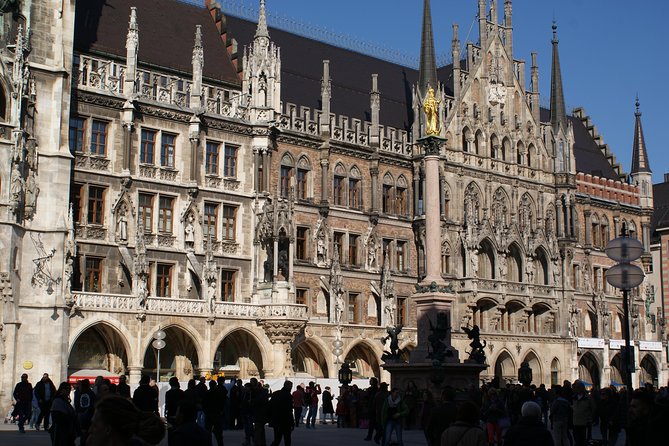
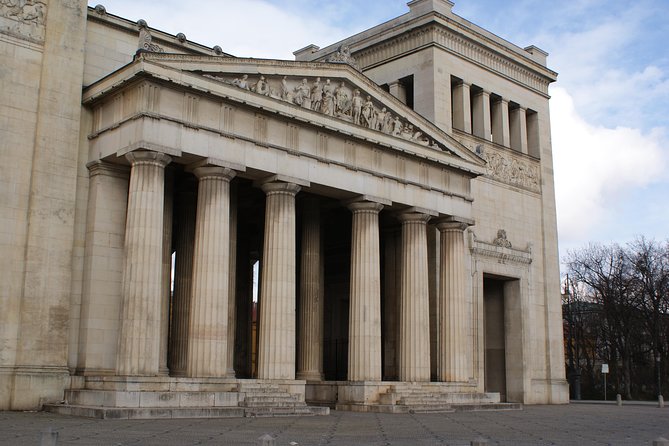
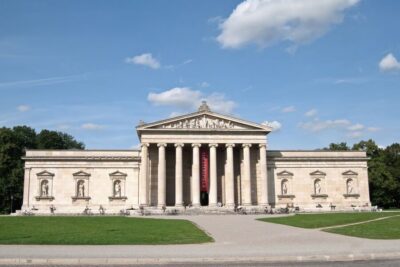
The final major stop is Königsplatz, one of the places where political events were staged in a very visible way.
Here, the tour points out the building where the Munich Agreement took place in 1938. This is a big pivot from what happened in the streets and squares to decisions made that affected Europe’s fate.
You also stand where the Nazis used to conduct ceremonies in respect of the 1923 failed beer hall coup. In other words, even the “loss” became part of their propaganda story, recycled into symbolism and public ritual.
At the end, there is an option to visit the documentation centre of National Socialism. The tour format suggests you can add this at the end if you want, so you can go deeper after the walking portion.
A practical note: the documentation centre visit is optional and the tour itself is the walking segment. If you want to keep your schedule open, you can finish the tour, then decide based on time and energy.
The Guide: Sensitive, Animated, and Built for Questions
From what you are told about the guide, this is not a dry lecture. Reviews describe Alun Evans as pleasant, animated, friendly, and appropriately sensitive. That blend matters on a tour like this, because the topic is grim and the goal is understanding, not theatrics.
Several comments highlight the guide’s ability to explain how the Nazi party grew, not just list sites. You are also encouraged to ask questions. The guide listens and adjusts the story based on what people want to know.
I especially appreciate that the tour can handle different interests. If you are drawn to political history, you get it. If you are drawn to how buildings and streets served as tools of control, you get that too.
And yes, one of the more practical wins from reviews is that the guide was accommodating with quick bathroom breaks, including when families joined. That can make a tough topic easier to handle without feeling like you must power through.
Walking Tour Value: Is $60.07 Worth It?
At $60.07 per person for about 2 hours, you are paying for a licensed-style experience, not a generic audio app. What makes the price feel fair is that it includes:
- A professional guide
- Pickup from a central meeting point
- A small group cap of 15
- A route that connects multiple key events in 1923 and 1938
Also, the stops listed are shown as free for admission. That means you are not adding surprise entry fees just to see where the story happened.
The real question is what you want your Munich time to do. If you want only postcard Munich, you might feel this tour is heavy and very specific. But if you want the “why” behind the buildings and the politics, this tour is a strong value because it compresses a lot of context into a short walk.
If you are the type who likes asking follow-up questions, the small group size becomes part of the value. You get to clarify details instead of listening from a distance.
Who This Tour Is Best For
This tour is best for you if:
- You care about WWII and the mechanics of the Nazi rise
- You like seeing history in the exact places it happened
- You want a guided explanation rather than self-guided reading
- You prefer a small group over large bus tours
It may not be ideal if:
- You want a lighter, more mixed itinerary focused on scenery and general city highlights
- You need frequent opportunities to sit down during explanations
- You prefer that history be treated with less direct emphasis on the Third Reich itself
One review even notes that the focus can feel like it leans strongly toward the rise of the Third Reich. That is a fair expectation for this specific tour title. It is designed for that theme.
What to Bring for a Weather-Proof Walk
This operates in all weather conditions, so dress for wind, rain, or cold. You are outside most of the time, and the itinerary is designed around standing and walking between central sites.
Also bring:
- A warm layer even in moderate weather, because Munich evenings and winter afternoons can feel sharp
- Comfortable shoes for cobblestones and uneven pavement
- Your phone for the mobile ticket
If you are visiting with kids or people who need breaks, the reviews suggest the guide can work with quick bathroom stops. Still, build in patience, because you are walking and the story is time-based.
Final Call: Should You Book This Munich Nazi Landmarks Walk?
I think you should book this tour if your goal is understanding, not just sightseeing. The route is concentrated, the topics connect, and the guide’s approach sounds careful and engaging. With the small group size, you should feel like you can ask questions and get real context.
Skip it, or consider a different tour, if you want a broad “best of Munich” feel in two hours. This is focused, and it brings you face to face with the machinery of power.
My practical recommendation: if this is one of your only history activities in Munich, this tour is a strong use of time. If you are already planning multiple museum stops, this walking tour still works well, because it gives you the street-level map for everything you will read later.
FAQ
How long is the Small-Group 2-Hour Munich and The Third Reich Walking Tour?
The tour lasts about 2 hours.
What language is the tour offered in?
The tour is offered in English.
Where do I meet, and when does it start?
The meeting point is Landeshauptstadt München Stadtkämmerei, Marienplatz 8, 80331 München, Germany. The start time is 3:00 pm.
How big is the group?
The tour has a maximum of 15 people.
Does the tour run in bad weather?
Yes. It operates in all weather conditions, so dress appropriately.
Is there free cancellation?
Yes. You can cancel for a full refund up to 24 hours before the experience’s start time.
Cities at Walking Speed
- Munich: Night Watchman Walking Tour
★ 4.7 · 2,092 reviews - Munich Ghosts and Spirits Evening Walking Tour
★ 5.0 · 1,900 reviews - Munich Old Town Walking Tour
★ 4.5 · 1,287 reviews - Munich: Walking Tour Old Town and Viktualienmarkt
★ 4.7 · 839 reviews
Fresh on the arrivals board for Munich

Guided Walks in Munich, compared.
Old Town & Viktualienmarkt City Walk in German
Read our review →
Munich Ghosts and Spirits Evening Walking Tour
Read our review →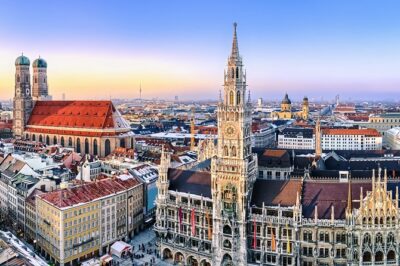
Birthplace of the Third Reich Guided Walking Tour
Read our review →Browse the lists this tour appears in