
Reviewed · GUIDED WALKS IN BERLIN
Private Berlin Walking Tour
Berlin can feel heavy, fast. This private walk strings together the stories behind Berlin’s biggest WWII and Cold War symbols, with a certified English-speaking guide and a steady pace through memorials and turning points. I especially like the tight 2.5-hour focus on landmarks that explain how the city went from unity fantasies to division and then reunification.
I also love that the route includes places like the Holocaust Memorial and the Berlin Wall Memorial, where the guide can give you the meaning without making it feel like a history lecture. One possible drawback to weigh is the price at $285.09 per person, plus there’s no hotel pickup, so you’ll want to plan how you get to Hotel Adlon Kempinski at Unter den Linden.
In This Review
- Key things to know before you walk
- Why this private loop is a smart value for Berlin
- Start at Hotel Adlon, end at Bebelplatz (and plan your transport)
- Brandenburg Gate: the unity symbol you need first
- Holocaust Memorial: stopping long enough to really see the design
- Berlin Wall Memorial: the city’s wound turned into a map
- Fuhrerbunker: the bleak reminder of what ends look like
- Aviation Ministry building: Nazi power meets postwar administration
- Checkpoint Charlie: the Cold War in one square
- Gendarmenmarkt: where Berlin looks its most elegant
- Bebelplatz and the Book Burning Memorial: the warning you still need
- Guides like Marc and Jenny: what good storytelling adds
- How much walking is really involved, and who should book
- Practical tips to get more out of every stop
- Should you book this private Berlin walking tour?
- FAQ
- How long is the private Berlin walking tour?
- What is the price per person?
- Is the tour offered in English?
- Is this a private tour or a group tour?
- Where does the tour start and end?
- Does the tour include hotel pickup or drop-off?
- Are tickets required for the stops?
- Do I need a printed ticket?
- Is the meeting point near public transportation?
- What is the cancellation policy?
Key things to know before you walk
- Private means just your group, not a cattle-car shuffle, so your guide can answer questions as you go.
- A landmark sequence you can remember, from the Brandenburg Gate to Bebelplatz, covering unity, genocide memory, and Cold War fractures.
- Short, intentional stop times (about 15 to 20 minutes each) so you see a lot without spending the whole day standing still.
- Admission is listed as free for each stop on this tour, which helps keep the day from turning into a ticket-hunt.
- Guides like Marc and Jenny have been praised for making Germany’s division click, often with clear visuals and simple explanations.
Why this private loop is a smart value for Berlin
At $285.09 per person, this is not a budget-only activity. But you are paying for something you cannot easily DIY: a guide who can connect the dots between sites that otherwise feel like separate photo stops. You get an expert, English-language interpretation and a route designed to help you understand what you are looking at, not just where it is.
The best part is the mix of memorials and historical anchors. Berlin’s story is not linear. This walk helps you see the timeline in human terms: national pride at the Brandenburg Gate, the moral reckoning at the Holocaust Memorial, the mechanics of division around the Wall, and the last-days darkness tied to the Fuhrerbunker area and Nazi-era military buildings.
I also like the pacing. About 2 hours 30 minutes is long enough to build meaning, but short enough that you can still enjoy the rest of the day on your own. And because it is private, you are less likely to get stuck behind slow walkers or stuck waiting for the group to catch up at each monument.
More Guided Walks in Berlin
- Discover Berlin Half-Day Walking Tour
★ 5.0 · 9,624 reviews - Berlin City walk Government District and Places of Democracy
★ 4.7 · 8,467 reviews - Berlin: Third Reich & Cold War Guided Walking Tour
★ 4.9 · 8,378 reviews
Start at Hotel Adlon, end at Bebelplatz (and plan your transport)
Your tour starts at Hotel Adlon Kempinski Berlin, Unter den Linden 77 (near Berlin’s central sights) and ends at Bebelplatz. That end point is useful. You finish in an area with cafés and local street life, so you can keep the momentum rather than return to the starting point.
One practical consideration: there is no hotel pickup or drop-off. You will need to reach the meeting point on your own, and you will likely continue your sightseeing from Bebelplatz. The good news is that the experience is described as being near public transportation, so you should have workable options.
Also, the tour uses a mobile ticket, so you’ll want to keep your phone charged. Bring water if you are walking in warm weather. Even with short stop times, Berlin sun can sneak up on you, and many of these sites require you to slow down and think.
Brandenburg Gate: the unity symbol you need first
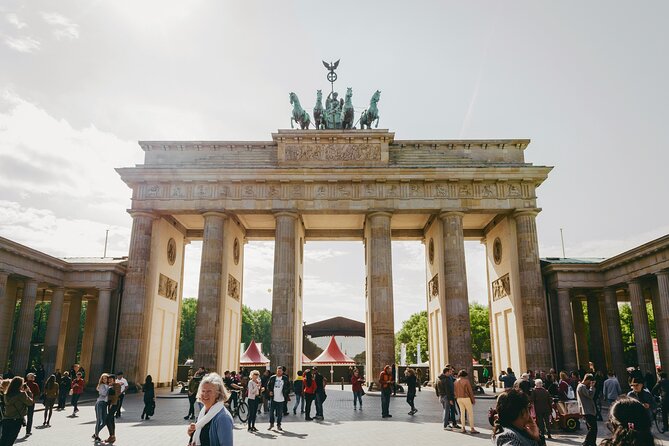
Stop 1 is the Brandenburg Gate, built in the 18th century as a neoclassical triumphal arch. It is one of those places where you can take a quick photo, or you can use it as your starting chapter. On this route, the Gate matters because it represents ideals of unity and state power, then becomes part of a much harsher reality once Berlin is split.
Expect about 20 minutes here. That is enough time to look closely, understand why it became such a loaded symbol, and then move on without lingering so long that the rest of the tour loses energy.
If you are sensitive to emotional topics, it helps that the Gate gives you a less heavy opening. It is a good “set the scene” stop, especially if you have never studied how Berlin became the front window of the Cold War.
Holocaust Memorial: stopping long enough to really see the design
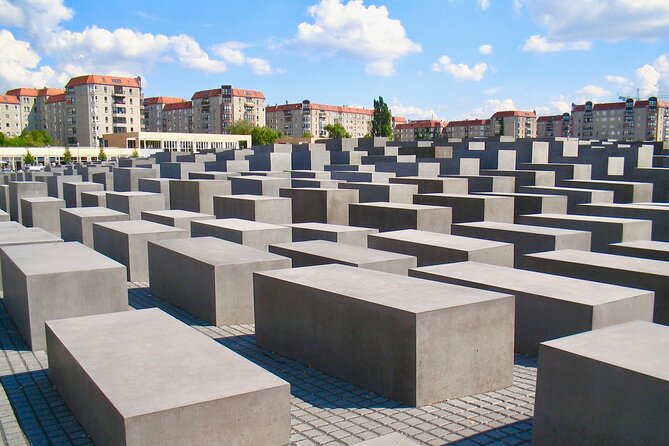
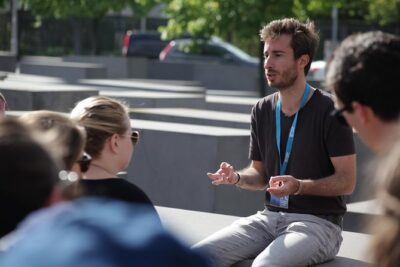
Next is the Memorial to the Murdered Jews of Europe, often called the Holocaust Memorial. This site is made of 2,711 concrete slabs arranged in a grid on a sloping field. The design is abstract on purpose, and your guide’s job is to help you translate that abstraction into something you can feel and understand.
You get about 20 minutes. That may sound short, but it is usually the right length to do two things: first, walk the space and notice how the slabs block sightlines, then second, pause where the experience hits hardest. If you rush it, you miss the point. If you linger too long, you may feel emotionally worn out for the rest of the day. This tour hits a workable middle.
Admission is listed as free for this stop, which matters because you are not juggling costs while also handling a difficult topic. I like that this route does not make you feel like you are constantly “spending to learn.” It’s more like the day is about listening.
Berlin Wall Memorial: the city’s wound turned into a map
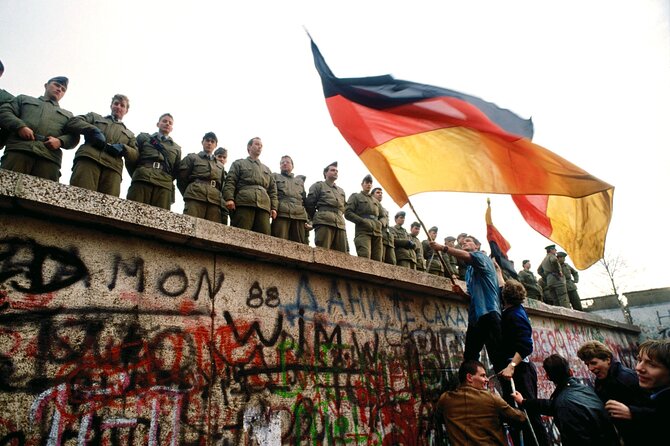
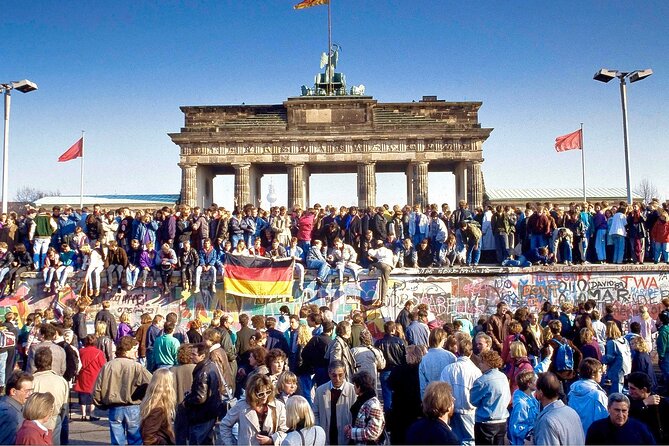
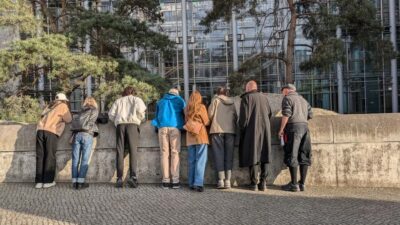
Stop 3 is the Memorial of the Berlin Wall, with the idea that remnants of the Wall are preserved around the city. This is important because the Wall was not one neat object. It was a system, a barrier, and a daily reality for people who lived next to it.
You’ll have about 20 minutes at this stop. Your guide can help you understand how you are looking at history that still sits in the city’s fabric, not history behind glass. The route also connects to the idea that some Wall-related sites are known for murals, and the guide can steer you toward what to notice if you are curious about that part of Berlin’s later memory culture.
One thing to keep in mind: the Wall story is emotionally intense. You might feel that the best way to understand it is to look around, not only at the obvious marker. A private guide helps here. They can point out what you might otherwise walk right past.
More German cities at walking speed:


Fuhrerbunker: the bleak reminder of what ends look like
Stop 4 is the Fuhrerbunker, the site associated with Hitler’s bunker complex. Today, it is not a dramatic museum setting. It is described as an unremarkable parking lot, with information boards providing context about the bunker’s role in the final days of World War II.
You get about 20 minutes. That is a good amount of time for this stop because it forces you to do something modern Berlin does well: learn in place. You are not shielded by special effects. You are reading signs where the ground once held decisions that helped destroy millions of lives.
The takeaway here is not architecture. The takeaway is how history can be quietly present. This stop can feel jarring precisely because it does not look like the kind of site you expect after learning the name. If you enjoy blunt realism in your history, this works.
Aviation Ministry building: Nazi power meets postwar administration
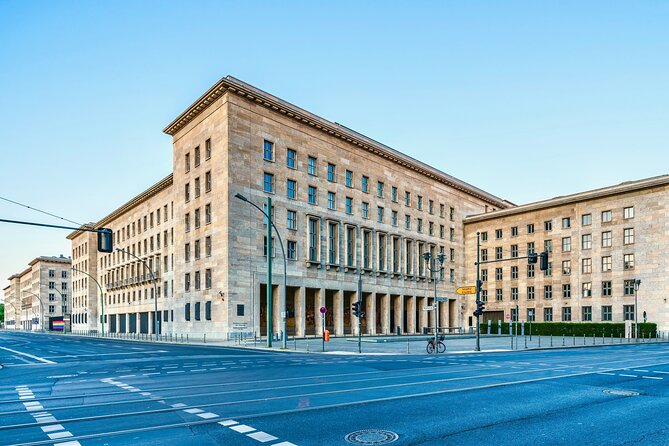
Stop 5 is the Aviation Ministry of Berlin, the former Luftwaffe Building, once Nazi Air Force headquarters, and now the German Finance Ministry. This is one of the more “Berlin” stops on the list, because it shows how power structures are repurposed instead of erased.
You’ll have around 15 minutes. That is about right for a major building like this, where your guide can help you notice how scale and style were used for intimidation and control. Then the contrast lands: the same mass and presence now houses modern state administration.
If you like architecture that tells political stories, you will probably appreciate this stop more than you expect. It is also a reminder that postwar Germany did not rebuild from nothing. It reused, redesigned, and reassigned meanings.
Checkpoint Charlie: the Cold War in one square
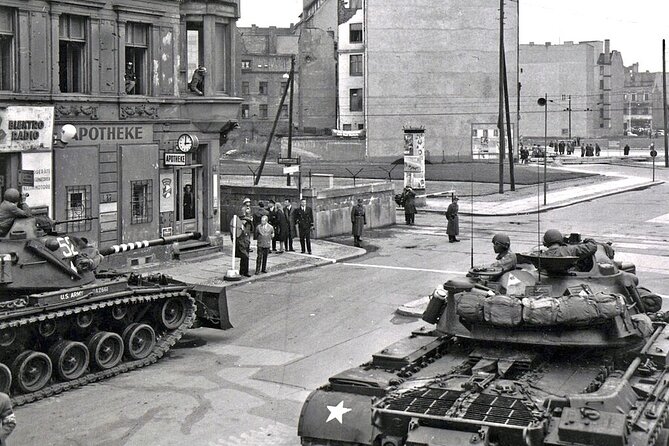
Stop 6 is Checkpoint Charlie, historically one of the most famous crossing points between East and West Berlin. Today it is a tourist attraction with a replica guardhouse and an informative museum documenting escape attempts and Cold War history.
You’ll have about 15 minutes. That can feel tight for a museum, so think of this as a guided orientation: you get the story and the key themes rather than a full deep read of every exhibit. If you want to go deeper afterward, your guide can likely point you to what is most worth your time based on what you care about most.
Admission is listed as free for the stop, which is a nice bonus. The bigger value is what your guide helps you notice, especially how escape attempts were not random acts. They were driven by desperation, ingenuity, and the brutal geometry of borders.
Gendarmenmarkt: where Berlin looks its most elegant
Stop 7 is Gendarmenmarkt, one of Berlin’s most beautiful squares, with the French and German Cathedrals and the Concert House around it. After the heaviness of the previous stops, this is a welcome tonal shift.
You’ll spend about 20 minutes here, and this is where you can reset your brain without turning the day into a break from meaning. The guide can help you see how Berlin’s architecture and civic spaces reflect different eras, different ambitions, and different ideas about public life.
This stop is also practical. Squares like this are good places to orient yourself, grab a coffee break if you need one, and prepare for the last memorial stop without rushing.
Bebelplatz and the Book Burning Memorial: the warning you still need
Stop 8 is Bebelplatz, known for cultural buildings and the Book Burning Memorial. The memorial commemorates the Nazi book burning of 1933, using a transparent pane set into the cobblestones that reveals empty bookshelves below.
You’ll have about 20 minutes. This is one of the more thought-provoking stops because it links violence to ideas. It is not only about what happened to people. It is also about what happened to knowledge, dissent, and literature.
I like that the physical design forces you to look down and see the absence. It turns the concept of censorship into an immediate visual experience.
Admission is listed as free here too, which keeps the memorial experience accessible. And ending at Bebelplatz makes sense. You finish with a message that is both historical and painfully current.
Guides like Marc and Jenny: what good storytelling adds
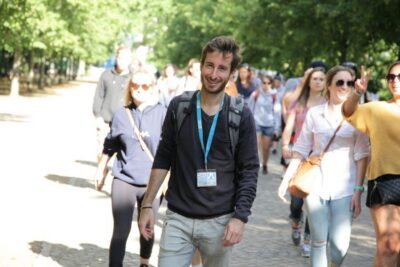
This tour is built around interpretation. And the past experiences shared for this route point to a specific strength: guides explain the German division in a way that feels simple, clear, and memorable. One guide named Marc is praised for explaining Germany’s division after the Second World War with a mapping approach that made the structure click. Another guide named Jenny is praised for storytelling that brings the city history to life in a very engaging way.
You will likely feel the difference most at the transition points, when the guide connects one site to the next. That is where “memorize dates” becomes “understand the pattern.” It’s also where a private setting helps, because you can ask questions instead of guessing what the guide meant.
One more bonus from the guide style mentioned in feedback: Marc is noted for sharing restaurant and nightlife recommendations. Not every guide will add that, but it is a sign that the experience can spill beyond the monuments into real local life.
How much walking is really involved, and who should book
This is a walking tour with eight stops, with most stops timed around 15 to 20 minutes. That means you’ll be on your feet for most of the tour, plus you will pause often. If you can handle steady walking and a few thoughtful pauses, most travelers can participate.
Private tours are especially worth it if you are:
- traveling as a small group that wants a custom pace
- interested in WWII and Cold War context rather than photo-only sightseeing
- the kind of traveler who gets more out of a guide’s explanations than from reading plaques
It may not be the best fit if you hate memorial spaces or you are looking for a light, casual “see the city” stroll. This route includes genocide remembrance, Nazi-related sites, and Cold War division. You can still have a good day. Just go in expecting emotional weight.
Practical tips to get more out of every stop
Bring the basics that make memorial walking easier:
- Comfortable shoes. You will be standing, reading boards, and looking around.
- A charged phone for your mobile ticket.
- Water, especially if you are visiting in warmer months.
- A little mental flexibility. Some stops require you to slow down, not speed through.
Also, since there is no hotel pickup, arrive early enough at the meeting point to avoid feeling rushed. Starting calm helps you absorb more, especially at the first major sites.
Should you book this private Berlin walking tour?
If you want a concentrated route through Berlin’s most important 20th-century turning points, this tour is a strong choice. I think it’s especially worth booking if you care about understanding the “why” behind each landmark and not just collecting images. The private format plus expert English guidance helps you turn a scattered set of monuments into a coherent story.
Skip it if $285.09 per person feels too high for your budget, or if you prefer free-form sightseeing with no fixed stop order. And if you need hotel pickup, you’ll want to plan your own transit to the start at Hotel Adlon Kempinski.
Overall, this is the kind of tour that makes Berlin’s hardest chapters feel less confusing and more grounded. You end with Bebelplatz, which is a fitting final note: ideas, memory, and the consequences of silence.
FAQ
How long is the private Berlin walking tour?
The duration is about 2 hours 30 minutes.
What is the price per person?
The price is $285.09 per person.
Is the tour offered in English?
Yes, it is offered in English.
Is this a private tour or a group tour?
It is a private tour, meaning only your group participates.
Where does the tour start and end?
It starts at Hotel Adlon Kempinski Berlin, Unter den Linden 77, 10117 Berlin, and it ends at Bebelplatz, 10117 Berlin.
Does the tour include hotel pickup or drop-off?
No, the tour does not include hotel pickup or drop-off.
Are tickets required for the stops?
The tour information lists admission ticket free for the listed stops.
Do I need a printed ticket?
No, it uses a mobile ticket.
Is the meeting point near public transportation?
Yes, it is near public transportation.
What is the cancellation policy?
You can cancel for a full refund up to 24 hours in advance of the experience start time. If you cancel less than 24 hours before, the amount paid is not refunded.
Fresh on the arrivals board for Berlin
Guided Walks in Berlin, compared.
Berlin City walk Government District and Places of Democracy
Read our review →
Berlin’s Best: 2 Hour Walking Tour Third Reich and the Cold War
Read our review →
Third Reich Berlin: Hitler and WWII Walking Tour
Read our review →
Browse the lists this tour appears in