
Reviewed · GUIDED WALKS IN BERLIN
Privat: Berlin: Walking Tour of Prenzlauer Berg
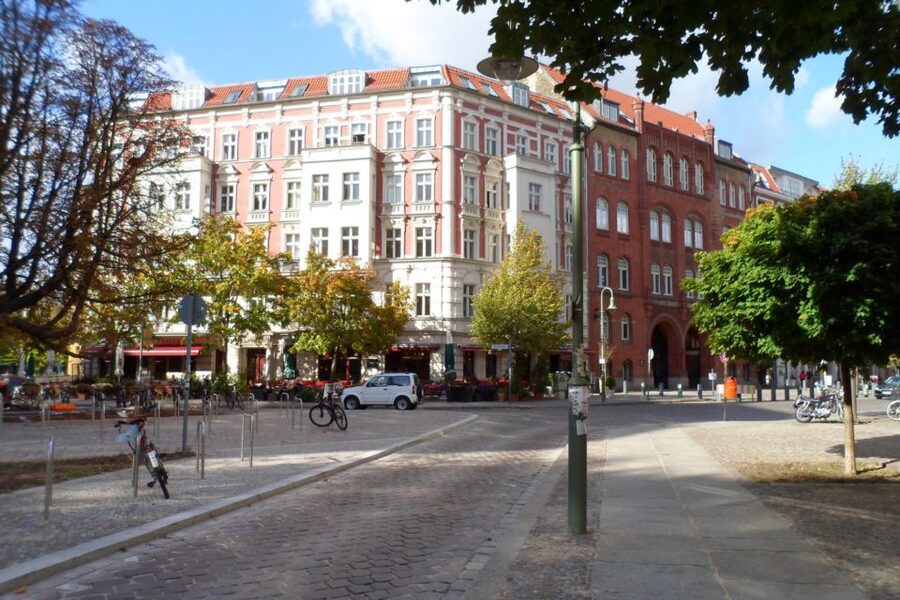
Prenzlauer Berg feels like Berlin’s creative restart. This private 150-minute walk through Prenzlauer Berg mixes East Berlin stories with sights you can still touch, and I especially like the pairing of Prater Beer Garden atmosphere with the neighborhood’s big “how did this place become like this?” questions.
Two things I like a lot: the stop at Kulturbrauerei, where you get well-preserved industrial architecture, and the food moment around Berlin’s street-food culture, including time to try currywurst. One possible drawback is language: the tour’s live guide is German, so you’ll want to be ready to follow along or double-check how much English support you’ll get.
A good tour here is about more than photos. The guides, including Katrin and Uli, are praised for making the history and politics make sense, not just naming buildings. Since it’s a private group for up to 8 people, you can ask questions without feeling like you’re in someone else’s pace.
In This Review
- Key highlights you should care about
- Prenzlauer Berg after the Wall, why this district changed so fast
- Meeting on Schönhauser Allee, and how a private format helps you learn
- Jewish Cemetery on Schönhauser Allee, starting with memory
- Wasserturm and Kollwitzplatz, the neighborhood rhythm in miniature
- Rykestrasse Synagogue, where community shows in the streets
- Kulturbrauerei, preserved industrial architecture you can still picture
- Prater Beer Garden, Berlin’s oldest for a reason
- Konnopke’s Imbiss and the currywurst pause
- What makes the guiding matter, Katrin and Uli’s best traits
- Price and value for a private up-to-8 group
- Timing, weather, and how to dress so you enjoy every stop
- Who this tour suits best
- Should you book this Prenzlauer Berg walking tour?
- FAQ
- How long is the Prenzlauer Berg tour?
- Where does the tour meet?
- Where does the tour end?
- Is this a private tour?
- What language is the live guide?
- Are refreshments included?
- Does the tour run in bad weather?
- What’s the price?
Key highlights you should care about
- Jewish Cemetery start for a grounded first connection to Berlin’s layered past
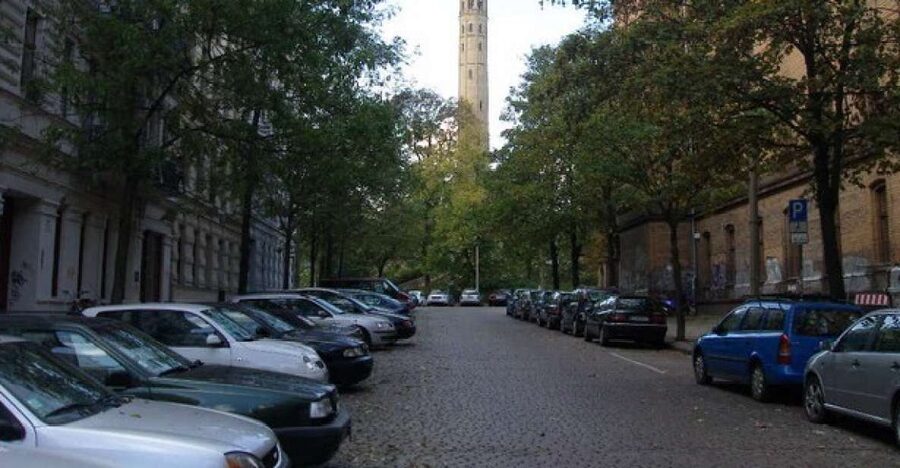
- Wasserturm and Kollwitzplatz to understand how this district lives day to day
- Rykestrasse Synagogue as a clear stop for community and architecture
- Kulturbrauerei for well-preserved industrial architecture in a cultural setting
- Prater Beer Garden plus currywurst to balance social history with real Berlin street culture
Prenzlauer Berg after the Wall, why this district changed so fast
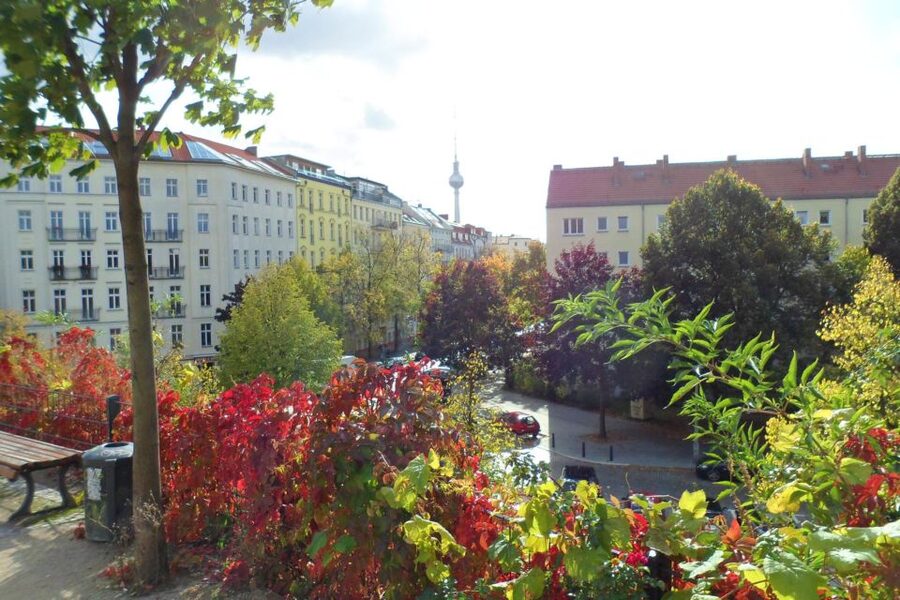
Prenzlauer Berg is one of the best places in Berlin to see change happening in real time. During the GDR era, it held an eclectic mix of residents, including laborers and artists, plus punks and squatters, and people openly opposed to the government. World War 2 damage was relatively limited here, and new building during GDR times mostly shifted to the suburbs.
After 1989, the district’s character flipped quickly. Many of the longtime residents left, and the newcomers were often well-off, able to handle higher rents, along with young families. Today, the neighborhood is known for having one of the highest numbers of children in Berlin, and that shows up in how the streets feel, not just in demographics.
What I like about a good tour of this area is that it doesn’t treat Prenzlauer Berg like a theme park. You get a sense of cause and effect, how housing, politics, and community shifted, and why the neighborhood developed its day-and-night café and pub rhythm.
More Guided Walks in Berlin
- Discover Berlin Half-Day Walking Tour
★ 5.0 · 9,624 reviews - Berlin City walk Government District and Places of Democracy
★ 4.7 · 8,467 reviews - Berlin: Third Reich & Cold War Guided Walking Tour
★ 4.9 · 8,378 reviews
Meeting on Schönhauser Allee, and how a private format helps you learn
The tour starts at the entrance of the Jewish Cemetery on Schönhauser Allee 23 to 25. It ends at Schönhauser Allee 44B, 10435 Berlin, so you’re not doing the classic round trip where you forget the last half of the route while thinking about the return.
It runs about 150 minutes, which is long enough to cover major highlights without turning it into a marathon. And because it’s a private group (up to 8 people), you’re more likely to get a dialogue with the guide, not a lecture over your head.
One practical note: refreshments are not included. So if you want drinks or a snack beyond what the tour highlights, budget for buying on your own. If you don’t plan for that, the “food and beer garden” parts can turn from a fun bonus into an awkward scramble.
Jewish Cemetery on Schönhauser Allee, starting with memory
Starting at the Jewish Cemetery works because it puts you in a reflective mood fast. Before the cafés and beer garden stories, you get a chance to see Berlin as a place where layers of community, loss, and continuity are part of the urban fabric.
This stop is also a good “orientation anchor.” When you start your walking route at a major historic site, everything after it feels more connected. You’re not just collecting sights, you’re building a story of how different communities lived and shaped the city.
If you’re the type who likes your history grounded, this opening fits. If you’re coming for lighter sightseeing only, it can still work, but you might want to think of it as the tour’s emotional baseline before the more social stops.
Wasserturm and Kollwitzplatz, the neighborhood rhythm in miniature
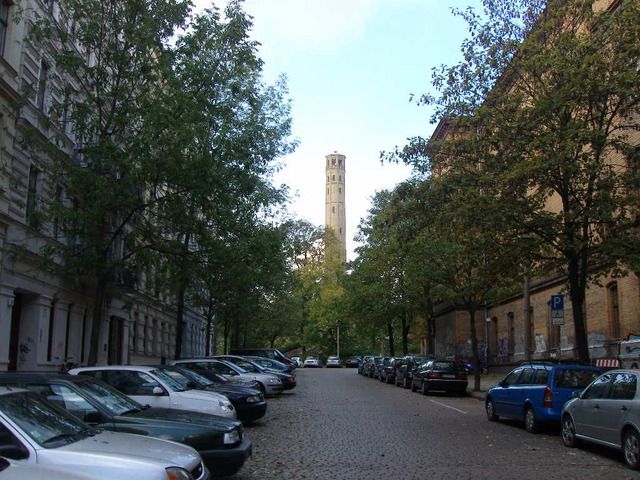
From there, you move into the everyday side of Prenzlauer Berg. Stops like Wasserturm and Kollwitzplatz help you read the neighborhood the way locals do, through public space and street life.
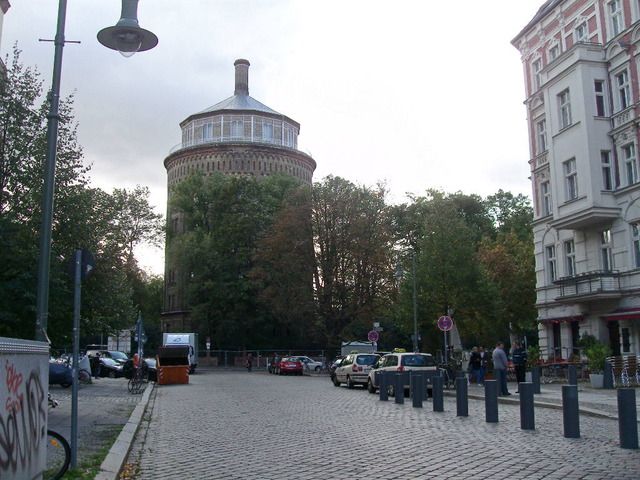
Wasserturm is a recognizable landmark, and it gives you a strong visual reference point for the district. Then Kollwitzplatz is the kind of square where you can sense how the neighborhood functions: people crossing, gathering, and using the space in daily routines.
This part is valuable because it explains why Prenzlauer Berg became desirable after the Wall. It’s not only about grand monuments, it’s also about how street design, squares, and walkability make a place feel livable.
Rykestrasse Synagogue, where community shows in the streets
Rykestrasse Synagogue is a major cultural and community landmark, and it’s worth seeing with a guide who can connect it to the broader neighborhood story. In a district that once held many different resident groups, a religious institution is one more clue to how people organized community life.
This stop pairs well with the neighborhood’s political backstory. You can see how public institutions, cultural identity, and community buildings all reinforce the feeling of belonging, even as the resident mix shifted over decades.
If your German is limited, don’t worry too much about catching every word. Architectural and cultural stops often communicate plenty through what you can observe, and a good guide should translate the key takeaways clearly.
More German cities at walking speed:


Kulturbrauerei, preserved industrial architecture you can still picture
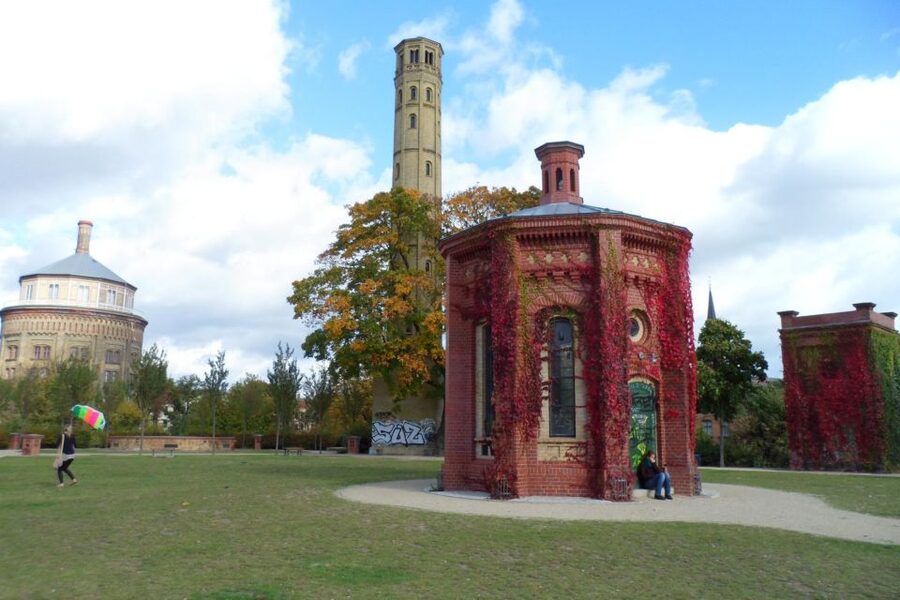
One of the tour’s strongest highlights is Kulturbrauerei. You’re there to view well-preserved examples of industrial architecture, and that matters because Prenzlauer Berg’s story isn’t only about what was built for people, it’s also about what was built for industry and how later uses reshaped the space.
Industrial buildings often hold clues: structure, materials, and layout can tell you what kinds of work happened there. And when those spaces stay instead of being erased, the neighborhood keeps a physical memory of its earlier economic life.
This is also where the tour’s guiding quality really shows. In the notes shared by previous participants, guides like Uli are credited with going beyond surface architectural commentary, bringing in wider political context so the district’s evolution feels logical. If you enjoy connecting the dots, Kulturbrauerei is the stop that tends to reward you most.
Drawback to keep in mind: this is an exterior-focused sightseeing moment. If you were hoping for a museum-style deep interior visit, the data here suggests the emphasis is on seeing and understanding the architecture as you walk through the area.
Prater Beer Garden, Berlin’s oldest for a reason
Then comes the social side. You’ll visit Prater Beer Garden, described as the oldest beer garden in Berlin. That single detail gives this stop a special kind of weight, because it’s not just a trendy patio, it’s tied to long-running local habits.
A beer garden is also a great place to understand why Prenzlauer Berg’s post-1989 vibe took hold. Neighborhood culture often follows food and drink rhythms, not only big policy changes. When you sit at or view a long-established gathering spot, you get a sense of continuity beneath the modern makeover.
Since refreshments are not included, treat this as a sightseeing highlight plus a chance to buy something if you want. If you’re the type who likes a drink as part of the experience, plan your budget so you’re not deciding last minute.
Konnopke’s Imbiss and the currywurst pause
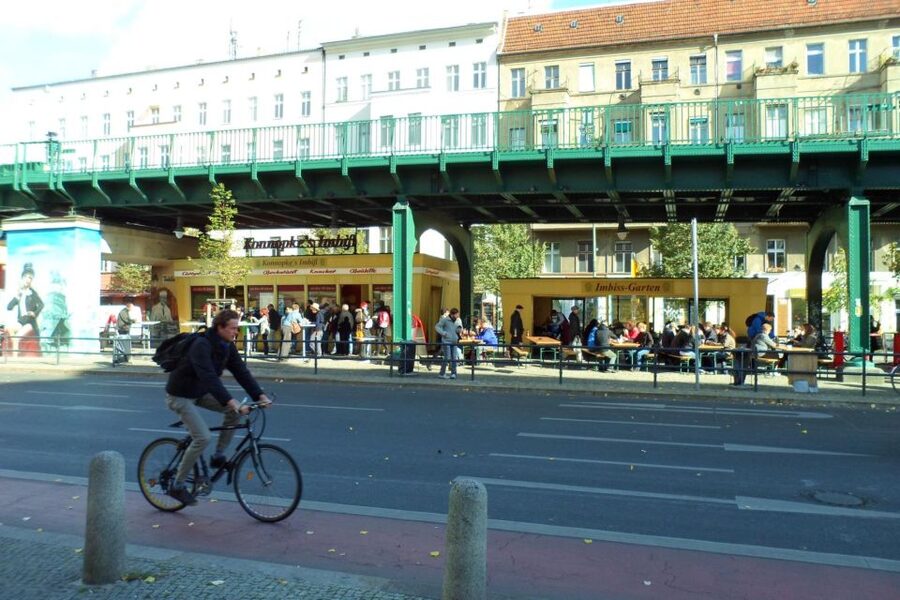
The tour’s street-food angle is practical and very Berlin. Currywurst is called out as a must-try, and the route includes a stop at Konnopke’s Imbiss, making this the area where you can connect neighborhood history to everyday eating culture.
Even if you don’t go out of your way for street food, this pause helps break up the walking. It also gives you a chance to watch the neighborhood in motion, people lining up, chatting, and grabbing food without turning it into a formal activity.
The value here is not just the taste. Currywurst, beer garden culture, and casual snacks are how neighborhoods express identity. In a district that shifted from a politically mixed East Berlin home to a family-and-café scene, food is one of the most visible signals of who the neighborhood serves now.
What makes the guiding matter, Katrin and Uli’s best traits
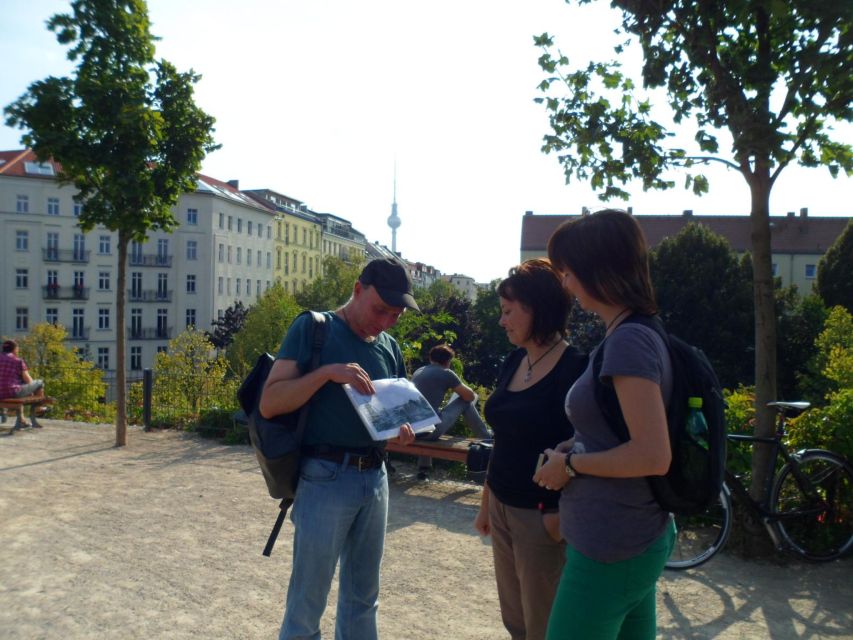
The most praised aspect of this experience is the guide. The strong feedback points toward tours led with real engagement, clear information, and a personal style that keeps the walk from feeling scripted.
Katrin is mentioned for being engaged and very well-informed, with a route that keeps time from dragging. Uli is praised for not just pointing out architectural features or listing historical dates, but for using wider historical and political knowledge to make what you see much more understandable. That combo is what separates a basic sightseeing walk from a tour you remember.
One particularly useful detail from earlier feedback: the guide checked the route for risky passages when there was snow and ice. That kind of practical care matters on a city walk because it affects how smooth the pacing feels, and it signals attention to guest comfort, not just content.
If you want your Berlin explanation to feel connected instead of scattered, you’re in the right place. A strong guide turns “I saw a tower” into “I understand why people wanted to live here.”
Price and value for a private up-to-8 group
At $221 per group for up to 8 people, the math can be surprisingly friendly if you’re traveling with others. If you fill the group size, that works out to about $27.63 per person for the full 150 minutes. Even if you don’t fill all spots, you still get private-guiding time that often feels more efficient than piecing together multiple public tours.
You’re paying for three things: a focused route through several major Prenzlauer Berg landmarks, guided context that ties architecture to the district’s East Berlin past and post-1989 shift, and a private-group format that makes questions and pacing easier. That’s good value when you care about context, not only taking pictures.
The one cost caveat is refreshments. Since they’re not included, build in a small extra budget for anything you want at the beer garden or any food moment that appears on your route.
Timing, weather, and how to dress so you enjoy every stop
This tour runs in all weather conditions, including rain and cold. If it’s raining, ponchos are offered for free use, which is a thoughtful touch because it keeps the walk from turning into a miserable sprint between covers.
With 150 minutes of walking, you’ll be happier in shoes that handle cobblestones and uneven sidewalks. If it’s cold, dress in layers. You’ll likely spend time looking, standing, and listening at stops like Kulturbrauerei and the synagogue area.
If you’re sensitive to cold weather walking, it’s smart to plan for breaks you control, since refreshments aren’t part of the package. Use the café and beer garden nearby as your mental cue for when to warm up.
Who this tour suits best
This experience fits best if you like Berlin stories that connect people to place. Prenzlauer Berg is the right district for that, because its identity shifted from a politically mixed East Berlin neighborhood into a family-friendly, café-heavy area.
You’ll also like it if you enjoy architecture with context. The focus on well-preserved industrial architecture at Kulturbrauerei, plus cultural and community stops like Rykestrasse Synagogue, gives you more than surface sightseeing.
Because it’s private and capped at 8, it works well for small groups who want conversation. It’s also a good option for first-timers who want an East Berlin perspective without doing the whole city in one day.
Should you book this Prenzlauer Berg walking tour?
I think you should book if your goal is understanding. If you want to see Kulturbrauerei’s industrial architecture, stand in socially meaningful places like Prater Beer Garden and Rykestrasse Synagogue, and get a guide who connects history and politics to what you’re seeing, this is a strong match.
Skip it or at least confirm details if you need guaranteed English guidance. The provided data indicates a German live guide, and your experience will depend on how well you can follow the conversation.
Also, be realistic about food and drinks. Refreshments aren’t included, so the currywurst and beer garden moments are about choosing what you want to buy, not about being provided everything.
If you’re good with that, you’ll likely come away with a clear sense of why Prenzlauer Berg became the Berlin district people want today, not just what it looks like.
FAQ
How long is the Prenzlauer Berg tour?
The tour lasts about 150 minutes.
Where does the tour meet?
It meets at the entrance to the Jewish Cemetery on Schönhauser Allee 23 to 25.
Where does the tour end?
The tour finishes at Schönhauser Allee 44B, 10435 Berlin.
Is this a private tour?
Yes, it is a private group tour, with up to 8 people per group.
What language is the live guide?
The live tour guide is listed as German.
Are refreshments included?
No. Refreshments are not included.
Does the tour run in bad weather?
Yes. The tour takes place in all weather conditions, and rain ponchos are offered for free use in rain.
What’s the price?
The price is $221 per group (up to 8 people).
Fresh on the arrivals board for Berlin
Guided Walks in Berlin, compared.
Berlin City walk Government District and Places of Democracy
Read our review →
Berlin’s Best: 2 Hour Walking Tour Third Reich and the Cold War
Read our review →
Third Reich Berlin: Hitler and WWII Walking Tour
Read our review →
Browse the lists this tour appears in