
Reviewed · HISTORICAL TOURS
Münster x History: A chronological journey through 1200 years of Münster
Münster’s past is easier to grasp when it’s in sequence. This 1.5-hour old town tour turns about 1200 years of change into a clear timeline, moving from early Middle Ages roots to the Anabaptist era and the Peace of Westphalia, then landing in modern Münster.
Two things I really like: the guide keeps the story structured (so you never feel lost), and you get to see major landmarks up close, not just read plaques. A possible drawback is the tour runs in German, so if you are not comfortable with that language, you may miss some finer details.
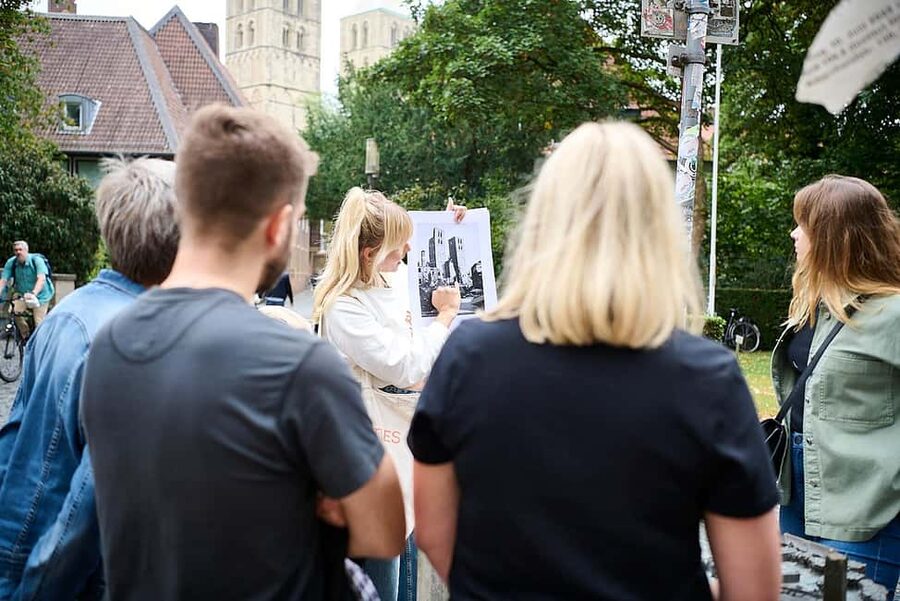
You also get the kind of history teaching that feels practical, not academic. In my experience of the route style, the guide highlights people as much as buildings, and uses historical images like old maps and portraits to make eras click. One thing to consider is that it is a walking tour through central highlights, so you’ll want decent walking shoes and a pace that fits an urban stroll.
In This Review
- Key takeaways before you go
- Why Münster’s 1.5-Hour Timeline Works Better Than Random Stops
- Starting at Fürstenberghaus: Getting Oriented by Franz von Fürstenberg
- St. Paul’s Cathedral and the Prinzipalmarkt: Where Münster’s Central Shape Makes Sense
- Lamberti Church and the Anabaptist Era: History That Changes the City’s Tone
- Überwasser Quarter and Liebfrauen-Überwasserkirche: A Neighborhood With a Name You Can Explain
- Historic Town Hall and Erbdrostenhof: Power, People, and the City’s Public Face
- Old City Maps, Photos, and Portraits: Why the Source Material Matters
- Price and Value: Is $23 for Münster’s Old Town History Worth It?
- Who This Tour Fits Best (and Who Might Prefer Another Plan)
- Should You Book This Münster History Timeline Tour?
- FAQ
- How long is the Münster x History tour?
- Where do I meet for the tour?
- Is the tour in German?
- What are the main places the tour visits?
- Does the tour focus on a chronological history?
- How much does it cost?
Key takeaways before you go
- Chronological storytelling that helps you connect centuries instead of bouncing between unrelated sights
- Old town landmarks in one loop, including St. Paul’s Cathedral, Prinzipalmarkt, and the Lamberti area
- Named figures bring the city to life, from Liudger to Johanna van Hal
- Source material on the move, with old maps, photographs, and portraits woven into the talk
- Clear Münster neighborhoods, like the cathedral square and the Überwasser quarter, explained as you walk
- A guide who answers questions, with extra energy even when the group is small
Why Münster’s 1.5-Hour Timeline Works Better Than Random Stops

Most city walking tours toss you from one landmark to the next. This one uses a timeline approach, and that matters. When Münster’s story is told in order, you start to see patterns: how power centers shift, why certain religious conflicts mattered, and why later diplomacy still echoes in the city’s identity.
You’ll cover big turning points without losing the thread. The early Middle Ages get you grounded, then the dramatic Anabaptist period changes the atmosphere of the story. After that, the Peace of Westphalia gives the city a wider role in European history, not just local intrigue. Finally, you land in the modern era, where Münster’s reputation for culture and art makes sense rather than sounding like a marketing line.
And instead of treating history as a list, the tour connects eras to spaces. A church square is not just a photo stop. It becomes a clue.
More centuries per city block:
- Münster: Old Town Historical Walking Tour by “Geo Epoche”
★ 4.7 · 51 reviews - Leipzig: City History Canal Sightseeing Tour on a Motorboat
★ 4.7 · 7,671 reviews - Berlin: Natural History Museum Entrance Ticket
★ 4.6 · 3,382 reviews
Starting at Fürstenberghaus: Getting Oriented by Franz von Fürstenberg
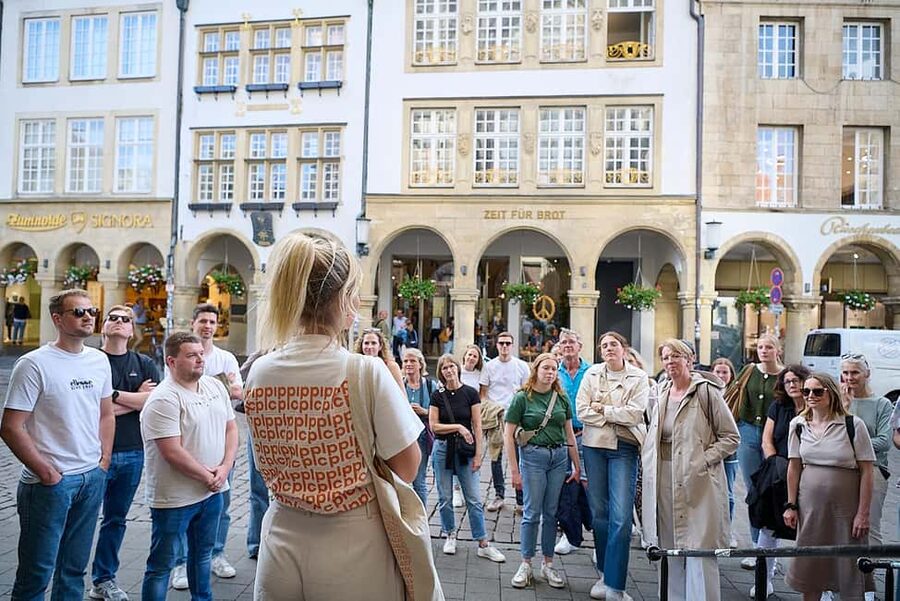
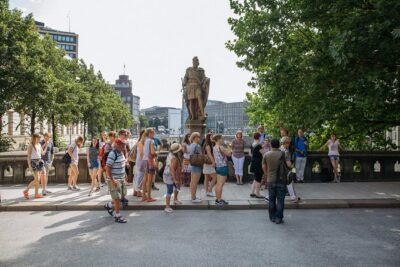
The meeting point is at the Fürstenberghaus, by the statue of Franz von Fürstenberg. Even if you only have a short time in Münster, that spot helps because you start with orientation, not chaos. Your guide frames what you’ll see and, more importantly, how to “read” the old town as you move.
This is where the timeline approach kicks in. Your guide doesn’t just say, Here’s the cathedral and here’s a plaza. The focus is on how Münster grew, what kinds of people mattered, and why some places became stages for major events.
It also sets expectations for the feel of the tour. It’s not a hushed museum experience. It’s a lively city walk with historical details that stick.
St. Paul’s Cathedral and the Prinzipalmarkt: Where Münster’s Central Shape Makes Sense
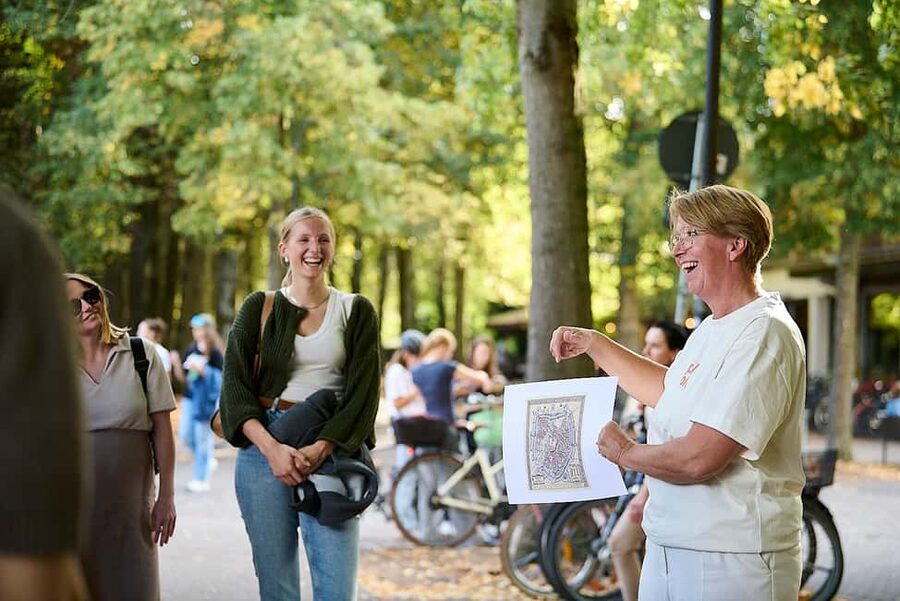
One of the first rewards is seeing how Münster’s centerpiece works in real life. You’ll visit St. Paul’s Cathedral and the Prinzipalmarkt, and the way your guide explains their relationship is key.
Instead of leaving you with two separate sightseeing photos, you get a practical map in your head. You’ll learn why the Prinzipalmarkt nestles against the cathedral square, and how that proximity reflects where influence lived. In older European cities, the church and the main civic market often sat close for a reason, and Münster is a clear example.
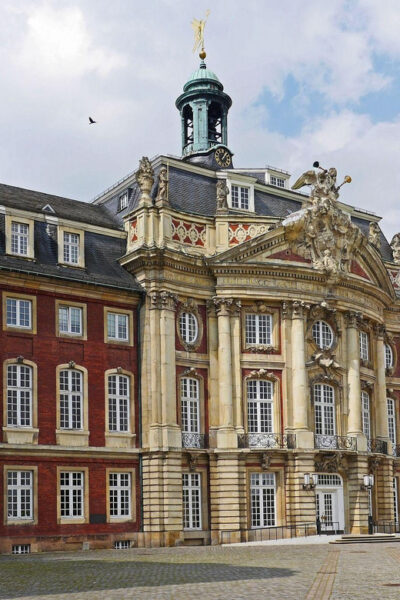
From here, the tour points out the baroque layer as well. You’ll hear how the nobility built its baroque island, and you’ll understand why the old town feels like it grew in “chapters,” with new styles and new priorities added over time.
If you enjoy architecture but don’t want a building-by-building lecture, this is a good balance. You get the meaning, not just the dates.
Lamberti Church and the Anabaptist Era: History That Changes the City’s Tone
A huge part of Münster’s identity is tied to the Anabaptist era, and the tour doesn’t treat it like a footnote. It’s presented as a turning point that reshaped how people viewed authority, faith, and belonging.
As you move toward the Lamberti Church, the story takes on sharper edges. You’ll hear about the dramatic conflict period, and the guide ties those tensions to what you see around you. That makes the era feel less like a distant textbook topic and more like a real force that altered lives and institutions.
One detail I especially like about this style is that it doesn’t just mention major events. It names people connected to the city’s story, including Johanna van Hal, who helps explain how individuals stood within big historical waves.
You’re also shown how Münster eventually absorbed those shocks into a broader civic narrative, setting up why later moments like the Peace of Westphalia were so significant for the city’s future.
Überwasser Quarter and Liebfrauen-Überwasserkirche: A Neighborhood With a Name You Can Explain
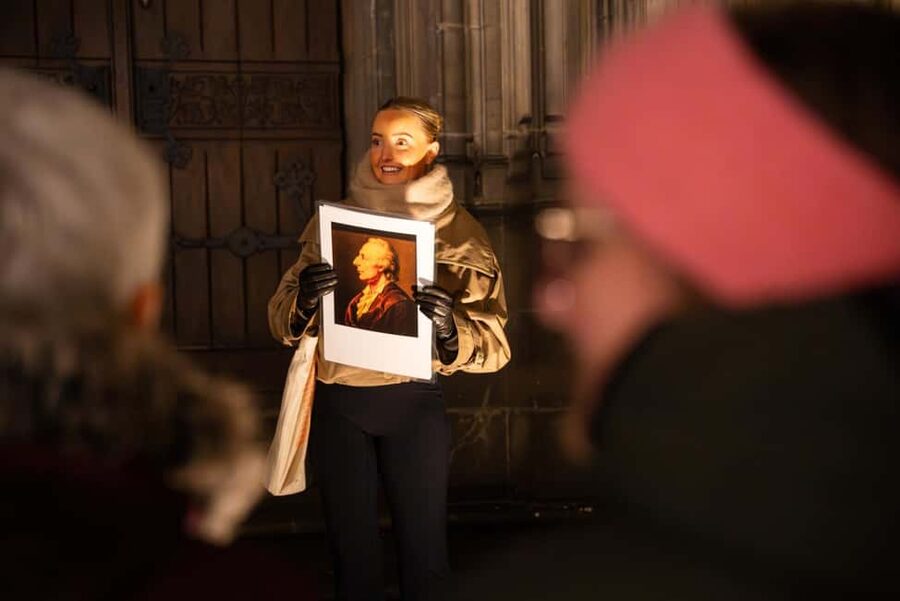
The Überwasser quarter is one of those places where, once you know the story behind the name, the city feels less random. On this tour, the guide explains how the area got its name and what that hints at about Münster’s relationship to its geography.
You’ll visit the Liebfrauen-Überwasserkirche, and the tour uses it as a bridge between local identity and larger historical currents. This is one of those moments where a church becomes more than a postcard. You learn how religious life, neighborhood identity, and city planning intersected over time.
What’s useful here is the “why.” Instead of relying on vague cultural explanations, the tour links the neighborhood’s identity to tangible features and the way residents organized their lives.
If you like walking through cities and wanting to know what you are actually looking at, this stop delivers.
Also holding a platform in Munster




Historic Town Hall and Erbdrostenhof: Power, People, and the City’s Public Face
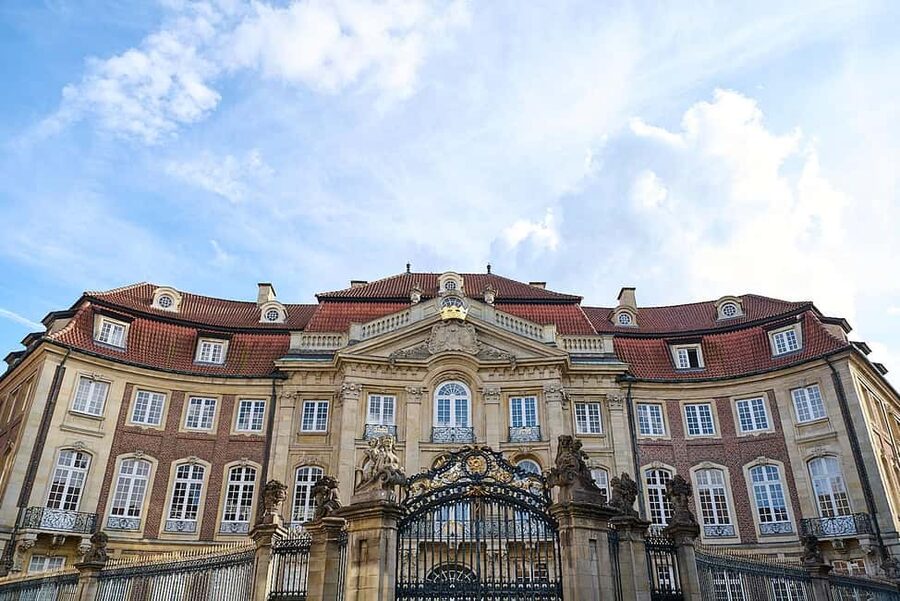
The tour continues into major civic spaces, including the Historic Town Hall and Erbdrostenhof. This is where Münster’s story shifts from sacred buildings and neighborhood identity into the world of governance, influence, and public decision-making.
As you approach these landmarks, you’ll hear about key figures tied to Münster’s rise and evolution. The guide brings forward names such as Johann Conrad Schlaun, known for architecture, and other personalities who shaped how Münster looked and functioned. You’ll also hear about King Jan, including the detail that he had many wives, which is exactly the kind of specific human fact that makes the past less sterile.
You’ll leave this section with a better sense of how Münster built a public image for itself. The city was not only a place people lived. It was a place people ruled, negotiated, and represented.
And by the time you get to the final parts of the timeline, you can see why Münster gained its reputation for culture and art in the modern era. It’s not just a vibe. It’s the long-term result of centuries of civic and religious conflict, then reconstruction, then cultural growth.
Old City Maps, Photos, and Portraits: Why the Source Material Matters
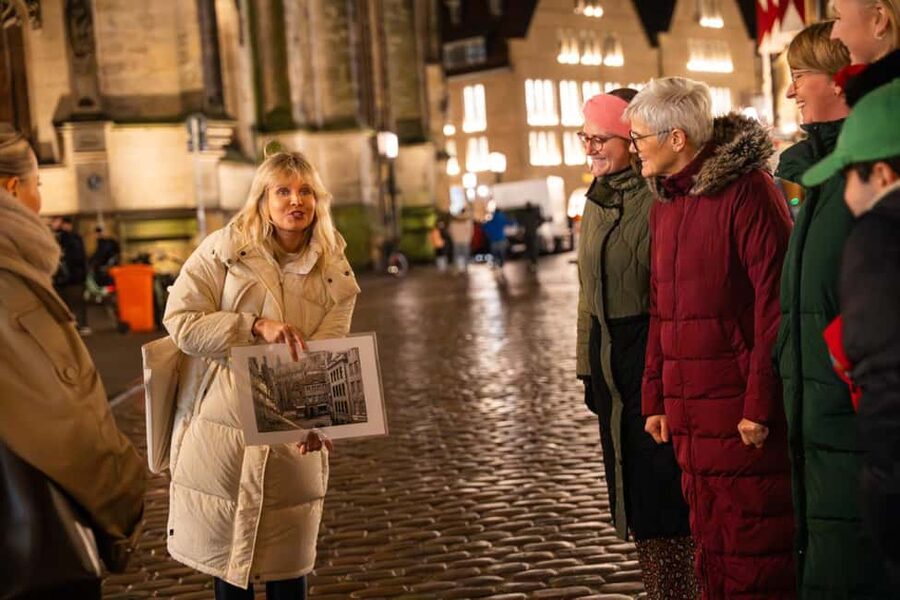
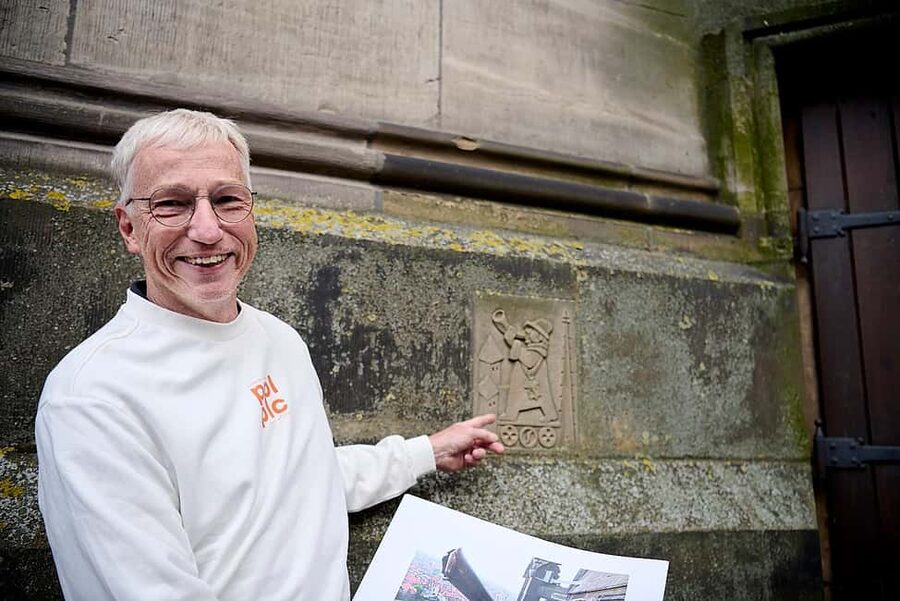
A standout element is the inclusion of historical source material, like old city maps, photographs, and portraits. This is more than decoration. It’s the difference between hearing a story and being able to picture it.
When the guide shows how Münster looked in earlier periods, you start understanding why certain streets and areas developed the way they did. You also get a sense of continuity, and sometimes of sudden change, which is what makes 1200 years feel real rather than abstract.
I also like that the tour uses visual material to widen the story beyond just the most obvious power players. The focus on people includes perspectives you might not expect, including women, which helps balance the usual “kings and buildings” style of history tours.
Your guide also answers questions along the way, and you’ll notice how much that improves the experience. If something sparks curiosity, you don’t have to guess. You get a direct explanation.
Price and Value: Is $23 for Münster’s Old Town History Worth It?
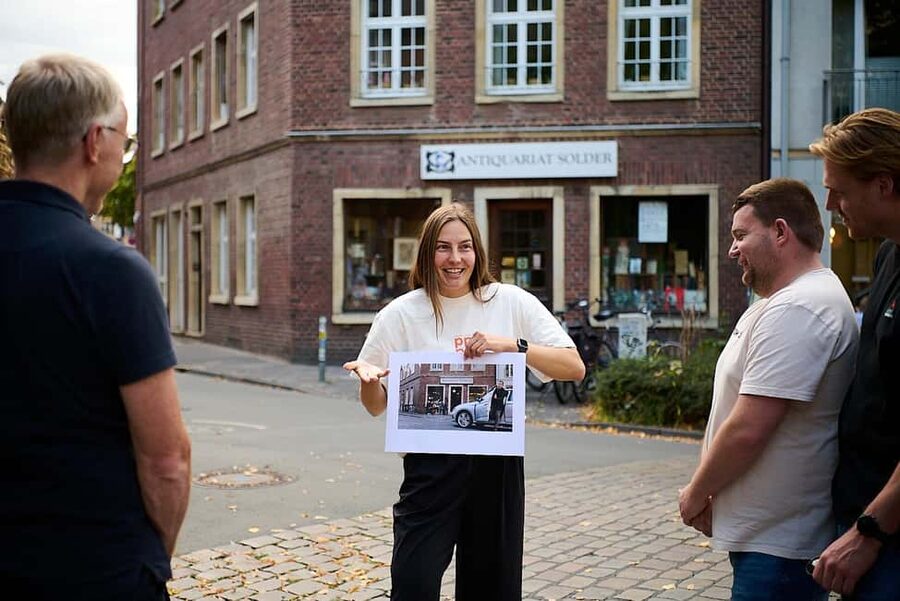
At $23 per person for a 1.5-hour guided walk, the value mostly comes from concentration. You get a lot of storytelling density in a short time: multiple iconic stops, a coherent timeline, and the added layer of historical visuals.
You are not paying for a handful of photos. You’re paying for interpretation. The guide turns landmarks into clues, and the chronology gives you structure, so you can remember what you learned when you step away from the group.
Also, the tour includes personal tips for further exploration in Münster. That might sound like a small add-on, but it helps you convert a tour into follow-up plans, especially if you only have a day or two in town.
If you enjoy city history but want it in human terms, not lecture-mode, this is the kind of price that feels reasonable.
Who This Tour Fits Best (and Who Might Prefer Another Plan)
This tour is ideal if you want to:
- Understand Münster’s history in order, from early Middle Ages to modern life
- See major landmarks like St. Paul’s Cathedral, Prinzipalmarkt, Lamberti, Liebfrauen-Überwasserkirche, and the Town Hall
- Learn through people and stories, including figures such as Liudger, King Jan, and Johanna van Hal
- Appreciate the added context from old maps and portraits
It may be less ideal if you need heavy explanations in English, because the tour guide provides the live experience in German. If you’re comfortable with basic German or you have history context you can follow, you’ll still get a lot out of the sights and visuals. But if German is a challenge, consider pairing this tour with another English-friendly activity to fill gaps.
Finally, it’s a walking format, so you’ll want to be ready for a compact old town circuit at an easy city pace.
Should You Book This Münster History Timeline Tour?
I’d book it if you want a short, structured way to understand Münster instead of collecting disconnected sights. The best reason is the timeline method: it turns 1200 years into something you can actually organize in your head. Add in the landmark lineup, the neighborhood explanations, and the historical source material, and you get a tour that feels both memorable and practical.
If you have limited time, this is exactly the kind of experience that helps you leave town with more than photos. You’ll know why Münster looks the way it does, and you’ll be able to connect major European moments like the Peace of Westphalia to real places in the city.
FAQ
How long is the Münster x History tour?
The tour lasts 1.5 hours.
Where do I meet for the tour?
You meet at the Fürstenberghaus, by the statue of Franz von Fürstenberg.
Is the tour in German?
Yes. The live guide language is German, and some content may be shown in its original language.
What are the main places the tour visits?
The tour includes stops such as St. Paul’s Cathedral, Prinzipalmarkt, Lamberti Church, Liebfrauen-Überwasserkirche, the Historic Town Hall, and Erbdrostenhof.
Does the tour focus on a chronological history?
Yes. The tour is structured as a chronological journey through Münster’s history, from early periods to the modern era.
How much does it cost?
The price is $23 per person.
Fresh on the arrivals board for Munster




Historical Tours, compared.

City History Canal Sightseeing Tour on a Motorboat
Read our review →


Browse the lists this tour appears in