

Reviewed · MUNSTER TOURS & ACTIVITIES
Münster: Old Town Highlights Guided Tour
Münster’s power struggles are written in stone. This guided old town tour makes the city feel less like postcards and more like a lived-in place, with stories that connect street corners to big turning points. I especially liked the competent, entertaining guide who stayed on time and answered questions clearly, and I loved how the tour ties eerie details like the Überwasserkirche tower mystery and the headless saints to the Anabaptist era. The one catch is that it’s in German only, so it’s not ideal if you need an English tour.
You’ll cover the essentials in about 1.5 hours, moving through major sights such as Dom, Lamberti Church, Prinzipalmarkt, and the Historic City Hall. If you’re traveling with kids, the pricing is also refreshingly family-friendly, with children aged 0 to 5 joining for free.
Even though it’s short, it doesn’t feel like a speed-run. The guide’s approach is practical, pointing out what to notice while you’re still standing in the right spot, including some places you might otherwise miss.
In This Review
- Key Things That Make This Münster Old Town Tour Worth Your Time
- Finding Your Way: Starting Opposite the Historic Town Hall
- A 90-Minute Walk Through Münster’s Origins: Mimigernaford to Münster
- St. Paul’s Cathedral: Why This Place Changed Everything
- Merchant vs. Clergy: How Old Disputes Still Shape the Cityscape
- The Anabaptist Era, Told Through Uncomfortable Details
- Cages on St. Lambertus: A Symbol You Can See
- Prinzipalmarkt and the City Core: Where Public Life Meets Power
- Historic City Hall and the Peace Hall: The Peace of Westphalia in 1648
- Baroque Münster: Erbdrostenhof and Clemenskirche by Johann Conrad Schlaun
- Price, Timing, and What 1.5 Hours Buys You
- Language Reality Check: A German Tour With Real Benefits
- Who Should Book This Münster Old Town Highlight Tour
- Should You Book This Münster Old Town Highlights Tour?
- FAQ
- What’s the duration of the Münster Old Town Highlights Guided Tour?
- How much does the tour cost per person?
- Is the tour offered in English?
- Where do I meet the guide?
- Which sights are included?
- Are children allowed, and do kids get free entry?
- Is there a cancellation policy?
- Can I reserve without paying right away?
Key Things That Make This Münster Old Town Tour Worth Your Time

- A guide who keeps it lively and clear, with time to answer questions and a punctual start
- Real city storytelling, where medieval decisions and later conflicts still show up in the buildings
- Anabaptist-era clues you can physically see, including the Überwasserkirche tower oddity and the cages symbolism
- Peace of Westphalia context at the Historic City Hall, including the Dutch and Spanish negotiations
- Baroque Münster perspective, with Johann Conrad Schlaun’s Erbdrostenhof and Clemenskirche
- Value for families, since children 0 to 5 years can join for free
Finding Your Way: Starting Opposite the Historic Town Hall
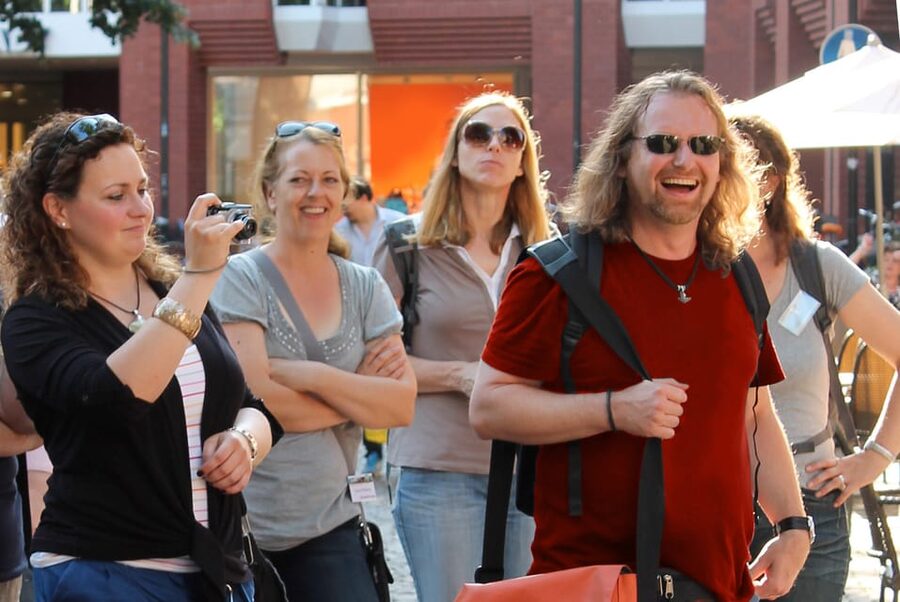
The tour starts opposite the historical town hall, under the sign Michaelisplatz, near the Rathausrelief. Look for the guide with an orange bag showing the k3 sign.
This matters more than it sounds. Münster’s old center has a lot of similar stone facades and narrow streets, so having a precise meeting spot helps you get into the walk without the usual pre-tour confusion.
You’ll be on a live guide tour with a German-speaking guide, and that live element is a big part of why the experience works. A good guide does two things: they tell you what you’re looking at, and they tell you what you might otherwise overlook.
Also holding a platform in Munster
- Münster-Highlights-Tour with Rickshaw-Guide
★ 4.8 · 244 reviews - Münster: Nachtwächter-Führung (Erlebnistour)
★ 4.4 · 213 reviews - Crime show city tour by rickshaw including guide
★ 4.8 · 105 reviews
A 90-Minute Walk Through Münster’s Origins: Mimigernaford to Münster
You start learning right away about Münster’s transformation. The guide explains how a small Saxon settlement called Mimigernaford grew into the city of Münster, and how that early starting point still shapes the way the city grew around key places.
That origin story is not just trivia. It helps you read Münster’s layout. When you understand the city began as a settlement that attracted religious and economic power, the later conflicts make more sense. You’re not just seeing buildings, you’re seeing consequences.
St. Paul’s Cathedral: Why This Place Changed Everything
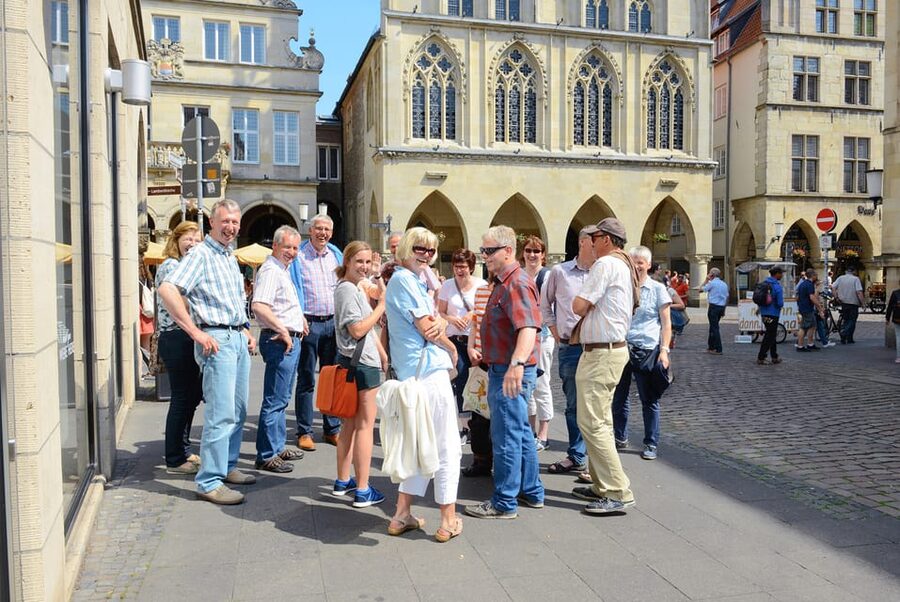
One of the first anchors is St. Paul’s Cathedral (Dom). The tour connects the cathedral to city power in a way that’s easy to remember: cathedral institutions were not only spiritual centers, they were also legal and political forces.
You’ll also hear about the cathedral immunity, basically meaning the area around the cathedral came with special rules and protections. In many European cities, these privileges affected everything from where people built, to who had authority, to how disputes got handled.
For your visit, this is a useful lens. Once you know the cathedral held unusual weight, you can look at the surrounding area with sharper eyes, not as random streets, but as a space shaped by authority and negotiation.
Merchant vs. Clergy: How Old Disputes Still Shape the Cityscape

A standout part of this tour is how it links earlier disputes between merchants and clergy to what you see today. Münster’s buildings and street patterns are like a record, and the guide treats them that way.
Why this is worth your time: it turns “pretty old buildings” into “organized power.” You’ll start noticing how certain areas feel geared toward trade, movement, and public contact, while others reflect the influence of religious authority.
This is also where a good guide earns their fee. The information is specific enough to feel real, not generic. And in reviews, people highlight that the guide stayed well informed and answered questions, which is exactly what you want when you’re hearing about complicated historical tensions.
The Anabaptist Era, Told Through Uncomfortable Details
If Münster has a reputation tied to 16th-century religious conflict, this tour addresses it head-on. You learn how the rule of the Anabaptists shaped the city, and the guide points you toward several physical reminders.
One of the most memorable moments is the Überwasserkirche. You’ll hear about the tower standing without a point to this day. The tour explains the connection to that period, so the tower’s odd silhouette doesn’t feel like a random quirk.
You’ll also hear about saints in the area whose heads are missing. It sounds strange until the guide puts it into context. Then it reads as deliberate and symbolic, a kind of permanent visual record of what happened when power shifted.
And yes, it can feel intense. But for many visitors, that’s the point. Münster’s old center is a place where history is not politely behind glass. It’s right there on walls and towers.
Onward connections from Munster:



Cages on St. Lambertus: A Symbol You Can See

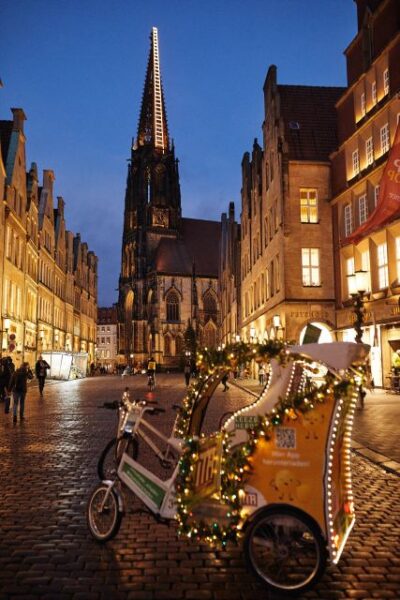
Next, the tour turns to the cages symbolism tied to the end of the Anabaptist movement. You can still see cages on the tower of the market church of St. Lambertus, where the tower keeper worked.
This is one of those details that makes the city easier to picture. You’re not just told that something happened, you’re shown an object symbolizing an ending. The guide’s explanation helps you understand why it was placed where it is, and why it stayed.
If you’re the kind of traveler who likes “small objects, big stories,” this stop delivers. The tour doesn’t treat symbolism as abstract. It makes it concrete, and it gives you enough context to interpret it.
Prinzipalmarkt and the City Core: Where Public Life Meets Power
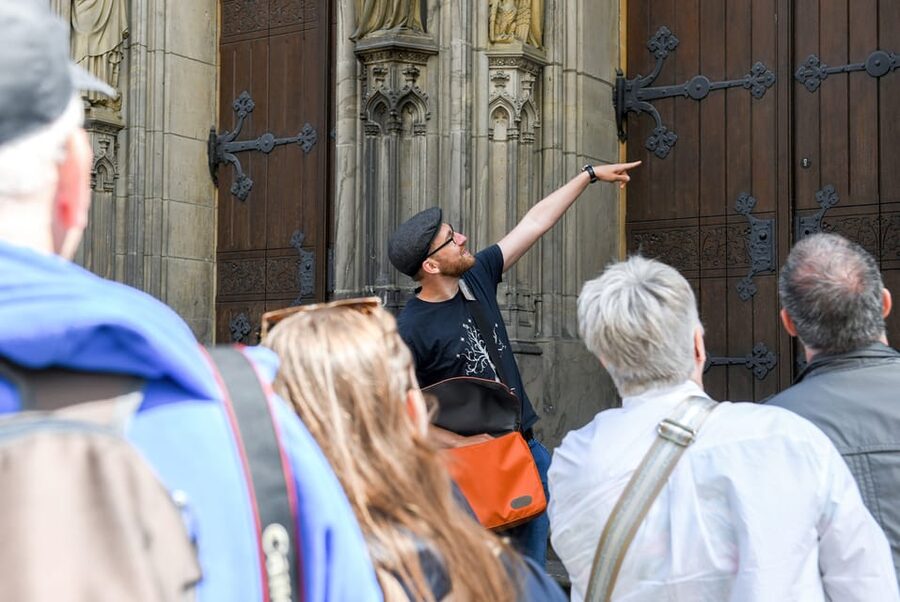
The tour includes highlights such as Prinzipalmarkt. Even if you’re only getting a brief look, this kind of central square matters because it represents the civic and commercial heartbeat of the city.
For you, this is practical. After the tour, you’ll know where to spend time if you want to keep exploring on your own. You’ll also understand why people historically would gather in these spaces, instead of treating them like just another nice plaza.
A guide who takes the extra time also helps here. In feedback, people specifically appreciated that the guide led them into corners you might otherwise skip and shared interesting facts along the way. That kind of route choice helps you see more of Münster’s “how people live” side, not just the headline landmarks.
Historic City Hall and the Peace Hall: The Peace of Westphalia in 1648
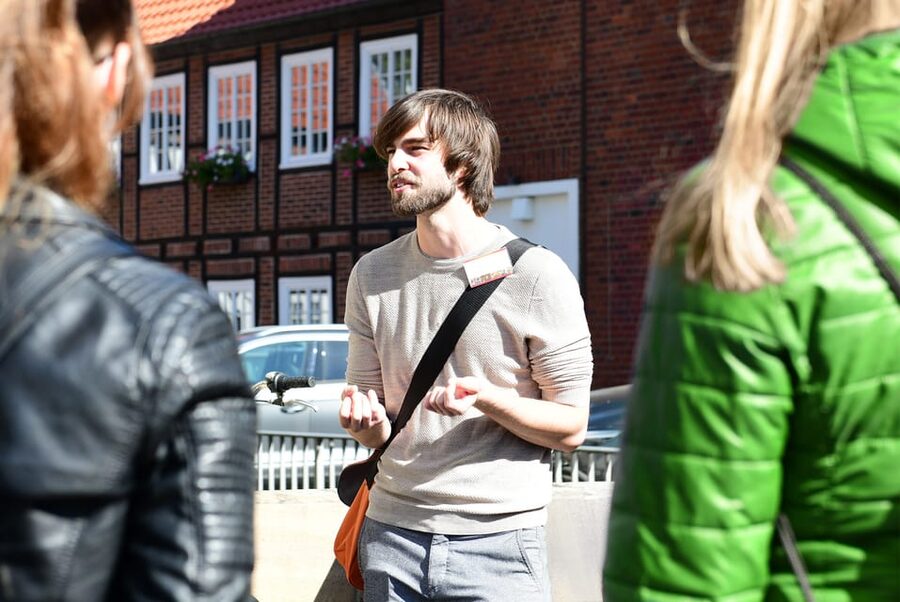
At the Historic City Hall, the tour shifts from religious conflict to a political turning point. You’ll learn about the Westphalian peace negotiations and how the Peace Hall is the place where peace was signed between the Dutch and the Spaniards.
The guide connects this to the bigger result: the Peace of Westphalia helped end the horrors of the Thirty Years’ War in 1648.
This stop is important for any history-minded visitor, but it’s also for travelers who just want a meaningful story. If you understand that a specific building played a role in a decisive European settlement, Münster becomes more than a local destination. It becomes part of a larger story that shaped borders, power, and the meaning of peace.
Baroque Münster: Erbdrostenhof and Clemenskirche by Johann Conrad Schlaun
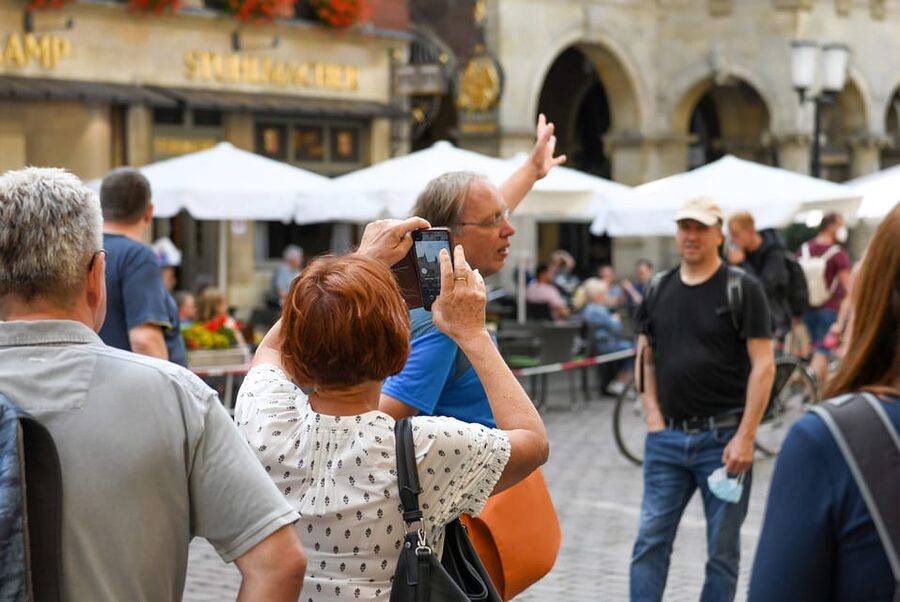
The tour doesn’t stop at medieval and early modern drama. It also points you toward two exemplary baroque buildings by Johann Conrad Schlaun: Erbdrostenhof and Clemenskirche.
Why include baroque? Because Münster’s city face did not freeze after the Renaissance. Styles changed, wealth moved, and power kept finding new ways to show itself in stone and detail. Schlaun’s style still characterizes the city today, so you get an extra layer for reading what you see.
If you’re the type who enjoys architecture but doesn’t want to study a guidebook for hours, this is a nice balance. You get named context, not just vague compliments about beauty.
Price, Timing, and What 1.5 Hours Buys You
At $16 per person for a 1.5-hour live guided walk, this tour is priced in the range where it can genuinely work as a first-day orientation. The value comes from how much history the guide packs into a manageable time.
Also, the child deal makes a difference. Children aged 0 to 5 years can join for free, which turns “a family activity that costs too much” into something easier to plan. For many parents, that’s the deciding factor.
Timing matters too. Ninety minutes is long enough to connect multiple sights, but short enough that you can still wander afterward. In practical terms, you can use this as your setup visit, then go back on your own to linger at the places that struck you most.
Language Reality Check: A German Tour With Real Benefits
This tour is in German. If you speak the language, great, you’ll get the full experience, including details about immunity, disputes, and symbolism.
If you don’t speak German, you’ll still likely see the key sights, but you might miss the cause-and-effect explanations that make the story stick. So treat this as a tour best suited for German speakers, or for travelers who are comfortable catching the gist without translation.
In the reviews, people praised how well the guide knew the material and how thoughtfully they answered questions. That’s a strong sign you’ll benefit from the live format, but only if you can follow the language.
Who Should Book This Münster Old Town Highlight Tour
I think this tour is a good fit if:
- You want the story behind Münster’s landmark buildings, not just the landmarks themselves
- You like compact walking tours with a strong guide
- You’re traveling with kids aged 0 to 5 and want a free entry option
- You enjoy history that includes uncomfortable symbolism, not just polished museum narratives
- You want an easy start that helps you navigate the old center afterward
It may be less ideal if:
- You need the tour in English, because the guide speaks German only
- You prefer long, slow visits where you sit and read or stay at one monument for ages
Should You Book This Münster Old Town Highlights Tour?
Yes, if you want a smart, guided orientation to Münster’s old core in a short time, I’d book it. The strongest reason is the combination of a lively, on-time guide and the way the tour ties specific details to real historical turning points, from St. Paul’s Cathedral and cathedral immunity, to Anabaptist-era reminders like the Überwasserkirche tower oddity and the cages on St. Lambertus, to the Historic City Hall and the Peace Hall negotiations.
And if you’re traveling with young kids, the free age policy is a clear win. For everyone else, $16 for a live guided 90-minute walk is a fair deal, especially because it helps you understand what you’re looking at immediately, so your later self-guided wandering feels less guesswork.
If you can handle German, this tour gives you a lot of “aha” moments per minute.
FAQ
What’s the duration of the Münster Old Town Highlights Guided Tour?
The tour lasts 1.5 hours.
How much does the tour cost per person?
The price is $16 per person.
Is the tour offered in English?
No, this tour is held in German.
Where do I meet the guide?
Meet opposite the historical town hall beneath the sign Michaelisplatz, close to the Rathausrelief. The guide wears an orange bag with the k3 sign on it.
Which sights are included?
The tour covers highlights such as Dom, Lamberti Church, Prinzipalmarkt, and the Historic City Hall.
Are children allowed, and do kids get free entry?
Yes. Children aged 0 to 5 years can join for free.
Is there a cancellation policy?
You can cancel up to 24 hours in advance for a full refund.
Can I reserve without paying right away?
Yes. You can reserve now and pay later.
Fresh on the arrivals board for Munster



Munster Tours & Activities, compared.


Crime show city tour by rickshaw including guide
Read our review →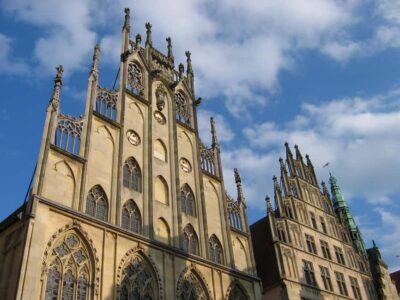

Night watchman tour through the picturesque old town by lantern light
Read our review →
Private Christmas Tour in Münster including Glühwein
Read our review →
Old Town Historical Walking Tour by “Geo Epoche”
Read our review →Browse the lists this tour appears in