
Reviewed · HISTORICAL TOURS
Münster: Old Town Historical Walking Tour by “Geo Epoche”
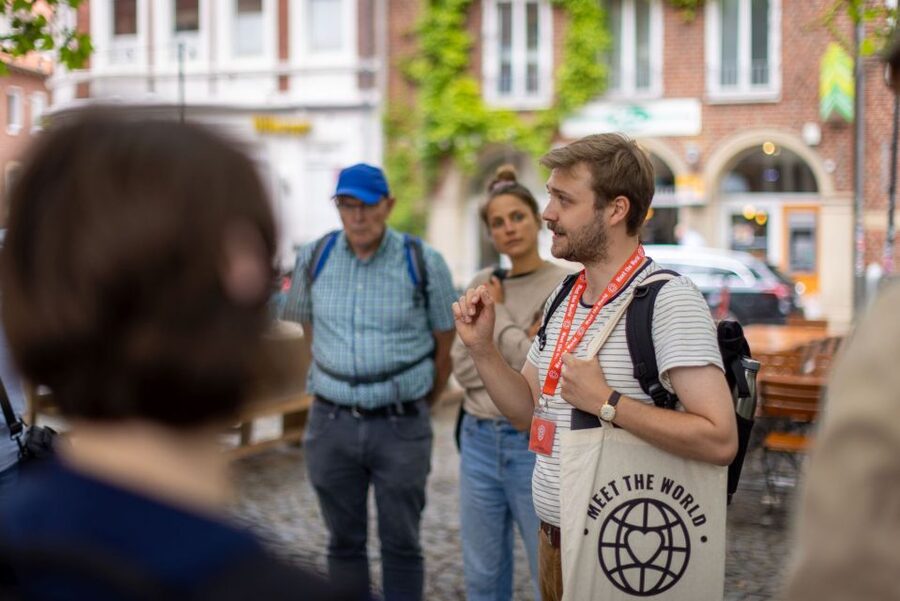
History walks get real fast in Münster. This one focuses on how the Anabaptists came into power and how the city changed, using major Old Town landmarks as your guide. I especially like the Geo Epoche style, with a brochure that includes illustrative pictures from the past, plus visual aids like diagrams.
I also like that it is a straightforward 2-hour loop, so you can fit it between museum visits and meals without cramming your whole day. The main drawback to consider is that it is mostly “listen while walking,” so if you hate lots of talk or you are stuck in steady rain, the experience can feel less comfortable.
In This Review
- Key things to know before you go
- Anabaptist Münster is a story that fits the streets
- Meeting at the Lamberti fountain: the start is easy to find
- Geo Epoche style: stories with photos and diagrams, not just talk
- Lambertikirche: why this landmark is the anchor point
- Krameramtshaus: seeing daily life through a power story
- Prinzipalmarkt and the Historical City Hall: public spaces that matter
- Timing, weather, and how to dress for rain or shine
- Language and group feel: plan for German and moving on
- Price and value: $29 for two hours of guided storytelling
- Who should book this Münster Old Town walking tour?
- Should you book? My practical verdict
- FAQ
- Where is the meeting point for the Münster Old Town historical walking tour?
- How long is the tour?
- What is the price per person?
- What language is the tour guide speaking?
- What’s included in the tour price?
- Is food or drinks included?
- Does the tour run in bad weather?
- Is the tour suitable for people with mobility impairments?
Key things to know before you go
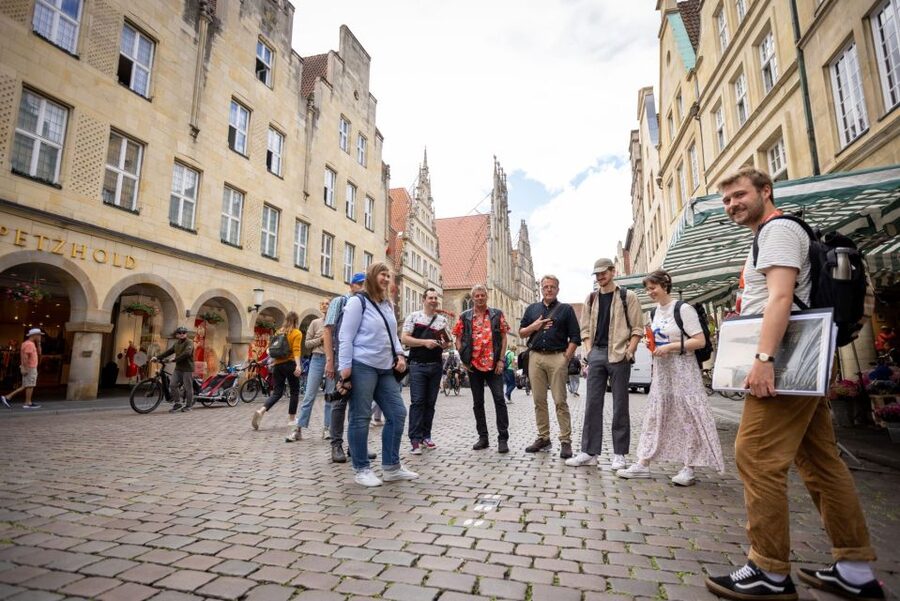
- Anabaptist-centered storytelling tied to real Münster landmarks, not random photo stops
- Geo Epoche brochure with illustrative pictures and support materials that help the story stick
- Major Old Town anchors including Lambertikirche, Krameramtshaus, Prinzipalmarkt, and the Historical City Hall
- 2 hours of leisure walking, so comfort matters, especially in wet weather
- Live guide in German, so non German speakers should plan carefully
- Group tour reality: it may not feel like a private walk even if you expected fewer people
Anabaptist Münster is a story that fits the streets
Münster’s Old Town is the right setting for this kind of history. The tour is built around the Anabaptists and the way they came into power, then how they radically redesigned the city. Instead of treating that period like a textbook chapter, the guide uses the streets and landmarks as “evidence,” turning architecture and public places into talking points.
What I like is the cause-and-effect angle. You are not only hearing what happened, you are watching how the city’s layout and key buildings become part of the narrative. That makes it easier to understand why certain spots matter, because each stop feeds the next one. If you enjoy history that connects to real places, this approach tends to land well.
One practical note, though: the tour is framed for people who want story and facts, not just scenery. A good chunk of your time is listening as you walk. If you prefer quiet observation or lots of sheltered time, plan your expectations before you show up.
More German cities at walking speed:
- Discover Berlin Half-Day Walking Tour
★ 5.0 · 9,624 reviews - Berlin City walk Government District and Places of Democracy
★ 4.7 · 8,467 reviews - Berlin: Third Reich & Cold War Guided Walking Tour
★ 4.9 · 8,378 reviews
Meeting at the Lamberti fountain: the start is easy to find
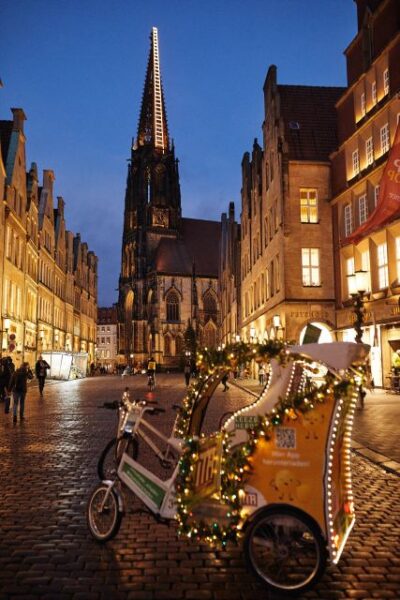
You meet at the Lamberti fountain in front of the entrance of the Lambertichurch. That is a smart setup because it’s a recognizable landmark and it gives you a clear “meet here, start there” point.
The tour runs for 2 hours, and you should expect some leisure walking. “Leisure” still means you will be on your feet for stretches, and you will likely stop and start multiple times. Bring comfortable shoes. This is especially important if you are traveling in the shoulder seasons when damp sidewalks can turn slippery.
Because the tour is offered with live guidance, the rhythm depends on the guide’s pacing. If you like a steady flow with frequent explanations at each site, you will probably enjoy it. If you want long, quiet breaks to soak in the views, you may feel the schedule moves on quickly.
Geo Epoche style: stories with photos and diagrams, not just talk
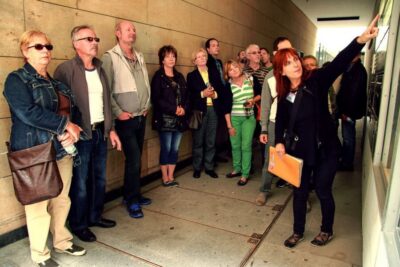
This is not a “stand in one place and read a plaque” tour. It was developed together with Geo Epoche, and the format uses illustrated materials to back up the narrative. You get a brochure with pictures from the past, and the guide uses exciting anecdotes plus accompanying historical photographs and diagrams.
That combination matters more than it sounds. When history involves intense political and religious upheaval, people remember the details better when they can visualize the setting. The diagrams and old photographs help you picture what the guide is describing, even if the city has changed since then.
You should also know the tour runs in German with a live guide. If you speak German, you can follow the story more naturally and enjoy the nuance. If you do not, you might catch only the headlines, even though the visuals in the brochure may help. For the best experience, plan to be comfortable with German or bring a translation support plan for yourself.
Lambertikirche: why this landmark is the anchor point
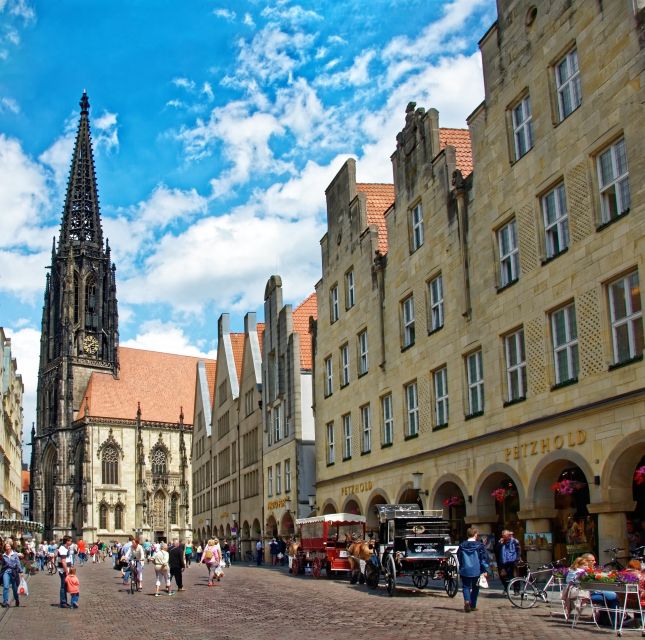
One of the named stops is the Lambertikirche area, and since your meeting point is tied to the Lambertichurch, you effectively start the narrative right at its doorstep. For a walking tour about a transformative period, choosing an anchor like this is useful. It gives the guide a clear starting framework and lets you connect the broader story to a specific place from the first minutes.
During the stop, expect the guide to connect what you are seeing with how the city’s power shifted and how public life was reshaped. The tour is designed to answer the big question: how did people’s lives and the city’s identity get remade during that reign?
If you care about the link between buildings and history, this stop is likely the easiest to enjoy. Even if the architecture itself is not your main interest, listening for what the church represents in the story can turn “just another landmark” into a meaningful reference point.
Krameramtshaus: seeing daily life through a power story
The tour also includes Krameramtshaus. Even without getting lost in architectural jargon, this kind of stop usually works well in a story like this because it represents more than a single event. It can help you understand how institutions and the city’s structure relate to the people living there.
Because this is a period focused tour, you can expect the guide to frame the building as part of the broader redesign of Münster. The Anabaptist rise and the radical changes to the city are the through line, so you are not just learning “what the building is,” you are learning how it fits into the changes happening across town.
A practical tip: take a moment to look, then listen. If you try to do both at once while walking in the rain, it can get hard to track the details. If the weather is cooperative, this is one of the stops where pausing for a quick visual scan pays off.
More centuries per city block:




Prinzipalmarkt and the Historical City Hall: public spaces that matter
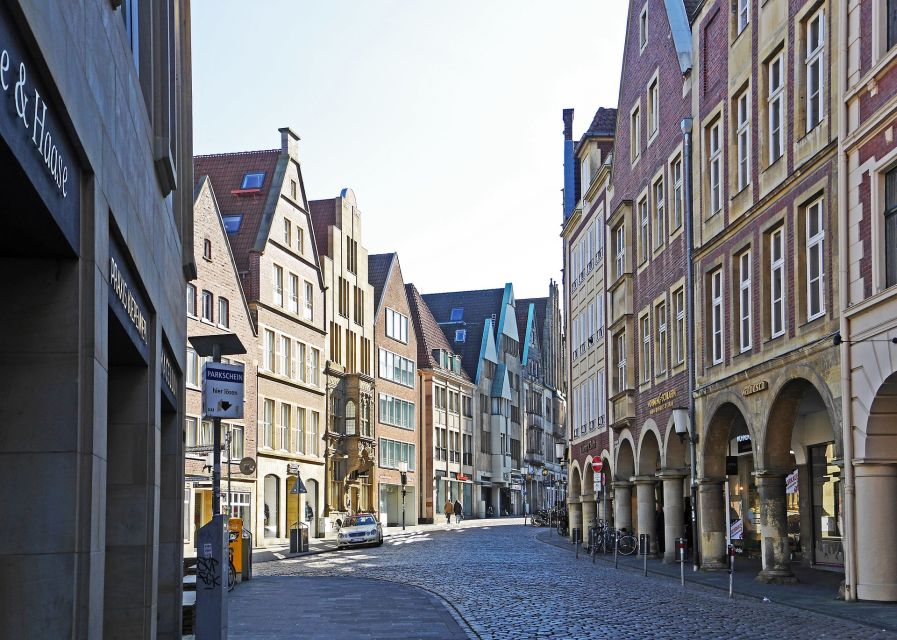
Two additional named highlights are the Prinzipalmarkt and the Historical City Hall. These sound like exactly the kind of places where political and social power would show up in everyday sightlines.
In a walking tour like this, public spaces often act like story hubs. The guide can tie them to how the Anabaptists gained influence, then how the city’s order was reorganized. You should listen for the connection between civic authority and the redesign of the city, because that’s the tour’s main theme.
If you like history that feels practical, these stops are usually where it clicks. You start thinking in terms of power being displayed in real rooms and real squares, not only in written accounts. And since the tour includes illustrations and diagrams, you can better connect what you hear to what you see around you.
Timing, weather, and how to dress for rain or shine
This is a rain or shine tour. That means you should dress for wet conditions even if the forecast looks mild. The tour includes leisure walking, so cold hands and soaked socks can spoil the mood faster than you expect.
Do this part simply: wear comfortable shoes with grip, and bring weather-appropriate clothing. If rain is likely where you are staying, consider layers you can adjust during stops, not one bulky outfit you can’t breathe in.
Because the tour is outdoors for the full experience, you cannot count on sheltered time to reset. If you prefer to stand in dry spots while listening, you might find the timing challenging on a bad weather day. Still, the structure is only two hours, so you can mentally treat it like a manageable outdoor sprint.
Language and group feel: plan for German and moving on
The tour is in German, with a live guide. If you read German well, you may still get a lot from the brochure visuals even with limited listening. But if your German is basic, this is one of those tours where you should decide carefully. The visuals help, yet the story delivery is the heart of the experience.
Also, I suggest thinking of it as a shared walking tour. One booking note from a past participant indicates they expected a solo experience but ended up with other people in the group. That is not something you can fully control, but it’s a strong reason to plan like you are joining a group, not getting a private lecture.
Another reality check: the format can feel talk-heavy since you are hearing facts and anecdotes at each stop. If you enjoy long explanations and detailed context, you will likely appreciate that pace. If you prefer shorter explanations and more time for quiet looking, consider whether a guided two-hour history walk is your style.
Price and value: $29 for two hours of guided storytelling
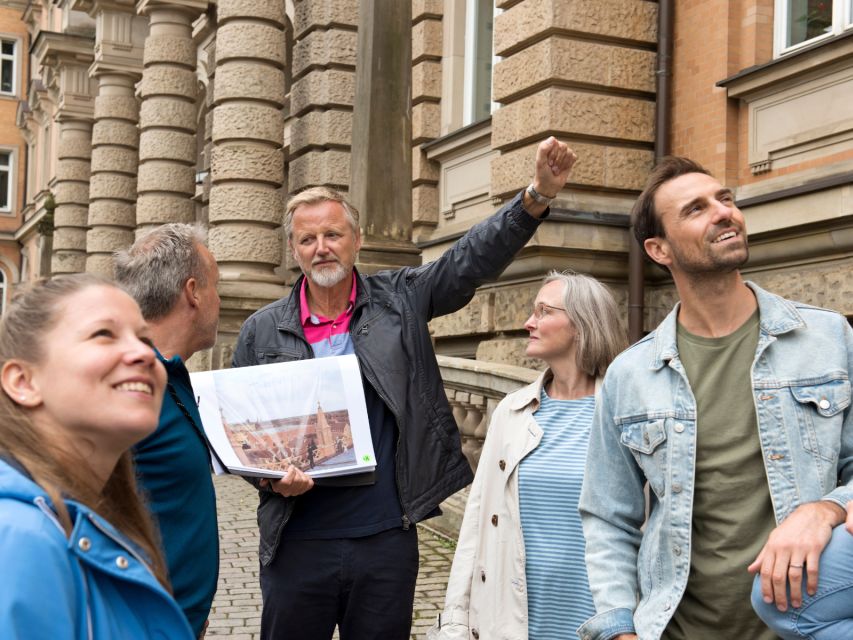
At $29 per person for a 2-hour walk, the price sits in the accessible range for guided tours in Germany. What makes the value better than a low-cost generic walk is what you get for that time: a live guide, plus a brochure with illustrative pictures from the past.
You also get a specific theme, not a broad “see everything” circuit. The Anabaptist focus can save you time planning your own reading, since the guide curates the narrative around power, redesign, and key locations like Lambertikirche, Krameramtshaus, Prinzipalmarkt, and the Historical City Hall.
Food and drinks are not included, so factor that into your day plan. The upside is you are free to choose where and when to eat after the tour, rather than waiting for a fixed break.
If you want a structured story with visuals and multiple landmark stops, the cost-to-time ratio looks fair. If you only want light background while you wander on your own, you might find yourself paying for a level of detail you did not request.
Who should book this Münster Old Town walking tour?
This tour is a strong fit if you enjoy thematic history tours and you want Münster’s Old Town to mean something more than postcard views. It also works well if you like visual learning, since the brochure includes illustrative pictures and the guide uses historical photographs and diagrams.
It may not be the best choice if you need step-by-step accessibility support, because it is not suitable for people with mobility impairments and it includes leisure walking. Also, if German is a barrier, you may prefer a tour in your language or a self-guided route supported by books and signage.
For solo travelers who are comfortable in group settings and want a guided narrative, this can be a great way to get oriented in a short window. For couples or small friend groups, it can create shared conversation points that carry into the rest of your day.
Should you book? My practical verdict
If you want a two-hour, German-led walk that connects the Anabaptists to real Münster landmarks, this is the kind of tour that can add real texture to your visit. The best reason to book is the combination of story plus visuals through the Geo Epoche brochure format, plus stops at major Old Town sites like Lambertikirche and the Historical City Hall.
I would skip it if you are sensitive to rain outdoors, dislike being in a group, or you do not feel confident with German. Otherwise, it’s a good use of time, especially if you like understanding how a turning point in history can leave marks you can still see.
FAQ
Where is the meeting point for the Münster Old Town historical walking tour?
Meet the tour guide at the Lamberti fountain in front of the entrance of the Lambertichurch.
How long is the tour?
The tour lasts 2 hours.
What is the price per person?
The price is $29 per person.
What language is the tour guide speaking?
The tour is in German, with a live guide.
What’s included in the tour price?
A tour guide and a brochure with illustrative pictures from the past are included.
Is food or drinks included?
No. Food and drinks are not included.
Does the tour run in bad weather?
Yes. The tour takes place rain or shine.
Is the tour suitable for people with mobility impairments?
No. The tour is not suitable for people with mobility impairments.
Fresh on the arrivals board for Munster




Historical Tours, compared.

City History Canal Sightseeing Tour on a Motorboat
Read our review →

Browse the lists this tour appears in