
Reviewed · MUNSTER TOURS & ACTIVITIES
True x Crime: Dark, Scary, True – Münster’s Most Notorious Criminal Cases
Münster’s dark side comes with real addresses. This 1.5 hour guided walk maps true-crime cases onto Münster’s historic center, from public punishment to modern cold cases, and it keeps history tied to places you can actually point at.
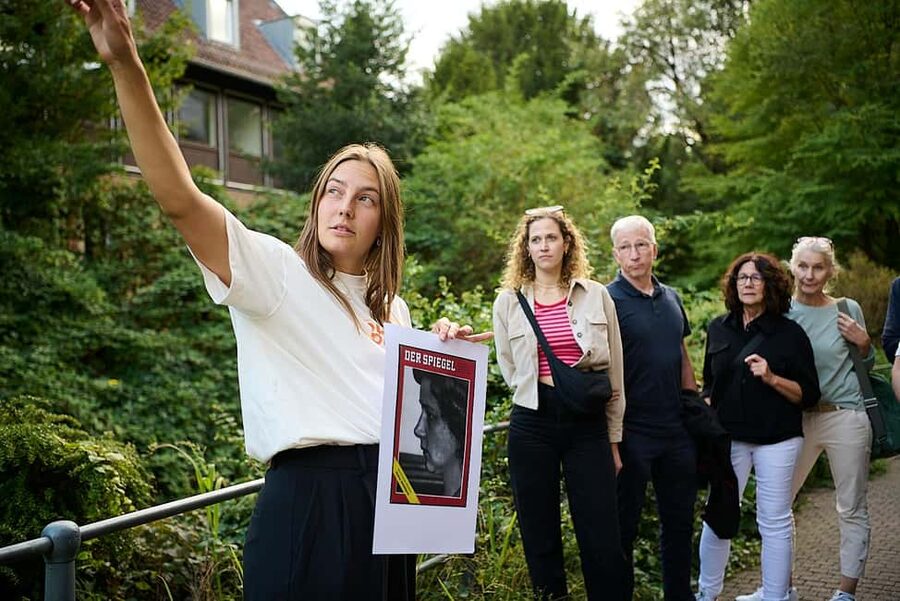
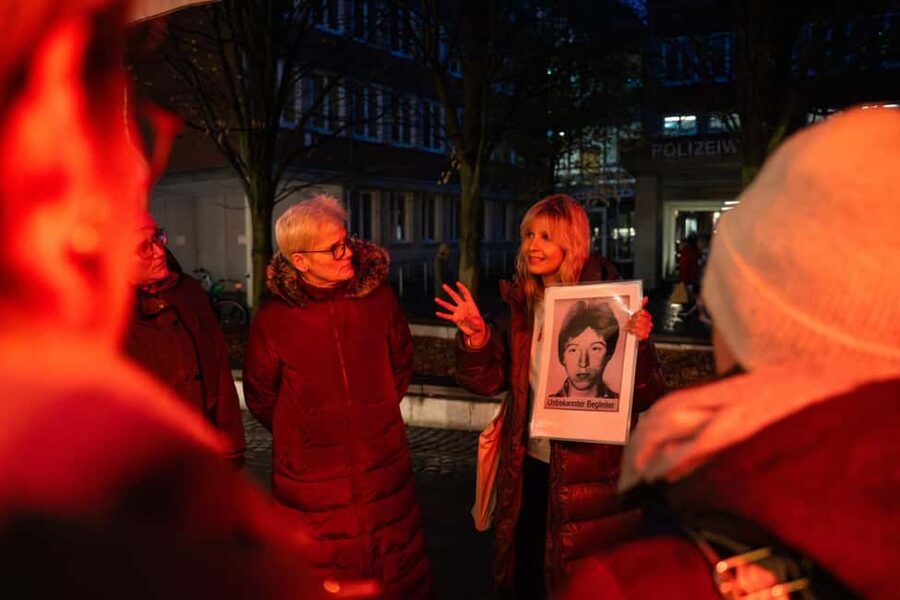
I love how the guide uses images and maps to make stories clear, not chaotic. I also like that you get the entertaining delivery of Sebastian, the kind of guide who can explain grim details without turning it into a lecture. One possible drawback: the tour is German only, and some content may be shown in its original language, so non-German speakers will likely miss parts.
In This Review
- Key highlights you should care about
- A true-crime city tour built on locations, not gore
- Meeting at Michaelisplatz, and getting your bearings fast
- Domplatz: where cathedral-square duels turn into real city history
- Prinzipalmarkt: pillory and the machinery of public punishment
- Lambertikirche and the idea of evidence in a changing city
- Zwinger: cells, cages, and the cold logic of confinement
- Alleys, “inconspicuous” corners, and how crime hides in plain sight
- Corpses in iron baskets, the Aasee case, and the shock of specificity
- Modern cases, an IRA terror thread, and the weight of an unsolved murder
- How good storytelling and visuals help you follow in 1.5 hours
- Price and time value for a Münster old-town walk
- Who should book this true-crime walk
- Should you book True X Crime in Münster?
- FAQ
- Where is the meeting point for the tour?
- How long is the tour?
- What is the tour about?
- Which sites in Münster are included?
- Does the guide use pictures or maps?
- What language is the tour in?
- What does the tour cost?
- Is pay later and cancellation available?
Key highlights you should care about
- Five centuries of crime in 90 minutes, from the 1500s to the present day
- Original crime-scene locations in Münster’s old town, not just talk in one square
- Graphic but contextual storytelling, including the social conditions behind crime and how investigations work
- Domplatz, Prinzipalmarkt, Lambertikirche, and Zwinger as core stops, tied to specific cases
- Visual support with pictures and maps that help you follow along fast
A true-crime city tour built on locations, not gore
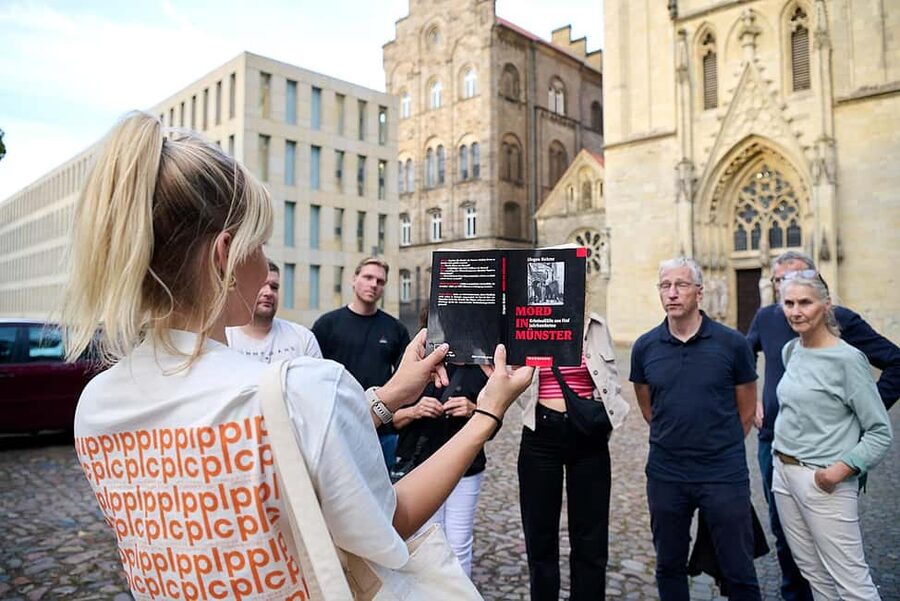
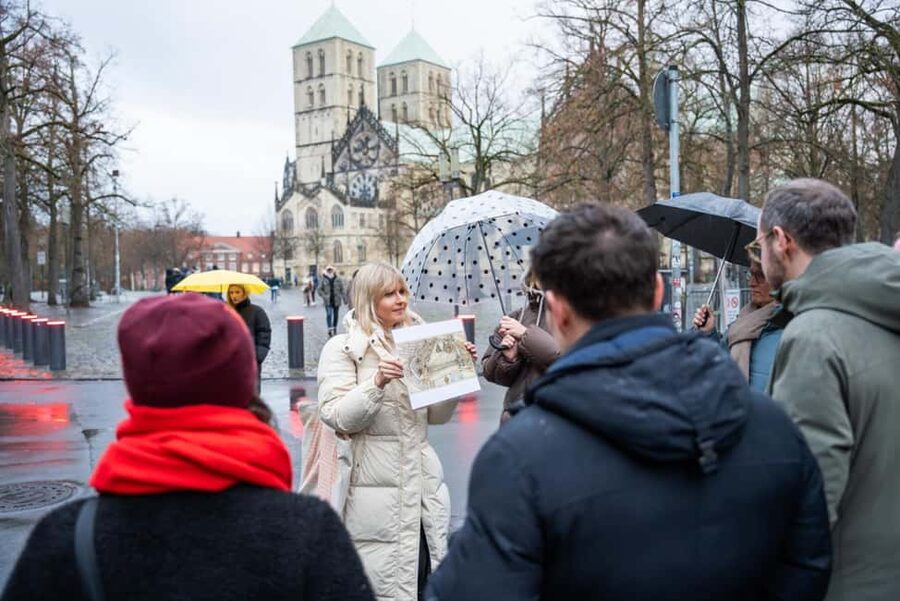
If you like your sightseeing with a little bite, this one works. The whole idea is simple: Münster has landmarks you know from postcards, and the guide uses them as anchors for notorious cases. You do not just hear a story, you move through the same kind of streets and squares where consequences played out.
What I especially like is the way the tour frames crime as something human and, at times, explainable. It does not try to shock you for its own sake. Instead, it links what happened to the era’s everyday realities, from social pressures to the reality of forensic searches for clues. That approach makes the stories stick, and it gives you a reason to look up at the architecture while you listen.
If you are the type who wants light and fluffy history, skip this. The tone is grim, gruesome, and true, and the tour openly promises unsettling scenes like corpses in iron baskets and dismemberment cases. In other words, it is not for anyone who wants to keep things cheerful.
Also holding a platform in Munster
- Münster: Old Town Highlights Guided Tour
★ 4.7 · 286 reviews - Münster-Highlights-Tour with Rickshaw-Guide
★ 4.8 · 244 reviews - Münster: Nachtwächter-Führung (Erlebnistour)
★ 4.4 · 213 reviews
Meeting at Michaelisplatz, and getting your bearings fast
You meet at Michaelisplatz, in front of the Historic Town Hall. This is a good start point because it immediately puts you inside the old-town rhythm of Münster. The meeting spot also makes it easy to connect the tour to self-guided wandering before or after, since you are already near the city core.
Once the group gathers, the guide sets the tempo. The pace matters here because the tour covers a lot of time. In 1.5 hours, you can feel like history is rushing by. The tour avoids that by using a steady route and repeating key geographic anchors, so you are always grounded in where you are.
One more practical point: the tour is conducted in German. If you speak at least basic German, you will probably follow the storyline much better, especially when the guide connects cases to specific spaces like cathedral squares and old cells.
Domplatz: where cathedral-square duels turn into real city history
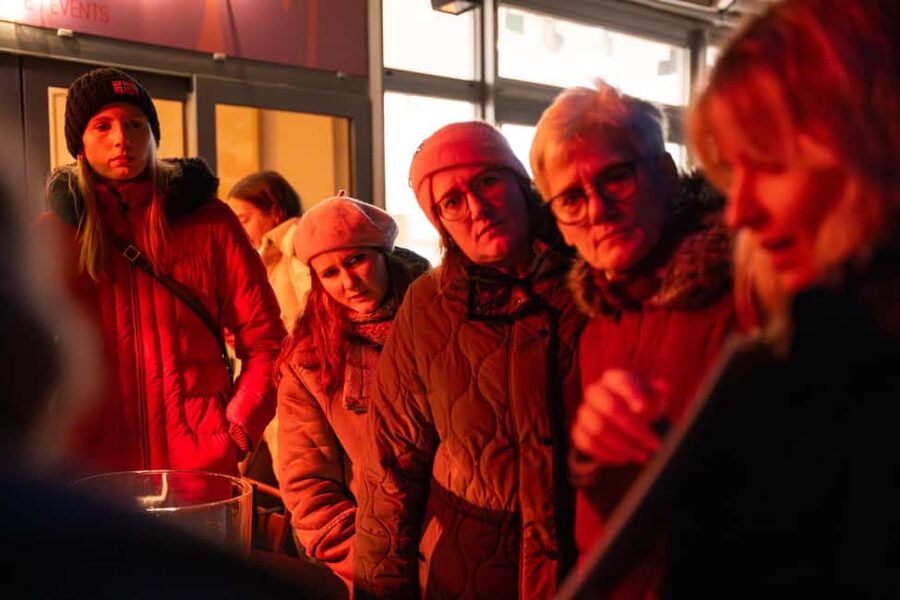
One of the big emotional beats happens around Domplatz. The tour connects this cathedral square to brutal events, including bloody duels tied to the cathedral city atmosphere. Standing on a major public square changes how you experience these stories. A duel is not something that happened in a vacuum. It is a spectacle in a place where people gather, trade, and watch.
What you learn here is not just that violence occurred. You learn how violence fit into authority and everyday life, how public spaces made conflict visible, and why the crowd mattered. The guide also connects the cases to Münster’s broader history, so the square becomes a timeline in your head.
You might notice how the tour keeps returning to the same theme: crime is both personal and systemic. In the guide’s telling, you see how conditions of the time shaped decisions, and how investigations depended on what people in that era could actually observe and document.
Prinzipalmarkt: pillory and the machinery of public punishment
Next, you move toward Prinzipalmarkt, where the guide points out the pillory site. This is one of the most valuable parts of the tour because it shifts your focus from the moment of violence to the aftermath and the public response.
The pillory matters because it shows punishment as performance. It was meant to be seen. It was meant to teach. When you hear cases connected to public punishment while standing at the marketplace, the story feels more concrete than it would if you were just reading a description in a museum.
This is also where the tour’s balance shows. Yes, the subject is dark. But the guide keeps explaining the “how” of enforcement, not only the “what.” You end up understanding the logic of the era’s justice system: what authorities wanted people to believe, and how fear was part of social control.
Lambertikirche and the idea of evidence in a changing city
The stop at Lambertikirche adds a different flavor. Instead of focusing only on one dramatic scene, the guide uses the church area to link crime stories with the city’s long, layered growth. Churches and religious landmarks often function like historical magnets. People always return, and records always accumulate around important buildings.
Here, the tour becomes more investigative in tone. The guide talks about forensic searching for clues, and you start to see crime-solving as a process that evolves with time. That is important because it prevents the tour from turning into a simple collection of murders. You learn how investigation methods, witnesses, and evidence changed across centuries.
It is also a nice mental reset. After public punishment and duels, this is a chance to slow down and think about how a city remembers. The guide’s structure makes you notice that Münster’s architecture is not just pretty stone. It is part of the story about how events were recorded, repeated, and interpreted later.
Onward connections from Munster:



Zwinger: cells, cages, and the cold logic of confinement
Then comes Zwinger, where the tour focuses on draughty cells and the spaces where people were held. This stop is one of the most effective for visualizing the human scale of punishment and investigation.
Cells and confinement spaces do something that lecture-style explanations cannot. They make time feel heavy. You start imagining the days, the movement restrictions, the fear, and the practical constraints. The guide connects this to specific kinds of cases and to how authorities approached interrogation and evidence.
What I like here is that the tour does not treat prisons as generic backdrops. It treats them as tools with purpose, which changes how you interpret the story. You stop thinking of criminals as cartoon villains and start seeing them as people shaped by circumstances, and also by how institutions worked.
If you are sensitive to grim content, this is a good moment to adjust your pace. Even if you are fine with dark history, you can take a breath, refocus, and let the guide’s context do the heavy lifting.
Alleys, “inconspicuous” corners, and how crime hides in plain sight
The tour also leans into what the city does best, narrow streets and inconspicuous corners. The guide points out that crime scenes are not always dramatic buildings. Sometimes the location looks ordinary now, but it was part of the route, the hiding place, or the chance encounter back then.
This is where the tour becomes fun in a brainy way. You start paying attention to lines of sight, street layout, and how someone could disappear or approach without being noticed. If you like walking with a purpose, this segment gives you that.
It also helps you understand why the guide spends time on social conditions and the “everyday world” around the crimes. When the setting is a quiet alley or a small passage, the reasons people get drawn into trouble can feel closer to home.
Corpses in iron baskets, the Aasee case, and the shock of specificity
The tour does not shy away from the infamous images. It includes the idea of corpses in iron baskets high above the city. It also mentions dismembered corpses in the Aasee. Even if you have heard bits of Münster’s darker lore before, hearing it paired with specific locations hits differently.
This is where the tour’s “true crime, linked to history” promise pays off. The guide does not just throw shocking facts at you. It connects the events to how Münster worked at the time, and to the investigative process that followed.
One of the most memorable aspects is the way the guide uses visuals. Pictures and maps make the distance between you and the event smaller. You are not trying to imagine everything from scratch. The guide helps you picture the spatial logic, who was where, and why the search for clues mattered.
Modern cases, an IRA terror thread, and the weight of an unsolved murder
The tour moves beyond old scandals and into more recent terror and unresolved mystery. You hear about the IRA’s terror reaching Münster, and you also hear about the Münsterland murderer who has not yet been caught.
This matters because it shows the city is not only a “then” place. It is a “now” place too. When a tour links past and present, it tells you something about memory and uncertainty. Even when investigations evolve, some cases remain open, and communities carry that tension.
I also like that the guide balances solved cases and cold cases. That gives you a more honest sense of how crime history works, not just the satisfying endings.
If you are coming with a true-crime mindset, this portion will feel like the payoff. If you are coming with a history mindset, it will feel like proof that Münster’s history includes real fear, not only guilds and architecture.
How good storytelling and visuals help you follow in 1.5 hours
At 29 dollars per person and 1.5 hours long, you need the tour to be efficient. This one is. The guide keeps it moving, and the story structure helps you track the “when” and “where” of each case.
The visuals are a major part of why it works. Pictures and maps make dense time periods easier to sort. When the guide ties a case to multiple stops, the visuals help you connect the dots quickly, instead of leaving you guessing.
You also get personal tips for further exploration at the end. That is a small thing, but it can boost value. A good guide does not only tell you a story, they point you toward what to look at next if you want to go deeper on your own time.
Price and time value for a Münster old-town walk
For $29, you are paying for a focused, guided route through the city core, plus specialized storytelling across five centuries. The value is strongest if you like walking and you enjoy a structured route, because the price buys you more than narration, it buys context and local “location literacy.”
At 1.5 hours, it is a manageable commitment. You can do it without sacrificing a full afternoon of independent exploring. It is also long enough to feel like a complete arc, not a quick hit.
If you only want a light overview of Münster’s top sights, you might feel the content runs darker than expected. But if you want your history grounded in place, and you do not mind the subject matter, it is priced like a thoughtful specialty tour, not a generic city walk.
Who should book this true-crime walk
This is a great fit if you:
- Want a guided walk focused on specific Münster locations rather than broad commentary
- Like true crime stories that include social context and investigative reasoning
- Enjoy tours with visuals, so you can picture what the guide is describing
- Speak German well enough to follow the guide’s narration, since the tour is conducted in German
It is less ideal if you:
- Strongly prefer cheerful sightseeing
- Need everything explained in English
- Are easily distressed by gruesome details
Should you book True X Crime in Münster?
I think it is worth booking if you want a city tour that treats Münster like a living archive of real stories. The biggest reason to go is the combination of five centuries, credible investigative framing, and the fact that you move through the actual old-town spaces tied to the cases.
Book it if you like dark history but also want understanding, not just shock. Skip it if you want gentle vibes, or if you cannot comfortably handle a German-guided format. If you fit the target mood, this is one of the more memorable ways to experience Münster, because you leave with places you will never look at the same way again.
FAQ
Where is the meeting point for the tour?
You meet at Michaelisplatz, in front of the Historic Town Hall.
How long is the tour?
The duration is 1.5 hours.
What is the tour about?
It is a guided city tour focused on true-crime stories in Münster, covering cases across five centuries, from historical crimes to modern ones.
Which sites in Münster are included?
The tour includes central locations such as Domplatz, Prinzipalmarkt, Lambertikirche, Zwinger, and other crime-scene places in the heart of the city.
Does the guide use pictures or maps?
Yes, the stories are explained with pictures and maps to help you follow the cases.
What language is the tour in?
The tour is in German, and some content may be shown in its original language.
What does the tour cost?
The price is $29 per person.
Is pay later and cancellation available?
Yes. You can reserve now and pay later, and you can cancel up to 24 hours in advance for a full refund.
Fresh on the arrivals board for Munster


Munster Tours & Activities, compared.
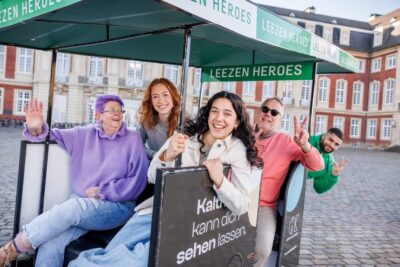

Crime show city tour by rickshaw including guide
Read our review →

Night watchman tour through the picturesque old town by lantern light
Read our review →
Private Christmas Tour in Münster including Glühwein
Read our review →Browse the lists this tour appears in