
Reviewed · HISTORICAL TOURS
Lübeck: Hanseatic League History Walking Tour
One gate, one street, and suddenly the sea trade makes sense. This is a focused Lübeck walking tour that turns the Hanseatic League from a textbook topic into real places you can point at, especially around the Holstentor area. I like that you get a clear story of how merchant guilds became a city confederation, and you also get to walk the kind of narrow lanes where that trade culture still feels present.
What I really love is the way the stops are chosen for understanding, not just photos. You see major landmarks like the Holsten Gate, Rathausmarkt square, and St. Mary’s Church, then connect them to ships, fortifications, and merchant life. The second big win is the guiding. Guides like Bernd and Karin stand out for fitting lots into 90 minutes, including answering questions and even working in extra looks at places like courtyards when your group wants that.
The main consideration is simple: it is a compact 90-minute walk, so you will want comfortable shoes and a pace that keeps moving through the old town. If you prefer a slow sit-down sightseeing day, this might feel tight.
In This Review
- Key Highlights You Will Feel Fast
- Why Lübeck Was Built for Trade Power
- Getting Started at Holsten Gate, Then Seeing the City Walls
- Salt Storehouses and Trave Harbour: Where Ships Became the Whole Point
- Große Petersgrube: Stepped Gables, Old Brick, and a Street You Will Remember
- St. Mary’s Church and Rathausmarkt: Trade Meets Civic Power
- Buddenbrook House and the Schiffergesellschaft Guild Hall Stop
- Hospital of the Holy Spirit and Lübeck Backyards
- What the 90 Minutes Feels Like on Foot
- Price and Value: When $259 Makes Sense
- The Guides Make or Break This Tour, and This One Gets It
- Who Should Book This Lübeck Hanseatic Tour
- Should You Book This Hanseatic League History Walking Tour?
- FAQ
- Where is the meeting point for the Lübeck Hanseatic League tour?
- How long is the walking tour?
- Is this tour private?
- What languages are the guides?
- What places will we see during the tour?
- Is a guide included in the price?
- Are food and drinks included?
- What is the cancellation policy?
Key Highlights You Will Feel Fast
- Holstentor, the fortification-gate starting point and one of Lübeck’s best entry points into the city’s trading mindset
- Trave Harbour and salt storehouses that explain why ships, not guesswork, drove Hanseatic power
- Große Petersgrube, one of Lübeck’s oldest streets, with brick and stepped-gable buildings you will want to pause for
- St. Mary’s Church and how its design became a model across Hanseatic cities in the Baltic region
- Schiffergesellschaft guild hall and the sailor side of merchant history
- Hospital of the Holy Spirit to see how old social institutions and quiet backyards lived alongside commerce
Why Lübeck Was Built for Trade Power
Lübeck’s Hanseatic story matters because it is not just about merchants getting rich. It is about the systems that made long-distance trade work: sea connections, routes, agreements, and the kind of city organization that could protect business. During the 12th to 17th centuries, the Hanseatic League grew from ties among North German merchant groups into a wider confederation of cities.
This tour gives you the big picture early, then keeps returning to it at each stop. That is the best kind of history tour. You do not have to memorize dates because the places do the explaining for you. If you have ever looked at a map of Northern Europe and wondered how Riga or Bruges ended up connected, you will get a satisfying answer here: a network built on shared commercial interests and the need for reliable sea routes.
Lübeck also helps you because it still has the “look” of that era. You will walk streets with stepped gables, old brick details, and tight passageways that feel like they were designed for daily life, not only for tourists. The tour does not just show buildings, it shows how the city’s layout supports the story.
More German cities at walking speed:
- Discover Berlin Half-Day Walking Tour
★ 5.0 · 9,624 reviews - Berlin City walk Government District and Places of Democracy
★ 4.7 · 8,467 reviews - Berlin: Third Reich & Cold War Guided Walking Tour
★ 4.9 · 8,378 reviews
Getting Started at Holsten Gate, Then Seeing the City Walls
The tour begins at Holsten Gate, which is one of the city’s fortification gates. That matters because it reframes what you might think of as “just an old gate.” Fortifications were part of trade security. If you are moving goods by ship and inland routes, you need protection, and cities built it into their infrastructure.
Right away, you also get an orientation for Lübeck’s key theme: the city turning outward to the water. You do not just stand and admire stone. Your guide connects this gateway area to the larger system that allowed merchants to operate across borders, from North Sea and Baltic lanes to inland connections that fed into port life.
This is also a good spot to start because it is visually strong. You can quickly understand why Lübeck mattered, then you can walk from there with your eyes open. When the rest of the stops make references to walls, trade storage, and harbor activity, you will already have your bearings.
Salt Storehouses and Trave Harbour: Where Ships Became the Whole Point
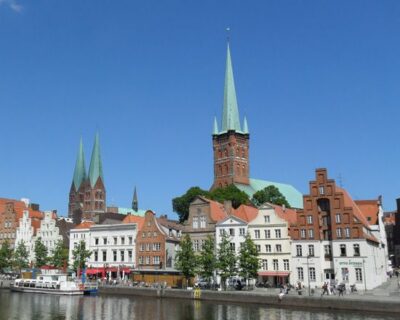
After Holsten Gate, the walk shifts toward the Trave Harbour and the salt storehouses. This is where the Hanseatic story becomes practical. Salt was essential for food preservation, and the ability to store and move it efficiently supported long-distance commerce.
You will see how the harbor area connects to the merchant world. It is easy to imagine that ships just happened, but trade requires infrastructure: warehouses, logistics, and places for goods to be handled reliably. The tour helps you read those locations as part of a larger economic machine.
A plus here is pacing. The route makes logical sense, so you are not just crisscrossing for the sake of variety. You follow the geography the way a business network would. If you like history that feels grounded in everyday operations, you will probably find this section one of the most satisfying parts of the walk.
Große Petersgrube: Stepped Gables, Old Brick, and a Street You Will Remember
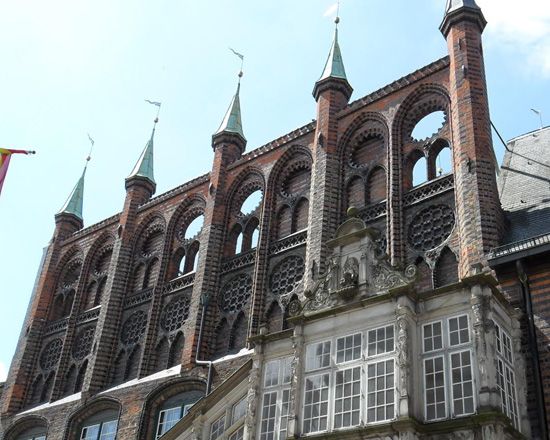
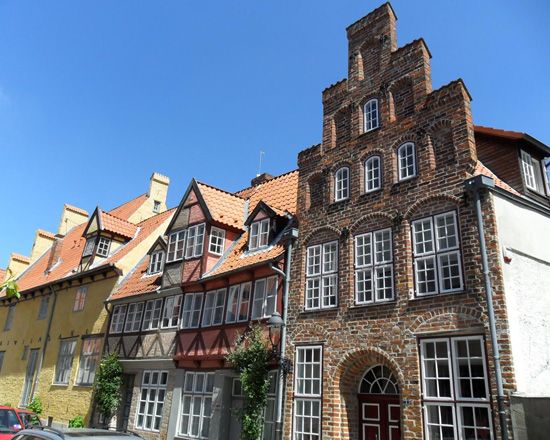
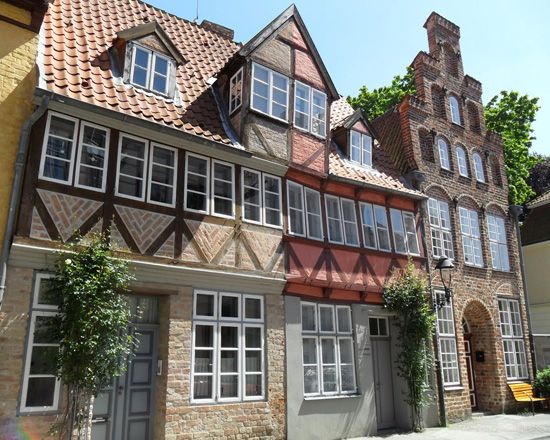
One of the more charming segments is the stroll through Große Petersgrube, described as one of Lübeck’s oldest streets. Here, the tour leans into what Lübeck does best: narrow lanes, traditional brick work, and the classic stepped-gable architecture that shaped the look of northern trade cities.
This is not just aesthetic sightseeing. Stepped gables and brick details signal local building traditions, while narrow lanes show the density and the practical nature of old-city planning. This matters because merchant life depended on being close to neighbors, workshops, and storage. Cities like Lübeck were not laid out for leisure. They were arranged for working.
If you enjoy street-level history, you will have fun here. Stop and look at doorways and facades. Even though you are moving with the group, your guide usually frames what you are seeing so it feels meaningful, not random.
St. Mary’s Church and Rathausmarkt: Trade Meets Civic Power
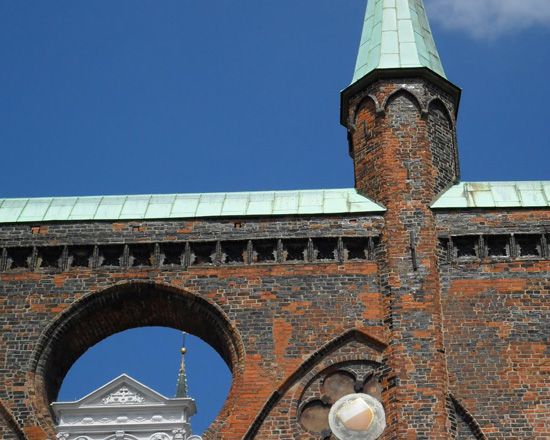
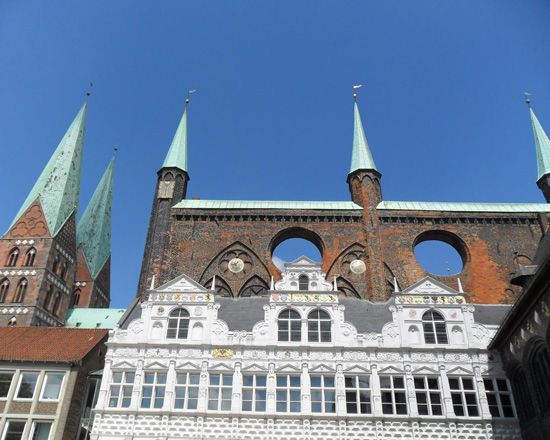
Next up, you reach major civic and religious landmarks, including St. Mary’s Church and the Rathausmarkt square area with the City Hall. This is the moment where you see that merchant power was also city power.
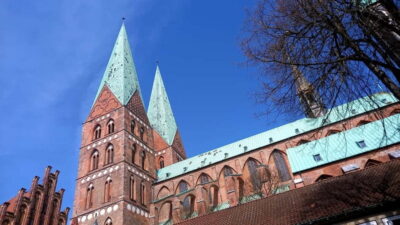
St. Mary’s Church is especially important because it served as a model for numerous churches in Hanseatic cities in the Baltic region. That is a strong clue that Lübeck was not operating in isolation. Ideas, styles, and status traveled with trade networks. The tour uses the church to connect religious architecture with the cultural influence that came along with economic strength.
At Rathausmarkt and around the City Hall, you get the civic side of the same story. A trading confederation needs cities to coordinate, govern, and represent their interests. When you see the public buildings, it clicks that this was not just private commerce. It was an organized system with visible authority.
If you only have one walking tour in Lübeck, this is where it helps to go, because it ties together the “who ran things” answer with the “where it looked official” answer.
More centuries per city block:



Buddenbrook House and the Schiffergesellschaft Guild Hall Stop
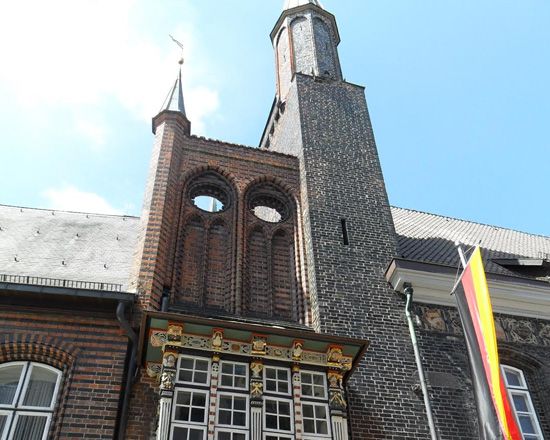
Now you shift from the broad city story into the merchant and sailor world. You pass the Buddenbrook House of the Mann family. Even if you do not know the background of the name right away, the stop works because it is placed as a clue about wealthy trading families and how their status shaped what got built and preserved.
Then comes a highlight for people who like guild culture: the Schiffergesellschaft guild hall. Here, the tour spotlights the sailors of the Hanseatic League and their stopping place in Lübeck. That detail is useful because it prevents the story from becoming too “merchant only.” Trade depended on crews, navigation, and the people who actually made the voyages possible.
The guild angle also helps you understand the Hanseatic League as a network of organized groups, not just scattered cities competing alone. Guild halls were places where community and business interacted, and your guide connects that idea to what you have been learning since the start.
If your goal is to understand how people lived inside the trade system, this is one of the best stops. You feel the human scale behind the big economic machine.
Hospital of the Holy Spirit and Lübeck Backyards
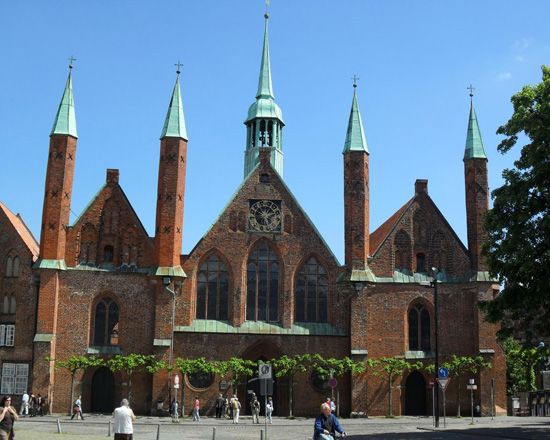
The tour finishes at the Hospital of the Holy Spirit, one of the oldest social institutions in Lübeck. This ending is a smart contrast. After harbors, fortifications, and merchant power, you get to see how older cities handled care and charity.
Your guide also points you toward romantic backyards nearby, giving you a chance to slow down for a moment. Even if you are not spending much time there, the effect is memorable. Lübeck feels lived-in, not only historical.
This ending works especially well if you want a tour that leaves you with questions you can follow on your own. The backyards and quiet corners are the kind of places you can revisit later when you want a calmer pace.
What the 90 Minutes Feels Like on Foot
The tour is designed as a 90-minute walk, which is just enough time to connect the dots without sending you into a full-day endurance test. It is also private for up to 6 people per group, which changes the feel in a positive way: your questions matter and your guide can adjust the pace.
I also like that you do not need to think about logistics during the tour itself. The route is structured around major anchors like Holsten Gate, key church and civic points, and then guild and social-history stops.
Practical note: you are walking the old town streets, which tend to be tight and uneven in historic city centers. Bring comfortable shoes. If anyone in your group struggles with longer standing times, it might be worth planning extra breaks on your own before or after the guided portion.
Price and Value: When $259 Makes Sense
The price is $259 per group up to 6, and the tour includes a professional city guide. That is one of those situations where the value depends on how you travel.
If you split it between:
- 2 people, it works out to about $129.50 per person
- 4 people, about $64.75 per person
- 6 people, about $43.17 per person
That is why private group tours can be such a good deal in places like Lübeck, where the best context really comes from a guide, not a self-guided map. You get a coherent narrative delivered at walking speed, with enough stops to matter but not so many that you lose the thread.
Also, the included guide time is the core product. Food and drinks are not included, so you should plan to grab a snack or a meal before or after. Since the tour ends at a historic institution area, you can often keep exploring nearby rather than scrambling across town.
The Guides Make or Break This Tour, and This One Gets It
This tour performs best when the guide makes the story feel alive, and the guide lineup here seems strong. I have seen feedback that highlights guides like Bernd as a walking reference, with lots of energy and a clear joy in explaining the city. There is also mention of Karin giving helpful city context and suggestions for things to do after the official walk. Another guide, Chris, was praised for teaching a lot.
What that tells me as a reader is that this is not a scripted drive-by tour. Your guide is likely to answer questions in real time, and if your group has a specific interest (like courtyards or architectural details), you have a good chance of getting that included within the limited time.
Because it is live guided and offered in German and English, you also avoid the frustration of half-understanding key points. If you want the Hanseatic League explained in a way that actually sticks, this is the format.
Who Should Book This Lübeck Hanseatic Tour
This tour is a great fit if:
- You want the Hanseatic League explained through specific Lübeck locations
- You like walking history that mixes architecture, civic life, and trade logistics
- You are traveling with up to 5 other people and can split the group cost
- You prefer a guided narrative rather than only a self-guided checklist
It may be less ideal if:
- You hate walking during sightseeing, since it is built as a 90-minute stroll through multiple stops
- You want a meal included as part of the experience, since food and drinks are not part of the tour
Should You Book This Hanseatic League History Walking Tour?
I would book it if your goal is to understand why Lübeck mattered, not only what it looks like. The stop selection is practical, the history is connected to real trade systems, and the finale at the Hospital of the Holy Spirit gives you a fuller view of how the city worked beyond commerce.
One final piece of advice: plan your day with a little breathing room before and after. You will want time to look back at a couple of the stepped-gable streets or revisit the harbor area at a calmer pace once you have the story in your head. If that sounds like your kind of travel, this is a strong, good-value choice.
FAQ
Where is the meeting point for the Lübeck Hanseatic League tour?
Please meet your tour guide at the Holsten Gate.
How long is the walking tour?
The tour lasts 90 minutes.
Is this tour private?
Yes. It is listed as a private group experience.
What languages are the guides?
The live guide speaks German and English.
What places will we see during the tour?
You will see stops such as the Holsten Gate, Rathausmarkt square, St. Mary’s Church, the Buddenbrook House, and the Schiffergesellschaft guild hall, plus areas around the Trave Harbour and old streets like Große Petersgrube. The tour ends at the Hospital of the Holy Spirit.
Is a guide included in the price?
Yes. A professional city guide is included.
Are food and drinks included?
No. Food and drinks are not included.
What is the cancellation policy?
You can cancel up to 24 hours in advance for a full refund.
Fresh on the arrivals board for Lubeck

Historical Tours, compared.
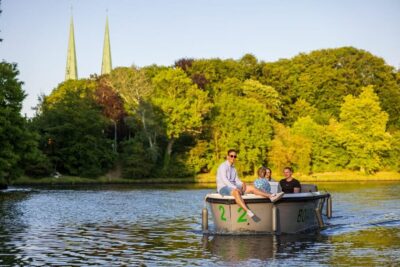
City History Canal Sightseeing Tour on a Motorboat
Read our review →

Browse the lists this tour appears in