
Reviewed · LUBECK TOURS & ACTIVITIES
Lübeck: Architecture and Local Craft Private Guided Tour
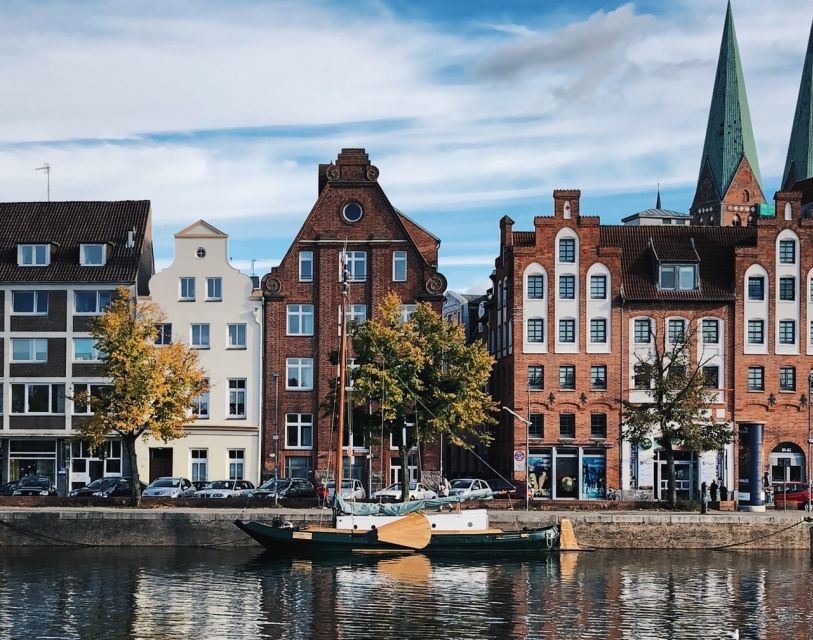
Lübeck bricks have stories in every corner. This private guided tour focuses on the citys UNESCO Hanseatic brick architecture, starting at the Holstentor and walking you through the old streets where medieval choices still show. You also hear the more human side of Lübeck, including the kinds of events that unfolded behind closed doors.
I love how the guide turns the buildings into a guided lesson. One standout for me is the stop in the town market area, where you get to connect the big names like the Ratskirche St. Marien with what daily life looked like in a Hanseatic city. You should also expect lots of Q-and-A, and in past tours a friendly, answering-their-questions style of guiding clearly made the experience feel personal.
The only real consideration is that church entrance fees are optional and listed separately at 2.00 EUR, so plan a little extra if you want to go inside. Also, your tour time can be set anywhere between 9AM and 7PM, so you will need to coordinate your start when the guide reaches out after booking.
In This Review
- Key Highlights Worth Plotting Into Your Day
- Why Lübeck Brick Architecture Feels Different When Someone Explains It
- Starting at Holstentor, Then Learning the City Through Streets
- Town Market Stops: Town Hall and the Power of Ratskirche St. Marien
- Buddenbrockhaus and Glockengießerstraße Courtyards and Passages
- The Brick-Making Story: Why Craft Skills Mattered in Lübeck
- Church Buildings on the Route and the Optional 2.00 EUR Choice
- Price and Value: $277 per Group Up to 8 for 90 Minutes
- Who This Private Lübeck Tour Fits Best
- Booking Smart: Scheduling, Language, and Making the Most of Your Questions
- Should You Book This Private Lübeck Brick Architecture Tour?
Key Highlights Worth Plotting Into Your Day
- UNESCO-listed Gothic brick architecture, explained street by street
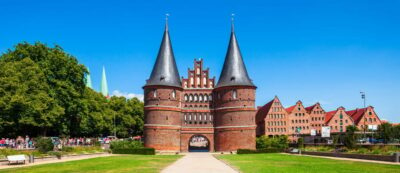
- Holstentor as your anchor point, then a walk that follows Lübecks logic
- Town market time for the Town Hall area and Ratskirche St. Marien
- Glockengießerstraße passages and courtyards, where the city becomes intimate
- A brick-making story from a local merchant house angle, focused on why craft mattered
- Church buildings on the route, with optional 2.00 EUR entrances
Why Lübeck Brick Architecture Feels Different When Someone Explains It
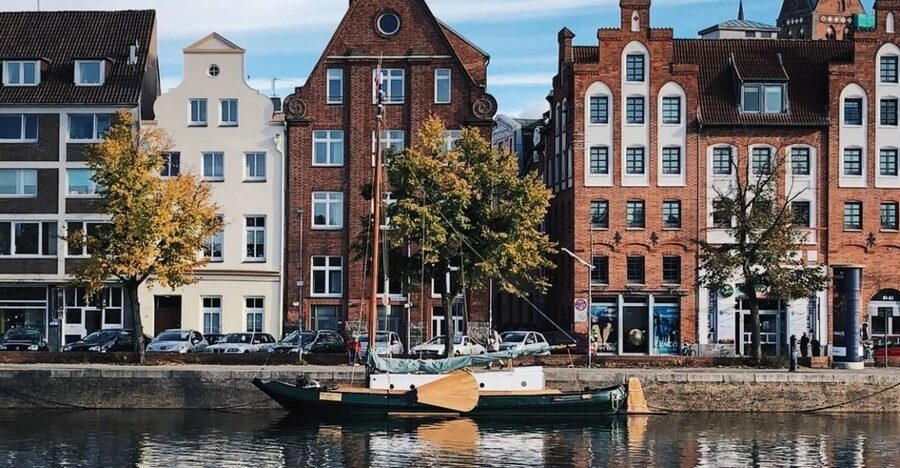
Lübeck is famous for its brick, but the trick is that it is not just pretty walls. It is architecture shaped by trade, building know-how, and the practical reality of what a maritime merchant city needed. On this tour, you do not just admire the facades. You learn why they look the way they do, and what their design says about how Lübeck worked.
I also like the tour length. At 90 minutes, you get enough time to walk meaningful distances and hit the key areas, without turning it into a full-day sprint. You can stay in “slow travel mode,” with stops that feel like you are catching details instead of checking boxes.
Finally, the private format matters. You can ask questions in English or German, and the guide can steer attention to the things you care about, whether that is churches, townhouses, or the engineering side of older buildings.
Also holding a platform in Lubeck
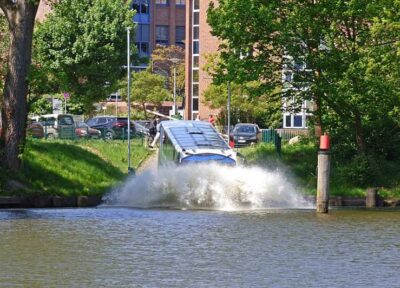
- Lübeck: 1-Hour Splash Bus City Tour
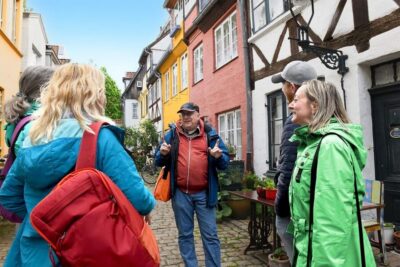
★ 4.0 · 2,626 reviews - Lübeck: entertaining guided tour to old town highlights
★ 4.7 · 594 reviews - Lübeck: Entertaining Tour Through Hidden Courtyards
★ 4.8 · 483 reviews
Starting at Holstentor, Then Learning the City Through Streets
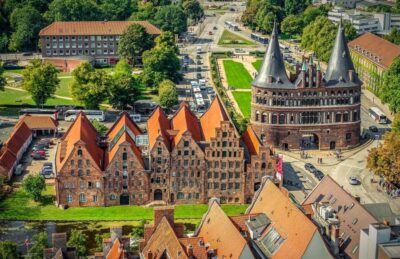
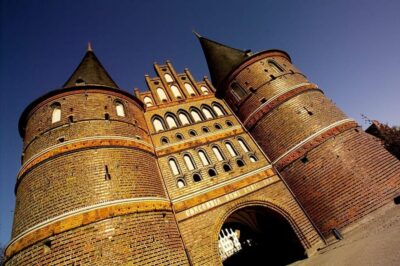
Your meeting point is right at the Holstentor, and the guide meets you at the entrance of the Holstenstor. This matters because it gives you a clear mental map quickly. You start with one of Lübecks most recognizable landmarks, then the tour moves outward into the neighborhoods where the famous brick buildings actually live.
From there, you head onto Lübecks streets with your local guide guiding the pace and focus. You learn about the original street system, and you also hear how medieval construction areas expanded in an artificial way. That sounds technical, but it becomes easy to visualize once you are walking and seeing the results in how buildings line up.
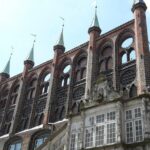
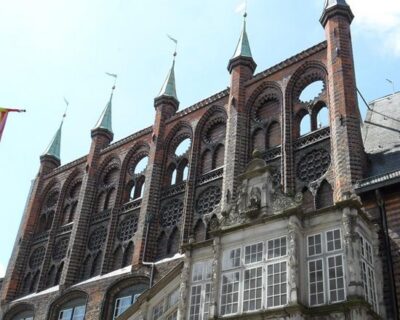
You will also pick up architectural clues you might otherwise miss. For example, you get explanations for sagging houses and for later gable alterations. Standing in place and being told what to look for changes everything. You start noticing uneven lines, shifts in structure, and the ways newer roof shapes altered older facades.
This is the kind of walking tour where you leave with more than a photo. You leave with a way to read the city.
Town Market Stops: Town Hall and the Power of Ratskirche St. Marien
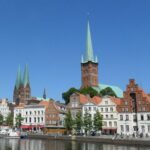
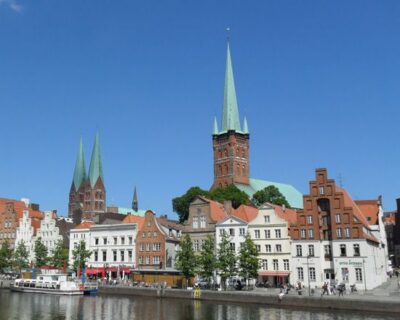
A highlight is a stroll through the town market area, where the civic and religious buildings reinforce each other. You get to marvel at the Town Hall, then you move to Ratskirche St. Marienchurch (often discussed as the citys famous Marien church). This is one of those Lübeck moments where the architecture is not just a backdrop. It is part of the citys identity.
What I like about this stop is that it is not random sightseeing. The guide ties the big visual moments to what the city valued: authority, faith, and community in one compact space. In a Hanseatic city, these landmarks were not silent. They were settings for the public face of merchant power and everyday civic life.
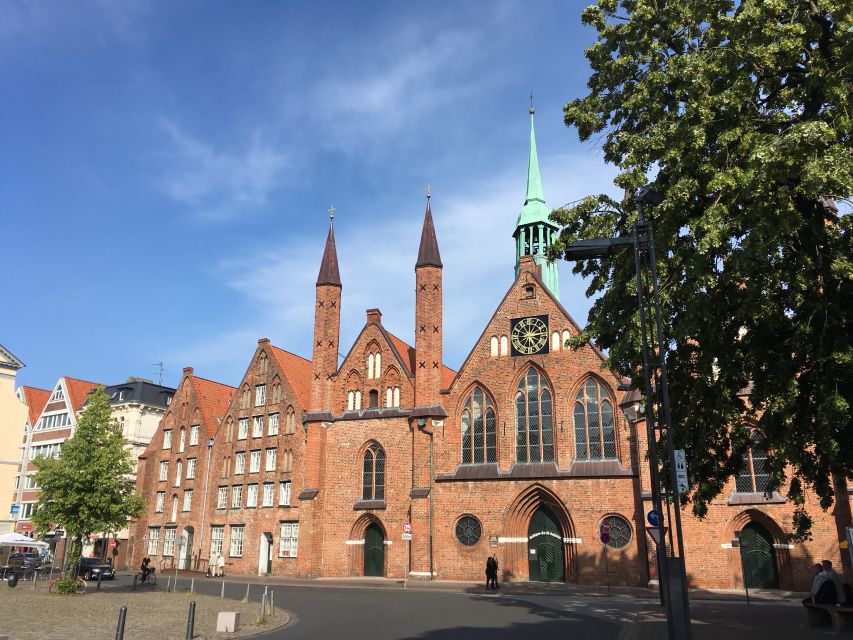
If you enjoy churches, you will probably want to spend extra time looking at how brickwork and Gothic shapes create vertical drama. Even if you do not go inside, you can learn to spot the details the guide points out and understand why they were built that way.
One practical note: church entry is listed as optional, with a 2.00 EUR entrance fee. If your group wants the full inside experience, budget for it. If you prefer to keep the focus on exterior architecture and street stories, you can skip entrances and still get a strong tour.
Buddenbrockhaus and Glockengießerstraße Courtyards and Passages
After the market area, the tour flows toward the Buddenbrockhaus area and then continues to Glockengießerstraße. This is where Lübeck starts feeling less like a postcard and more like lived-in city space.
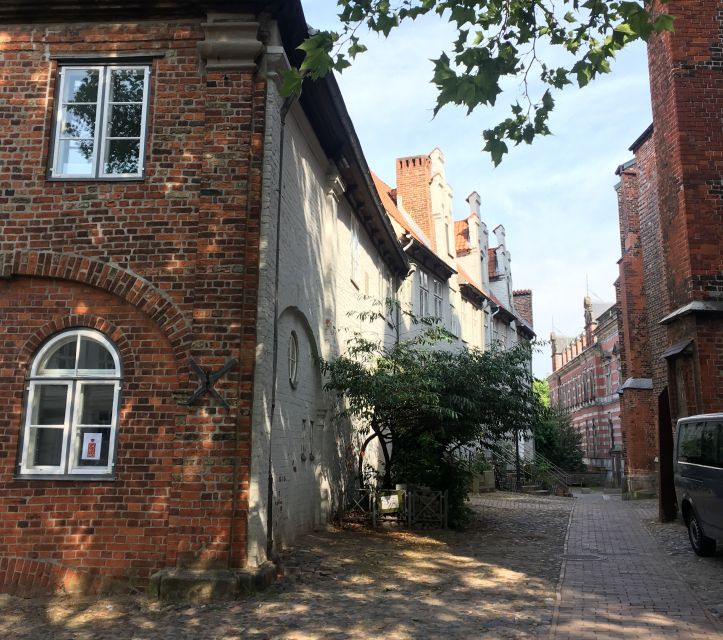
Glockengießerstraße is highlighted for its passages and courtyards, and this is exactly the kind of place where a guide earns their fee. A passage is easy to overlook when you walk past it on your own. But with a local guide, you learn about its history and how it was constructed, and suddenly the space makes sense.
You also get a sense for how craftsmen and merchants shaped the urban layout. The tour does not treat the city like a single museum piece. Instead, it shows you how building choices made movement, work, and daily routines possible in a dense medieval environment.
I found this part especially enjoyable because courtyards have that quieter feeling. You can see the contrast between the wide civic spaces and these more hidden interior spaces where the city performed its quieter functions.
The Brick-Making Story: Why Craft Skills Mattered in Lübeck
One of the tour’s most interesting angles is a stop at a local merchant’s house, where you listen to insights about brick-making. You are not given random facts. The guide frames why mastering this craft was so important to Lübeck and its residents.
This is a key point for you as a traveler. Lübeck’s brick architecture can look uniform at first glance, but the reason it became iconic is tied to skill, supply, and reliability. When a city relies on trade and construction at scale, the ability to produce consistent building materials becomes power. It is not just art. It is infrastructure.
Learning about brick-making also helps explain why the architecture survives and why it changes over time. Sagging houses and altered gables are not just weird quirks. They are the long-term results of centuries of building, weather, and upkeep. A guide connects the dots so the city feels coherent.
If you like history that has practical consequences, this stop will land well. It turns “old buildings” into a story about production, expertise, and survival in a place built for commerce.
Onward connections from Lubeck:


Church Buildings on the Route and the Optional 2.00 EUR Choice
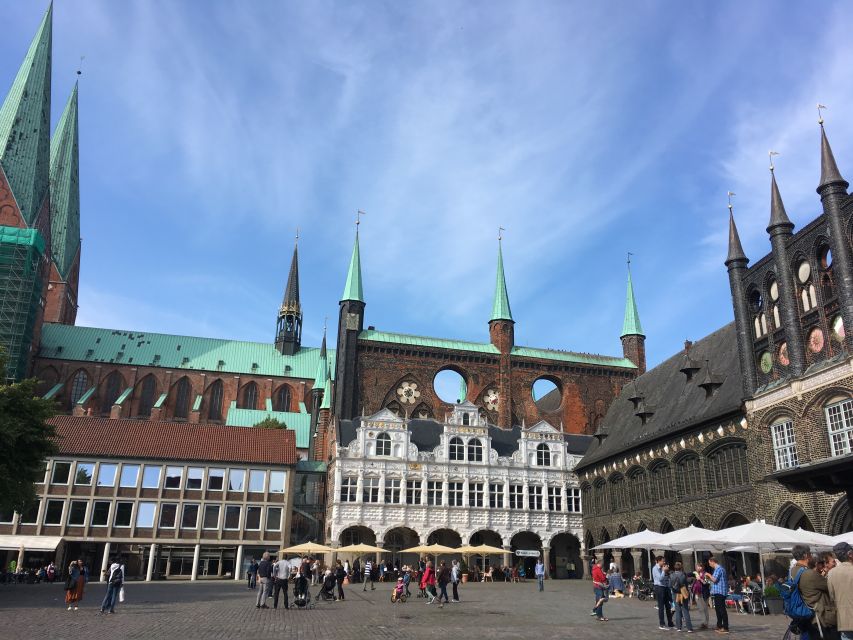
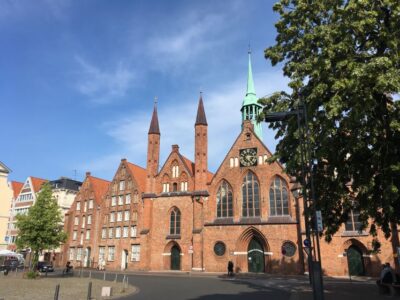
Church buildings are a major theme throughout the walk. You will see them as part of how the city is organized, not as isolated monuments. That makes your viewing time smarter because the guide helps you connect exterior architecture to the role churches played in public life.
As noted earlier, entrance fees for churches are optional, at 2.00 EUR. This detail matters because it affects your final experience. If your group loves interiors and architectural detail, you will likely feel that paying a small amount makes sense. If your group prefers to focus on outdoor architecture, you can still get a strong tour without spending extra inside.
A good strategy: decide early as a group what you want most. If interiors and artwork are your thing, bring cash for the optional entrance. If you are traveling with kids, a tight schedule, or someone who prefers exteriors, keep it simple and let the guide handle what is most worth stopping for.
Either way, the tour is designed so you can enjoy the church theme without feeling blocked by optional costs.
Price and Value: $277 per Group Up to 8 for 90 Minutes
The price is $277 per group for up to 8 people, for a 90-minute tour. For many travelers, that sounds like a lot until you do the math and remember you are buying something specific: a private guide for a short, high-impact walking experience.
If you are traveling solo or as a couple, the cost can feel steep. But if you are a small group, families included, the value improves fast. You get private attention, a flexible start time window between 9AM and 7PM, and you can ask questions as you walk. That kind of tailored pacing is hard to replicate on a larger group tour.
Also, you are not just seeing “the sights.” You are getting explanations tied to details like the street system, medieval expansion, sagging houses, and gable alterations. Those are the kinds of learning points that help you better appreciate what UNESCO listing means in real life.
If your time in Lübeck is limited, this tour is a good way to avoid wandering without direction. In a city where architecture is the main attraction, a focused guide can save you time and help you see more depth per hour.
Who This Private Lübeck Tour Fits Best
This tour is ideal if you care about architecture beyond taking photos. You will likely enjoy it most if you want to understand why Lübeck looks the way it does, how Hanseatic brick architecture works, and how the city evolved through medieval construction patterns.
It is also a solid match if you like structure. The tour walks a logical path from Holstentor to the market area, then through the Buddenbrockhaus and Glockengießerstraße sections, plus the merchant house and church-focused stops. Even within 90 minutes, it feels like a real route with meaning.
You may want to skip it if you want a long, slow museum-style experience. This is a walking tour, so you should be comfortable strolling through town. And if your priority is food stops or tastings, the tour is not built around that, since food and drinks are not included.
For a mixed-interest group, it can still work because the stories connect buildings to how people lived and worked. That craft and civic angle tends to satisfy more than one type of traveler.
Booking Smart: Scheduling, Language, and Making the Most of Your Questions
Your guide meets you at the Holstentor entrance, and then you are guided in English or German. The tour can start any time between 9AM and 7PM based on your preference, and the guide contacts you after booking to schedule the exact time.
That flexible start window is useful. If you like arriving early and avoiding crowds near major landmarks, you can plan for a morning start. If you are coupling Lübeck with other daytime plans, you can choose a later slot as long as it fits the 9AM to 7PM window.
If you want to maximize the tour, come with two or three topics you care about, like how brick buildings resist time, why churches dominate the city image, or what “sagging houses” usually indicates. A good private guide will steer answers to those interests, and based on the strong review scores, the guiding approach has consistently included thoughtful responses and lots of engagement.
Should You Book This Private Lübeck Brick Architecture Tour?
I think you should book it if you want the fast route to understanding Lübeck’s UNESCO brick architecture with real context. It is a tight 90-minute private walk anchored at Holstentor, with satisfying stops at the town market area, Ratskirche St. Marienchurch, Buddenbrockhaus, Glockengießerstraße, and a merchant-house angle into brick-making.
Skip it if you only want casual sightseeing, because the optional church entrances and the focus on architecture and stories means you will get the most out of it when you enjoy learning as you walk.
If you are deciding between doing it yourself or paying for a guide, this is one of those cases where a local guide pays off. The city is beautiful, but the real value is how the guide teaches you to read the bricks, the streets, and the city’s evolving shapes.
If that kind of understanding matters to you, this is a strong pick.
Fresh on the arrivals board for Lubeck
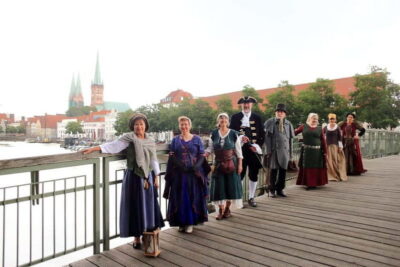
Lubeck Tours & Activities, compared.
entertaining guided tour to old town highlights
Read our review →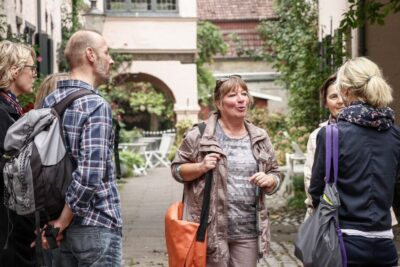
Lübeck zwischen Grusel und Geschichte Truecrime zu Halloween
Read our review →
Browse the lists this tour appears in