
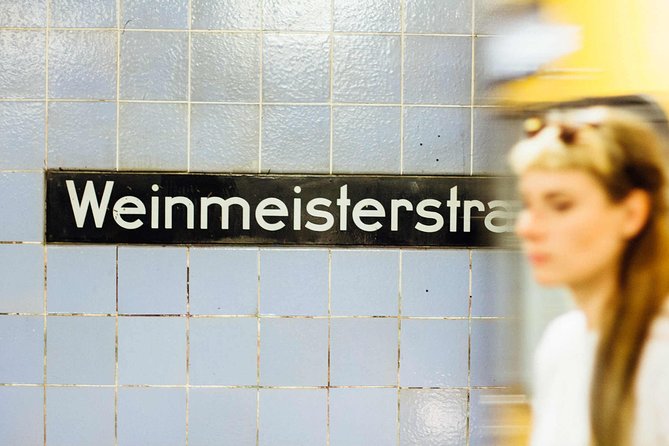
Reviewed · GUIDED WALKS IN BERLIN
Kreuzberg Berlin: Off the Beaten Track PRIVATE Walking Tour
Berlin has two faces, and this tour reads both.
This private walk trades big-group herding for neighborhood stories, graffiti context, and street-level culture. I like that you start in a central spot and then move into the Kreuzberg side where Berlin feels more personal and a bit more complicated.
Two things I especially like: you get a genuine street-art lens on the city, not just photos, and you have the freedom to shape the route while you’re walking. Kreuzberg and the East Side Gallery are a strong combo, and the guide’s stories help connect the dots between art, politics, and neighborhood change.
One possible drawback: the experience depends on your guide, so if you want deeper art meaning or stronger history on each mural, don’t be shy about asking. A private tour is great when you and the host are on the same page.
In This Review
- Key highlights worth planning for
- First step: meeting at Hackescher Markt and getting the route right
- Kreuzberg on foot: courtyards, graffiti protest, and the Pink Man moment
- What this stop gets right
- East Side Gallery: reading the Wall through international art
- Urban Spree Gallery: where street art energy turns into a bigger picture
- How private touring really plays out in Kreuzberg street art culture
- Price and value: is $123.36 per person worth it?
- Timing, walking pace, and what to wear
- Who should book this tour and who should skip it
- Should you book this Kreuzberg street art private tour?
- FAQ
- How long is the Kreuzberg Berlin off the beaten track private walking tour?
- Where does the tour start?
- Is this tour private?
- What’s included in the price?
- Do I need to buy tickets for the main stops?
- Can I cancel for a full refund?
Key highlights worth planning for

- Private, you-and-your-guide format means you can ask questions and adjust the plan as you go
- Kreuzberg street art focus, including the Pink Man graffiti by Blu and the gentrification conversation
- East Side Gallery with Wall context so you understand what you are seeing, not just where it is
- Urban Spree Gallery stop for a bigger view of Berlin’s urban art ecosystem
- Metro skills included, since you’ll use transit instead of taxis or long walks alone
First step: meeting at Hackescher Markt and getting the route right
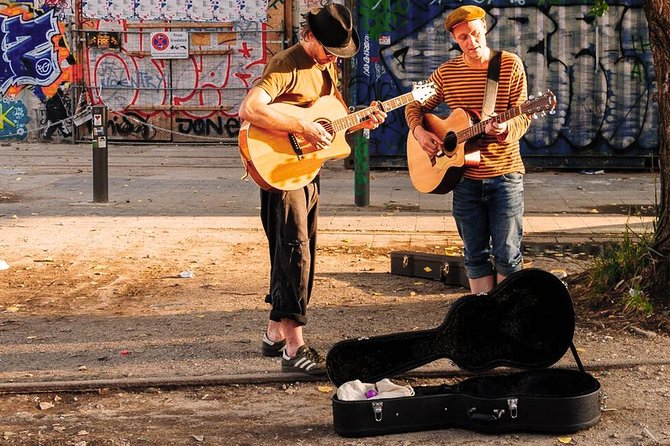
The tour starts at Hackescher Markt 4. That matters more than you might think. This is an easy transit hub, so you can arrive with less stress and you are not stuck coordinating hotel pickups. Since the tour ends back at the meeting point, it also helps you plan the rest of your day without guessing how far you’ll end up.
The format is PRIVATE TOUR: only you & your local guide, which changes the whole rhythm of the day. You are not listening through twenty sets of earbuds while everyone tries to catch up. Instead, you can stop when something catches your eye, and you can ask questions as they come up.
You also get real flexibility. After booking, your route can be tailored, and on the day you can make changes too. If you want more street art, ask for it. If you want more neighborhood texture, say so early. The best private tours are not just about the itinerary, they are about matching the walk to your curiosities.
One more practical thing: you’ll have a metro ticket and you can learn how to use transit on the fly. That’s a big win in Berlin, where moving efficiently makes the city feel smaller and more manageable.
More Guided Walks in Berlin
- Discover Berlin Half-Day Walking Tour
★ 5.0 · 9,624 reviews - Berlin City walk Government District and Places of Democracy
★ 4.7 · 8,467 reviews - Berlin: Third Reich & Cold War Guided Walking Tour
★ 4.9 · 8,378 reviews
Kreuzberg on foot: courtyards, graffiti protest, and the Pink Man moment
The first part of the walk focuses on Kreuzberg and the creative spaces that don’t make it into every first-timer photo reel. It starts with a courtyard that contemporary artists love. Courtyards in Berlin can be a whole world inside the blocks, and this one gets attention because the art has meaning, not just decoration. Your guide connects the visuals to what people were trying to say and why certain spots became gathering points.
Then you move from quiet courtyards to street walls and political visuals. A standout stop is the Pink Man graffiti piece by Blu, known for protesting gentrification. Even if you have only a casual interest in street art, this is the kind of mural that makes you look twice. You’re not just seeing a style choice. You’re seeing a debate in paint.
This is where Kreuzberg really earns its reputation. The district has long been a place where alternative culture grew in the cracks. But those cracks can close as neighborhoods become more popular. Your guide’s job is to show you how that change happens on the ground, and how art becomes both a record and a reaction.
You should expect plenty of walking. The tour is listed for moderate physical fitness, so comfy shoes matter. If you are planning a heavy walking day in Berlin anyway, this tour is a good fit because it feels purposeful, not like aimless wandering.
Also, one route detail to note: your guide may include a small theater known for a 1970s flair. Even if you do not go in, it is the kind of sidestep that makes Kreuzberg feel lived in, not museum-ified.
What this stop gets right
- You learn how to read street art as communication, not just aesthetics
- You get a neighborhood frame that makes later Wall and art stops click faster
- You experience Berlin at pedestrian speed, where courtyards and small blocks matter
East Side Gallery: reading the Wall through international art
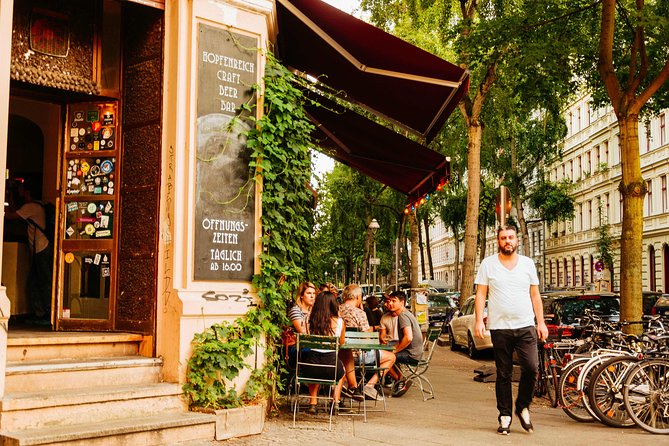
The second anchor is the East Side Gallery, with a dedicated hour. This is not just a long stretch of painted history. With the right guide, it becomes a walking conversation between the Wall era, international artists, and the message inside each piece.
Part of the value here is interpretation. The East Side Gallery is extremely photogenic, so it’s easy to treat it as a backdrop. A guide helps you slow down and notice what artists were responding to, and how the murals reflect the mood of the times. If you care about how politics and culture blend in public space, this stop is worth taking your time on.
Your walk also tends to connect the East Side Gallery visuals to the wider street culture you saw earlier. When you have seen protest art in Kreuzberg and then look at Wall art, the themes start to line up. You start noticing how cities use art to argue, to mourn, and to claim identity.
One practical note: this is a popular area, so you may run into crowds. The private format helps because you can pause without feeling like you are holding up a bus-group schedule. If you want specific photos, ask your guide when to move, so you are not stuck waiting at the worst time.
In some routes, guides may also draw your attention to specific famous mural imagery along the East Side Gallery wall, helping you understand why certain pieces became famous beyond Berlin.
Urban Spree Gallery: where street art energy turns into a bigger picture
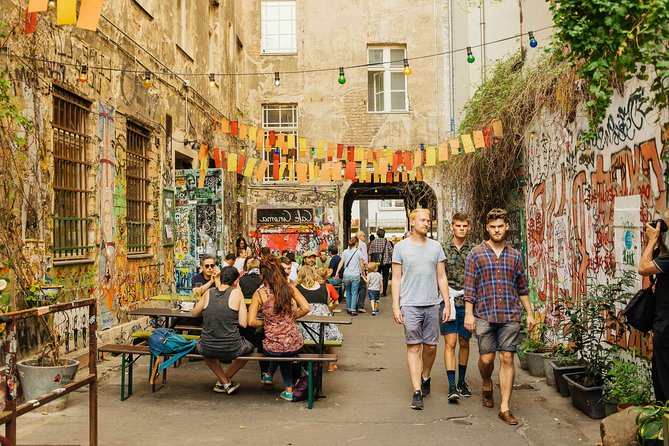
The third stop is Urban Spree Gallery, described as a large artistic and cultural center devoted to urban art. Think of it like a shift from neighborhood murals to an environment where street art has more space to breathe.
This kind of stop matters because it expands your understanding of how street art operates in Berlin. Outside, murals can feel temporary or confrontational. Inside, you can see how the culture organizes itself: exhibitions, creative events, and the broader ecosystem around the artists.
Your guide may also use this moment to recommend where to eat nearby and where to wander next. That’s not a small extra. Berlin works well when you build a mini plan around the themes of the day. If you enjoyed Kreuzberg’s street art side, you’ll usually want food and a final walk that match that vibe.
More German cities at walking speed:


How private touring really plays out in Kreuzberg street art culture
A private walk is not automatically better just because it costs more. The difference is control and attention.
Here’s how to make it work in your favor:
- Tell your guide what you care about before you get too deep. Street art meaning, neighborhood history, or club and alternative culture? Pick your priorities early.
- Ask one or two questions that force interpretation. Instead of What is this?, try Why this mural here, and what changed around it?
- Use the customization option. If you see a side street with art you like, ask if you can go there.
The guide you meet makes a real difference. In the past, names like Betty, Seth, Miha, Michelle, Pedro, Amelia, Leah, Melina, and Dave have come up with people who felt they had the right energy and explanations. The upside of this tour is that the format gives your guide room to connect art and context in a way group tours often skip.
There is also a fair caution. A couple of experiences did not feel like a true guided deep dive, and some people wanted clearer background on the street art and Wall history. You can avoid that problem by steering early. If your guide starts skating over meaning, ask for specifics. If you want more history, say it upfront.
A good private guide responds to that quickly. When you get it right, the tour ends feeling like you now understand the logic of what you saw, not only where you saw it.
Price and value: is $123.36 per person worth it?
At $123.36 per person for about 3 hours, this is not the cheapest way to see Berlin. But it is priced in line with what you are really buying: a one-on-one walking educator plus smart use of transit.
Here’s what makes it feel more reasonable than it looks:
- It’s truly PRIVATE with only you and your guide, so you are not paying for the time of a big group handler
- You get a metro ticket included, which helps you move efficiently
- The tour is described as a Sustainable Carbon Neutral Experience, which signals the operator considers footprint, even if you personally still care most about the actual experience
- The route can be customized, which means you are paying for relevance, not just a fixed checklist
Also, the tour tends to be popular enough that it’s commonly booked in advance, with an average booking window of 38 days. If you have a specific date or want a guide style that matches you, booking ahead is a smart move.
In your cost-benefit math, think about what you’d do instead. If you are doing street art and Wall sites yourself, you’ll still need to research meanings and map transit. This tour is basically paying for that translation service, plus the freedom to go where you want instead of following a script.
Timing, walking pace, and what to wear
The tour is around 3 hours, and it includes about an hour at each major area. That means it’s not a marathon, but it is not a sit-and-stroll either. You’ll be moving, pausing, and moving again.
So plan your day like a normal walking day. Bring:
- Comfortable shoes
- Water, especially if you go in warmer months
- A charged phone for the mobile ticket use
If you are traveling with family members, note that one experience mentioned the guide adjusting attention to older participants. That suggests the guide can adapt pace and focus, but you should still choose this option with moderate walking in mind.
And since it ends back at the meeting point, you have a clean stop at about the 3-hour mark. That makes it easier to pair with dinner plans in Kreuzberg or nearby creative areas.
Who should book this tour and who should skip it
You’ll probably love it if you:
- Enjoy street art and want the meaning behind murals
- Want the Kreuzberg side of Berlin, not only the obvious tourist loop
- Prefer talking with one guide over following a group plan
- Like to ask questions while you walk, then follow the recommendations afterward
You might skip it if:
- You only want famous landmarks and you prefer fast photo stops
- You expect a rigid schedule with zero flexibility
- You do not care about interpretation, politics, or neighborhood change themes
For first-time visitors, this is a strong way to get your bearings because it mixes iconic Wall art with a neighborhood that shows you how Berlin’s identity keeps shifting.
For repeat visitors, it can still work well because the customization can pull you into side courtyards and street corners you might never choose on your own.
Should you book this Kreuzberg street art private tour?
If your Berlin goal includes street art with context, plus Kreuzberg neighborhoods that feel real, I’d book it. The private format and the ability to adjust the route are the big reasons. You’re not just collecting sights, you’re learning how the city argues with itself through art.
Book it especially if you like to connect themes. This tour ties gentrification, protest murals like Pink Man by Blu, and Wall-era creativity into one walking story.
The only reason not to book is if you want a strictly checklist-style experience with minimal questions. If that’s you, choose a guided loop that matches that style. If you do want to think while you walk, this one fits.
FAQ
How long is the Kreuzberg Berlin off the beaten track private walking tour?
It runs for about 3 hours.
Where does the tour start?
The meeting point is Hackescher Markt 4, 10178 Berlin, Germany.
Is this tour private?
Yes. It is a private tour with only you and your local guide.
What’s included in the price?
Included are the private local guide, a metro ticket, and a sustainable carbon neutral experience.
Do I need to buy tickets for the main stops?
The itinerary stops listed have admission noted as free, and the tour uses a mobile ticket.
Can I cancel for a full refund?
Yes. You can cancel up to 24 hours before the experience for a full refund.
Fresh on the arrivals board for Berlin



Guided Walks in Berlin, compared.
Berlin City walk Government District and Places of Democracy
Read our review →
Berlin’s Best: 2 Hour Walking Tour Third Reich and the Cold War
Read our review →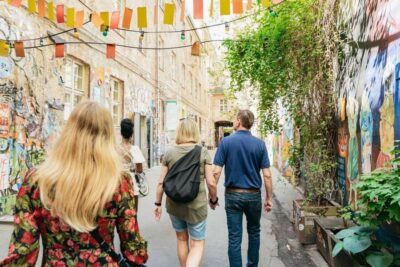
Third Reich Berlin: Hitler and WWII Walking Tour
Read our review →
Browse the lists this tour appears in