
Reviewed · RHINE VALLEY TOURS & ACTIVITIES
Koblenz – Old Town including the Deutsches Eck
Koblenz tells its story fast. This private, English-language walk is a smart way to get your bearings and understand why this river city matters. I especially like how the guide connects big eras, from Romans to postwar rebuilds, using details you can actually see. I also like the pacing, with about two hours covering the core Old Town highlights. One caution: if you want museum depth and long stops inside churches, two hours might feel a bit tight.
The value here is in how efficiently you cover key landmarks. With a mobile ticket and multiple daily start times, you can fit this into a day that already has Rhine views and coffee breaks. Still, because you’re moving from spot to spot, wear comfortable shoes and plan to stand and look often.
You finish with one of Koblenz’s signature viewpoints at Deutsches Eck, so your last moments are scenic, not just informational. If you like walking routes that feel logical, this one is built that way.
In This Review
- Key highlights at a glance
- A quick Koblenz intro that actually helps you navigate
- Münzplatz: the square where the city name gets a Roman backbone
- Liebfrauenkirche and the romantic church-street idea
- St. Castor Basilica: Carolingian-era meaning, not just an old building
- Schangelbrunnen: a fountain that explains Koblenz identity
- Deutsches Eck: the headland ending that ties everything together
- Guide style, pacing, and why this tour feels easy to follow
- Pricing: what you’re really paying for with a private group tour
- Practical tips so your two hours feel smooth
- Should you book Koblenz Old Town and Deutsches Eck?
Key highlights at a glance
- Münzplatz to Deutsches Eck in about two hours, with a calm, city-center pace
- Roman confluence origins, tied directly to the city name story
- Liebfrauenkirche with onion domes, plus a 1944 destruction and 1955 rebuild context
- Basilica of St. Castor, one of Koblenz’s oldest churches tied to early Carolingian rule
- Schangelbrunnen fountain meanings, including Josef Cornelius and the France connection
- Kaiser Wilhelm memorial views from the famous headland area
A quick Koblenz intro that actually helps you navigate
If you only have a short window in Koblenz, you need two things: a route that makes sense and explanations that don’t drown you in dates. This tour is built for that. You start in the Old Town core and end at Deutsches Eck, so the walk follows the city’s logic from early roots toward the riverfront landmark most people come to see.
I like that it’s private, meaning it’s just your group. That tends to make it easier to ask questions and hear the story at a pace that fits you. It’s also offered in English, which makes the tour feel usable, not like you’re piecing clues together alone.
Another practical win is flexibility. You can choose from multiple daily tour times, which matters in a place like Koblenz where the weather and your Rhine plans can shift. And since the total time is about two hours, you’re not committing your whole day to just one area.
The only downside is also the nature of a focused tour: you get a good overview, not a slow, hours-long deep sit-down at every site. If your travel style is “linger at details,” plan either extra time on your own after the tour or pick a day when you can stretch the afternoon.
Also holding a platform in Koblenz
- Koblenz: Rhine Valley Castles and Palaces Boat Tour
★ 4.4 · 1,824 reviews - Koblenz:Rhine Valley boat tour along the castles and palaces
★ 4.5 · 1,084 reviews - Koblenz: Old Town Sightseeing Cruise along the Rhine
★ 4.5 · 305 reviews
Münzplatz: the square where the city name gets a Roman backbone
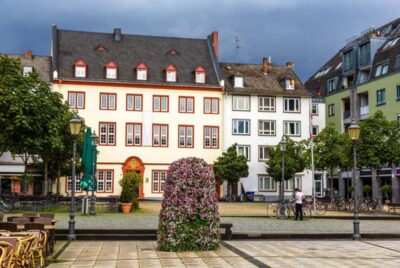
Your walk begins at Münzplatz, a square that sounds simple until you hear the layers. The name traces back to the electoral coin called Münz, minted as far back as the 11th century. That kind of detail matters because it shows how Koblenz kept reinventing itself while staying rooted in older systems of trade and power.
Then comes the story that ties the square to the Romans. The area is connected to the Roman foundation called Castellum apud confluentes, meaning a fort at the confluence. In other words, Koblenz’s geography is not an accident. It’s the reason people arrived, built, and stayed.
The fountain at Münzplatz adds a modern “chapter” too. On the occasion of the 2000 year anniversary in 1992, the fountain was constructed by Wili Heinzen as a gift to the city and its citizens from Sparkasse Koblenz. Even if you’re not a fountain person, this detail helps you read the square like a living space, not a backdrop.
At roughly 15 minutes, this stop is short but meaningful. It gives you a foundation you can carry to every other stop. If you’ve ever visited a town and felt lost about what to look for, this is the kind of start that helps you decode the rest.
Liebfrauenkirche and the romantic church-street idea
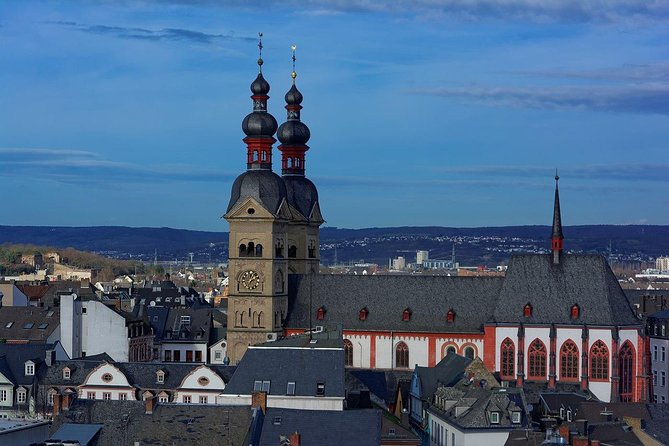
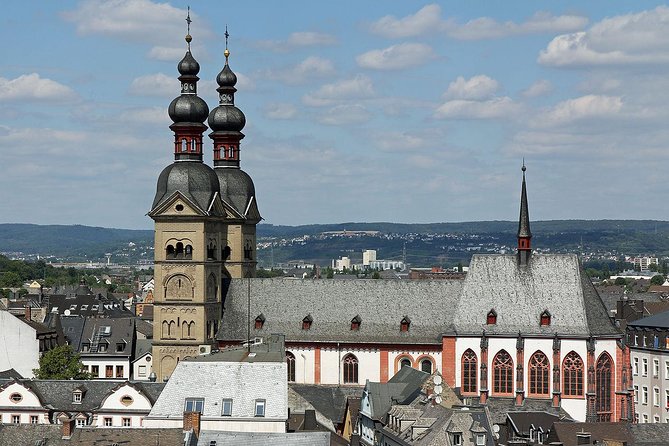
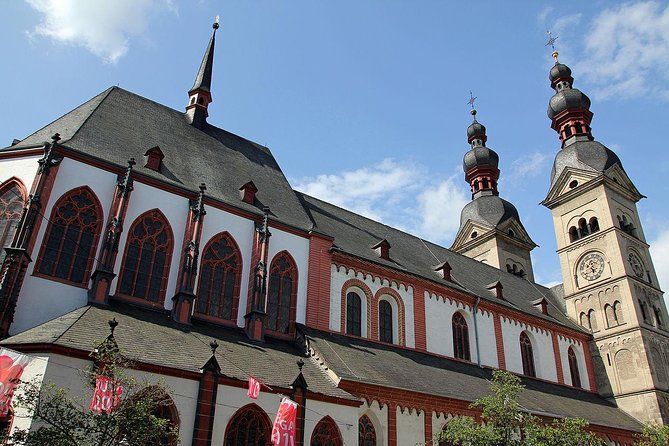
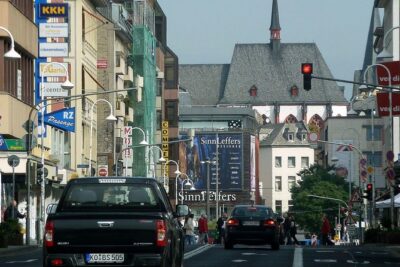
From Münzplatz, you head toward Liebfrauenkirche, known for its onion domes. That visual feature is easy to spot, but the tour context makes it more than a pretty roofline. The church sits on the highest point of the city, so you’re dealing with a landmark that has always been about visibility and importance.
The story here also includes political shockwaves. During the French Revolution, it was one of the main parish churches. And then came devastation: the building was destroyed in 1944, but it was rebuilt again in 1955. That timeline gives you a clear sense of how 20th-century events reshaped what people worshipped and how quickly communities tried to restore normal life.
Another clever element is the “romantic street” idea between two churches. The wording may sound like a brochure, but the practical value is real. When you walk that stretch, you’re naturally guided through the spacing and angles that make Old Town Koblenz feel walkable and historic at the same time.
This stop is also about 15 minutes, which keeps the momentum going. You get enough time to look closely at the domes and absorb the rebuild context, without dragging the route into a slow crawl.
St. Castor Basilica: Carolingian-era meaning, not just an old building
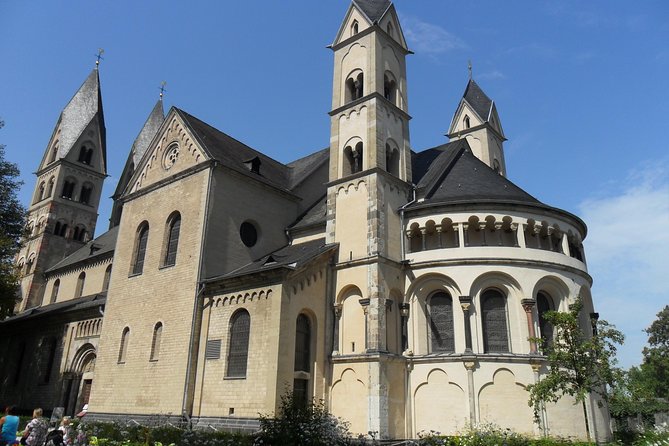
Next up is the Basilica of St. Castor, the oldest church in Koblenz. That’s a big claim, and the tour backs it with specific early medieval detail: it was constructed between 817 and 836 by the Archbishop of Trier with support from Emperor Louis the Pious.
That connection matters because it helps you understand the church as part of political and religious structure, not just a standalone relic. You’re seeing an era when church foundations were tied to authority, governance, and the spread of influence.
It’s also described as a Carolingian proprietary church. Without getting too technical, this idea basically means the church was tied to the ownership and power systems of its time. Once you know that, you’ll likely look at the building differently. You’re no longer just admiring “old stone.” You’re recognizing a place that had a role in how early medieval society organized itself.
As with earlier stops, expect about 15 minutes. That’s enough time for you to get the major context and take in the sense of age. If you want to go deeper, you can always do a return visit on your own after the tour, but the baseline understanding you get here is strong.
Schangelbrunnen: a fountain that explains Koblenz identity
When you reach Schangelbrunnen, you’re standing at a symbol of Koblenz city life. The tour connects the word “Schängel” to the city’s 20-year allegiance to France from 1794 to 1813. That time period might not be familiar, but it becomes simple once you connect it to the nickname.
Then there’s the fountain itself. Located at the city hall, it was designed by Carl Burger in 1940 and dedicated to the poet Josef Cornelius. This is the kind of detail that makes you appreciate public art more. It’s not just decorative. It’s a civic reminder of who mattered and what the city wanted to remember.
The practical takeaway for you is that this stop gives you something to talk about and remember later. When you hear Koblenz called by its identity nickname, you’ll know the origin thread. And if you’re taking photos, the city-hall setting gives you a clean backdrop for a classic “Old Town square” shot.
At roughly 15 minutes, you’re given the meaning without losing time. If you’re traveling with people who like history but get bored with long lectures, this is a great balance stop.
Onward connections from Koblenz:


Deutsches Eck: the headland ending that ties everything together
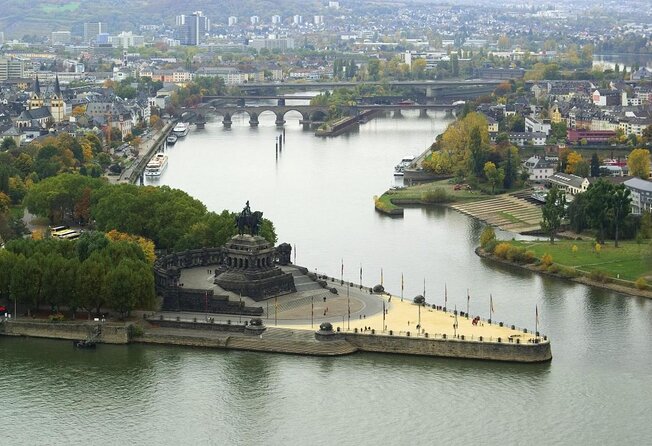
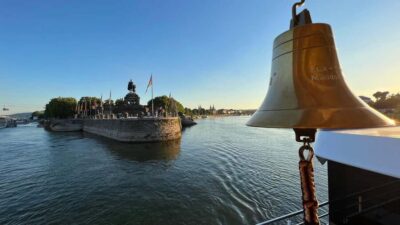
The tour’s final stretch moves to Deutsches Eck, the famous headland where the view is the payoff. You learn the name directly: Kaiser Wilhelm, the first German Emperor, was commemorated here, and the monument was erected in 1897. That adds a national-history layer to what would otherwise just be a scenic riverside spot.
But the most useful part is the way the tour sets you up for what you’ll notice in the area. Deutsches Eck is not just one object. It’s the start of a broader riverfront scene with many sights around the end of the route. Since your time at this stop is longer, about 35 minutes, you get room to look, orient, and take in the atmosphere without rushing.
This is also where first-time visitors usually feel the difference between “seeing” and “understanding.” When you reach the end with the earlier Roman, church, and city-identity stories in your head, the river confluence setting feels less random. It becomes the reason the city grew into what it is.
If you’re planning a Rhine day, this ending is especially good. It gives you a strong visual anchor before you head off to whatever comes next, whether that’s a meal, a museum stop, or simply walking the waterfront at a slower tempo.
Guide style, pacing, and why this tour feels easy to follow
The strongest praise for this experience points to a clear teaching style. The guide approach is described as lively and very understandable, and that shows in how the stops are framed. You don’t just hear facts. You’re guided to see why each place mattered.
That’s not a small thing. Koblenz sits in a region where layers stack up: Roman beginnings, church authority, French-era changes, and postwar rebuilding. Without a guide, it can turn into a pile of names you forget. With a guide who explains clearly, those layers start to feel like a story.
Pacing helps too. Each main stop is about 15 minutes, with the final Deutsches Eck stretch at about 35 minutes. That means you get enough time to look, absorb, and move on, instead of waiting around. For most people, that’s the sweet spot for a two-hour city introduction.
And because it’s private, you’re less likely to feel rushed by a big crowd. Up to 15 people means it can still be lively, but the experience is designed around your group, not a chaotic schedule.
Pricing: what you’re really paying for with a private group tour
The price is listed at $420.53 per group, up to 15 people. On paper, that looks like a “group price” rather than a per-person fare. In practice, this can be very good value if you’re traveling with friends or family who share your timing.
Here’s the simple math you can use: if you fill all spots with 15 people, it comes out around $28 per person. If your group is smaller, the per-person cost rises, so it’s best suited to groups who can spread it out. If you’re a solo traveler, you might prefer a cheaper option, unless the private format and the quick, coherent route matter a lot to you.
What you’re paying for is not just walking. You’re paying for a guided story that links the Roman confluence origin, the church rebuild history, civic identity through Schängel symbolism, and the Kaiser Wilhelm memorial context into one easy-to-follow arc.
If you want a first pass through Koblenz without spending time figuring out what’s important, this format can be a smart use of your limited time.
Practical tips so your two hours feel smooth
This tour uses a mobile ticket, which is convenient. You avoid printed passes and can keep everything on your phone. It’s also offered in English, so you can focus on listening and looking rather than translating.
The meeting point is at Münzplatz (Münzpl., 56068 Koblenz), and the ending is at Konrad-Adenauer-Ufer near Deutsches Eck (56068 Koblenz). That matters because you can plan your next stop based on an actual end location, not a vague return to where you started.
It’s also described as near public transportation. That’s useful if you’re arriving by train or want an easy hop to other parts of town afterward. As for walking, the “most travelers can participate” note suggests this is a doable city walk, not a high-intensity hike.
Bring comfortable shoes, since you’ll spend time on sidewalks and in public squares. Also, if you care about photos, plan to pause briefly at each stop rather than trying to rush the shots all at once.
Should you book Koblenz Old Town and Deutsches Eck?
Book this tour if you want a first-time Koblenz overview that feels structured and easy to understand. It’s ideal when your time is limited and you want the key story points tied to real places you can see, from the Roman confluence origin to church history and civic symbolism at Schangelbrunnen, ending with the big viewpoint at Deutsches Eck.
I’d skip it or add extra time on your own if you’re the type who needs long inside visits. The format is strong for orientation and context, not for slow museum-level exploration.
If your goal is to leave Koblenz knowing what you’re looking at, and why it matters, this private, English-language walk is a solid choice.
Fresh on the arrivals board for Koblenz

Rhine Valley Tours & Activities, compared.
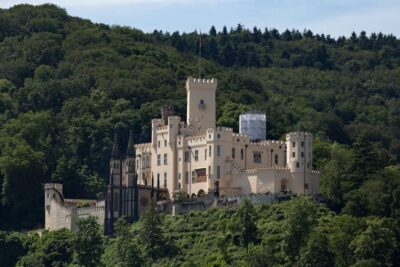
Rhine Valley boat tour along the castles and palaces
Read our review →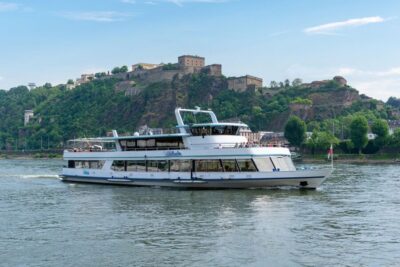
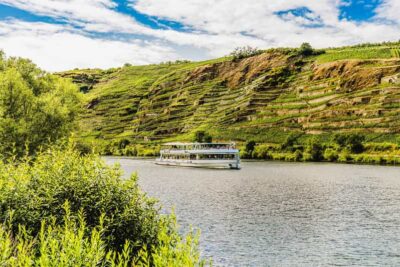
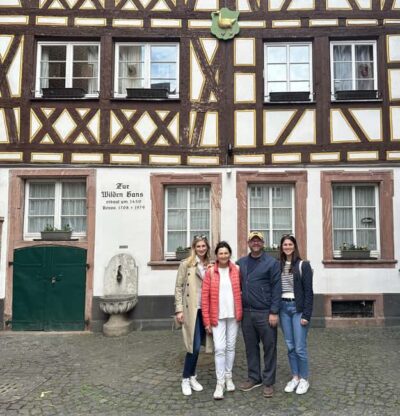
Guided tour in Mainz on the Rhine in german and english
Read our review →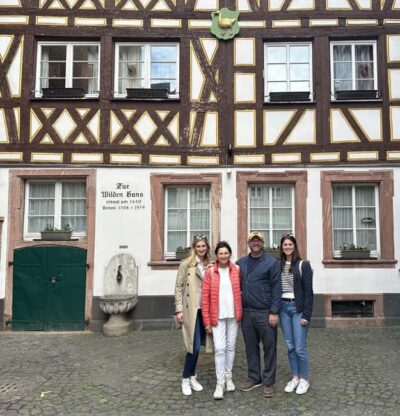
guided evening tour of the Rhine riverbank/old town in German and English
Read our review →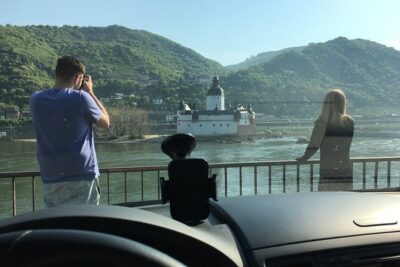
Small Group Rheingau Vineyards Tour with Castles and Abbeys
Read our review →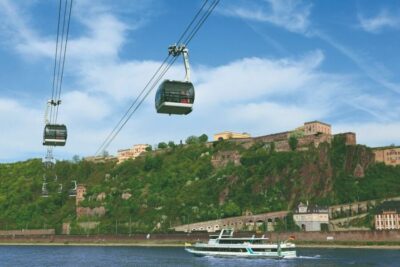
Browse the lists this tour appears in