
Reviewed · RHINE RIVER CRUISES
Mainz: guided evening tour of the Rhine riverbank/old town in German and English
Mainz glows after work. This 90-minute walk along the Rhine riverbank views uses a live German and English guide to connect the old town to names like Johannes Gutenberg and Napoleon Bonaparte. I love that the sights are practical and easy to picture at night, not just vague city-center points. My only caution: churches close at night, so you’ll see exteriors, not interior visits.
You meet on the Hilton Hotel terrace by the Rhine, right near the Theodor Heuss Bridge. The route works well for a real evening plan, you’re back on your feet for the whole 1.5 hours and it’s paced at a leisurely walking pace. And yes, the tour is wheelchair accessible, which helps if you’re trying to keep the evening low-stress.
The finish point matters. You end in Kirschgarten, the half-timbered cherry orchard area from the late Middle Ages, and it’s a great place to linger in warm light before your next stop.
In This Review
- Key highlights at a glance
- Mainz after dark, with a Rhine front-row seat
- Meeting at the Hilton terrace by the Rhine and the quick orientation you get
- Theodor Heuss Bridge to Rheingoldhalle: start with big views and easy momentum
- Finding the old town story: Eisenturm, Heiliggeist, and the Cathedral-area rhythm
- High Cathedral of St. Martin on the cathedral hill: your main night photo moment
- Alter Dom St. Johannis, Leichhof, and the contrast between old layers
- Kirschgarten half-timbered lanes: why the end works so well
- What you learn: Romans to modern times, plus Gutenberg and Napoleon
- Price, value, and whether 90 minutes is enough
- Tips to make your evening smoother (and more fun)
- Should you book the Rhine and old town evening tour?
- FAQ
- What is the duration of the Mainz evening walking tour?
- How much does the tour cost?
- Where do we meet for the tour?
- Where does the tour end?
- Is the tour offered in German and English?
- Can we visit churches inside during the tour?
- Is the tour wheelchair accessible?
- Is there free cancellation?
- Is reserve now, pay later available?
Key highlights at a glance
- Theodor Heuss Bridge at dusk, with Rhine and river-activity views that set the tone fast
- German and English live guidance, so the story stays clear even if your language skills are rusty
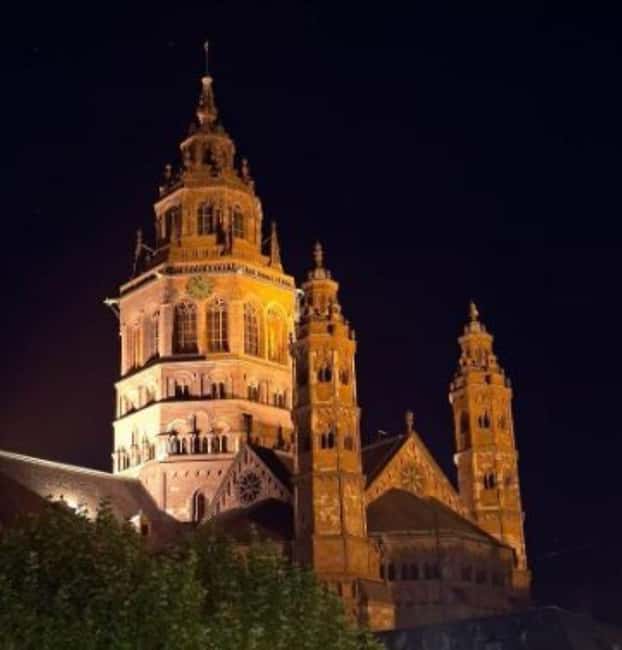
- Main cathedral hill plus St. Martin exteriors, ideal for night photos from multiple angles
- Old St. Johannis and Leichhof area, where the atmosphere shifts from river to old town
- Kirschgarten half-timbered lanes, a late-Middle Ages feel right at the end of the walk
Mainz after dark, with a Rhine front-row seat
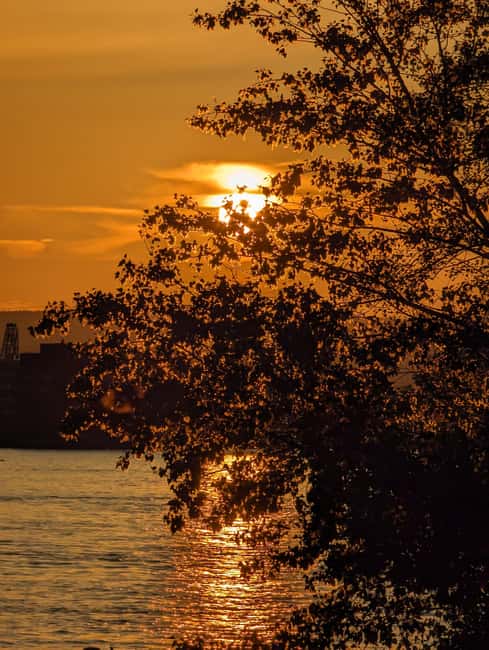
This tour is a smart way to spend an evening in Mainz if you want both atmosphere and context. The Rhine gives you instant drama, and the lit facades keep the walk visually rewarding even when you’re tired from a working day. Instead of racing through spots, the pace is gentle, so you actually have time to look up, not just look at your feet.
What I like most is how the guide keeps everything connected. You’re not bouncing between unrelated landmarks. You’re moving along a story thread from the river edge into the old town, and the guide’s anecdotes help make the centuries feel like a sequence, not a random list of dates.
And because you’re outside most of the time, you don’t need to commit to a long day tour. This is the sweet spot for 90 minutes: long enough to get your bearings, short enough that you can still plan dinner afterward.
More river bends past Rhine castles:
- Koblenz: Rhine Valley Castles and Palaces Boat Tour
★ 4.4 · 1,824 reviews - Koblenz:Rhine Valley boat tour along the castles and palaces
★ 4.5 · 1,084 reviews - Koblenz: Old Town Sightseeing Cruise along the Rhine
★ 4.5 · 305 reviews
Meeting at the Hilton terrace by the Rhine and the quick orientation you get
You start at the terrace in front of the Hilton Hotel in Mainz, toward the Rhine and the Theodor Heuss Bridge. That location is handy because it puts you immediately on the water and gives you a clear reference point. You also get views toward the bridge and the boat landing stage, so even if you’ve never been to Mainz, you’ll feel oriented quickly.
One practical tip I’d give: check which terrace you’re standing on. The Hilton can feel like a two-terrace situation, and it’s easy to lose a few minutes if you wander to the wrong side. When a tour is only 90 minutes, those minutes matter.
Once you’re together, the guide sets the tempo and gives you what you need for the rest of the evening. This matters because night walking tours can go two ways, either smooth and guided, or scattered. This one is designed to keep you moving with purpose, without urgency.
Theodor Heuss Bridge to Rheingoldhalle: start with big views and easy momentum
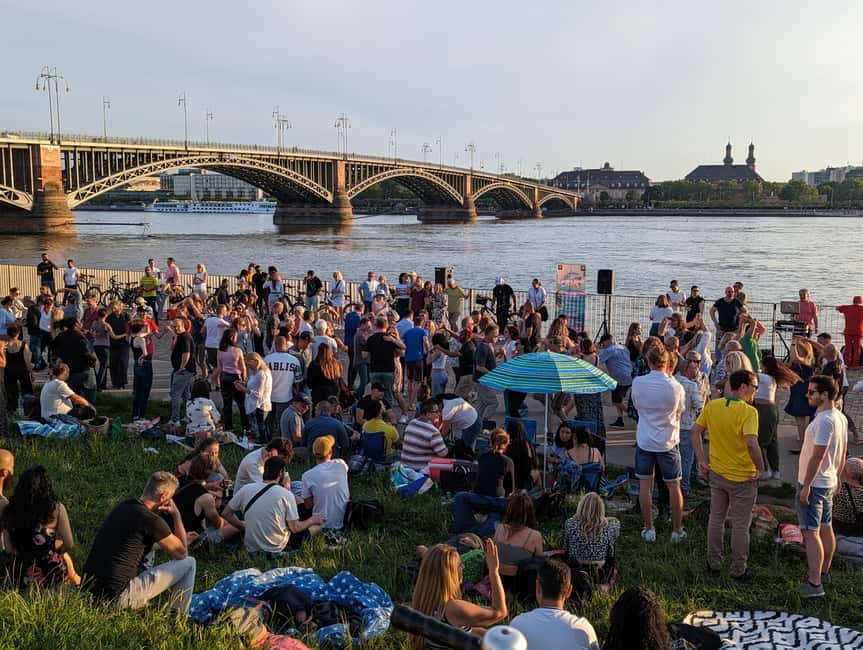
Right away you’re at the Theodor Heuss Bridge, and that’s a strong first “wow” stop. Bridges are perfect at night because the structure draws your eyes, and the Rhine turns streetlight into reflections. Even if you only spend about 10 minutes here, you’ll see enough to understand the layout of the riverbanks and how the old town connects to the water.
From there the route continues past major river-adjacent landmarks, including the Rheingoldhalle Mainz area. This sort of stop is valuable because it gives you a sense of how Mainz balances river life, public spaces, and monumental buildings. It also helps you photograph the city without needing a car or a complicated map.
Next come short orientation points around the river-town transition areas, including stops near Jockel-Fuchs-Platz and the Eisenturm Mainz. You might not spend long at each one, but these short sections do two useful things. They give you rhythm, and they prevent the walk from feeling like a single long line with no checkpoints.
Finding the old town story: Eisenturm, Heiliggeist, and the Cathedral-area rhythm
As the walk shifts inward, the pace stays leisurely, but the mood changes. The bright river glow becomes more architectural. You’ll start noticing how streets and small squares lead you toward higher ground and larger religious buildings.
A key stretch includes the Heiliggeist stop and then moving toward Liebfrauenplatz. This is one of those parts where a guided tour helps a lot, because at night you can miss the “why” of a spot even when you can see it clearly. With a guide, you learn what you’re looking at and why it matters to Mainz’s identity.
Then comes Domplatz and the Wochenmarkt area. Night markets are a whole separate vibe, but even if shops are quiet, a historic market square still carries a sense of daily life. I like that the tour includes a place tied to regular rhythms of people and trade, because it makes the city feel lived-in, not museum-like.
You also get a group walking advantage here. Mainz’s center is walkable, but the landmarks are spread in a way that can feel slightly tricky without context. The guide keeps the chain of stops clear, so you don’t waste time second-guessing your direction.
High Cathedral of St. Martin on the cathedral hill: your main night photo moment
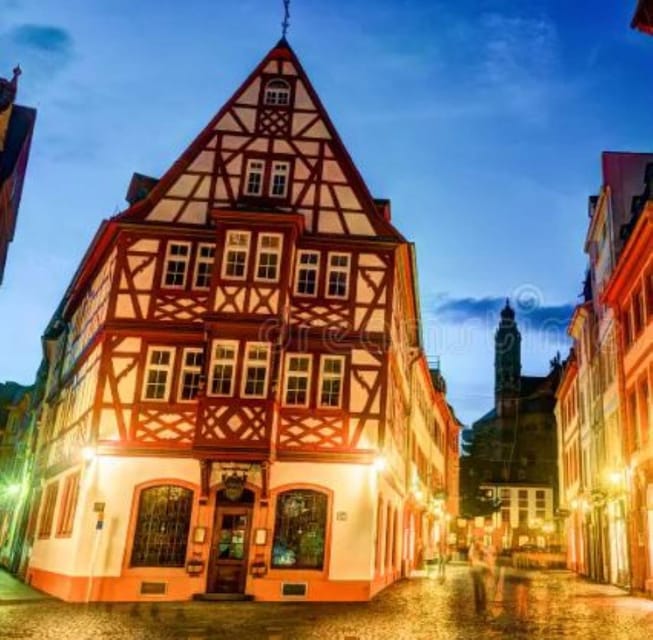
The High Cathedral of St. Martin and the cathedral hill are the headline segment for many good reasons. Even when you’re not going inside, a cathedral hill works at night because it gives you height, angles, and a skyline effect that street level alone can’t replicate.
Plan to spend time looking from different sides. Cathedrals often feel more impressive when you catch them from a slight angle, and at dusk and night you also get contrast between stone and shadow. This stop is where the tour’s focus on city structure really pays off.
You’ll also hear the Mainz connections tied to big-name historical figures, including Johannes Gutenberg. The guide doesn’t just name-drop. The point is to connect Mainz to broader European movements, so you understand why the city’s story extends beyond local streets.
One more important note: you’ll see the churches and cathedrals as illuminated exteriors, but the tour is not built around interior visits. Since churches are closed at night, there’s no promise that you’ll go inside. That’s not a deal-breaker, but it changes what kind of experience you should expect.
More German evenings after the offices close:




Alter Dom St. Johannis, Leichhof, and the contrast between old layers
After the cathedral segment, the tour moves past the old cathedral of St. Johannis, often referred to as Alter Dom St. Johannis, and through the Leichhof area. This is a smart contrast point. If St. Martin feels like the dominant night landmark, St. Johannis helps you see how Mainz holds onto older layers of its spiritual and civic identity.
Stops like this are valuable because they teach you how to read a city at human speed. You’re learning what to notice: the relationship between religious sites, nearby open areas, and the street patterns that carry history forward.
You also stay in that golden zone where guided narration changes what you see. Without a guide, it’s easy to walk past older structures and simply register them as historic buildings. With the guide, you get the anecdote-driven context that turns them into story points.
And because you’re already on foot, you can slow down for photos without feeling like you’ve fallen behind. The tour is paced for a calm evening, not a sprint.
Kirschgarten half-timbered lanes: why the end works so well
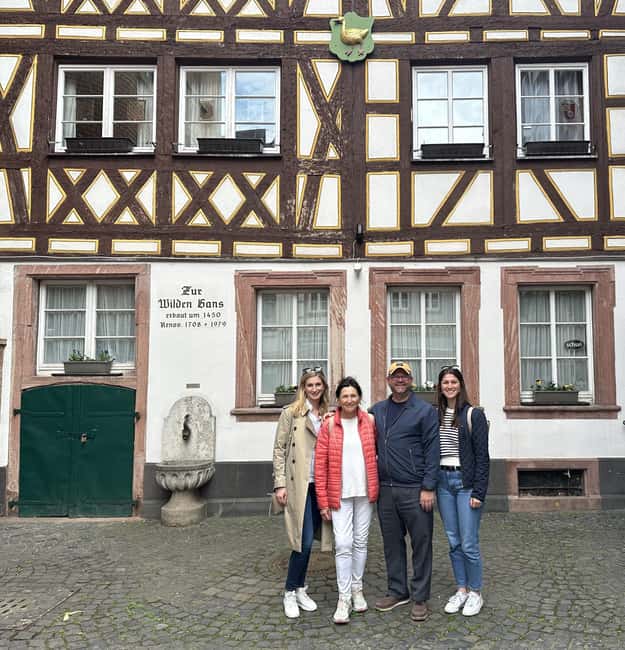
You finish in Kirschgarten, a cherry orchard setting lined with half-timbered houses from the late Middle Ages. This is the kind of end point that feels like a payoff. After cathedral hill and older cathedral spaces, the half-timbered lanes bring you back down to human scale, with details you can actually spot while walking.
Kirschgarten is also a practical ending. It gives you a natural place to pause, look around, and decide your next move. The tour isn’t designed as a drop-off that sends you into confusion. Instead, it lands you in an area where you can keep enjoying Mainz on foot.
The cherry orchard angle is a nice touch, even if you’re visiting outside peak season. The setting helps you imagine daily life in centuries past, and the half-timbered architecture gives you a strong visual identity for the city. It’s also a great zone for night photos, because you can frame the timber patterns against lit street surfaces.
What you learn: Romans to modern times, plus Gutenberg and Napoleon
The backbone of this tour is a story arc from Romans to modern times, and it’s tied to Mainz on the Rhine and its citizens. That structure helps you retain what you hear because you’re always moving forward, and each stop reinforces the next idea.
You’ll also follow in the footsteps of Johannes Gutenberg and Napoleon Bonaparte. Since the tour is focused on connecting these figures to places you can actually see, it helps history feel grounded rather than abstract. Instead of learning them as names in a textbook, you hear how they relate to Mainz’s development across time.
I like tours that connect people to place. This one does that through anecdotes. Even if you’re not a “history person,” the stories help the city feel personal, not just scenic.
Price, value, and whether 90 minutes is enough
At $20 per person for 90 minutes, this is solid value if you want both orientation and storytelling. You’re paying for more than walking time. You’re paying for guided interpretation of what you’re seeing, plus a route that strings together multiple key landmarks without making you plan anything.
Here’s how I’d judge value for this specific tour. If you only wanted photos of one or two places, you could do it on your own. But you’d miss the narrative chain that makes the cathedral areas, older structures, and the Rhine edge connect into one coherent evening.
Also, 90 minutes is the right length for a night walk. It’s short enough to stay comfortable, but long enough to cover the major highlights, including the Theodor Heuss Bridge, St. Martin cathedral area, Alter Dom St. Johannis, and the Kirschgarten finish.
Tips to make your evening smoother (and more fun)
Wear shoes you trust. Night walking tours sound easy until cobblestones and uneven pavements happen. Bring a light layer if the Rhine air is chilly, since you spend time near the water early on.
Bring your phone, but also bring your eyes. The illuminated city looks best when you pause for a few seconds instead of snapping everything in motion. The guide’s stops are built around moments where you can really see the architecture rather than just pass by it.
As for the meeting point, aim to arrive a few minutes early at the Hilton terrace toward the Rhine and the Theodor Heuss Bridge. If you’ve got doubts about which terrace to use, ask staff before the tour starts. One review specifically called out that the Hilton can have two terraces in front, front and back, which can create a small mix-up.
Finally, plan your post-tour plan lightly. A good part of the tour value is that the guide can recommend a place to stop for refreshments at the end. Since you finish in Kirschgarten, you’re not stuck wandering for a good option right when your energy drops.
Should you book the Rhine and old town evening tour?
Yes, if you want an evening plan in Mainz that’s low-effort, high on context, and built around the city’s nighttime look. It’s especially worth it if you care about understanding why Mainz matters beyond the postcard version. The combination of Rhine views, cathedral-area landmarks, and a half-timbered finale in Kirschgarten makes the route feel complete.
Book it if you like guided walking tours that feel practical. The pace is leisurely, it’s offered in German and English, and the wheelchair-accessible approach makes it easier for more people to join.
Skip it only if you’re expecting church interiors at night. This tour is about exteriors and stories, not late opening hours. If that’s what you want, you’ll be happier choosing a different kind of visit.
If your goal is to get oriented fast, see the illuminated old town, and leave with a clearer sense of Mainz from the Romans onward, this is a very easy yes. The price is reasonable, the route is well paced, and Kirschgarten gives you a memorable finish instead of a rushed exit.
FAQ
What is the duration of the Mainz evening walking tour?
The tour lasts about 90 minutes at a leisurely pace.
How much does the tour cost?
The price is $20 per person.
Where do we meet for the tour?
You meet on the terrace in front of the Hilton Hotel in Mainz, toward the Rhine and the Theodor Heuss Bridge.
Where does the tour end?
The tour ends in Kirschgarten.
Is the tour offered in German and English?
Yes, the live tour guide provides commentary in German and English.
Can we visit churches inside during the tour?
No. Since the churches are closed at night, it is not possible to visit them inside.
Is the tour wheelchair accessible?
Yes, the tour is wheelchair accessible.
Is there free cancellation?
Free cancellation is available, with a full refund if you cancel up to 24 hours in advance.
Is reserve now, pay later available?
Yes. You can reserve your spot and pay nothing today.
Fresh on the arrivals board for the Rhine Valley

Rhine River Cruises, compared.
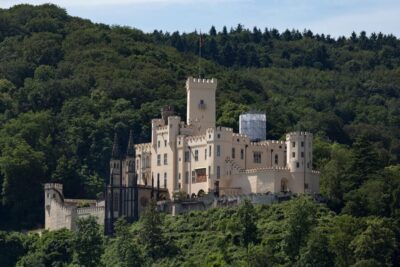
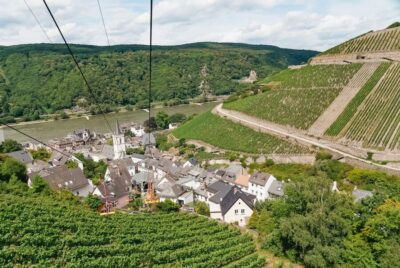
Rhine Valley Trip from Frankfurt including Rhine River Cruise
Read our review →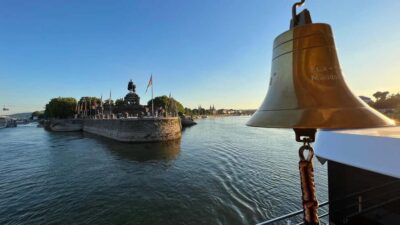
Rhine Valley boat tour along the castles and palaces
Read our review →
Cologne City Tour Experience cathedral city on the Rhine
Read our review →
Browse the lists this tour appears in