
Reviewed · RHINE RIVER CRUISES
Evening walking tour of Mainz Rhine bank and Old Town
Dusk makes Mainz feel personal fast, like the Rhine is telling the story. I love the rhythm of a short 1.5-hour walk and the way a local-style guide turns landmarks into scenes you can picture. I also like that you get a small-group format, so questions land and the pace stays relaxed. The main downside is simple: it is an outdoor evening, so in cooler months you will want real warmth.
This route links the river views to the Old Town in a way you can actually remember later. You start near the Rhine at VINEUS Restaurant & Wine Bar, then you end in Kirschgarten, right where the evening atmosphere feels strongest. Also, because churches and museum spaces are closed at night, the tour is built for seeing the sights from the outside, not doing late-night interiors.
In This Review
- Key highlights if you want the good parts right away
- Why Mainz at 6:30 pm hits different
- Price and logistics: what you are paying for
- From VINEUS Restaurant to Kirschgarten: the walking flow
- Theodor-Heuss-Brücke: seeing Mainz and Wiesbaden as one story
- Rheingoldhalle Mainz: why the Rhine bank mattered to people
- Eisenturm: the Iron Tower and the idea of Golden Mainz
- Gutenberg Museum area: letterpress origins, plus what rebuilding means
- Mainzer Dom and St. Johannis: big silhouettes, long timelines
- Kirschgarten finish: why this ending point feels like a reward
- What kind of traveler should book this evening walk
- Should you book the Mainz Rhine and Old Town evening tour?
- FAQ
- How long is the evening walking tour in Mainz?
- What does the tour cost?
- Where do I meet and where does the tour end?
- What time does the tour start?
- Do I get a ticket on my phone?
- Are museum and church visits included inside at night?
- What is included with the tour?
- Is the tour limited to a certain group size?
- What is the cancellation policy?
Key highlights if you want the good parts right away
- Theodor-Heuss-Brücke to Wiesbaden: one bridge view, two cities, and a clear Rhine context.
- Rhine-focused stop at Rheingoldhalle Mainz: you learn why the river mattered to daily life, not just ships.
- Eisenturm and Medieval Mainz: the Iron Tower stop is timed for story, not just photos.
- Gutenberg Museum area (rebuilding): letterpress history tied to the city behind it.
- Ending in Kirschgarten: the finish point is chosen for the mood, not convenience alone.
Why Mainz at 6:30 pm hits different
Mainz looks great in daylight, but evenings do something practical for your brain. They slow you down. You see details you might skip in bright sun, like the lines of stonework against the darker sky and how the Rhine bank glows instead of glare-flashes.
This tour is built for that. It is designed as an easy-moving evening circuit, about 1 hour 30 minutes, starting at 6:30 pm. You get guided context as you walk, so the stops feel connected rather than like a random list of famous spots.
You also get the comfort of knowing what kind of experience this is. It is not a late-night church crawl. Since you cannot visit inside at night, the value is the guided storytelling plus the best exterior views along the river and in the Old Town streets.
More river bends past Rhine castles:
- Guided tour in Mainz on the Rhine in german and english
★ 4.9 · 163 reviews - Mainz: guided evening tour of the Rhine riverbank/old town in German and English
★ 4.9 · 106 reviews - Cologne: Top Sights Rhine River Cruise – Skyline Tour
★ 4.4 · 3,030 reviews
Price and logistics: what you are paying for
The price is $20.25 per person, and that is not just for someone to lead you from point A to point B. The walk includes tickets tied to multiple stops, so you are not paying extra at each location. Even when you cannot go inside the way you might during daytime hours, having admissions included still matters for your overall value and smoothness.
The group size caps at 12 travelers, which changes the feel immediately. In a big crowd, you mostly hear facts. In a small group, you get back-and-forth, and you can ask why a detail matters. The vibe here matches that. In past experiences with this tour format, guides like Andy, described as passionate about Mainz, have led at a relaxed pace and taken time for questions.
The tour also relies on good weather, and that is worth respecting. If it is wet or miserable, you might be offered another date or a full refund. In any case, plan for an outdoor evening and dress like the temperature is going to drop faster than you expect.
From VINEUS Restaurant to Kirschgarten: the walking flow
The route starts at VINEUS Restaurant & Wine Bar, Rheinstraße 68 and ends at Zur Wilden Gans, Kirschgarten 30. That matters because you are not just walking in a loop that dumps you back at the start. The finish in Kirschgarten gives you a natural transition from sightseeing to dinner and a relaxed post-walk stroll.
You can expect to see a sequence that gradually moves from river-and-bridge storytelling into tower and cathedral symbolism, then down into the Old Town mood at the end. The total time is short enough that you do not feel stuck for hours, but long enough that the guide can connect the dots between geography and Mainz identity.
You will also see why the tour chooses this timing. Morning tours often focus on inside visits and museums. Evening tours are for atmosphere. Here, you get exterior views of major landmarks plus brief stops timed for quick, high-impact explanations.
One small practical note: it is December-friendly in spirit, but not in comfort. If you are sensitive to cold, bring warm layers, because the group will keep moving more in good weather and slow down only briefly at each landmark.
Theodor-Heuss-Brücke: seeing Mainz and Wiesbaden as one story
The first stop is Theodor-Heuss-Brücke, the bridge connecting Mainz and Wiesbaden. This is a smart opening. It gives you a big-picture anchor immediately, so every later stop makes more sense. You are not just looking at a bridge, you are getting the first link in the Rhine corridor story.
A good guide at this point will talk about how Mainz am Rhein sits in the wider regional network. The bridge view is a natural way to understand why Mainz has always been more than a “city you pass through.” It has been a place of crossings, trade, and strategic attention.
What I like about starting here is that it teaches you how to look. Instead of saving your attention for the cathedral later, you practice seeing the river relationship early. After you learn that connection, the rest of the tour becomes easier to follow, even if you only catch fragments in the moment.
If you are traveling with limited time in Mainz, this first segment is a strong return on that time investment. You leave with a simple mental map: Rhine, bridge, city importance, then Old Town meaning.
Rheingoldhalle Mainz: why the Rhine bank mattered to people
Next comes Rheingoldhalle Mainz, the exhibition hall stop. This part is less about a single famous monument and more about the river’s role in everyday life. The guide explanation focuses on the banks of the Rhine and why they mattered to Mainz residents.
That angle is practical because it pushes past the usual “the Rhine is pretty” framing. You learn why the river shaped movement, work, and the city’s long-term survival. Even if you know the Rhine is important, hearing it tied directly to Mainz helps you understand why certain places and institutions in the city exist where they do.
This stop also works as a breather. It is short enough to keep energy up, but it still gives you context. You are not rushing through everything like a checklist.
A small tip for getting the most out of this segment: look at the river and the nearby structures as if you are imagining commerce and gatherings. You do not need to visualize ships in detail. You just need to connect the geography to human behavior.
More German cities at walking speed:


Eisenturm: the Iron Tower and the idea of Golden Mainz
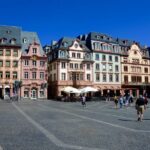
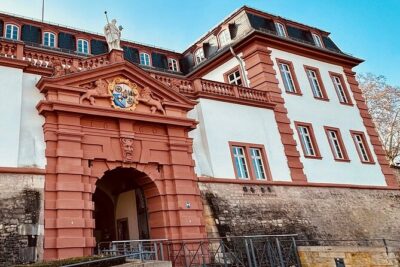
The tour then heads to Eisenturm, the Iron Tower. This is where the story tightens around Mainz in the Middle Ages. The guide also ties the tower stop to the concept of Golden Mainz, which helps you understand how Mainz gained status and how that identity lasted in memory.
Iron towers sound like defensive stuff, and that fits. But the tour approach is not only about military walls. It connects the tower to city ambition, power, and how a place earns its reputation over time.
What I find valuable here is that you see a landmark and learn what it symbolizes. You can remember towers better than dates, and that is exactly what guides aim for. There is often a helpful mix of major events plus smaller, memorable details.
If you enjoy history that feels human rather than textbook-only, this is the segment to pay close attention to. In past experiences with this tour, guides have included vivid examples of how ordinary people lived through crisis, like how women had to handle rubble after bombings. Those kinds of details help the Middle Ages and later centuries feel connected, not isolated.
Gutenberg Museum area: letterpress origins, plus what rebuilding means
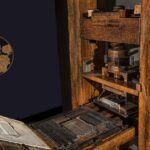
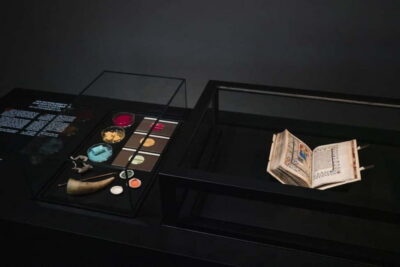
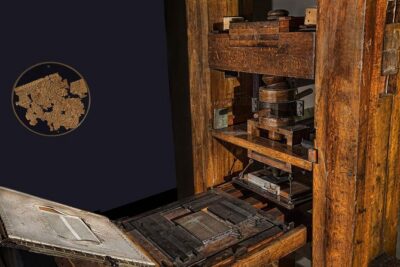
One of the best-known names in Mainz is Gutenberg, and the tour brings you to the Gutenberg Museum area. A key note: the museum is currently being rebuilt, so you are not expecting a full daytime-style experience.
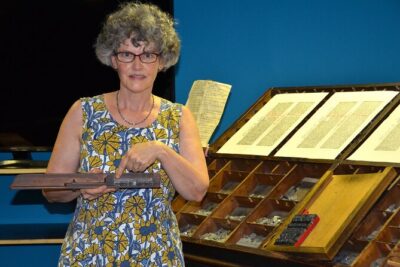
But that is actually part of the value. You get the story of Gutenberg as the father of Mainz and the invention of letterpress, without turning the stop into a rushed museum sprint. Letterpress is one of those topics where a short explanation can change your entire sense of the city. It reframes Mainz as a place that helped change how ideas spread.
Because it is evening, you will likely focus on what you can see from the outside. That means the tour keeps the emphasis on understanding instead of waiting in lines. It is a good fit if your priorities are city orientation and storytelling.
If you care about modern publishing history, this stop pairs well with what you learn earlier about the Rhine connection and later about cathedral symbolism. Mainz becomes more than scenic. It becomes a crossroads for communication as well as movement.
Mainzer Dom and St. Johannis: big silhouettes, long timelines
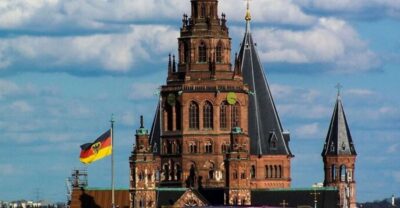
Two of the most important religious landmarks follow: Mainzer Dom (the Cathedral of St. Martin) and St. Johannis, the Old Cathedral of St. Johannis. The guide explains that the cathedral has existed for more than 1000 years, and that St. Johannis is tied to the idea of the city’s oldest church.
Seeing cathedrals from outside at night is different from seeing them in daylight. You focus on scale, symmetry, and the way the building dominates the skyline. That is exactly what you want in a short evening tour. Inside would take extra time, and the tour is not built for late-night interiors anyway.
This is also where you get a sense of Mainz continuity. You are walking through layers of time, from medieval power at Eisenturm, into Gutenberg-era influence, then into cathedral-era identity. When the guide connects those dots, the city starts to feel like one long conversation instead of a set of unrelated stops.
Practical comfort note: churches and the museum are not available for inside visits at night. So if your personal travel style is very “I must go inside,” you might prefer adding a daytime visit to catch interiors. For an evening walk, though, these exterior views are still highly worth your time.
Kirschgarten finish: why this ending point feels like a reward
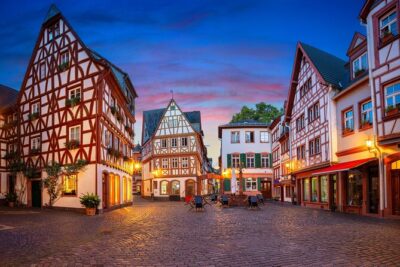
The final stop is Kirschgarten, described as the most beautiful place in Mainz. That is a bold claim, but it fits what evening tours usually aim for: end with a scene that makes you slow down.
The tour wraps at Zur Wilden Gans in Kirschgarten, which is a convenient and natural transition. You finish where you can immediately choose dinner and a relaxed post-walk moment. You do not have to rethink your logistics after the tour ends.
Kirschgarten also makes sense thematically. After cathedral-scale views and medieval symbolism, you get something more intimate. The guide’s job here is to help you notice why the neighborhood feels special and how it connects back to the Rhine city story you learned at the start.
If you are the kind of traveler who likes to take one last good photo before you eat, this is a strong ending. You will remember the walk more because you finish somewhere scenic rather than simply somewhere central.
And if you are traveling with friends who want both history and food, this ending gives you leverage. You can go straight from the final explanation into real life: dinner, wine, and a calmer pace for the rest of the night.
What kind of traveler should book this evening walk
This tour is ideal if you want city orientation fast, with a guide who explains why places matter. It suits first-time visitors who want Mainz am Rhein context without committing to a full-day museum plan. It also fits couples and small groups who like a relaxed pace and time to ask questions.
It also works well if you already plan to explore Mainz the next day. One evening walk helps you recognize landmarks later when you are wandering on your own. You will know what you are looking at, and that boosts your confidence.
If you are traveling with mobility limitations, the tour is short, but you should still expect an evening walk on streets. The exact terrain is not detailed here, so it is smart to plan based on your comfort level with nighttime walking.
If you hate cold evenings, consider timing. The tour requires good weather, and it is held at 6:30 pm. Dress for temperature drop, not just for what it feels like right after you meet.
Should you book the Mainz Rhine and Old Town evening tour?
I think you should book this if you want a compact evening dose of Mainz with included tickets and a guide who makes landmarks feel connected. The best parts are the small group size, the relaxed pacing, and the fact that you get stories tied to real places, from Theodor-Heuss-Brücke to Kirschgarten.
I would not book it as your only Mainz experience if your top priority is interior visits. Since churches and the Gutenberg Museum are not accessible at night, you are choosing exterior viewing plus narration over late-night museum time.
Still, as a value play at $20.25 for a guided 1.5-hour evening route with included admissions, it is a smart way to get your bearings, learn why the Rhine shaped Mainz, and leave with a clearer sense of the city. If you do plan a daytime follow-up, you will get even more out of your trip.
FAQ
How long is the evening walking tour in Mainz?
It runs about 1 hour 30 minutes.
What does the tour cost?
The price is $20.25 per person.
Where do I meet and where does the tour end?
You start at VINEUS Restaurant & Wine Bar, Rheinstraße 68, 55116 Mainz. The tour ends at Zur Wilden Gans, Kirschgarten 30, 55116 Mainz.
What time does the tour start?
The start time is 6:30 pm.
Do I get a ticket on my phone?
Yes, the tour uses a mobile ticket.
Are museum and church visits included inside at night?
No. Since churches and the Gutenberg Museum are closed at night, you will not be able to visit inside.
What is included with the tour?
The tour includes a guided evening walking tour, and admission tickets are included for the listed stops.
Is the tour limited to a certain group size?
Yes, it has a maximum of 12 travelers.
What is the cancellation policy?
You can cancel for a full refund up to 24 hours before the experience starts. If you cancel less than 24 hours before, the amount paid is not refunded. The tour also requires good weather, and if it is canceled due to poor weather, you will be offered a different date or a full refund.
After the Offices Close
- Hamburg: 90-Minute Evening Lights Harbor Cruise
★ 4.5 · 7,728 reviews - Dresden: The Original Night Watchman Tour in Lantern Light
★ 4.6 · 6,653 reviews - Hamburg: 1-Hour Evening Harbor Lights Cruise
★ 4.4 · 5,073 reviews - Hamburg: Night Watchman’s Tour of St. Pauli in German
★ 4.7 · 4,818 reviews
Fresh on the arrivals board for Mainz
Rhine River Cruises, compared.
Rhine Valley Trip from Frankfurt including Rhine River Cruise
Read our review →
Rhine Valley boat tour along the castles and palaces
Read our review →
Cologne City Tour Experience cathedral city on the Rhine
Read our review →
Browse the lists this tour appears in