
Reviewed · RHINE VALLEY TOURS & ACTIVITIES
Koblenz: Old Town Tour with the Ehrenbreitstein Fortress
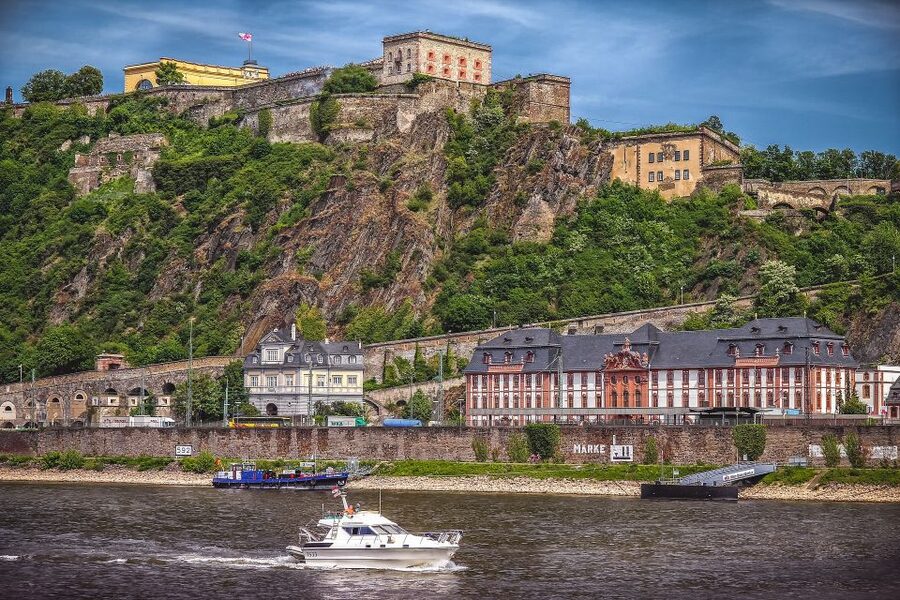
Rhine Valley views start right at the fortress. I love how this tour gives you Ehrenbreitstein Fortress views over the Rhine Valley and then connects that big-picture landscape to small, human details in Koblenz’s old streets. You’ll also get real value from having a private guide who stays with you the whole time, pointing out what to notice and why it matters.
One thing to consider: entrance fees for the fortress are not included, and with only a 3-hour window you’ll focus on top sights, not every alley and museum.
In This Review
- Key points to know before you go
- First stop: Ehrenbreitstein Fortress and the “why” behind the views
- Münzplatz: the coin square where Koblenz begins
- Between two churches: Liebfrauenkirche and St. Castor
- Schängel at City Hall: symbols you’ll actually understand
- Deutsches Eck and the Kaiser Wilhelm memorial at the end of the loop
- Private group flow: how you actually experience 3 hours
- Price and value: what $430 per group really buys
- Should you book this Koblenz old town and Ehrenbreitstein tour?
- FAQ
- How long is the Koblenz old town tour with Ehrenbreitstein Fortress?
- Where does the tour start?
- Is this tour private?
- Are entrance fees to Ehrenbreitstein Fortress included?
- Does the tour include pickup from a cruise or hotel?
- What languages are offered for the live guide?
- Is the tour wheelchair accessible?
- Is there free cancellation?
Key points to know before you go
- UNESCO Rhine views from Ehrenbreitstein: a fortress perched about 118 meters above the Rhine, with big vantage points for photos and perspective.
- A tight 3-hour hit of Koblenz highlights: Münzplatz, two major churches, Schängel at City Hall, and the Kaiser Wilhelm memorial.
- Roman-to-modern storytelling: the tour links Koblenz’s name and early settlement to what you see on the ground today.
- Private pacing and clarity: you get a guide in English, German, or Italian, with time to ask questions.
- Fortress access via the cable car connection: the route between town and Ehrenbreitstein is built around that connection.
- Wheelchair accessible: the tour is listed as wheelchair accessible, so it’s worth asking how the route fits your needs.
First stop: Ehrenbreitstein Fortress and the “why” behind the views
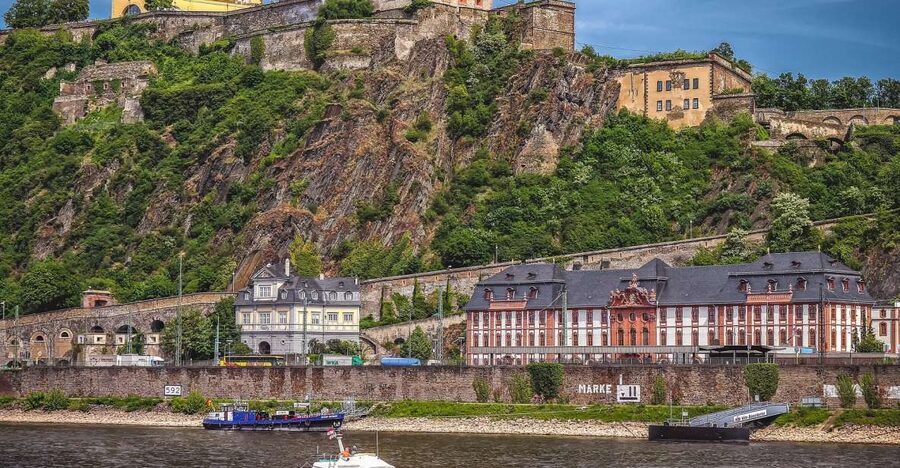
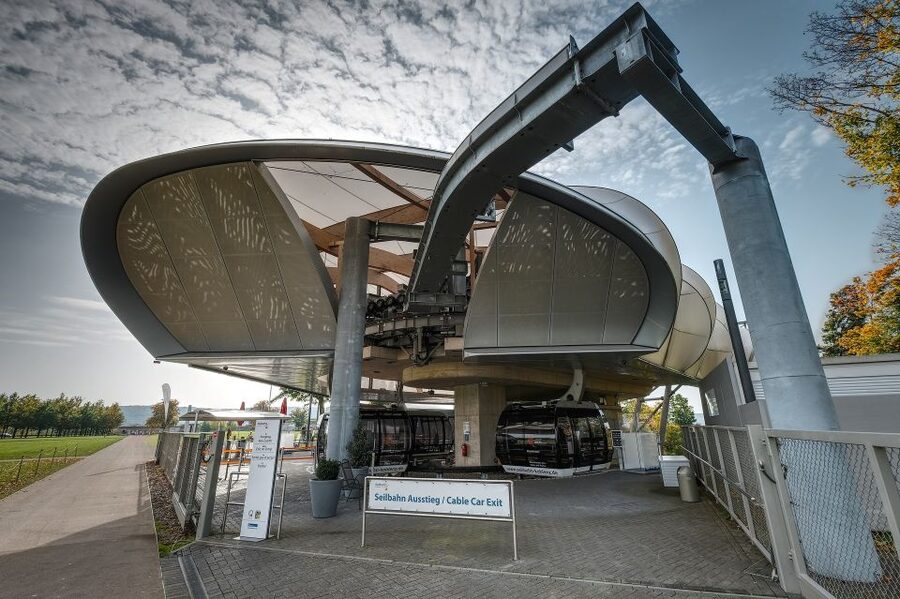
The tour kicks off at the cable car station on the Koblenz side, which is a smart move because it gets you oriented fast. From there, you head to Ehrenbreitstein Fortress, the UNESCO World Heritage site that watches over the middle Rhine region.
This isn’t a casual lookout. Ehrenbreitstein was built as a fortification, constructed between 1817 and 1828, with a purpose that shaped the way this part of the Rhine was defended for generations. It’s about 118 meters above the river, and it’s described as the second largest fortress in Europe. Even if you never care about military architecture, the scale makes the Rhine feel different. You’re not just looking at a view, you’re looking at a strategic vantage point.
You’ll also get the human drama behind it. In 1672, during a war between France and Germany, the Archbishop refused requests from both sides to allow troops to pass across the Rhine. That kind of refusal sounds small until you stand in the place where control of crossings and river access mattered. Later, the fortress was destroyed by French troops in 1801, and it was after that destruction that the British poet Lord Byron wrote lines describing shattered walls and the way war left marks that peace could not erase. The fortress was later rebuilt, which helps you understand why the structures you see now have that mix of scars and restoration.
Practical tip: wear comfortable shoes. Even if you’re not climbing all day, fortress areas tend to involve uneven ground, steps, and time spent looking outward. If you want crisp photos, the best “frame” usually comes after you pause, let your eyes adjust, and then pick one viewpoint to linger at.
Also holding a platform in Koblenz
- Koblenz: Rhine Valley Castles and Palaces Boat Tour
★ 4.4 · 1,824 reviews - Koblenz:Rhine Valley boat tour along the castles and palaces
★ 4.5 · 1,084 reviews - Koblenz: Old Town Sightseeing Cruise along the Rhine
★ 4.5 · 305 reviews
Münzplatz: the coin square where Koblenz begins
After the fortress, the tour moves down into Koblenz’s old town with a stop that sounds almost too specific: Münzplatz. The name comes from the electoral coin called Münz, minted back in the 11th century. It’s the kind of detail that makes a city feel more than a set of postcards, because you can connect a square name to real economic history.
There’s also a fountain in Münzplatz that was built in 1992. It was designed by Wili Heinzen and gifted to the city by Sparkasse Koblenz. The square matters not just for the fountain, but for where it sits in the story of the city.
This is the area connected to the Roman origin of Koblenz. You’ll hear about the Roman settlement Castellum apud confluentes, described as a fort at the confluence, meaning the meeting of rivers. That confluence is what gives Koblenz its identity. Standing there, it’s easy to see why: where rivers meet, trade routes form, people gather, and authority contests happen. In other words, Koblenz exists because of geography, and the old town layout is a living reminder of that.
A nice bonus of having a guide here is that you learn what to notice in a short time. Instead of “go see the square,” you get the point of it: it’s a hinge between the Rhine’s big movement and the city’s layered past.
Between two churches: Liebfrauenkirche and St. Castor
From Münzplatz, you walk the romantic street between two standout churches. Think of it as the emotional middle of the tour: more scale shifts here, and you slow down enough to see how religion, rebuilding, and city identity overlap.
First is Liebfrauenkirche, known for its onion domes. It’s built on the highest point in the city, which is a big clue about how visibility worked historically. During the French Revolution, it was one of the main parish churches. The church was constructed in the 17th century, then destroyed in 1944, and rebuilt again in 1955. That rebuilding timeline is not just trivia. It tells you the city faced damage, then chose continuity.
Next comes the Basilica of St. Castor, described as the oldest church in Koblenz. It was constructed by the Archbishop of Trier between 817 and 836, supported by Emperor Louis the Pious. It was built as a Carolingian proprietary church, which makes it feel unusually tied to early medieval power rather than being only a later civic landmark.
Why this pairing works on a short tour: you get a before-and-after story. Liebfrauenkirche gives you the arc through newer centuries and 20th-century war damage, while St. Castor anchors you back to early medieval roots. Together they show that Koblenz didn’t “start over” from scratch each time. It kept reusing meaning.
Practical tip: if you’re the kind of person who likes to photograph church details, bring a phone camera or compact camera. You’ll want to frame domes and façades from angles you might not choose on your own, especially along a walking route.
Schängel at City Hall: symbols you’ll actually understand
Next is a stop that’s easy to miss if you’re walking without a plan, the Schängel fountain at the City Hall. The word Schängel comes from Koblenz’s 20-year allegiance to France, from 1794 to 1813. In other words, the name is not random cuteness. It’s tied to a real political period.
The fountain is described as a symbol of Koblenz. In 1940, it was designed by Carl Burger and dedicated to the famous poet Josef Cornelius. This matters because it turns a statue or fountain into a “why do we care?” moment.
Here’s what I like about this kind of stop on a guided tour: it breaks the habit of viewing old towns as scenery. You start connecting culture to specific time periods, and you get better at reading cities like documents. You walk past a landmark and instead of thinking, “Oh, pretty,” you think, “Oh, this is how the city explains itself.”
If you have limited time, this is exactly the sort of stop that makes the hours worth it. You’re not just checking boxes. You’re learning the city’s short answers to identity questions.
Deutsches Eck and the Kaiser Wilhelm memorial at the end of the loop
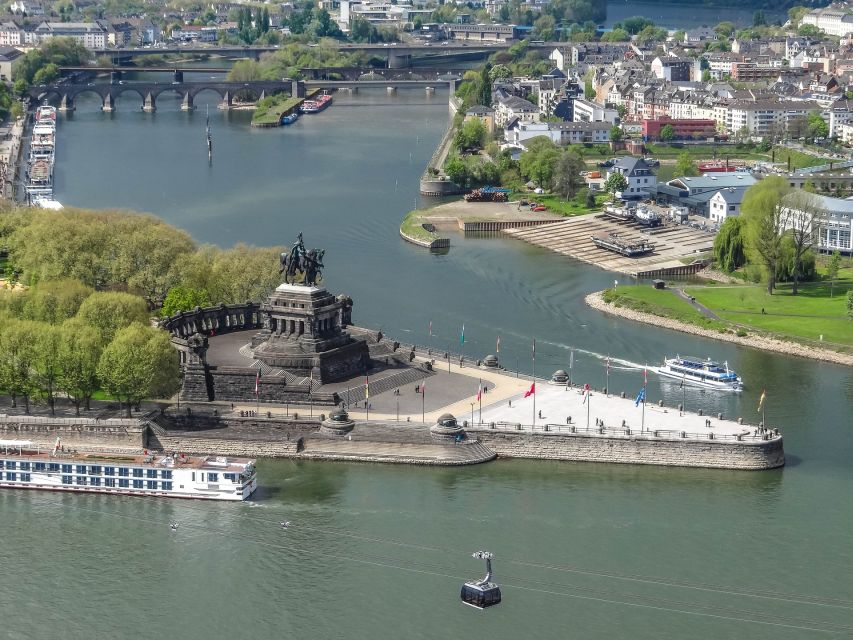
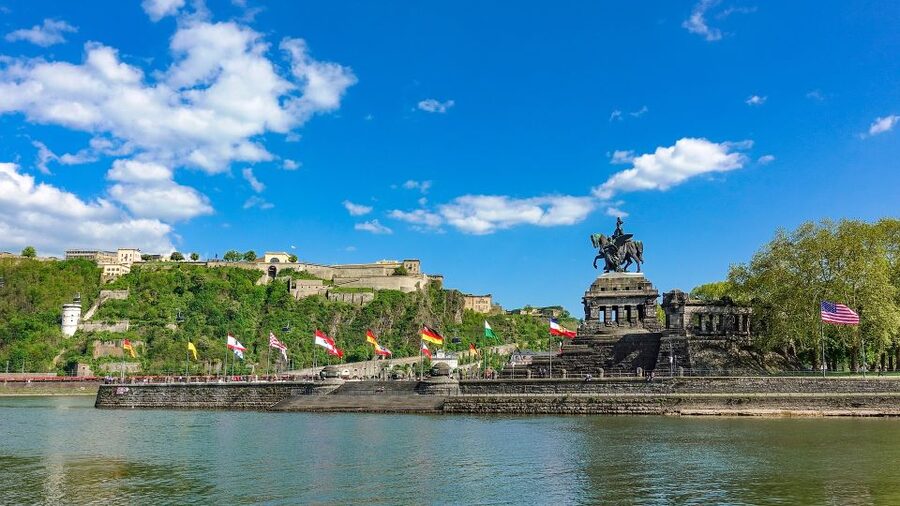
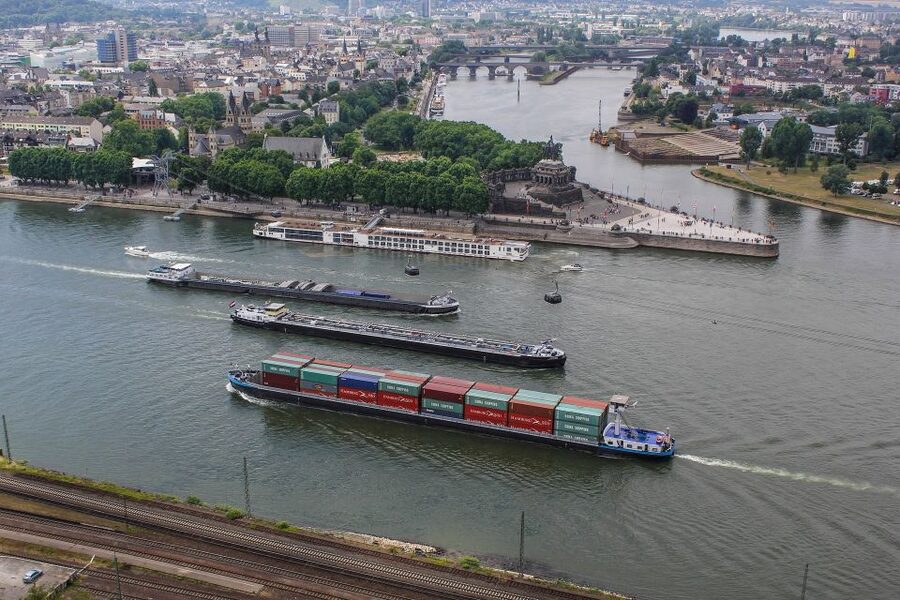
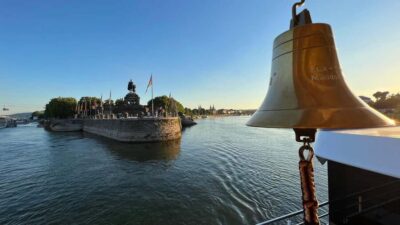
The tour finishes with a look at the oldest city area around Deutsches Eck, the headland in Koblenz. This is one of those names that signals importance, and you’ll learn why.
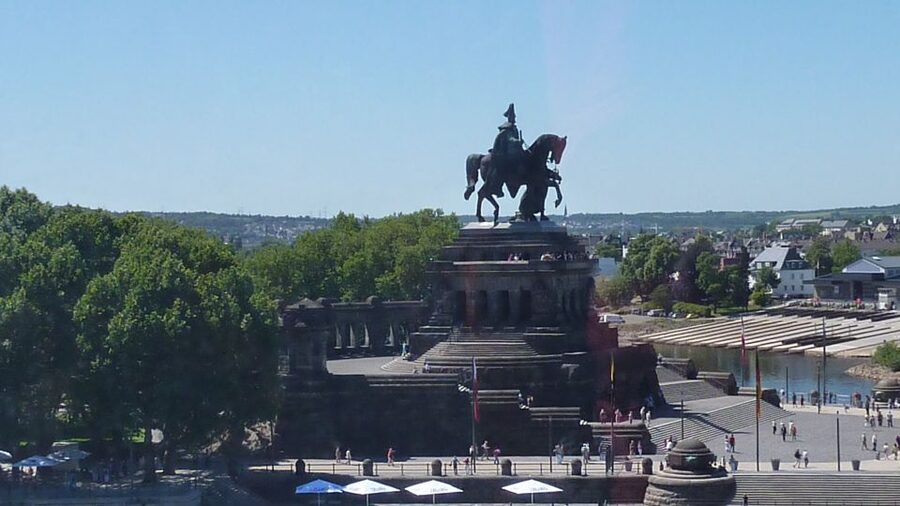
Kaiser Wilhelm was the first German Emperor, and a memorial was erected in 1897. When you reach this point, the Rhine setting does the work. The river angle, the headland shape, and the open space make the memorial feel more like a viewpoint than a background object.
You’ll also see how the tour has built a story arc. Starting with a fortress built to control and defend the middle Rhine region makes the later open headland feel logical. You’re seeing both the “guard the river” mindset and the “this is where the city claims its place” mindset.
If you want photos, treat the ending like a photo runway. Before you shoot, take one minute and choose one wide shot for the setting, then one closer shot for the memorial details. The guide can point out where angles tend to work, which saves time and frustration.
Onward connections from Koblenz:


Private group flow: how you actually experience 3 hours
A 3-hour tour can either feel rushed or feel satisfying, and here it’s set up to be satisfying. The tour is private, so you’re not stuck in a herd. You get an official live guide and you move as a group, with the guide adjusting attention where it’s most useful for you and your party.
One practical perk is the pickup. You can meet at your cruise docking location or a hotel if you’re centrally located. That takes away the “where do we start?” stress, which matters when your port schedule or city plans are tight.
The tour ends back at the meeting point, so you’re not left wondering how to return if you planned your day around a specific route. If you’re spending part of a Koblenz day and you want structure without committing to a half-day of wandering, this setup fits well.
Languages are also part of the value. Your guide is available in English, German, and Italian. If you can pick the language that suits your group best, you’ll catch more of the details, especially the names, dates, and the meaning behind each landmark.
Wheelchair accessible is listed, which is encouraging. Still, fortress areas can involve uneven terrain, so if mobility is a factor, ask how much walking is expected on your specific time slot. (The tour itself is labeled accessible, but it’s always smart to confirm what the path looks like for your needs.)
Price and value: what $430 per group really buys
The price is listed as $430 per group up to 20 people for the full 3-hour tour. That’s not “cheap,” but it often works out better than you’d expect when you compare it to paying for multiple individual tours.
The real value here is that the guide does the linking work for you. In a short time, you go from a UNESCO fortress with deep defensive context to old town landmarks connected to coins, Roman settlement, rebuilding after war, and cultural symbolism like Schängel. That kind of story stitching is exactly what a good guide is for.
Also, the guide involvement matters twice: first at the fortress viewpoints, where context changes what you see, and then in the old town walking segments where you might otherwise skim past small details. The company of an exclusively private guide means you can ask questions and get answers tied to the exact spot you’re standing in.
One catch: entrance fees for Ehrenbreitstein Fortress are not included. So when you budget, treat the advertised price as the guided service and add the fortress admission on top. If you’re traveling as a small group, it can still be a good deal because you spread the guide cost. If you’re just two people, you’ll likely want to compare against other guided options that might bundle admission, but the fortress is a major draw here, so many people find the add-on worth it.
Should you book this Koblenz old town and Ehrenbreitstein tour?
I’d book this if you want a focused Koblenz orientation with UNESCO views, without losing half your day to “figure it out” logistics. It’s especially appealing if you’re on a cruise or you want a clear plan that ends near where you started. You’ll get the fortress scale and the Rhine Valley perspective, then you’ll come down into the old town and learn why key landmarks earned their places.
It’s also a good fit if your group has mixed interests. The fortress satisfies the history and architecture side, while the old town stops give you culture and identity, not just walls and dates. And since it’s private, the pacing is more likely to match your actual energy level.
The main reason to pause is the extra fortress admission cost and the fact that the whole experience is only 3 hours. If you want long cathedral time inside buildings, or you want to linger on museums and side streets for hours, you’ll need extra free time after the tour. But if your goal is to get your bearings fast and leave with a clear, connected picture of Koblenz, this is one of the more efficient ways to do it.
FAQ
How long is the Koblenz old town tour with Ehrenbreitstein Fortress?
It lasts about 3 hours.
Where does the tour start?
You meet at the cable car station on the Koblenz side.
Is this tour private?
Yes. It’s a private group, with your guide working exclusively with your group.
Are entrance fees to Ehrenbreitstein Fortress included?
No. Entrance fees are not included.
Does the tour include pickup from a cruise or hotel?
Yes. Pickup is available from your cruise docking location, or from a centrally located hotel.
What languages are offered for the live guide?
The guide is available in English, German, and Italian.
Is the tour wheelchair accessible?
The tour is listed as wheelchair accessible.
Is there free cancellation?
Yes. You can cancel up to 24 hours in advance for a full refund.
Fresh on the arrivals board for Koblenz

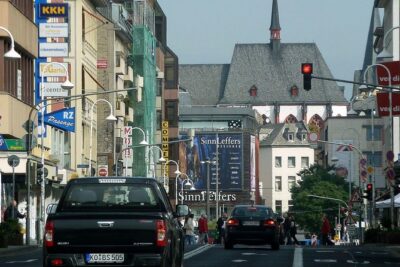

Rhine Valley Tours & Activities, compared.
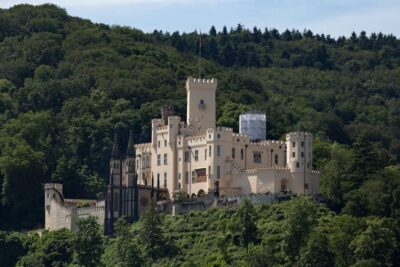
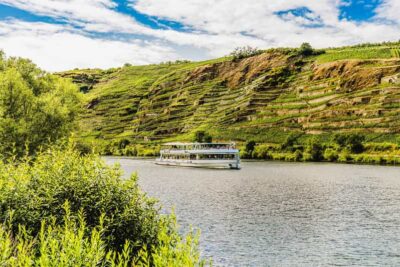
Rhine Valley boat tour along the castles and palaces
Read our review →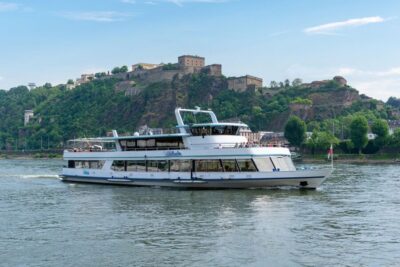
Guided tour in Mainz on the Rhine in german and english
Read our review →
guided evening tour of the Rhine riverbank/old town in German and English
Read our review →
Small Group Rheingau Vineyards Tour with Castles and Abbeys
Read our review →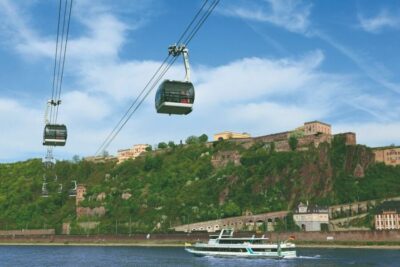
Browse the lists this tour appears in