
Reviewed · RHINE VALLEY TOURS & ACTIVITIES
Koblenz – Old Town with the Ehrenbreitstein Fortress
A town at the Rhine deserves a view. This private, time-friendly tour pairs Ehrenbreitstein Fortress with Koblenz’s standout Old Town sights, and it’s guided end to end so you know what you’re seeing. I especially love the Rhine Valley viewpoints from the fortress and the easy-to-follow walk through key historic churches and squares. One catch to plan for is timing, because in just about 3 hours you’ll likely spend less time at each stop than a slower self-guided wander.
You can choose a morning, afternoon, or evening start, and that flexibility helps if you’re syncing with river sights, meals, or train times. The tradeoff is that you’ll need moderate stamina for the walk portions and you should expect to add separate fortress admission and the cable car ticket for the ride connection.
In This Review
- Key things to look forward to
- Ehrenbreitstein Fortress: the big Rhine view you can’t skip
- From fortress back down to Münzplatz: where Koblenz got its name
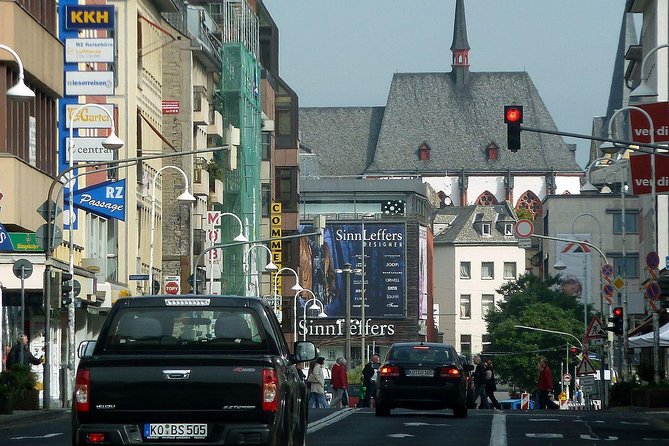
- Liebfrauenkirche and the Romantic street between churches
- St. Castor: stepping into Koblenz’s oldest church era
- Schangelbrunnen and the story behind Koblenz’s Schängel nickname
- Deutsches Eck and Kaiser Wilhelm: where the Rhine’s story meets empire
- How the 3-hour format really feels
- Price and value: what you really get for $438.73 per group
- Best fit for your trip style
- Quick practical tips before you go
- Should you book this Koblenz Old Town and Ehrenbreitstein Fortress tour?
- FAQ
- How long is the Koblenz Old Town with Ehrenbreitstein Fortress tour?
- Is this a private tour?
- What’s included in the price?
- What is not included?
- Where does the tour start and end?
- Can I choose a departure time?
- What happens if weather is bad?
- What is the cancellation policy?
Key things to look forward to
- Ehrenbreitstein Fortress above the Rhine for major, panoramic valley views
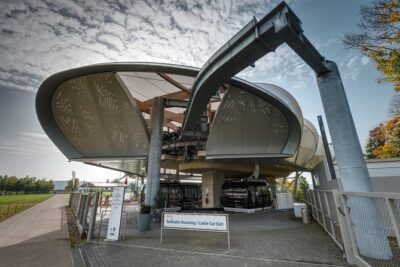
- Cable car connection between fortress and town area (ticket not included)
- Munzplatz to Deutsches Eck covering confluence-era Koblenz to Kaiser Wilhelm’s memorial headland
- Old Town church stops including Liebfrauenkirche and the oldest Koblenz church, St. Castor
- City-symbol details like Schangelbrunnen, tied to Koblenz’s French-era nickname, Schängel
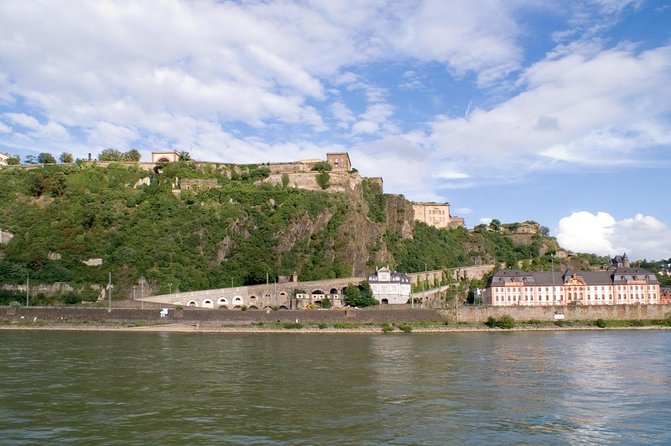
Ehrenbreitstein Fortress: the big Rhine view you can’t skip
Koblenz makes a good first impression because it sits right where river stories overlap, the Rhine framing the city and the landscape opening outward. Starting your tour at Ehrenbreitstein Fortress is smart because you get the wide-angle view early, before the Old Town details pull your attention in tighter.
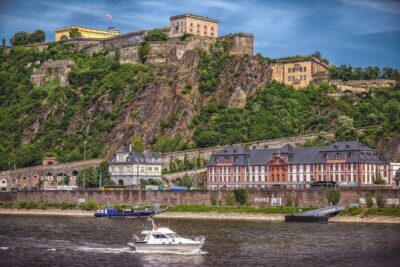
This fortress wasn’t built for a postcard moment. It was designed to guard the middle Rhine region as a major fortification project, constructed from 1817 to 1828. It rises 118 meters above the Rhine, and it’s described as the second largest fortress in Europe, which gives you a real sense of scale the moment you’re up there. If you like military architecture, you’ll likely appreciate how the structure fits the terrain rather than fighting it.
The fortress also carries a layered political note from the 1600s. In 1672, during conflict between France and Germany, an Archbishop refused requests that troops pass through the Rhine. It’s the kind of detail that makes a viewpoint feel more grounded in events, not just scenery.
One more connection I found especially fun is the literary one. The area below the fortress is linked to the British poet Lord Byron, who wrote about Ehrenbreitstein in his work using images of damage and the fortress’s heavy, defensive look. You don’t need to memorize the lines. You just need to look at the fortress as something that has been shaped by real conflict, then look out at the calm river now.
Practical reality check: fortress time is where most of your effort goes. The tour includes about 1 hour 20 minutes at the fortress area, but entrance fees are not included, and the cable car ticket is also separate. Plan your budget and your timing around that. Also, if weather is poor, this kind of outdoor viewpoint outing can be affected, since the experience calls for good conditions.
Also holding a platform in Koblenz
- Koblenz: Rhine Valley Castles and Palaces Boat Tour
★ 4.4 · 1,824 reviews - Koblenz:Rhine Valley boat tour along the castles and palaces
★ 4.5 · 1,084 reviews - Koblenz: Old Town Sightseeing Cruise along the Rhine
★ 4.5 · 305 reviews
From fortress back down to Münzplatz: where Koblenz got its name
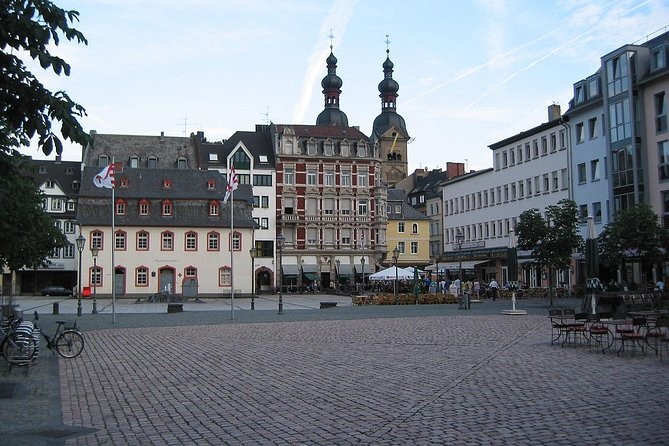
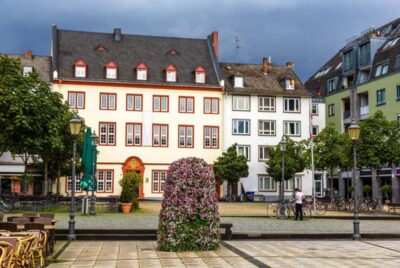
Once you’re done looking over the Rhine from above, the Old Town rhythm starts. The first key stop you hit down in town is Münzplatz, a compact square that helps you orient the city quickly.
The name comes from the Münz, the electoral coin minted starting in the 11th century. That’s not just trivia. It clues you into how money, power, and the right location moved together along the Rhine trade routes.
Then there’s the fountain story. For the 2000-year anniversary in 1992, a fountain was built here by Willi Heinzen as a gift to Koblenz citizens from Sparkasse Koblenz. So even if you only glance at it, you’re seeing a local milestone turned into a public landmark.
Münzplatz is also where Koblenz’s deeper origin kicks in. The Romans first founded a fort at the confluence called Castellum apud confluentes, a fort at the point where rivers meet. That origin is part of why the city’s name and layout make so much sense. You’ll feel it more after you’ve stood near the water and walked the streets a bit.
This is one of those stops that works well for everyone because it’s short and straightforward, and it doesn’t require a long attention span. It’s a “get your bearings fast” moment, but with substance.
Liebfrauenkirche and the Romantic street between churches
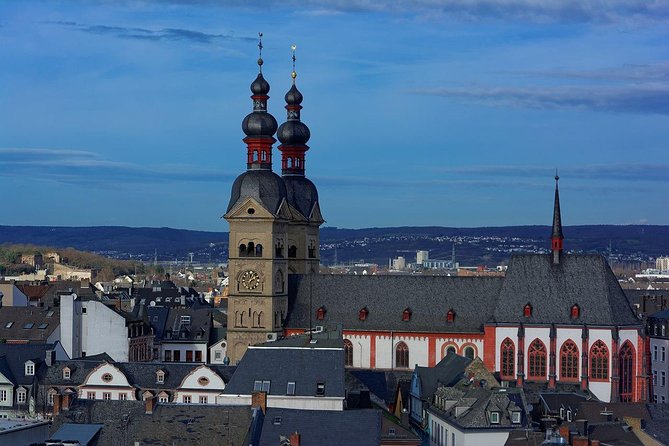
Next comes Liebfrauenkirche, known for its distinctive onion domes and for being placed on the highest point in the city. Even if you’re not a church person, you’ll likely notice the way the domes visually anchor the skyline when you look across the Old Town streets.
This church has a story shaped by upheaval. It was built in the 17th century but was destroyed in 1944. It was later rebuilt in 1955. During the French Revolution, it served as one of the main parish churches. That sequence helps you understand why so many European churches are not single-era monuments, but living records of changes around them.
From a walking-tour perspective, the route between two churches is a real treat because it gives your feet something to do while your eyes keep landing on key landmarks. It’s easy, slow enough to enjoy, and it doesn’t feel like you’re rushing past the important stuff.
Potential drawback: if your timing is tight due to weather or cable car connections, church exteriors are easier to absorb than interiors. The tour plan keeps these stops fairly short, so you’ll likely focus on exteriors and quick orientation unless you choose extra time on your own.
St. Castor: stepping into Koblenz’s oldest church era
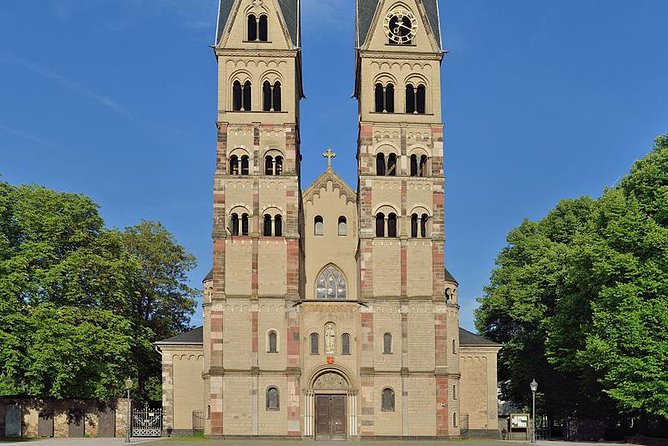
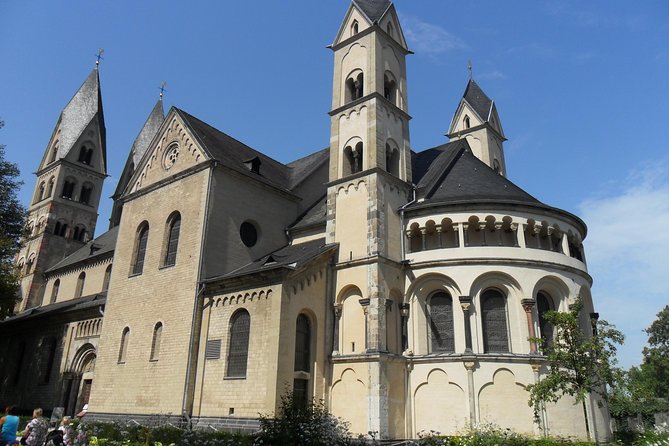
Right after Liebfrauenkirche, you’ll visit the Basilica of St. Castor, which is considered the oldest church in Koblenz. If you like early medieval architecture, this is your “okay, this is really old” stop.
The church was constructed by the Archbishop of Trier between 817 and 836, with support from Emperor Louis the Pious. In other words, you’re looking at a Carolingian-era foundation, not a decorative rebuild from later centuries. That makes the building feel like it sits closer to the start of Europe’s medieval story than many towns can manage in their central areas.
If you like to understand why places matter, St. Castor gives you something concrete: a specific timeframe, a specific political sponsor, and a specific architectural tradition. Even a quick viewing helps you connect the city’s present look with the early 800s reality of power and church-building.
This stop is also a good pace-break. After fortress scale and square-level orientation, you shift to a calmer, human scale moment.
Schangelbrunnen and the story behind Koblenz’s Schängel nickname
Next up is Schangelbrunnen, a fountain near the city hall area and one of the most recognizable symbols for Koblenz. It’s not just a pretty fountain. It’s built around language and identity.
The word Schängel is connected to Koblenz’s 20-year allegiance to France from 1794 to 1813. Over time, that historical period became part of local identity, and the fountain is treated as a symbol of the city itself.
There’s also a maker and dedication detail. In 1940, the fountain was designed by Carl Burger and dedicated to poet Josef Cornelius. So it connects history to culture, and it does that in a place you can spot without needing a lot of effort.
If you want a tour that doesn’t only show you monuments, but explains how local stories get turned into public art, this stop is a highlight. It’s short, but it gives you something you can carry with you when you walk away.
Onward connections from Koblenz:


Deutsches Eck and Kaiser Wilhelm: where the Rhine’s story meets empire
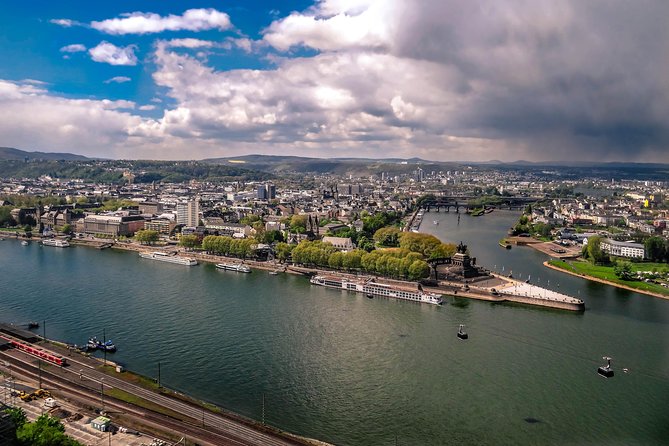
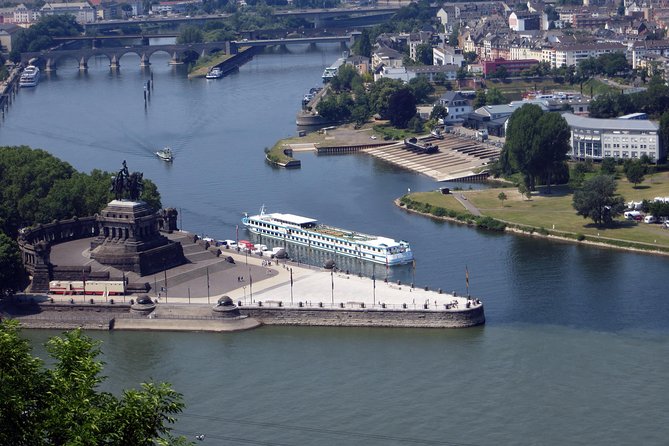
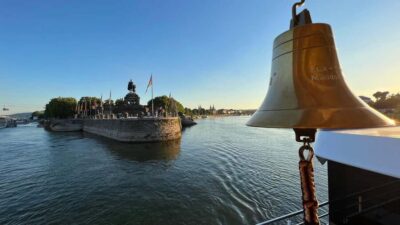
The final stretch brings you to Deutsches Eck at the headland called Konrad-Adenauer-Ufer. This is the spot most people associate with major Rhine river views in Koblenz because the riverside setting makes everything feel larger.
Deutsches Eck is named for the headland, and it features the Kaiser Wilhelm memorial. Kaiser Wilhelm was the first German Emperor, and the memorial was erected in 1897. Standing here helps you understand the kind of national symbolism Europeans built in the late 1800s, right where the rivers served as highways of commerce and movement.
What I like about closing the tour here is that your final viewpoint ties back to the first one. You started high above the water at Ehrenbreitstein Fortress, and you end down at the waterline where the rivers do the real talking. If the weather behaves, you’ll likely get those satisfying Rhine moments where you can trace the city’s geography with your eyes.
Time reality: this ending is about the sights and the viewpoints, not a long museum stop. If you want to linger, you’ll be able to continue on your own from the promenade once your guide finishes.
How the 3-hour format really feels
This tour is priced for groups up to 15 and lasts about 3 hours. That structure is ideal if you want the key highlights without burning a whole day. It’s also a clear sign that the pacing will be brisk. You’ll cover more ground than a slow walk, and you’ll get a guide’s explanations rather than piecing things together alone.
The biggest value you’re buying is the ability to do both major areas, fortress and Old Town, while someone helps you connect details to context. The “private” part matters too, because you can ask quick questions and get direct answers instead of trying to squeeze into a larger group’s rhythm.
One more note on comfort: the experience lists moderate physical fitness. That usually means you can manage the walk portions and viewpoint areas, but you should wear shoes you trust. If you’re concerned, focus on what you personally feel comfortable with, since the day includes walking plus time spent in outdoor spaces.
Price and value: what you really get for $438.73 per group
The price is $438.73 per group (up to 15), and it includes a licensed guide. That means the cost is less about paying per person and more about buying a shared experience that scales with your group size.
Here’s the honest value math: you still need to budget for fortress entrance fees and the cable car ticket, since those are not included. You also pay for transportation costs if you choose to travel between start and end areas beyond walking. So the total day cost can rise a bit, depending on how you handle those extras.
But if you’re traveling with friends or family and you want a guide to link the fortress stories to the Old Town architecture and local identity, the private setup is where the money tends to make sense. For solo travelers, it can be a pricier way to see the city versus mixing transit and self-guided stops. Still, the time efficiency and guided context can be worth it if you’re on a tight schedule.
Best fit for your trip style
You’ll likely love this tour if you:
- Want Rhine Valley views without spending a half-day planning routes
- Prefer guided context for churches and squares, not just photos
- Like a focused highlight route that still covers major anchor points of Koblenz
It may be less perfect if you want slow museum time or if you hate the idea of paying separately for fortress entry and the cable car. Also, because the experience requires good weather, pick a day where you’re not gambling on heavy rain.
Quick practical tips before you go
- Dress for outdoors. Even if the walking is moderate, you’re in open air for viewpoints and the fortress area.
- Bring your own timing buffer. The tour is short, and you’ll want to account for cable car and separate admission.
- If you care about interior viewing of churches, keep expectations realistic since the route is designed for highlights rather than extended stops.
Should you book this Koblenz Old Town and Ehrenbreitstein Fortress tour?
I’d book it if you want a compact, guided hit of Koblenz that connects the fortress and the Old Town without you having to figure it out from scratch. The standout strength is the combination of a major viewpoint landmark and multiple historic city center stops, explained by a guide who can keep the pace lively.
I’d think twice if you’re chasing lots of time inside buildings or if your day is extremely weather-dependent. In that case, you might want a backup plan for when conditions are poor, since the experience explicitly calls for good weather and has a weather-based rescheduling or refund option.
FAQ
How long is the Koblenz Old Town with Ehrenbreitstein Fortress tour?
The tour lasts about 3 hours.
Is this a private tour?
Yes. It’s a private tour/activity, and only your group participates. The group size is up to 15.
What’s included in the price?
A licensed guide is included, and you receive a mobile ticket.
What is not included?
Entrance fees for the Ehrenbreitstein Fortress and cable car charges are not included, and transportation costs are also not included.
Where does the tour start and end?
It starts at Ehrenbreitstein Fortress on Greiffenklaustraße, 56077 Koblenz, Germany, and it ends at Deutsches Eck on Konrad-Adenauer-Ufer, 56068 Koblenz, Germany.
Can I choose a departure time?
Yes, you can choose a morning, afternoon, or evening departure time.
What happens if weather is bad?
The experience requires good weather. If it’s canceled due to poor weather, you’ll be offered a different date or a full refund.
What is the cancellation policy?
The experience is non-refundable and cannot be changed for any reason. If you cancel or ask for an amendment, the amount you paid will not be refunded.
Fresh on the arrivals board for Koblenz


Rhine Valley Tours & Activities, compared.
Rhine Valley boat tour along the castles and palaces
Read our review →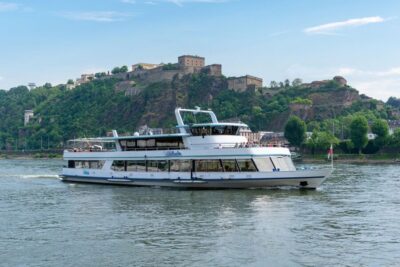
Guided tour in Mainz on the Rhine in german and english
Read our review →
guided evening tour of the Rhine riverbank/old town in German and English
Read our review →
Small Group Rheingau Vineyards Tour with Castles and Abbeys
Read our review →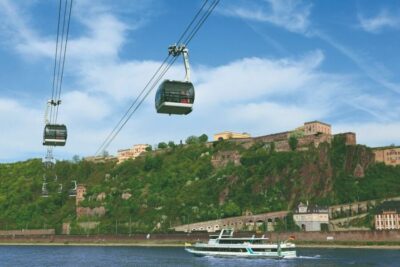
Browse the lists this tour appears in