

Reviewed · WALKING TOURS
Koblenz: City Walk with Audio Guide in 7 Languages on your Phone
A phone-led walk beats wandering randomly. You get a phone audio guide in 7 languages plus GPS guidance, so you can learn the city while you move, without waiting for a group rhythm. I like how the route links big-name stops like the Our Lady Church, the Ludwig Museum, and the German Corner with plenty of time for your own pace.
Here is the catch. This is not a hands-off tour, because it depends on your phone, an internet connection, and GPS working well, plus you still need headphones to hear the stories. If your battery is low, it can turn into a frustrating scavenger hunt, so charge up or bring a power bank.
In This Review
- Quick reasons this Koblenz audio walk works well
- Why Koblenz feels easier when you control the pace
- Price and value: $8.87 for a 2 to 3 hour city “show”
- Setup checklist: phone, GPS, internet, headphones, and battery
- The walking route in plain English: what you will connect by foot
- Our Lady Church and Ludwig Museum: two stops, two moods
- German Corner (Deutsche Eck): riverside payoff and a big statue
- St. Castor Basilica: Romanesque details that reward slowing down
- Jesuitenplatz: a historic square break between major sights
- The Four Towers: medieval watchtowers and that view moment
- The app experience: 7 languages, 33 stories, and occasional GPS quirks
- How to pace it: 2 to 3 hours, plus flexibility until the next day
- Who should book this self-guided Koblenz walk
- Should you book CityAppTour in Koblenz?
- FAQ
- How long does the Koblenz city walk take?
- What distance will I cover?
- What is included in the price?
- Do I need to bring anything?
- Is it a private activity?
- What is the cancellation policy?
Quick reasons this Koblenz audio walk works well
- 33 stops and stories over about 5.3 km, which is a realistic amount for a 2 to 3 hour walk
- Audio in 7 languages on your smartphone, so you are not stuck with one language choice
- GPS guidance and an online map, which helps you find the next stop without constant backtracking
- Major landmarks included, like the German Corner and St. Castor Basilica, plus smaller side sights along the way
- You can finish by the end of the next day, so you can slow down for a break or a museum stop
Why Koblenz feels easier when you control the pace
Koblenz is the kind of city where the best moments come from small choices. You decide when to pause for photos, when to cut across to a viewpoint, and when you want to linger near a church or museum. This walk is built for that. It is self-guided, private for your group, and designed around your tempo rather than a fixed tour pace.
I also like that the storytelling is spread across 33 stories. That means you are not just doing a “see it, move on” loop. You get context and talking points as you go, so places like the German Corner feel more meaningful than a quick river photo stop.
One practical note: because it is self-guided, you will enjoy it more if you are the kind of traveler who likes reading signs, looking up at details, and taking your time. If you want someone else to handle every step, you may find this style a bit hands-on.
More German cities at walking speed:
- Koblenz: Express Walk with a Local
★ 5.0 · 4 reviews - Discover Berlin Half-Day Walking Tour
★ 5.0 · 9,624 reviews - Berlin City walk Government District and Places of Democracy
★ 4.7 · 8,467 reviews
Price and value: $8.87 for a 2 to 3 hour city “show”
At $8.87 per person, you are paying for an app-based guide rather than a paid local guide standing next to you. For that price, the value is in the structure: a walking route, GPS guidance, and audio content on a single device.
You also have a group discount option listed, which can make it even better value if you are traveling with friends or family. And because you can finish the walk by the end of the next day, you are not forced into a rushed half-day schedule.
The main “cost” is not money. It is phone readiness. This experience requires internet connection and GPS function, so you should treat your phone like part of your travel kit.
Setup checklist: phone, GPS, internet, headphones, and battery
Before you set out, make sure you have the basics ready:
- The smartphone you use must have internet connection and GPS working
- You must bring your own smartphone and headphones
- The guide uses GPS guidance, so if your location services are off, it will not help you much
- Plan for battery. The recommendation is to charge your phone to the max or bring a power bank
I recommend doing a quick test before leaving. Open the app, confirm you have signal, and check that the next stop number or audio begins where you expect. That small step can save you from walking in circles later.
Also, keep your expectations realistic: the content helps you orient yourself, but GPS positioning can sometimes be slightly off. The good news is that, based on feedback, it is still workable for navigation if you stay aware of what you are seeing around you.
The walking route in plain English: what you will connect by foot

The full walk is about 2 to 3 hours and roughly 5.3 km. That distance is very doable on foot, as long as you plan for stops. The route is designed to connect classic Koblenz highlights, including:
- Our Lady Church
- Ludwig Museum
- German Corner (Deutsche Eck)
- St. Castor Basilica
- Jesuitenplatz
- The Four Towers
On top of that, you will also get detours to lesser-known spots, so you are not limited to only the postcard scenes. Think of it as a structured wander.
Because it is audio-driven, the experience flows best when you walk steadily but do small pauses when the story prompts you. If you power through without listening, you will still see the sights, but you will lose the main value.
Our Lady Church and Ludwig Museum: two stops, two moods
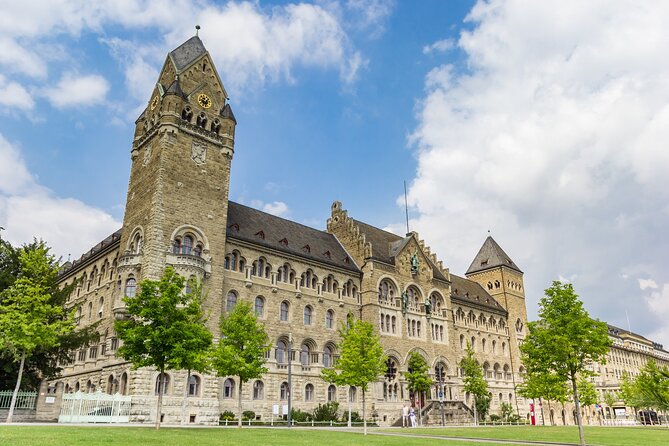
You start by working your way through Koblenz’s major landmarks, and two early anchors are the Our Lady Church and the Ludwig Museum.
Our Lady Church is framed as an impressive focal point on the walk. Even if you only spend a few minutes, it is the kind of place that rewards looking closely at the architecture and getting your bearings. Audio here is useful because it helps you connect what you are looking at to Koblenz’s broader story.
Then the route moves toward the Ludwig Museum, described as an art museum with a diverse contemporary collection. The standout detail for me is that it includes paintings, sculptures, and multimedia installations. If you time it right, this is a great moment to slow down even more, because museums naturally change the pace of a self-guided route.
Possible drawback: if you are not planning museum time, the Ludwig Museum can still be a stop where you are tempted to check opening times. The good part is you are not trapped in a strict schedule. You have until the end of the next day to finish the full walk.
Also holding a platform in Koblenz




German Corner (Deutsche Eck): riverside payoff and a big statue
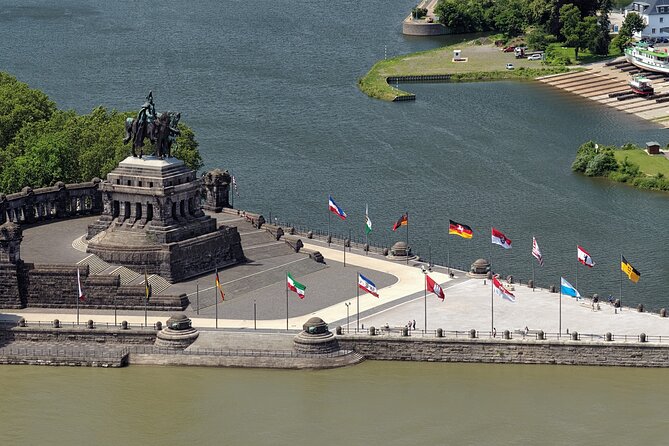
The German Corner (Deutsche Eck) is one of the most satisfying parts of this walk because it is a clear “here is why Koblenz matters” location. The two rivers, the Rhine and Moselle, come together here, and the view is the point.
You will also see the statue of Emperor William I on horseback, which gives the river junction a powerful visual. I like that the audio ties this stop to what you are seeing, rather than treating it as a quick photo stop. If you want a scenic break, this is where it fits.
Tip: give yourself a few extra minutes at German Corner so you can look from multiple angles. The rivers are doing the heavy lifting visually, and your brain needs time to absorb the scale.
St. Castor Basilica: Romanesque details that reward slowing down
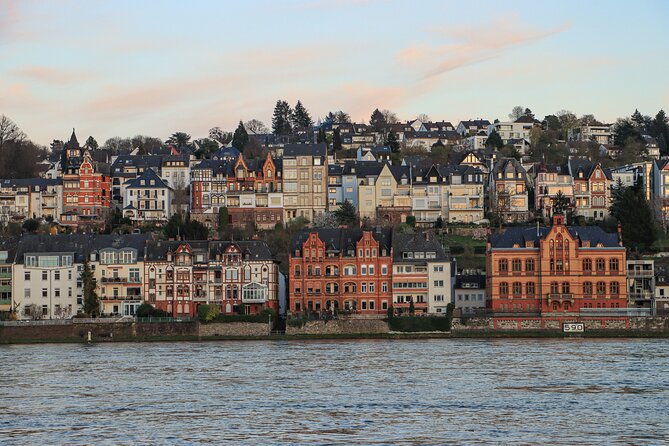
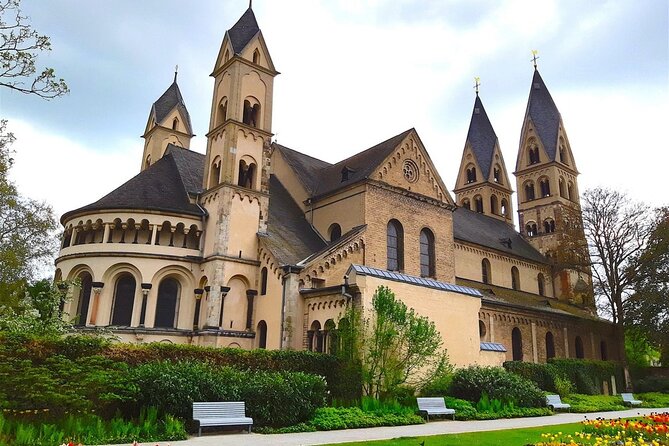
Next up is the St. Castor Basilica, described as a historic church known for Romanesque architecture and a long religious heritage. This kind of stop is where audio can help you notice what you might otherwise skim over.
Because Romanesque architecture often has strong shapes and weight in its design, listening while you look works better than looking without context. You will likely find the stories make the basilica feel less like a background object and more like a landmark with meaning.
Keep in mind: this is still a walking experience. If you want to spend a long time inside, plan to pace your remaining route so you can still finish within the activity’s window.
Jesuitenplatz: a historic square break between major sights
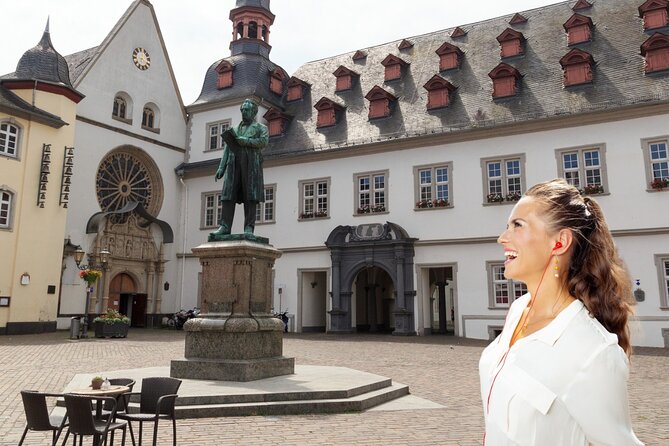
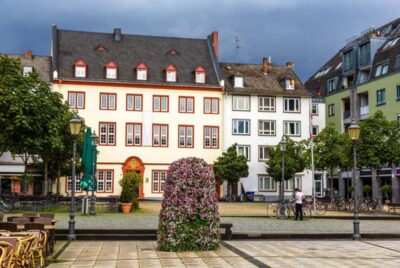
Between the bigger landmarks, you pass by Jesuitenplatz, described as a historic place. Even without deep specifics provided, the practical value of this kind of stop is simple: it gives you a natural reset point.
For a self-guided route, you need those “breathing” locations. A square like this is a good spot to pause your walking rhythm, refocus your phone on the next segment, and decide whether you want a longer break before moving on.
I find that these mid-route squares are often where cities feel most like everyday life. You see where people linger, where traffic patterns flow, and how the streets connect.
The Four Towers: medieval watchtowers and that view moment
The final highlight cluster includes the Four Towers, historic watchtowers that once guarded the city’s medieval fortifications. The audio frames them as a key reminder of Koblenz’s past and a great place for photos.
What matters most to your visit is the payoff: you can get picturesque views of the surrounding area. If you plan it well, this is a good time to walk a little slower and check the horizon lines around the towers.
Practical note: because your total walk is about 5.3 km, you are not doing a marathon. Still, the towers are a high-reward stop. If your phone battery is low, prioritize getting to this area with enough charge for the audio.
The app experience: 7 languages, 33 stories, and occasional GPS quirks
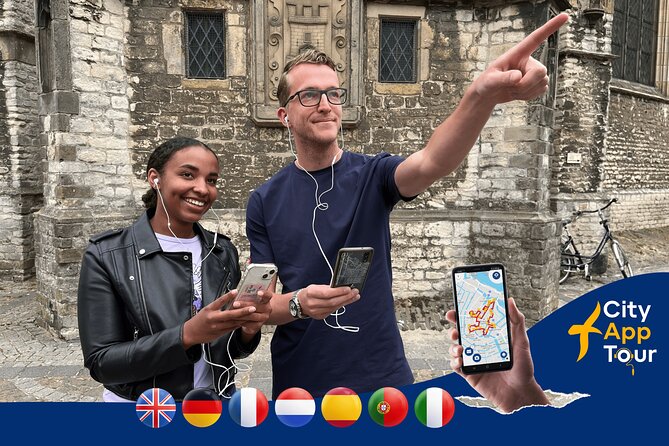
The core product is the app: audio guide in 7 languages plus GPS guidance. You get a detailed online map, so the route is meant to feel navigable rather than guesswork.
The best part for me is the “own pace” design. One of the feedback points is that the stories are informative and enjoyable, and that you can set your speed. That is the exact right combination for a city walk, especially in a place where you may want to step into a museum or stop for a drink.
One consideration to keep in mind is that some locations and positioning may not be perfectly accurate on GPS. The guidance is still described as sufficient to orient yourself. My advice: rely on the general area and what you see, not only the blue dot. If a marker seems off, look around for the landmark the story is describing, then continue from there.
How to pace it: 2 to 3 hours, plus flexibility until the next day
The listed walking time is 2 to 3 hours, with a total distance of about 5.3 km. That usually translates to a comfortable pace if you stop for audio at each story and do a short look at key sights.
Here is the flexibility that makes this more useful than a strict tour: you have until the end of the next day to finish it. That means you can split it up if you want. You can also take a break, visit a museum, or grab a drink without feeling like you missed the train of the day.
If you are planning your Koblenz day, think of the walk as a spine. You can add time around museums or river views, then come back to complete the audio segments.
Who should book this self-guided Koblenz walk
This experience is a strong fit if you:
- Want to explore Koblenz at your own pace
- Like audio stories that help you notice details while walking
- Are comfortable using a phone as your guide
- Prefer a budget-friendly option compared with full guided tours
It may not be the best fit if you:
- Hate relying on phone GPS and data connection
- Do not want to bring a smartphone and headphones
- Prefer a live guide to handle routing, timing, and explanations
Should you book CityAppTour in Koblenz?
If you are okay using your phone as a guide, I think this walk is a good value. For a little under $9, you get a structured route, GPS guidance, and 33 audio stories that cover major sights like the German Corner and St. Castor Basilica. The ability to finish by the end of the next day is also a nice safety net for real travel days.
The deciding factor is simple: battery and signal. If you can keep your phone charged and you will have internet access, you are set up for an easy, satisfying Koblenz loop with good orientation and enjoyable storytelling.
If you want, tell me what day you plan to go and whether you are visiting museums, and I can suggest a smart way to pair this walk with a couple of breaks.
FAQ
How long does the Koblenz city walk take?
The walking time is about 2 to 3 hours.
What distance will I cover?
The total walking distance is listed as 5.3 km.
What is included in the price?
You get an app with an audio guide in 7 languages and GPS guidance.
Do I need to bring anything?
Yes. You need your own smartphone, plus headphones to listen to the audio. The experience also requires an internet connection and GPS on your phone.
Is it a private activity?
Yes. It is a private tour or activity, meaning only your group participates.
What is the cancellation policy?
Free cancellation is available. You can cancel up to 24 hours in advance for a full refund. Cancel less than 24 hours before the start time, and the amount you paid will not be refunded.
More Self-Guided Tours in Koblenz
- e-Scavenger hunt Koblenz: Explore the city at your own pace
★ 4.0 · 20 reviews - Dortmund: BVB Self-Guided Stadium Walk
★ 4.5 · 3,195 reviews - Hamburg: Scavenger Hunt Self-Guided Tour for Children
★ 4.5 · 319 reviews - Spicy’s Gewürzmuseum Entry Ticket and Audio Guide
★ 4.3 · 203 reviews
Fresh on the arrivals board for Koblenz




Walking Tours, compared.

Berlin City walk Government District and Places of Democracy
Read our review →



Berlin’s Best: 2 Hour Walking Tour Third Reich and the Cold War
Read our review →

Browse the lists this tour appears in