
Reviewed · GUIDED WALKS IN BERLIN
Jewish Berlin Extended (private Walking tour – 5 Hours)
Jewish Berlin hits harder with a guide. This private 5-hour walk strings together synagogue remains, protest memorials, and train-station remembrance, with free stops and English commentary that gives meaning to what you are seeing.
I love the way the pace is structured. You get short, focused time at each place, so you move through Berlin without getting stuck in one spot too long, and you still come away with a clear story. One drawback to consider: several stops are brief and outside-focused, so if you want extended museum time, you may need extra free time afterward.
In This Review
- Key Highlights Worth Booking For
- Why This Jewish Berlin Private Walk Feels Personal
- Price and Timing: What You Actually Get in 5 Hours
- Starting at Hackescher Markt, Ending at Centrum Judaicum
- Denkmal Alte Synagoge Berlin-Mitte: Seeing the Oldest Remains
- Rosenstraße Memorial: Women’s Protest and Moral Courage
- Hackesche Höfe: History in a Courtyard Setting
- Museum Blindenwerkstatt Otto Weidt: Ordinary People Who Took Big Risks
- Memorial Jewish Cemetery: Names, Loss, and the Oldest Burial Ground
- Missing House: Learning to Understand Absence
- Stiftung Neue Synagoge Berlin, Centrum Judaicum: A Facade With a Story
- Gleis 17 Memorial: The Deportation Story and Germany’s Memory Culture
- Who This Jewish Berlin Tour Suits Best
- Should You Book It?
- FAQ
- How long is the Jewish Berlin Extended private walking tour?
- Is this tour private, and how many people can be in a group?
- Do you offer hotel pickup?
- Where does the tour start and end?
- What language is the tour offered in?
- Are there admission fees for the stops?
- What is covered at the Gleis 17 Memorial?
- Is food or drinks included?
- Can I get a refund if I cancel?
Key Highlights Worth Booking For
- A story-led guide approach, including clear explanations and question time (Ariel is specifically praised for this)
- Private group attention so you are not stuck weaving through crowds
- Stop-by-stop memorial context that connects early Jewish life to Nazi-era deportations
- Powerful sites in a walkable loop, including Denkmal Rosenstraße and Gleis 17
- A special focus on memory in Germany, including how commemoration changed over time
Why This Jewish Berlin Private Walk Feels Personal
A Jewish Berlin tour can turn into a checklist fast. This one resists that. You are walking from one meaningful site to the next, but the real value is how the guide frames each location, what it meant, and why it matters now. The result is that you do not just look at plaques. You understand the human thread behind them.
I also like the format. It is a private walking tour, so you can ask questions and get direct answers without feeling rushed. The group is capped at up to 15 for pricing purposes, but the key point is that it is only your group. That matters in a city like Berlin, where a popular memorial area can feel crowded even when you are trying to slow down and pay attention.
Finally, the time budget is smart. At around 5 hours, you get enough coverage to connect several eras. You also avoid the fatigue of doing too much on your feet in one day.
More Guided Walks in Berlin
- Discover Berlin Half-Day Walking Tour
★ 5.0 · 9,624 reviews - Berlin City walk Government District and Places of Democracy
★ 4.7 · 8,467 reviews - Berlin: Third Reich & Cold War Guided Walking Tour
★ 4.9 · 8,378 reviews
Price and Timing: What You Actually Get in 5 Hours
The price is $624.79 per group (up to 15) for about 5 hours. That sounds steep if you are thinking per person. The value really depends on group size.
- If you are a small group, you are paying for personalized guiding, not for a low-cost mass tour.
- If you have a larger group, the per-person cost drops quickly because the price is per group.
Either way, you are also getting a lot of “included” value. All fees and taxes are included, and the stop admission tickets listed for the locations on this walk are free. That means fewer small add-ons to manage while you are trying to focus on the story.
Timing matters too. The walk is built from short visits, typically around 15 to 20 minutes at most stops, with one longer block near the end. That keeps the tour moving, but it also means you should bring the right mindset: this is about moving through key sites with context, not about lingering in one museum for hours.
Starting at Hackescher Markt, Ending at Centrum Judaicum

The tour starts at Hackescher Markt (10178 Berlin) and ends at New Synagogue Berlin – Centrum Judaicum on Oranienburger Str. 28-30 (10117 Berlin).
Why this end point is useful: Centrum Judaicum is a natural hub for continuing your day nearby. You can wrap up your walk and still have options for a meal or for more self-guided exploring in the same general area.
Pickup is offered, and the plan is straightforward: you are picked up from the lobby of your hotel. If you do not want pickup, you can still start at the meeting point near public transportation. Either way, you will be saving time getting to the first stop, which is one of those small travel wins that makes the whole day smoother.
One practical tip: because the tour is around 5 hours and includes multiple stops, wear comfortable shoes. Some of the most powerful moments happen when you slow down and look closely, and you will not want sore feet doing that.
Denkmal Alte Synagoge Berlin-Mitte: Seeing the Oldest Remains
You begin at Denkmal Alte Synagoge Berlin-Mitte, where you can see the remains of one of Berlin’s oldest synagogues. This first stop sets the emotional tone without starting with the darkest events. Instead, you get early beginnings, the idea that Jewish life in Berlin has roots that go far beyond the Nazi period.
The short stop time can be a strength. It forces you to absorb the essentials and move on, while the guide keeps the story coherent. If you try to see this kind of site alone, it is easy to miss what you are actually looking at. With a guide, the physical remnants become a historical anchor.
If you want to get the most out of this stop, look at the site first, then let the guide fill in what it represents. The contrast between “what you see” and “what it means” is where the understanding clicks.
Rosenstraße Memorial: Women’s Protest and Moral Courage
Next you visit Denkmal Rosenstraße, a monument connected to a remarkable act of protest. This is the story of women who protested for the release of their husbands from transports to the camps.
This stop hits differently because it is not only about suffering. It is about courage, risk, and moral clarity in the middle of a system designed to crush ordinary life. The guide’s job here is crucial, because without that framing it is easy to read a monument like a vague symbol. With context, it becomes a concrete moment in history where people tried to change something.
The stop is brief, but it is memorable. If you are traveling with someone who tends to think of history as distant or abstract, this is a good place to bring them in close. The theme is human and immediate.
More German cities at walking speed:




Hackesche Höfe: History in a Courtyard Setting
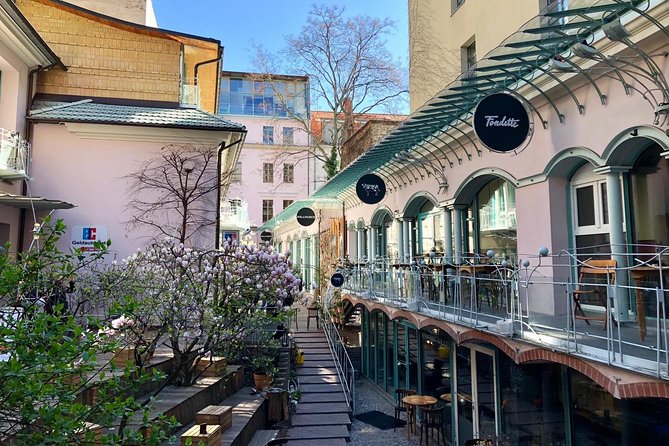
After the memorial weight, the tour goes to Hackesche Höfe. This is a site where you can get a sense of Berlin’s layered city life through a more everyday lens.
The guide explains its history, and that matters because Hackesche Höfe is the kind of place people walk past without realizing there is more going on underneath. Short stop time here is normal, since it is one of those “pause and orient yourself” moments. It also helps break up the heavier stops so you do not feel like you are absorbing tragedy nonstop.
If you enjoy architecture and city texture, you will likely appreciate this interlude. It makes the tour feel like a walk through real neighborhoods rather than only a chain of memorials.
Museum Blindenwerkstatt Otto Weidt: Ordinary People Who Took Big Risks
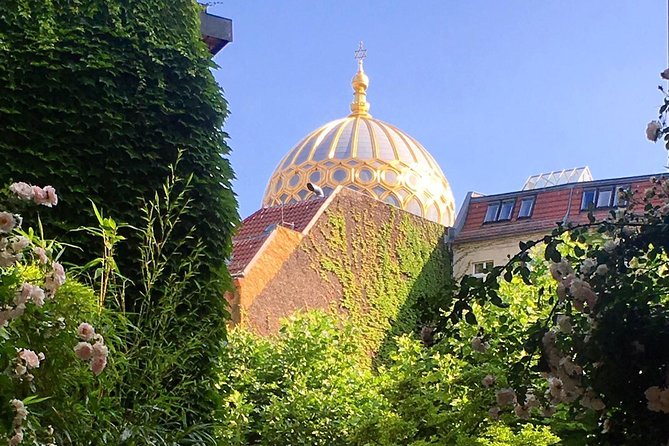
One of the most powerful parts of the walk is the Museum Blindenwerkstatt Otto Weidt. Here you hear the story of a man who risked his life to save his Jewish employees from the death camps.
This is exactly the kind of narrative that keeps your brain from freezing on dates. The guide ties the site to a person’s choices, and that turns a location into a moral lesson. It also gives you something practical to remember after the tour: courage can be quiet, and it often shows up through daily work rather than dramatic speeches.
The stop is around 20 minutes, which works well. You get the key story beats without it turning into a lecture. If you want more, you can follow up on your own after the tour, but the guided visit sets the emotional groundwork.
Memorial Jewish Cemetery: Names, Loss, and the Oldest Burial Ground
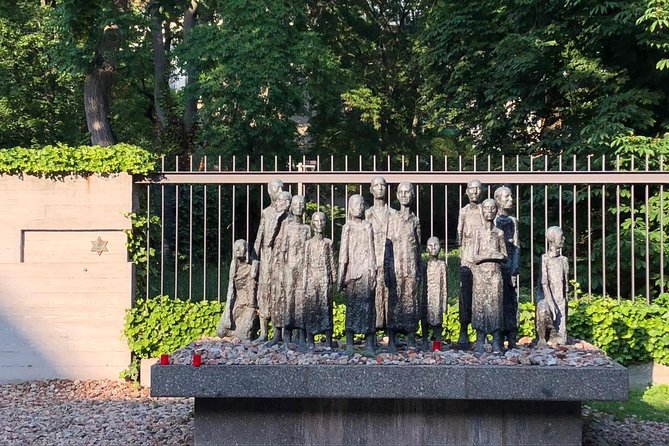
Then the tour moves to the Memorial Jewish Cemetery. This is described as the remains of the oldest Jewish cemetery in Berlin, and the guide helps you connect the physical site to the people who were buried there.
Cemetery stops are tricky. Without context, you can end up looking at stones like objects. With a guide, you learn how to read the meaning in what has survived. The experience is short, but it should feel heavy in a respectful way. Take a moment to slow down your walking pace even if the schedule is tight.
If you are someone who likes to photograph everything, this is where I would suggest restraint. Let your eyes do the work first. If you take photos, do it after you have listened to the explanation, not before.
Missing House: Learning to Understand Absence
The Missing House stop is short, but it plays an important role in how the tour teaches memory. A missing building is not just an empty spot on a map. The guide explains the monument and its significance, and you start to see how Berlin uses absence as a kind of message.
This is also a useful lesson if you are planning future memorial travel. Many memorial sites are not loud. They are quiet, and that can make them easier to misunderstand. A good guide tells you what the quiet is trying to communicate.
Even in 5 minutes, this stop helps the tour feel more than just factual. It becomes reflective.
Stiftung Neue Synagoge Berlin, Centrum Judaicum: A Facade With a Story
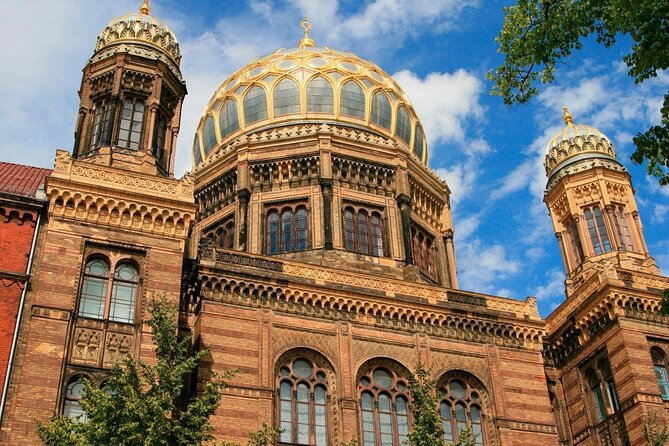
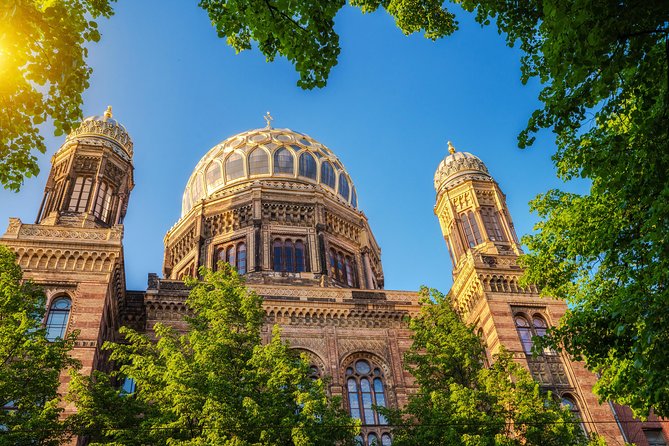
After that, you visit Stiftung Neue Synagoge Berlin – Centrum Judaicum. This is a major point on the Jewish Berlin map, and the guide discusses the history and what you can learn from the site.
Here is a detail that stands out from firsthand impressions people often share: the New Synagogue can look magnificent from the outside, but what you experience beyond the exterior may feel different than you expected. In one praised tour moment, the guide framed the contrast between the beautiful facade and the reality that beyond it you may find offices, a yard, and a small chapel on the third floor.
That contrast is not a flaw in the site. It is part of the story of how communities use space, adapt through time, and keep religious and cultural life going in changed circumstances. If you go in expecting a museum experience, you might be disappointed. If you go in expecting a historical site with practical modern use, it lands better.
This stop is around 15 minutes, so you get a guided orientation and enough context to continue your own questions afterward if you want to.
Gleis 17 Memorial: The Deportation Story and Germany’s Memory Culture
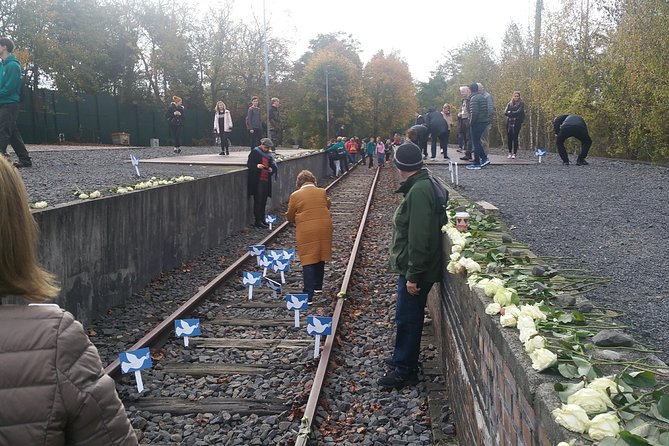
The final major block is the Gleis 17 Memorial. This is the part of the walk where the tone becomes unmistakably tied to deportations, and you spend about 45 minutes here.
You see four monuments on the site and discuss the deportation of Berlin’s Jews to the camps. The guide also talks about the culture of memory in Germany, and how commemoration can change over the years. That theme is valuable because it prevents you from treating memory as a fixed thing. You start to see it as something societies build, revise, and argue about.
One review detail that I think you should watch for: a Kinder transport element is singled out as special. Even if you already know the basics, these memorial spaces tend to sharpen your understanding by linking the historical event to what it meant for families and children.
The practical advice here is simple. Give yourself permission to feel unsettled. Do not rush this stop to “get it done.” If the guide encourages questions, ask one that connects the story to what you are seeing in the memorial design. The goal is not just to know the facts, it is to learn how the site teaches them.
Who This Jewish Berlin Tour Suits Best
This tour is a strong fit if you want:
- A guided narrative across multiple eras, from early community life to World War II deportations
- Private pacing and time for questions
- A walkable route built around major Jewish history and memorials
- A guide who can answer questions clearly, like Ariel is praised for doing with illustrations
It may be less ideal if you want:
- Long indoor museum time, since multiple stops are short
- A purely visual sightseeing day without structured explanations
Also, if you like authenticity and human stories, you are in the right place. The walk includes the kind of accounts that do not always show up on casual self-guided routes, like the courage story around Otto Weidt and the protest narrative at Rosenstraße.
Should You Book It?
Yes, if your goal is understanding, not just photos. The big win is the way the guide connects each site into a coherent story. You also get the comfort of a private format, and most stops are set up so you can learn without paying extra entry fees.
I would book this especially if it is your first time doing Jewish Berlin history in depth, or if you want the emotional impact that comes from hearing moving stories you might miss on your own. Just go in with the right expectations: it is a 5-hour walk with short stop times, so the power comes from context and pacing, not from long independent browsing.
FAQ
How long is the Jewish Berlin Extended private walking tour?
The tour duration is about 5 hours.
Is this tour private, and how many people can be in a group?
It is a private tour/activity, and the pricing is per group up to 15.
Do you offer hotel pickup?
Yes. Pickup is offered from the lobby of your hotel.
Where does the tour start and end?
The tour starts at Hackescher Markt, 10178 Berlin, Germany, and ends at New Synagogue Berlin – Centrum Judaicum, Oranienburger Str. 28-30, 10117 Berlin, Germany.
What language is the tour offered in?
The tour is offered in English.
Are there admission fees for the stops?
The tour information lists admission tickets for the stops as free, and all fees and taxes are included.
What is covered at the Gleis 17 Memorial?
You’ll see four monuments at the site and discuss the deportation of Berlin’s Jews to the camps, including how Germany’s culture of memory has developed over the years.
Is food or drinks included?
No. Food and drinks are not included.
Can I get a refund if I cancel?
Yes. You can cancel for a full refund if you cancel up to 24 hours in advance of the experience’s start time. If you cancel less than 24 hours before, the amount is not refunded.
Fresh on the arrivals board for Berlin

Guided Walks in Berlin, compared.
Berlin City walk Government District and Places of Democracy
Read our review →

Berlin’s Best: 2 Hour Walking Tour Third Reich and the Cold War
Read our review →
Third Reich Berlin: Hitler and WWII Walking Tour
Read our review →
Browse the lists this tour appears in