

Reviewed · GUIDED WALKS IN BERLIN
In Search of Jewish Berlin Walking Tour
Jewish Berlin is personal, and this walk shows why. This small-group route brings you face-to-face with key Jewish sites, guided by a Jewish history scholar, and it helps you connect architecture, neighborhood life, and heart-wrenching history across decades in Berlin.
I love how the tour mixes landmark buildings with real neighborhood details. You visit the Scheunenviertel area, and you also get context for what these places meant, including why the New Synagogue still matters for the Jewish community today.
One consideration: this is not a light topic tour. Expect serious moments, especially around the Holocaust Memorial, so if you want an upbeat stroll, you may find the tone heavy.
In This Review
- Key takeaways before you go
- Why this Jewish Berlin walk feels different
- The guide makes the difference (especially on hard topics)
- New Synagogue and Centrum Judaicum: assimilation made visible
- Auguststraße: a girls’ school and the power of an address
- Hackeschen Höfe and the Scheunenviertel: where everyday life mattered
- Block der Frauen: when ordinary people resisted
- Holocaust Memorial: 2711 slabs and the meaning of space
- Price and value: what you get for $156.53
- What your walk day might look like, step by step
- How to prepare so you get more out of it
- Who should book this tour, and who might skip it
- Should you book In Search of Jewish Berlin Walking Tour?
- FAQ
- How long is the Jewish Berlin walking tour?
- What is the group size limit?
- What language is the tour offered in?
- What does the tour cost?
- Is food included?
- Where does the tour start?
- Do I need to pay for admission at the stops?
- Is the tour guided by a scholar?
- Is public transportation nearby?
- Can I cancel if plans change?
Key takeaways before you go
- Max 10 people means you get time for questions and follow-ups.
- Jewish history scholar leadership brings serious, human explanations, including sensitive topics.
- Scheunenviertel focus helps you see Jewish Berlin beyond just one museum stop.
- Free entry at every listed stop keeps your costs predictable.
- Three hours on foot is a solid overview, not a slow, all-day wander.
Why this Jewish Berlin walk feels different
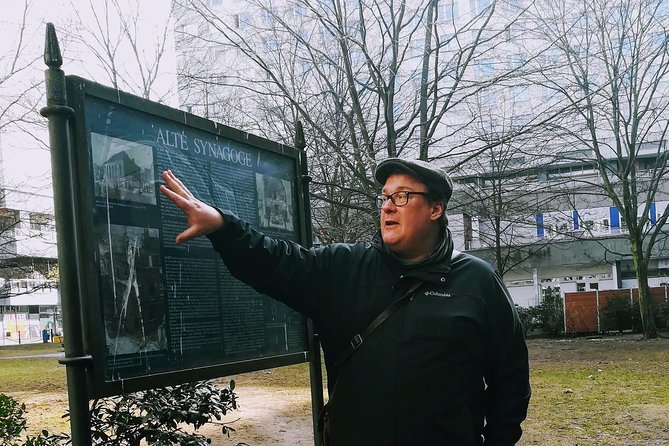
Berlin can look crisp and modern from afar. But when you walk with a guide who studies Jewish history, the city turns into a map of people, choices, and consequences. This tour is built for that shift.
It lasts about three hours, and it stays small, with a maximum of 10 travelers. That matters in Berlin, where you often run into two problems on tours: big groups that move fast, and guides who have to talk at you instead of with you. Here, you can ask why a building was designed the way it was, or what a memorial is trying to make you feel.
You’ll also appreciate the format. The stops are spaced so you get context at each place, then you walk a little and let the story land. It is not just a sightseeing checklist.
More Guided Walks in Berlin
- Discover Berlin Half-Day Walking Tour
★ 5.0 · 9,624 reviews - Berlin City walk Government District and Places of Democracy
★ 4.7 · 8,467 reviews - Berlin: Third Reich & Cold War Guided Walking Tour
★ 4.9 · 8,378 reviews
The guide makes the difference (especially on hard topics)
The biggest strength of this tour is the human, expert narration. You’re not just getting facts. You’re getting explanations shaped by Jewish Studies scholars and guides who can handle emotional material with care.
From the guide examples shared for this experience, you can see the range of strengths they bring:
- Ioana N. was praised for empathy and for customizing the route around what people wanted to know, including her long connection to Berlin.
- Forrest and Lee were highlighted for making the material easy to follow and answering questions clearly.
- Heather stood out for passion and openness, plus a knack for covering both monuments and the bigger storyline.
- Isabel Daniel was praised for answering every question, and for bringing Ph.D-level depth into the conversation.
That question-friendly approach is what makes this type of tour work. Jewish Berlin history includes centuries of change, and it helps when your guide can translate that change into plain language you can remember.
New Synagogue and Centrum Judaicum: assimilation made visible
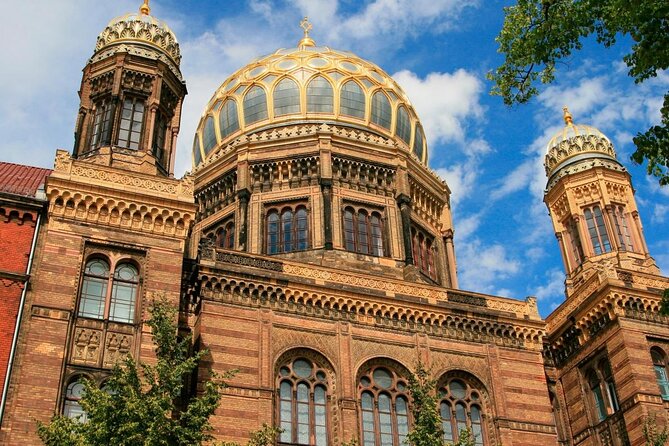
Stop one is the Stiftung Neue Synagoge Berlin, also known as Centrum Judaicum. This is one of the most moving points on the walk, and for a good reason. The New Synagogue’s grand design reflects Jewish life and assimilation in 19th-century Germany, when public visibility for Jewish communities was rising.
In real terms, this means you’re looking at more than a pretty building. You’re seeing how architecture can signal belonging, ambition, and identity. And today, it carries another layer: it is home to the Jewish community that is reviving in Berlin.
The practical payoff for you is this: the guide’s framing helps you read the building as a statement. Without that context, you might view it as simply a synagogue you passed once. With it, you start understanding what it was designed to communicate.
Time on site: about 20 minutes, with admission listed as free.
Auguststraße: a girls’ school and the power of an address
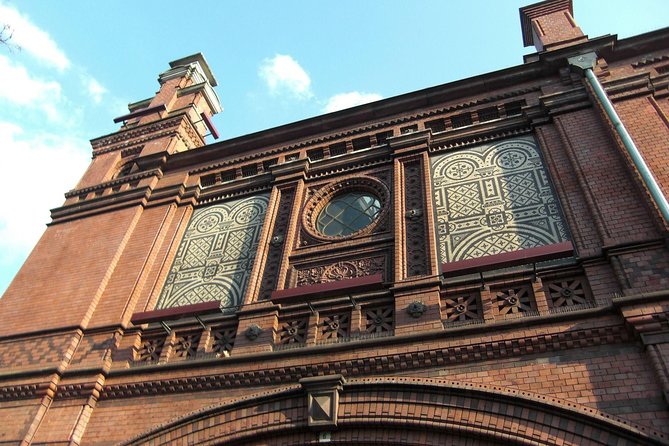
Next up is Auguststraße, once filled with Jewish institutions. This stop is a reminder that history lives in street grids. Even the address Auguststraße 11-13 becomes a story when you know what stood there.
Here, the highlight is the Jewish Girls’ School from 1927 to 1928, created as a historical monument by architect Alexander Beer, and described as New Objectivity style. That combination matters. New Objectivity is about clarity, function, and modern realism. So the building is not just a relic. It reflects a period’s hopes and design values.
Today, you’re not just looking at a monument behind glass. It is described as hosting an exhibit hall and a coffee shop. That is a useful kind of stop because it gives you a chance to reset. You can take the emotional weight from the last block and switch to something lighter without walking out of the story.
Time on site: about 20 minutes, with free admission.
One small drawback to consider: this stop can feel like a “read and imagine” moment. If you’re hoping for a lot of preserved interiors from the school era, the key value here is the building and what the guide brings to it, not a detailed historical room tour.
Hackeschen Höfe and the Scheunenviertel: where everyday life mattered
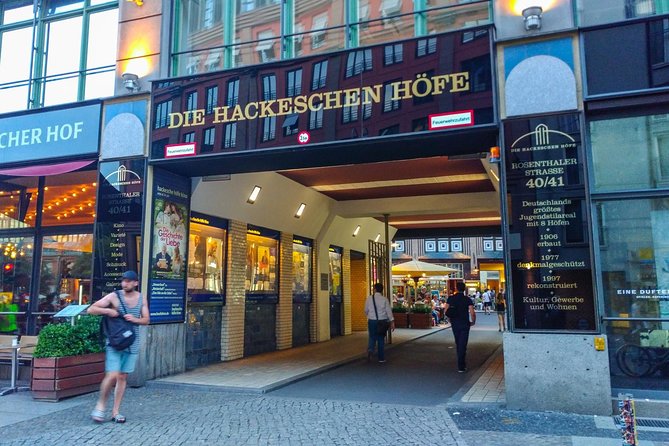
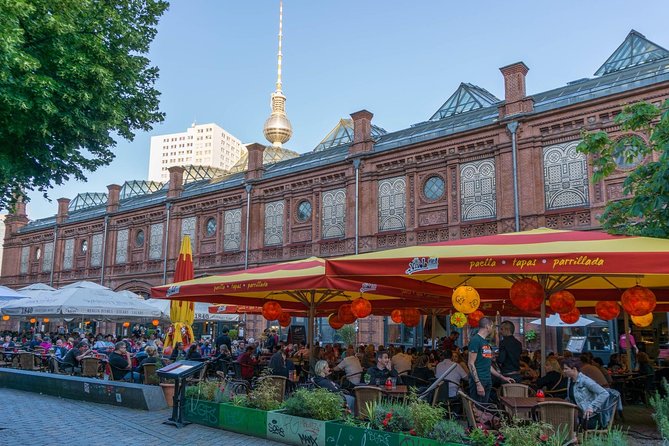
Stop three leads you to Die Hackeschen Höfe, near Hackescher Markt, in the area tied to the Scheunenviertel, often called the Barn Quarter. This is where you start to see how Jewish life was not only about institutions and memorials, but also about neighborhood spaces, streets, and daily rhythms.
What I like about this stop is the balance. You get graceful architecture, plus stories about German Jewish life across Spandauer Vorstadt and the Scheunenviertel. It is the kind of context that helps you understand why the Barn Quarter mattered, not just that it existed.
Also, this part of the walk tends to feel more like you are in Berlin now, not only in the past. That’s not denial of history. It helps you picture where people walked, shopped, studied, and met.
Time on site: about 30 minutes, with free admission.
If you’re someone who loves to understand the “where” as much as the “what,” this stop is a strong anchor. It makes the rest of the walk easier to process.
More German cities at walking speed:




Block der Frauen: when ordinary people resisted
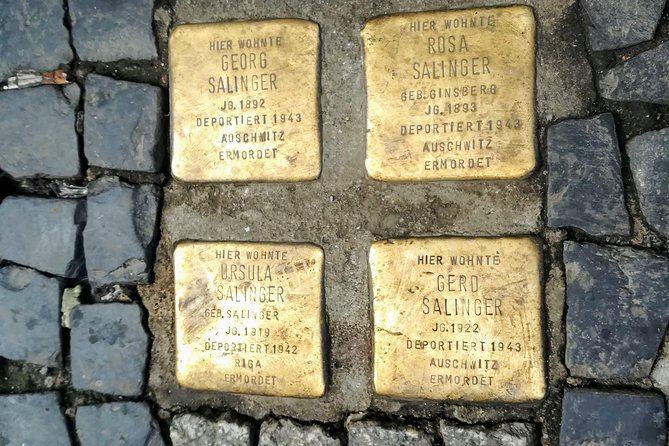
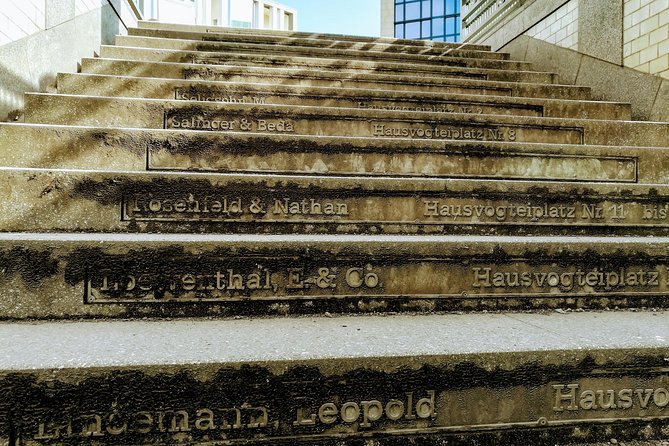
Stop four is the Block der Frauen, a moving memorial dedicated to protest demonstrations led by non-Jewish wives and relatives of Jewish men who had been arrested by the Nazis and targeted for deportation.
This detail is powerful because it breaks the usual pattern of “perpetrators vs. victims” you might see in simplified history telling. Here, you’re reminded that refusal and moral courage can come from people who are not the primary target.
For you, the benefit is emotional and practical. You stop here long enough to let it land, about 20 minutes, and it reshapes how you interpret the rest of what you’ve seen. It puts a human scale on resistance, and it explains why this memorial exists.
Free admission is listed, and that keeps the focus on the meaning, not the logistics.
Holocaust Memorial: 2711 slabs and the meaning of space
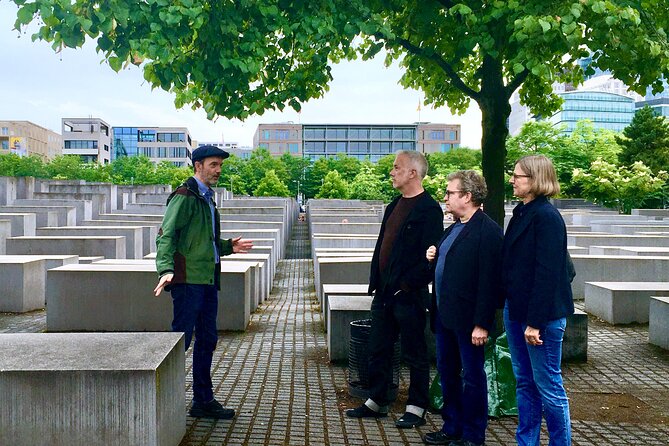
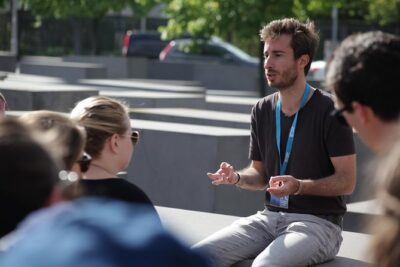
Then the tour moves to the Holocaust Memorial, also called the Memorial to the Murdered Jews of Europe. The description you get is specific: architect Peter Eisenman created a labyrinth of 2711 concrete slabs meant to represent Germany’s acknowledgment of the Holocaust.
This is the stop where the tour can feel quiet in a way that’s hard to fake. Even if you are emotionally prepared, the design does something physical. The slabs create a sense of disorientation and restricted perspective, which is exactly what makes the walk through it memorable.
You’ll spend about 20 minutes here, with free admission.
A practical tip: wear shoes you can trust. You’ll be walking in a place designed to change your sense of direction. Sturdy footwear makes you less focused on your balance and more able to take in the experience.
Price and value: what you get for $156.53
At $156.53 per person, this is not the cheapest walking tour in Berlin. But for what you’re paying for, the math can work.
You’re paying for:
- A three-hour guided experience
- A small group with a maximum of 10 people
- A guide with Jewish history expertise, led by a Jewish Studies scholar type
- Free entry at each of the listed stops
- A route that combines neighborhood context with major memorial sites
If you were to replicate this on your own, you’d need to spend time piecing together context, finding which buildings to look at, and figuring out how to connect them into a coherent storyline. The guide saves you that work, and the small group size makes the conversation part of the value.
One more detail that adds value: the tour is offered in English, and it uses a mobile ticket. That reduces friction, especially on a walking schedule.
What your walk day might look like, step by step
You’ll start at Rosenthaler Str. 40/41, 10178 Berlin. The meeting point is near public transportation, which is your best friend in Berlin. Use transit to shave off stress, and plan to arrive a bit early so you can meet the group without rushing.
Expect roughly:
- Short blocks of guided time at each stop
- Walking between them through the Scheunenviertel area and surrounding streets
- A consistent focus on telling you what to look for, not just where to stand for a photo
The tour also includes group discounts, which can matter if you’re going with friends or another couple.
And because most of the stops list free admission, you are not hit with unexpected museum fees mid-walk. That keeps the experience stable, especially if you book close to the date.
How to prepare so you get more out of it
You can make this tour better with a few simple choices.
Bring something for comfort. Three hours is enough time to feel weather, even in mild seasons. Plan layers.
Write down questions as you go. The guide format is built for questions. If something feels confusing, ask. Berlin history is not always linear, and the best way to understand it is to ask how one era connects to the next.
Go in with the right mindset. This is a Jewish Berlin history walk that includes memorials. The goal is understanding, not entertainment. If you treat it like a serious conversation with the city, you’ll leave with more clarity.
Wear shoes for uneven mood. The emotional shift from neighborhood stories to the Holocaust Memorial is part of the design. Good shoes help you stay present instead of mentally handling foot pain.
Who should book this tour, and who might skip it
This experience is a great fit if you want:
- A structured overview of Jewish history in Berlin with a human guide
- A small group setting where you can ask questions
- A route that includes both the neighborhood story around the Scheunenviertel and major memorials
- An English-language tour led by a scholar type
You might skip it if you:
- Prefer to explore memorials on your own pace with less guided framing
- Want a purely lighter theme tour with no references to deportation-era history
- Struggle with extended walking during a set three-hour window
Should you book In Search of Jewish Berlin Walking Tour?
I’d book it if you want a real, guided connection between place and meaning. The strongest reason is the combination of small group size and scholar-level guidance, plus the fact that every stop is built to teach you how to look at the city, not just where it is.
If you’re the type who likes to understand why a building exists, what a memorial is trying to communicate, and how a neighborhood can carry centuries of identity and loss, this tour should work well for you.
The emotional content is serious, but that is also why the tour is worth your time. This is the kind of experience that changes the way Berlin looks after you leave.
FAQ
How long is the Jewish Berlin walking tour?
The tour lasts about 3 hours.
What is the group size limit?
The maximum group size is 10 travelers.
What language is the tour offered in?
The tour is offered in English.
What does the tour cost?
The price is $156.53 per person.
Is food included?
No. Food and drinks are not included.
Where does the tour start?
The meeting point is Rosenthaler Str. 40/41, 10178 Berlin, Germany.
Do I need to pay for admission at the stops?
Admission is listed as free for the listed stops.
Is the tour guided by a scholar?
Yes. It is a 3-hour tour led by a Jewish Studies scholar.
Is public transportation nearby?
Yes, the meeting point is near public transportation.
Can I cancel if plans change?
Free cancellation is available. You can cancel up to 24 hours in advance for a full refund.
Fresh on the arrivals board for Berlin

Guided Walks in Berlin, compared.
Berlin City walk Government District and Places of Democracy
Read our review →

Berlin’s Best: 2 Hour Walking Tour Third Reich and the Cold War
Read our review →
Third Reich Berlin: Hitler and WWII Walking Tour
Read our review →
Browse the lists this tour appears in