
Reviewed · GUIDED WALKS IN BERLIN
East Berlin: City of Shadows Walking Tour
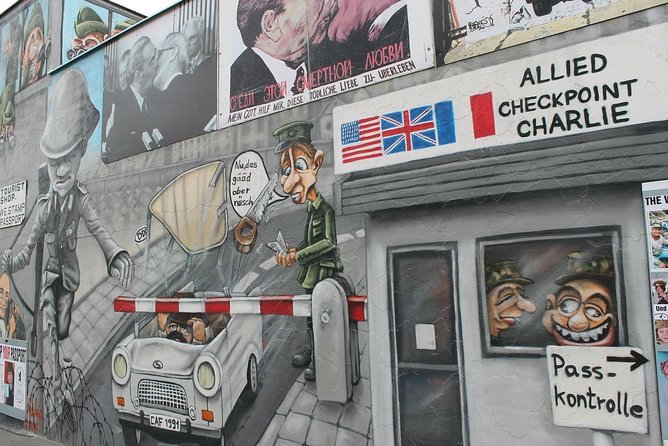
Berlin’s past is written on stone. This 3-hour walk through East Berlin’s Communist-era sites turns landmarks into a clear political story, starting at the Brandenburg Gate and moving street by street toward 1989. I like the local historian approach, because you don’t just see places, you understand why they were built, guarded, and feared.
I also like that the tour hits major DDR touchpoints with free admission at each stop, so you can keep your day simple and focused. The main drawback to plan around is that it is short by design, so you may not get deep museum time on your first stop, especially if you want full, linger-and-read detail at places like the Stasi Museum.
In This Review
- Key Highlights to Know Before You Go
- A 3-hour Route That Turns East Berlin Into a Timeline
- Price and Value: What You’re Paying For
- Before You Go: Meeting Point, Pickup, Fitness, and Group Size
- Stop 1: Brandenburg Gate and the Cold War Moment That Still Echoes
- Stop 2: Friedrichstrasse and the Palace of Tears
- Stop 3: Park am Nordbahnhof and the World of Ghost Stations
- Stop 4: Karl-Marx-Allee, Socialist Dreams, and the Cost of Paranoia
- Stop 5: The Berlin Wall Memorial and the Death Strip Stories
- Stop 6: Stasimuseum and Eric Mielke’s Surveillance Network
- Stop 7: Alexanderplatz and the 1989 Demonstrations
- Getting Around: Transit Tips and Day Pass Math
- Who This Tour Suits Best
- Should You Book the East Berlin City of Shadows Tour?
- FAQ
- How long is the East Berlin City of Shadows walking tour?
- What is the price per person?
- Is the tour offered in English?
- What is the group size limit?
- Where does the tour start?
- Is pickup available?
- Do I need public transportation during the tour?
- Are admission tickets included for the stops?
- Is food and drinks included?
- Can I cancel for free?
Key Highlights to Know Before You Go
- A 3-hour historian-led route that connects Communist-era sites into one storyline
- Free admission for the included stops, so you spend less time worrying about tickets
- Friedrichstrasse and the Palace of Tears as a human-scale entry into family separations
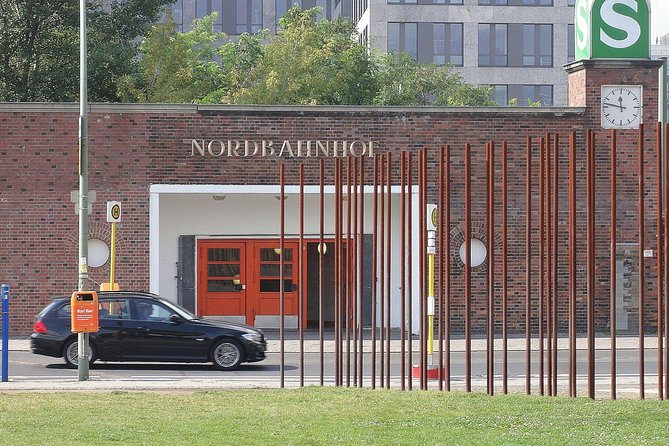
- Nordbahnhof ghost stations that show how division shaped daily transit
- Berlin Wall Memorial and the Death Strip stories for real-world context, not just photos
- Stasimuseum and Eric Mielke to understand surveillance without vague slogans
A 3-hour Route That Turns East Berlin Into a Timeline
East Berlin can feel like a bunch of impressive buildings until someone gives you the map in words. This tour does that. In about three hours, you walk a tight line through DDR power, propaganda, and the systems that enforced control.
You get a day-and-night effect from the way the tour is structured. It starts with headline-level Cold War stakes, then moves toward what it meant for ordinary people. That shift matters. By the end, you understand why 1989 felt inevitable to some and impossible to imagine for others.
More Guided Walks in Berlin
- Discover Berlin Half-Day Walking Tour
★ 5.0 · 9,624 reviews - Berlin City walk Government District and Places of Democracy
★ 4.7 · 8,467 reviews - Berlin: Third Reich & Cold War Guided Walking Tour
★ 4.9 · 8,378 reviews
Price and Value: What You’re Paying For
At $156.53 per person, this is not a bargain-basement tour. You are paying for a guided route led by a local historian, plus time saved by getting a pre-planned sequence of key stops.
Here’s where the value shows up. Each listed stop comes with free admission tickets, so you are not stacking costs on top of the tour price. Also, the group size is capped at 8 travelers, which usually means less waiting around and more chance to hear the full story at each point.
What you should weigh is depth versus speed. If you want to spend hours inside museums, you will likely do better using the tour for orientation and then returning on your own.
Before You Go: Meeting Point, Pickup, Fitness, and Group Size
You start at Unter den Linden 42, 10117 Berlin. The tour ends in Berlin (the exact endpoint isn’t pinned to a single address in what you’re given), so keep your end-of-tour plans flexible.
Pickup is offered from any hotel or accommodation in Berlin, which is handy if you are staying farther out or just don’t want to think about connections right away. Your schedule is built around short stops and a few transit hops, so being able to get started smoothly can save energy.
This is listed for moderate physical fitness, and the itinerary involves walking plus transit between locations. Plan for standing and short walks more than long hiking. The group stays small, with a maximum of 8 travelers, so expect a quieter pace than the big-bus crowd.
One more practical detail: you get a mobile ticket. That is simple on the day.
Stop 1: Brandenburg Gate and the Cold War Moment That Still Echoes
You begin at the Brandenburg Gate, and the tour uses it like an introduction page. You are meant to see the gate not only as a photo spot, but as a marker of how modern Berlin sits on top of a darker past.
A local historian connects the Allies’ post-war division of Germany into four parts to decades of Cold War tension. Then the story lands on a key public moment in June 1987, when President Ronald Reagan urged Soviet Premier Mikhail Gorbachev to tear down this wall.
Nearby, you also hear about the former Soviet Embassy, built in 1945 amid WWII rubble. The guide explains how grand buildings were used as political statements, especially in a city where control was both ideological and physical.
Time on this stop is about 20 minutes. My advice: use those minutes to listen hard, not to sprint for the perfect shot. The gate is famous, but the explanation is what makes it stick.
Stop 2: Friedrichstrasse and the Palace of Tears
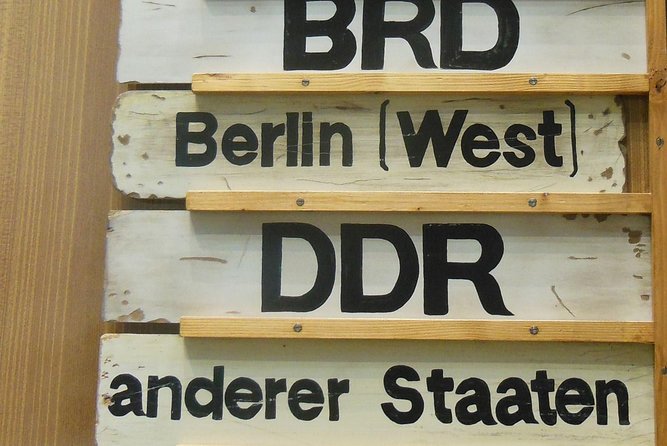
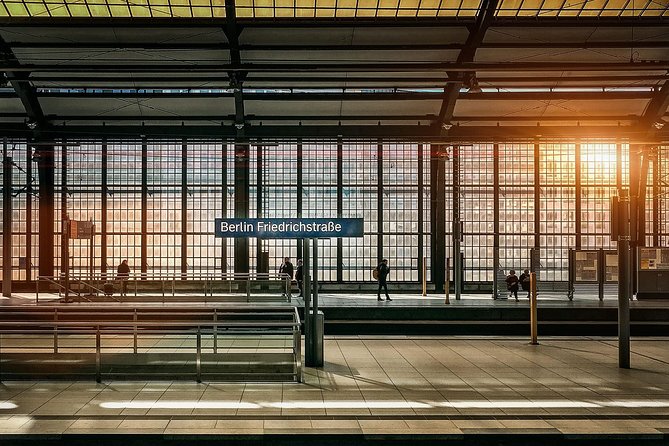
Next up is Friedrichstrasse train station, a major crossing point between East and West Berlin. This is where the tour shifts from big politics to family-level consequences.
The guide focuses on the heartbreaking process families faced under East German immigration rules, and you hear about the office known as the Palace of Tears. That name alone tells you the emotional tone, but the real value is learning why a station had an office built around separation and grief.
This stop is about 15 minutes. It is short, so if you tend to ask questions, save them for this part, since it is one of the most human-scale moments on the route.
More German cities at walking speed:


Stop 3: Park am Nordbahnhof and the World of Ghost Stations
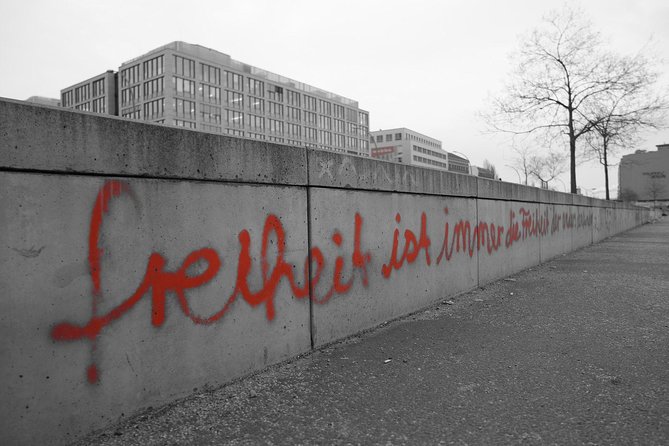
At Nordbahnhof, the tour explains how Berlin’s division created “ghost” stations. These were unused, heavily guarded platforms built into a subway system that served West Berlin routes, but sat inside East German territory.
The idea is chilling in a simple way. Even movement had to be controlled. Even empty spaces could be part of the security machine.
You get about 10 minutes here. Don’t treat it as a quick photo stop. Think of it as a way to understand how borders can live inside everyday infrastructure.
Stop 4: Karl-Marx-Allee, Socialist Dreams, and the Cost of Paranoia
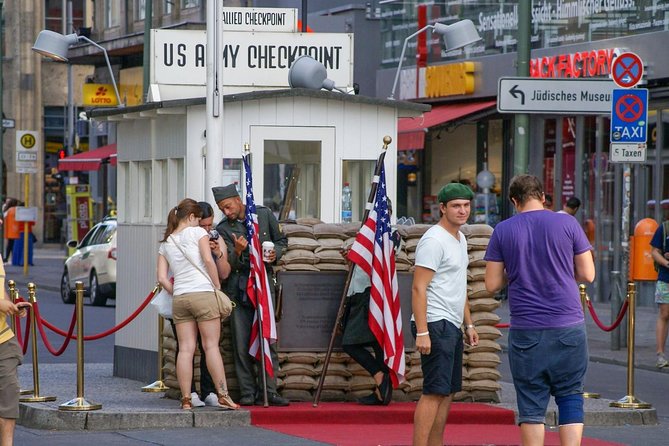
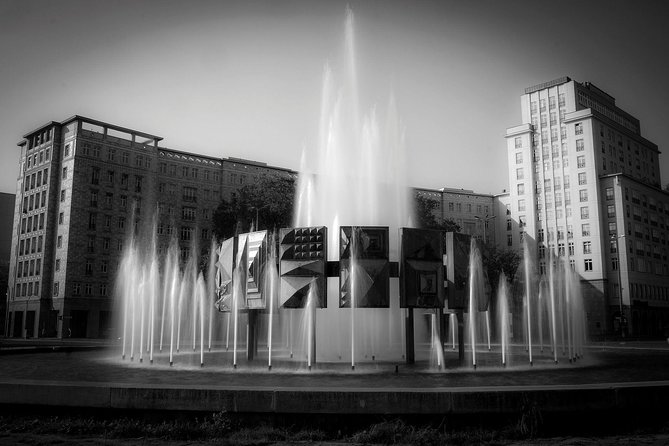
Then comes Karl-Marx-Allee, the mile-long housing complex that East Germany showcased as a kind of Socialist paradise.
This stop works well because it challenges the propaganda angle without turning it into a lecture. The guide explains how dreams for a better system turned into deprivation, suppression, and paranoia.
You’ll see the scale and the style first. Then you hear the intended message behind the design. That combo helps you read the street in a more honest way.
You only spend about 10 minutes here, which is just enough to anchor the main ideas. If you are especially interested in architecture and urban planning, you may want to do a follow-up walk on another day using this street as your starting point.
Stop 5: The Berlin Wall Memorial and the Death Strip Stories
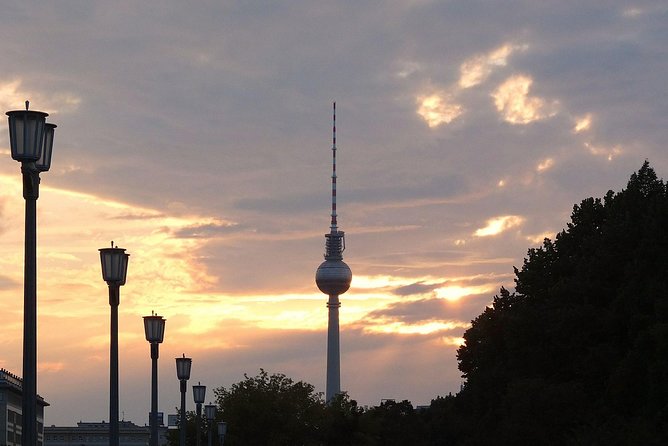
The Memorial of the Berlin Wall is the emotional center of the tour. Here, you get the chance to understand the wall not as a single barrier, but as a whole system designed to prevent escape.
The guide helps you experience the notorious Death Strip and shares stories of East Berliners whose escape attempts ended tragically. This section is not for quick consumption. You’ll need a moment to absorb what you’re hearing.
Time at this stop is about 15 minutes. If you want to remember it later, take a few notes. Even a short sentence about what the guide emphasizes will make your memory feel sharper when you are back at your hotel.
Stop 6: Stasimuseum and Eric Mielke’s Surveillance Network
At the former Stasi headquarters, the tour turns from visible walls to invisible control. The Stasi was East Germany’s secret police, and the guide explains how coercion extended into daily life.
You learn that neighbors and even family members were pressured to spy on one another. Then the story gets specific about the feared leader Eric Mielke, including how he recruited a massive network of spies and used surveillance methods that were designed to catch people before they acted.
This is one of the stops where you can feel how the Communist system functioned as a social system, not just a government.
Time here is about 10 minutes. This is the point where you should manage expectations. If you want to do serious museum reading or spend longer with exhibits, treat the tour as your orientation. Afterward, you can come back on your own for more time inside.
Stop 7: Alexanderplatz and the 1989 Demonstrations
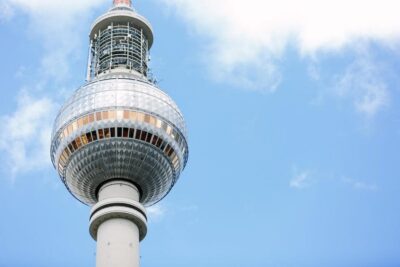
The final stop is Alexanderplatz, East Berlin’s center of public life. The guide explains how the square was rebuilt in the 1960s, including monuments like the futuristic parliament building and the iconic TV Tower.
Then it moves to 1989. Alexanderplatz becomes the stage for massive demonstrations that helped break the regime and bring 40 years of Communist rule to an end.
This stop runs about 10 minutes, but it lands the tour on an outcome you can picture. The buildings here still feel modern, but now you understand why people were willing to risk everything in the late 1980s.
Getting Around: Transit Tips and Day Pass Math
This tour includes a mix of walking and public transport. The distances between some key sites would be too far to walk in a single pass, so expect a few transit segments.
If you do not already have visitor transit figured out, the tour suggests you buy a day metro pass. The details provided are:
- Berlin Transit one-way AB: 2.8 Euro
- Senior discount: 1.70 Euro
- Berlin Transit day ticket: 7 Euro
- Senior discount: 4.70 Euro
If you cannot purchase a pass in advance, your guide will help you buy it at the first metro station on the tour. That is a real convenience if you arrive with a dead battery or just don’t want to figure out ticket machines under time pressure.
Who This Tour Suits Best
This tour is a good fit if you want a focused way to understand East Berlin’s DDR story without building your own route from scratch. I think it works especially well for:
- First-time visitors who want a clear orientation before going deeper on their own
- People who like political history told through places, not just dates
- Travelers who prefer smaller groups and real explanations at each stop
It may be less ideal if your top priority is museum time. With short stops, you’ll get the big context fast, but you will likely want to plan return visits for deeper exhibits.
Should You Book the East Berlin City of Shadows Tour?
Yes, I’d book it if you want to understand East Berlin quickly and accurately. The small group size, the historian-led pacing, and the free admission stops make it a strong value for a first pass.
I would not book it as your only Berlin DDR plan if you are a serious museum-only type. Use this tour to get your bearings and the core storyline, then build a day or two afterward for deeper independent exploration, especially around the Stasi story.
If you like your history grounded in real streets and real systems, this one will give you that. You will leave with East Berlin’s past translated into something you can actually walk through.
FAQ
How long is the East Berlin City of Shadows walking tour?
The tour lasts about 3 hours.
What is the price per person?
The listed price is $156.53 per person.
Is the tour offered in English?
Yes, it is offered in English.
What is the group size limit?
The maximum group size is 8 travelers.
Where does the tour start?
The start point is Unter den Linden 42, 10117 Berlin, Germany.
Is pickup available?
Pickup is offered from any hotel or accommodation in Berlin. Hotel drop-off is not listed as included.
Do I need public transportation during the tour?
Yes. You will need to use public transport a few times because some distances between sites are too far to walk.
Are admission tickets included for the stops?
For the listed stops, you get admission tickets free as part of the tour.
Is food and drinks included?
No. Food and drinks are not included.
Can I cancel for free?
Yes. Free cancellation is available if you cancel up to 24 hours in advance of the experience start time.
Fresh on the arrivals board for Berlin
Guided Walks in Berlin, compared.
Berlin City walk Government District and Places of Democracy
Read our review →
Berlin’s Best: 2 Hour Walking Tour Third Reich and the Cold War
Read our review →
Third Reich Berlin: Hitler and WWII Walking Tour
Read our review →
Browse the lists this tour appears in