
Reviewed · WALKING TOURS
Dresden: Private Guided Walking Tour
Dresden tells its story in stone. This private walking tour strings together Baroque landmarks and the human history around them, starting at Neumarkt and ending near Frauenkirche. I like that you are not just looking at buildings, you are getting the why behind them, from medieval times to modern Dresden.
Two things I really like: first, the tour runs with a professional, licensed guide who mixes big stories with small, funny anecdotes. Second, the walk is built around the city’s most famous sights in a logical flow, including Frauenkirche, Semperoper, and the Zwinger, then continuing through Dresden Castle, Brühl’s Terrace, the Procession of Princes, and Stallhof. One possible drawback is the tight 2-hour length, so if you want long stops inside churches or to linger for photos in every square, you may feel a bit rushed.
If you come with basic English or German, this works well. If you need a different language, you will have to request it, because the standard languages are English and German. Also, the group can be as large as 25, which is still “private group” territory, but it can affect how slowly you move at peak crowding.
In This Review
- Key points to know before you walk
- Meeting at Neumarkt, then walking with a plan
- Neumarkt to Frauenkirche: where the old town starts to make sense
- Semperoper: Baroque drama, explained in plain language
- Zwinger: seeing grandeur without getting stuck in a maze
- Dresden Castle and Brühl’s Terrace: power and perspective
- Dresden Cathedral and the 1000-year timeline
- Taschenbergpalais and Augustus Bridge to finish near Frauenkirche
- How the Peaceful Revolution of 1989 shows up on this walk
- Private group value: $212 per group, and what it really means
- Who this tour suits best (and who might want something else)
- A quick word on guides and pacing, based on real feedback
- Should you book this private Dresden walking tour?
- FAQ
- Where does the tour start and where do I meet the guide?
- How long is the Dresden private guided walking tour?
- What languages are offered?
- How large is the private group?
- Is the tour wheelchair accessible?
- What is the route like, and where does it end?
Key points to know before you walk
- Licensed guide, story-first: You get an experienced guide who brings the city’s past to life with both humor and context.
- Baroque highlights in a smart route: Frauenkirche, Semperoper, and the Zwinger anchor the experience, then the walk continues through royal sights.
- 1000 years of Dresden, not just one era: You’ll hear the arc from medieval times through Renaissance energy to the Baroque and up to modern events.
- 1989 has a place here: The Peaceful Revolution context is part of the narration, not just an afterthought.
- Insider tips during your walk: You can expect practical suggestions for restaurants and events, shaped for your day.
Meeting at Neumarkt, then walking with a plan
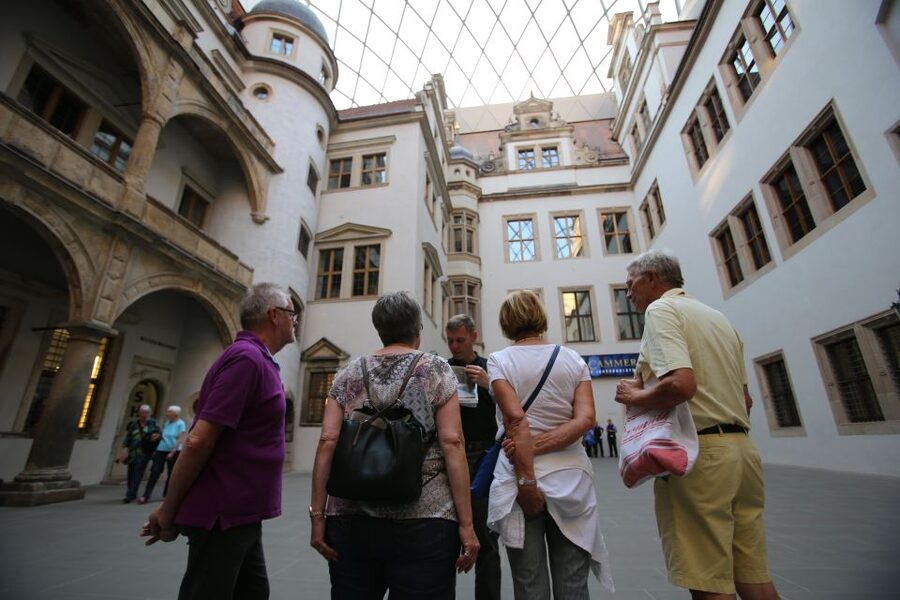
The tour starts at Neumarkt, meeting your guide at Dresden Information, Neumarkt 2, in the QF Passage basement floor. I like this because it gets you into the historic center quickly, before your legs get the chance to decide on their own plan.
Once you’re with your guide, the pacing stays friendly for a walking tour. It is long enough to feel like you covered the city’s key ideas, but not so long that you are exhausted before the best photo spots. The biggest advantage of a private small group is that the guide can shape the route and tempo to the group, instead of marching everyone through like a conveyor belt.
You’ll also notice the “two-way” feel. The tour is guided, but you’re encouraged to listen for the stories your guide highlights, and to ask for practical tips on what to do next.
More Walking Tours in Dresden
- Dresden: City & Semperoper Guided Walking Tour
★ 4.8 · 2,397 reviews - Dresden: Guided City Walk
★ 4.6 · 2,075 reviews - Dresden: Complete Walking Tour with Frauenkirche Visit
★ 4.8 · 700 reviews
Neumarkt to Frauenkirche: where the old town starts to make sense
Neumarkt is the kind of starting point that helps you get oriented fast. From there, you’ll head to major landmarks that define Dresden’s skyline and mood. The tour is designed so that the first stretch builds momentum, not confusion.
Frauenkirche is the anchor you keep coming back to, and for a good reason. Your guide will frame it inside the broader story of Dresden, rather than treating it as a single monument you glance at and move on. Even if you already know the name, you’ll get a clearer sense of what the building represents in the city’s long arc.
This is also where the guide’s storytelling style matters. If the group’s energy is high, you’ll hear more of the “human” details and sharper anecdotes. If the group is quieter, you still get the big context, just with a different rhythm. Either way, you end this stretch with the feeling that you understand what you’re looking at.
One watch-out: the route moves through central sights, so expect normal crowding around the most famous corners. Wear comfortable shoes, and plan for short photo waits.
Semperoper: Baroque drama, explained in plain language
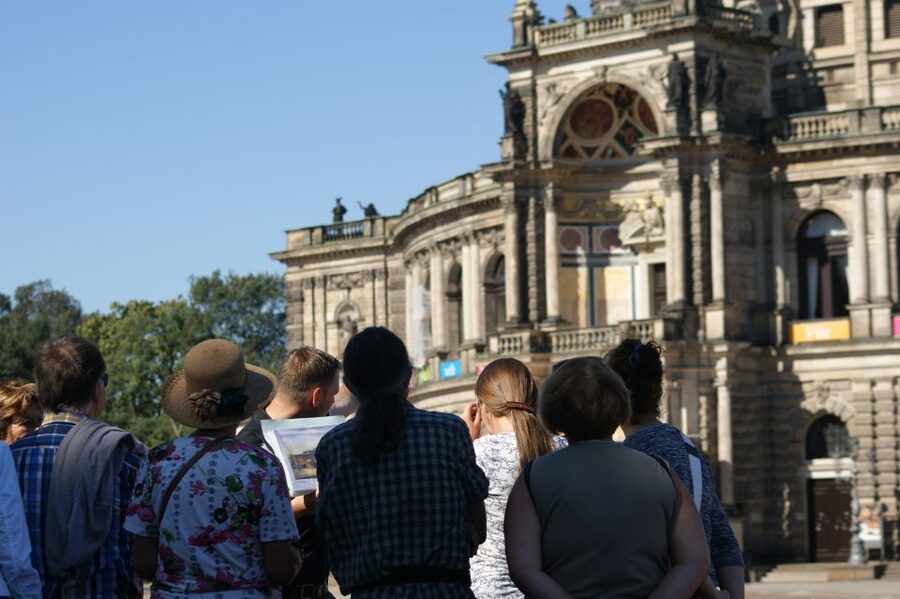
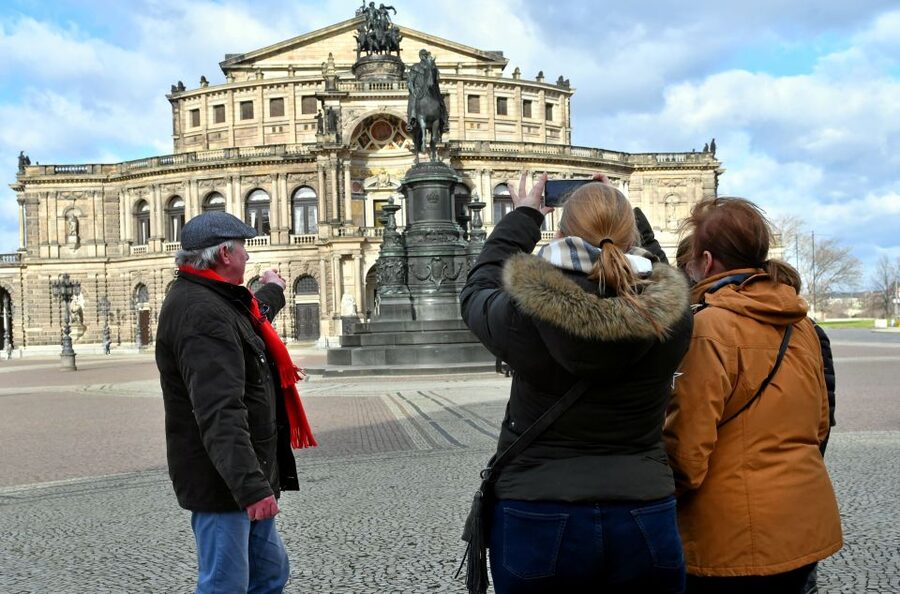
Next up is Semperoper, a building you can recognize instantly once you see it. The benefit of having a guide here is not that they recite facts like a worksheet. It is that they explain how Dresden’s culture and power showed up in architecture.
Dresden’s Baroque is often described with words like grand and dramatic, and that is true on the street. But the guide helps you connect that “look” to history, including the energy Dresden went through across centuries. You start hearing how Renaissance vigor and Baroque spectacle weren’t random choices, they were tied to the city’s ambition.
I love the way a good guide makes this feel accessible. You should leave with a clearer mental picture of how the city’s identity evolved, instead of just collecting names of buildings.
Zwinger: seeing grandeur without getting stuck in a maze
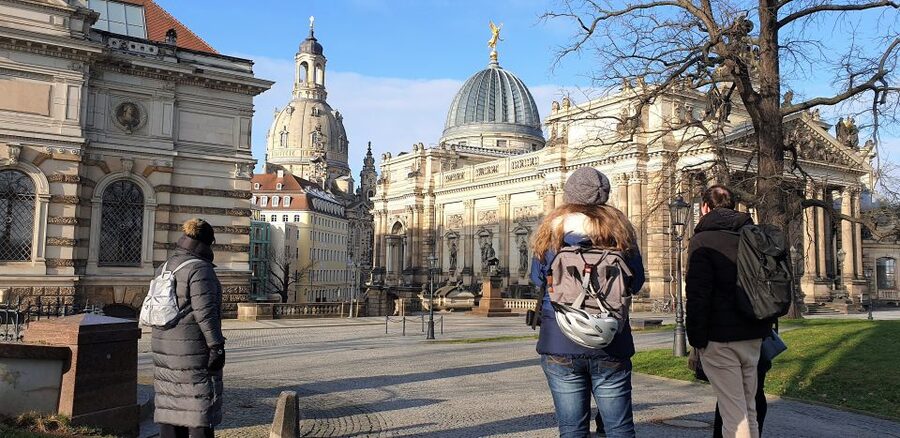
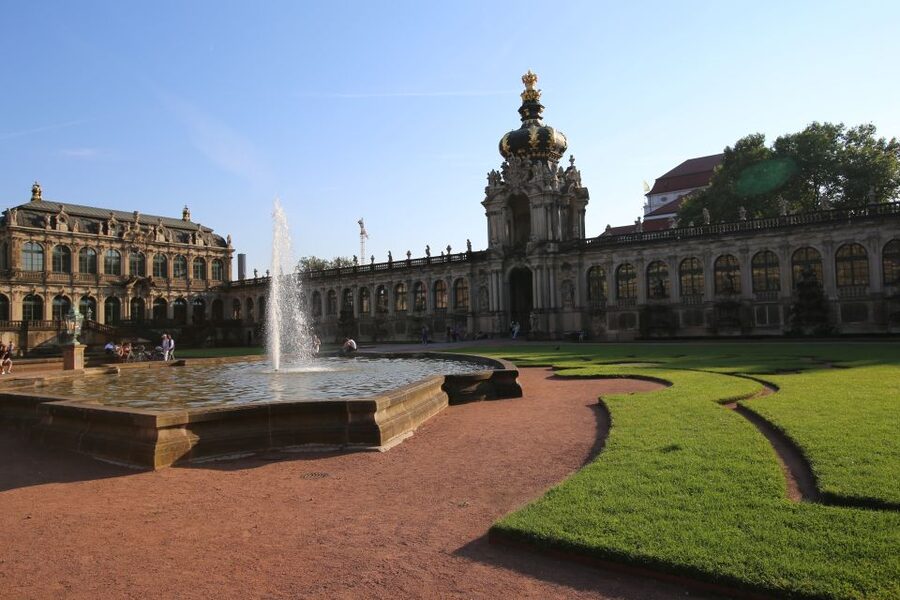
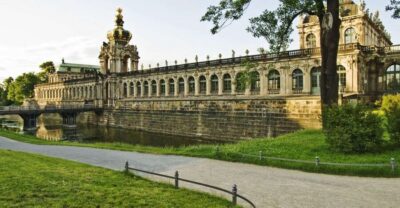
The Zwinger is one of those stops where you feel the pull to slow down. During this tour, you’re not expected to turn it into a full museum day. Instead, you get the key sights and the meaning behind them, in a way that fits a 2-hour walking format.
What makes this stop work is the combination of visuals and narration. Your guide ties what you see here to the larger theme of the Baroque period and to Dresden’s bigger historical timeline. It’s a good mix when you want the “wow” factor, but you also want the context to stick.
You’ll likely pick up small, useful observations as you walk, like what to notice first from where you stand. Those are the kinds of details that help you enjoy Dresden more after the tour ends, when you’re exploring on your own.
Dresden Castle and Brühl’s Terrace: power and perspective
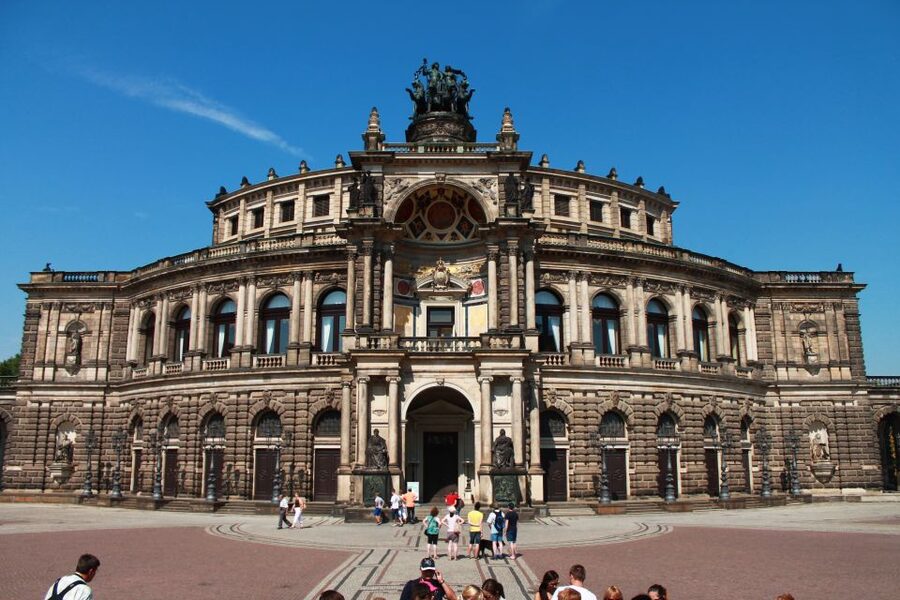
From the Zwinger area, the route continues toward Dresden Castle. This is where the walk starts to feel like you’re moving through different “chapters” of the city. The guide’s job here is to keep the timeline coherent, so the Baroque does not feel like a separate island.
Brühl’s Terrace is a standout viewpoint in the walk. Even without spending hours here, you get the sense of scale and the way the city’s important buildings relate to each other. This is also a great place for a quick reset, because the architecture and sightlines help you catch your breath.
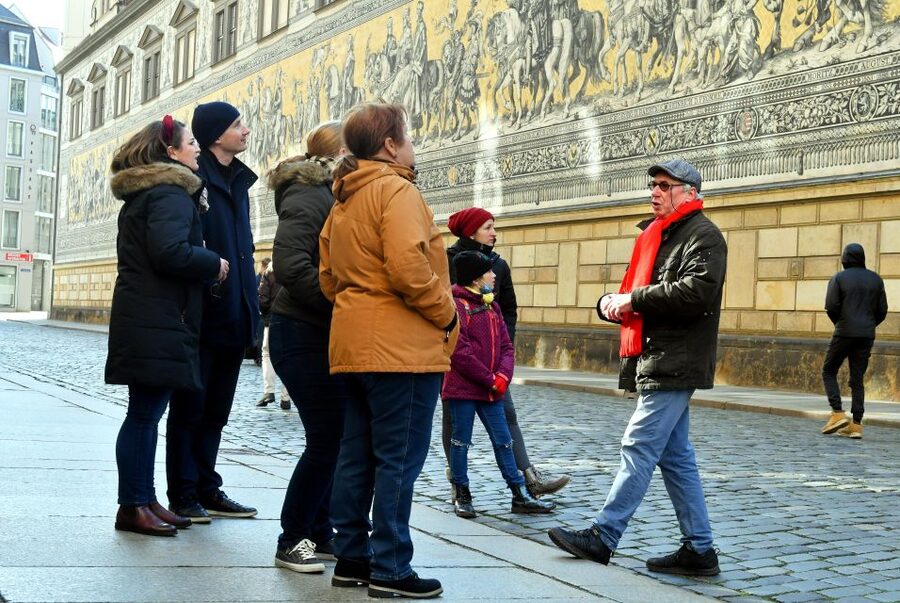
Then come two more stops that add character: the Procession of Princes and Stallhof. These are perfect for understanding how decoration and symbolism work in Dresden. Your guide can point out how the city uses visual storytelling, so you’re not just reading stone as stone.
Practical note: this section can involve more stepping and turning. If your group prefers slower movement, this is where a private guide can help manage expectations, since you’re not stuck with a rigid mass-tour pace.
More German cities at walking speed:




Dresden Cathedral and the 1000-year timeline
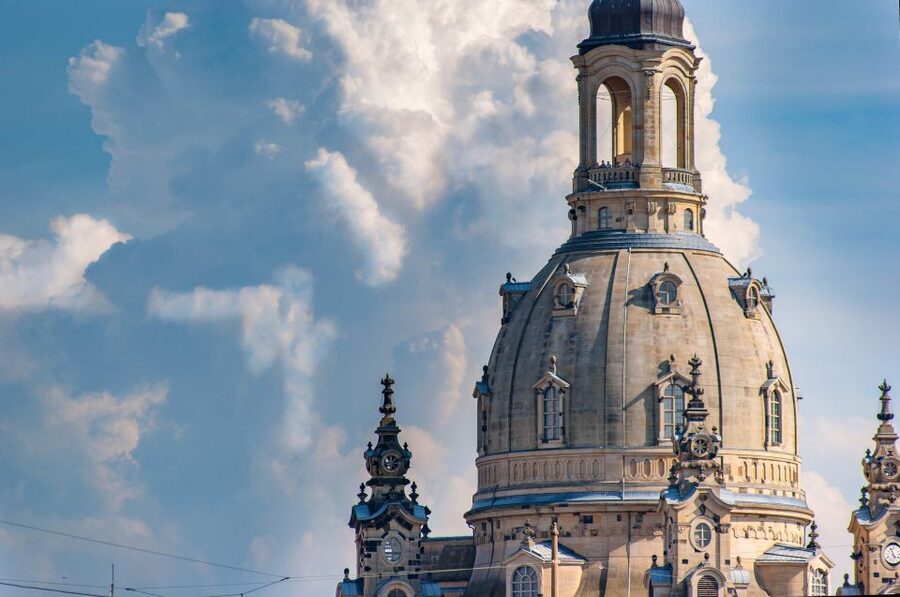
The tour continues toward Dresden Cathedral, and this is a key moment for the “big history” part of the experience. The point is not to cram every century into your brain. It is to show you how Dresden keeps reinventing itself, and how each era leaves its mark in the built environment.
The description for this walk emphasizes getting to know the history of over 1000 years, from the Middle Ages until the present. In practice, that means your guide will likely connect what you see to changes in politics, culture, and everyday life.
I like this approach because it makes Dresden feel real. You start to understand that the city is not one style or one century. It is layers, and the guide helps you see those layers without turning it into a lecture.
As always, keep your phone charged, and plan for a couple of quick stops. You’ll want a photo or two, but don’t let photos take over the pacing.
Taschenbergpalais and Augustus Bridge to finish near Frauenkirche
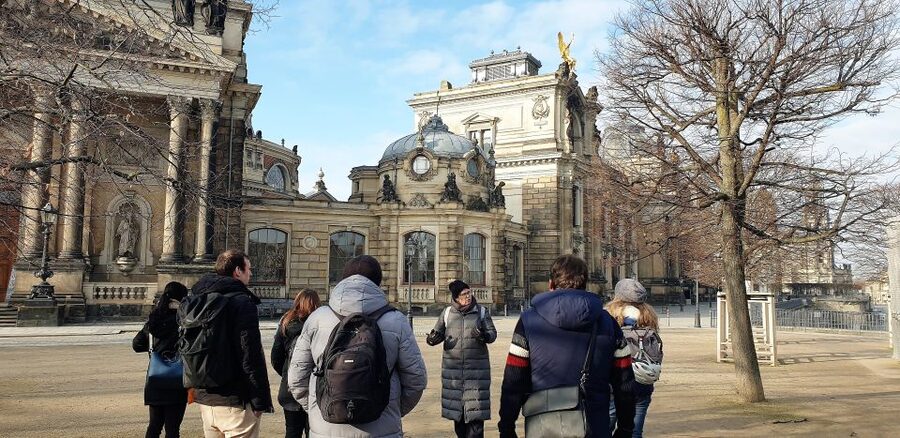
After the cathedral area, the walk shifts toward Taschenbergpalais and Augustus Bridge. This late portion matters because it changes the feel of the day from “monuments and names” to “city walk with character.”
Taschenbergpalais adds another dramatic architectural moment, reinforcing the Baroque mood you’ve been following since the beginning. Then Augustus Bridge becomes a natural finishing rhythm, because it offers a different angle on the city.
The tour concludes near Frauenkirche, which is smart. You end where you started with a clearer mind. By the time you reach the finish, you should be able to look at the skyline and think in terms of story, not just scenery.
How the Peaceful Revolution of 1989 shows up on this walk
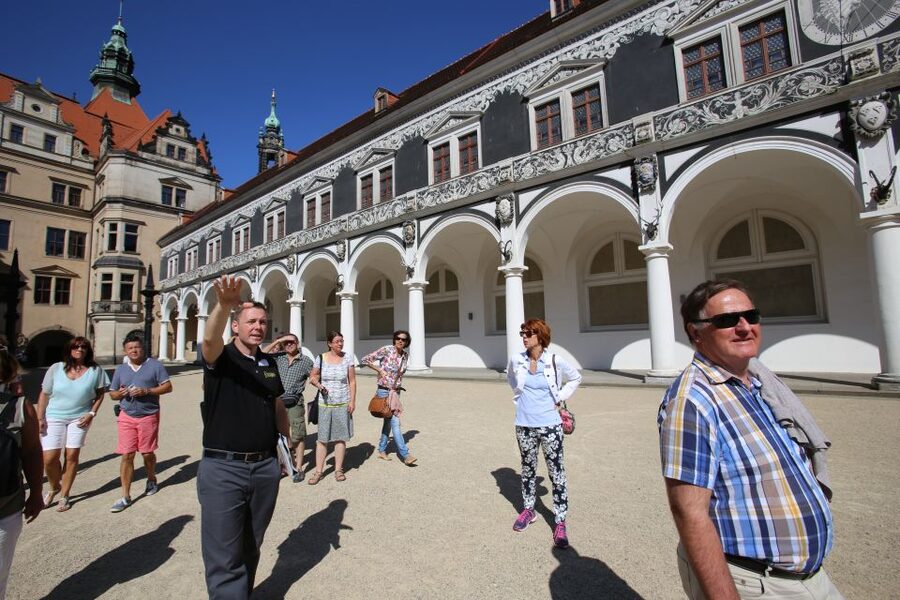
One of the most valuable parts of this tour is that it does not treat modern history like a separate topic. The route includes context about the Peaceful Revolution of 1989 and what it might have felt like for people from former East and West Germany.
That kind of narration changes how you experience the city. Buildings become more than architecture, they become the backdrop to human decisions, pressure, and change. Even if you only know a few basics about the period, the guide’s framing helps you connect the dots without drowning you in details.
I also like the tone described for the tour. You should expect big stories with readable pacing. The guide will likely balance emotion and clarity, so you leave informed, not overwhelmed.
Private group value: $212 per group, and what it really means
The price is listed as $212 per group, for a maximum group size of up to 25, and the duration is about 2 hours. Here’s how I judge value for a tour like this: the real question is whether the guide can help you see more than you would on your own in the same time.
If you are traveling with friends or family and you want a plan with minimal friction, private-group pricing can be a smart use of money. You are paying for route design, live context, and the ability to ask questions. A guided walk also helps you avoid the common problem of standing in front of a famous building and having no idea where to look next.
In other words, you’re not paying only for photos. You’re paying for direction and meaning. For a city like Dresden, that’s a good trade.
The one trade-off is that a 2-hour walking tour always has boundaries. You get a concentrated experience, not an all-day deep study of every building.
Who this tour suits best (and who might want something else)
This is a great fit if you want:
- a Baroque-focused walk with history that moves across centuries
- a private group experience where you can keep questions in the loop
- a guide who gives practical, local tips for what to do next
It is also a strong choice if you like walking but you don’t want to plan every stop yourself. The route gives you a clear sequence, from Neumarkt to Frauenkirche, with major landmarks along the way.
If you are the type who needs long breaks, long museum time, or specialized interest in one single building, you might find 2 hours a bit short. In that case, consider pairing this with independent time afterward.
A quick word on guides and pacing, based on real feedback
This tour’s quality seems to hinge on the guide. Recent feedback highlights that guides can be entertaining, with humor mixed into historical context. Two names you may see associated with the experience are Frau Schulz and Idiko, both specifically praised for engaging different age groups and keeping the walk fun.
That matters for you because Dresden can feel intense if you only hear dates and facts. A guide who can adjust to the group keeps the story moving and makes the city feel easier to absorb.
On the other hand, there is at least one concerning report about a tour not happening as scheduled. If you book, make sure you have your confirmation details ready and keep an eye on your timing so you can follow up quickly if anything feels off.
Should you book this private Dresden walking tour?
I think this is a book-worthy way to see Dresden if you want a guided, coherent route through the old town, with Baroque sights and real historical context in a short time window. The combination of major landmarks, a timeline that spans centuries, and the inclusion of the Peaceful Revolution of 1989 makes it more than a photo walk.
You should book if:
- you want a licensed guide and an easy plan that starts at Neumarkt and ends near Frauenkirche
- you’re comfortable with English or German
- you value insider tips on restaurants or events during your visit
Skip it if you need extra time at each building, or if you’re looking for a deeper, inside-focused itinerary.
FAQ
Where does the tour start and where do I meet the guide?
Meet your guide at Dresden Information, Neumarkt 2, 01067 Dresden, Germany, in the QF Passage basement floor.
How long is the Dresden private guided walking tour?
The tour lasts about 2 hours.
What languages are offered?
The tour is available in English and German only, unless you request something different.
How large is the private group?
The maximum group size is 25 persons.
Is the tour wheelchair accessible?
Yes, the tour is wheelchair accessible.
What is the route like, and where does it end?
It starts in the Neumarkt area and takes you past major sights including Frauenkirche, Semperoper, the Baroque Zwinger, Dresden Castle, Brühl’s Terrace, the Procession of Princes, Stallhof, Dresden Cathedral, Taschenbergpalais, and Augustus Bridge, then ends near Frauenkirche.
Fresh on the arrivals board for Dresden


Walking Tours, compared.

Berlin City walk Government District and Places of Democracy
Read our review →
Berlin’s Best: 2 Hour Walking Tour Third Reich and the Cold War
Read our review →
Browse the lists this tour appears in