
Reviewed · WALKING TOURS
Dresden: Guided City Walk
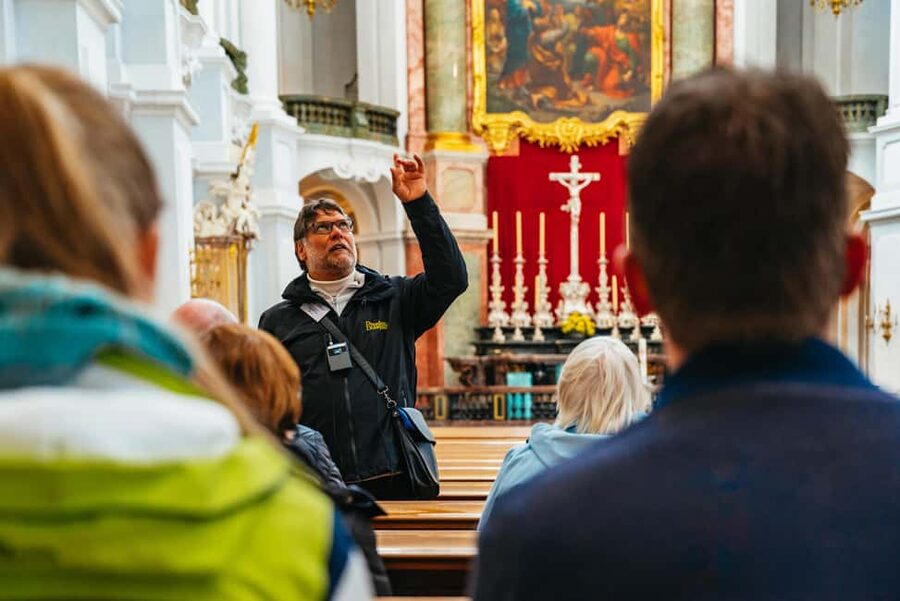
Dresden tells its story in stone and plans. In 90 minutes, a licensed guide walks you through the Middle Ages, Renaissance muscle, and Baroque showmanship, then connects it to the Peaceful Revolution of 1989. You also get a clear read on why some newer buildings in Dresden’s center feel controversial.
I love two things most. First, the way the guide turns major landmarks like Frauenkirche and Semperoper into understandable chapters, not just photo backdrops. Second, you get special extras like a visit to the Nymphenbad in the Zwinger plus frequent stops that are genuinely good for pictures.
One drawback to plan for: the tour is German only, so if you do not feel comfortable following spoken German, bring a translation app before you go.
In This Review
- Key highlights that matter on the ground
- Where this Dresden walk starts, and why it sets the tone
- Dresden Information to Stallhof: getting oriented without wasting time
- Fürstenzug and Stallhof: the city shows you its rulers
- Brühl’s Terrace: a classic view, with more meaning than scenery
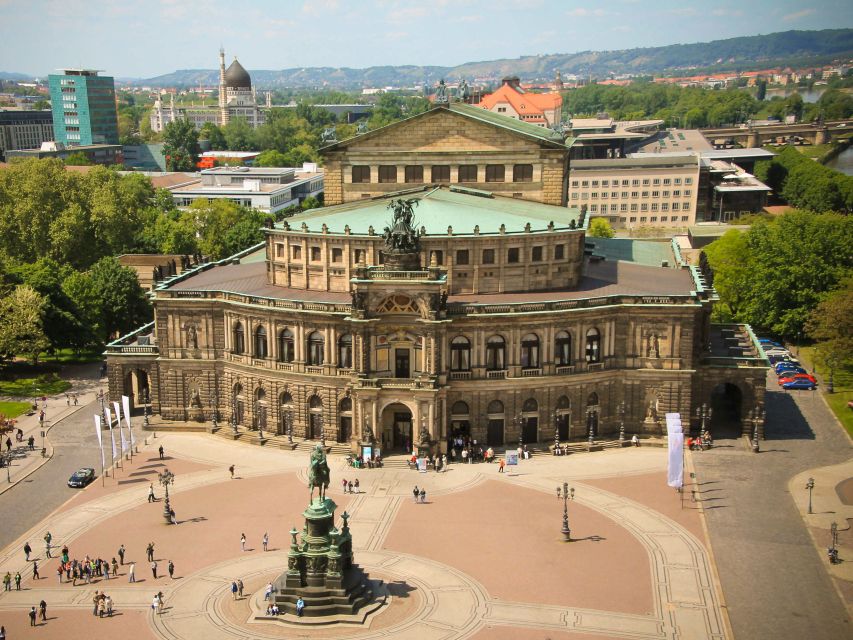
- Semperoper: Baroque grandeur and the modern city debate
- Zwinger and the Nymphenbad: Baroque detail with a rare inside moment
- Dresden Castle and Residenzschloss area: the power center behind the views
- Taschenbergpalais, Augustus Bridge, and the approach to Frauenkirche
- What you actually get for $15, and why it feels like a deal
- Practical details that affect your experience
- Who this tour suits best
- Should you book the Dresden Guided City Walk?
Key highlights that matter on the ground
- German-only guided walk that still feels easy to follow thanks to stories and landmark sequencing
- Frauenkirche and Semperoper explained as more than architecture
- Zwinger time with the Nymphenbad visit, a rare detail you can’t wing on your own
- Fürstenzug and Brühl’s Terrace stops that make history visible and walkable
- Restaurant and leisure tips from your guide, useful for what you do after the tour
Where this Dresden walk starts, and why it sets the tone
This tour is designed for people who want context fast. You begin at Dresden Information in the Untergeschoss of the QF Passage, and that matters because the guide can get your bearings right away, before you start climbing through the city’s layers.
You then head out on foot for quick jumps between the center’s most important sights. The pace is made for a short, high-impact evening or morning plan, not a slow museum crawl.
If you like understanding what you are looking at, this is your kind of walk. The guide is licensed, and the storytelling is built to connect key sites with the big movements of Dresden’s past.
More Walking Tours in Dresden
- Dresden: City & Semperoper Guided Walking Tour
★ 4.8 · 2,397 reviews - Dresden: Complete Walking Tour with Frauenkirche Visit
★ 4.8 · 700 reviews - Dresden: Walking Tour with a Night Watchman including a Meal
★ 4.5 · 535 reviews
Dresden Information to Stallhof: getting oriented without wasting time
The meeting point is specific, which helps. Go to the Untergeschoss of the QF Passage and find the seating area of Dresden Information. When a tour starts this clearly, you spend less energy searching and more energy looking.
From there, the route kicks off with a first set of stops around the historic core, including Stallhof. Even if you only catch it briefly, Stallhof works like a warm-up, because it gets you into the “center of power” zone of Dresden’s old city layout.
Practical note: in a short walk like this, your best move is to keep your camera ready and your focus on the guide’s orientation cues. The guide will point out what to look for, and those directions make the next stops faster to enjoy.
Fürstenzug and Stallhof: the city shows you its rulers
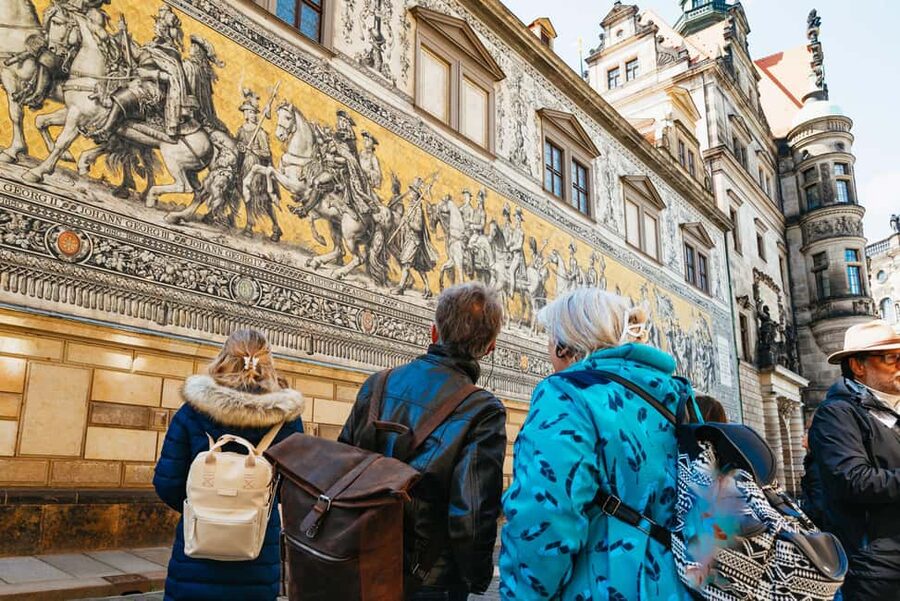
One highlight on the route is the Fürstenzug, the Procession of Princes. This is not just a decorative stop. It is a way to see how Dresden wanted to present itself, through images that make authority feel like part of daily life.
Standing there with a guide helps because you learn what the display represents and how it fits into the city’s long timeline. Without that explanation, it is easy to treat it like a pretty mural. With the explanation, you start seeing it as political storytelling in stone and ceramic.
The Stallhof stop also supports that idea of power in place. The guide’s job here is to connect architecture and city planning with what people wanted the city to communicate.
If you enjoy “why it looks like that” questions, you will feel rewarded at these stops.
Brühl’s Terrace: a classic view, with more meaning than scenery
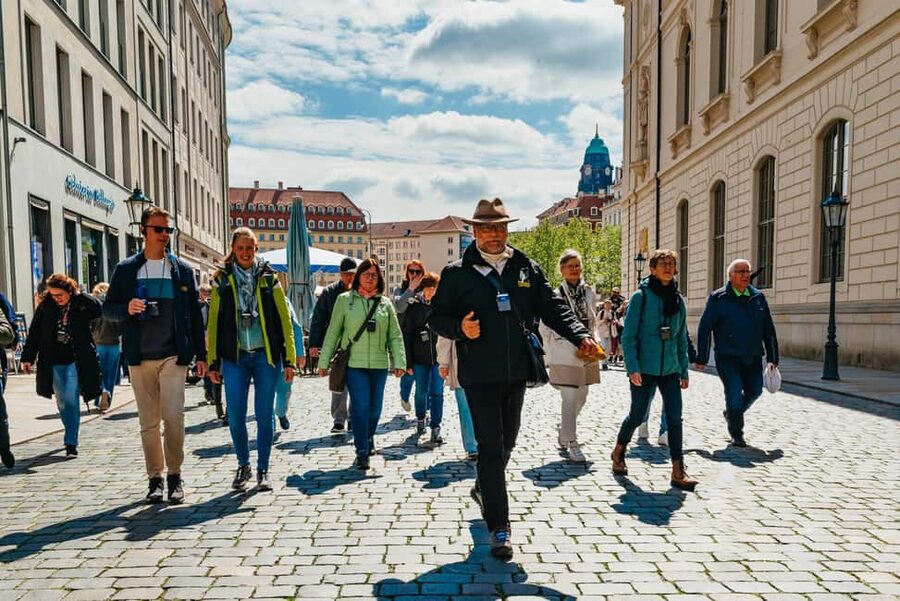
Next up is Brühl’s Terrace, a place that instantly gives you a sense of Dresden’s dramatic center. Yes, it is a great photo spot. It also carries a deeper role in how the city presents itself, which is where the guide’s context earns its keep.
The guide’s stories help you understand how the terrace fits into the wider old-town design. You start noticing alignments, sightlines, and how the river area and palace district work together.
This is a stop that is ideal if you like to pause and actually look. Do not rush it. Let the guide’s background sink in, then take a couple photos from the angles that match what they say.
Semperoper: Baroque grandeur and the modern city debate
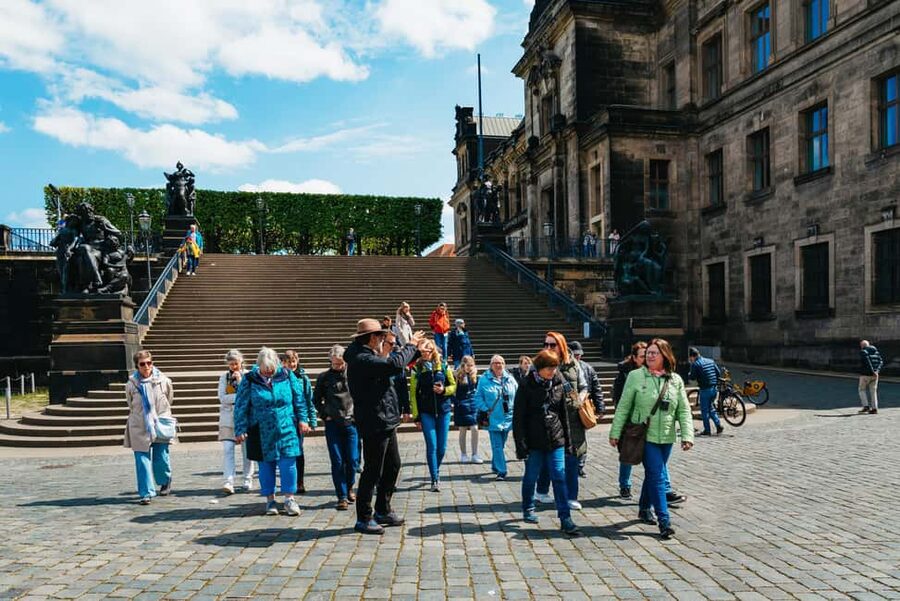
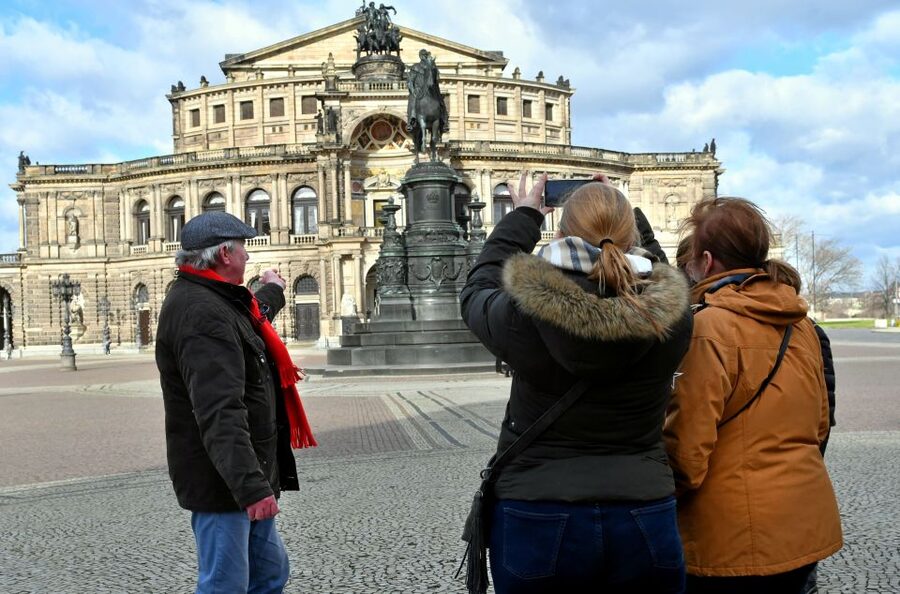
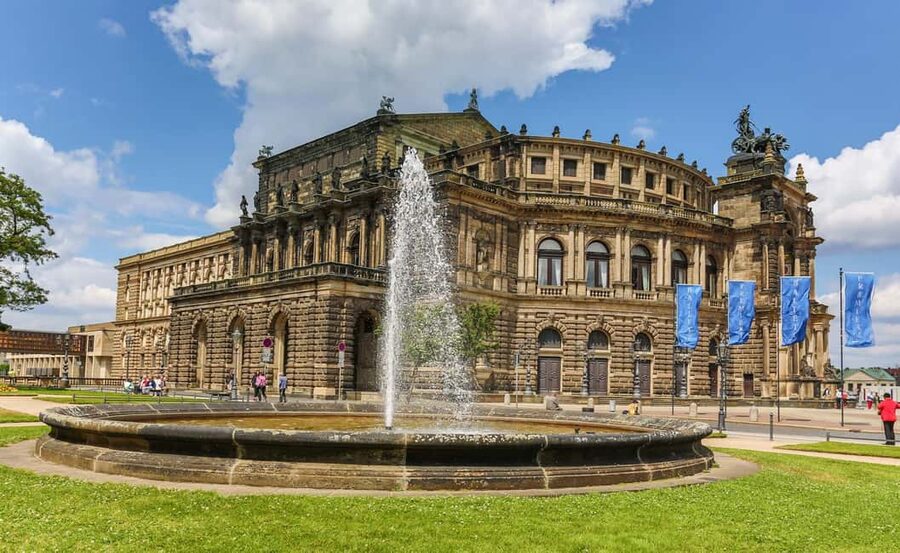
After Brühl’s Terrace, you reach the Semperoper. This is one of Dresden’s iconic buildings, and it is also a useful example of how the city mixes old grandeur with more recent history.
The tour frames Semperoper within Dresden’s Baroque legacy and the city’s longer development. That means you are not only getting a style lesson. You are also getting a “how Dresden keeps changing its face” story, including how newer construction choices can feel controversial.
This stop is especially good for travelers who want more than aesthetics. If you like architecture with context, the guide helps you connect the look of the building to the reasons people built and rebuilt in different eras.
Tip: if you are traveling with friends who do not usually care about opera houses, this is still a strong stop. The guide explains the building in plain language, tied to the city’s growth.
More German cities at walking speed:




Zwinger and the Nymphenbad: Baroque detail with a rare inside moment
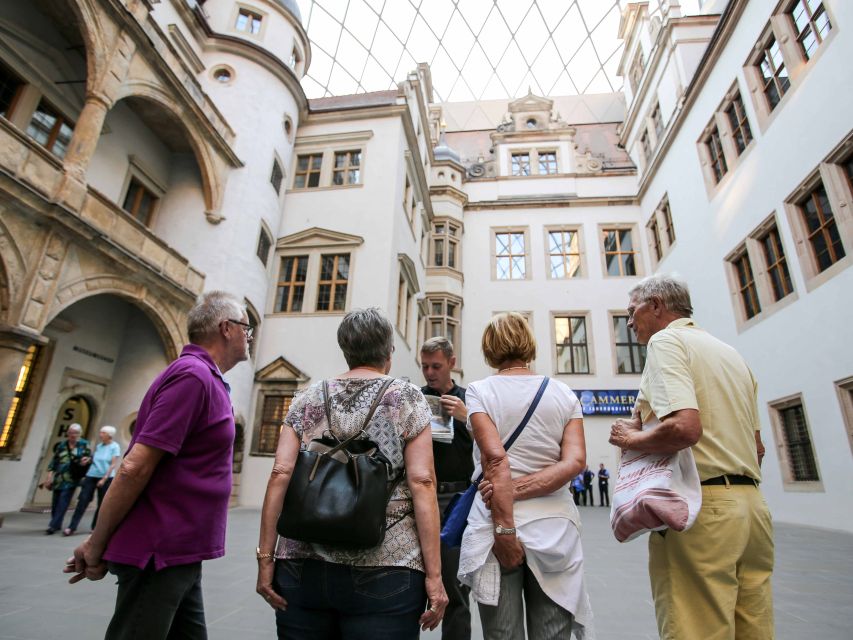
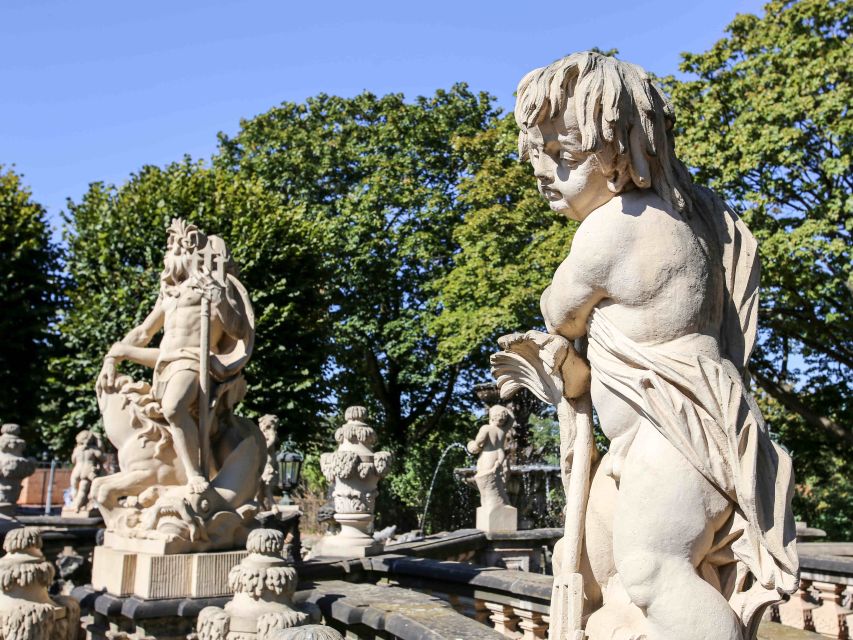
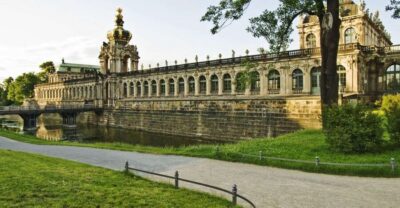
The tour’s Zwinger portion is where your camera habit meets your “wait, that’s cool” reaction. You will see the Baroque complex and get explanations about how Dresden developed and why Baroque architecture became a statement of ambition.
What makes this stop more than a standard exterior walk is the included visit to the Nymphenbad in the Zwinger. You do not have to hunt for an obscure feature or guess your way through what you are seeing. Your guide brings you to the right moment and helps you understand what you are looking at.
Because the Zwinger is full of visual detail, a guide also helps you avoid information overload. Instead of trying to figure everything out alone, you focus on the key elements the tour highlights.
If you like walking away with one or two “I learned something specific” memories, the Nymphenbad visit is a standout candidate.
Dresden Castle and Residenzschloss area: the power center behind the views
From the Zwinger, the walk moves toward the Dresden Castle area, with stops tied to the Residenzschloss. This section is important because it connects Dresden’s landmark beauty to how the city functioned as a seat of influence.
This is also where the tour’s time-spanning approach becomes clear. You hear stories that run from medieval darkness to later periods of Renaissance vigor, then to Baroque grandeur. The castle area is a strong anchor for those themes because it sits at the center of Dresden’s “people of power” geography.
A good way to experience this part is to slow down for a moment and watch how the guide’s explanation changes what you see. You might start noticing architectural choices that previously looked like decoration. Now they read like messaging.
The tour is built so you do not just pass through. You understand why this district matters.
Taschenbergpalais, Augustus Bridge, and the approach to Frauenkirche
After the castle area, the route continues toward the river-side corridor, passing Taschenbergpalais and Augustus Bridge. These stops give you a more complete picture of how Dresden’s center connects across the water.
Then you end near Frauenkirche, the cathedral that anchors the city’s visual identity. The guide’s storytelling at the end matters because this is where Dresden’s more modern, emotional history comes into view, including the context around the Peaceful Revolution of 1989.
This ending does a nice job of tying together what you saw earlier. You started with broad periods and architectural styles. You finish with a place that carries meaning beyond building design.
If you have never visited Dresden before, this ending is especially effective, because it helps you leave the tour with both a map in your head and a story in your heart.
What you actually get for $15, and why it feels like a deal
At $15 per person for a 90-minute guided walking tour, the value is strong, especially if you care about interpretation. A big part of what you are paying for is not the walking time. It is the licensed guide who can explain what you are seeing, keep the sequence logical, and help you avoid dead ends.
Here is what you get that is hard to replicate on your own in the same time window:
- A structured walk that hits major landmarks like Frauenkirche, Semperoper, and the Zwinger
- Stops chosen for best photo opportunities
- Insider tips on restaurants and leisure activities
- A included visit to the Nymphenbad inside the Zwinger
- A guide who helps you understand the city across multiple eras, including the lead-up to 1989
There is also a practical bonus: the tour includes skipping the ticket line. That saves time when you have a tight schedule.
One more value point: the review pattern you are likely to feel in person is that people consistently mention how much information they received. That usually means the guide spends the whole walk on meaningful context, not filler.
Practical details that affect your experience
This is a German-only tour with a live guide. That is the biggest planning factor. If you speak enough German to follow a spoken conversation, you will likely enjoy it a lot. If not, consider using a translation app and focusing on key landmark names the guide repeats.
The tour is wheelchair accessible, which is good for travelers who need that option. Since it is a walking tour, still expect you will be on your feet for most of the 90 minutes.
Also, it is worth wearing comfortable shoes. Even when the stops are close, Dresden’s center is best enjoyed at a walking pace.
If you are traveling in winter, you might appreciate the structure. A guided route helps you stay warm mentally, because you always know what is coming next.
Who this tour suits best
This guided walk is ideal for you if you:
- Want the fast version of Dresden’s story, from medieval times to the Peaceful Revolution era
- Care about Baroque buildings, but want the context to make them make sense
- Like learning through landmark connections rather than reading a guidebook alone
- Want practical advice for what to do right after your walk, thanks to insider recommendations from your guide
It is also a good choice if you are doing Dresden as part of a longer trip and you only have a short window. The route is built to be efficient while still hitting the city’s major “must-see” anchors.
If you hate walking or need lots of long breaks, you might prefer a slower format. This one is designed for forward motion and short stops that add up.
Should you book the Dresden Guided City Walk?
Book it if you want a smart, story-driven tour of Dresden’s center that goes beyond surface sightseeing. For $15 and 90 minutes, the inclusion of the Zwinger’s Nymphenbad visit and the guide-led interpretation of top landmarks makes it easy to feel like you got your money’s worth.
Skip it or think hard if your German is not strong enough to follow the guide. Since it is German only, you would be relying on translations for most of the meaning, and that can reduce the value of the storytelling.
If you are comfortable with spoken German, you will walk away with a clearer sense of Dresden’s past and why certain buildings and rebuilding choices still matter today.
Fresh on the arrivals board for Dresden


Walking Tours, compared.

Berlin City walk Government District and Places of Democracy
Read our review →

Berlin’s Best: 2 Hour Walking Tour Third Reich and the Cold War
Read our review →
Browse the lists this tour appears in