
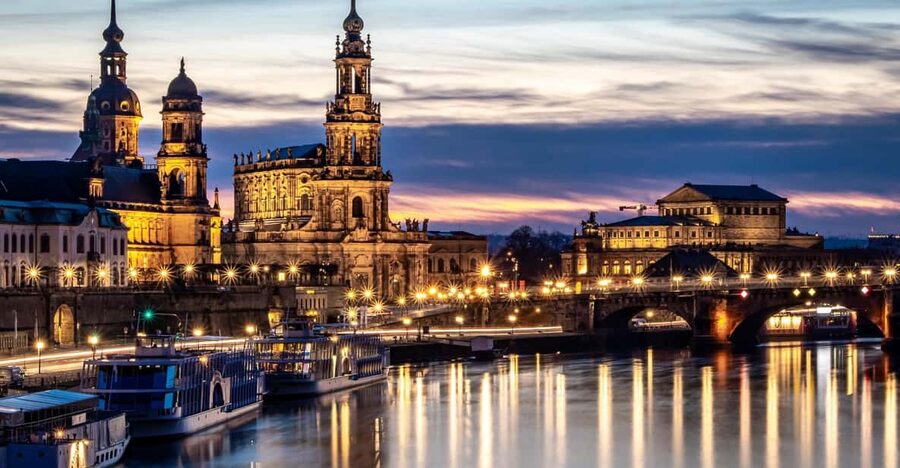
Reviewed · WALKING TOURS
Dresden Old Town – Guided Walking Tour in English
Dresden feels different when someone narrates it. This guided Old Town walk connects Slavic roots and Saxon power, with stops like Neumarkt and Frauenkirche, and it keeps you moving through the center at a story-friendly pace.
I especially like how the guide turns architecture into context, not just facts. You get clear connections to wider Central European history, and it clicks why Dresden feels like a crossroads rather than a one-note German city. English-speaking guides also bring energy, with humour and quick side stories that make the time fly.
One consideration: it is a 2.5-hour walking tour, and there is no mention of a formal toilet stop. If you need breaks, plan for it before you meet.
In This Review
- Key things that make this walk worth your time
- Dresden’s Slavic-German story, told from the pavement
- Neumarkt and Frauenkirche, with Martin Luther right at the start
- Fürstenzug: the Prince-Electors mural you can read like a timeline
- Dresden Castle and Altmarkt to Kreuzkirche: where medieval power meets public space
- Brühlsche Terrasse and the Elbe bridge area: trade, rebuilding, and river views
- Hofkirche and Semperoper: baroque ambition in everyday form
- Zwinger Palace near the Elbe bridge: where the early 1700s shine shows up
- Price and pacing: is $35 good value for 2.5 hours?
- Who should book this Dresden Old Town walk?
- Should you book this Dresden Old Town guided walk?
- FAQ
- Where is the meeting point for the tour?
- How long is the Dresden Old Town guided walking tour?
- Is the tour offered in English?
- Is transportation included?
- What does the tour cost?
- Is the tour wheelchair accessible?
- How early should I arrive at the meeting point?
- Can I get a refund if I cancel?
- What does reserve now, pay later mean here?
Key things that make this walk worth your time
- Start at Neumarkt beside the Martin Luther Statue and Frauenkirche, with a yellow umbrella to find your guide
- Fürstenzug, the Prince-Electors procession mural, which reads like a visual timeline
- Dresden Castle, so you understand how power grew from a medieval stronghold
- Brühlsche Terrasse and the Elbe bridge area, for river views that explain trade and location
- Semperoper and Hofkirche, where you’ll see baroque ambition and civic pride in stone
- Zwinger Palace, a major “wow” stop near the Elbe that ties the city’s early 1700s shine together
Dresden’s Slavic-German story, told from the pavement
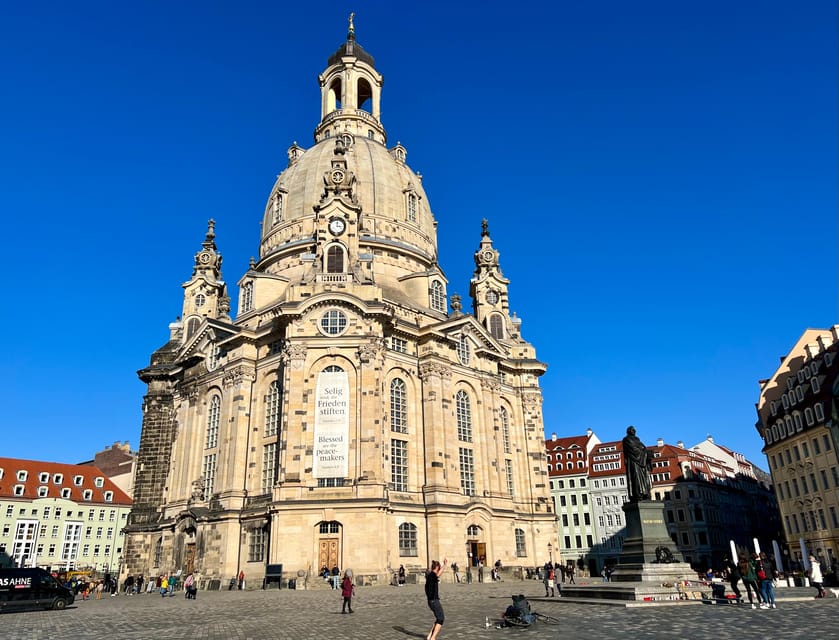
The best walking tours in Europe do two things at once. They get you from place to place, and they train your eyes to notice what matters. This Dresden Old Town walk is built for that. One reason it works is the focus on connections, not just chronology.
The Elbe is often described as a boundary between Germanic and Slavic worlds. Here, the theme is different: it also connects them, and Dresden feels like the meeting point. Even the name clues you in. Dresden sounds familiar to Czech, Slovak, Polish, and Sorbian speakers, which hints at the city’s older Slavic settlement roots before it became a Saxon power center.
You’ll also learn how a small village grew around a castle in the 1200s and then expanded into a major trading hub by the end of the Middle Ages. A key part of that prosperity was mining in the nearby Rudavy mountains, including silver and lead. The guide’s job is to make these details feel usable, so when you look at today’s grand facades and ceremonial routes, you understand what they were designed to show.
And then there’s the part Dresden can’t hide: the 20th century. The city was heavily damaged during World War 2, and the center was restored with painstaking methods and design elements. Walking the cobbled streets, you might expect ruins, but instead you see rebuilt streetscapes that can look shockingly coherent. The tour helps you connect what you’re seeing to the rebuilding choices behind it.
More Walking Tours in Dresden
- Dresden: City & Semperoper Guided Walking Tour
★ 4.8 · 2,397 reviews - Dresden: Guided City Walk
★ 4.6 · 2,075 reviews - Dresden: Complete Walking Tour with Frauenkirche Visit
★ 4.8 · 700 reviews
Neumarkt and Frauenkirche, with Martin Luther right at the start
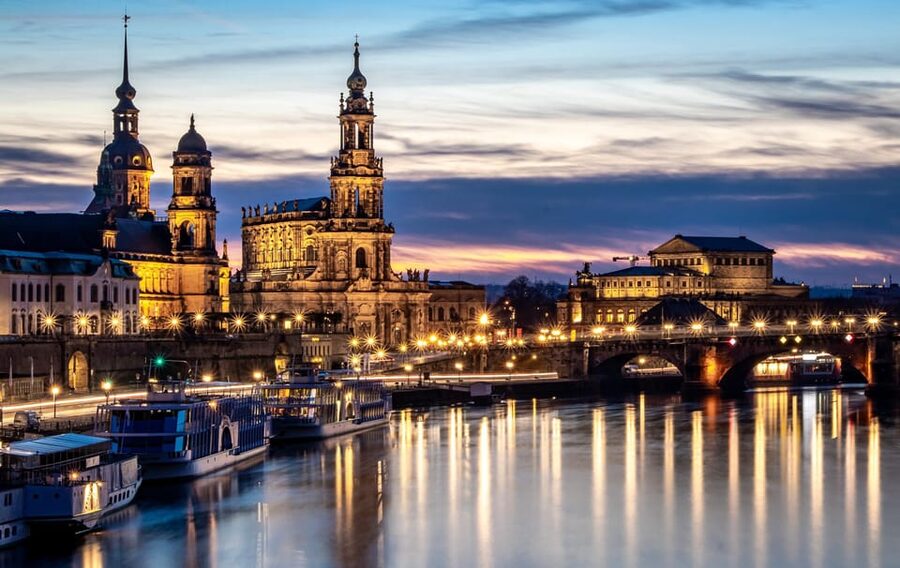
Your tour starts at Neumarkt, next to the Frauenkirche, by the Martin Luther Statue. The practical tip here is simple: show up about 10 minutes early and look for the guide with the yellow umbrella. That small detail matters because the first area sets the tone, and you do not want to arrive late when the story is warming up.
Neumarkt is one of those places where Dresden’s layers show immediately. You get a quick sense of how the city’s civic and religious identity became intertwined with its reputation for art and culture. The Frauenkirche stop is especially powerful because it anchors the conversation about loss and restoration. Instead of treating the war years like a footnote, the guide frames the damage and the careful rebuilding as part of Dresden’s modern identity.
The Martin Luther reference at the start helps too. Dresden’s story isn’t just about princes and baroque architects. It also reflects religious shifts and cultural debates that shaped the region. Even if you know Luther historically, seeing the statue in the real space where the guide is connecting events to buildings makes the information stick.
What you’ll like most at this early stage is momentum. You learn enough context here that the later stops, like Fürstenzug and the palace sites, do not feel like random highlights. They start to feel like chapters.
If you’re a slower walker or you’re trying to photograph a lot, you may feel a little rushed at the very beginning. Still, arriving early and taking a couple of quiet moments before the group gets moving can help you reset.
Fürstenzug: the Prince-Electors mural you can read like a timeline
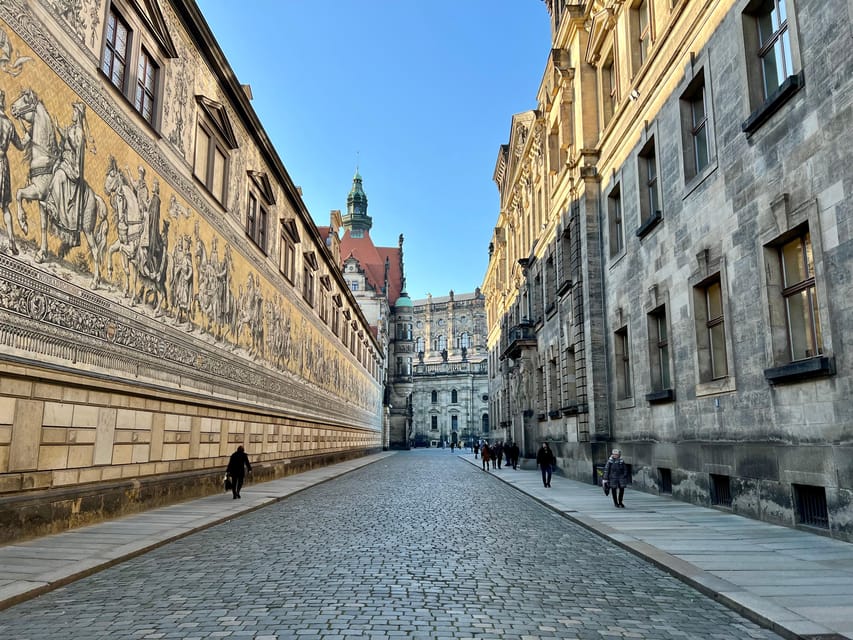
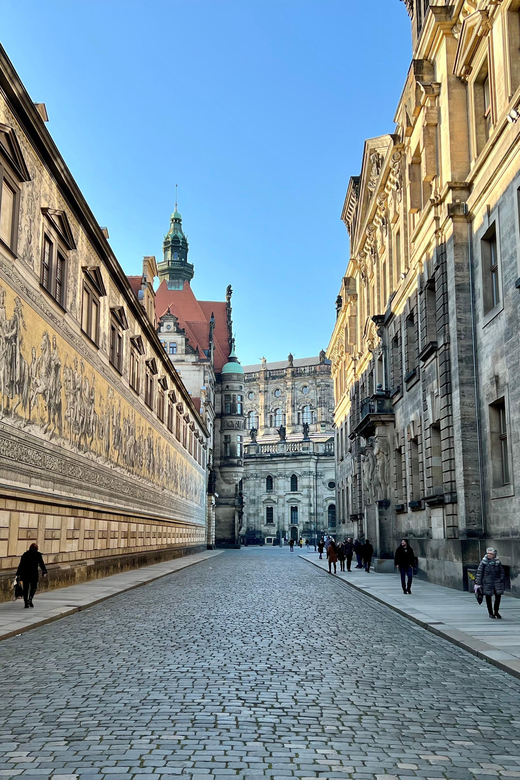
One of Dresden’s signature “stop and look up” moments is Fürstenzug, the gallery of the prince-electors of Saxony. If you’ve never seen it in person, plan to stop, tilt your head, and actually examine what’s there. This isn’t just decorative. It’s designed to communicate lineage, authority, and prestige in a way that feels public.
The guide’s angle makes Fürstenzug more than a wall of figures. You’re taught how Dresden’s political status grew over time. The story begins with the city’s rise to importance in the Middle Ages and the way it was elevated to become the seat of the Holy Roman Empire’s prince-electors. Then you connect that to the early 1700s, when Dresden truly begins to shine.
Here’s the key concept you’ll carry forward: Dresden’s grandeur did not appear out of thin air. It followed power, wealth, and cultural investment. Once you understand that, you can look at nearby monumental architecture and see the underlying purpose. That is the kind of “seeing differently” value you don’t always get from a standard sightseeing list.
Practical note: this is a detail-focused stop. If your group moves quickly or you’re not used to looking up at murals and facades, you might want to keep your phone ready and watch the guide’s pacing. It’s worth slowing down, because the mural’s whole point is accumulation.
Dresden Castle and Altmarkt to Kreuzkirche: where medieval power meets public space
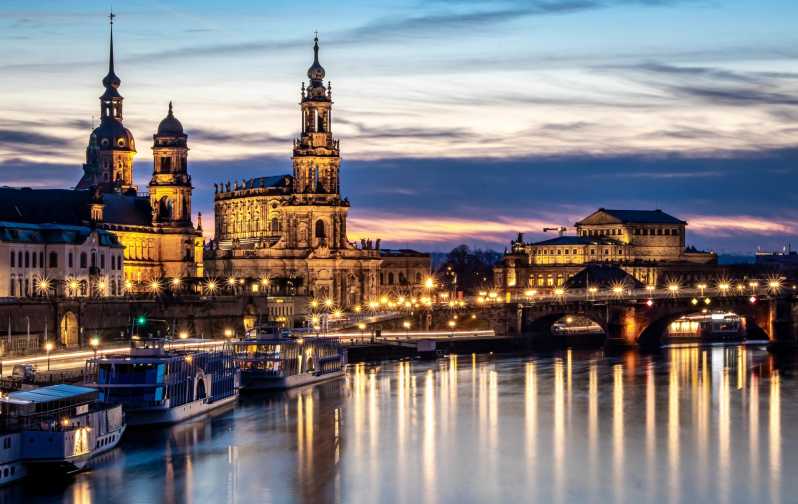
Next comes a strong shift from ceremonial symbolism to the city’s power center. You’ll see Dresden Castle and then move toward Altmarkt, Kreuzkirche, and the palace of culture area.
Dresden Castle is the kind of stop that rewards understanding. Without context, it can look like another impressive building in a Central European capital. With context, it becomes proof of how a smaller settlement became a seat of authority. The guide connects the castle’s medieval beginnings to the later surge in influence, including the Saxon princes of the Wettin dynasty and the way they gained major roles across Europe.
From there, the walk through Altmarkt and toward Kreuzkirche (with the palace of culture area in the mix) changes the pace in a helpful way. You go from “power at the top” to “power in the city.” These spaces matter because they show how governance and culture played out where people actually gathered.
Even if you mainly came for the baroque highlights, these stops help you map Dresden. You learn where civic life sits relative to royal and religious identity. That makes it easier to explore on your own afterward, because you know what each area is doing in the story.
One drawback to consider: this portion can feel dense if you prefer fewer stops and more time at each one. The tour keeps moving, and you’ll get best value if you allow yourself to listen even when the scenery is changing fast.
Brühlsche Terrasse and the Elbe bridge area: trade, rebuilding, and river views
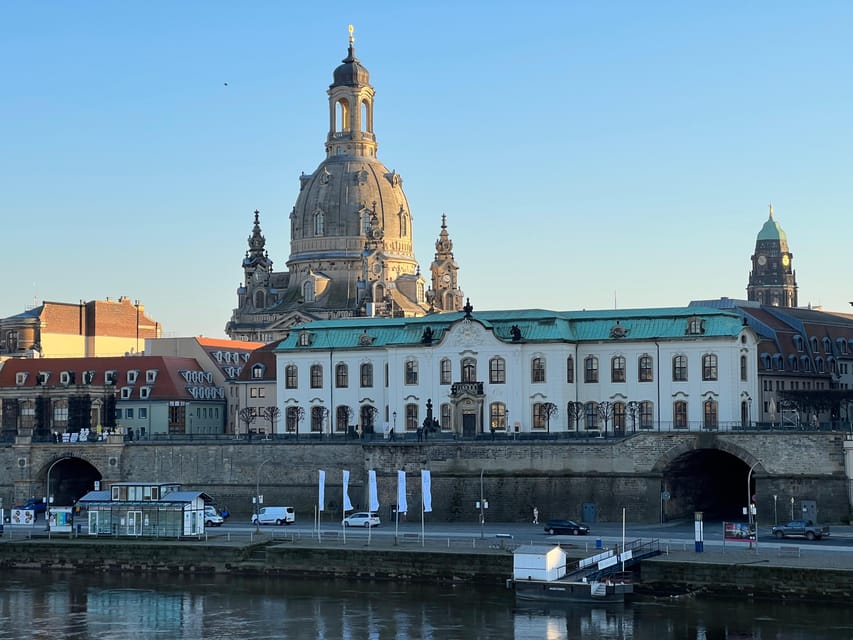
Then you reach Brühlsche Terrasse, and nearby you’re in the Elbe bridge area zone. This is where Dresden’s location stops being abstract. The river isn’t just scenery. It’s part of why Dresden rose.
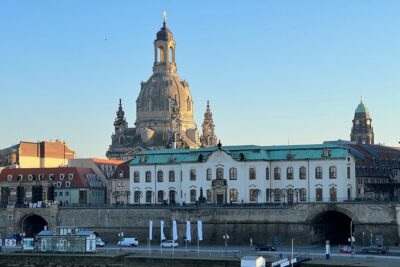
Brühlsche Terrasse is an ideal place for the guide to connect trade routes, the city’s economic growth, and the cultural ambition that followed. You learn how the Elbe functioned as a corridor for goods, ideas, and influence. The same “connection” theme that started with the Elbe and Slavic-German roots becomes visible here, because you’re physically oriented to the water.
This stop is also where the restoration story becomes tangible. Dresden’s center was restored with careful technique and design elements after WWII damage. When you look out over the river area, you can understand why rebuilding mattered: it wasn’t only about fixing structures. It was about recreating the city’s public face, the spaces where people would gather, and the routes that define how the city works.
Photography tip, if you like photos: this is a place to slow down, take a few frames, and then let the group move on. If you sprint ahead, you can end up missing the explanation that makes the view worth more than a pretty postcard.
If rain or cold is part of your trip, this may be the part where you feel it most because you’re outdoors and exposed. Dress for walking and for weather changes.
More German cities at walking speed:




Hofkirche and Semperoper: baroque ambition in everyday form
After the river and terrace area, you’ll get two major “culture and power” stops: Hofkirche and Semperoper.
Hofkirche helps round out the baroque conversation. In Dresden, baroque is not only about beauty. It’s also about showing status, faith, and the confidence of a court that believed it could shape culture. The guide’s framing ties the architecture back to what Dresden became in the early 1700s and how its Saxon rulers wanted the city to look, and feel, like an imperial center.
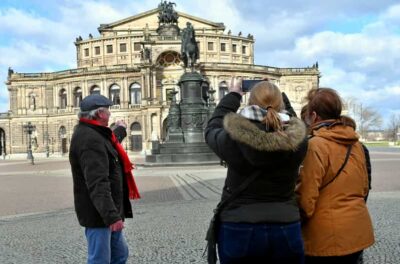
Then comes Semperoper. This is where Dresden’s identity as an arts city becomes hard to ignore. Even if opera isn’t your main interest, the setting helps you understand why the city gained its reputation for cultural life. Semperoper feels like a symbol of Dresden’s modern personality, built on the foundations of earlier grandeur.
What I find valuable about this pair of stops is balance. You’re not only hearing about kings and dates. You’re seeing how faith, civic life, and performance culture share the same urban stage. When the guide connects them, it makes the city feel coordinated, like one long plan rather than disconnected monuments.
If you are someone who likes to sit and absorb, note that a walking tour is not a “linger as long as you want” format. You will likely get only a short window at each landmark. Still, you can make it work by picking one or two items to photograph and focusing on the rest.
Zwinger Palace near the Elbe bridge: where the early 1700s shine shows up
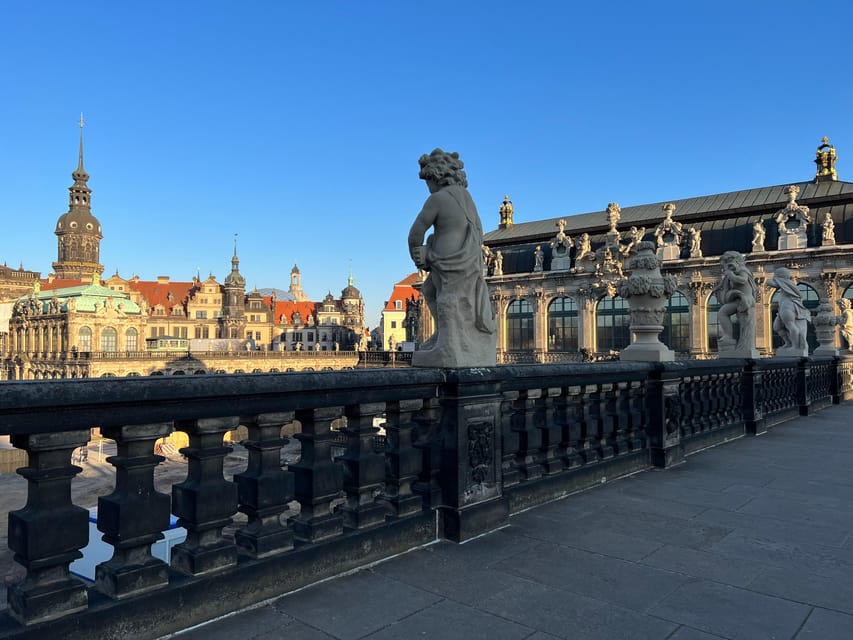
The tour’s late portion points you toward Zwinger Palace near the Elbe bridge. This is one of Dresden’s big visual payoffs, and it’s also a smart final “art and architecture” note.
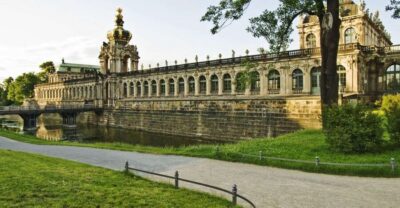
Zwinger Palace works well as an ending because it ties together themes introduced earlier: Saxon ambition, baroque design, and the way wealth and cultural investment shaped the city. By the time you reach this area, you’ve already learned why Dresden grew, why it gained importance as a prince-elector seat, and why the early 1700s were a turning point. The palace helps you see the result.
Also, because you’re near the Elbe bridge area again, you keep the city’s geography in mind. That matters. Dresden isn’t only pretty buildings in a line. It’s a planned relationship between institutions, river access, and the streets that stitch everything together.
If you’re hoping for an ultra-detailed architectural lecture at each corner, you might wish for more time at Zwinger. But for most people, this is the right kind of grand finale: enough time to appreciate the structure, and enough context to understand why it matters.
Price and pacing: is $35 good value for 2.5 hours?
At $35 per person for a 2.5-hour English walking tour, you’re paying for two things: a live guide and a guided route that focuses on meaning, not only sights. For a walking tour in a central European city, that’s fairly solid value, especially if you care about context.
This tour also has a practical advantage: it is wheelchair accessible, so it is designed to work for more people than a typical hard-to-navigate city walk. And since transportation is not included, the model is clear. You’re paying for the guide and walking experience, not for transit logistics.
The guide-focused structure also explains why people consistently rate the tour highly. The best tours feel like you’re getting a local’s interpretation of what you’re standing in front of. Here, you’re hearing how Dresden’s Germanic organization merged with Slavic sensibility into a Central European fusion that you can actually feel while walking.
Two pacing notes to consider. First, you are moving for 2.5 hours. That means comfy shoes are not optional. Second, speaking speed and style can vary by guide. If you need a slow start to catch every word, give the first few minutes extra attention.
If you like your sightseeing with a story and you want a guided orientation you can build on for the rest of the day, this price makes sense.
Who should book this Dresden Old Town walk?
This tour fits best if you want:
- A guided orientation of Old Town with the city’s major landmarks placed in context
- Art, history, and culture explained together, not as separate topics
- A local perspective that connects the Elbe, Slavic roots, Saxon power, and WWII restoration into one understandable storyline
- An English-speaking guide for a smooth experience, especially if you want the big picture without needing to research every stop yourself
It might be less ideal if you:
- Want long stops inside buildings, because a walking tour format generally moves on quickly
- Need frequent breaks, since the tour duration is set and there is no mention of a formal toilet stop
- Prefer self-paced exploration with minimal listening
If you’re visiting Dresden for the first time, or if you’ve been before but your memory is mostly facades and not meaning, this is the kind of tour that helps the city click.
Should you book this Dresden Old Town guided walk?
I would book it if you want Dresden to make sense. The mix of Neumarkt and Frauenkirche, Fürstenzug, the castle area, the Elbe-focused terrace and river views, and the baroque-plus-arts landmarks like Hofkirche, Semperoper, and Zwinger is a strong set of anchors. More importantly, the story theme, Slavic and Germanic connections plus the rebuilt after WWII reality, is what turns a list of sights into a coherent walk.
If you hate walking for long stretches, or you know you’ll need multiple breaks, you might plan a lighter day and save this for a morning when you feel fresh. But if you’re comfortable on your feet, this is an efficient way to get your bearings fast and understand why Dresden looks the way it does today.
FAQ
Where is the meeting point for the tour?
Meet your Walkative! guide next to the Martin Luther Statue at the Neumarkt, next to Frauenkirche. Look for the guide with the yellow umbrella.
How long is the Dresden Old Town guided walking tour?
The tour lasts about 2.5 hours.
Is the tour offered in English?
Yes, the tour is conducted in English.
Is transportation included?
No, transportation is not included.
What does the tour cost?
The price is $35 per person.
Is the tour wheelchair accessible?
Yes, it is wheelchair accessible.
How early should I arrive at the meeting point?
Please arrive 10 minutes before the activity starts.
Can I get a refund if I cancel?
Yes. You can cancel up to 24 hours in advance for a full refund.
What does reserve now, pay later mean here?
You can reserve your spot and pay later, meaning you can book while keeping travel plans flexible. The tour information also notes that this is a pay as you wish tour where the amount you pay covers the reservation fee and the guide’s payment.
Fresh on the arrivals board for Dresden


Walking Tours, compared.

Berlin City walk Government District and Places of Democracy
Read our review →
Berlin’s Best: 2 Hour Walking Tour Third Reich and the Cold War
Read our review →
Browse the lists this tour appears in