Reviewed · WALKING TOURS
Cochem: Private Guided Walking Tour
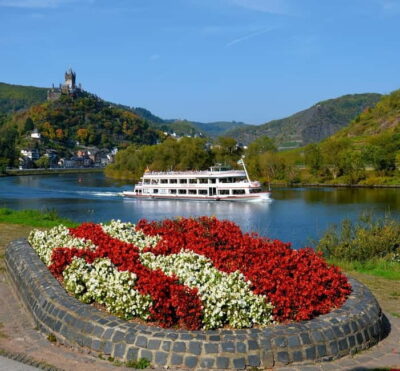
Cochem has a way of pulling you in fast. This private guided walking tour turns the pretty Mosel postcard town into a place with names, dates, and clear human stories, all in just 90 minutes.
What I like most is how the guide connects big events to real street corners, especially at St. Martin’s Church and around Reichsburg Castle. Second, I appreciate the pace, short enough to keep energy up, long enough to make the town feel understood, not rushed.
The one thing to consider: this is still a walking tour, and it is not suitable for people with mobility impairments or wheelchair users.
In This Review
- Key Things You’ll Remember From This Cochem Private Walk
- Cochem in 90 Minutes, Why This Format Works
- Starting at Endertplatz 1 and Finding the Right Walking Tempo
- St. Martin’s Church, From the Landmark to the Earliest Layers
- Celts, Romans, and the Town’s Power Shifts You Can Actually See
- Market Square, Half-Timbered Charm, and What Late Middle Ages Really Meant
- Reichsburg Castle on the Hill, Medieval Fortitude and Big Mosel Views
- French Occupation, Napoleon, and How WWII Changed Cochem
- Capuchin Monastery and the Metternich Thread
- How Much Does It Cost, and Is It Good Value?
- Who This Tour Fits Best
- Should You Book This Cochem Private Guided Walking Tour?
- FAQ
- How long is the Cochem private guided walking tour?
- What is the group size limit for this tour?
- Where do we meet for the tour?
- What languages are available?
- Is this tour private?
- Are entrance fees included?
- What should we bring?
- Is the tour suitable for wheelchair users?
- Can the route be customized?
- What is the cancellation policy?
- Is it possible to reserve now and pay later?
Key Things You’ll Remember From This Cochem Private Walk
- St. Martin’s Church as your anchor point for early Cochem life
- How Celts and Romans left traces, before medieval Cochem took over the story
- The Metternich family and the long shadow of major crises like the Black Plague
- Reichsburg Castle viewpoints, plus why this hilltop matters
- World War II context, including Cochem’s links to Natzweiler concentration camp subcamps
- A route that can be adjusted on the spot by a local guide
Cochem in 90 Minutes, Why This Format Works
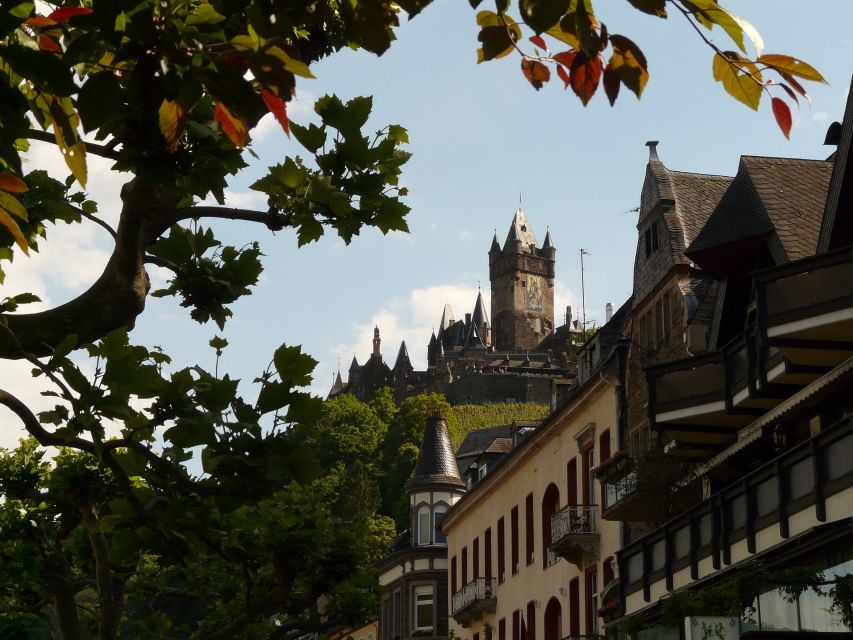
Cochem earns its reputation as the Mosel town with romantic views and a mountain backdrop. But what makes it more than a pretty place is that the town has been repeatedly reshaped by wars, power struggles, and rebuilding. The trick is knowing where to look.
That is where a private walking tour earns its keep. You get a local professional guide who stays with your group only, and you cover the key landmarks without wasting time figuring out what matters. At 90 minutes, you also avoid the common problem of history tours that feel like a lecture. This one is built for walking, questions, and fast context.
And yes, your group can be up to 15 people for this price, so it can make sense for families and small friend groups who want the same guide experience instead of splitting up.
The drawback is also simple: you need comfortable shoes, and there is no way around the fact that you will be walking. If mobility is an issue, this is not the right choice.
More German cities at walking speed:
- Discover Berlin Half-Day Walking Tour
★ 5.0 · 9,624 reviews - Berlin City walk Government District and Places of Democracy
★ 4.7 · 8,467 reviews - Berlin: Third Reich & Cold War Guided Walking Tour
★ 4.9 · 8,378 reviews
Starting at Endertplatz 1 and Finding the Right Walking Tempo
You meet in front of the tourist office at Endertplatz 1, 56812 Cochem. That is a practical starting point because it puts you in the center of town, close to the places you will actually want to revisit after the tour.
From there, expect your guide to set a pace that fits your group, not a fixed script for strangers. The tour format also includes possible customization on the spot, which means you can nudge the focus. For example, if your group cares more about medieval power or more about WWII, a good local guide can adjust what they emphasize within the 90 minutes.
One of the strongest signals from past guests is that guides bring more than facts. Some guides tell personal, local stories, like a Cochem resident named Bridget, who shared personal insights while explaining the area. That kind of talk helps you connect to the town as something lived in, not just displayed.
St. Martin’s Church, From the Landmark to the Earliest Layers
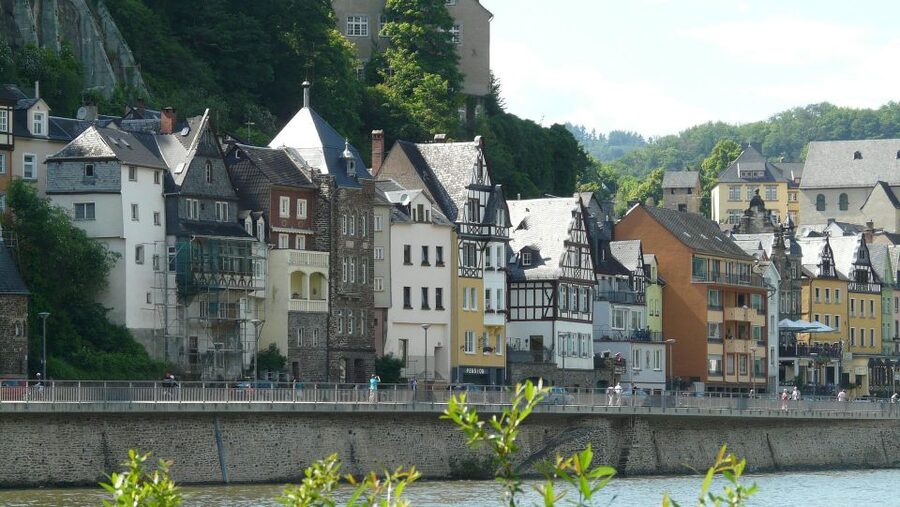
St. Martin’s Church is a landmark in Cochem, and it is also a smart place to start. When you begin at a focal point, the rest of the town becomes easier to interpret. Your guide uses this church setting to frame how Cochem grew over time, including the earliest roots.
You will hear how the area was inhabited since Celtic times and later became part of the Roman Empire. The story then moves forward to when Cochem was first documented in the 9th century under the Latin name Villa Cuchema. That may sound like a detail dump, but it actually matters: once you understand that the town’s roots stretch back far, every later era stops feeling random.
Then the guide brings in the harder chapters that shaped daily life. The tour includes the impact of the Black Plague, and the way the town’s leadership changed under powerful families, including the Metternich period. You do not just hear that the plague happened. You learn why it changed patterns of rule, rebuilding, and survival.
Practical tip: wear shoes with decent grip. Even in a charming town, historic centers can mean uneven pavement and short uphill stretches. You want to be comfortable enough to keep moving and listening.
Celts, Romans, and the Town’s Power Shifts You Can Actually See
One reason this tour feels worth the money is that it gives you a “why” for the landmarks. Cochem was not always the pretty Mosel town you see today. It was once an imperial estate, later pulled into conflicts across Europe, and it kept getting reshaped by who was in charge.
Your guide covers the Celts and Romans, yes, but the value is how those early eras explain what comes later. Ancient settlement patterns influence how towns grow, where authority concentrates, and what gets reused over centuries.
Then you move into the medieval and early modern power shifts. The tour highlights the rule of the Metternich family, and it connects major turning points to Cochem’s identity. You also learn about siege and occupation, including a French episode tied to King Louis XIV. He burned down the original castle after conquering the city, and that set up a long reconstruction period. You might not see every destroyed layer today, but you can understand why the town has the built form it has now.
This is also where a private format helps. In a group tour, you might get “the facts, next stop.” Here, your guide can slow down when something clicks for your group, or speed up when you already get it.
Market Square, Half-Timbered Charm, and What Late Middle Ages Really Meant
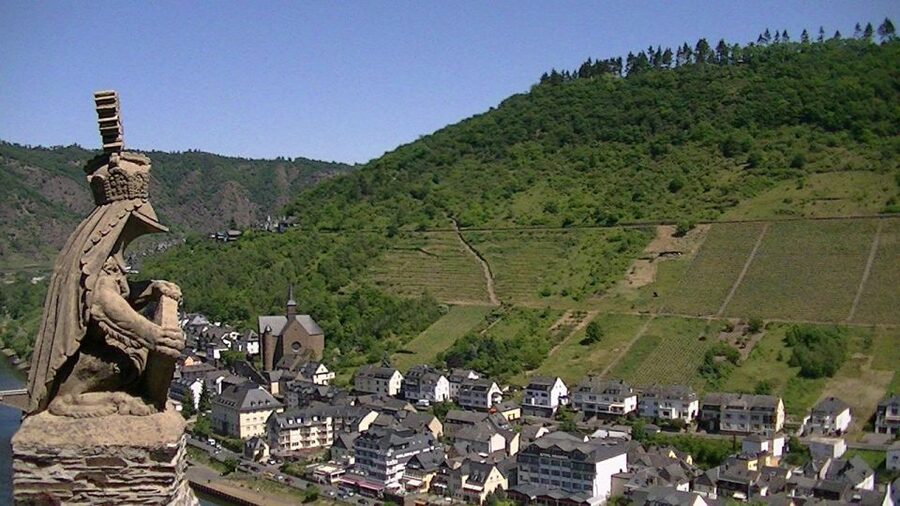
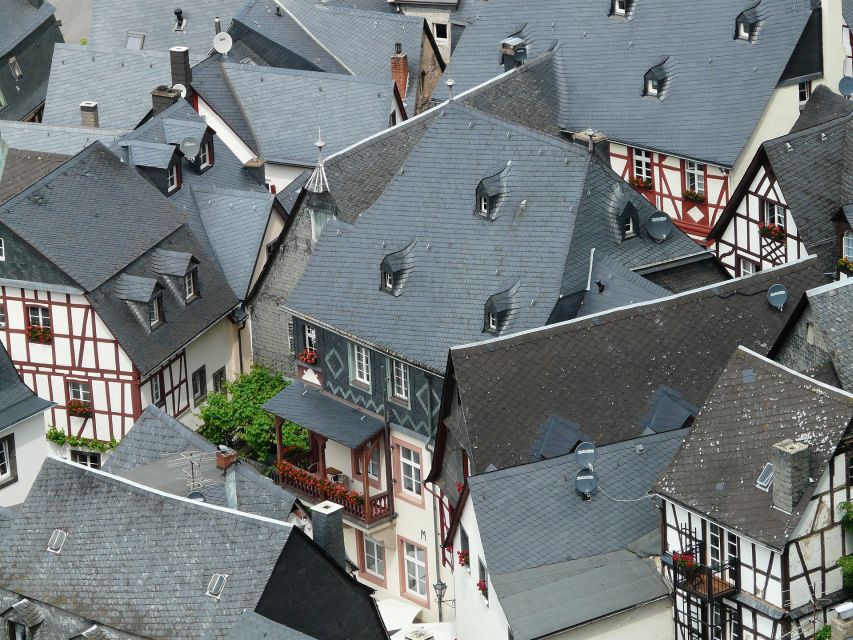
Cochem’s Market Square is where the town’s everyday life becomes visible. You will get a view of charming half-timbered houses, but your guide will also explain why the square mattered in the late Middle Ages.
This is a good moment to stop treating architecture like decoration. Half-timbered facades are not just cute. They reflect a long period of rebuilding and changing building styles. Your guide’s job is to connect those visuals to how Cochem functioned: trade, local authority, and the rhythms of a town that had to survive plagues, wars, and shifting rulers.
If you like walking tours that help you read a town like a map, you will probably enjoy this section. The guide makes you look up and around, not just forward.
Practical note: this part of the tour can be a great photo window, but do not get so stuck on pictures that you miss the guide’s explanation of what the square meant. Your photos will look better when you know what you are photographing.
Also holding a platform in Cochem



Reichsburg Castle on the Hill, Medieval Fortitude and Big Mosel Views
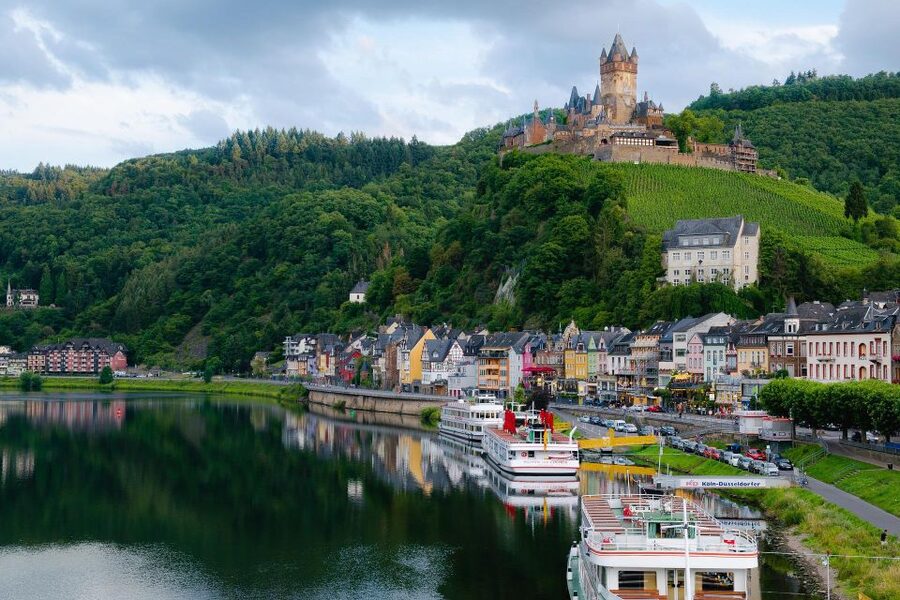
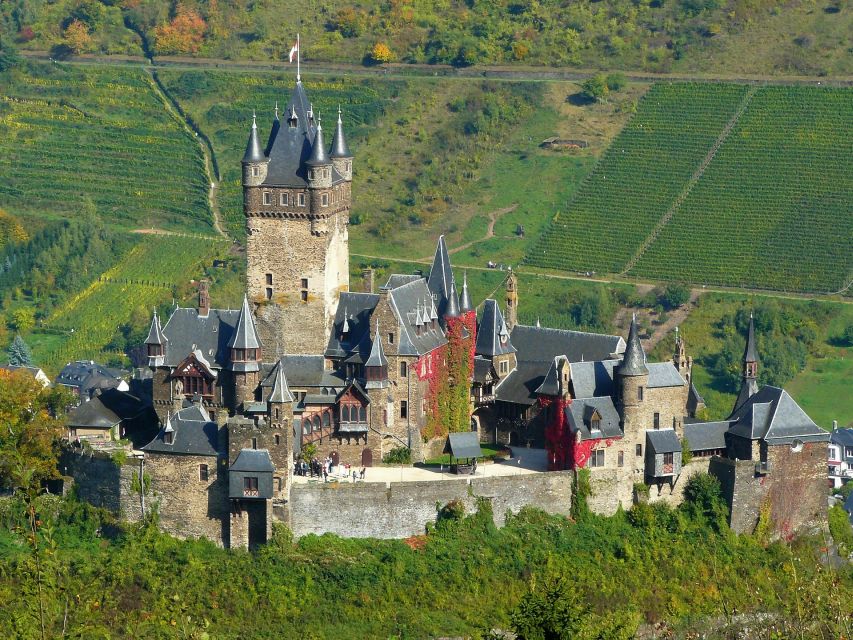
Reichsburg Castle is one of the highest hill castles on the Mosel. That matters because position was power. When you look from the hill, you understand why rulers fought over control, and why fortifications were built to dominate routes and sightlines.
The tour includes admiration of Reichsburg as a beautifully restored medieval castle. But the point is not only that it looks impressive. Your guide connects the castle to the long storyline of Cochem as a place worth fighting over. If Cochem was once an imperial estate, this castle is part of how that status worked on the ground.
As you get closer, you’ll also understand how the town’s topography shapes the visitor experience. Walking uphill is not just a workout moment. It is part of learning the logic of the site.
In past tours, guests have praised guides for matching historical detail with a readable pace. That balance is important here. Castle stories can get heavy, and you do not want to lose the thread. In this format, the guide keeps the story connected to what you are looking at right now.
If you are curious about wine culture in the Mosel region, there is a good chance your guide will touch on it too. One review highlighted a guide who talked about local wine alongside area history. Even if there is no tasting included, the cultural context can make the region feel more alive after your walk.
French Occupation, Napoleon, and How WWII Changed Cochem
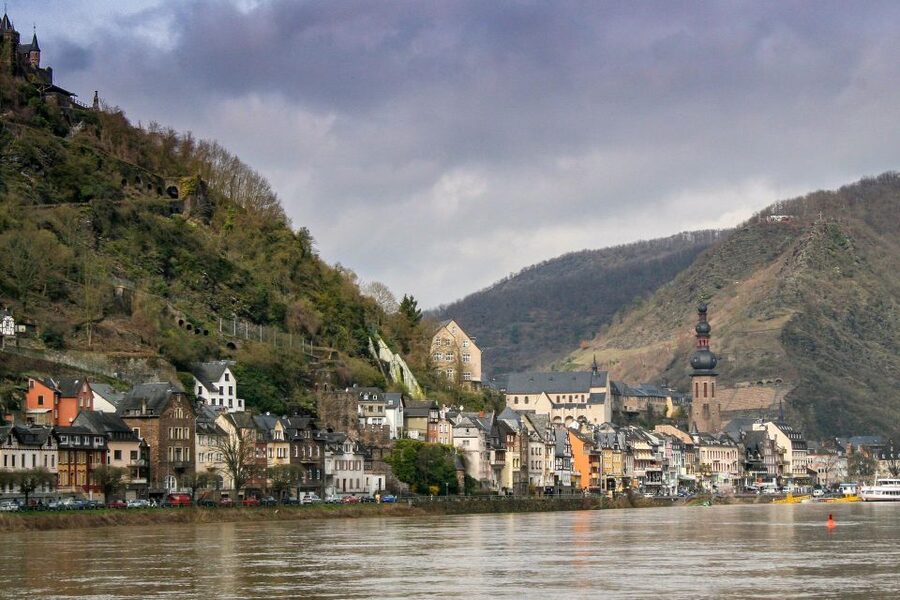
Cochem’s story includes repeated military pressure from different sides of European history. Your tour covers key turning points, including the French siege and occupation associated with Louis XIV burning down the original castle. It also includes the 18th-century occupation by Napoleon’s army, followed by the assignment to Prussian rule after Napoleon’s fall.
Then comes the part that requires a respectful tone: World War II. Most of Cochem was destroyed due to its subcamps of the Natzweiler concentration camp. Your guide will explain this connection and how it affected the town, not just as a distant event, but as something tied to why the built environment looks the way it does today.
This is not a tourist-friendly subject, but it is part of understanding any real place. A good guide helps you keep the focus where it belongs: on the human cost, and on the aftermath. After the war, Cochem was reassigned to the newly founded German State of Rhineland-Palatinate, which helps close the loop between destruction and postwar identity.
If you are the type of traveler who prefers history with clarity, not heavy dramatics, this section tends to fit well. The aim is context you can carry forward when you look at ruins, reconstructions, and memorial-adjacent spaces.
Capuchin Monastery and the Metternich Thread
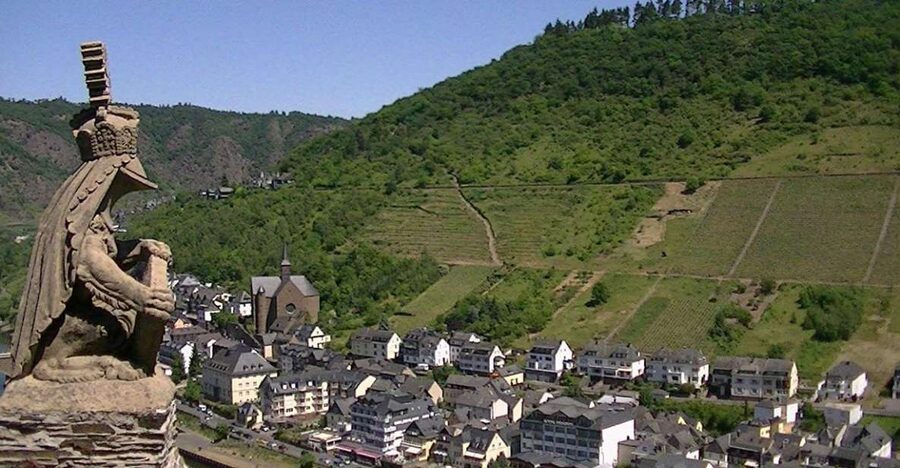
Another named stop is the Capuchin Monastery, founded in 1623 by the Elector Lothar von Metternich. That detail matters because it links religion, politics, and the influence of major families.
The Metternich connection shows up again beyond the monastery as part of the wider tour narrative. You are not just hearing a list of names. You are learning how power operated through institutions like monasteries and churches, which then shaped what towns looked like and how they functioned.
I like this stop because it adds variety. After walking through the church and the square, you get a different type of landmark, one that feels quieter. It is a reminder that Cochem’s story is not only about battle and rebuilding. It is also about community structures that endured.
How Much Does It Cost, and Is It Good Value?
The price is $272 per group, up to 15 people, for 90 minutes. For private, guided walking, that price can be competitive when you share it.
Here is the simple math: if your group fills the maximum at 15 people, you are paying about $18 per person for a local guide. If you have fewer people, the per-person cost climbs, but you still get the advantage of not sharing your guide with strangers and not waiting for a pace set by the slowest walker in a big group.
Value also comes from the content density. In 90 minutes, you cover multiple eras, from Celtic and Roman roots through plague, castle power, French and Napoleonic rule, and WWII subcamp context. That kind of “time-saving interpretation” is hard to recreate on your own without spending hours researching and mapping.
Who This Tour Fits Best
This private walking tour is a strong match if you want:
- A guided history framework for Cochem, not just sightseeing
- A compact route focused on top landmarks like St. Martin’s Church and Reichsburg
- A local guide who can adapt the emphasis, since customization is possible on the spot
- English or German interpretation, depending on your group
It is not the right fit if you need wheelchair access or have mobility impairments, since it is explicitly not suitable for those situations.
If your group includes older teens, history-minded adults, or mixed-age travelers who still want a real narrative, you’ll likely enjoy the pacing. And if you like guides who tell personal and local stories, pay attention to that part, because multiple guests have highlighted that human touch.
Should You Book This Cochem Private Guided Walking Tour?
I’d book this tour if you want to understand Cochem quickly and accurately, without turning your day into a research project. The mix of landmarks, the clarity of the timeline, and the way the guide ties events to specific places is exactly what makes a private walking tour worth your time.
Skip it if mobility limits you, because it is a walking experience and not set up for wheelchair users. Also consider whether your group enjoys history that includes WWII context. If your group prefers light sightseeing only, you might feel the weight of the subject matter.
If your goal is to leave Cochem feeling like you truly understand what shaped it, this is a smart use of 90 minutes.
FAQ
How long is the Cochem private guided walking tour?
It lasts 90 minutes.
What is the group size limit for this tour?
The price is per group up to 15 people.
Where do we meet for the tour?
Meet in front of the tourist office at Endertplatz 1, 56812 Cochem.
What languages are available?
The live guide is available in English and German.
Is this tour private?
Yes, it is a private group tour.
Are entrance fees included?
No, entrance fees are not included.
What should we bring?
Bring comfortable shoes.
Is the tour suitable for wheelchair users?
No. It is not suitable for people with mobility impairments or wheelchair users.
Can the route be customized?
The tour includes possible customization on the spot with your local guide.
What is the cancellation policy?
Free cancellation is available up to 24 hours in advance for a full refund.
Is it possible to reserve now and pay later?
Yes, you can reserve now & pay later, keeping plans flexible.
Fresh on the arrivals board for Cochem


Walking Tours, compared.
Berlin City walk Government District and Places of Democracy
Read our review →
Berlin’s Best: 2 Hour Walking Tour Third Reich and the Cold War
Read our review →