
Reviewed · GUIDED WALKS IN BERLIN
Charlottenburg: 2-Hour City Walking Tour
Berlin has a soft side in Charlottenburg. This 2-hour walk takes you from formal grandeur at Rathaus Charlottenburg to the domed beauty of Charlottenburg Palace, with a guide who explains why the neighborhood was built the way it was.
I love how the route links 800 years of Prussian power to ordinary street life you can still see today. I also like the story-level details, including how Heinrich Zille’s ideas connect to working-class Berlin near the Stadtbad, not just to the big-name sights.
The main catch: the tour is German. If you need an English-first guide, you’ll have to work harder to follow along.
In This Review
- Key highlights that make this walk worth your time
- Charlottenburg’s “big city” feel, without the overload
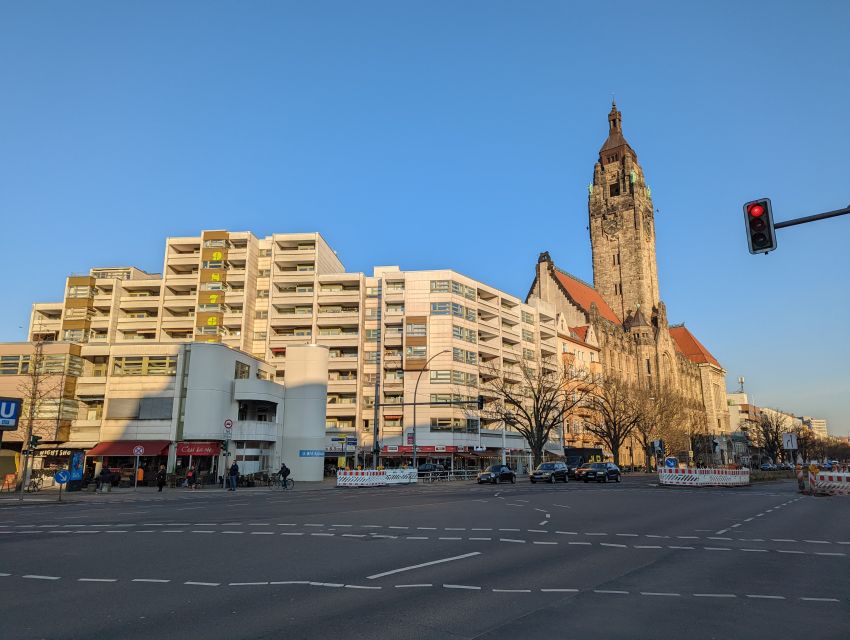
- Starting at Rathaus Charlottenburg, where the neighborhood signals its importance
- From medieval nucleus to 18th-century urban planning in one route
- Heinrich Zille and the Stadtbad: where art meets everyday Berlin
- Housing and schoolhouses from 1786: the lesson is what survives
- Klausener Kiez street life: cafés and shops as part of the history
- Villa Oppenheim and Schlossstraße: museums you can aim for later
- Charlottenburg Palace and the Stüler dome-topped buildings to finish strong
- Price and value: is $23 for 2 hours a good deal?
- Who should book this Charlottenburg 2-hour walking tour
- Should you book it
- FAQ
- FAQ
- Where does the Charlottenburg walking tour start?
- How long is the tour?
- How much does it cost?
- Is the tour in English or German?
- Is the tour wheelchair accessible?
- Does the tour run in bad weather?
- What is included in the price?
- What is not included?
- What should I bring?
- Can I cancel for a refund?
Key highlights that make this walk worth your time
- Rathaus Charlottenburg to Charlottenburg Palace in 2 hours: a tight route with lots of stops.
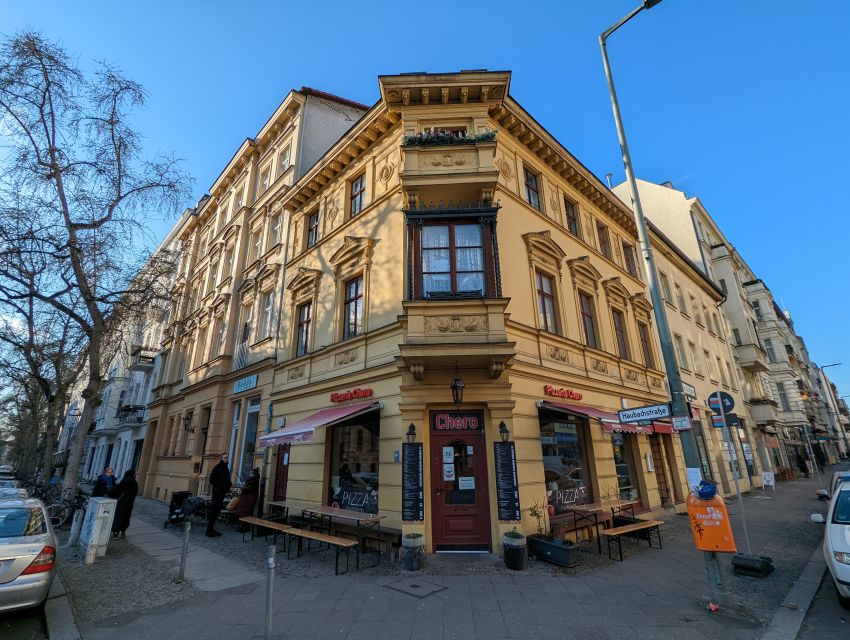
- Prussian-era planning you can see: from old village core logic to later street structure like Haubachstraße.
- Street-level stories, not museum-only facts: Heinrich Zille near the Stadtbad and working-class detail.
- Real, physical Berlin leftovers: housing styles and schoolhouses that date back to 1786.
- A more lived-in neighborhood feel: café and shop corners around Klausener Kiez, plus quieter streets like Nehringstraße and Christstraße.
Charlottenburg’s “big city” feel, without the overload
Charlottenburg is one of Berlin’s most opulent districts, but it does not feel like theme-park Berlin. Instead, it’s a patchwork of grand architecture, older street shapes, and everyday life from cafés to thrift stores. That mix is exactly why this tour works. In a short time, you get both the official side of Prussia and the local, human side of modern Berlin.
The format helps too. Two hours is long enough to connect the dots, short enough that you are not dragging yourself across the city at the end. You finish near Charlottenburg Palace, with the sense that you’ve learned something useful, not just seen photos.
If you like walking tours that treat streets like history pages, you’ll enjoy this one. The route is built around the idea that urban planning and architecture tell the story, not just the palace itself.
More Guided Walks in Berlin
- Discover Berlin Half-Day Walking Tour
★ 5.0 · 9,624 reviews - Berlin City walk Government District and Places of Democracy
★ 4.7 · 8,467 reviews - Berlin: Third Reich & Cold War Guided Walking Tour
★ 4.9 · 8,378 reviews
Starting at Rathaus Charlottenburg, where the neighborhood signals its importance
You meet at the main entrance of Rathaus Charlottenburg, and that’s a smart choice. City halls are not random landmarks. They tell you what a community wanted to project: order, stability, prosperity. Even before you get into the older parts, you get the feeling that this was once a powerful, confident Berlin suburb.
From here, your guide shifts you toward older layers of the district, including a medieval nucleus and an old village square. That transition matters. Many Berlin tours jump from medieval to 20th-century politics. This one tries to show how a place grew, block by block, and how the street layout shaped daily life.
Practical note: because you start outside and walk continuously, comfortable shoes matter. This is rain-or-shine territory, so dress for wet streets and cold air if needed.
From medieval nucleus to 18th-century urban planning in one route
One of the best parts is how the walk quietly teaches you Berlin’s layering. You are not just chasing individual buildings. You are learning the logic of how Charlottenburg became what it is.
You’ll move from the medieval nucleus and old village square toward the kind of planning that shaped later centuries. Near Luisenkirche, you’ll get historical context tied to 18th-century urban planning. The point is not that one church “caused” everything. The point is that religious and civic institutions influenced how neighborhoods were organized, what streets mattered, and where people gathered.
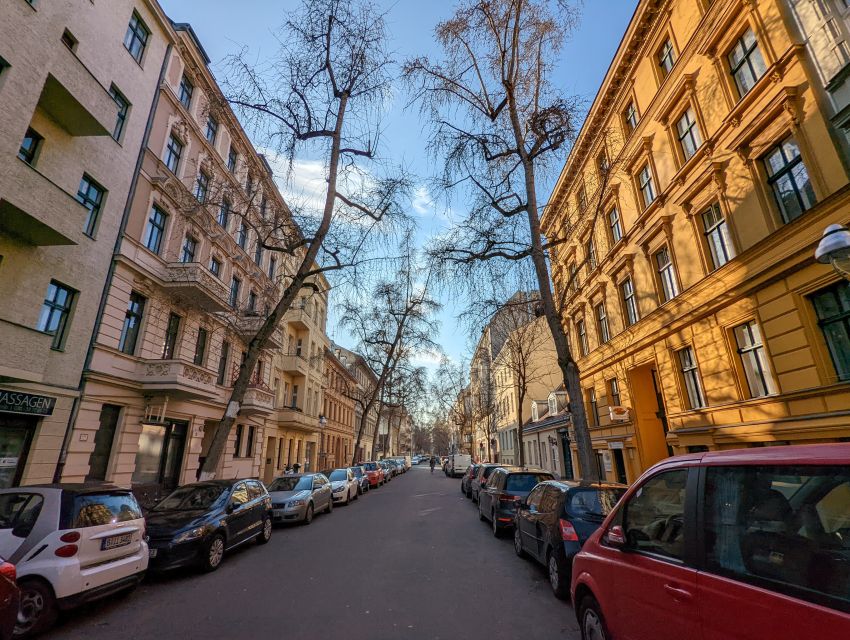
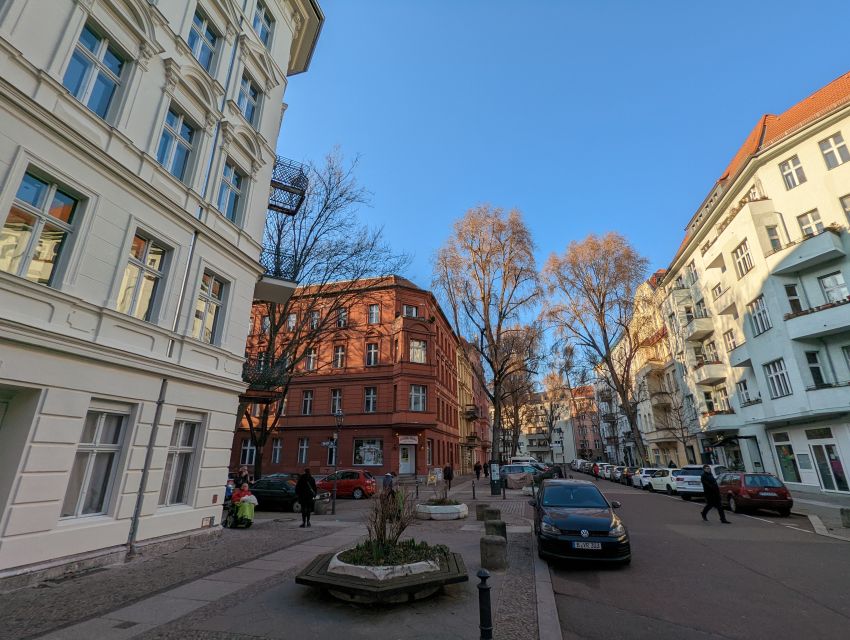
You also see housing patterns that still define Berlin’s cityscape. That’s important for understanding Charlottenburg today. The district’s beauty is not only in one palace. It’s in the everyday built form, including apartment styles and street edges that have carried forward through changes in politics and society.
Heinrich Zille and the Stadtbad: where art meets everyday Berlin
This tour does something more interesting than a standard grand-sights loop. It connects you to Heinrich Zille’s motifs near the historic Stadtbad. Zille is tied to Berlin’s working-class scenes, often with a sharp, ironic eye for daily life. Seeing that connection on the street makes the story land.
It helps you understand why Charlottenburg is not just “nice buildings.” You are shown how the district contained real people with real routines, and how artists found material there. You get the feeling that art history and city history are the same study, just with different tools.
In a practical way, this part of the tour gives you better “sight reading” skills. After you learn what the Stadtbad area represents, you start noticing things on your own in other neighborhoods too, like how public buildings served communities.
Housing and schoolhouses from 1786: the lesson is what survives
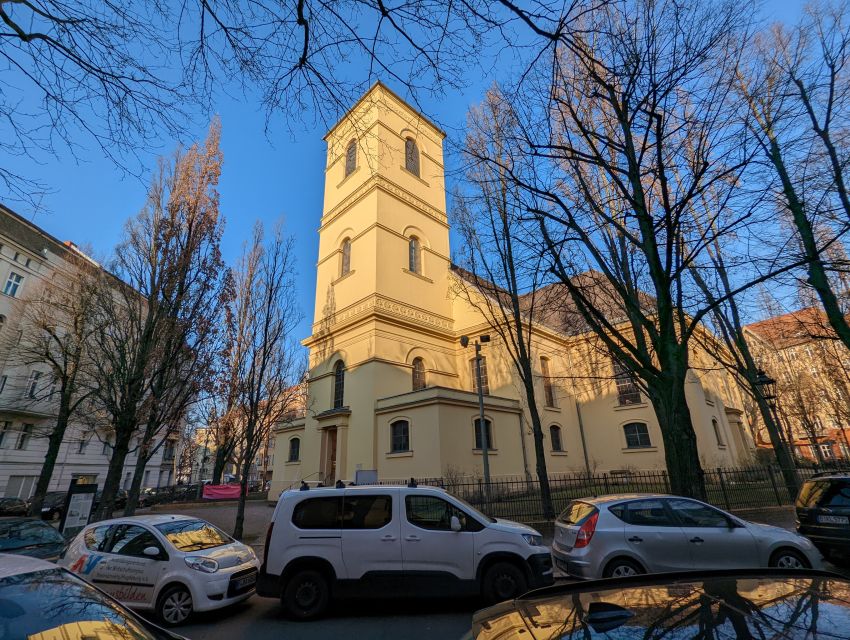
Berlin is famous for change. What often surprises people is how much survives. On this tour, you’ll see preserved schoolhouses dating from 1786 and learn why that matters.
A school building is not glamorous, so it’s easy to skip on your own. With a guide, it becomes meaningful. You learn how education institutions were part of urban development, and how the district invested in longer-term stability. These old structures are also a reminder that cities do not just “happen.” They get built and rebuilt with specific priorities.
You’ll also get examples of pre-war urban development. That matters because Charlottenburg’s look today is a product of different building eras. The tour helps you notice the differences without feeling like you’re studying from a textbook.
If you’re the type who likes to recognize styles while walking, this section is a win. You’ll leave with a more accurate sense of how Berlin’s look was created.
More German cities at walking speed:




Klausener Kiez street life: cafés and shops as part of the history
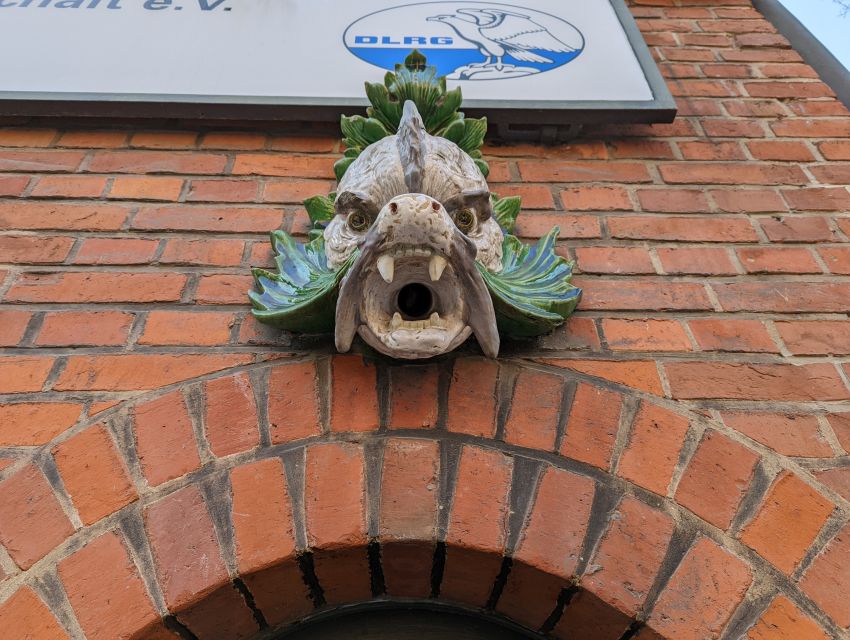
Charlottenburg can feel grand from a distance. Up close, it is also a place where people shop, pause, and live. You’ll spend time around the kind of local neighborhood corners where cafés, thrift stores, and corner shops fit naturally into the day.
The tour points you toward quaint street intersections, including the corner of Nehringstraße and Christstraße. This is the part that makes the walk feel like a real neighborhood experience, not a checklist. You get a sense of how locals mingle, and you might even spot things you would have missed without someone steering your attention.
This is also where the “800 years” idea becomes less abstract. Urban planning is not only about palaces and churches. It’s about the everyday spaces that keep a community functioning.
If you want one takeaway from the street-life portion, it’s this: Charlottenburg’s charm is not staged. It’s practical and lived in.
Villa Oppenheim and Schlossstraße: museums you can aim for later
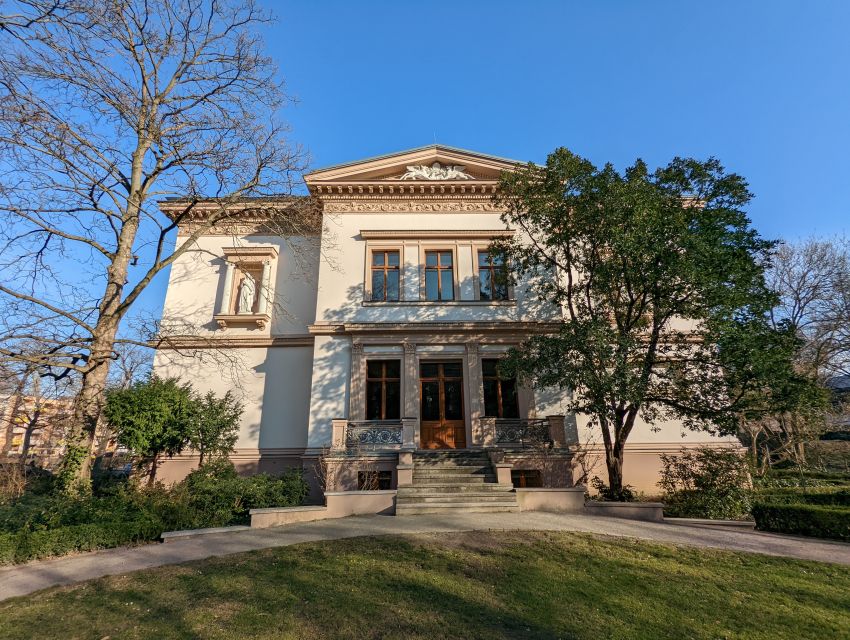
As the tour moves toward Schlossstraße, you get a transition from district life back to major institutions. Schlossstraße is where you’ll find world-class museums now, and your guide helps you connect what you’re seeing to the district’s larger story.
Before that, you’ll spot Villa Oppenheim, which adds variety. Not everything here is royal or state-level. That villa step is a reminder that wealth and influence took many forms, not all of them tied to crowns and palaces.
Importantly, museum visits are not included. That means the tour focuses on the exterior, the street setting, and the history context, rather than turning into a ticket line exercise. If you want to go inside the palace or museums later, you’ll have to plan that separately.
This can be a plus. You get guidance without committing your entire day to formal interiors. For many people, that’s exactly what they want on a first or mid-trip day in Berlin.
Charlottenburg Palace and the Stüler dome-topped buildings to finish strong
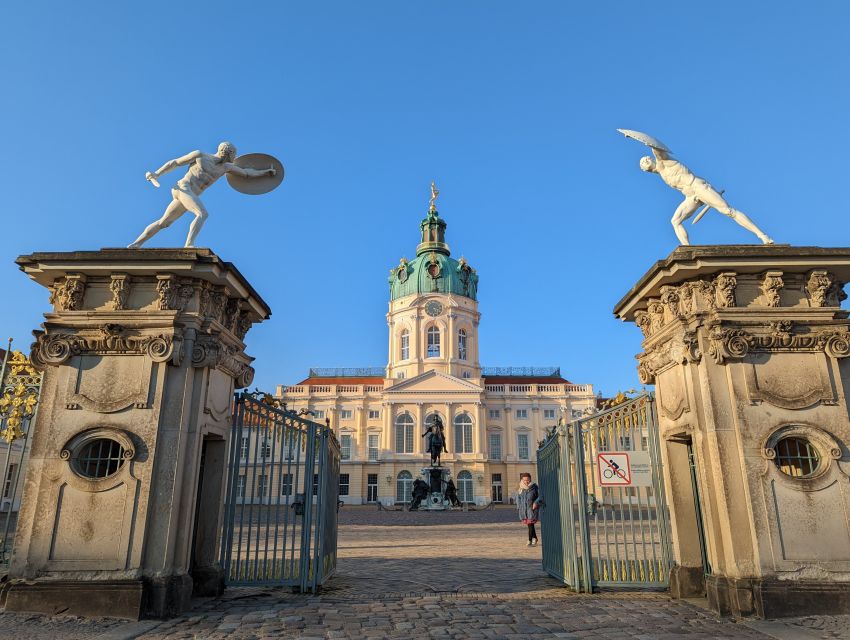
You end at Charlottenburg Palace, lined with the magnificent Stüler buildings, including the dome-topped structures. Ending here makes sense because the palace is the visual payoff for everything you learned about power, planning, and architectural ambitions.
This is not only a dramatic finish. It’s also a chance to see the palace as part of the district rather than as an isolated landmark. Earlier stops helped you understand the neighborhood’s growth and organization. Now you see the outcome of that long-term thinking.
If you want to continue your day, this ending location is convenient. You’re already where you can decide on a museum visit, a longer photo walk, or a late coffee nearby.
Price and value: is $23 for 2 hours a good deal?
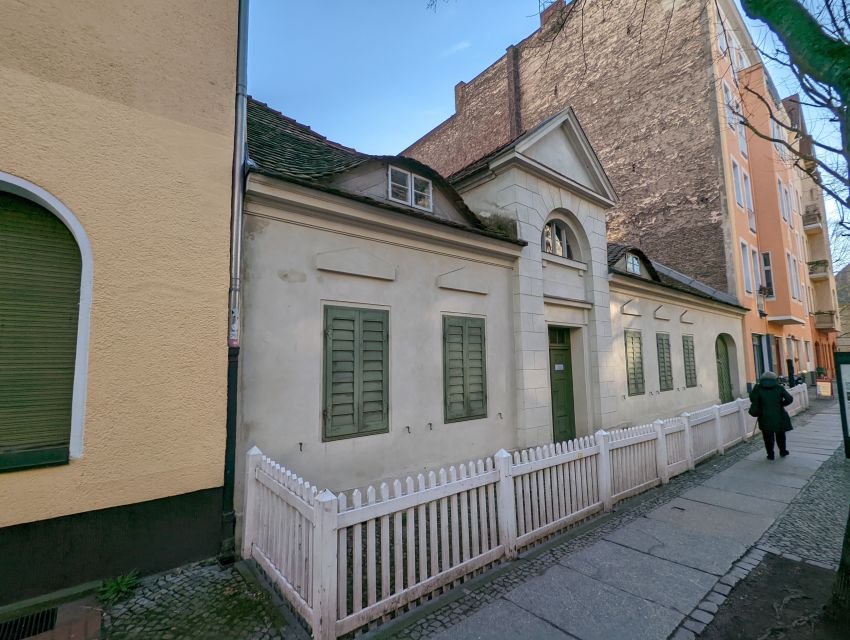
At $23 per person for a 2-hour guided walk, this is priced in the “reasonable for what you get” zone. The value is not just the time. It’s the type of guidance.
You’re getting a guided tour led by a professional museum expert, and the route covers a mix of civic, religious, neighborhood, and palace-level architecture. In a compact walking loop, that’s a lot of context you would struggle to assemble on your own unless you were planning carefully in advance.
It also helps that the pacing and explanations seem built for real understanding, not just rapid name-dropping. People often end up on city tours that feel like a lecture you can’t pause. This style is more conversation-friendly, with guidance that keeps questions in play.
If you’re trying to balance Berlin sightseeing with time for independent wandering, this tour fits well. You get a structured spine for your next steps, and you still have the freedom to explore on your own afterward.
Who should book this Charlottenburg 2-hour walking tour
This tour is a strong match if you want:
- A compact Berlin walk that covers more than one “famous building moment”
- Clear explanations of how Charlottenburg grew, including urban planning
- A mix of grandeur and neighborhood detail, including Klausener Kiez street life
- A guide who answers questions and keeps the story moving
You might hesitate if:
- You need an English-language guide, since the tour runs in German
- You’re hoping for long museum time, because museum visits are not included
- You don’t enjoy outdoor walking in changing weather, since it runs rain or shine
Should you book it
Yes, I’d book it if your goal is to understand Charlottenburg beyond postcards. The route gives you the big visual payoff of Charlottenburg Palace, and it does the smarter thing by teaching you the district’s layers through civic buildings, older street logic, and everyday life like Nehringstraße, Christstraße, and Klausener Kiez.
If you can follow German at least moderately, this is an efficient, high-value way to learn the neighborhood. If German is a stretch, you may still enjoy the sights, but you’ll likely miss part of what makes the tour special.
FAQ
FAQ
Where does the Charlottenburg walking tour start?
You meet your guide right in front of the main entrance to Rathaus Charlottenburg.
How long is the tour?
The tour lasts 2 hours.
How much does it cost?
The price is $23 per person.
Is the tour in English or German?
The live tour guide is German.
Is the tour wheelchair accessible?
Yes, it is wheelchair accessible.
Does the tour run in bad weather?
Yes. The tour takes place rain or shine.
What is included in the price?
A guided tour led by a professional museum expert is included.
What is not included?
Hotel pickup and drop-off, food and drink, and museum visits are not included.
What should I bring?
Bring comfortable shoes and weather-appropriate clothing.
Can I cancel for a refund?
Yes. You can cancel up to 24 hours in advance for a full refund.
Fresh on the arrivals board for Berlin



Guided Walks in Berlin, compared.
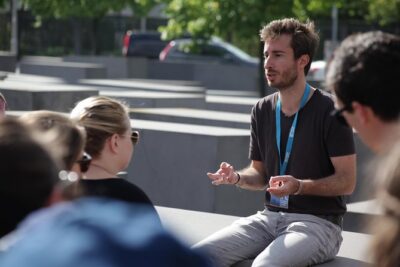
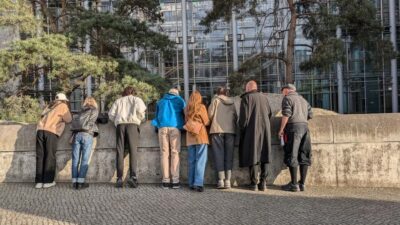
Berlin City walk Government District and Places of Democracy
Read our review →
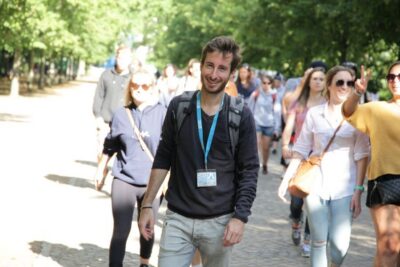
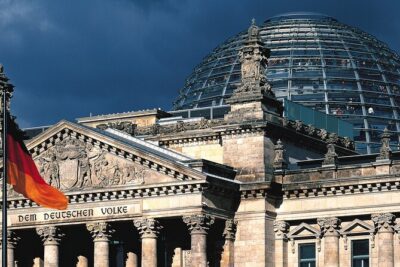
Berlin’s Best: 2 Hour Walking Tour Third Reich and the Cold War
Read our review →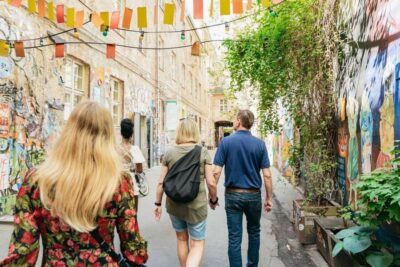
Third Reich Berlin: Hitler and WWII Walking Tour
Read our review →
Browse the lists this tour appears in