
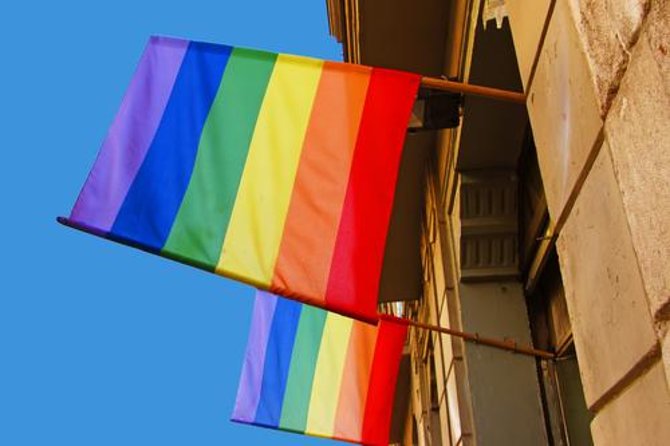
Reviewed · GUIDED WALKS IN BERLIN
Berlin’s Gay, Lesbian, and Queer Scene Small-Group Walking Tour
Queer Berlin still walks with you. This 3.5-hour small-group tour follows LGBT life from the 19th century to today, weaving through Schöneberg, Tiergarten, and Kreuzberg, with a visit connected to the Schwules Museum.
I love the small-group size (max 15), because you actually hear the story and can ask questions. I also like the mix of stops, from the queer-run bar and restaurant at Südblock to a club-origin tale tied to the 90s gay scene.
One drawback to consider: meeting-point confusion can happen, so arrive a bit early and confirm you have the correct English queer tour, not a similarly themed alternative.
In This Review
- Key things I think you will really like
- Where This Walk Takes You in Berlin
- Start Point and Finish Point: Neue Promenade to Nollendorfplatz
- Stop 1: Queer Culture as a Long Berlin Story
- Stop 2: The Modern-Day Alternative District in Schöneberg and Kreuzberg
- Stop 3: Südblock, a Queer-Run Bar and Restaurant With Real Weight
- Stop 4: The Club Story, From 90s Origins to Open-All-Hours Energy
- Stop 5: An Established LGBTQ Neighborhood and Christopher Isherwood
- Guides: The Tour Quality Hinges on the Person Holding the Thread
- Price and Value: Is $24.14 Worth 3.5 Hours?
- Timing and How Long You Should Plan For
- Getting the Most Out of It: How to Prepare and What to Bring
- Who Should Book This Tour (and Who Might Want Another)
- Should You Book This Berlin Gay, Lesbian, and Queer Walking Tour?
- FAQ
- Where does the tour start?
- What time does the tour start?
- Where does the tour end?
- How long is the walking tour?
- Is the tour offered in English?
- What group size should I expect?
- What is included in the price?
- Do I need a transit day pass?
- Does the tour run in bad weather?
- Can I cancel for a refund?
Key things I think you will really like
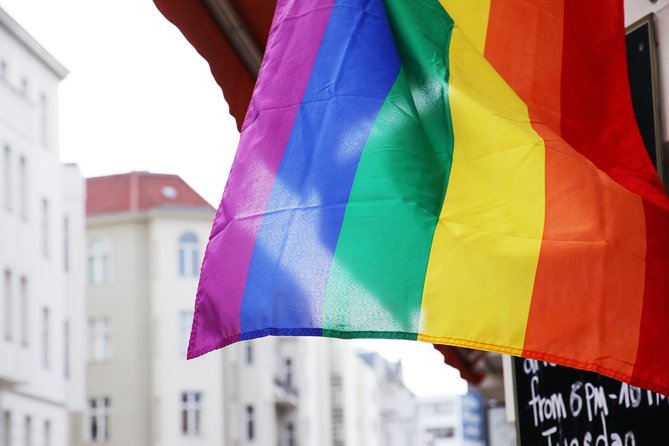
- A real story arc, not just nightlife, from the 19th century to today
- Max 15 people, which makes it feel like a guided conversation, not a herd
- Südblock as more than a stop, it is framed as a pillar of the LGBTQ+ community
- A famous club story that starts in the 90s and explains how Berlin nightlife changed
- Literary and political threads, including names like Christopher Isherwood, Marlene Dietrich, and Mayor Klaus Wowereit
- A museum stop tied to culture, with the Schwules Museum on the highlights list
Where This Walk Takes You in Berlin
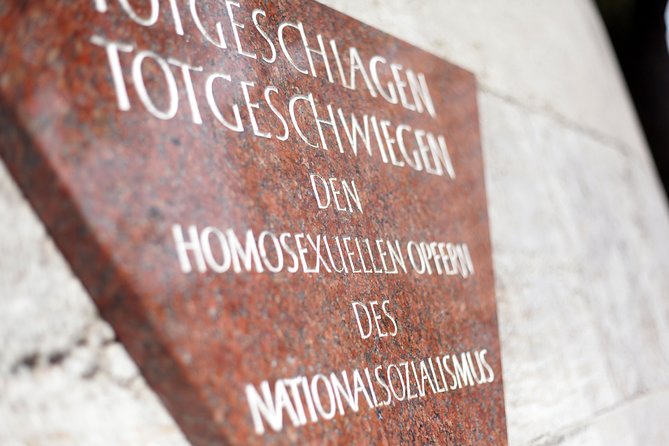
This tour is built around three neighborhoods you will actually recognize when you look at a Berlin map: Schöneberg, Tiergarten, and Kreuzberg. That matters because queer Berlin is not one single “district.” It’s more like changing neighborhoods over time, different corners of the city holding different chapters.
The route is designed as a walking timeline. You start with the idea that queer culture has been part of Berlin for centuries, then you move toward modern-day scenes and institutions. The promise is clear: you see how the city’s LGBT life evolved, and you also meet key personalities in the narrative, including Marlene Dietrich and Mayor Klaus Wowereit, plus Christopher Isherwood in the later part of the tour.
And yes, the focus is not only on clubs. There is a big emphasis on acceptance, community, and the people who shaped public life, not just the late-night side of Berlin.
More Guided Walks in Berlin
- Discover Berlin Half-Day Walking Tour
★ 5.0 · 9,624 reviews - Berlin City walk Government District and Places of Democracy
★ 4.7 · 8,467 reviews - Berlin: Third Reich & Cold War Guided Walking Tour
★ 4.9 · 8,378 reviews
Start Point and Finish Point: Neue Promenade to Nollendorfplatz
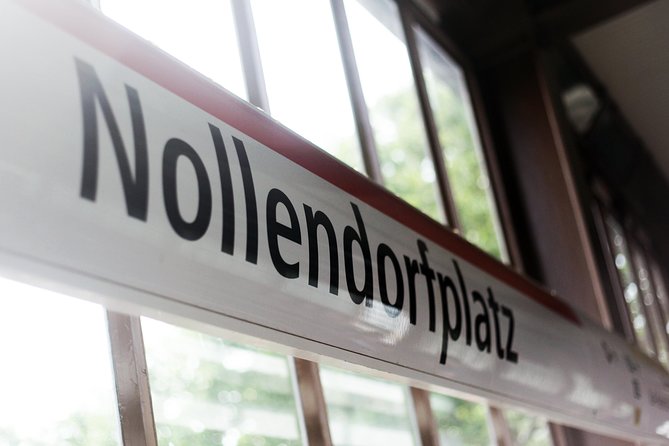
You meet your guide at Neue Promenade 3, 10178 Berlin, and the tour ends at Nollendorfplatz (10787 Berlin). The start time is 12:00 pm.
Why I think this matters: Nollendorfplatz is in the Schöneberg area, so after the tour you are well placed to keep exploring nearby neighborhoods on foot or with public transport. Also, because you end at a different location than you start, it helps to plan your day so you are not racing back across the city at the end.
You will likely have an easier time if you arrive early, especially because one review flagged that there was no obvious sign at check-in and the group setup can get confusing. I would treat this like any good walking tour: get there before the official start, confirm you are with the right group, and keep an eye out for your guide.
Stop 1: Queer Culture as a Long Berlin Story
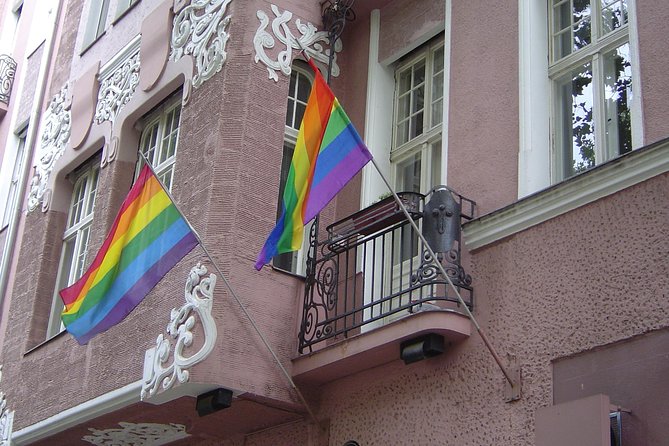
The first stop is centered on orientation. Your guide meets you in central Berlin and sets the tone with how queer culture has been an integral part of the city for centuries.
This opening is more important than it sounds. A lot of visitors arrive in Berlin thinking in neat boxes, like “Berlin equals nightlife” or “Berlin equals one famous landmark.” This tour tries to train your eyes to see continuity. You are taught to notice that places, people, and attitudes shift over time, even when the city looks unchanged.
Since the tour spans from the 19th century to today, your guide’s first job is to give you the thread. Once you have that, later stops at bars, museums, and neighborhoods make more sense. You are not just collecting places, you are collecting context.
Stop 2: The Modern-Day Alternative District in Schöneberg and Kreuzberg
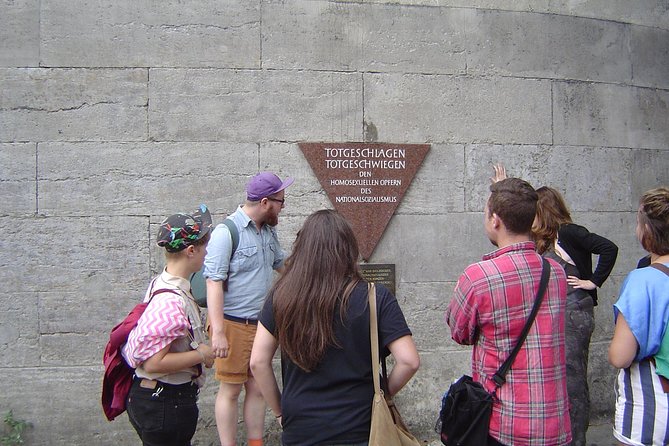
After the opening, the walk moves into Berlin’s modern-day alternative side. The tour describes this as an area where current queer culture connects to the city’s older history.
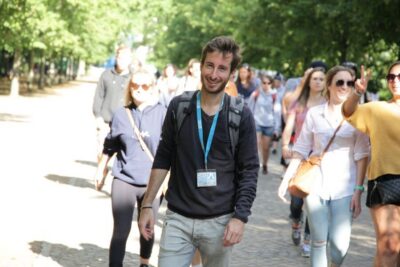
Practically, what you get here is atmosphere plus meaning. Your guide points out what people do with space, how community shows up in daily life, and why certain neighborhoods become magnets for identity and expression. Because this is a small group (up to 15), you can ask about what you are seeing right then.
This part is also a useful mental reset. If you come into the tour with just one idea of Berlin queer life, the guide pushes you toward a broader picture that includes how today’s scenes operate, not only how the past looked.
Stop 3: Südblock, a Queer-Run Bar and Restaurant With Real Weight
One of the best-structured parts of this tour is the Südblock stop. It is described as a queer-run bar and restaurant, and the guide frames it as an integral pillar of the LGBTQ+ community.
This matters because it is not treated like a random photo stop. You are meant to understand why a place like this becomes a hub. In practical terms, Südblock gives you a break from walking, and it also gives you something rare on tours: a stop that feels like part of the living present, not just a museum-like artifact.
It also sounds like guides handle this part with energy. Multiple feedback mentions enthusiastic guides and clear explanations, and at least one guide experience included going beyond the standard format when helpful. So if you like tours where the guide actually brings places to life, this is one of your best bets.
More German cities at walking speed:




Stop 4: The Club Story, From 90s Origins to Open-All-Hours Energy
Next comes the history of one of the world’s most famous clubs, starting with its roots in the 90s gay scene and moving through how it turned into the open-all-hours chaos people associate with Berlin nightlife.
Even without a bunch of dates, this is a strong segment because it connects culture to infrastructure. Clubs are not just parties, they are institutions that shape who feels safe, who finds community, and how people build a scene.
What I like about this stop is the arc. You start with earlier Berlin queer life, you then step into the club era, and you understand that “today” is built on earlier identity and earlier organizing. It is a good reminder that the nightlife reputation did not appear out of nowhere.
Also, because this is a walking tour, your guide can point out how the surrounding blocks fit the story. You get to watch how the city layout supports the social life.
Stop 5: An Established LGBTQ Neighborhood and Christopher Isherwood
The last themed stop brings you to one of Europe’s oldest and most established LGBTQ neighborhoods. You also learn about the life and times of Christopher Isherwood.
This final act tends to land well for visitors who like cultural connections. Isherwood is a name that helps translate queer Berlin from “places I see” into “people and writing I can carry with me.” It gives your brain something to latch onto after the walking part ends.
And keep an eye out for the museum element. The highlights include a visit to the Gay Museum (Schwules Museum*), which signals that the tour is trying to give you a deeper comprehension of LGBT history and culture, not just street-level storytelling.
One useful caution: one feedback mentioned that the museum should perhaps not be emphasized in the program the way it was, because the person went anyway out of personal interest. That tells me the museum stop may feel more or less central depending on your guide’s pacing. If you are museum-first and you want maximum time inside, plan your expectations and bring your flexibility.
Guides: The Tour Quality Hinges on the Person Holding the Thread
The standout theme in the feedback is guide energy plus preparation. People specifically praised guides for being enthusiastic, fun, and strong on the details. Names that show up include Finn, Tom, Lorna, Mal, and Trevor.
A few examples of what the strong guides seem to do:
- They keep the story moving and explain why each neighborhood matters.
- They use tech support during the walk, like references on an iPad, which helps you connect faces and places.
- They can adapt the experience, since one group even got a bonus bus ride that drove past additional buildings the guide discussed.
Not every day will be identical, but the pattern is clear: when the guide is firing on all cylinders, this tour becomes the kind of thing you remember on later nights in Berlin.
Price and Value: Is $24.14 Worth 3.5 Hours?
At $24.14 per person for about 3 hours 30 minutes, with a professional guide and a small group size capped at 15, this is positioned as good value. You are paying for curated walking plus context, not for entrance fees or a heavy add-on schedule.
A tip I give friends: walking tours are easiest to judge by what you learn per minute. If you want a feel for queer Berlin across time, and you want names like Marlene Dietrich, Klaus Wowereit, and Christopher Isherwood tied into locations, that is exactly what you are buying here.
Where value could feel different:
- If you already read a lot about queer Berlin and want very deep museum time, you might feel the walking format is limited.
- If you come in expecting a different theme than you booked, the value drops fast, because you will be disappointed by mismatch.
So my advice is simple: confirm you want the English queer Berlin tour. Show up ready to walk, and treat the museum as a chance to understand culture in a different way, not as the only highlight.
Timing and How Long You Should Plan For
The duration is listed as about 3 hours 30 minutes, but one experience ran around 4.5 hours. That difference can come from group questions, museum stop timing, and how the guide manages traffic and pacing.
Plan for a half-day window, not an exact clock match. If you schedule dinner right after, give yourself a buffer so you are not rushing.
Also remember it runs in all weather conditions, so wear layers. Berlin can be damp or chilly even when the sky looks fine.
Getting the Most Out of It: How to Prepare and What to Bring
You do not need special gear, but you will enjoy it more if you show up ready to observe. Here are the practical things that help:
- Wear comfortable shoes for a 3.5-hour walking day.
- Check your meeting point location before you leave your hotel, since the address is central but check-in can feel chaotic if you arrive late.
- Bring curiosity. This is a narrative tour, so your questions help steer your experience.
- If you want to keep up, consider downloading offline maps. The tour is near public transportation, but you still walk from stop to stop.
One more practical note: the transport Berlin Transport AB Zone day pass is around 7 Euros, and it is said that you can buy it from your guide on the day. So if you do not already have transit sorted, plan a little cash or payment method ready.
Who Should Book This Tour (and Who Might Want Another)
This is a strong fit if you want:
- A guided way to connect queer Berlin across time periods, from the 19th century to today.
- A small-group experience that feels personal.
- Stops that include a queer-run venue like Südblock, plus a story of Berlin club culture.
- Named figures woven into place, like Marlene Dietrich, Klaus Wowereit, and Christopher Isherwood.
You might want to reconsider if:
- You are primarily looking for a museum-only experience, where you spend most of the time inside.
- You have a very specific expectation about the exact emphasis, because one booking experience described confusion and an expectation mismatch.
That said, the overall rating is 4.7 and about 92% of people recommend it, which usually signals that the content and guide energy land well for most visitors.
Should You Book This Berlin Gay, Lesbian, and Queer Walking Tour?
Yes, I think you should book it if you want a guided, name-driven, neighborhood-by-neighborhood understanding of queer Berlin. The price is reasonable for what you get, the group size stays small, and the stop selection mixes community spaces, club culture, and deeper context through the Schwules Museum.
If you are worried about meeting-point confusion, solve that by arriving early and double-checking you are joining the correct English queer tour. If you are flexible and you like learning as you walk, this is the kind of Berlin experience that makes later exploration feel smarter.
FAQ
Where does the tour start?
The tour meets at Neue Promenade 3, 10178 Berlin, Germany.
What time does the tour start?
The start time is 12:00 pm.
Where does the tour end?
The tour ends at Nollendorfplatz, 10787 Berlin, Germany.
How long is the walking tour?
It runs for approximately 3 hours 30 minutes.
Is the tour offered in English?
Yes, it is offered in English.
What group size should I expect?
The tour has a maximum of 15 travelers.
What is included in the price?
The price includes a professional guide.
Do I need a transit day pass?
A Berlin Transport AB Zone ticket (about 7.00 Euros for a day pass) is not included, and it is available from your guide on the day.
Does the tour run in bad weather?
Yes, it operates in all weather conditions. Dress appropriately.
Can I cancel for a refund?
Yes. You can cancel up to 24 hours in advance for a full refund.
Fresh on the arrivals board for Berlin


Guided Walks in Berlin, compared.
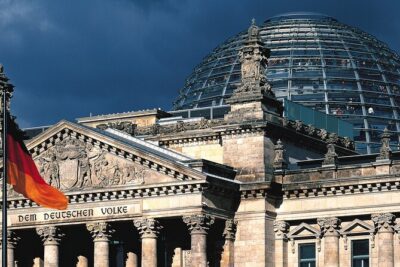
Berlin City walk Government District and Places of Democracy
Read our review →
Berlin’s Best: 2 Hour Walking Tour Third Reich and the Cold War
Read our review →
Third Reich Berlin: Hitler and WWII Walking Tour
Read our review →
Browse the lists this tour appears in