
Reviewed · GUIDED WALKS IN BERLIN
Berlin: The Time of National Socialism Walking Tour
Berlin can feel shiny and new, but the past is still there. This walking tour follows the streets and landmarks tied to the Third Reich, with a Berlin guide who connects what you see on the ground to what happened there.
I especially like the way it anchors big Nazi-era moments at recognizable stops, starting at the Brandenburg Gate and moving through the government district. I also like that you get both the propaganda story and the darker counterpoint, from the Holocaust Memorial to the places tied to SS power. One thing to consider: it is a mostly outside walk and the tour runs in all weather, so you’ll want solid layers and shoes.
In This Review
- Key takeaways before you book
- Walking Through the Third Reich, Without Needing a Textbook
- Meeting at Brandenburger Tor, and How the Timing Works
- Brandenburg Gate and Pariser Platz: Where Propaganda Became Public Theater
- The Reichstag Area: How 1933 Changed the Rules of Power
- Tiergarten Soviet War Memorial: Tanks and Artillery You Can Actually See
- Holocaust Memorial: A Place of Memory, Not a Quick Photo Stop
- Johann Georg Elser Memorial: Resistance Has a Name
- Government District Footprints: Bunker and New Reich Chancellery
- Detlev-Rohwedder-Haus: Another Piece of the Puzzle
- Topography of Terror: The SS and Secret Police in One Concentrated Stop
- Guide Style and Group Size: Why Small Matters on Heavy Topics
- What to Wear and Bring for an All-Weather Walk
- Price and Value: Is $43 for Two Hours Fair?
- Who Should Book This Tour, and Who Might Skip It
- Final Call: Book This, If You Want Berlin With Context
- FAQ
- Where does the tour start?
- What is the meeting point exactly?
- How long is the tour?
- What language is the live guide?
- Is the tour wheelchair accessible?
- How big is the group?
- Does the tour run in bad weather?
- What are the major stops on the walk?
- What is the cancellation policy?
Key takeaways before you book
- A route built around real places: Brandenburg Gate, Reichstag area, Tiergarten memorials, and the Topography of Terror documentation center
- WWII traces you can still spot: Soviet T-34 tanks and artillery at the Soviet War Memorial in Tiergarten
- Holocaust remembrance is central: the tour includes the Holocaust Memorial to the murdered Jews of Europe
- Resistance gets real air time: the Johann Georg Elser Memorial is part of the story, not an afterthought
- Small-group pacing: limited to 10 participants, so questions are more than a formality
Walking Through the Third Reich, Without Needing a Textbook
This is the kind of Berlin tour you take when you want facts, but also want your feet to help you understand the geography. You start at the city’s iconic gateway area, then you move through the governmental and memorial landscape that shaped, and was shaped by, the Nazi years.
In two hours, you’re not trying to cover every chapter of the 1930s and 1940s. Instead, you get a focused walk that turns street-level landmarks into context: who gained power, how they used public space, and what the consequences looked like for Europe.
You’ll also notice the tour style right away. It’s led by a professional city guide, and the tour format is designed for a small group, so the guide can answer questions and steer you through the stops at a human pace. That matters on a topic like this, where you will have emotional reactions and factual questions.
More Guided Walks in Berlin
- Discover Berlin Half-Day Walking Tour
★ 5.0 · 9,624 reviews - Berlin City walk Government District and Places of Democracy
★ 4.7 · 8,467 reviews - Berlin: Third Reich & Cold War Guided Walking Tour
★ 4.9 · 8,378 reviews
Meeting at Brandenburger Tor, and How the Timing Works
The tour meets directly at the metro station S+U Bhf. Brandenburger Tor, exit B. The direction is Pariser Platz and Straße des 17. Juni, and you’re looking for the tour guide with the Get Your Guide flag that says You in Berlin.
The stated duration is 2 hours, and the group is limited to 10 participants. That makes it a good option if you have limited time in Berlin but still want to hit the most meaningful Nazi-era locations, the WWII remnants, and the memorials connected to persecution and resistance.
A practical note: the tour runs in all weather conditions and on public holidays. So plan your day around the walk, not around perfect weather.
Brandenburg Gate and Pariser Platz: Where Propaganda Became Public Theater
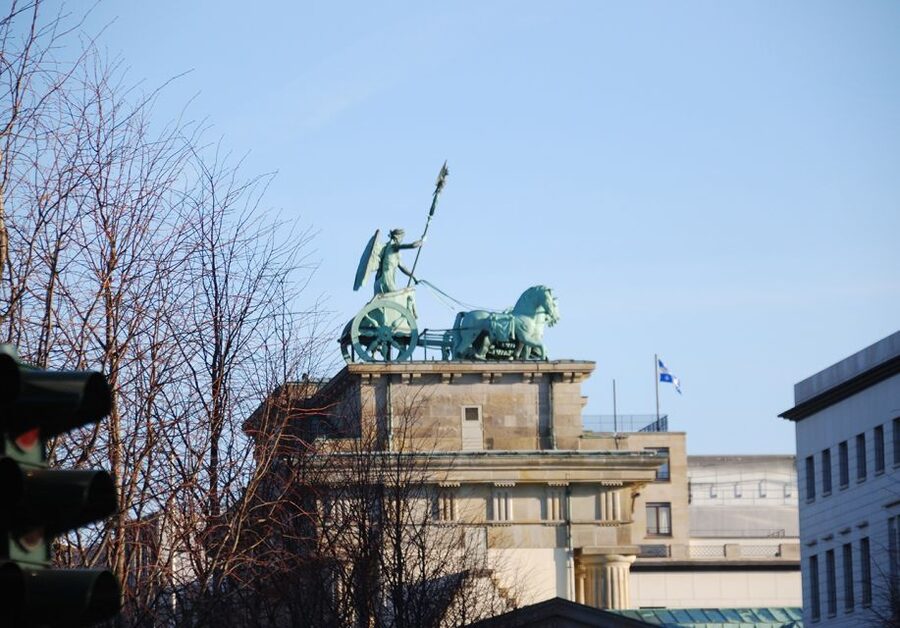
You begin at Pariser Platz and then walk straight to the Brandenburg Gate, one of the most recognizable landmarks in Germany. During the time of National Socialism, this area was used for propaganda marches. On this tour, you don’t just see the monument. You learn how the regime used highly visible city space to project power and unity.
This is a key start point because it frames a theme you’ll keep seeing: the Nazis didn’t rely only on secret police and violence, they also relied on optics. The guide’s job here is to help you connect what you see, stone by stone and street alignment by street alignment, to how the regime wanted the city to feel.
If you’re sensitive to heavy subject matter, you might still appreciate this opener. It keeps the discussion grounded in the way public space was staged, not only in abstract history.
The Reichstag Area: How 1933 Changed the Rules of Power
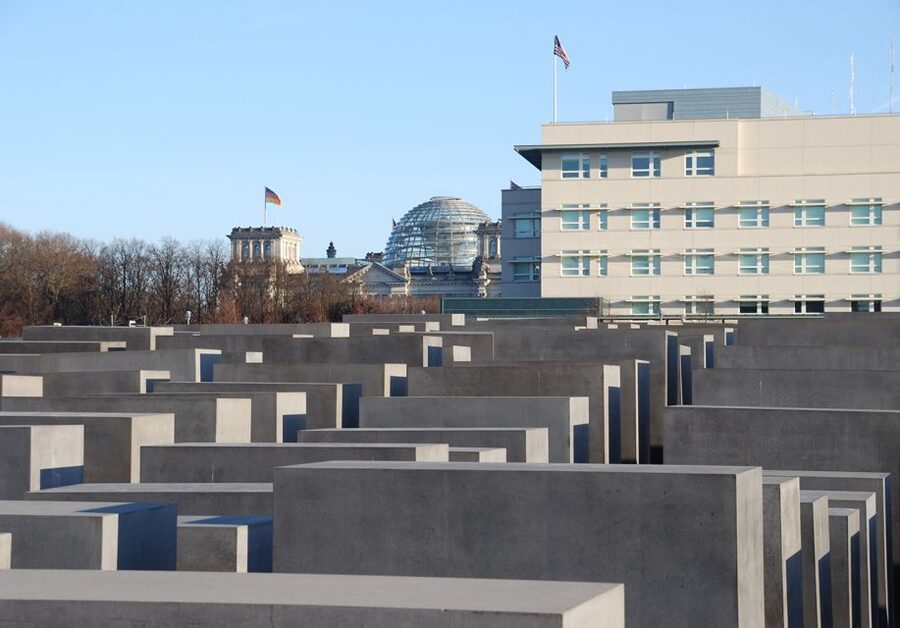
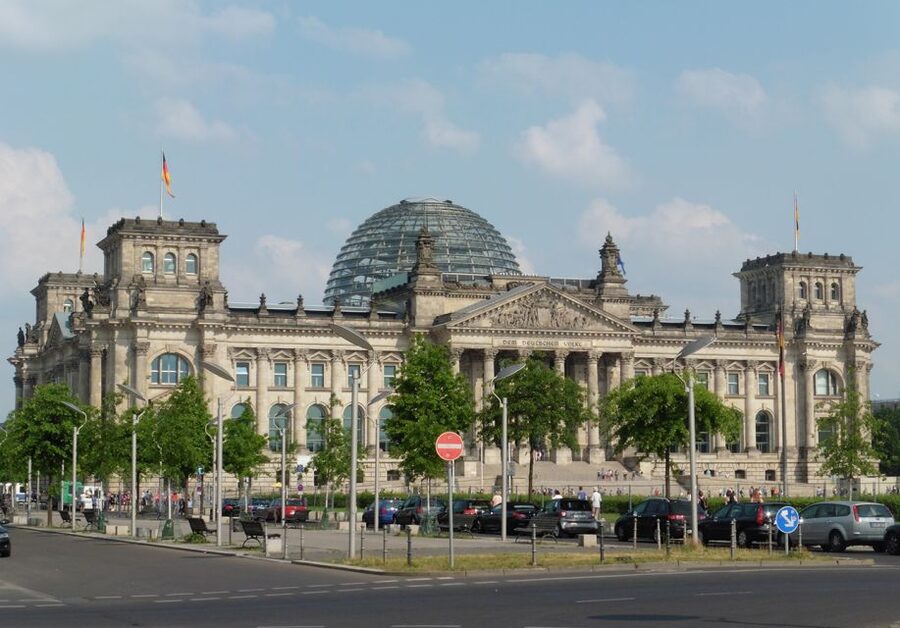
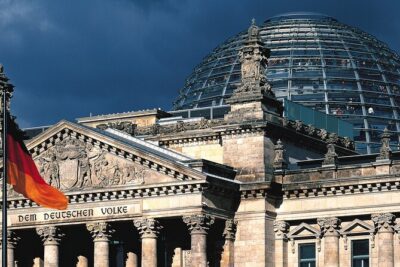
From the Brandenburg Gate area, you move toward the Reichstag. Today it’s the seat of the German Parliament, but the tour’s focus is what happened when the Nazi Party, the NSDAP, and Adolf Hitler came to power in 1933.
What makes this stop valuable is the contrast. The building is now associated with parliamentary democracy, while the tour explains that, back then, it sat inside a political takeover. Even if you don’t go inside, the location helps you understand why governments fight over symbols and access to decision-making spaces.
One caution: depending on the day, you might have to navigate crowds or open-public-area conditions around major landmarks. That’s not a problem with the tour, just the reality of central Berlin.
Tiergarten Soviet War Memorial: Tanks and Artillery You Can Actually See
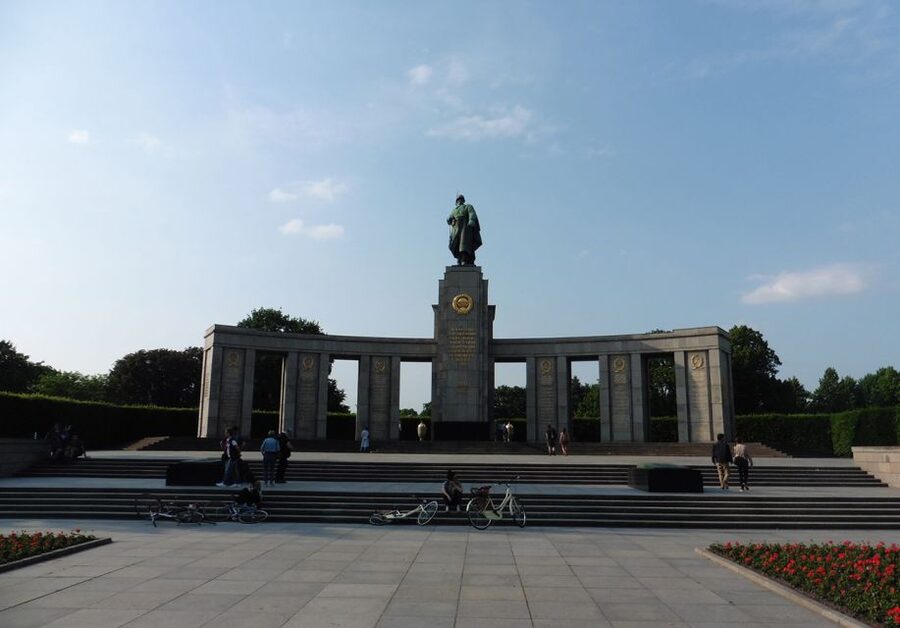
Next comes Tiergarten and the Soviet War Memorial. This is where the story shifts from Nazi-era propaganda and governance into the broader WWII reality. You see Soviet T-34 tanks and artillery displayed at the memorial grounds.
This stop hits differently because it forces the timeline to widen. You’re not only studying the Nazi system. You’re also seeing how the war ended, and how the city carries its aftermath. The guide helps you read the memorial as more than a static monument, tied to specific WWII events.
For many people, this is the moment when Berlin’s layers get extra real. You can point at physical objects, not just buildings. And once you’ve seen that, the later memorial stops land with more weight.
More German cities at walking speed:


Holocaust Memorial: A Place of Memory, Not a Quick Photo Stop
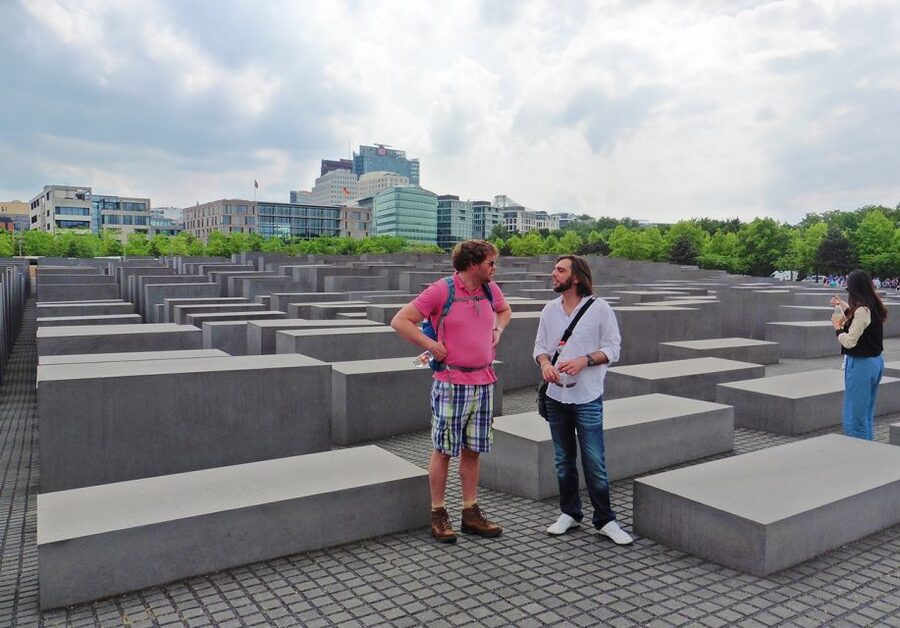
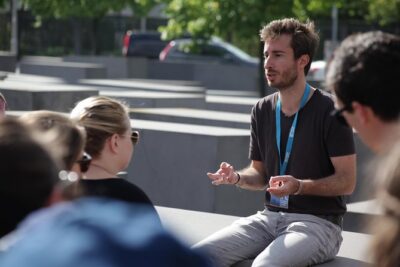
Then you reach the Holocaust Memorial, the memorial to the murdered Jews of Europe. The tour includes this stop because it belongs in any honest Berlin walk about the Nazi era.
What I like about this part of the route is that it’s placed after the WWII reminders, so you’re not bouncing between eras without meaning. The guide’s explanations help you understand that memorials are built with intention, and your job as a visitor is to slow down and let the space do its work.
This is also a good checkpoint for you. If you get overwhelmed, you can stand quietly and let the guide’s facts settle. The tour is not built around rushing you through.
Johann Georg Elser Memorial: Resistance Has a Name
After the major memorials, the tour moves to the Johann Georg Elser Memorial. Elser is a key figure because he represents resistance, and the tour explicitly gives that theme space.
This works well for a couple of reasons. First, it avoids turning the story into only perpetrators and victims. Second, it brings in the idea that opposition existed even inside a brutal dictatorship.
If you’re the kind of traveler who wants a more complete moral picture, this stop helps. You get a human-scale example, not just a list of events.
Government District Footprints: Bunker and New Reich Chancellery
You then reach the place where the bunker and the New Reich Chancellery of Adolf Hitler were located, along with the broader government district of Berlin at that time.
This part is powerful because it makes the abstract concrete. When you walk past the modern city, the guide helps you understand where the Nazi leadership structure actually sat. You’re not just learning that Hitler had a bunker. You’re learning where it was positioned in the city and what that says about how power was organized.
A quick realism check: because modern Berlin occupies the same area, you might not see obvious bunker structures on the street today. That’s where the guide earns their fee, by translating what’s present now into what mattered then.
Detlev-Rohwedder-Haus: Another Piece of the Puzzle
The route also includes the Detlev-Rohwedder-Haus. In a walking tour like this, smaller stops matter because they connect the dots between the big headline sites. Even if you’re not sure what a building’s role was at first glance, you’ll get enough context from the guide to place it within the government-area story.
Think of these moments as the connective tissue. They turn the walk from a series of monuments into a coherent map.
Topography of Terror: The SS and Secret Police in One Concentrated Stop
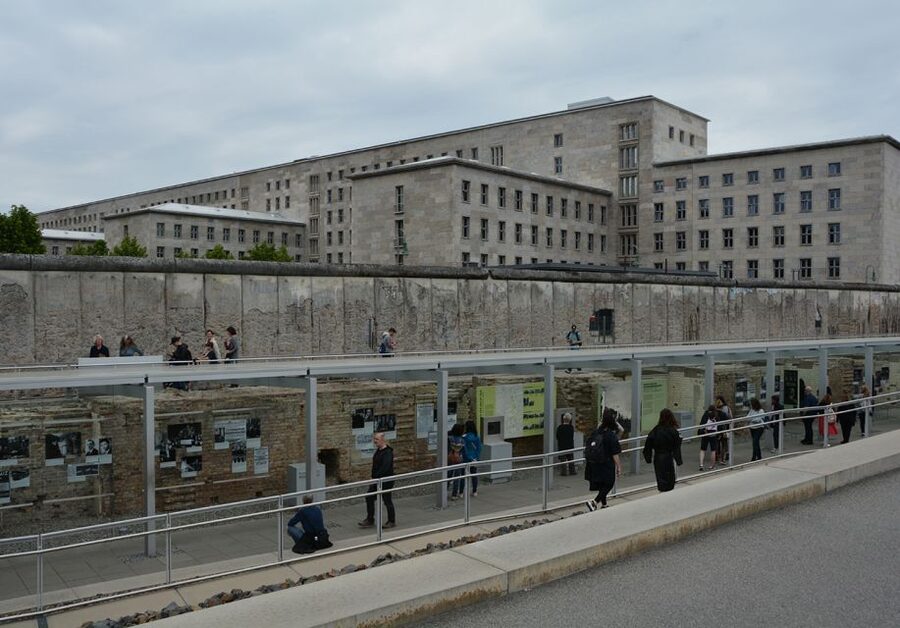
The tour’s final major stop is the Topography of Terror documentation center. This is where the darker administrative machinery is explained in a very grounded way.
You learn about the headquarters locations tied to the SS, the Secret State Police, the Reich Security Main Office, and the Reich Aviation Ministry during WWII. The guide also ties in stories about German Resistance against the dictatorship as the tour reaches its ending point.
This end matters because it moves from propaganda and political power into systems and enforcement. In many history tours, you get the speeches and the buildings but not the machinery. Here, you get the machinery, and then you leave with a better understanding of how repression became organized and repeatable.
It’s also a logical landing point, because Topography of Terror is built to help you process what you just walked past. Even if you don’t stay long after the tour ends, you’ll know what you are looking for.
Guide Style and Group Size: Why Small Matters on Heavy Topics
The guide is German-speaking, and the tour is designed as a small group limited to 10 participants. That setup changes the feel of a history walk. You can ask a question without the guide talking over you, and you don’t get stuck in a moving wall of bodies.
There’s also a consistent signal about guide quality in how people describe their experience. Guides like Carlo, who was noted for being enthusiastic and taking time even in nasty weather, show you what good guiding looks like on this topic. It’s not just facts, it’s pacing, clarity, and the ability to keep the group moving safely when streets are icy.
For you, that means you are less likely to feel lost between stops. The guide’s job is to tie each place to the bigger story, then help you connect it yourself as you walk.
What to Wear and Bring for an All-Weather Walk
This is a walking tour that runs in all weather conditions. If Berlin decides to be winter-on-purpose, you’ll feel it. Wear suitable clothes for a walking tour, and think about traction and warmth.
You might also want to bring a small backpack for water and a layer you can peel off. Because the route is centered on major landmarks and memorial spaces, you’ll also want simple, comfortable shoes you trust on sidewalks.
If you’re planning photos, remember that memorial spaces can be reflective zones. You’ll get more out of the stop if you pause and look first, then decide if you want images after.
Price and Value: Is $43 for Two Hours Fair?
At $43 per person for a 2-hour guided walking tour, you’re paying for a lot more than a route map. You’re paying for interpretation at major, high-impact locations, including the Holocaust Memorial and Topography of Terror, plus a guided explanation of WWII traces like the Soviet T-34 tanks and artillery.
This price feels especially reasonable when you consider the stops are spread across central Berlin and involve sites that are easy to misread on your own. Without context, you might see buildings and memorials but miss the connections between propaganda, power structures, persecution, resistance, and war aftermath.
The small group limit to 10 participants is part of the value too. It helps the guide keep the tour focused, answer questions, and manage the pace. If you’re the type who likes your history with clear structure, that’s a good use of money.
Who Should Book This Tour, and Who Might Skip It
You should book if you want a Berlin Nazi-era walking tour that is structured, respectful, and rooted in specific places. It’s also a smart pick if you have limited time and still want to cover the key sites: Brandenburg Gate, the Reichstag area, Tiergarten memorial, Holocaust Memorial, Resistance context with Johann Georg Elser, and the Topography of Terror documentation center.
It can also work well for older teens and young adults, especially if your group likes guided explanations rather than solo museum wandering. The tour’s focus is clear enough for school-age curiosity but serious enough to feel meaningful.
You might skip if you prefer lighter entertainment or you want a purely visual sightseeing day. Also, if you don’t do well with prolonged outdoor walking in changing weather, you’ll need to be honest with yourself. This tour is designed for all weather, not only perfect days.
Final Call: Book This, If You Want Berlin With Context
If you want to understand Berlin during the Third Reich, without piecing together a dozen tabs on your phone, this is a strong way to go. The route is compact, but it hits the right nodes: propaganda space, power, war aftermath, genocide remembrance, and the administrative machinery explained at Topography of Terror.
My advice is simple: treat it as a guided walk of meaning. Wear comfortable shoes, keep your schedule clear for two hours, and be ready for facts that land with weight. That is exactly what this tour is built to do.
FAQ
Where does the tour start?
It starts at the metro station S+U Bhf. Brandenburger Tor, exit B, in the direction of Pariser Platz and Straße des 17. Juni.
What is the meeting point exactly?
Meet the guide at the exit of S+U Bhf. Brandenburger Tor, exit B, looking for the guide with the Get Your Guide – You in Berlin flag.
How long is the tour?
The tour duration is 2 hours.
What language is the live guide?
The live tour guide language is German.
Is the tour wheelchair accessible?
Yes, the tour is listed as wheelchair accessible.
How big is the group?
The group is limited to 10 participants.
Does the tour run in bad weather?
Yes, the tour takes place in all weather conditions and on all public holidays.
What are the major stops on the walk?
You visit places including the Brandenburg Gate, the Reichstag area, the Soviet War Memorial in Tiergarten, the Holocaust Memorial, the Johann Georg Elser Memorial, and the Topography of Terror documentation center.
What is the cancellation policy?
Free cancellation is available up to 24 hours in advance for a full refund.
Fresh on the arrivals board for Berlin



Guided Walks in Berlin, compared.
Berlin City walk Government District and Places of Democracy
Read our review →
Berlin’s Best: 2 Hour Walking Tour Third Reich and the Cold War
Read our review →
Third Reich Berlin: Hitler and WWII Walking Tour
Read our review →
Browse the lists this tour appears in