
Reviewed · GUIDED WALKS IN BERLIN
Berlin: 2.5-Hour Walking Tour through Kreuzberg 61
Kreuzberg has quiet surprises. This 2.5-hour walking tour threads through Kreuzberg’s lesser-known corners between Platz der Luftbrücke and Mehringdamm, with stops that show you how the neighborhood grew up around everyday people. I like that it’s not built around the usual postcard landmarks, and you spend real time on the streets and courtyards where Berlin still feels lived-in.
My favorite part is the mix of architecture plus neighborhood mood. You get photo stops in places like Viktoriapark, Riehmers Hofgarten, and Chamissoplatz, then you finish in the shopping-and-street-life zone around Bergmannstraße. It’s also led by Tobias Schwabe, who is repeatedly described as friendly, professional, and story-driven, with an easy way of explaining how buildings connect to politics and daily life.
One heads-up: it is a walking tour, so if you want long museum-style stays or lots of big interior sightseeing, you might feel the pace is too focused and stop times are short. Also, the start can vary depending on the option you pick, so check your meeting point carefully.
In This Review
- Key points to know before you go
- Kreuzberg 61 on foot, between Luftbrücke and Mehringdamm
- Starting options: choosing Mehringdamm or Platz der Luftbrücke
- Platz der Luftbrücke to a printing-related memorial
- Sixtusgarten and the art of the quick photo stop
- Viktoriapark’s waterfall moment and calm city views
- The Prussian Monument for the Liberation Wars: your panoramic payoff
- Riehmers Hofgarten: another pocket of quiet
- Schmelzwerk in den Sarottihöfen: the stop for industrial-era character
- Bergmannstraße: the shopping street finale with multicultural atmosphere
- The Fachwerkhof: a quick architecture pause you’ll remember
- Chamissoplatz and the feeling of well-kept neighborhood edges
- Marheineke Markthalle: your built-in break and local rhythm
- What the guide does well, especially Tobias Schwabe
- Price and time: what $23 buys you in real value
- Who this tour suits best in Kreuzberg
- Should you book this Kreuzberg 61 walking tour?
- FAQ
- How long is the Berlin: Kreuzberg 61 walking tour?
- Where does the Kreuzberg 61 tour take place?
- How much does the tour cost?
- Who leads the tour and what languages are available?
- Where do I meet for the tour?
- Can I request a different meeting point, date, or time?
- Is free cancellation available?
Key points to know before you go
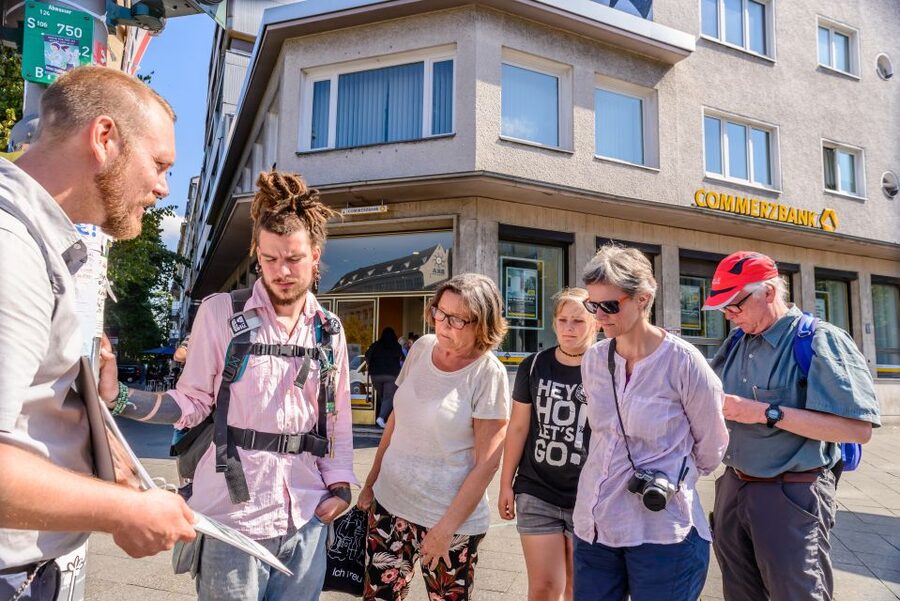
- Off-the-beaten-track Kreuzberg 61 route, run between Platz der Luftbrücke and Mehringdamm
- Expert live guide in English or German, with a strong emphasis on architecture, politics, and culture
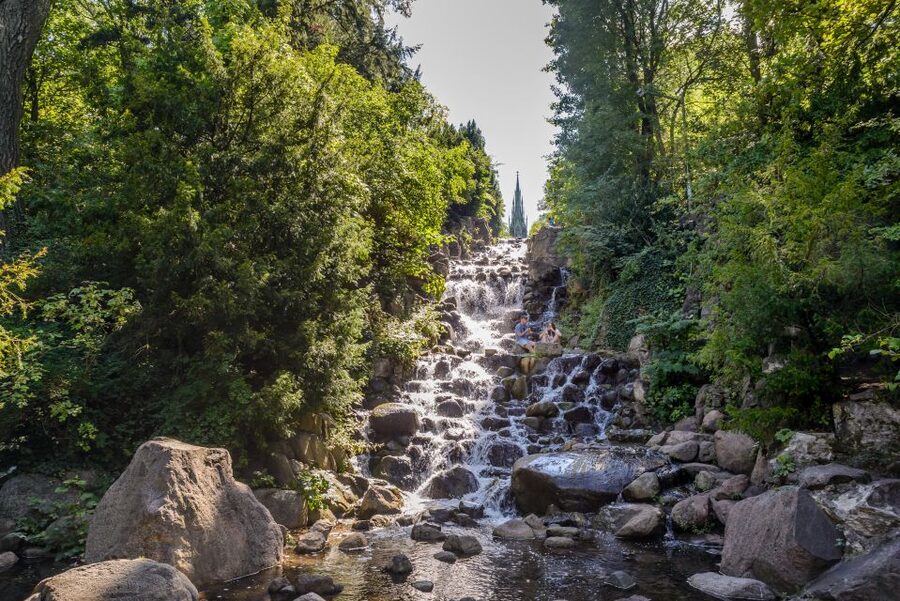
- A calm reset in Viktoriapark and Riehmers Hofgarten, including a waterfall in Viktoriapark
- Panoramic monument moment at the Prussian Monument for the Liberation Wars
- Local-life finish near Bergmannstraße and Marheineke Markthalle, with a short break built in
Kreuzberg 61 on foot, between Luftbrücke and Mehringdamm
Kreuzberg is one of those Berlin neighborhoods where the story is written in facades, courtyards, and street layouts. This walking tour gives you a clean way to read those clues without getting lost in the usual highlights. In just 2.5 hours, you cover a compact stretch that feels like an open-air history lesson, but with enough pauses to actually enjoy what you’re seeing.
What makes this route special is its focus on the “in-between” places. You’re not just passing famous buildings. You’re getting stops tied to older city planning, monuments, residential character, and the calm pockets that sit inside a busy modern district.
And because it ends around Bergmannstraße, you also get a satisfying shift from explanation to atmosphere. The point is not to rush you through sights. The point is to help you understand why Kreuzberg feels the way it does.
More Guided Walks in Berlin
- Discover Berlin Half-Day Walking Tour
★ 5.0 · 9,624 reviews - Berlin City walk Government District and Places of Democracy
★ 4.7 · 8,467 reviews - Berlin: Third Reich & Cold War Guided Walking Tour
★ 4.9 · 8,378 reviews
Starting options: choosing Mehringdamm or Platz der Luftbrücke
You start in one of two ways, based on your booking option. One common start is around Mehringdamm 129, and the other is at Platz der Luftbrücke. Either way, you’re positioned well to start moving through western Kreuzberg and work your way toward the more lively shopping streets later on.
I like that this gives flexibility. If you’re staying closer to one side of the district, you’re not forced to cross Berlin just to begin a short tour.
The trade-off is simple: you need to show up at the correct point for your option. Since the meeting point can vary, double-check it before you head out, and give yourself a little extra time to find the group.
Platz der Luftbrücke to a printing-related memorial
Once you’re moving, the tour eases you into the area right from Platz der Luftbrücke. You spend about 25 minutes there, passing by on foot while the guide sets context for what you’ll see next. That early framing matters, because Kreuzberg can look chaotic if you only focus on buildings one by one.
From there, you pass the Verband der deutschen Buchdrucker (Denkmal). The name hints at a connection to Germany’s printing world, and as a monument stop, it’s the kind of place where the explanation turns a stone marker into something with meaning. This is one of those “small stop, big payoff” moments.
You’re not supposed to rush past it. Even as a pass-by location, it’s part of the tour’s pattern: monuments and addresses matter because they reflect what the community valued at the time.
Sixtusgarten and the art of the quick photo stop
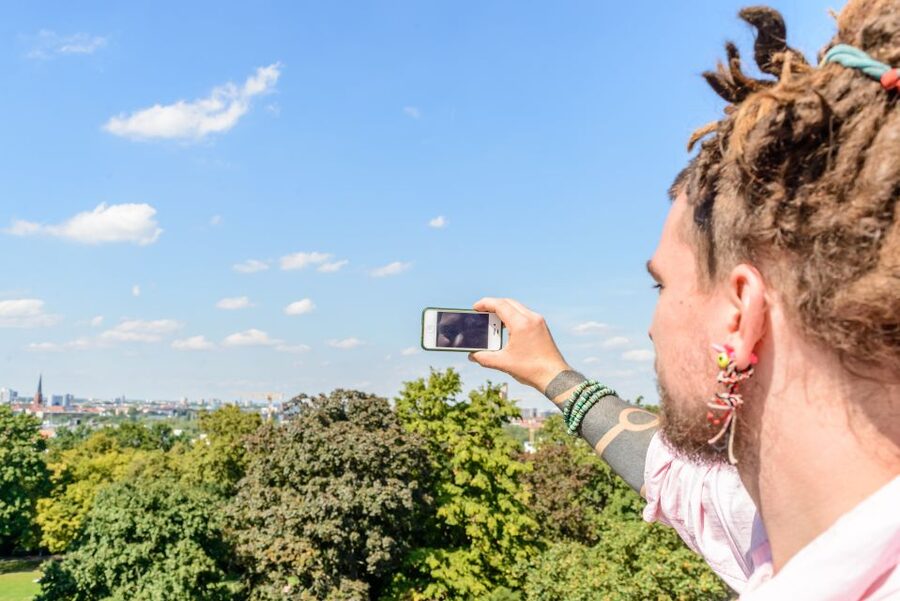
Next comes Sixtusgarten 10, a short segment that is mainly a photo stop. For a lot of walking tours, a stop like this can feel optional. Here, it’s actually useful, because it trains your eye to notice how green pockets and garden spaces sit close to dense urban blocks.
This is also where you start to get the rhythm of the walk. Some points are longer pass-by moments with guide context. Others are short pauses designed for orientation, photos, and a mental reset.
If you’re the type who likes to keep moving, you’ll probably enjoy this pacing. If you need long breaks, plan on using the final break by Marheineke Markthalle to recharge.
Viktoriapark’s waterfall moment and calm city views
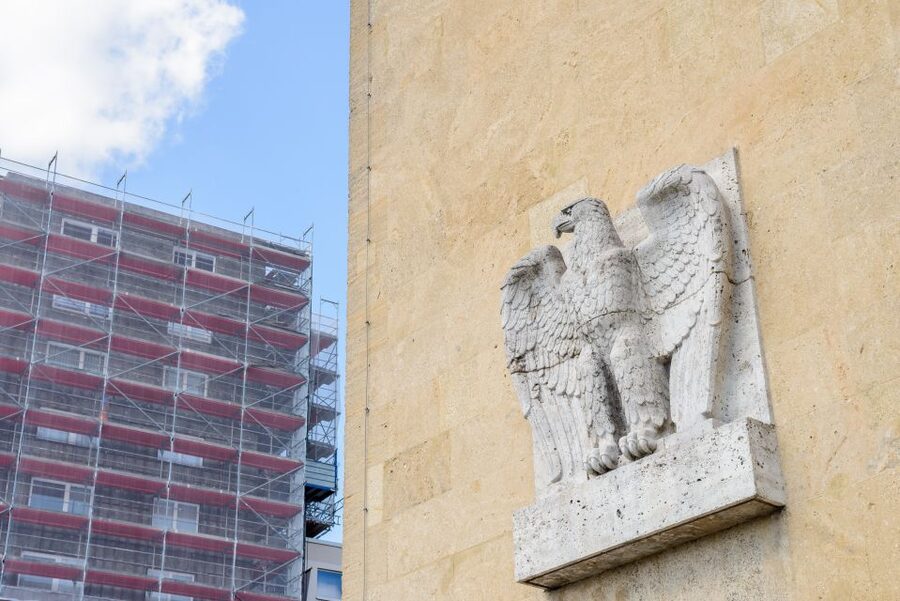
Viktoriapark is one of the clear “yes, stop here” spots on the route. You spend around 35 minutes here, with a photo stop and guided walk-by moments, plus scenic views along the way. The tour description calls out the waterfall in Viktoriapark, and you’ll be in the right place to appreciate how the park provides relief from city noise.
I love parks on walking tours when they’re not just for a quick picture. Viktoriapark works because it lets you see the district from a more human scale. Instead of treating the neighborhood like a map, the park encourages you to notice sight lines, elevation, and how Berlin’s older urban design shapes modern movement.
It’s also an oasis in the middle of the walk. If your day in Berlin is already packed, this pause can feel like a breather rather than another appointment on your schedule.
More German cities at walking speed:


The Prussian Monument for the Liberation Wars: your panoramic payoff
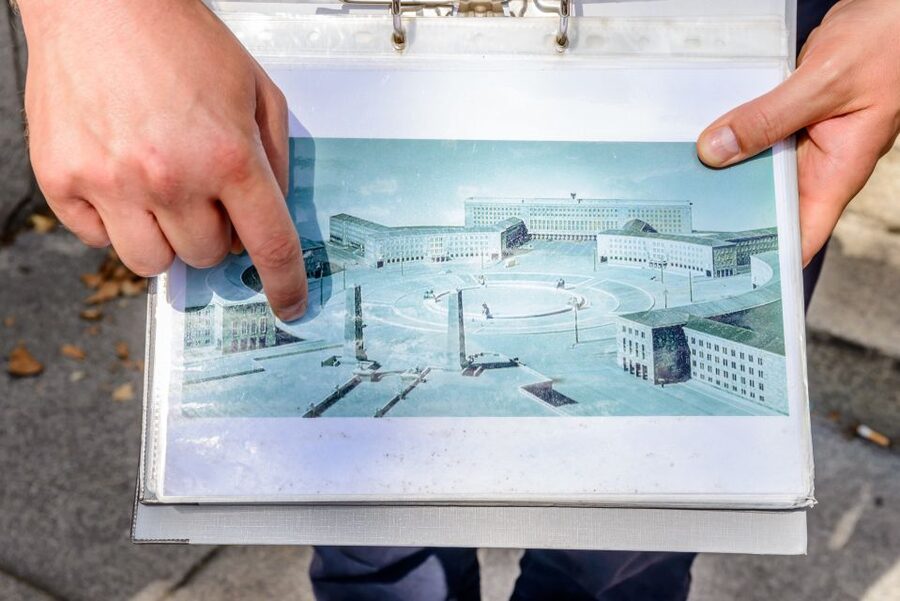
After the park calm, the tour gives you a classic Berlin viewpoint payoff at the Prussian Monument for the Liberation Wars. You have a photo stop here for about 10 minutes, plus scenic views on the way.
This is the part that the tour description frames as a Schinkel-related national monument moment, known for panoramic views over Berlin. Even if you only get a short stop, panoramic viewpoints change how you understand a city, because they make the street-level details snap into place.
This is also a good reminder of how Kreuzberg layers eras. One minute you’re in a quiet park setting. The next, you’re looking across the broader city structure that grew around these neighborhoods.
If you’re visiting in mixed weather, plan for this segment to be your best “photo angle” even if the rest of the day is less dramatic.
Riehmers Hofgarten: another pocket of quiet
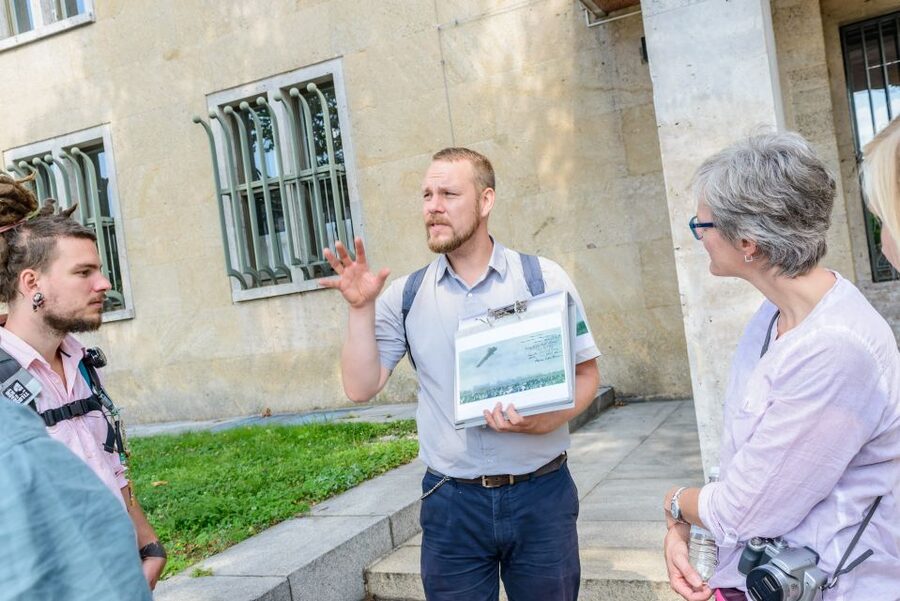
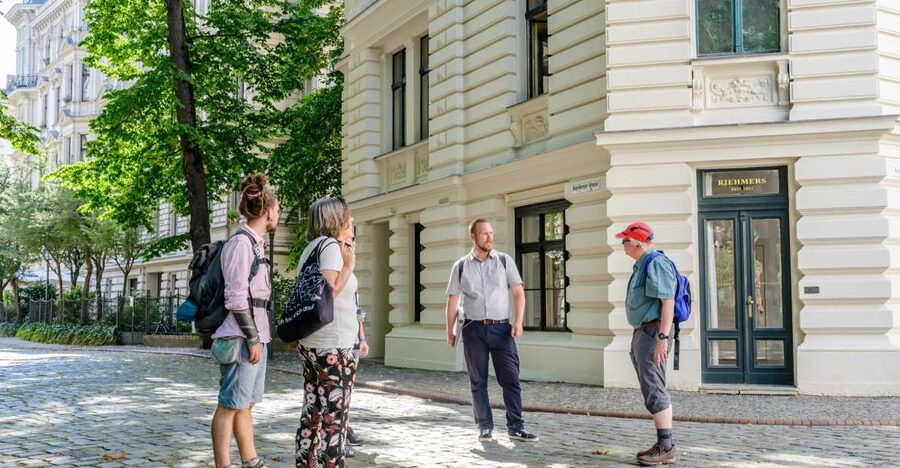
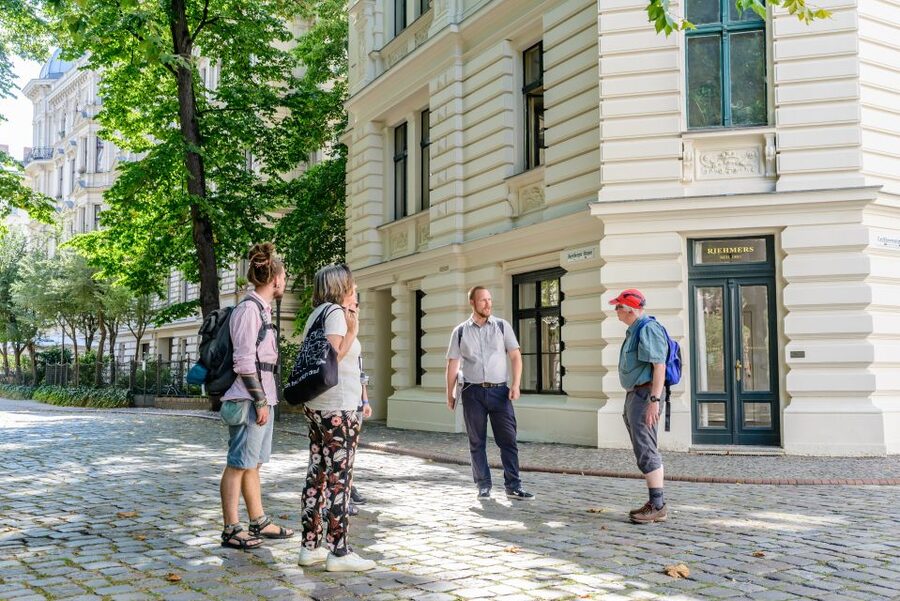
Riehmers Hofgarten appears next, with a photo stop and guided pass-by for about 10 minutes. Like Viktoriapark, it’s framed as calm, and it helps reinforce the tour’s theme: Kreuzberg contains small places where daily life slows down.
I find these garden courtyards and park-adjacent spaces valuable on a short walk. They prevent the experience from turning into pure chronology. Instead, you get mood shifts that make the architecture and monuments feel grounded.
If you’re the kind of traveler who enjoys urban texture, you’ll likely pick up details here, like how these spaces are arranged to be used by people, not just admired from a distance.
Schmelzwerk in den Sarottihöfen: the stop for industrial-era character
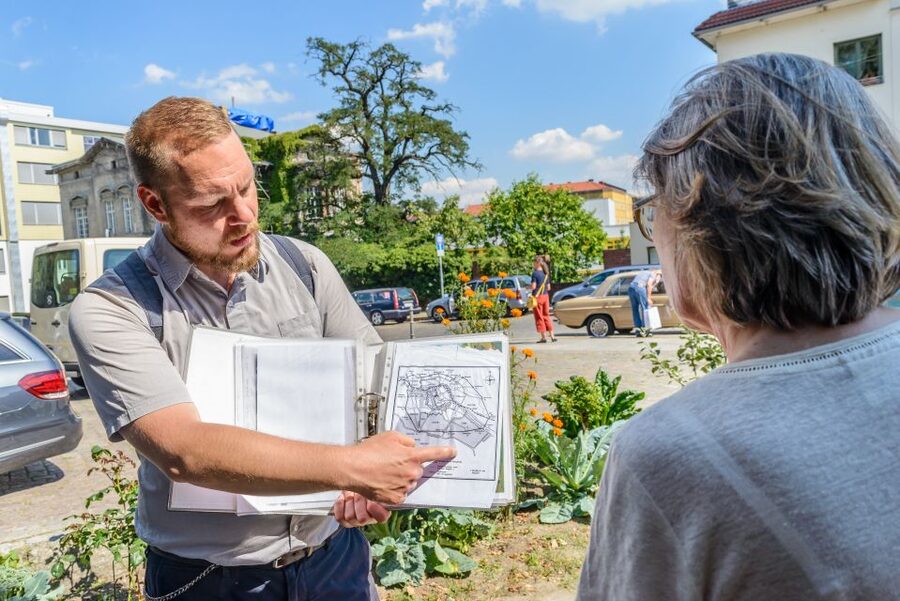
Next up is Schmelzwerk in den Sarottihöfen, another photo stop with guided pass-by. This is a great example of how the tour treats buildings as clues. Even without heavy interior access, the exterior and the setting can tell you about industry, reinvention, and how older complexes survive inside a modern district.
What you’ll get here is less about a single famous monument and more about the “fabric” of Kreuzberg. This stop supports the broader learning goal: noticing how architecture reflects work, housing, and the changing needs of Berlin over time.
If you’re traveling with an architecture interest, this is one of those moments that can become a highlight because it shows a different side of the neighborhood than the parks and shopping streets.
Bergmannstraße: the shopping street finale with multicultural atmosphere
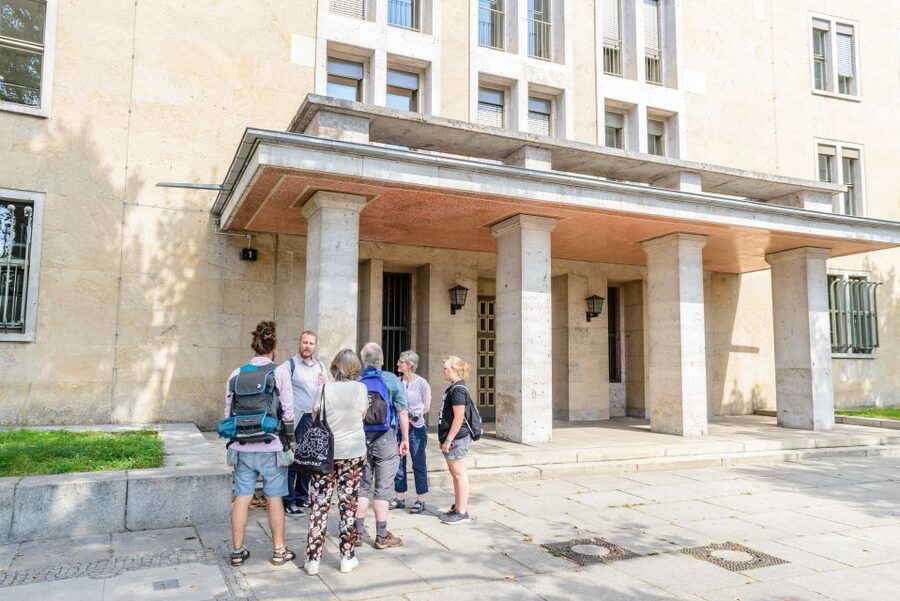
The tour then moves into Bergmannstraße, where you get about 20 minutes of guided walking with a shopping component and sightseeing pass-by time. This is where the experience shifts from explanation to street life.
Bergmannstraße is often where Kreuzberg feels most human: storefronts, pedestrians, and the kind of everyday variety that makes the district feel like more than a set of sights. The tour’s description specifically notes the multicultural atmosphere around Bergmannstraße, and the time here helps you see that atmosphere in motion rather than as a theory.
I also like that the tour ends close to areas where you can keep exploring on your own. When a tour finishes at a lively street, you’re not stuck hunting for dinner with zero momentum.
The Fachwerkhof: a quick architecture pause you’ll remember
You then stop at Der Fachwerkhof in Berlin Kreuzberg for about 5 minutes, mainly a photo stop with guided context as you pass by. The name points to traditional half-timbered architecture, and even a short stop can be useful when the guide helps you see how those styles fit into the neighborhood’s broader build.
This is one of the “short but worth it” stops. Half-timbered facades can look charming at a glance, but without context they’re easy to overlook. With a guide explaining how such details survived and where you see them, you’re more likely to understand why they matter.
If you love visual variety in your photos, this is a nice last-minute architectural contrast before the tour wraps.
Chamissoplatz and the feeling of well-kept neighborhood edges
Chamissoplatz comes next as another short pass-by stop, again with guided sightseeing for about 5 minutes. The tour highlights Chamissoplatz as charming, and the idea here is that you’ll notice well-preserved architecture and the way residential spaces shape the “edge” of the district.
I like adding a stop like this late in the walk. By then, you’ve already built up your attention span for details. So a small square or plaza becomes more than a place to stand. It becomes a place to compare what you’re seeing now with what you learned earlier about how Kreuzberg evolved.
This is also a good point to pause and think about what style differences you’ve noticed between parks, monuments, courtyards, and residential blocks.
Marheineke Markthalle: your built-in break and local rhythm
Finally, you reach Marheineke Markthalle, with a short break time of about 5 minutes. It’s listed as part of the experience with guided sightseeing and shopping pass-by time.
Even a short break can make the walk feel better, because you’re not forced to keep moving through the last segment without any pause. If you want a quick snack or a last look at local food culture, this is your moment.
In a tour like this, the market stop is not just about food. It’s about switching from “sightseeing mode” to “Berlin living mode.” When you end at a place like a market hall, you can keep the day going with fewer decisions.
What the guide does well, especially Tobias Schwabe
The tour’s strongest asset is its guide. Tobias Schwabe shows up repeatedly in the available feedback as friendly, professional, and passionate about Kreuzberg. People also describe how he shares stories that connect buildings to political and cultural life, not just dates and names.
That matters for you because Kreuzberg can be confusing if you only use surface-level guides. When a guide explains why a monument sits where it does, or how residential areas reflect different waves of Berlin’s growth, your photos look better, but your understanding improves even more.
The tour also runs in English and German with a live guide. For language comfort, that’s a big plus, since you can ask questions in the moment instead of relying on a phone app.
Price and time: what $23 buys you in real value
At $23 per person for a 2.5-hour walking tour, you’re paying for two things: guided interpretation and a tightly planned route through a dense city area. This is not just “someone walks with you.” The structure is built to keep stops short and frequent, so you get multiple viewpoints on Kreuzberg without blowing your whole day on transit.
The strong ratings shown for this experience, with a 4.9 score and 525 bookings, suggest consistent quality over time. When a walking tour holds a high standard across many departures, that usually means the guide is doing the hard work well, like pacing, storytelling, and keeping the group moving smoothly.
If you’re visiting Berlin for a few days and you want your time to count, this price feels like a reasonable way to learn the neighborhood’s logic fast. If you already know Kreuzberg deeply, it can still work, but you might get more out of it if you focus on architecture, urban planning details, and the smaller parks and courtyards.
Who this tour suits best in Kreuzberg
This tour is a good fit if you like small-city details and you enjoy learning through walking. It’s also ideal for people who want something different from standard landmark circuits and prefer a route built around neighborhood character.
I’d especially recommend it if:
- you care about architecture and urban form
- you want parks and courtyards as part of your sightseeing plan
- you like history that includes everyday life, not only major events
It may be less ideal if you want heavy museum time, long indoor viewing, or a relaxed pace with lots of free wandering. The structure is efficient, and the guide keeps things moving.
Should you book this Kreuzberg 61 walking tour?
I think you should book it if you want a smart, off-the-beaten-track way to understand Kreuzberg between Platz der Luftbrücke and Mehringdamm. The route gives you calm park breaks, a panoramic monument moment, architecture-focused photo stops, and then a finish near Bergmannstraße where you can keep living the day.
If you’re tight on time in Berlin, the 2.5-hour duration is a sweet spot. You get enough stops to build a real picture, without tiring yourself out for the rest of the evening.
If you dislike walking tours with short stops, or you want long museum interiors, you might feel under-satisfied. In that case, pick a tour with fewer stops and more time inside. But for the right traveler, this one is a strong value for learning Kreuzberg’s personality in one go.
FAQ
How long is the Berlin: Kreuzberg 61 walking tour?
It lasts 2.5 hours.
Where does the Kreuzberg 61 tour take place?
It’s in Berlin, in the Kreuzberg district, focused on an area between Platz der Luftbrücke and Mehringdamm.
How much does the tour cost?
The price is $23 per person.
Who leads the tour and what languages are available?
The tour includes a professional live guide. Languages offered are English and German.
Where do I meet for the tour?
The meeting point may vary depending on the option booked, including starting locations like Mehringdamm 129 or Platz der Luftbrücke.
Can I request a different meeting point, date, or time?
Yes. A special meeting point, date, and time of your choice can be arranged for your group upon request when booking.
Is free cancellation available?
Yes. You can cancel up to 24 hours in advance for a full refund.
Fresh on the arrivals board for Berlin


Guided Walks in Berlin, compared.
Berlin City walk Government District and Places of Democracy
Read our review →
Berlin’s Best: 2 Hour Walking Tour Third Reich and the Cold War
Read our review →
Third Reich Berlin: Hitler and WWII Walking Tour
Read our review →
Browse the lists this tour appears in