
Reviewed · WALKING TOURS
Augsburg’s Water Management System – City Walking Tour
Augsburg’s water tells a 2,000-year story. On this 2-hour walking tour, you follow the city’s UNESCO water system through old streets, canals, and fountains that still shape daily life. You’ll also get the kind of guided context that makes technical water history feel human, not dusty.
I especially loved feeling the cobblestones under my shoes while the guide connected the Old Town water story to real places. The tour also leans into Augsburg’s signature fountains, with stops built around Augustus, Merkur, and Herkules.
One thing to consider: the tone can be more facts and dates than personal anecdotes, so if you’re hoping for lots of storytelling, you may find it a bit more historical than chatty.
In This Review
- Key things to know before you go
- Why Augsburg’s water system is UNESCO worthy
- Starting in the Old Town, and why meeting location matters
- Following fountains like a map: Augustus, Merkur, and Herkules
- Lech quarter canals: small channels and big meaning
- The Rotes Tor waterworks stop, and what makes it special
- How the optional elysium® audio works (and when it helps)
- Price and value: what you really get for about $20
- What the guide style feels like on the ground
- Who this walking tour suits best
- Should you book Augsburg’s Water Management System walking tour?
- FAQ
- Where does the tour start?
- How long is the Augsburg water management system walking tour?
- How much does it cost?
- What languages are the tours offered in?
- Is the tour wheelchair accessible?
- Is entry to attractions included?
- What should I bring?
- Does the tour include the optional sound system?
- What is included in the tour price?
- Is free cancellation available?
Key things to know before you go
- UNESCO World Heritage water system in 2 hours, hitting several of the 22 elements you want to understand
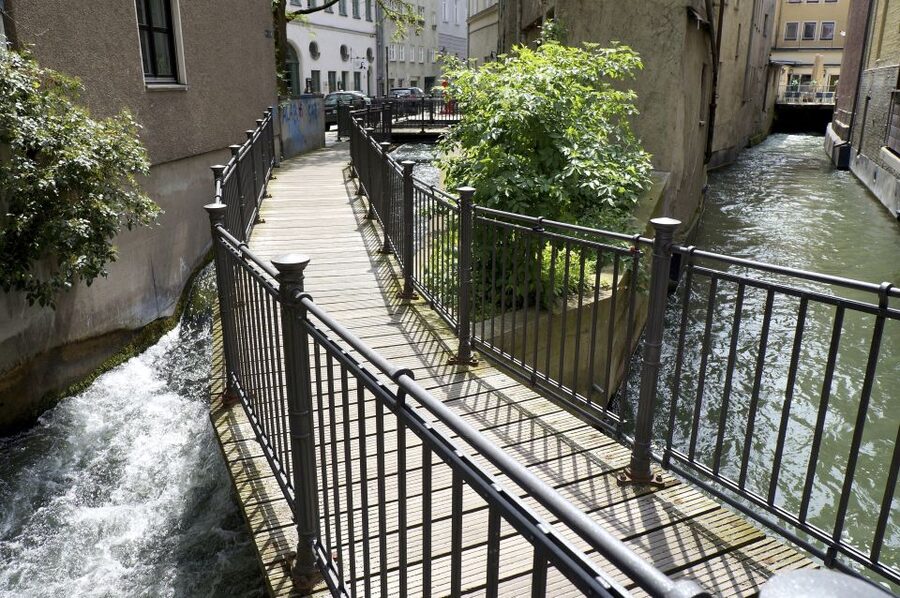
- Lech quarter canal walking, with small historic channels and red-roofed streets
- Rotes Tor waterworks stop, described as the oldest existing waterworks in central Europe
- Fountain-focused route, including the Augustus fountain plus Merkur and Herkules
- Optional elysium® sound amplification, which you can use with your own smartphone and headphones
Why Augsburg’s water system is UNESCO worthy
Augsburg is known for lots of things, but its water management system is the one that really rewards slow walking. This isn’t just a pretty canal walk. It’s a long-running system for capturing, distributing, and using water across the city, with multiple parts working together over time.
What makes this tour feel worth your time is how it turns that big idea into concrete landmarks. You’re not handed a lecture in one place. Instead, you move from fountain to canal to historic waterworks and your guide ties it all back to the UNESCO designation. You’ll learn that Augsburg’s system is made up of 22 elements, and you’ll see several of them on the route.
This approach matters for value. Two hours sounds short, but when the guide shows you real objects in real locations, the information sticks. You leave with mental photos, not just facts floating around.
More German cities at walking speed:
- Augsburg: Walking Tour with Fuggerei
★ 4.6 · 2,245 reviews - Augsburg: Illuminated Guided Evening Walking Tour
★ 4.6 · 67 reviews - Historical Walking Tour of Augsburg / Historische Führung
★ 4.7 · 41 reviews
Starting in the Old Town, and why meeting location matters
Your tour begins in the city center, meeting your guide in front of the Tourist Information Center. That’s a good setup because it means you start where the action is already concentrated. You can park your brain quickly, get your bearings fast, and then spend your energy on the water story instead of figuring out logistics.
From the start, expect a walking pace that works best with comfortable shoes. This is Old Town walking, so cobblestones are part of the deal. The tour also includes time outdoors at more than one stop, so weather matters, even if your guide can’t control rain.
Group size isn’t something you should bank on from the available info, but the structure is clear: it’s a guided walk through multiple sites, with the guide doing the heavy lifting in terms of explanation and connections between locations. If you like learning through scenery, it’s a strong format.
Following fountains like a map: Augustus, Merkur, and Herkules
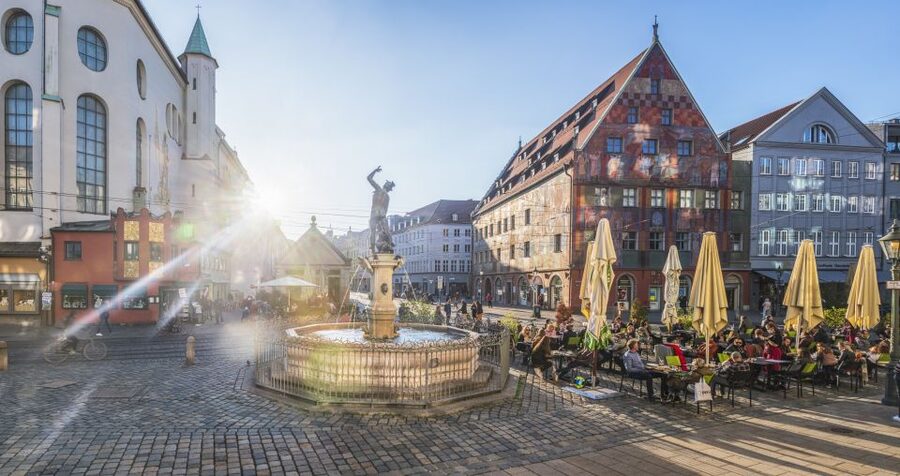
One of the most satisfying parts is how the route uses fountains as visual anchors. You don’t just hear that Augsburg has important water features. You see them, and you learn why they matter.
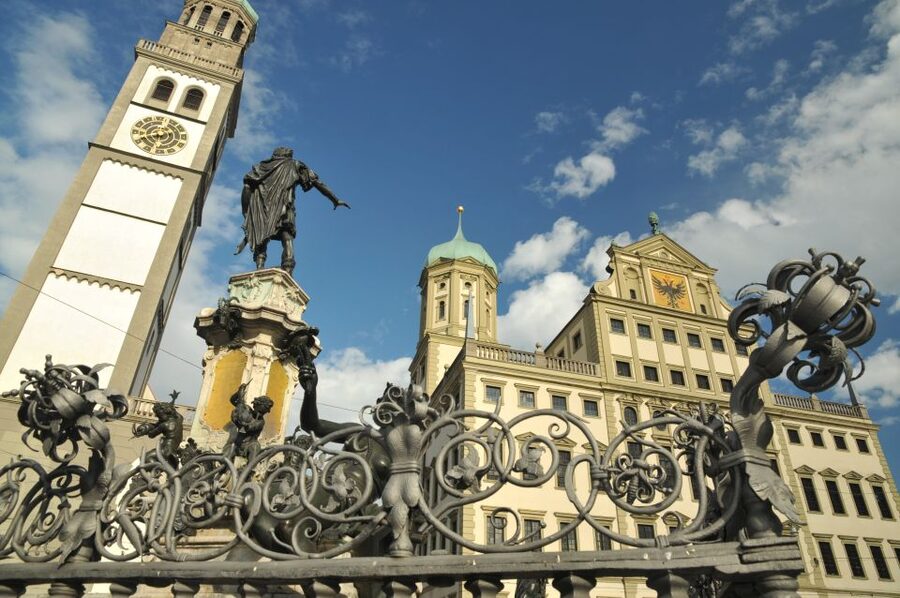
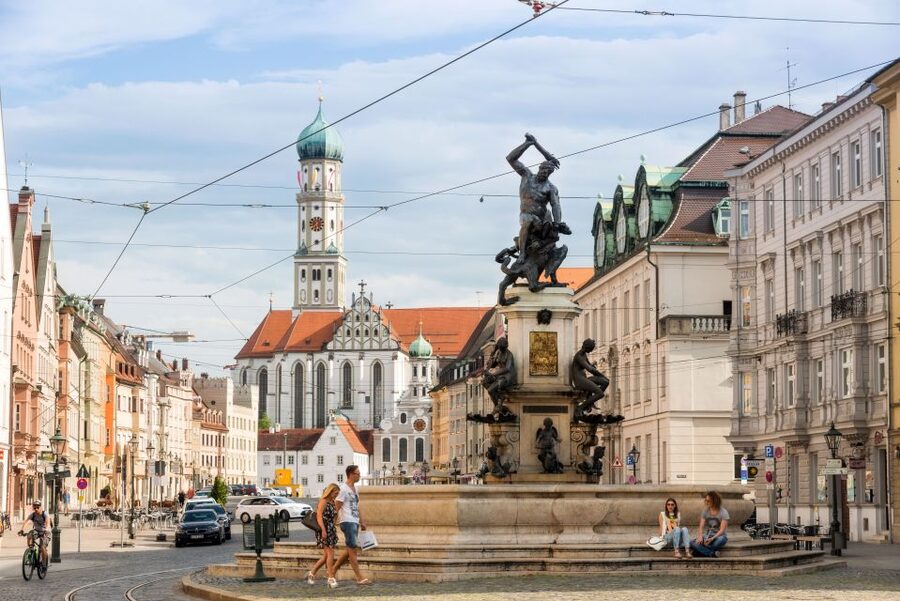
The tour highlights several major fountains, including the Augustus fountain, plus the Merkur and Herkules fountains. Each one is more than a landmark photo. In practice, these fountains help you understand how Augsburg celebrated and used water. They’re where civic pride meets infrastructure, which is a useful theme to keep in your head as you walk.
Here’s the practical trick I’d use: when you reach each fountain, slow down for a moment and look for the connections. Even if you don’t know the technical details yet, you can often sense the logic of the system, like where water would need to travel and how the city would want to showcase it. Your guide fills in the missing pieces so the fountains stop being random decorations and become part of a working plan.
Also, fountains are great for learning because they give you a focal point. It’s easier to remember a route when you can name the “milestones” along the way.
Lech quarter canals: small channels and big meaning
After the downtown highlights, the tour heads to the Lech quarter, where the tone shifts from monumental to intimate. This is where you walk along small historic canals and take in the feel of the city up close.
The description of what you’ll see is very specific: small and historic Lech canals, cobblestone streets, and red-roofed houses. That combination is the real payoff. You get to picture how water moves through the city, not just how it looks from a square.
This segment also helps you understand why Augsburg’s system is more than a museum topic. When you see canals in the neighborhood context, water management stops feeling like something buried underground and starts feeling like part of everyday urban design. Your guide also connects the canals back to the larger UNESCO story, so the walk doesn’t become only scenic.
If it’s raining, expect the walking to feel slower because cobblestones can be slick. Bring practical traction in your shoes, and give yourself extra time to enjoy, not just survive, the surfaces.
The Rotes Tor waterworks stop, and what makes it special
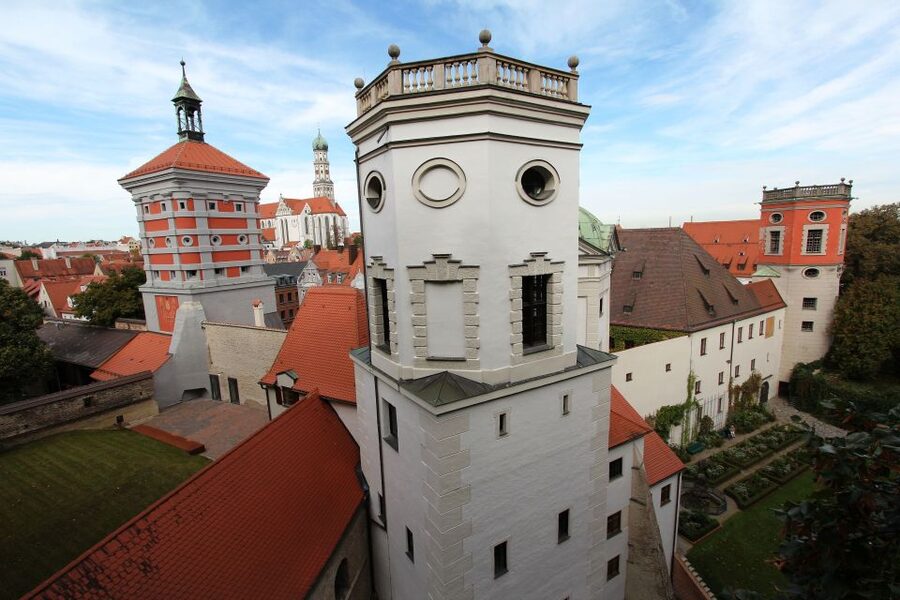
The route culminates at the waterworks at the imposing Rotes Tor. This is the “wow” stop, because it’s described as the oldest existing waterworks in central Europe.
That phrase matters because it sets expectations. You’re not just visiting an attractive old building. You’re seeing something tied to how long Augsburg has managed water systems that kept functioning. Even without technical background, you can appreciate the continuity: this city has been thinking about water for a very long time.
A big practical benefit of placing this stop later in the tour is that you’re ready for it by then. After seeing fountains and canals, the waterworks becomes easier to interpret. You understand what the system is doing, what it needs water for, and why a “waterworks” would be a central point in the network.
Drawbacks here are mostly about comfort. This is part of a walking route, so it works best if you’re willing to stay on your feet for the full 2 hours. If you’re sensitive to standing and walking on cobblestones, plan for that upfront rather than trying to “push through.”
How the optional elysium® audio works (and when it helps)
A nice extra is the optional, free-of-charge elysium® sound amplification system. If you choose to use it, you bring your own smartphone with internet connection plus headphones. That means you do not need to pick up special gear from the start, but you do need to make sure your phone is ready.
When does this help? If you’re in a busy outdoor area or if the guide is speaking a bit farther than you’d like, amplification can make the difference between catching key details and feeling like you missed the important sentence. It’s also helpful when the tour focuses heavily on historical facts, because you don’t want to lose the precision.
If you’d rather travel light, you can skip it. Either way, comfortable shoes and weather-appropriate clothing matter more than any gadget.
Price and value: what you really get for about $20
The tour is priced at 14,00€ plus a 3,00€ administration fee per person, which lines up with the summary figure of around $20 depending on exchange rates.
For value, the key question is what you buy with that money. You’re not paying for entry tickets to attractions, since those are not included. You’re paying for a local guide to connect multiple UNESCO-linked elements into one understandable walk. You also pay for a structured 2-hour experience that gets you from fountain to canal to waterworks without you having to map it all out yourself.
Two hours also hits a sweet spot. Long enough to learn, short enough that you can still enjoy the rest of Augsburg the same day. And because the tour is wheelchair accessible, it’s designed for a range of mobility needs, even though cobblestones always require a bit of realistic planning.
If you enjoy travel where the “story” is tied to physical places, this is a good use of time.
What the guide style feels like on the ground
From the guide experience described, the delivery can be structured and fact-heavy. One guide example named in the information is Brigitte Plonner, described as making Augsburg’s water management understandable with a vivid, clear approach. Another note points out that the guide may focus strongly on historical data and facts, with fewer personal stories.
So here’s how to set your expectations in a way that helps you enjoy it more: arrive curious about how a city managed water, not just how it looked. If you want dates, names of features, and a clear explanation of how the system worked, you’ll likely feel satisfied. If you’re expecting lots of personal storytelling, consider treating the tour like a guided walking lesson with great sights.
Either way, the core strength stays the same: the guide ties the UNESCO system to visible Augsburg, including the fountain stops and the Rotes Tor waterworks.
Who this walking tour suits best
This tour works best if you like:
- city walks where the details teach you something real
- history that’s tied to infrastructure, not just buildings
- photos that you understand after the fact, not before
It’s also a good choice if you’re short on time but want a structured introduction to Augsburg beyond the obvious sights. Because you’ll see multiple parts of the water system in one go, it’s an efficient way to start building your mental model of the city.
If you’re traveling with someone who cares less about technical history, bring them along anyway. The canals and fountains do a lot of the persuasion. The guide’s job is to connect the beauty to the function, and that connection is the point.
Should you book Augsburg’s Water Management System walking tour?
I’d book it if you want a 2-hour, guided, UNESCO-linked walk that turns Augsburg’s water story into real places you can point to later. The fountain stops and the canal walking give you strong visual anchors, and the Rotes Tor waterworks is a genuinely meaningful finale because it’s described as the oldest existing waterworks in central Europe.
Skip it only if you already know the subject and you’re looking for something more hands-on or more anecdote-driven. Based on what’s offered here, this is a guided walking tour that prioritizes explanation and clarity over dramatic storytelling.
If your goal is to understand Augsburg faster and enjoy the city with a better lens, this tour is a smart, solid value.
FAQ
Where does the tour start?
You meet your guide in front of the Tourist Information Center.
How long is the Augsburg water management system walking tour?
The tour lasts about 2 hours.
How much does it cost?
The price is 14,00€ plus a 3,00€ administration fee per person.
What languages are the tours offered in?
The tour is offered in German and English.
Is the tour wheelchair accessible?
Yes, it is listed as wheelchair accessible.
Is entry to attractions included?
No. Entry tickets to attractions are not included.
What should I bring?
Bring comfortable shoes and weather-appropriate clothing.
Does the tour include the optional sound system?
There is an optional elysium® sound amplification system. If you use it, you need your own smartphone with internet connection and headphones.
What is included in the tour price?
Included are the tour guide and the walking tour. The optional elysium® sound system is included if you choose to use it, plus the 3,00€ administration fee.
Is free cancellation available?
Yes, you can cancel up to 24 hours in advance for a full refund.
Fresh on the arrivals board for Augsburg


Walking Tours, compared.

Berlin City walk Government District and Places of Democracy
Read our review →

Berlin’s Best: 2 Hour Walking Tour Third Reich and the Cold War
Read our review →

Browse the lists this tour appears in