
Reviewed · HISTORICAL TOURS
Historical Walking Tour of Augsburg / Historische Führung
Augsburg history shows up on every corner. This 2.5-hour walking tour strings together Rathausplatz, the Fugger story, and the lives of Bertolt Brecht and Leopold Mozart. It ends with time to stretch your legs around Hofgarten.
What I really like is the tour’s focus on turning big names into real places you can point at, from Elias Holl’s Augsburg Town Hall to the neighborhood details that shaped the city. I also like that it keeps the story human, with a guide like Michael described as friendly and able to explain without drowning you in dry facts. You’ll leave with a clearer sense of why Augsburg mattered.
One drawback to consider: the tour runs in German, and in some cases the guide’s voice can be a bit hard to catch from farther back. If you know you need clear audio, stand closer to the front and plan your listening time.
In This Review
- Key things to know before you go
- Rathausplatz to Hofgarten, a focused walk through the city core
- The Augsburg Town Hall and Goldener Saal, why this stop anchors everything
- Perlach Tower for city orientation, then Fugger Square for power and money
- Little Venice canals, then Brechthaus for theater that lives in Augsburg
- Leopold Mozart Haus, how one birthplace adds meaning to the music you know
- Augsburg Cathedral (Dom), Romanesque and Gothic, plus 12th-century stained glass
- Price, timing, and what $22 buys you in real value
- Who should book this Augsburg history walk, and who might skip
- Should you book this Historical Walking Tour of Augsburg?
- FAQ
- How long is the Historical Walking Tour of Augsburg?
- How much does it cost?
- Where do we meet, and when?
- What language is the live guide speaking?
- What’s included in the tour price?
- Is food and drinks included?
- Does the tour run in rain or snow?
- Is this tour suitable for wheelchair users or mobility impairments?
Key things to know before you go

- Rathausplatz meeting at 10:30am with a yellow umbrella
- Augsburg Town Hall by Elias Holl, plus the famous Goldener Saal
- Perlach Tower for a quick city-orientation viewpoint
- Fugger Square, focused on the power of merchant families
- Brechthaus and Leopold Mozart Haus in the same route, connecting arts and Augsburg
Rathausplatz to Hofgarten, a focused walk through the city core
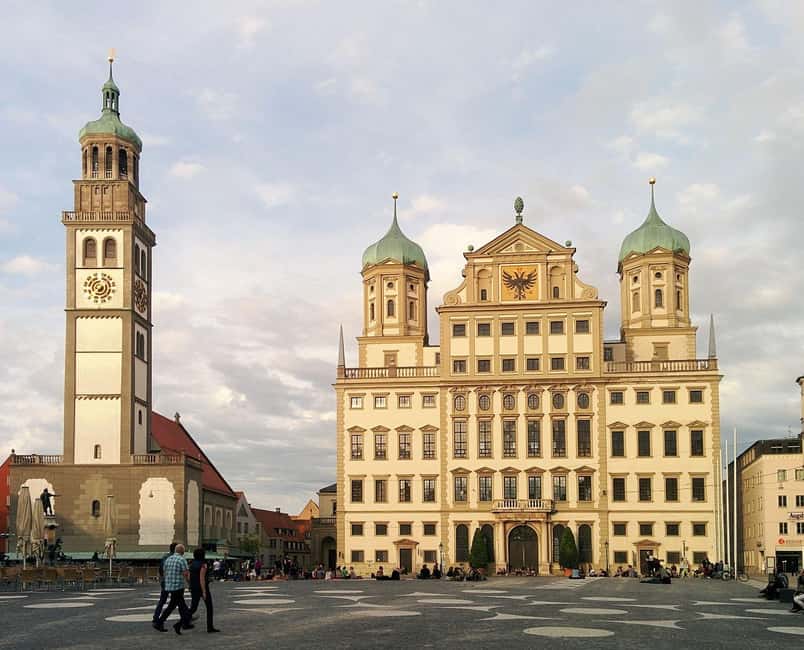
This tour is designed for a very doable historical sweep: you start at the practical city center, then you move through major landmarks without feeling like you’re crisscrossing Augsburg all day. The route is about 150 minutes, and the walking is described as moderate, so you should treat it as a proper stroll, not a sitting tour.
You’ll get a guided storyline, plus a bit of breathing room to look around as you move between stops. The finish in Hofgarten is a nice touch, because it gives you a calm endpoint instead of dropping you back in the busiest traffic of the old town.
The meeting point is very clear: Rathausplatz Augsburg at 10:30am, look for the yellow umbrella. If you want a smoother start, arrive a few minutes early so you can get your bearings before the group settles in.
Also keep your expectations in the right place. This is not a museum-only route, and food is not included, so plan to grab a snack before or after. Bring water and comfortable shoes, and dress for the weather, because the tour does not run when it’s raining or snowing.
More German cities at walking speed:
- Augsburg: Walking Tour with Fuggerei
★ 4.6 · 2,245 reviews - Augsburg’s Water Management System – City Walking Tour
★ 4.5 · 168 reviews - Augsburg: Illuminated Guided Evening Walking Tour
★ 4.6 · 67 reviews
The Augsburg Town Hall and Goldener Saal, why this stop anchors everything
Most Augsburg history tours start with the center for a reason, and Rathausplatz is exactly that anchor. From here you can take in the big public face of the city, then connect it to the people who shaped its wealth and power.
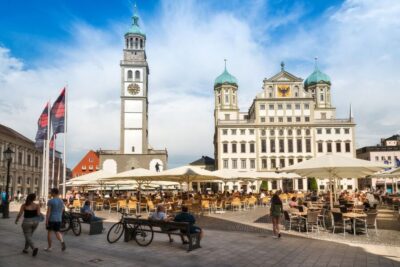
The highlight is the Augsburg Town Hall, a Renaissance masterpiece designed by Elias Holl. This is one of those places where the building itself acts like a time machine, because it’s impressive enough to hold attention even before the guide starts talking details. If you like architecture, you’ll appreciate that the story is tied to a specific designer, not just general “Renaissance times.”
The tour also points you toward the Goldener Saal, which is the kind of named feature that makes the stop feel more vivid. Even if you’re not an expert in art history, the name alone signals that this is a room worth knowing about, and the guide’s explanation helps you understand why.
A practical tip: this is a good moment to check your photos early. After you leave the Town Hall area, you’ll keep moving, and some later stops involve more walking or more interior viewing. So if there’s a façade or square view you want, grab it before the tour pulls you onward.
Perlach Tower for city orientation, then Fugger Square for power and money
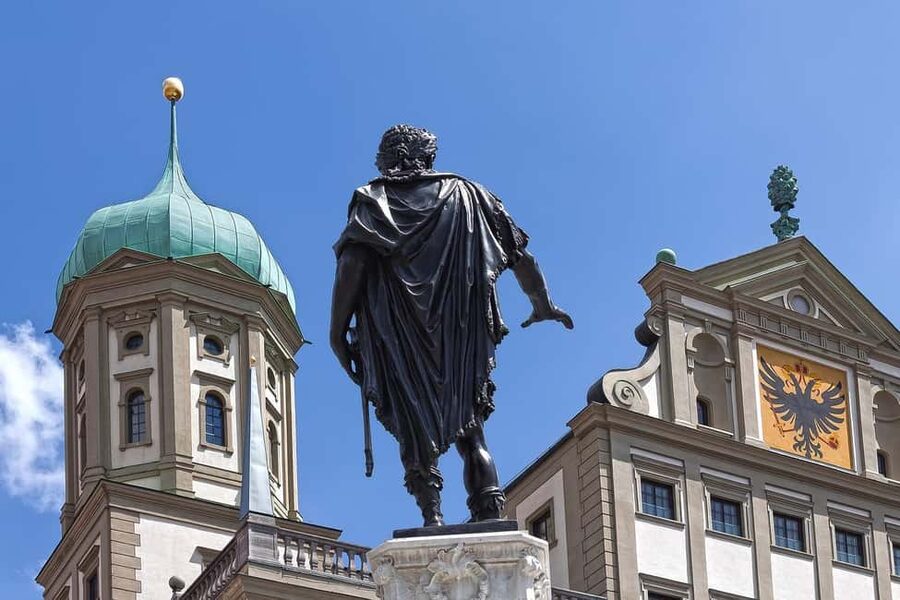
Once you’ve seen the civic heart, the walk shifts to a “see Augsburg from above” moment with the Perlach Tower. The tour frames it as a former watchtower, and the payoff is the panoramic view that helps you understand the city layout.
Even if you never fully memorize a city map, a viewpoint like this gives your brain landmarks to store. You’ll start linking streets and districts to the stories you’re hearing, and that makes later stops easier to follow.
Then comes Fugger Square, where the tour turns from watching the city to explaining who controlled it. You explore the history of Europe’s most powerful merchant families, the Fuggers. The key value here is the way the guide connects influence to place, so you’re not just hearing a name list. You’re seeing how mercantile power could shape governance, culture, and what the city chose to build and celebrate.
If you’re the type of person who likes history in human terms, Fugger Square usually lands well because it’s not abstract. It’s tied to Augsburg’s identity, and it sets up why later cultural stops matter too.
One thing to watch: because Fugger Square is part of the old-town flow, you’ll be moving and regrouping as you go. Stay alert, keep your water accessible, and keep an eye on the group so you don’t drift away during the transitions.
Little Venice canals, then Brechthaus for theater that lives in Augsburg
After the money story, the tour takes you into a visual change of pace with little Venice. The canals here are described as charming and reminiscent of Venice, which makes this section feel lighter while still fitting the overall Augsburg character.
What I like about this stop is that it gives your eyes a break. You’ve been concentrating on major buildings and famous families, and now you get scenery you can absorb without taking notes. It also helps you remember that cities aren’t only monuments. They’re also waterways, streets, and everyday spaces.
From there, the tour heads to the Brechthaus, the birthplace of playwright Bertolt Brecht, now a museum honoring his life and works. This is one of the route’s more emotionally satisfying transitions, because it grounds European modern culture in an address you can actually stand at.
If you think you only know Brecht through a school reading or a title on a list, you’ll probably find this moment gives you a clearer mental picture. The guide’s explanation keeps it from turning into a random museum detour, because it’s framed as part of Augsburg’s story, not a separate topic.
A practical suggestion: this is a good place to slow your pace slightly. Even if you don’t want to linger for a long museum visit, you’ll get more from the stop if you take a moment to look at the building and let the context settle before you move on.
Leopold Mozart Haus, how one birthplace adds meaning to the music you know
Next up is the Leopold Mozart Haus, where Leopold Mozart, father of Wolfgang Amadeus Mozart, was born. It’s now a museum focused on the musical history of the Mozart family.
This stop works well even if you’re not a hardcore classical music person. The reason is simple: the tour uses a personal birthplace to connect a famous name to a specific setting. Instead of treating Mozart as a distant figure, you’re seeing how the family story is rooted in Augsburg.
You also get a satisfying thematic payoff. Earlier, the tour used the Fuggers to show how Augsburg’s power shaped the city. Now it uses Mozart family beginnings to show how the arts and music heritage fit into the same urban identity.
In terms of pacing, this stop also helps balance the route. If you found the political and economic content at Fugger Square a bit heavy, the Mozart stop usually feels more approachable because it’s grounded in people and culture.
For your comfort: since you’ll likely be moving between interior viewing areas and outdoor streets, keep your layers sensible. Interiors can feel cooler, and the walking in between can warm you back up fast.
Augsburg Cathedral (Dom), Romanesque and Gothic, plus 12th-century stained glass
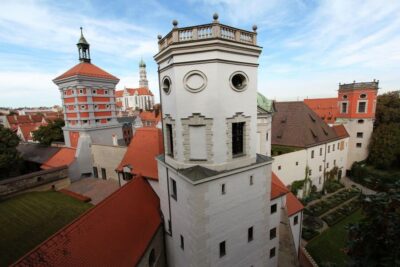
The final major landmark is the Augsburg Cathedral, often referred to as the Dom. The tour highlights that it mixes Romanesque and Gothic elements, which is exactly the kind of contrast that makes a cathedral more than a single style postcard.
Inside, there’s a set of features you should not rush past. The tour specifically points out 12th-century stained glass windows and the detailed bronze door. These are the kinds of details that reward slow looking, so plan to pause and actually look, even if the group keeps moving.
This is also where the tour’s included access matters. You get access to the Augsburg Cathedral, so you’re not left wondering whether you need separate entry or scrambling to find the right desk. It’s a clean “finish strong” moment, because after all the outdoor walking, you get a chance to slow down and absorb something crafted over centuries.
One more practical detail: stained glass is often best when light hits it at the right angle. If the lighting feels flat when you arrive, wait a minute and change position slightly, if you can. Even small shifts can make the colors and lead lines become much clearer.
When you step back out after the cathedral, Hofgarten is waiting as your gentle landing. It’s a good place to decompress, and it also helps you wrap your brain around what you just learned.
Price, timing, and what $22 buys you in real value
At $22 per person for about 2.5 hours, this tour sits in the “solid value” category for a guided experience that includes a major interior stop. You’re paying for guided interpretation, not just entry tickets, and you’re getting multiple anchor points along the way, not just one building.
Here’s what makes the price make sense for your time:
- You see the city’s core landmarks in one loop, from Rathausplatz to the Dom.
- You get the kind of cultural and civic context that you usually only get when someone explains the connections out loud.
- Cathedral access is included, which reduces the hassle of planning your own entry.
The tour is also timed well for a day in Augsburg. 150 minutes is long enough to build meaning, but short enough that you can still eat, browse shops, or visit another place afterward without feeling like you used your whole afternoon.
What you should plan around is the fact that it is German-only. If you don’t speak German, you’ll still be able to follow the building visuals, but you may not catch the story beats. And if the guide is speaking softly on your departure, your best defense is position. Stand where you can hear without craning.
Comfort matters too. Wear shoes that handle cobblestones and uneven sidewalks, bring water, and accept that this is not a wheelchair-friendly route.
Who should book this Augsburg history walk, and who might skip
This tour is a strong fit if you want a guided overview of Augsburg’s identity without turning it into a homework assignment. It’s especially good for you if you like history connected to specific places, not just dates on a timeline.
It also fits well if you’re interested in the Fuggers and in the arts side of Augsburg through Brecht and the Mozart family. The mix of civic power and creative legacy is a smart pairing, because it prevents the tour from feeling one-note.
You might want to choose something else if:
- You need a fully accessible route, because the tour is not suitable for mobility impairments or wheelchair users.
- You are relying on audio clarity and have trouble catching speech in groups, since volume can vary.
- You do not speak German at all, because the guide language is German.
If you’re building a first visit to Augsburg, this walk can act like your city primer. It gives you orientation for what to follow up with on your own after the tour ends in Hofgarten.
Should you book this Historical Walking Tour of Augsburg?
Yes, if your ideal day includes a guided walk, landmark stops, and stories that connect big names to Augsburg’s streets. At $22, the value is strong because you get guided interpretation plus cathedral access, all wrapped into a 150-minute loop that ends in a relaxing green space.
Book it if you want the Goldener Saal and Elias Holl on your route, and if you’re curious about how the Fuggers shaped the city and why Brecht and the Mozart family matter here. Just make sure you’re comfortable with moderate walking, that you can handle a German-only guide, and that you plan for your own food afterward.
FAQ
How long is the Historical Walking Tour of Augsburg?
The tour lasts 150 minutes, which is about 2.5 hours.
How much does it cost?
It costs $22 per person.
Where do we meet, and when?
You meet at 10:30am at Rathausplatz Augsburg. Look for the yellow umbrella.
What language is the live guide speaking?
The live tour guide is German.
What’s included in the tour price?
You get a guided walking tour of Augsburg’s historic landmarks and access to the Augsburg Cathedral.
Is food and drinks included?
No, food and drinks are not included.
Does the tour run in rain or snow?
The tour operates in all other weather conditions, but it does not run when it is raining or snowing.
Is this tour suitable for wheelchair users or mobility impairments?
No, it is not suitable for people with mobility impairments or for wheelchair users.
Centuries Per Block
- Leipzig: City History Canal Sightseeing Tour on a Motorboat
★ 4.7 · 7,671 reviews - Berlin: Natural History Museum Entrance Ticket
★ 4.6 · 3,382 reviews - Leipzig: 1.5-Hour Historical Walking Tour in German
★ 4.7 · 2,217 reviews - Berlin: 3-Hour World Heritage Cruise to Potsdam
★ 4.5 · 1,569 reviews
Fresh on the arrivals board for Augsburg
Historical Tours, compared.
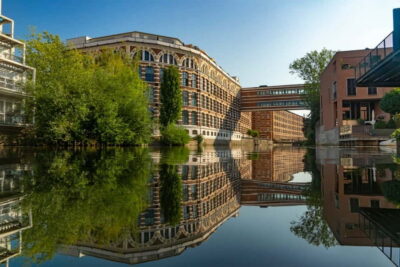
City History Canal Sightseeing Tour on a Motorboat
Read our review →

Browse the lists this tour appears in