
Reviewed · HISTORICAL TOURS
Augsburg: Historical Highlights Private Walking Tour
Two thousand years, one walk. This private Augsburg tour strings Roman roots, the Fuggerei, and the 6-floor Town Hall into a tight 2-hour route with a live guide.
I like the smart pacing. You get the big landmarks, then the guide turns them into stories you can actually remember.
I also like that it is truly private. Your guide can adjust the stops to match what you care about most, instead of a one-size-fits-all script.
The main drawback to consider is that it is not a sit-down experience, and it is not suitable for wheelchair users. Add in that entrance fees are not included, and you may need extra time if you want to go beyond what is seen on the sidewalk.
In This Review
- Key things I’d highlight before you go
- Augsburg in two hours, why this private walk works
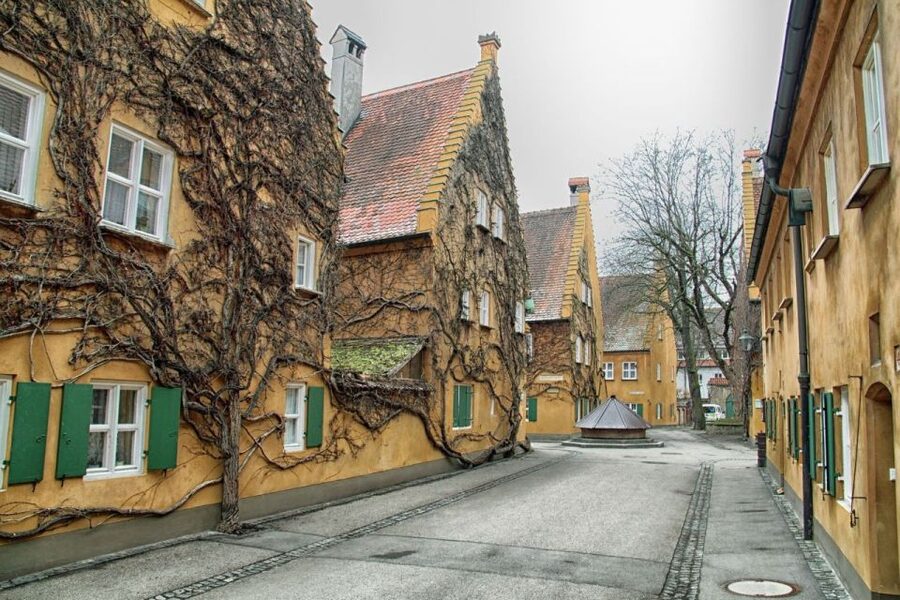
- Meeting at the Fuggerei and tracing 15 B.C. Roman roots
- Augsburg Town Hall and spotting the world-first six-floor surprise
- The Fuggerei and the Fugger social model in practice
- Cultural stops for Mozart’s father and Berthold Brecht
- SchaezlerPalais finish, a landmark that survived World War II without a scratch
- Price and value for a group up to 15
- Should you book this Augsburg private highlights tour?
- FAQ
- Where do I meet for the tour?
- How long is the Augsburg historical highlights walking tour?
- Is this a private tour or a group tour?
- What is the price?
- Which languages are available for the live guide?
- Are entrance fees included?
- What is the cancellation policy?
- Is the tour wheelchair accessible?
Key things I’d highlight before you go
- Start at the Fuggerei, right in the heart of one of Augsburg’s most distinctive sights
- Roman Augsburg starts in 15 B.C., with context for how a colony grew into a Roman provincial capital
- Town Hall is the world-first six-floor building, and the guide helps you read what you are seeing
- Fuggers and the social settlement, a founder story that feels real, not like a museum lecture
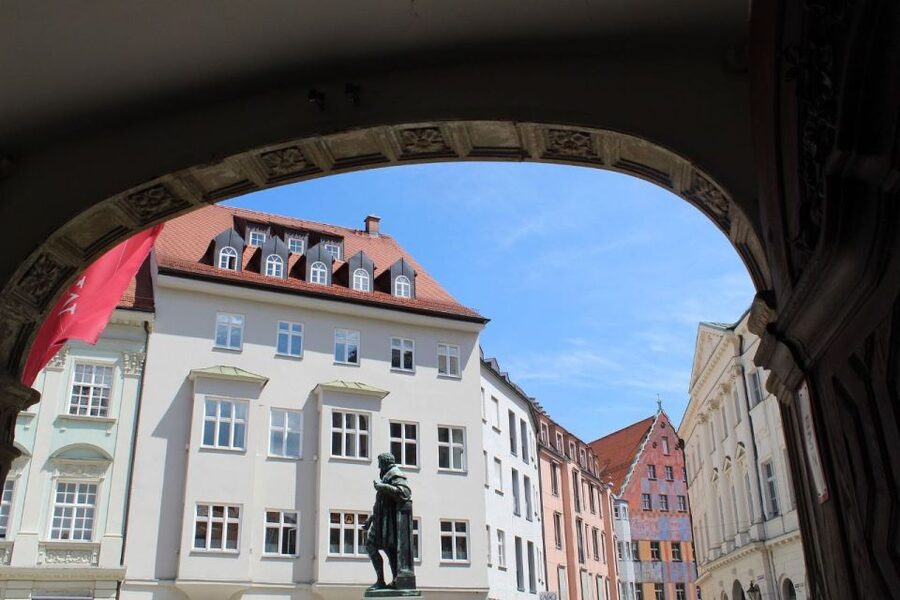
- Mozart’s father and Berthold Brecht, culture stops that link famous names to places
- Finish at SchaezlerPalais, a landmark that survived World War II without a scratch
Augsburg in two hours, why this private walk works
Augsburg can feel like a “take your time” city, but this tour is built for short stays. In about 2 hours, you get a clear thread through the city’s biggest eras, from its Roman beginnings to modern Augsburg in Swabia. The private format matters here, because you can ask questions as you go, not at the end.
I also like that the tour is guided by a local professional guide who talks in a practical way. You are not just hearing facts, you are learning why each place got important, and what it says about Augsburg’s priorities over time. The guide is fluent in German and English, so you can pick the language that lets you focus on details instead of translating in your head.
One more practical point: this is a walking tour with major highlights grouped efficiently. If you want to sprint through everything, this fits. If you want a slow museum day, you may want a different plan and add this as your orientation tour.
More German cities at walking speed:
- Augsburg: Walking Tour with Fuggerei
★ 4.6 · 2,245 reviews - Augsburg’s Water Management System – City Walking Tour
★ 4.5 · 168 reviews - Augsburg: Illuminated Guided Evening Walking Tour
★ 4.6 · 67 reviews
Meeting at the Fuggerei and tracing 15 B.C. Roman roots
You meet at the Fuggerei, and that is a great choice. It is not a random “check in here” point. It puts you at a place tied to social history and local identity, and it helps you understand Augsburg as something lived in, not only preserved.
From there, the guide sets up Augsburg’s origin story: the city began as a Roman colony dating to 15 B.C. You also learn how it grew into the capital of a province in the Roman Empire. That is the kind of context that helps when you later look at civic buildings, walls, and street patterns. Even if the Roman layers are not always visible, the guide gives you a mental map of what Roman rule likely meant for Augsburg’s growth.
Then the tour connects those early centuries to the Augsburg you can walk today. Augsburg is now the capital of the Swabia region in Bavaria, and it is described as Germany’s third oldest city. The tour does a good job of keeping that chronological jump manageable. You are not asked to remember a timeline. You are shown a route where the story stays attached to real places.
What to expect on the ground: you will be standing and walking between key sights, with enough time for the guide to point out what to look for. Dress for weather, because you will be outside for the whole 2-hour window.
Augsburg Town Hall and spotting the world-first six-floor surprise
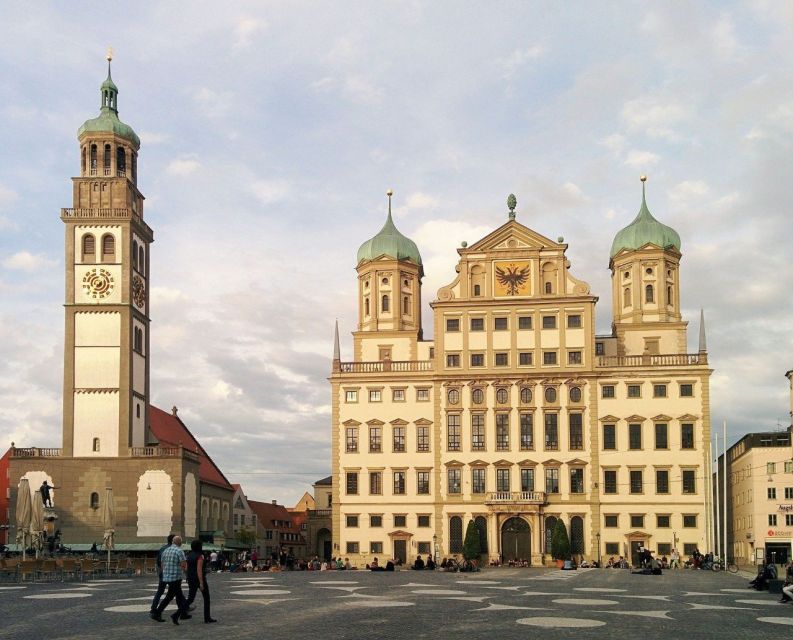
One of the headline stops is the Augsburg Town Hall, and it comes with an unusual detail: it is the first building in the world to have 6 floors. That is the sort of fact that would normally be a trivia line. Here, the guide helps you understand why it is notable, meaning it is not only tall, it signals ambition, civic power, and an era when Augsburg’s governance needed serious space.
As you get closer, you can use the guide’s framing to look past plain architecture. Think about the Town Hall as a statement: who ran the city, where decisions happened, and why Augsburg wanted to build upward. When a place is known for a structural “first,” the guide usually points out features you might otherwise miss, so you can appreciate the building without needing architectural training.
This is also one of the stops where the private format shines. If you care more about civic history, you can lean into that. If you care more about daily life in historical cities, ask how a Town Hall building shaped work, trade, and public order. Either way, you leave with a better sense of how Augsburg functioned, not only how it looked.
Timing-wise, Town Hall tends to be a highlight you can absorb quickly within a short walking tour. Entrance fees are not included, so if the tour expects you to view key elements from outside or in public areas, plan your priorities accordingly.
The Fuggerei and the Fugger social model in practice
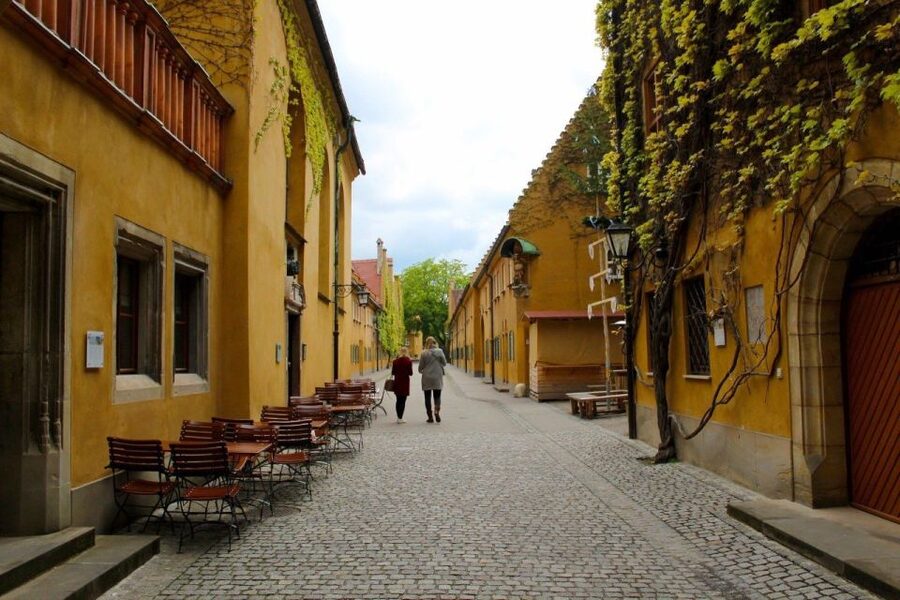
The Fuggerei is more than a pretty historic site. It is tied to the Fugger family, who founded the oldest social settlement in world history. That phrase is bold, but it points to a real idea: some cities built wealth, then had to decide what to do with the people left behind.
On this walk, the guide explains the Fugger legacy in a way that stays grounded. You do not just hear a founder name. You hear why the settlement mattered and how it fit Augsburg’s status over time. That makes your next questions easier, like why a city’s rulers would invest in a social system, and how that approach might reflect Augsburg’s identity.
You’ll also be helped by the fact that the tour is planned to connect this stop to other major cultural points. Seeing Fuggerei early in the walk helps you understand later references to Augsburg as a place shaped by both governance and influential families. In other words, it acts as an anchor.
Practical tip: if you want to spend extra time at Fuggerei beyond what is covered on the 2-hour route, build buffer time. The tour is designed to cover multiple highlights, and it does not include entrance fees, so any site access beyond the basic viewing may cost extra.
Cultural stops for Mozart’s father and Berthold Brecht
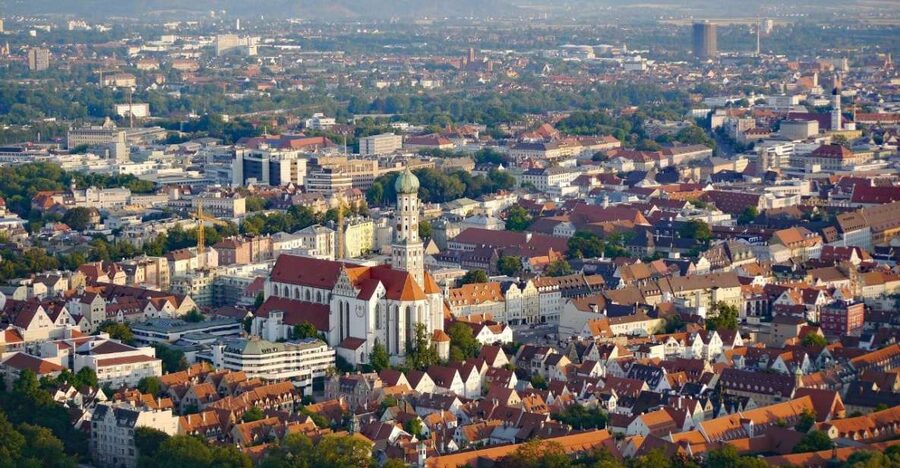
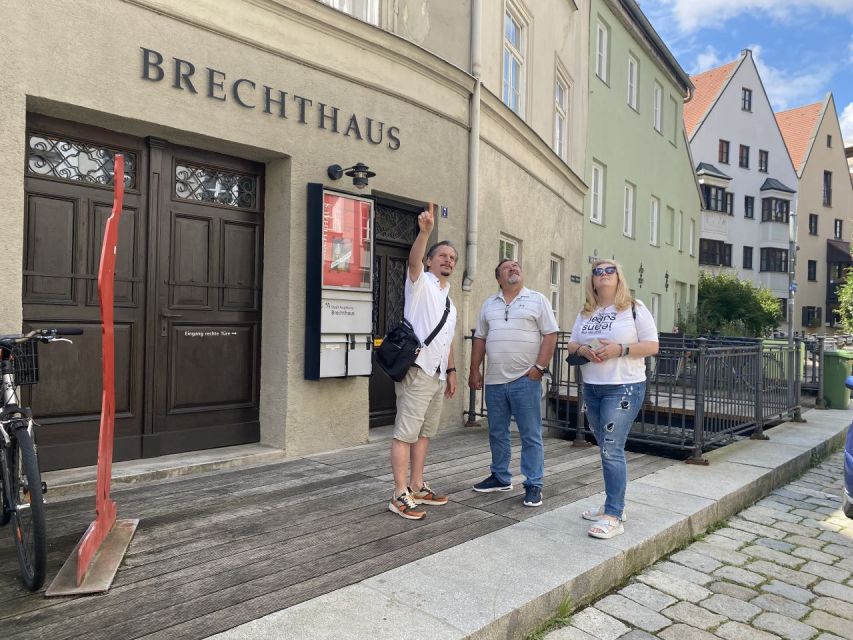
Augsburg earns its fame partly through ideas, not just buildings. This tour includes two culture-linked birthplaces: Wolfgang Amadeus Mozart’s father and Berthold Brecht.
These stops work best when you treat them as wayfinding for the mind. The guide helps you connect the literary and music worlds to physical locations. Instead of learning a name, you learn how cities like Augsburg can produce people whose work outlives their hometown. You are not getting a full biography. You are getting a sense of why these places matter enough to be remembered in street form.
Why this is valuable for you: it is an easy way to make history feel personal. You can like one culture more than the other, but both stops are built to broaden your view of Augsburg. If you already know these figures, you get the location payoff. If you do not, the guide provides just enough framing to make the names stick.
Also, private tours let you ask side questions in the language you choose. If you are traveling with someone who loves literature more than music, you can shift the emphasis without derailing the whole walk.
More centuries per city block:




SchaezlerPalais finish, a landmark that survived World War II without a scratch
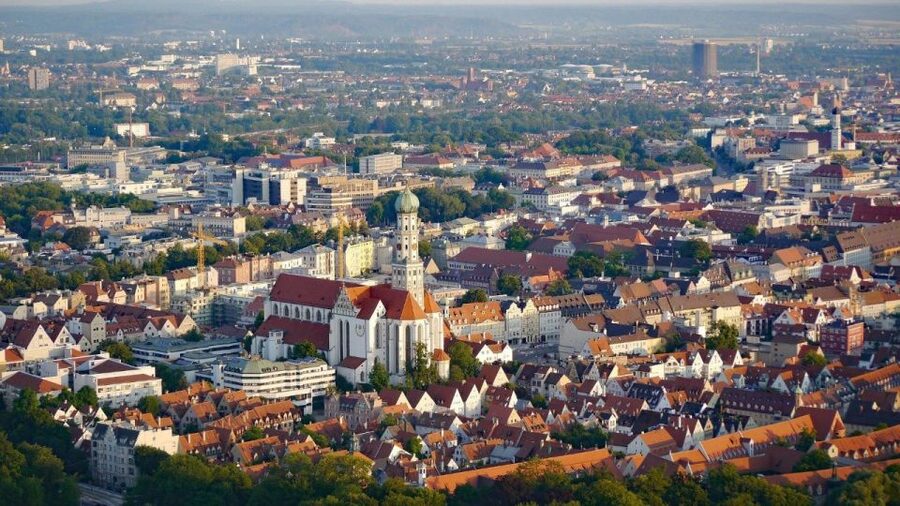
The tour ends at SchaezlerPalais, which survived World War II without a scratch. That fact does more than add drama. It helps you understand how layers of Augsburg’s built environment survived, changed, or stayed. When you finish at a landmark with that kind of endurance, the route feels complete. You start with Roman roots and the long arc of civic development, then close with a reminder that the modern world tested these streets and buildings too.
SchaezlerPalais is a fitting final stop for photography and a calm landing spot. It is also a good moment to ask the guide any last questions, because you still have time to adjust and focus. If you are deciding where to go next after the tour, the guide’s perspective at the end can be useful for choosing which neighborhoods match your interests.
One practical note: if you want to extend the day, this is a logical endpoint. You will likely know what “type” of Augsburg you have been seeing, so choosing your next walk becomes easier.
Price and value for a group up to 15
The price is $362 per group, up to 15 people, for a 2-hour private tour. That pricing structure is typical for private guided experiences, but value depends on your group size.
If you have 2 to 4 people, the per-person cost can feel high compared with larger-group tours. One thing I would keep in mind is that a private tour works best when your group actually wants personalization, quick questions, and a guide who can adapt to your pace. If you are the type who loves asking what you are looking at, you will feel the value. If you mostly want a basic checklist, you might feel the cost more sharply.
If your group is closer to 10 to 15 people, the math shifts toward fairness fast, because the guide cost is shared. For families or small friend groups who want a single guide instead of splitting up, it becomes a strong deal. And because the highlights are well-focused into 2 hours, you are not paying for hours of transit or waiting.
Entrance fees are not included, so if you plan to enter any sites during the walk, budget for that separately. The good news is that for a walking highlights tour, you can often enjoy a lot from viewing key exteriors and key public areas, especially when the route is designed around iconic landmarks.
Should you book this Augsburg private highlights tour?
Book it if you want an efficient orientation to Augsburg that still feels human. I think it is a great choice for first-time visitors, people who like connecting famous names to places, and anyone who wants a guide to adjust the plan on the spot. The combination of Roman beginnings at 15 B.C., the civic oddity of the 6-floor Town Hall, and culture stops for Mozart’s father and Berthold Brecht makes this more than a standard sightseeing walk.
Skip it or consider a different format if you need wheelchair access. This tour is not suitable for wheelchair users, and it is designed for walking between multiple sights in a short time.
If you are price-sensitive, do a quick reality check. Ask yourself whether you will use the private advantage: asking questions, tailoring the stops, and getting your guide to focus on what you care about. If yes, this is likely money well spent for a memorable 2 hours. If no, you may want a cheaper group option.
FAQ
Where do I meet for the tour?
You meet at the Fuggerei.
How long is the Augsburg historical highlights walking tour?
The duration is 2 hours.
Is this a private tour or a group tour?
It is a private guided tour for your group.
What is the price?
The price is $362 per group, up to 15 people.
Which languages are available for the live guide?
The live tour guide is available in German and English.
Are entrance fees included?
No, entrance fees are not included.
What is the cancellation policy?
You can cancel up to 24 hours in advance for a full refund.
Is the tour wheelchair accessible?
No, it is not suitable for wheelchair users.
Fresh on the arrivals board for Augsburg




Historical Tours, compared.

City History Canal Sightseeing Tour on a Motorboat
Read our review →

Browse the lists this tour appears in