
Reviewed · GUIDED WALKS IN BERLIN
All-in-One Berlin Highlights on Foot: Private Walking Tour
Berlin makes sense fast on foot. This private 3-hour highlights walk is built for time-saving orientation, and I really like how the guide uses clear explanations to connect the sites to the bigger story, from Cold War flashpoints to modern democracy, including the Brandenburg Gate. One catch: the schedule is tight, so if you want to linger, plan that some stops are quick photo and reflection moments.
I also like that this isn’t just a checklist. You spend real time at places that shaped Berlin’s choices after World War II, and the narration helps you understand what you are seeing instead of just snapping pictures. If your guide happens to be Joana, you’ll likely get a very detailed line through the era, which helps when the history feels complicated.
One more practical note: this is a walking tour that mixes stunning architecture with heavy memorial stops. It’s meaningful, but it can feel intense, so wear comfy shoes and pace yourself if you need breaks.
In This Review
- Key takeaways before you go
- How this 3-hour Berlin walk gives you instant orientation
- The smart start: walking up to Brandenburg Gate
- Reichstag Building: modern democracy with a darker shadow
- Holocaust Memorial: a short visit that requires room to breathe
- Checkpoint Charlie: Cold War tension at street level
- Topography of Terror: where Nazi power meets the Cold War
- Fuhrerbunker: a grim last chapter, kept brief on purpose
- Museum Island: architecture, UNESCO, and a calmer shift
- Bebelplatz and Nazi book burning: history you can feel in the streets
- Neue Wache: memorial for victims of wars and tyrants
- Unter den Linden: a short stroll down Berlin’s royal mile
- Gendarmenmarkt: a grand finish with architecture you can’t ignore
- The value of having a guide do the talking
- Price and what you are really paying for
- Who should book this Berlin highlights on foot tour
- A few practical tips so the 3 hours feel comfortable
- Should you book it?
Key takeaways before you go
- A focused 3-hour route that strings together major Berlin landmarks without the usual wandering
- Time-saving navigation help so you spend less time figuring out where to go next
- Memorial stops with real context, especially at the Holocaust Memorial and Topography of Terror
- Big-city highlights plus cultured detours, from Museum Island to Gendarmenmarkt
- A private group experience, so your questions get answered in real time
- Few or no ticket hassles, with the Reichstag visit being the main exception
How this 3-hour Berlin walk gives you instant orientation
Berlin can feel like a puzzle at first. The city has layers stacked on top of layers, and without a guide you can end up seeing individual sights while missing how they connect. This tour is designed to solve that problem fast. In about three hours, you move through a concentrated corridor of landmarks that explain how Berlin went from dictatorship and war to division, then to reunification and a new national identity.
You’ll notice the pacing early on. Stops are short enough to keep the flow, but long enough to feel like you are actually at the site, not just passing by. The “on foot” part matters too. You get street-level perspective on Berlin’s scale, how neighborhoods meet, and how quickly the mood can change from celebratory architecture to grim memorial space.
The best part is the way the guide turns each location into a point on a timeline. That is what makes the tour useful for first-time visitors and also for people who have read a little about Berlin but still feel fuzzy on how everything fits together.
More Guided Walks in Berlin
- Discover Berlin Half-Day Walking Tour
★ 5.0 · 9,624 reviews - Berlin City walk Government District and Places of Democracy
★ 4.7 · 8,467 reviews - Berlin: Third Reich & Cold War Guided Walking Tour
★ 4.9 · 8,378 reviews
The smart start: walking up to Brandenburg Gate
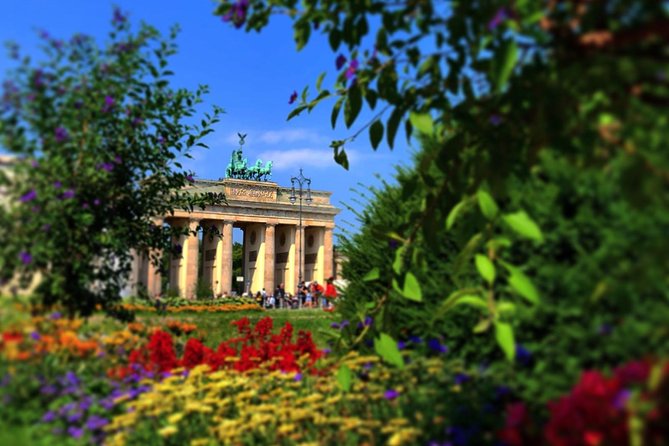
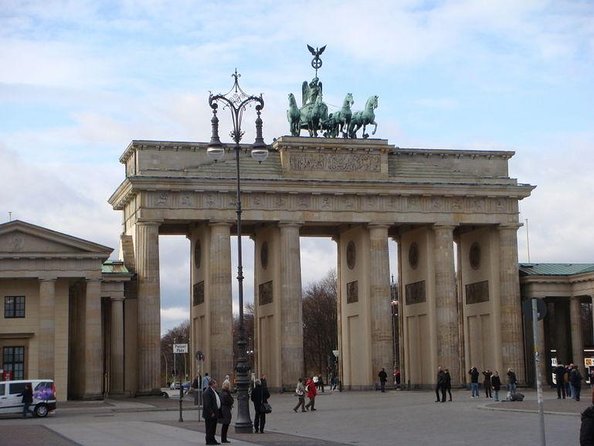
The tour begins at Am Lustgarten 1, and the opening stop is the Brandenburg Gate at Pariser Platz. This is one of those places where you can’t help but slow down. Even if you only know it as an icon from photos and history books, being there in person gives it weight.
You’ll walk through the gateways and get the story behind why it became Germany’s most important cultural monument. The time is about 15 minutes, so think of it as enough time to absorb the symbolism and get a few good angles, not enough time for a long, separate photo session.
A small tip for your experience: use the first stop to reset your expectations for the rest of the walk. The Gate is a “look forward” moment, then the tour shifts into political scars, Cold War drama, and the cost of ideology.
Reichstag Building: modern democracy with a darker shadow
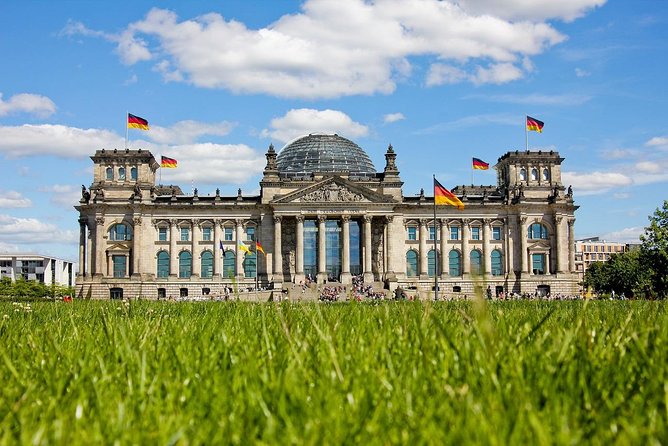
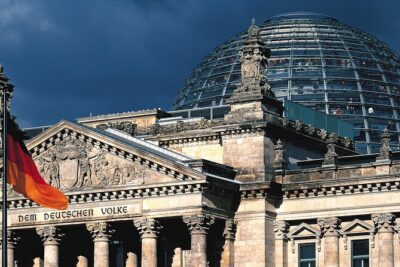
Next comes the Reichstag Building, with about 10 minutes at the site. This is the German parliament building, and it carries a heavy historical echo. You’ll hear how it was burned after Hitler rose to power, and how it became a symbol of modern German democracy.
Important practical note: entry is not included for the Reichstag building. That means you are likely standing in the surrounding area rather than going inside on this tour. If you specifically want to go in or see particular parts, you would need to plan that separately.
The short stop works in your favor though. You get to understand the symbolism without spending your whole day waiting or paying for additional entry.
Holocaust Memorial: a short visit that requires room to breathe
Then the tour moves to the Memorial to the Murdered Jews of Europe, commonly called the Holocaust Memorial. You get around 15 minutes here, and the time is well chosen. This is not a place that rewards rushing. The concrete stelae create a field that feels disorienting on purpose, and the guide’s commentary helps you connect what you see to what it represents.
You’ll walk the space and hear about the atrocities of National Socialism, but you will also get pointed toward the everyday courage of the persecuted. That matters because it stops the story from becoming only statistics. It also helps you process the memorial as a human experience, not just a visual landmark.
If you’re traveling with teens or you know someone who gets restless at memorials, this is exactly the kind of stop where a good guide makes the difference between a blank stare and actual understanding.
Checkpoint Charlie: Cold War tension at street level
After that, you’ll reach Checkpoint Charlie, with about 10 minutes at the spot. This is the frontline location where East and West confronted each other during the Cold War. You’ll hear how spies operated in the area and how US and Soviet tanks faced off in 1961.
What’s useful about this stop on a walking tour is scale. Checkpoint Charlie looks like a normal city corner until you learn what was happening there. Hearing the context while standing in the street makes it feel real, not abstract.
Drawback consideration: this is still a popular tourist area. You can see why, but you might also feel like it is a bit chaotic compared with the memorial sites nearby. Give yourself a moment to focus on the story the guide is sharing, and you’ll get more out of it.
More German cities at walking speed:


Topography of Terror: where Nazi power meets the Cold War
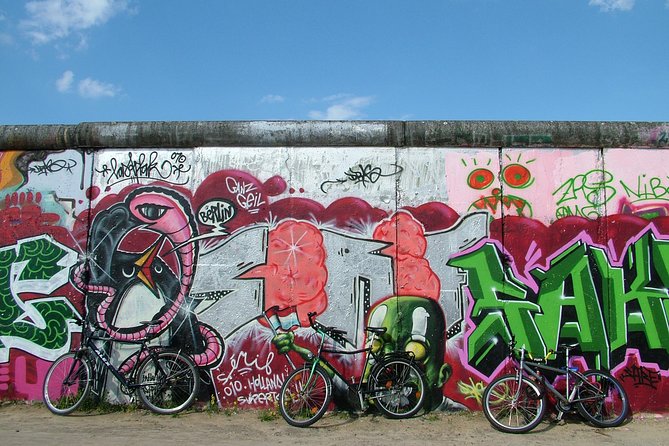
Next up is Topography of Terror, also around 15 minutes. This stop is hard, but it is one of the most important ones on the whole route. You’ll see the former headquarters of the SS and Gestapo, plus excavated torture cells. You also get face-to-face context for the brutal Cold War symbol of the Berlin Wall.
Even without going deep into museum-style exhibits, this location communicates power through geography and remains. The guide’s commentary helps you understand what the site meant then, and how Berlin’s division turned yesterday’s trauma into today’s political reality.
If you are sensitive to graphic historical details, this is the part where you might want to take a breather. The tour time is capped, so you can step back if you need to. Use the short stop structure as a safety feature, not a limitation.
Fuhrerbunker: a grim last chapter, kept brief on purpose
At the Fuhrerbunker site, you’ll have about 10 minutes. This is where history’s most notorious criminal committed suicide at the end of WWII. It’s a small stop in time, but it carries an enormous moral weight.
The guide’s framing matters here because otherwise it can feel like a random historical marker. With the explanation, it becomes the end of an arc you’ve been hearing throughout the walk: dictatorship, war, collapse, and the way Berlin had to rebuild its identity afterward.
Museum Island: architecture, UNESCO, and a calmer shift
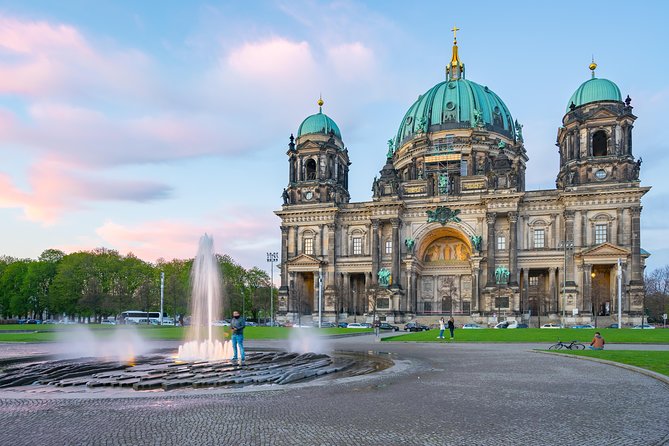
Then the tour reaches Museum Island, with about 10 minutes. This is a UNESCO-listed World Heritage Site, and it’s a strong contrast after the darker sites. You’ll see the Old Museum, the Berlin City Palace, the Berlin Cathedral, and more.
This is where the guide’s narrative becomes practical for your future. Museum Island is the kind of place where visitors often plan a museum day but underestimate how much planning it takes. After walking by these buildings with context, you’ll have a better sense of what each institution represents and which direction you might want to go next.
Drawback: 10 minutes is just a taste. If you love museums, you will probably want to add independent time later.
Bebelplatz and Nazi book burning: history you can feel in the streets
At Bebelplatz, you get about 10 minutes. You’ll see the buildings tied to Frederick the Great’s 18th-century Berlin, and you’ll also visit the site of the Nazi book burning on May 10, 1933.
This is one of those stops where the setting does a lot of work. The city looks like a city, and that makes the act feel more chilling, because it shows how cultural destruction can be carried out right in the middle of everyday life.
If you want a single sentence to remember from Berlin’s postwar story, this stop helps you understand why reunification, free thought, and democratic values became more than slogans.
Neue Wache: memorial for victims of wars and tyrants
Next is Neue Wache, around 10 minutes. Here you acknowledge victims of two world wars and those murdered at the orders of tyrants at Germany’s central national war memorial.
This stop is emotionally different from the Holocaust Memorial and Topography of Terror. It feels more “national reflection,” even though it is still deeply tied to the human cost of violence and dictatorship. The guide’s commentary keeps it grounded so you understand why the memorial exists, and what it asks you to remember.
Unter den Linden: a short stroll down Berlin’s royal mile
Then comes a quick 5-minute stroll on Unter den Linden, Berlin’s historically important boulevard often described as a royal mile. This short segment helps you connect the political and memorial stops to the city’s grand visual language.
Even in a brief time, you start to see why Berlin’s central streets became stages for power. The architecture and the street geometry make it feel like history was always meant to be seen here.
Gendarmenmarkt: a grand finish with architecture you can’t ignore
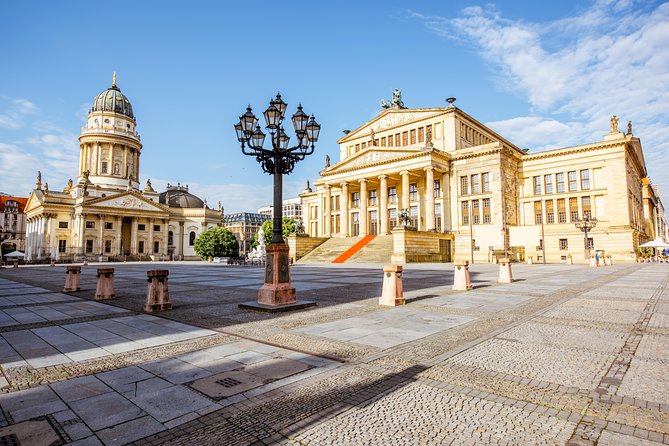
The last major named stop is Gendarmenmarkt, around 10 minutes. You’ll see the French and German domes and the Concert House, plus enjoy the architectural unity of this square.
This ending matters. After walking through serious history for much of the morning or afternoon, the finish gives you a place to reset, look around, and breathe. It also gives you something positive to carry with you as you head toward the tour’s end near Brandenburg Gate.
The value of having a guide do the talking
A walking tour like this lives or dies on interpretation. When the guide explains why a building burned, what a memorial layout is trying to do, or how Cold War tension played out street by street, you stop treating Berlin like a photo album and start treating it like a real story.
I especially like the way the tour uses commentary to make transitions clear. You move from one era to another quickly, but you are never totally left alone to connect dots. That is what people mean when they call the tour masterful for complicated history. It turns a jumble into a timeline.
Practical tip: if you have one or two questions you’re nervous about, bring them. Ask about how Berlin’s postwar identity was reshaped or what to prioritize on a day after this tour. A good guide can point you to smart next steps based on what you care about.
Price and what you are really paying for
At $223.24 per person for a private 3-hour tour, the price might look steep if you compare it to generic group walking tours. But the value is in the structure. You are paying for a professional local guide, English commentary, a route designed to cover key sites efficiently, and the private format where your pacing and questions can actually matter.
Also, because entrance fees are mostly not required for the included stops, you are mostly buying time and expertise instead of adding a pile of ticket costs. The big exception is the Reichstag building, where entry is not included.
If you are traveling as a small group, the fact that group discounts are offered can make the per-person cost feel more reasonable. And if you only have a half day to build context before you start exploring on your own, this tour can save you from wasting hours trying to interpret what you’re looking at.
Who should book this Berlin highlights on foot tour
You’ll likely love this tour if:
- You are in Berlin for the first time and want a fast orientation of major historical sites
- You prefer to walk between sights rather than spend your day on transit
- You want clear commentary that helps you connect political history, Cold War events, and memorial meaning
- You like the mix of architecture and reflection, including Museum Island and Gendarmenmarkt
You might skip it or add something else if:
- You want longer visits inside major museums or you plan a dedicated Reichstag dome visit
- You dislike walking for extended stretches or prefer a slower pace with fewer stops
- You would rather keep memorial sites optional, because the route includes some intense history
A few practical tips so the 3 hours feel comfortable
Bring comfortable walking shoes. The tour is paced for efficiency, so you should expect a lot of standing and moving between spots.
Dress for the weather. Berlin can swing quickly, and because this is an outdoor walking route, you will feel it.
If you want the most from the memorial stops, slow down mentally even when the schedule moves quickly. Let the guide’s explanation land first, then take photos if you want them.
Finally, keep an open plan for what comes next. After this route, you will likely want to return to at least one area, especially if Museum Island or Topography of Terror sparked your interest.
Should you book it?
If your goal is to understand Berlin in one focused afternoon, I think this is a strong choice. The biggest win is the guided connection between sites, so you don’t just see landmarks, you learn why they matter. It is also good value for a private experience because entrance fees are mostly not part of the deal.
Book it if you want a structured, efficient highlights route that still gives real time at key memorials and historic checkpoints. Consider pairing it with extra self-guided time for any location you want to linger on, especially if Reichstag is on your personal must-do list.
Fresh on the arrivals board for Berlin
Guided Walks in Berlin, compared.
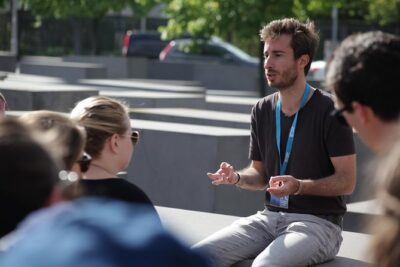

Berlin City walk Government District and Places of Democracy
Read our review →
Berlin’s Best: 2 Hour Walking Tour Third Reich and the Cold War
Read our review →
Third Reich Berlin: Hitler and WWII Walking Tour
Read our review →
Browse the lists this tour appears in