Reviewed · TICKETS
THE WALL: asisi Panorama Berlin Ticket
You can almost hear the Wall again. I like this ticket most for the 4-meter-high visitor’s platform and the realistic panorama scenes, which make a hard subject feel startlingly close.
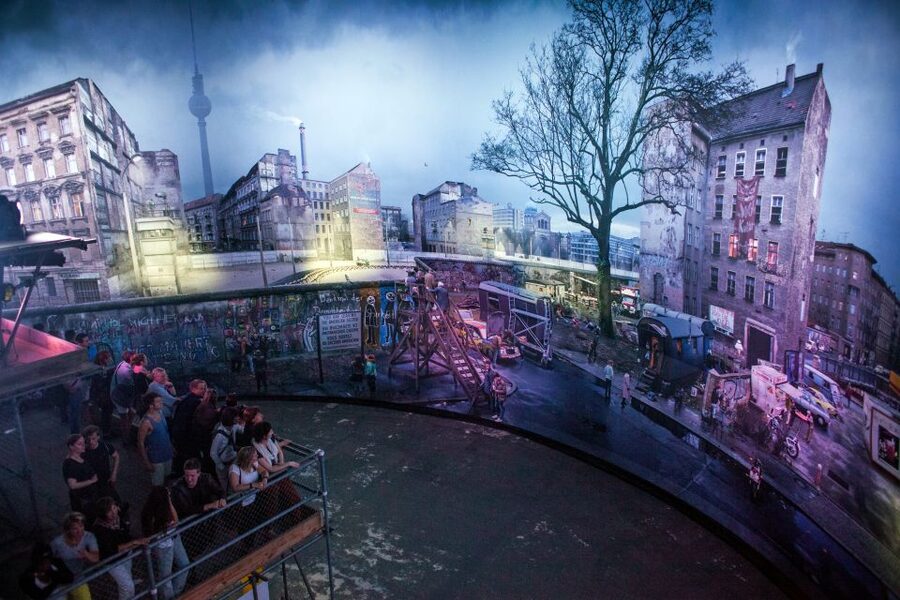
asisi Panorama Berlin recreates a fictitious 1980s autumn day around Kreuzberg, showing how life looked from West Berlin while the Wall sat between worlds. You also get a deeper layer through the Yadegar Asisi documentary and the SO 36 perspective, so it’s not just a visual set.
One possible drawback: this is not a guided tour, so if you want a narrator to answer questions in real time, you’ll need to rely on the on-site information instead.
In This Review
- Key things to know before you go
- Walking Into asisi Panorama Berlin on Friedrichstraße
- The 4-meter visitor platform, where the Wall becomes a picture you can read
- Finding the Death Strip and border facilities like a slow detective
- SO 36 in West Berlin: how a neighborhood stays human next to the Wall
- Following Yadegar Asisi’s story, from early ideas to the finished panorama
- What the free key folder helps you do (and why it matters)
- Time plan, value for the about-$16 price, and who should book
- Pairing it with Checkpoint Charlie and a remaining Wall section
- Should you book the asisi Panorama Berlin Wall ticket?
- FAQ
- Where is the meeting point for asisi Panorama Berlin?
- How much does the Wall ticket cost?
- How long is the experience?
- Do I need a guided tour included with the ticket?
- What is included with my ticket besides admission?
- Can I skip the ticket line?
- Are pets allowed inside?
- Is there support for English speakers?
- Is there a documentary included in the exhibit?
- Is free cancellation available?
Key things to know before you go
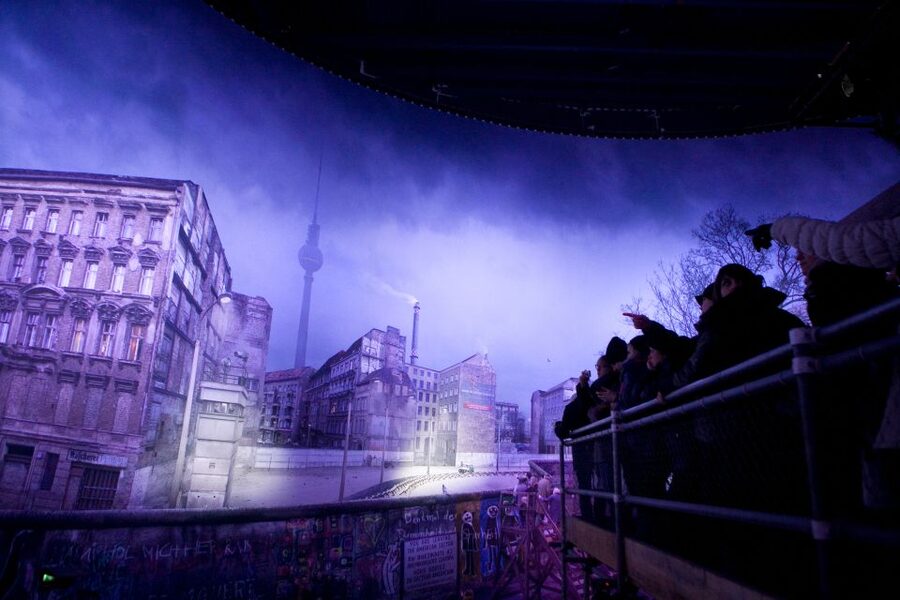
- 4-meter-high visitor’s platform view: the show’s best angle is from above the everyday scenes below.
- Fictitious autumn day in the 1980s: the Wall story is framed through a specific season and street-life details.
- Death Strip and border facilities: the exhibition points your eyes to places that were designed for control and separation.
- SO 36 life in West Berlin: you get a West Berlin neighborhood feel, not just the East side of the border.
- Artist process included: the exhibit features a documentary about how Yadegar Asisi created the panorama.
Walking Into asisi Panorama Berlin on Friedrichstraße
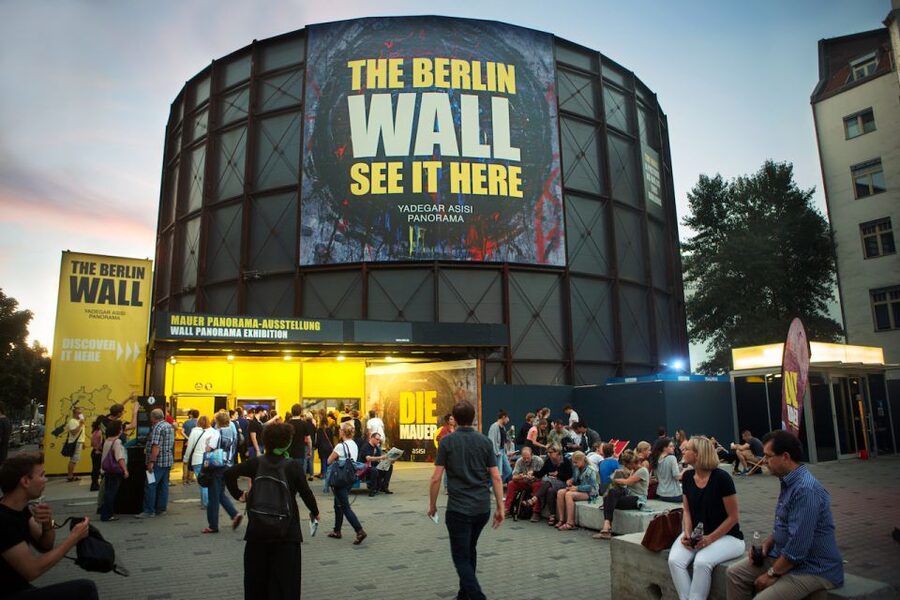
The asisi Panorama Berlin sits at Friedrichstraße 205 (10117 Berlin), which is convenient if you’re also doing the central Wall-area sites. I like places you can fit into a busy day, and this one works that way because it’s built around a clear in-and-out flow.
When you arrive, you’ll pick up your ticket and head straight in with the skip-the-ticket-line benefit. That matters in Berlin, where waiting can eat your time. Plan for a calm pace once inside, since the whole point is to look carefully at what’s going on around the Wall.
No pets are allowed, so leave Fido (and friends) at home. Also, there isn’t a guided tour included. That doesn’t make it worse, it just changes how you should approach it: come ready to read the labels and use the extra info materials so the details land.
Also holding a platform in Berlin
- Berlin: Reichstag, Dome and Government District Guided Tour
★ 4.7 · 18,288 reviews - Berlin: 1-Hour City Tour by Boat with Guaranteed Seating
★ 4.3 · 16,993 reviews - Berlin: TV Tower Standard Entrance Ticket
★ 4.4 · 15,883 reviews
The 4-meter visitor platform, where the Wall becomes a picture you can read
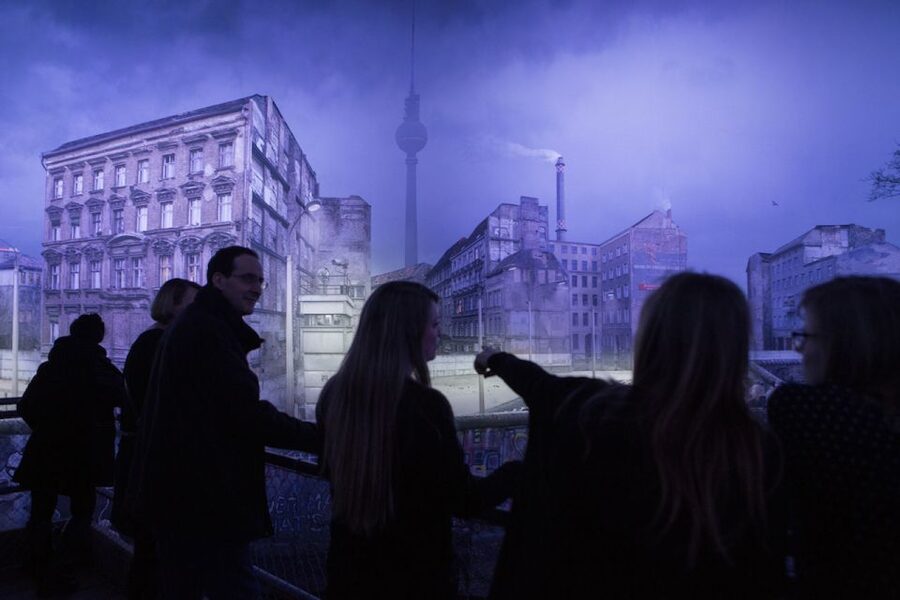
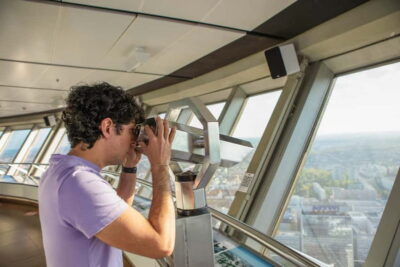
The centerpiece is the panorama itself. You take in the view from a 4-meter-high visitor’s platform, which is high enough to make the scene feel staged and intentional, like you’re standing where the border watchfulness meets ordinary routines.
What I find smart is how the exhibition doesn’t try to shock you with action. It focuses on everyday life, the kind you’d normally ignore when walking down a street. Then it forces you to notice the nearby barriers and controlled spaces. The result is a strange mix: you’re watching mundane moments, but you’re doing it from the shadow of something brutal.
The setting is Kreuzberg on a fictitious autumn day in the 1980s. That’s a subtle but important choice. Seasonal details help your brain accept the place as real, even though you’re in an artistic reconstruction. On an autumn day in Berlin, that realism hits harder, because the lighting and mood match what your eyes already know.
If you like exhibitions that reward close attention, this is for you. The platform gives you a consistent viewpoint, so you can compare sections as you move your eyes. It’s also the kind of stop where you’ll get more on a second pass, and that’s not a bad idea if you have time.
Finding the Death Strip and border facilities like a slow detective
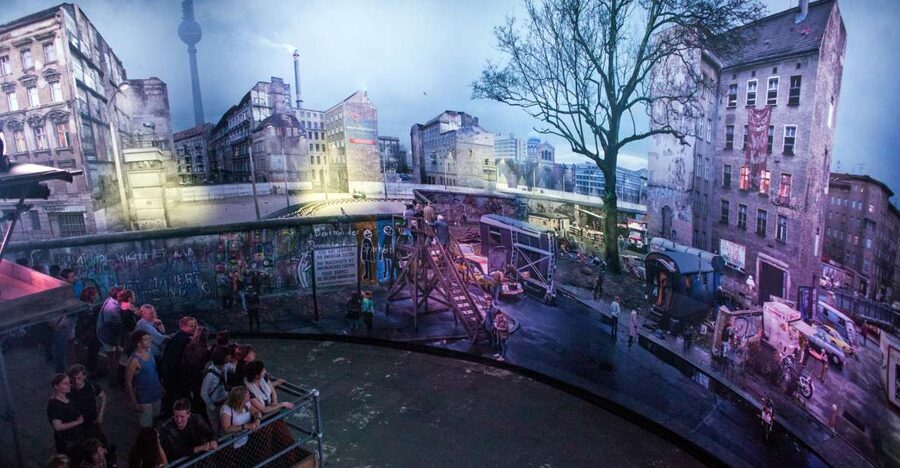
One of the most important things the exhibition shows is the Death Strip and the border facilities. Instead of using broad explanations, the panorama directs your attention to specific zones and structures tied to the border system.
Here’s why that matters for your understanding: “Wall history” can turn abstract fast. You hear names, years, and facts, but you don’t always visualize the geometry of separation. Seeing the controlled spaces built into a recognizable streetscape helps you grasp what separation looked like in real space.
As you view the panorama from the platform, I recommend you treat it like you’re mapping the scene:
- First, locate where the Wall sits relative to the street life.
- Then, identify the controlled zones next to it.
- Finally, look for small details that suggest surveillance or restriction.
Some visitors also note sound effects from the surrounding areas, and that can add to the feeling of being there. Even if you don’t notice sound right away, don’t rush past the “quiet” parts. Those are often where the exhibit wants your focus.
And yes, it can feel gruesome. The exhibition is built to convey how ordinary life continued under conditions that were not ordinary at all.
SO 36 in West Berlin: how a neighborhood stays human next to the Wall
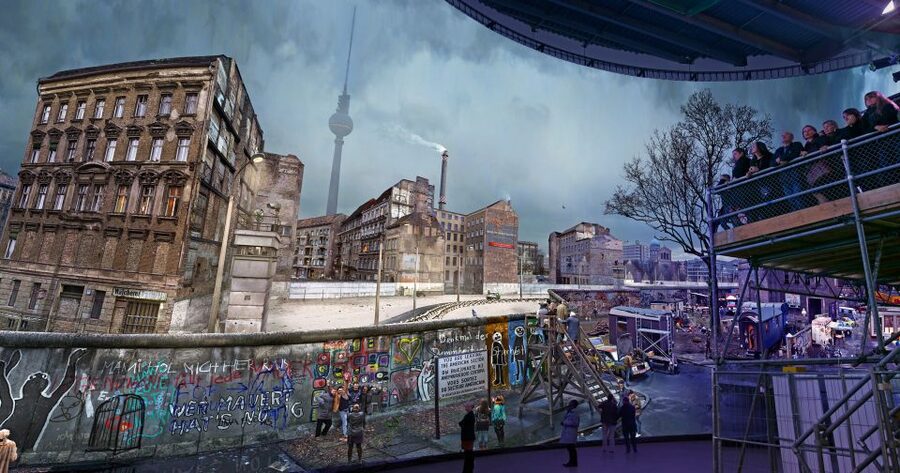
A big reason this ticket is worth your time is that it doesn’t treat the Wall as a single-surface tragedy. It also frames life in West Berlin’s SO 36, separated from East Berlin but only a stone’s throw away.
That small phrase changes your emotional reading of the scene. You’re not looking at a Wall in isolation. You’re looking at a neighborhood where people still worked, lived, walked, and carried on. The Wall turns distance into a problem, even when cities are close enough to see each other in normal life.
I also like that this approach helps you balance the story. If your Berlin trip already includes a few big Wall stops, this panorama adds texture: it puts you in the position of someone living in the West, noticing the border every day.
One practical note: if you’re starting Berlin history with minimal background, this format helps. It gives you context through visuals first, then reinforces it with details. That can be easier than jumping straight into dense museum walls of text.
Following Yadegar Asisi’s story, from early ideas to the finished panorama
The exhibition includes a documentary on the artist, Yadegar Asisi, tracing the journey from early ideas to the creation of the panorama. That’s not just a nice bonus. It tells you how to read what you’re seeing.
When an artwork takes this much effort, it’s worth knowing what questions the artist was trying to answer. The documentary helps you understand why the scene feels so constructed, and why the focus stays on everyday moments beside the machinery of control.
There’s also an ending video experience. Some visitors specifically recommend watching it at the exit, because it brings the artist’s story full circle. If you’re tempted to bolt toward your next stop, this is one moment where you’ll probably feel glad you stayed.
That artist-layer is especially valuable if you already feel a little “museum fatigue.” You’ll shift from consuming facts to understanding a creative process that’s tied to history.
Onward connections from Berlin:



What the free key folder helps you do (and why it matters)
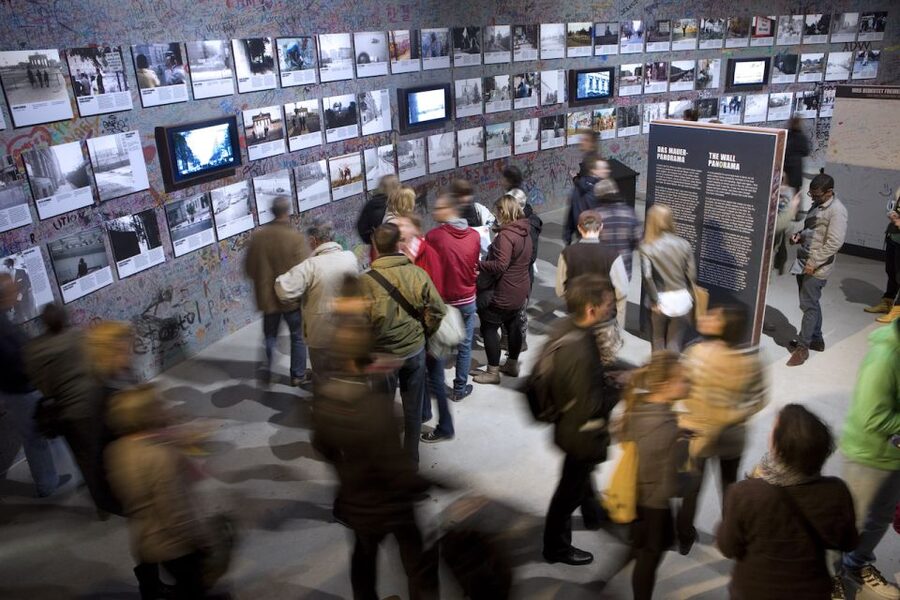
Your ticket includes a free key folder with extra information. Don’t treat it like a souvenir. Use it like a worksheet.
I find these kinds of materials most helpful in exhibitions that are visual-first. The panorama gives you a lot to look at, and the labels and key materials help you decide what to notice. In other words, it turns a “pretty impressive scene” into a “now I get what I’m seeing.”
Because this is not guided, you’re the guide. That’s fine if you go in with a plan:
- Glance at the key folder early.
- Identify a few concepts you want to spot in the panorama, like border facilities or the Death Strip.
- Use the folder to keep your attention from drifting.
If you’re the type who likes learning without being lectured, this setup works well. If you prefer a spoken walkthrough, you’ll likely want to add a Wall guide somewhere else on your day, but you can still enjoy this panorama fully on its own.
Time plan, value for the about-$16 price, and who should book
This is a 1-day ticket. Duration isn’t long, but it’s not a “blink and go” type of visit. For best results, give yourself time to look up close at details on the platform and time to read the informational elements as you go.
Price-wise, around $16 per person is strong value for what you get: a skip-the-line entry, the panorama experience, and extra information materials. Most Berlin Wall experiences either charge for a guided explanation or focus on a single site. Here, you’re paying for a whole constructed view of the era, plus context via the artist documentary.
Who I think it suits best:
- First-timers to the Berlin Wall who want context without needing a lecture.
- Visitors who learn by seeing, not by reading long texts.
- Anyone who wants a focused Wall experience without committing to a multi-hour tour.
It may be less ideal if you want an interactive guide to answer questions on the spot. Since it’s self-directed, your learning is tied closely to what you pay attention to.
Pairing it with Checkpoint Charlie and a remaining Wall section
This stop is well placed for a classic Wall-day route. If you’re already planning to do Checkpoint Charlie earlier, the panorama makes a poignant follow-up. It shifts from a well-known checkpoint story to a neighborhood-scale story of how the border affected day-to-day life.
There’s also a practical tip that’s easy to remember once you’re done: if you’re walking nearby, look for a remaining section of the original Wall down the road near the traffic lights area described by one visitor. It’s an excellent way to compare the artistic reconstruction with what still survives.
If you like building mental connections between stops, this combo works. You’ll feel the difference between history you can touch and history you experience through a built artwork.
Should you book the asisi Panorama Berlin Wall ticket?
If you want a powerful, visual way to understand the Berlin Wall from a West Berlin viewpoint, I’d book it. The 4-meter platform view is the big draw, but the real win is the way the exhibit mixes everyday life with the controlled spaces right next to it.
Book it if:
- You’re curious about how West Berlin neighborhoods, like SO 36, lived alongside the border.
- You want the Death Strip and border facilities explained through what your eyes can recognize.
- You value the added layer of the Yadegar Asisi documentary.
Consider booking something guided elsewhere if:
- You know you’ll want extra verbal context while you’re inside.
- You want someone to translate the more technical parts on the fly.
For most people, though, this ticket is a solid use of time, and it hits harder than you’d expect from a single admission.
FAQ
Where is the meeting point for asisi Panorama Berlin?
The meeting point is asisi Panorama Berlin, Friedrichstraße 205, 10117 Berlin.
How much does the Wall ticket cost?
The ticket price is listed as $16 per person.
How long is the experience?
The ticket is valid for 1 day, and you can check available starting times.
Do I need a guided tour included with the ticket?
No. A guided tour is not included.
What is included with my ticket besides admission?
Your ticket includes admission to the asisi Panorama Berlin and a free key folder with extra information.
Can I skip the ticket line?
Yes, the option to skip the ticket line is included.
Are pets allowed inside?
No, pets are not allowed.
Is there support for English speakers?
Translation options were offered for English speakers, according to available feedback.
Is there a documentary included in the exhibit?
Yes. The exhibition includes a documentary about the artist, Yadegar Asisi.
Is free cancellation available?
Yes, free cancellation is available up to 24 hours in advance for a full refund.
Fresh on the arrivals board for Berlin



Tickets, compared.
Munich Hop-On Hop-Off Tour: 1-Day or 2-Day Ticket
Read our review →