Reviewed · BERLIN TOURS & ACTIVITIES
Sündenbabel Berlin – The Roaring Twenties in Berlin
Berlin in the 1920s has a secret route.
This Sündenbabel Berlin walk turns everyday streets into storyboards, tracing how Nollendorfplatz became a magnet for Berlin’s gay and lesbian movement. I like how the guide frames the route with literary and cultural touchpoints, including how W. H. Auden and Christopher Isherwood were drawn to the scene.
I also really enjoyed the pacing: short stops, lots of explanation, and plenty of time to look around at real locations rather than sitting through a lecture. One thing to consider, though: at a couple places, you may need to plan for admission that is not included (so keep a little budget or flexibility).
In This Review
- Key Highlights to Know Before You Go
- From Nollendorfplatz to Kurfürstendamm: Berlin’s 1920s Queer Nightlife Trail
- Motzstraße and the Eldorado Sign: Where the Night Begins
- Fuggerstraße and the Scala: International Performers on a Local Street
- Kaufhaus des Westens (KaDeWe) at the Kaufhaus des Westens: Shopping as a 1920s Sensation
- Tauentzienstraße’s Femina Palace: A Dance Hall with an Open-Air Idea
- Kaiser Wilhelm Memorial Church: A Landmark That Breaks the Pattern
- Zoo Palast Cinema: How Film Advertising Made Night Outplans
- Bahnhof Zoologischer Garten: Meeting Point Energy, Explained Clearly
- Theater des Westens, Kurfürstendamm, and Kranzler Eck: Entertainment, Luxury, and a Name with Attitude
- Should You Book Sündenbabel Berlin for the Roaring Twenties?
- FAQ
- How long is the Sündenbabel Berlin tour?
- Where does the tour start and end?
- Is the tour offered in English?
- Do I need to print a ticket?
- Is admission included at every stop?
- What is the maximum group size?
- Is the meeting point near public transportation?
- What is the cancellation policy?
Key Highlights to Know Before You Go

- A 1920s queer Berlin storyline anchored around Nollendorfplatz and the Ku’damm area
- Street-level stops that mostly have free admission, so you can keep costs controlled
- Cinema context at Zoo Palast, including how movie advertising worked in the 1920s
- Landmarks mixed with nightlife spots, like the Kaiser Wilhelm Memorial Church
- Kurfürstendamm luxury talk, with a playful nod to how high-end buying and entertainment were linked
From Nollendorfplatz to Kurfürstendamm: Berlin’s 1920s Queer Nightlife Trail
This tour is built for people who want more than postcards. You spend about 2 hours walking between major points in the west side of Berlin, starting near Nollendorfpl. 3-4 and finishing at the area of Cafe Kranzler on Kurfürstendamm. It runs in English, uses a mobile ticket, and keeps group size to a maximum of 25, which usually helps with questions and staying together.
What makes it feel special is the theme. The route is tied to the 1920s, when the Nollendorfplatz area pulled in the queer community and created a nightlife ecosystem. The guide connects that to what you can still see now, from street corners to landmark facades. If you like Berlin as a living city, not just a museum, this kind of walk can click fast.
If you want to do it all in one go, this tour is a good match. But if you’re expecting a museum-level deep dive in places that charge admission, know that the experience is mostly outdoors, with only a few interior moments.
Also holding a platform in Berlin
- Berlin: Reichstag, Dome and Government District Guided Tour
★ 4.7 · 18,288 reviews - Berlin: 1-Hour City Tour by Boat with Guaranteed Seating
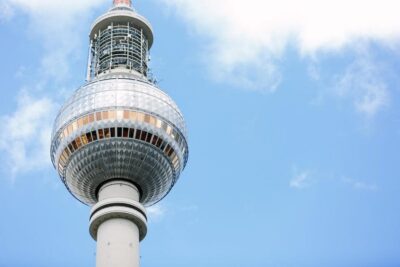
★ 4.3 · 16,993 reviews - Berlin: TV Tower Standard Entrance Ticket
★ 4.4 · 15,883 reviews
Motzstraße and the Eldorado Sign: Where the Night Begins
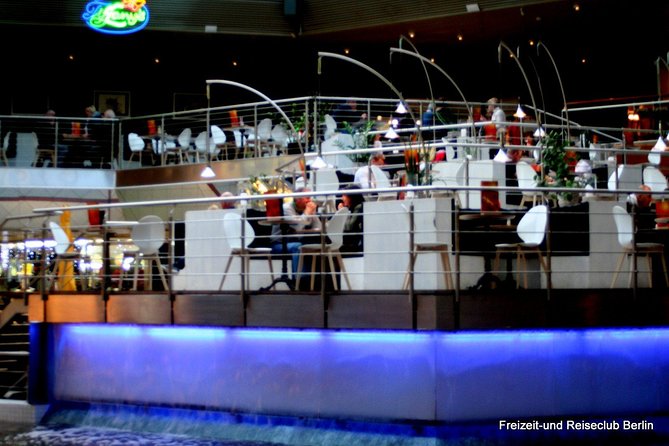
You start with Motzstraße, and the guide sets the tone right away with a slogan linked to the legendary Eldorado. Even if you’ve never heard that name before, the point lands: this wasn’t just random nightlife, it was a recognizable scene with its own labels and identities.
This stop is short, so you are not looking at a long exhibit. Instead, you’re doing something more useful for orientation. You get a sense of how the streets worked as a network, how people moved, and why certain addresses became magnets. The tour keeps you on your feet and looking up, which is the right move for Berlin. Buildings, signs, and street layouts do a lot of the storytelling.
Practical note: this is one of the stops where admission is ticket free, which means you can spend your energy on the guide’s explanations rather than lining up for entry.
Fuggerstraße and the Scala: International Performers on a Local Street
Next comes Fuggerstraße, just a few steps from where the Scala once stood. The guide ties the area to entertainment that felt bigger than Berlin. Going to the Scala at night was a kind of shorthand, a way of saying you were part of the city’s nighttime culture.
You also hear about the kinds of acts that appeared there, including international performers such as Enrico Rastelli, Clown Grock, and the Scala Girls. Even though you are not in a performance hall right now, the tour uses the location to explain why these venues mattered. Berlin’s queer nightlife in the 1920s wasn’t only about dancing. It was also about stages, spectacle, and shared nights out.
Another plus here: the stop is ticket free, so you can keep momentum. The only real drawback is that, like many story-based city walks, you’re limited to what you can absorb in a short window. If you want to go inside and linger, you’ll need separate time on your own.
Kaufhaus des Westens (KaDeWe) at the Kaufhaus des Westens: Shopping as a 1920s Sensation
At Kaufhaus des Westens, the tour shifts from nightlife to a different kind of modern magnet: big-city shopping culture. KaDeWe opened in the early 1900s and pulled in huge crowds. The guide emphasizes how the store made fashion feel like a world sensation, including the pull of the latest Parisian styles.
This stop matters because it shows a side of the 1920s city beyond clubs. Entertainment and identity weren’t separated. Shopping, style, and nightlife fed each other. If you’ve ever noticed how Ku’damm still signals glamour, you’ll understand why this location belongs in a themed walk.
Admission here is free, so you’re not locked into a paid visit to get value. Still, you might want to treat KaDeWe like a bonus stop after the tour, especially if you enjoy people-watching and fashion history at street level.
Tauentzienstraße’s Femina Palace: A Dance Hall with an Open-Air Idea
Tauentzienstraße is where the tour gets vivid. The guide points out the Femina Palace, a famous dance hall that the building has preserved in its original condition. That is an important detail. When architecture survives, it gives the story something solid to stand on.
The highlight is the concept of the roof being able to open, so dancing could happen in open air. The tour doesn’t just say it was a dance hall. It uses the building to help you imagine the mood: music, movement, and a night that felt both indoor and outdoor.
This stop runs about 5 minutes, and it’s ticket free, so don’t expect a long tour of the interior. But do expect the guide to connect the dots between venue design and how people used those spaces socially.
Onward connections from Berlin:

Kaiser Wilhelm Memorial Church: A Landmark That Breaks the Pattern
One of my favorite choices on the itinerary is the Kaiser Wilhelm Memorial Church stop. It catches your eye fast, and it gives your brain a reset from the entertainment focus. The tour treats it like a landmark you should know, even if your main interest is nightlife history.
Why it works: it anchors the scene geographically. Berlin’s west side is full of dramatic architecture, and this church helps you keep the mental map straight. It also adds contrast, reminding you that daily life and big public spaces sat close to nightlife streets.
This is also a ticket free stop, and it’s short. So it’s not meant to replace a full church visit. Instead, it helps you stitch together the city as a whole, which is exactly what you want during a themed walking tour.
Zoo Palast Cinema: How Film Advertising Made Night Outplans
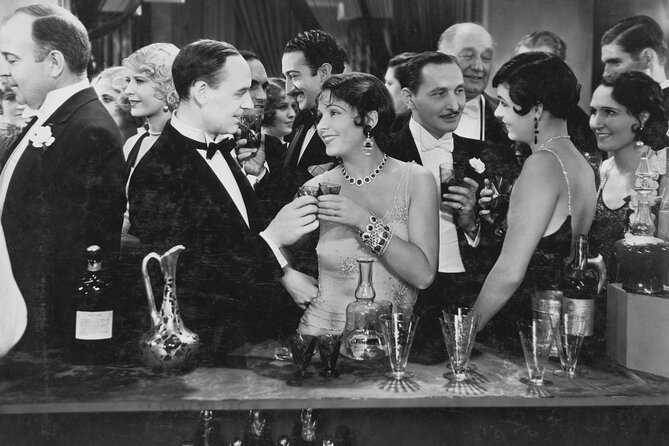
Then you hit Zoo Palast, which the tour uses to explain how cinema drew the masses in the 1920s. The guide talks about how advertising worked for films, and it also gets into the social side of going to the movies, including where a gentleman might have taken his wife out.
This stop is different from the rest because it’s not only about buildings and streets. It’s about how media shaped public life. Cinema was a modern habit, and the tour shows you how it turned into a shared experience, not just a quiet activity.
Here’s the practical bit to know: admission for Zoo Palast is not included. That doesn’t make the stop pointless, since the guide still gives you context. But if you want to actually enter and experience the place directly, plan for that cost and time on your own.
Bahnhof Zoologischer Garten: Meeting Point Energy, Explained Clearly
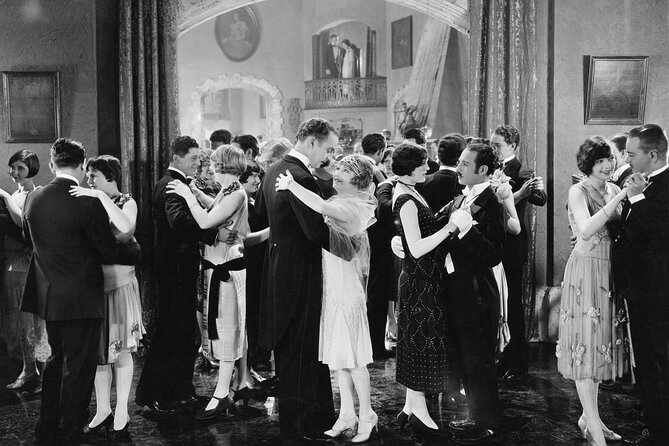
The route then moves to Bahnhof Zoologischer Garten, and this is one of the most theme-pure stops on the walk. In the 1920s, the area around the station became a meeting place for the gay and lesbian movement in Berlin. The guide explains which establishments were preferred, focusing on how people found each other and built night plans.
This is valuable because it takes the story out of abstraction. It makes the scene feel logistical and human. Stations and transport hubs are where decisions happen. You can picture someone meeting friends, finding a bar, and choosing the next step of the evening.
Admission here is included, which is a big deal for value. It means at least one interior or paid moment is built into the tour rather than added afterward.
If you prefer clear stories with practical details, you’ll probably enjoy this stop the most.
Theater des Westens, Kurfürstendamm, and Kranzler Eck: Entertainment, Luxury, and a Name with Attitude
In the final stretch, the tour connects big entertainment venues to the shopping and luxury culture along Kurfürstendamm. First, you get Theater des Westens and the adjoining Delphi Palace, both important places for entertainment or dancing in the 1920s. The stop is short, and admission is not included, but the guide helps you understand why these were key nighttime destinations.
Then you land on Kurfürstendamm, where the guide brings in a playful line of thought: basically, leave your credit card at home. Even though the city has changed, the idea is that Ku’damm has long been about luxury items and high-profile entertainment. It’s not just shopping. It is theater for the self.
Finally, you reach Kranzler Eck and the Cafe Megalomania story. The tour promises that the guide will share why it was called that and what stories sit behind it, and it lands as a fun closing note. You end near Cafe Kranzler, so you can wrap up with a drink or snack where the walk naturally finishes.
One consideration here is that some final-stop admissions are not included, so if you’re hoping for multiple paid entries, this tour will not fully do that for you. Still, as a guided “how the city worked then” tour, the value is in the connections, not the ticket stack.
Should You Book Sündenbabel Berlin for the Roaring Twenties?
I think you should book it if you want a short, guided Berlin walk that makes the 1920s feel personal and specific. The strongest reason is the combination of friendly, informative guidance with a clear theme. The best moments are when the guide turns a street corner or landmark into an explanation of how real people built their nights.
Book it, too, if you like tours where most stops are ticket free. You still get culture and context without needing to pay for every location. And if you care about queer history in a way that connects to geography and daily life, this route is built for that.
Skip it if you want long interior time at major attractions, because the tour is about walking and short stops, not museum hours. Also, if you are set on entering places like Zoo Palast during the tour, check that Zoo Palast admission is not included, so you might need to plan ahead.
If your goal is to see Berlin from a different angle, this is a smart way to do it in just a couple hours.
FAQ
How long is the Sündenbabel Berlin tour?
The tour is approximately 2 hours.
Where does the tour start and end?
It starts at Nollendorfpl. 3-4, 10777 Berlin, and ends at Kurfürstendamm 10719, with the tour ending at Cafe Kranzler.
Is the tour offered in English?
Yes, it is offered in English.
Do I need to print a ticket?
No, it uses a mobile ticket.
Is admission included at every stop?
No. Most stops are ticket free, Zoo Palast admission is not included, Bahnhof Zoologischer Garten admission is included, and Theater des Westens and Delphi Palace admission is not included. Kranzler Eck admission is also not included.
What is the maximum group size?
The tour has a maximum of 25 travelers.
Is the meeting point near public transportation?
Yes, the meeting point is near public transportation.
What is the cancellation policy?
You can cancel for a full refund up to 24 hours in advance. If you cancel less than 24 hours before the start time, the amount you paid is not refunded.
Fresh on the arrivals board for Berlin
Berlin Tours & Activities, compared.
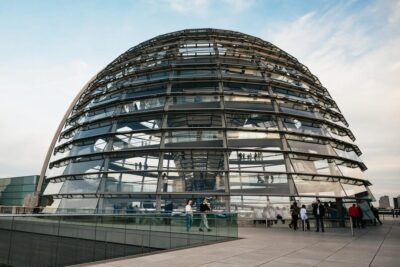
Reichstag, Dome and Government District Guided Tour
Read our review →
1-Hour City Tour by Boat with Guaranteed Seating
Read our review →

Berlin City walk Government District and Places of Democracy
Read our review →