Reviewed · BERLIN TOURS & ACTIVITIES
Rude Bastards tour of Medieval Berlin
One route, lots of centuries, zero boredom. This Rude Bastards tour turns key medieval and early-modern spots into a fast, story-driven stroll with room for laughs. You will walk past big names and quieter details, and the guide connects them into one readable map of Berlin’s past.
I especially like how short stops keep the pace moving, so you spend your time seeing rather than waiting. I also love that the guide brings real personality to the Reformation, churches, and city landmarks, with photos and plain talk that help it all click.
The one drawback to think about is that most interiors are not included, so if you want to go inside longer at every stop, you will likely need extra time and possibly separate entry tickets. Also, there is no formal restroom break listed, so plan around that.
In This Review
- Key highlights you should know before you go
- Starting at Luther Monument: Protestant roots in a walkable 2 hour 40 minutes
- St. Mary’s Church, the Dance of the Death, and why paintings still teach
- Rotes Rathaus: functions and the very German art of naming
- Franziskaner Klosterkirche: from 1250 stone to a school and big political names
- Palais Podewil: court life, foreign affairs, and the politics inside a name
- Parochialkirche and the cemetery story: Reformed roots plus a damaged roof
- Memorial of the Berlin Wall: a timeline lesson, even if it is confusing at first
- Köllnischer Park: bear cage oddness and a lion entrance gag
- Historischer Hafen Berlin and the Hanseatic League reality check
- Humboldt Forum: when reconstruction becomes the story, and entry is free
- Museum Knoblauchhaus: Frederick the Great meets Berlin Jewish history
- Nikolaikirche: the wrap-up from the 1200s to the 1800s
- Price and value for money: why $3.60 works only if you play along
- Pace and who this suits best (and who might feel shortchanged)
- Should you book this Medieval Berlin tour?
- FAQ
- What is the duration of the Rude Bastards Medieval Berlin tour?
- What time does the tour start, and where do I meet?
- What language is the tour offered in?
- Is the tour ticket mobile, and do I get confirmation?
- Are admission tickets included for the stops?
- Does the price include public transport?
- Is there a restroom break during the tour?
- Is the group size limited?
Key highlights you should know before you go
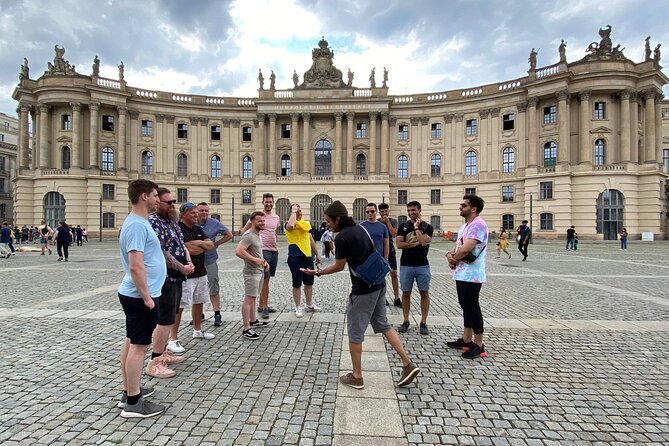
- Edutainment energy in a small group (max 20), with humor that keeps the facts from feeling like homework
- A tight medieval loop from Luther Monument to Nikolaikirche, with 13 stops in about 2 hours 40 minutes
- Church art and symbolism explained at St. Mary’s, including the Dance of the Death paintings
- Real context for the Reformation and German division, starting right at the Luther Monument
- Money, power, and naming quirks, from civic sites like Rotes Rathaus to court history at Palais Podewil
- One free entry moment at Humboldt Forum, while other sites list admission as not included
Starting at Luther Monument: Protestant roots in a walkable 2 hour 40 minutes
The tour starts at the Luther Monument, Karl-Liebknecht-Str. 8, Berlin, meeting around 11:00 am. That timing matters in summer and shoulder seasons because you get your main landmarks in before the later-day crowds thicken.
This first stop sets the tone fast. You will talk Protestantism, the Protestant Reformation, and how these ideas fed into the division of Germany. Even though you only spend about 15 minutes here, it gives you a frame for the churches and cemetery stories you will see later. No entry ticket is listed, which keeps this start low-stress.
If you like your history with clear cause-and-effect, this beginning helps. You are not just seeing buildings, you are learning what people argued about, and why it mattered enough to reshape institutions.
Also holding a platform in Berlin
- Berlin: Reichstag, Dome and Government District Guided Tour
★ 4.7 · 18,288 reviews - Berlin: 1-Hour City Tour by Boat with Guaranteed Seating
★ 4.3 · 16,993 reviews - Berlin: TV Tower Standard Entrance Ticket
★ 4.4 · 15,883 reviews
St. Mary’s Church, the Dance of the Death, and why paintings still teach
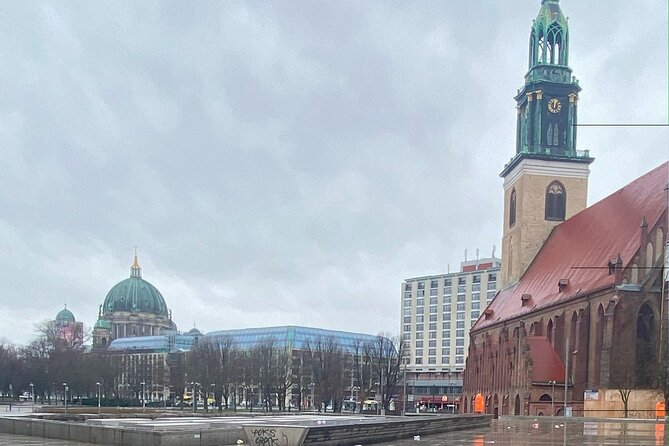
Next up is St. Mary’s Church, a structure from 1270 that is described as the second oldest construction of Berlin. You get about 10 minutes here, and the focus is art and meaning, especially the Dance of the Death theme.
This is the kind of stop that rewards you if you enjoy looking closely. The guide explains what the paintings are about, and that turns what could be passive sightseeing into a kind of visual reading lesson. Instead of trying to memorize dates, you understand the message behind the images.
One practical thing: since the stop is short and entry is not listed, come ready to spend those minutes looking, listening, and asking your own follow-up questions if you have them.
Rotes Rathaus: functions and the very German art of naming
You only get around 5 minutes at Rotes Rathaus. That is not a problem here, because the point is the explanation, not a long museum-style visit.
You will learn what the building’s functions were when the city was taking shape, and you will get a quick laugh about how Germans name things. It sounds small, but that kind of detail adds flavor to a city, and it also helps you decode what you see later.
If you are someone who hates rushing, keep your expectations realistic. This tour is designed as a story walk, so some stops are designed as “context hits,” not deep dives.
Franziskaner Klosterkirche: from 1250 stone to a school and big political names
One of the most time-friendly stops is Franziskaner Klosterkirche, with a 15-minute window. The building is described as the oldest preserved structure here, dating to around 1250. That matters because it anchors the tour’s medieval theme in something tangible.
The guide also connects the site to later education, described as the Berlin High School at the Gray Monastery in 1574. Then you hear about major historical figures linked to the broader story, including Karl Friedrich Schinkel, Friedrich Ludwig Jahn, and Otto von Bismarck.
What I like about this stop is how it shows continuity. It is not medieval versus modern, it is one location taking on different roles across time. If you are trying to understand how Berlin keeps reusing the same bones of the city, this is a strong example.
Palais Podewil: court life, foreign affairs, and the politics inside a name
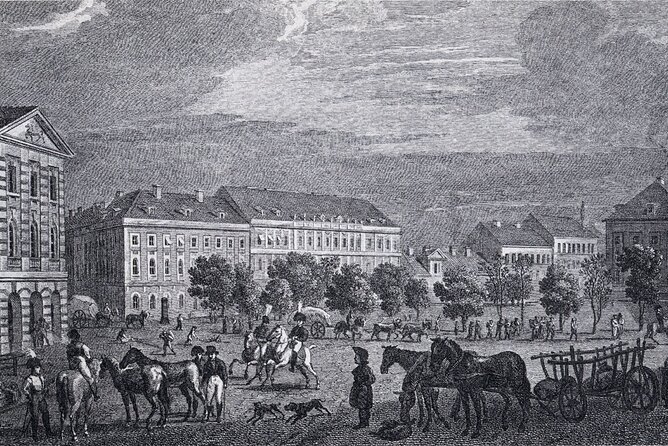
At Palais Podewil you get about 20 minutes, which is a good chunk for a moving walking tour. The background is very specific: it was erected by Berlin aristocrats in 1704 and later named after Heinrich Graf von Podewils, who lived there in 1732.
The guide ties him to the state machine, describing him as a minister for foreign affairs under the Cabinet of the Soldier King and in Frederick the Great’s government. If that sentence felt like a history textbook, you are exactly who this stop helps. You will hear the story in human terms, because the guide ties the people to the place.
This is also where you start to feel the tour’s bigger method: it uses one address to explain a whole system, then moves on before it turns into a lecture.
Onward connections from Berlin:

Parochialkirche and the cemetery story: Reformed roots plus a damaged roof
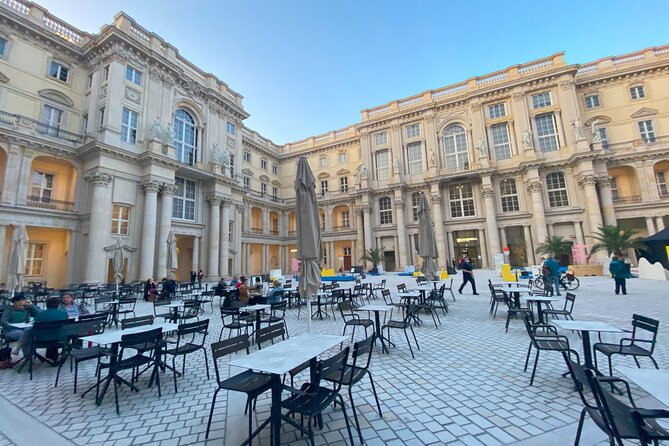
Parochialkirche is described as built between 1695 and 1705, and it is called the oldest Reformed Church of Berlin. You also learn about Friedrich III (I) and the oldest well preserved cemetery dating to 1706.
The story shifts from spiritual to physical when the tour explains the roof being destroyed by an incendiary bomb. The DDR rebuilt it but it was not used as a church, and after unification and later renovations, it changed again.
This is one of the best stops if you want the tour to feel honest about the 20th century. The lesson here is not just what the building looks like, it is how Berlin handled damage, ideology, and reuse over decades. The stop is about 15 minutes, with admission not included, so focus on listening and noticing details around the outside first.
Memorial of the Berlin Wall: a timeline lesson, even if it is confusing at first
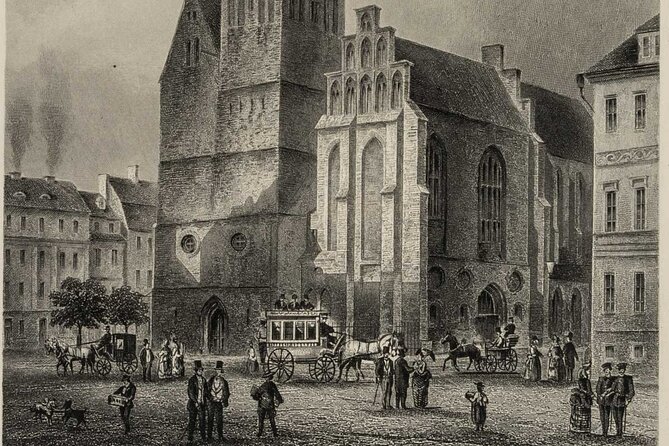
Then you hit a Memorial of the Berlin Wall, with a guide-led explanation of a timeline that begins being erected in 1250 and is described as being used and improved into the 17th century. I would not pretend that sounds intuitive, and it might not match what you already know.
Still, this is a good reminder that Berlin is layered, and memorial sites can carry different histories and interpretations. The value for you is the guided attempt to make the story make sense at the exact location you are standing in.
You only get about 10 minutes here, so the best move is to stay flexible. Let the guide explain, then decide if you want to read up after.
Köllnischer Park: bear cage oddness and a lion entrance gag
At Köllnischer Park you get around 10 minutes. The tour describes it as including a bear cage and other bizarre zoo elements, plus a very odd lion-related feature at the entrance.
This stop is not here to teach you architecture. It is here to break the mood and keep the walking tour from feeling like a nonstop lecture. If you like your history with a wink, this kind of detail is fun because it shows how Berlin used humor, spectacle, and odd public attractions in different periods.
Even better, it helps you remember the tour as a real experience, not just a list of names.
Historischer Hafen Berlin and the Hanseatic League reality check
Next is Historischer Hafen Berlin, with about 15 minutes. The guide covers the Hanseatic League and explains how Berlin’s location made it possible to be part of that network, even if it was described as not very important compared to other members.
Then the story pivots. Commerce starts improving when the Great Elector begins the process of creating canals connecting the main rivers of the state. That canal work is presented as a key reason Berlin’s status improved.
I like this stop because it gives you a practical economic lens. You learn why geography and infrastructure matter more than luck. And you get an explanation that feels connected to the city you see today.
Humboldt Forum: when reconstruction becomes the story, and entry is free
Humboldt Forum is a special stop on this route. The tour indicates the admission here is free, and you also get about 10 minutes to go inside.
You will hear the story of the old palace as the main draw, described as old but really new, and then you will focus on the money used for the building’s beautiful cosmetic work. In other words, you are not only looking at what exists, you are learning what it took to rebuild the idea of what the palace should represent.
This is the kind of stop that can change how you interpret modern Berlin. If you have ever wondered why some buildings look like they belong to a specific century even when they are not truly from that era, this is where you get language for it.
Museum Knoblauchhaus: Frederick the Great meets Berlin Jewish history
Museum Knoblauchhaus takes about 10 minutes. The story is built around Ephraim, described as a jeweler for the court of Frederick the Great in the 1700s. You will also learn that a house was built at this location and that there was even a silver refinery in the backyard.
Two main themes are highlighted by the guide: Frederick the Great and the history of Berlin Jews. That pairing is useful. It anchors individual lives inside bigger political and economic forces, rather than treating Jewish history as a side note.
Because entry is not listed as included, use this time to absorb the interpretation and the context the guide gives you. If you want more, you can always return later on your own with your new questions in mind.
Nikolaikirche: the wrap-up from the 1200s to the 1800s
The tour ends at St. Nicholas Church, Nikolaikirche, in Nikolaiviertel at Rathausstraße 21. This final stop is about 10 minutes, and it is designed to bring everything together from the 1200s through the 1800s.
This is where the tour’s structure clicks. You do not just hop between landmarks. The guide’s earlier Reformation framing, church art explanations, civic stories, and court connections are meant to connect into one longer narrative of what Berlin was becoming.
If you want a clean finish that helps you remember what you learned, this ending does the job.
Price and value for money: why $3.60 works only if you play along
The price is listed at $3.60 per person, which is unusually low for a guided walking tour in a major capital city. What you get for that price is a live local guide, plus insider tips for entertainment, cuisine, free museums, and night life. You also get a well rounded view of the local attractions.
Now the important part: admission is not included for most stops. Several sites specify admission tickets not included, so your final cost can go up depending on what you choose to add. Humboldt Forum is listed as free for entry, which is a nice bonus, but do not assume every stop lets you go inside.
Also, you will want a plan for logistics. A public transport ticket is not included, and there is no listed restroom break. So you should come ready to walk, keep moving, and handle your own bathroom timing around the route.
On the upside, the tour is limited to a maximum of 20 travelers, and that size usually makes it easier for the guide to keep things friendly and readable. It also keeps the pace manageable even while the stops stay short.
English is the offered language, and you get a mobile ticket. That means you should have phone battery and internet access ready, or at least a way to show the ticket offline.
Pace and who this suits best (and who might feel shortchanged)
The schedule is built for movement, with about 13 stops and a total duration of around 2 hours 40 minutes. Each stop ranges from about 5 minutes to 20 minutes, with most clustered around 10 to 15.
This works best for you if:
- you like story-led walking tours where the guide connects ideas across centuries
- you want a quick orientation to central Berlin’s medieval and early-modern sites
- you enjoy humor and clear explanations, like the guide approaches history as a conversation, not a monologue
This might be less ideal if:
- you want long indoor time at churches or museums, since the tour time per stop is brief
- you need guaranteed restroom time, because a break is not listed
- you expect every stop to be an included, ticketed interior visit
Should you book this Medieval Berlin tour?
Yes, I think you should book it if you want a compact way to understand Berlin’s medieval and Reformation-era logic, with laughs built in. The combination of church art like the Dance of the Death, Reformation context from the Luther Monument, and the quick civic and court stories makes it a smart first pass through the area.
I would also book it if you value a small-group feel, since the tour caps at 20 and the guide can keep the tone human. Just be realistic about entrances and extra tickets, because most stops are not included.
Only skip if you need a lot of independent museum time or you do not do well with shorter stop durations. And pick your day carefully, since the tour requires good weather, and if it is canceled due to poor weather you will be offered a different date or a full refund.
FAQ
What is the duration of the Rude Bastards Medieval Berlin tour?
The tour lasts about 2 hours 40 minutes.
What time does the tour start, and where do I meet?
It starts at 11:00 am at the Luther Monument, Karl-Liebknecht-Str. 8, 10178 Berlin, Germany.
What language is the tour offered in?
The tour is offered in English.
Is the tour ticket mobile, and do I get confirmation?
Yes, it uses a mobile ticket, and you receive confirmation at the time of booking.
Are admission tickets included for the stops?
Admission is not included for most stops. Humboldt Forum is listed as free to enter.
Does the price include public transport?
No. A public transport ticket is not included.
Is there a restroom break during the tour?
A restroom break is not listed as included.
Is the group size limited?
Yes, the tour has a maximum of 20 travelers, and most people can participate. Service animals are allowed.
Fresh on the arrivals board for Berlin
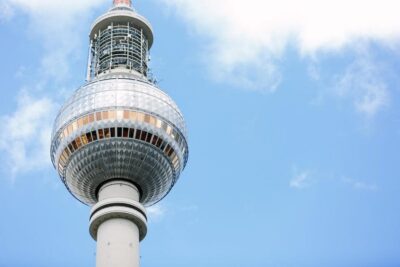
Berlin Tours & Activities, compared.
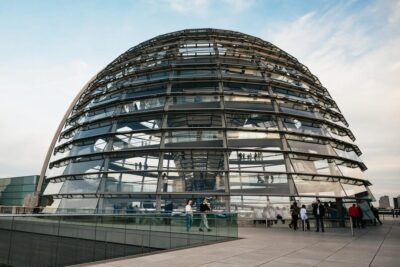
Reichstag, Dome and Government District Guided Tour
Read our review →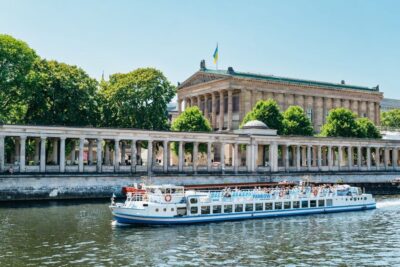
1-Hour City Tour by Boat with Guaranteed Seating
Read our review →

Berlin City walk Government District and Places of Democracy
Read our review →