Reviewed · BERLIN TOURS & ACTIVITIES
Rickshaw Tours Berlin – Groups of up to 16 people with several rickshaws
Berlin rolls by fast. This rickshaw tour strings together the icons of central Berlin with a story-first guide and comfortable, slow-moving wheels.
I especially like the way the route hits both the big postcard sights and the places where Berlin’s modern history is written into buildings and streets. Brandenburg Gate, the Reichstag area, the Wall memorial area, and Checkpoint Charlie sit on the same flowing loop, so you don’t waste half a day crossing the city.
One drawback to plan around: this is a short-stop sightseeing format. Many places are brief photo moments, and a few stops have sights where entry is not included, so you may want to decide in advance which interiors matter to you.
In This Review
- Key Highlights You Should Know Before You Go
- The Rickshaw Route, From Brandenburg Gate to Alexanderplatz
- Entering the Classics: Brandenburg Gate, the Reichstag Area, and the Chancellery
- Tiergarten, Soviet Memorials, and the Park That Shapes the Day
- Potsdamer Platz and Gropius Bau: Where Berlin Reinvents Itself
- Cold War Memory in One Flow: Topography of Terror, the Wall Memorial, and Checkpoint Charlie
- Stroll-Feeling in the City Center: Friedrichstraße to Gendarmenmarkt, Deutscher Dom, and Konzerthaus
- Book Burning to Museum Island: Bebelplatz, Berliner Dom, and Lustgarten Lawns
- Alexanderplatz: The City’s Loud Heart
- Price and Value: What $53.10 Buys You in Real Time
- Comfort, Music, and the Guide Factor (Hugo and Leo Are Big Names)
- Weather Matters More Than You Think
- Who This Tour Fits Best
- Should You Book This Berlin Rickshaw Tour?
Key Highlights You Should Know Before You Go
- Up to 16 people, several rickshaws: the group stays manageable while you still see a lot.
- WiFi and a photographer included: handy when you want photos without juggling your phone.
- Music on request: you can set the vibe, but you should keep an eye on volume.
- Most major Cold War sites are quick hits: Topography of Terror, the Wall memorial area, and Checkpoint Charlie fit into one route.
- Plenty of public-space stops: many locations are free to stand outside and look around.
- Pickup available within 2 km of Brandenburg Gate: less hassle if you’re staying nearby.
The Rickshaw Route, From Brandenburg Gate to Alexanderplatz

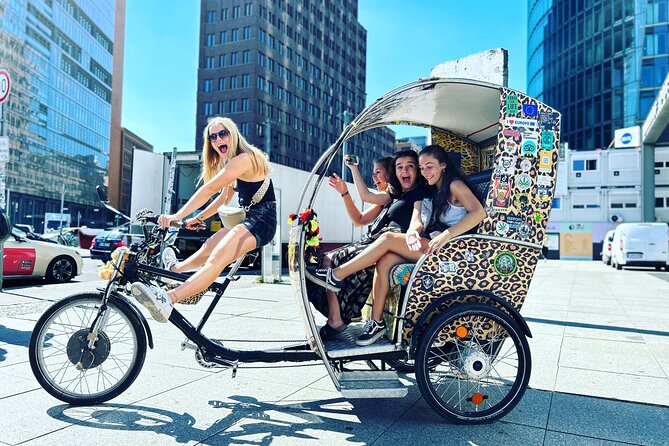
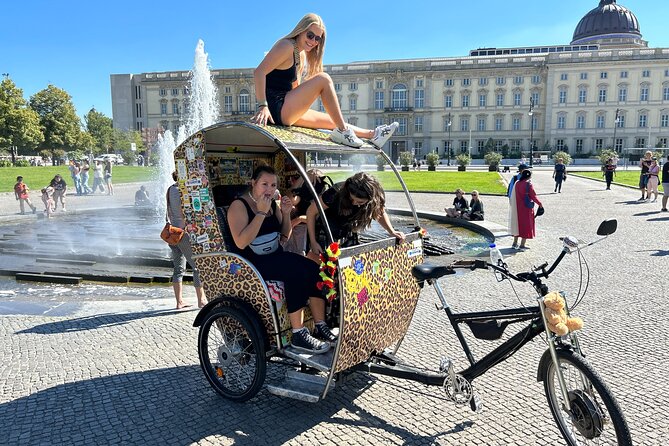
This tour is built for pace. You’re not doing a long walking marathon, and you’re not doing a high-speed bus loop either. Instead, you ride in a rickshaw format with private transportation and a guided narration that helps you connect what you’re seeing to why it matters.
Expect a route that starts near Brandenburg Gate at Brandenburger Tor, 10117 Berlin, and ends back around the same meeting point. The schedule stretches from 1 to 4 hours, and the itinerary is packed with major stops, usually with just enough time for a photo, a look around, and a quick orientation.
Group size is kept to up to 16 people with several rickshaws. In plain terms, that means you’ll likely have your own rickshaw or share one with a small group. It also means the guide can keep things moving without turning the experience into a loud scrum.
If you want a Berlin “greatest hits” day, this works. If you want deep museum time and long guided entries, you might need a second activity to go deeper after the ride.
Also holding a platform in Berlin
- Berlin: Reichstag, Dome and Government District Guided Tour
★ 4.7 · 18,288 reviews - Berlin: 1-Hour City Tour by Boat with Guaranteed Seating
★ 4.3 · 16,993 reviews - Berlin: TV Tower Standard Entrance Ticket
★ 4.4 · 15,883 reviews
Entering the Classics: Brandenburg Gate, the Reichstag Area, and the Chancellery
You start with the landmark that defines the mood of Berlin’s center. The Brandenburg Gate is a sandstone monument to German classicism, built in the late 1700s and aligned with the boulevard Unter den Linden. It’s not just pretty. It’s a visual anchor for understanding how Berlin has reinvented itself again and again.
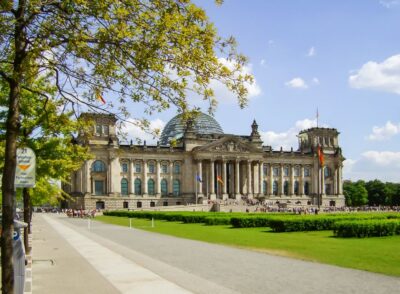
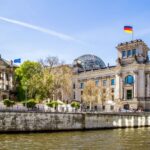
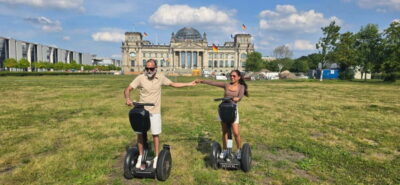
Next comes the Reichstag and Bundestag area. This part of the city is dense with turning points. You’ll hear about events tied to the Reichstag building, including the Republic being called from the balcony on November 9, 1918, the Reichstag fire in 1933, and the symbolism of the Red Army raising a Soviet flag on April 30, 1945. The tour stop is brief, but it’s the kind of location where a few accurate stories change how you read the façade.
Then you roll to the German Chancellery. Even if you only see it from outside, it’s worth it for the architecture. The building’s large central height, the transparency created by glass surfaces, and the way the wings are arranged gives you a different feeling than the heavier, older stone landmarks. It reads as modern governance, not just history.
Important practical note: the itinerary flags that some of these stops have admission ticket not included. So if you’re dreaming of going inside specific venues, plan for that separately and don’t assume your ticket gets you entry.
Tiergarten, Soviet Memorials, and the Park That Shapes the Day
A big change of pace happens when you head into the Tiergarten area. This isn’t a quick grab-and-go commercial stop. It’s a park space that helps Berlin breathe.
One highlight is the Soviet War Memorial Tiergarten. You’ll see T 34 tanks flanking the square and a bronze statue of a Red Army soldier carrying a rifle. Names of fallen Soviet soldiers are listed on the pillars behind, and the memorial area also includes graves of about 2,500 soldiers. Even from a short viewing stop, it’s powerful because it’s direct, not abstract.
The route also includes the history of the zoo in this area and mentions how Friedrich III created a pleasure park from a hunting ground. Later, Peter Joseph Lenné transformed the zoo into something like an English public park. It’s a reminder that Berlin’s cultural identity is not only built in stone, it’s shaped in green spaces too.
If you like a day with a mix of solemn sites and softer park scenery, this is where the tour becomes more than a checklist.
Potsdamer Platz and Gropius Bau: Where Berlin Reinvents Itself
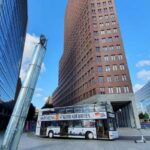
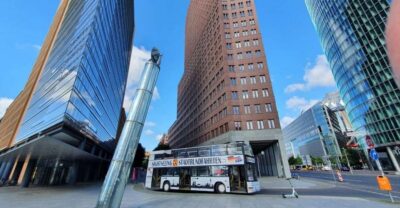
From the memorial atmosphere, you jump into Potsdamer Platz. This is where Berlin’s modern city planning is easiest to feel. The area was planned as a district, and the point is that it functions as a lived-in neighborhood, not only a tourist corridor. You’ll pass cafés, cinemas, shops, and the kind of urban density that helps Potsdamer Platz stay busy.
This stop is listed as free for sightseeing, which is good because it means your time there is about looking and soaking in the energy. For a lot of people, Potsdamer Platz is also a contrast stop. It sits on the same day as darker Cold War memorial sites, so your brain gets a full spectrum of Berlin’s story.
The route also includes Gropius Bau (Martin-Gropius-Bau). The focus here is cultural history, contemporary art, and photography. The itinerary indicates admission ticket not included. So treat this as a great curbside stop to orient yourself, then decide on another time if you want to go inside for exhibitions.
Cold War Memory in One Flow: Topography of Terror, the Wall Memorial, and Checkpoint Charlie

If Berlin has a theme for this ride, it’s Cold War geography. The route moves through places that show how power, fear, and borders shaped daily life.
First, you’ll see Topography of Terror, which became known by that name in 1987. The information tied to the site explains how it was a central location for planning and control of Nazi crimes, with key SS and police institutions housed there between 1933 and 1945. The stop is short, but the location is heavy, so the guide’s framing matters.
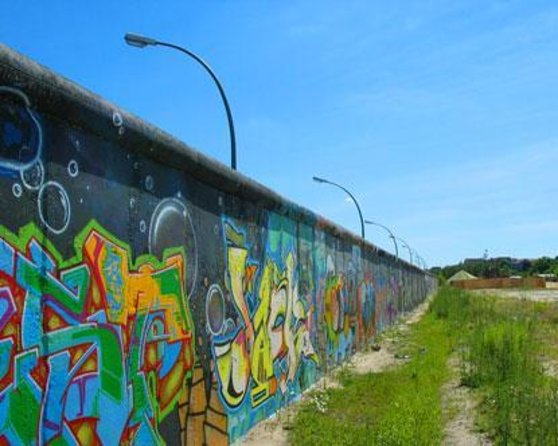
Then you go to Gedenkstätte Berliner Mauer in Bernauer Straße, an official memorial marking the Wall era. This area is remembered for escape attempts, including people throwing themselves out of windows toward the West side. You’ll also hear the Wall Memorial opened in August 1998 at the corner of Ackerstraße.
Next comes Checkpoint Charlie. This was the most famous border crossing, controlled by Americans during Berlin’s division. The tour stop is brief, but the context is clear: crossing points, who could pass, and how foreigners and officials were handled differently.
For many first-time visitors, this sequence is the best value moment of the entire day. You don’t just see three famous places. You see the border system as a set of connected locations.
Onward connections from Berlin:

Stroll-Feeling in the City Center: Friedrichstraße to Gendarmenmarkt, Deutscher Dom, and Konzerthaus
After the border and memorial stops, you shift into a more classic city-center rhythm.
You pass Friedrichstraße, a north-south axis and a shopping mile that became a popular draw after the Wall fell. The point of this stop is practical, not only scenic. It helps you understand how Berlin’s movement patterns changed when border barriers disappeared.
Then you reach Gendarmenmarkt, a square created in the late 1600s. The background includes French Huguenot settlers, and you’ll also hear how the square was renamed over time. It’s one of those Berlin spots where the architecture feels formal, almost theatrical.
The route includes Deutscher Dom with a permanent exhibition focused on the historical development of liberal parliamentary democracy across multiple floors. Admission ticket not included, so it’s a good external stop if you’re short on time, and a good add-on if your interests lean political-history.
Next, you visit Konzerthaus at Gendarmenmarkt. The building is classicist and linked to Karl Friedrich Schinkel. The tour notes a history that includes a small comedy house opening in 1776 and the later rise to a national theater. Even if you don’t go inside, you’ll appreciate why this square is often treated as a cultural stage.
Book Burning to Museum Island: Bebelplatz, Berliner Dom, and Lustgarten Lawns

One of the most chilling stops on the route is Bebelplatz. The Nazis burned books there in 1933, with a memorial marking the site. The tour highlights that tens of thousands of books were burned, including works by authors and intellectuals you may recognize from European literature and political thought. It’s not a long stop, but it’s one of the most important ones.
From there, you move to Museum Island, between the Spree and Kupfergraben. The buildings hold archaeological collections and 19th century art. Even a short look here helps you frame Berlin as a museum-city, not only a monument-city. The itinerary indicates admission ticket not included, so again, plan interior visits separately if you want them.
Then you’re at Berliner Dom, the cathedral with a striking dome. You don’t have to be a church person to see why it draws crowds. The tour points out that there’s a view opportunity after climbing the dome, but admission ticket not included, so you decide whether that’s worth adding on.
Nearby, you end up in Lustgarten, a pleasure garden in front of the city palace area. It’s laid out with linden rows and a prominent red granite bowl, and it’s a classic place for people-watching and relaxing lawns in warm weather. Since Lustgarten is free, it’s a great “slow down” moment after the heavier stops.
Alexanderplatz: The City’s Loud Heart

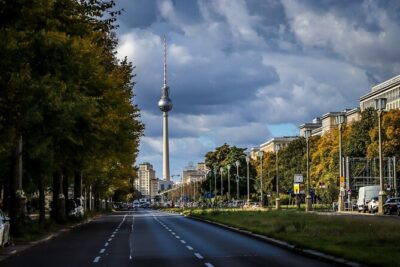
Finally, you reach Alexanderplatz, the lively square that has been important across eras, from the 1920s through GDR times to today. It’s more than a square. It’s a transit hub and a shopping center, plus it hosts major sights like the television tower and other recognizable landmarks.
The itinerary treats this as a flexible end point, because you can either enjoy the views right away or use the stop as a practical transition to dinner. It’s one of the best places in Berlin to feel like you’re in the present tense, not just reading the past.
Price and Value: What $53.10 Buys You in Real Time
The price is $53.10 per person, and the duration can range from 1 to 4 hours. That spread matters. This tour is strongest when you want guidance plus transportation that covers a lot of ground. If you were to pay for multiple separate guided city activities, plus transit time and the hassle of fitting them into one day, this starts to look like a workable deal.
You also get some practical extras:
- Private transportation
- WiFi on board
- Photographer
- Tour guide
- Music on request
The photographer detail is a real value boost. If you hate asking strangers to take your group photo, this solves that. WiFi is helpful if you’re mapping your next step after the ride.
The ride also includes a tour guide in English. You’ll want to pay attention to how the guide paces explanations. The itinerary is full of stops, so the best guiding style is the kind that stays clear and organized.
One caution on value: a few stops have admission tickets not included, so if you want to go inside multiple venues, you could add costs later. If you’re content with exterior looks and quick context, you can keep the budget tight.
Comfort, Music, and the Guide Factor (Hugo and Leo Are Big Names)
Your experience will depend on how the guide runs the narration and how the driver handles traffic. Many people rate the tour highly when the guide turns each stop into a story you can repeat later, and when the ride stays fun, not stiff.
Names that came up in positive feedback include Leo and Hugo. The descriptions of their guiding style were consistent: engaging storytelling, good pacing, and helpful photo stops. There was also praise for Ufuk Ayik for being accommodating during harsh weather.
That said, there are two realistic considerations you should keep in mind:
- Music on request is included, but one account described the speaker volume getting in the way of hearing the guide. I’d treat music as a nice-to-have and ask for it at a level that keeps conversation clear.
- One report described a driver as rough, with a complaint about driving style. You can’t control traffic, but you can choose the seat position, and if you feel unsafe, speak up right away.
Bottom line: when you get a guide who knows how to connect the dots without rushing, the tour clicks. When the pacing is off, you’ll still see the sights, but you may feel like you missed the point.
Weather Matters More Than You Think
This tour needs good weather. Berlin in any season can swing from pleasant to wet fast, and a rickshaw ride turns weather into part of the story. Even if you don’t love being outside, the upside is that you’re not trudging. Still, bring a rain layer if there’s any chance of showers.
Also note the mixed reliability signals in the feedback record. Some people had perfect rides. Others reported no-shows or major problems communicating with the operator. That doesn’t mean it will happen to you, but it does mean you should plan like a smart traveler: confirm the day-of details and make sure your contact info is correct.
If you’re traveling on a tight schedule, keep one extra buffer window in your day so one hiccup does not ruin your whole itinerary.
Who This Tour Fits Best
This rickshaw tour is a strong fit if:
- You want a first-timer overview of central Berlin with real context
- You prefer not to walk long distances
- You like history that connects across sites, from monuments to memorials
- You want a ride that keeps your day moving, not stuck in lines
It’s less ideal if:
- You want long museum time or lots of interior entries
- You need a strict timetable with minimal variability
- You dislike any outdoor time in variable weather
Should You Book This Berlin Rickshaw Tour?
Book it if you want a guided, efficient sampler of Berlin’s core sights and Cold War memory, with the convenience of transport and the bonus of photos and WiFi. The biggest value is the combination of major landmarks plus clear narration, without the strain of long walks.
Skip it or pair it carefully if you’re the type who needs museum entrances included, or if your trip is so tight that a weather or operational hiccup would ruin the day. If you do book, go in with the right mindset: think photo stops plus orientation, then choose any extra museum or interior visit you actually care about most.
Fresh on the arrivals board for Berlin



Berlin Tours & Activities, compared.
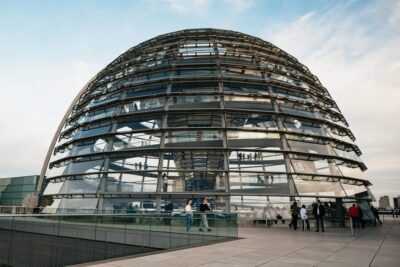
Reichstag, Dome and Government District Guided Tour
Read our review →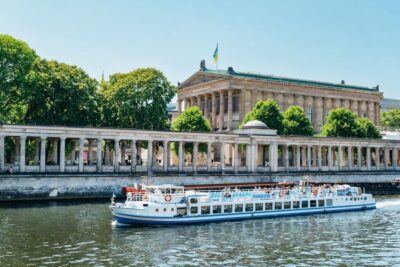
1-Hour City Tour by Boat with Guaranteed Seating
Read our review →
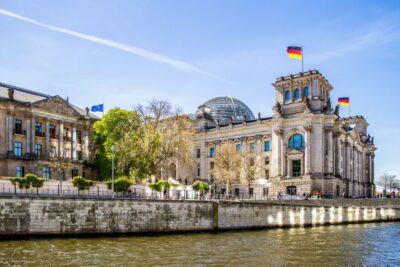
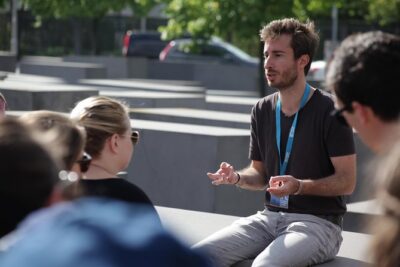
Berlin City walk Government District and Places of Democracy
Read our review →