
Reviewed · CITY TOURS
Rickshaw Sightseeing City Tours Berlin – Rikscha Tours
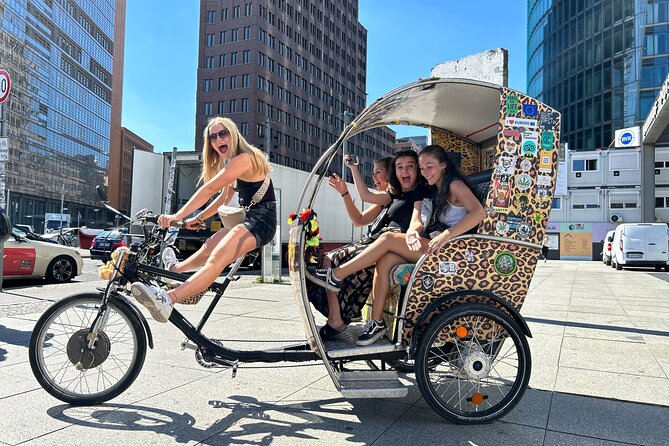
A rickshaw gives Berlin a closer face. This private ride past the Brandenburg Gate and the Berlin Wall memorial feels different than a bus loop, with onboard Wi-Fi and a warm blanket for chilly evenings. You stay connected while you glide from landmark to landmark, often with viewpoints you would not get from behind a windshield.
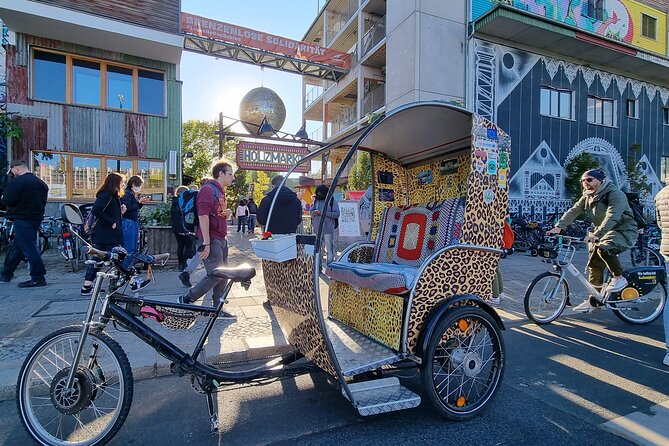
I especially love the up-close angles. A rickshaw gets you nearer to façades, memorials, and the details that usually blur by on a typical sightseeing drive. I also love that the experience is guide-led in a friendly way, including music on request and a photographer role where your guide can help capture your photos.
One consideration: reliability has a few rough edges. Several past bookings reported no-shows or missed communication, so I recommend you confirm close to departure and have a plan B if you are on a tight schedule.
In This Review
- Key highlights and what they mean for you
- Why a rickshaw works so well for Berlin sightseeing
- Comfort package: Wi-Fi, warm blankets, and music on request
- Value and price logic for a private ride
- Brandenburg Gate and the Reichstag, where Berlin tells its turning points
- German Chancellery and Tiergarten memorials: power, design, and memory
- Potsdamer Platz and the Topography of Terror, Berlin’s 20th-century stress test
- Gropius Bau, the Berlin Wall memorial, and Checkpoint Charlie
- Friedrichstraße, Gendarmenmarkt, and the theatre-and-façade payoff
- Bebelplatz book burning and the chilling simplicity of a memorial
- Neue Wache and Museum Island: a UNESCO site with a moral center
- Synagogue history, old-town feel, and the Alexanderplatz buzz
- East Side Gallery: Wall history turned into open-air art
- How long should you book, 1 hour or closer to 4?
- The comfort and the guide matter, especially if you love photos
- Reliability check: a small but real risk worth planning for
- Should you book this Berlin rickshaw tour?
- FAQ
- How long is the rickshaw tour?
- What does the tour cost for a small group?
- Is Wi-Fi and a blanket included?
- Do I need to pay for entry tickets to see places?
- Is pickup available?
- Is this a private tour?
- What weather does the tour require?
Key highlights and what they mean for you
- Close-up views of Berlin landmarks so photos feel personal, not postcard-flat
- Onboard Wi-Fi plus a warm blanket for comfort, even when the evening turns cold
- A guide who can tailor the pace and stop for the sights that matter most to you
- Photo support from your guide so you spend less time asking strangers to take pics
- A route packed with history from WWII, the Soviet era, and Cold War border points
- Private group of up to 2 makes it easier to move at your speed and preferences
Why a rickshaw works so well for Berlin sightseeing
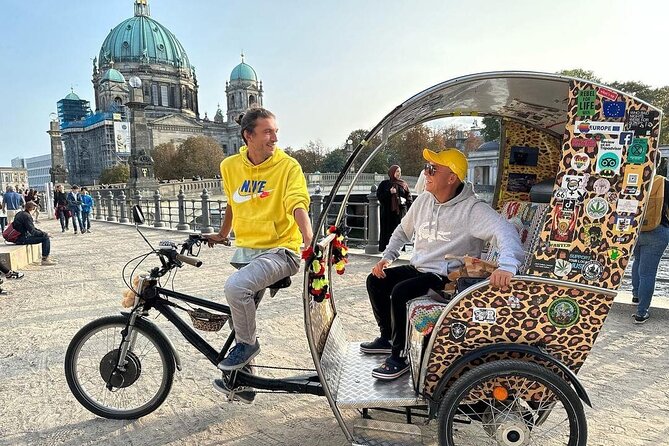
Berlin covers a lot of ground, but many of its best sights are spread across neighborhoods with narrow streets and tight corners. A rickshaw sidesteps the big-bus problem, where you see the landmark and still feel far away.
This tour is also built for shorter attention spans. You are not “hopping on and off” all day. Instead, you ride past major anchors, then pause long enough to take in the details and grab photos.
Also holding a platform in Berlin
- Berlin: Reichstag, Dome and Government District Guided Tour
★ 4.7 · 18,288 reviews - Berlin: 1-Hour City Tour by Boat with Guaranteed Seating
★ 4.3 · 16,993 reviews - Berlin: TV Tower Standard Entrance Ticket
★ 4.4 · 15,883 reviews
Comfort package: Wi-Fi, warm blankets, and music on request
This is not just a “sit and look” tour. You get onboard Wi-Fi, which is handy when you want directions, check messages, or just keep your trip organized on the move. When it gets cold, you also have a warm blanket, so your ride stays comfortable rather than something you rush through.
There is also music on request. That matters more than you might think. It can turn a history-heavy route into something that still feels relaxed and fun, especially in the evening.
Value and price logic for a private ride
The price is $105.72 per group, up to 2 people. That can work out very well if you are traveling as a pair, since you split the cost while still getting a private experience.
The tour duration is listed as about 1 to 4 hours. The longer the ride, the more chances you have to cover the full sweep of sights without feeling like you are sprinting. If you are short on time, go for the shortest slot that still includes your must-sees.
Pickup is included within a 2 km radius from Brandenburger Tor. If your lodging is farther, the tour charges €10 per km beyond that, so it is worth checking your starting point before you book.
Brandenburg Gate and the Reichstag, where Berlin tells its turning points
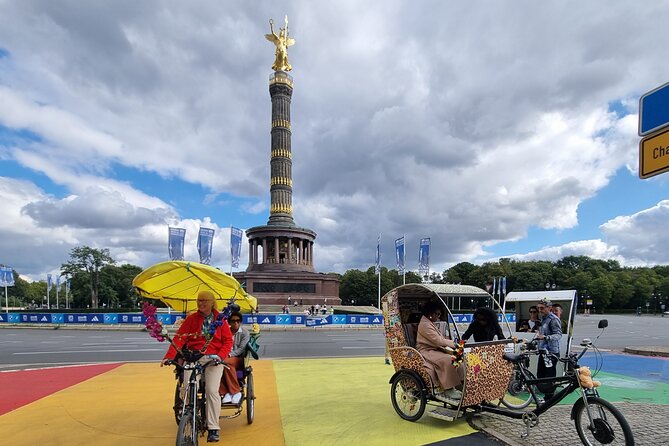
Your route begins at Brandenburger Tor, one of the city’s best-known symbols of German classicism. The gate’s design traces back to Carl Gotthard Langhans the Elder, with an architectural link to the propylaea of the Athens Acropolis. It was built in 1788 to 1791, ordered by King Friedrich Wilhelm II as a grand finish to the boulevard Unter den Linden.
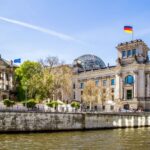
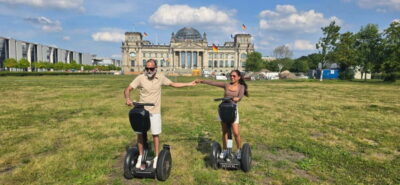
From there, you move toward the Reichstag area. This is one of those stops where the story matters as much as the building itself. The balcony on the west portal is tied to Philipp Scheidemann, who called the Republic on November 9, 1918. Then the Reichstag fire on February 27, 1933, destroyed the plenary hall and the dome. Later, the victory over the Third Reich is symbolized by a red flag raised April 30, 1945 by two Red Army soldiers.
Practical note: the tour does not include admission tickets here, so you are mostly seeing these sites from outside or from viewpoints you can reach without paid entry.
German Chancellery and Tiergarten memorials: power, design, and memory

Next up is the German Chancellery. It is known for its 36-meter height and for the way the building creates transparency and lightness. The design uses large glass surfaces and concrete pillars, plus glazed atriums in the side wings. In other words, it is modern government architecture with a visible, almost airy presence.
Then the route heads into the Soviet War Memorial in the Tiergarten. You get a strong visual impact right away: two T-34 tanks flanking a bronze statue of a Red Army soldier. Behind the memorial are names of fallen Soviet soldiers, and the rear part includes graves of around 2,500 soldiers. This is a stop where I recommend you take a slower moment. The visuals are powerful, and the details are part of the respect.
This memorial is listed as free of charge for admission, which makes it easier to include without budgeting extra time or money.
Onward connections from Berlin:
Potsdamer Platz and the Topography of Terror, Berlin’s 20th-century stress test
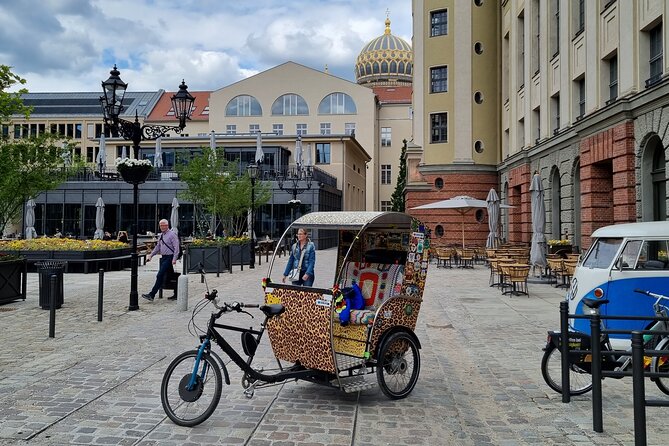
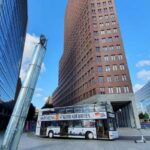
Potsdamer Platz is a contrast machine. It went from a planned district vision into a central place where Berliners actually spend time, not just a photo stop. The area is built around a new mix of cafes, cinemas, shops, and modern high-rises, all between Potsdamer Platz and Reichpietschufer.
After that, the tour turns toward the Topography of Terror, a site tied to the planning and control of Nazi crimes. Between 1933 and 1945, major SS and police institutions were housed there, including the Secret State Police Office, the Reichsführung SS, and the Reich Security Main Office. Even without entering a museum, this is the kind of stop where the setting alone helps you feel the weight of the era.
The Topography of Terror stop is listed as free, so you can spend your budget on the experience rather than entry fees.
Gropius Bau, the Berlin Wall memorial, and Checkpoint Charlie
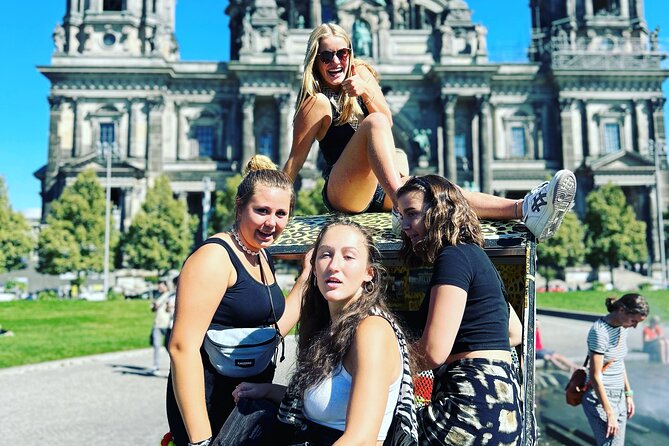
Gropius Bau is a cultural history stop, tied to contemporary art and photography. It is a good palate cleanser after heavy WWII and terror-site content, especially if you want the day to feel more balanced rather than one long emotional sprint.
Then the Cold War story comes sharply into focus at the Berlin Wall memorial. From there, you reach Checkpoint Charlie, which was the most famous border crossing during Berlin’s division for Americans. The other checkpoints were Helmstedt-Marienborn (Checkpoint Alpha) and Dreilinden-Drewitz (Checkpoint Bravo). Checkpoint Charlie also had rules for who could cross, including foreigners and certain officials.
The tour includes these locations as quick stops, meaning you get context through narration and views, rather than a long museum-style visit. Admission is listed as free for these parts, which helps keep the route moving.
Friedrichstraße, Gendarmenmarkt, and the theatre-and-façade payoff
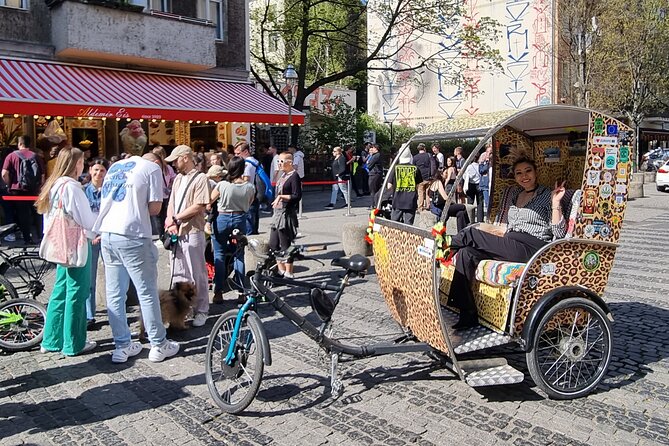
After the border sites, the ride follows Friedrichstraße, a north-south axis. It is also the spine of a popular shopping stretch that developed after the fall of the Wall, with lots of people using the corridor like a city living room.
Gendarmenmarkt is a highlight if you like squares and architecture. The area traces back to the late 17th century, planned by Johann Arnold Nering, and connected to French immigrants, especially French Protestants, often called Huguenots. Over time, the square shifted names, and it was renamed Gendarmenmarkt in 1799 because of the guard and stables of the Gens d’armes ward regiment from 1736 to 1782.
From Gendarmenmarkt, the route touches the Deutscher Dom and the Konzerthaus. The Deutscher Dom’s permanent exhibition, Ways, wrong trails, detours, focuses on the development of liberal parliamentary democracy across five floors. The Konzerthaus am Gendarmenmarkt is one of Karl Friedrich Schinkel’s major classicist works, and it has theatre roots going back to 1776, when Frederick the Great backed a comedy house. It was later renamed the Royal National Theater in 1787.
Admission for these stops is listed as not included, so keep your expectations on what you can see without paying entry.
Bebelplatz book burning and the chilling simplicity of a memorial
Bebelplatz is where the tour takes a turn from architecture to direct political violence. It is tied to the Nazis desecrating the place through book burning. On May 10, 1933, National Socialists burned more than 20,000 books at Bebelplatz. The selection targeted books they considered non-German spirit, including works by Erich Kästner, members of the Mann family, Magnus Hirschfeld, Lion Feuchtwanger, Karl Marx, Else Lasker-Schüler, and many other authors. Heinrich Heine also appears in the story.
This is a short stop, but it is one of the most important ones. If you are sensitive to heavy topics, plan to give yourself a breather right after, not just scroll past it and move on.
Neue Wache and Museum Island: a UNESCO site with a moral center
Near the German Historical Museum is Neue Wache, built between 1816 and 1818 to Karl Friedrich Schinkel’s designs. Since 1993 it has served as a central memorial in the Federal Republic of Germany for victims of war and tyranny. This is the kind of stop that benefits from quiet attention, because the message is meant to land slowly.
Then you get Museum Island, one of Europe’s standout museum complexes and a UNESCO World Heritage Site. Even if you do not step inside museums, the island setting gives you a sense of why Berlin built its cultural reputation here.
From this area, you also pass the Berlin Cathedral, which is described as a must for church lovers. Nearby is Lustgarten, once connected to the Berlin City Palace, now a popular square for locals and visitors.
Synagogue history, old-town feel, and the Alexanderplatz buzz
The New Synagogue on Oranienburger Strasse is part of the route, and it is described as once being Germany’s largest and most important synagogue. That context helps you notice the building as more than a backdrop, it is a marker of a community and its history.
Then you move into Nikolaiviertel, Berlin’s oldest residential area. It is associated with old town flair, historic houses, restaurants, and coffee shops, along with the Nikolaikirche.
Finally, the ride reaches Alexanderplatz, described as one of the liveliest places in Berlin across eras, including the 1920s and GDR times, and continuing today. It is a good “reset” moment after memorial-heavy stops, because the space is about everyday life again.
East Side Gallery: Wall history turned into open-air art
The tour’s endpoint includes the East Side Gallery, described as a remnant of the Berlin Wall and the longest open-air gallery in the world. This is one of the most visually satisfying parts of Berlin’s Wall story, since art turns a dividing structure into something people can walk and look at directly.
It is also a stop that pairs well with the rickshaw format. You are close enough to see the texture and details without trying to spot everything from far away.
How long should you book, 1 hour or closer to 4?
If you book a short slot, plan to treat it like a fast, high-impact introduction. You will get the major anchors and the key story beats, but not every stop on the long list.
If you book longer, you are more likely to cover both the “big monuments” and the “memory sites,” plus the more easterly sights like Alexanderplatz and the East Side Gallery. Longer time also helps if you want more stops to take photos or if your guide can pace it based on what you care about.
The comfort and the guide matter, especially if you love photos
The strongest feedback points in the experience revolve around the guide and the ride quality. Guides described as interactive and funny, plus attentive about where the rikscha goes and when you stop, are a huge part of why this tour lands well.
There is also a clear photo focus. Your guide can act as a photographer and help take pictures with your camera. If you care about getting real souvenir shots without setting up tripods, this is a practical win.
Reliability check: a small but real risk worth planning for
A handful of past bookings reported no-shows, poor communication, and delays resolving issues. That does not mean it happens all the time, but it does mean you should be smart about your expectations.
If your schedule is tight, send a confirmation message ahead of time and again shortly before the start. If you are coming from far away or flying in for a single day, keep an alternate sightseeing plan nearby, just in case.
Should you book this Berlin rickshaw tour?
Book it if you want Berlin sightseeing that feels close-up, personal, and more fun than a standard bus tour. The combination of onboard Wi-Fi, warm blanket comfort, and a guide who can handle both big landmarks and photo stops is a strong match for couples and small groups.
Skip it or proceed with extra caution if you cannot handle uncertainty. Past no-show reports are serious enough that you should confirm close to departure and keep a backup plan if you are traveling on a fixed itinerary.
If you land in the sweet spot, this is a smart way to see a lot of Berlin, while still getting the kind of viewpoints that make the trip feel like more than just passing by.
FAQ
How long is the rickshaw tour?
The tour is listed as approximately 1 to 4 hours, depending on the time slot you book.
What does the tour cost for a small group?
The price is $105.72 per group, up to 2 people.
Is Wi-Fi and a blanket included?
Yes. The tour includes warm blanket and Wi-Fi on board. It also includes music on request.
Do I need to pay for entry tickets to see places?
Admission tickets are not included for some sights (for example Reichstag/Bundestag, the German Chancellery, and several others). Some stops are listed as free for admission, like the Soviet War Memorial, Topography of Terror, and Checkpoint Charlie.
Is pickup available?
Pickup is offered within a 2 km radius from Brandenburger Tor. If your pickup location is more than 2 km away, there is a charge of €10 per km.
Is this a private tour?
Yes. This is a private tour/activity, and only your group participates.
What weather does the tour require?
The experience requires good weather. If it is canceled due to poor weather, you will be offered a different date or a full refund.
Fresh on the arrivals board for Berlin


City Tours, compared.
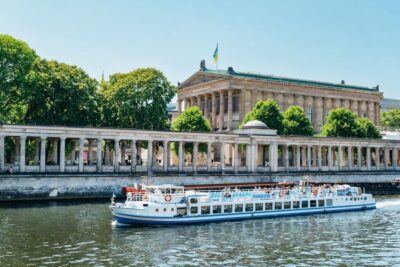
1-Hour City Tour by Boat with Guaranteed Seating
Read our review →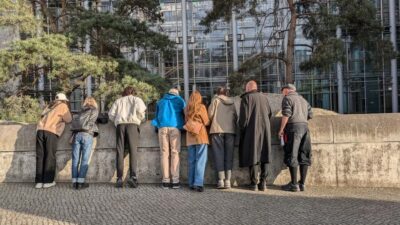
Berlin City walk Government District and Places of Democracy
Read our review →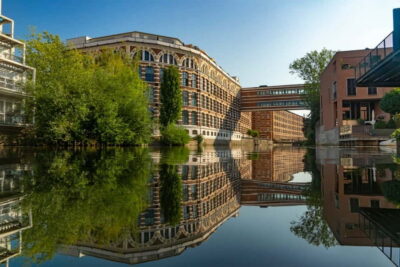
City History Canal Sightseeing Tour on a Motorboat
Read our review →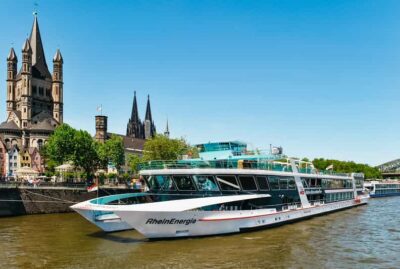
Browse the lists this tour appears in