Reviewed · BERLIN TOURS & ACTIVITIES
Queer Berlin Tour: Birthplace of LGTBQ Movements
Berlin has a queer map you can walk.
This Queer Berlin Tour traces LGBTQ milestones across Schoneberg, Unter den Linden, and Cold War Alexanderplatz, led by an expert licensed guide in English. You’ll hit cinema, nightlife, and political history in a tight route, so the stories feel close to the street.
I love that it spotlights specific places tied to real people, from Christopher Isherwood’s Berlin connections to the iconic 70s nightclub Chez Romy Haag. I also like the small group size (max 10), which keeps the pace human and the questions flowing. One practical drawback: metro transport is not included, so you should budget for a ticket before you start.
In This Review
- Key highlights to look for
- What this Queer Berlin walk is really good at
- The meeting point, the start time, and how to set yourself up
- Schoneberg: the “gay ghetto” chapter you can actually picture
- Unter den Linden: sexuality, disguise, and high-society myths
- Alexanderplatz and Cold War East Berlin: what “behind the Iron Curtain” meant
- Price and logistics: is $156.53 good value?
- Who should book this tour, and who might skip it
- Should you book this Queer Berlin Tour?
- FAQ
- How long is the Queer Berlin Tour?
- What is the price per person?
- Where do I meet for the tour?
- Where does the tour end?
- Is the tour offered in English?
- How big is the group?
- Are admissions included for the stops?
- What transport costs should I plan for?
- What is the cancellation policy?
Key highlights to look for
- Small group, max 10 keeps the walk personal.
- Free admission at the stops means you pay for the guide, not entry fees.
- Schoneberg’s queer layers connect Weimar-era nightlife to post-WWII rebirth.
- Christopher Isherwood to Cabaret shows how lived experience becomes art.
- Cold War Alexanderplatz context explains what persecution looked like under the Iron Curtain.
- A funny, smart guide vibe shows up repeatedly in the tour feedback.
What this Queer Berlin walk is really good at
This tour works because it doesn’t treat queer history like a museum display. You move through Berlin neighborhoods that still carry the atmosphere of what came before, and the guide ties each place to names and turning points. The route is compact, about 3 hours, and it covers three very different “chapters” of the city: early queer culture in the west, sexuality and disguise on a grand boulevard, and the pressure cooker of the Cold War east.
I especially like that the story isn’t only about activism in the narrow sense. You get the nightlife side, the art side, and the political side, all stitched together by the same theme: how queer Berlin survived, adapted, and built community.
One reason this feels worth the money is simple math. You’re paying a per-person price of $156.53, and the tour includes the expert licensed guide plus the stop admissions being free. The cost is mostly for interpretation and navigation, not ticket stacking.
Also holding a platform in Berlin
- Berlin: Reichstag, Dome and Government District Guided Tour
★ 4.7 · 18,288 reviews - Berlin: 1-Hour City Tour by Boat with Guaranteed Seating
★ 4.3 · 16,993 reviews - Berlin: TV Tower Standard Entrance Ticket
★ 4.4 · 15,883 reviews
The meeting point, the start time, and how to set yourself up
You meet at Impala Coffeeshop, Maaßenstraße 5 (10777 Berlin) at 2:00 pm. The tour ends at Alexanderplatz (10178 Berlin), so you finish near one of the city’s busiest transport hubs.
Because metro tickets are not included, I’d plan your transit before you go. The tour is near public transportation, which helps, but you still need your own ticket. If you’re staying central, it’s often easiest to do a quick hop from where you are to the meeting point, then just let the tour carry you.
This is offered in English, and it’s designed for most travelers. Also, the group stays small at up to 10 people, which changes the feel. You’re not shouting over a crowd, and it’s easier for the guide to answer questions without rushing.
One more value detail: it’s a mobile ticket experience, and you get confirmation at booking. That matters if you’re juggling plans and want less fuss once you’re in Berlin.
Schoneberg: the “gay ghetto” chapter you can actually picture
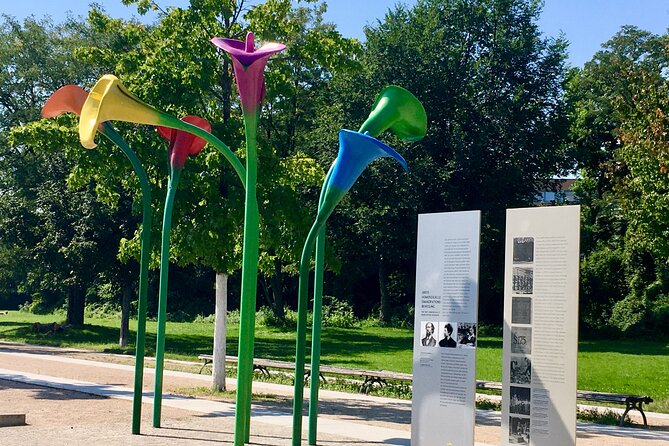
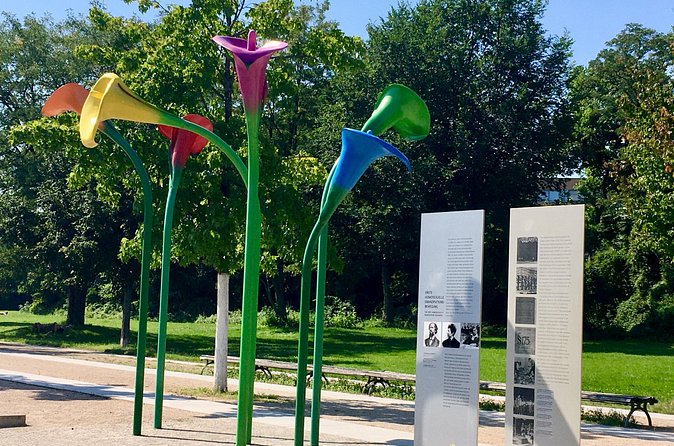
The Schoneberg stop is where this tour earns its name. You explore what’s often described as the world’s first gay ghetto, and the guide builds the neighborhood story like a timeline you can see. It’s not only about famous bars. It’s about how a place became a refuge, then how it got shaped by art and politics, and later how it rebounded after WWII.
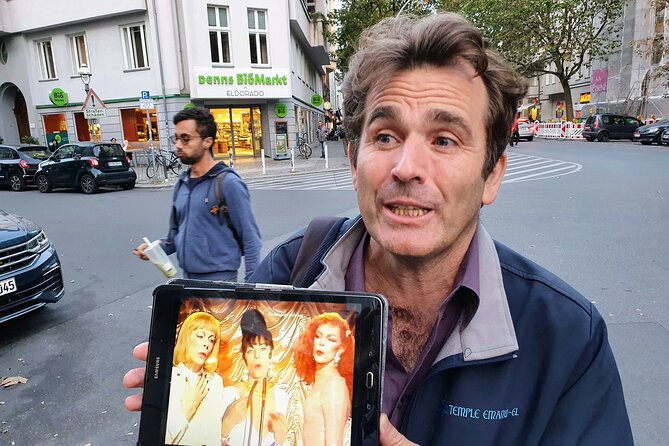
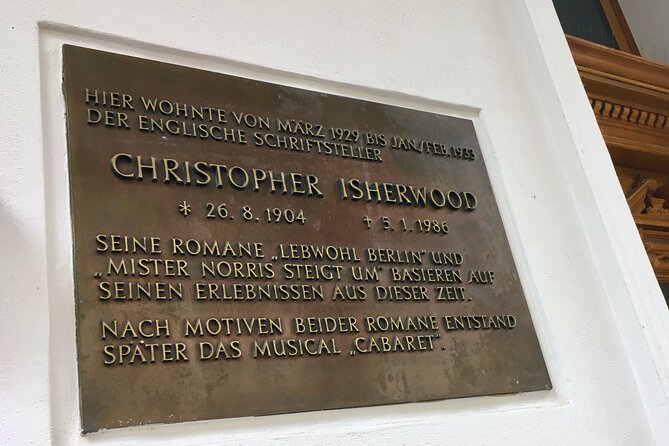
You’ll also connect queer Berlin to major cultural figures. The tour points out Christopher Isherwood’s former flat, and then ties his Weimar-era adventures to how they inspired the musical Cabaret. That connection is a smart move for your brain. Instead of just hearing names, you start linking streets to scenes, then scenes to songs.
From there, the walk goes through nightlife landmarks and the quieter texture of day-to-day queer life. You’ll pass nightclubs he frequented, and the guide highlights a rent-boy dive described as still gay-run. You also learn what was going on around the infamous El Dorado Cabaret, and that’s where the story gets extra sharp.
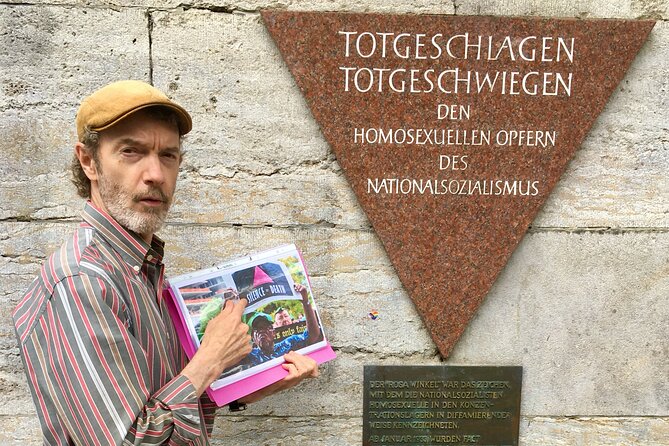
One standout topic here is Ernst Rohm, described as openly gay and the head of the Sturmabteilung (often referred to as the Nazi Brown Shirts). Including him isn’t there to shock. It shows how queer identities existed within the dark machinery of that era too, and how complicated and contradictory life could be under rising persecution.
The last part of Schoneberg’s story pays homage to the post-WWII revival of the neighborhood as a gay center, with special attention to Chez Romy Haag, the city’s iconic 70s nightclub. For me, that’s the payoff: the tour shows how community can re-form, not just how it can be destroyed.
What to watch for: this stop is dense. If you like history that has names, dates, and connections, you’ll be in your element.
Possible drawback: if you’re less interested in politics and more interested in modern-day Berlin, this section may feel heavier than you expected.
Unter den Linden: sexuality, disguise, and high-society myths
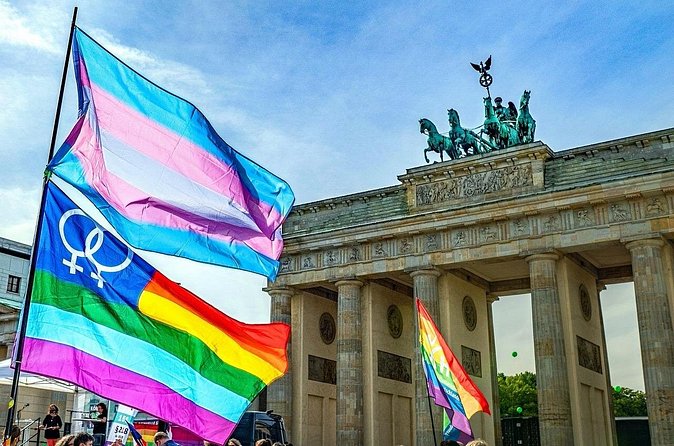
Next you head to Unter den Linden, the grand historic boulevard. This part shifts the tone from neighborhood nightlife to public power, and it uses an interesting angle: early gay Berliners and how they hid or adapted their sexuality.
You meet the guide’s chosen figures, including Prussian King Frederick the Great and explorer Alexander von Humboldt. The tour focuses on the idea of disguise, so the conversations tend to be about what could be said, what couldn’t, and how people performed respectability while living privately.
This is valuable because it resists a common trap. It doesn’t frame queer history only as a string of subculture events. It shows queer people inside the structures that shaped Europe, even when those structures were not safe places to be open.
You should expect a 45-minute stop here with more interpretive storytelling than “look at this building, done.” The boulevard itself is visually impressive, but the real point is how the guide uses it as a stage for identity, constraint, and secrecy.
What to watch for: because the focus is interpretation, you’ll get more from it if you stay mentally awake. Take your photos quickly, then listen.
Alexanderplatz and Cold War East Berlin: what “behind the Iron Curtain” meant
The final stop is Alexanderplatz, described as the heart of Cold War East Berlin. This is the part that changes the emotional temperature. The guide explains the suffering that gays and lesbians endured under the Iron Curtain, so the story moves from concealment and community-building into fear and punishment.
It’s also a smart way to end. Alexanderplatz is a high-visibility place in today’s Berlin, with huge transit energy. Ending here lets you see the contrast between how the area functions now and how it was tied to surveillance and control in the past.
This stop runs about 45 minutes, and it tends to feel more direct. Instead of lots of side-characters and nightlife references, you get the broad pressure: the cost of being who you were when the state and its systems weren’t playing nice.
Possible drawback: if you already know a lot about Cold War repression, you might want to ask your guide to slow down for the personal stories and specific mechanisms. The best tours are the ones where you can steer the conversation a bit.
Onward connections from Berlin:




Price and logistics: is $156.53 good value?
At $156.53 per person for roughly 3 hours, the deal looks fair because of what’s included. You get an expert licensed guide, the stops are described as having free admission, and the group cap is 10 people. That combination usually means you’re paying for interpretation and real-time navigation, not for entry fees and long lines.
The one cost to plan for is metro transport. The tour explicitly says metro tickets are not included, and it even references a 24-hour ticket (10 EUR). So, if you’re counting expenses, add that in. Also, you’re ending at Alexanderplatz, which is a major transit node, so you can usually connect easily after the tour.
Another practical value point: it’s frequently booked about 25 days in advance on average. If your dates are fixed, earlier booking is often the safest move, especially for a small group tour.
Who should book this tour, and who might skip it
Book this if you want queer Berlin history that’s tied to real names and real places. It’s especially good for people who care about cultural influence. The Christopher Isherwood to Cabaret thread, plus the stop around Romy Haag, connects queer life to art and entertainment in a way that feels concrete.
It’s also a strong choice if you like a guide who can juggle tone, humor, and seriousness. The tour feedback repeatedly highlights a funny, smart presentation style, plus guides described as approachable and well-versed.
You might consider another option if you prefer purely contemporary neighborhoods and modern venues. This tour spends a lot of time on specific historical eras, including Cold War suffering. That’s important context, but it’s not “just a nightlife walk.”
Should you book this Queer Berlin Tour?
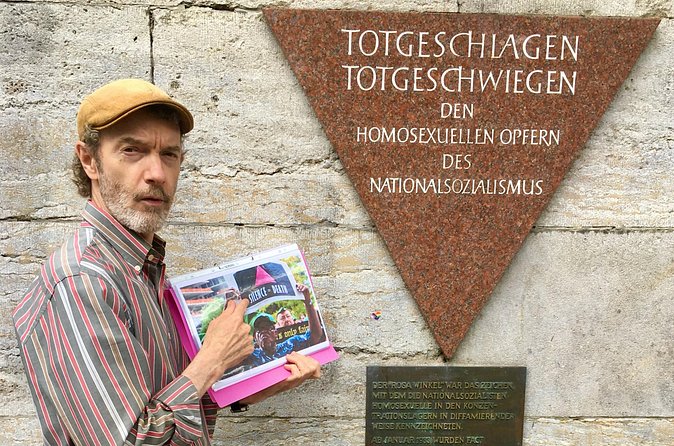
If your goal is to understand how queer life shaped Berlin, not just where it happened, I think this is a good booking. You’re getting a small-group, English-language walk with a licensed guide, free admission stops, and three well-chosen historical chapters that connect nightlife, art, power, and repression.
Just go in knowing two things. First, you need to handle metro tickets on your own. Second, the emotional range is real, from Schoneberg’s community energy to Cold War persecution. If that mix appeals to you, you’ll likely leave with Berlin feeling clearer, not just more colorful.
FAQ
How long is the Queer Berlin Tour?
It lasts about 3 hours.
What is the price per person?
The price is $156.53 per person.
Where do I meet for the tour?
You meet at Impala Coffeeshop, Maaßenstraße 5, 10777 Berlin.
Where does the tour end?
The tour ends at Alexanderplatz, 10178 Berlin.
Is the tour offered in English?
Yes, it is offered in English.
How big is the group?
The tour has a maximum of 10 travelers.
Are admissions included for the stops?
The stop admissions are listed as free.
What transport costs should I plan for?
Metro tickets are not included. A 24-hour metro ticket is referenced at 10 EUR.
What is the cancellation policy?
You can cancel for a full refund if you cancel at least 24 hours before the experience starts.
Fresh on the arrivals board for Berlin
Berlin Tours & Activities, compared.

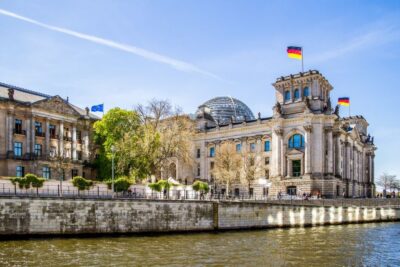
Reichstag, Dome and Government District Guided Tour
Read our review →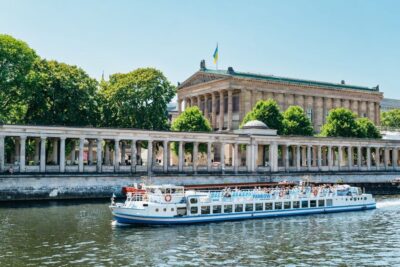
1-Hour City Tour by Boat with Guaranteed Seating
Read our review →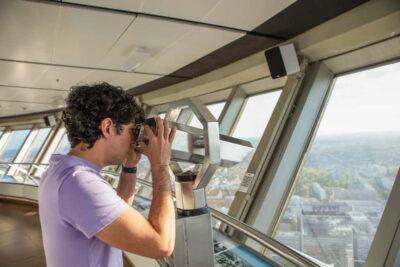
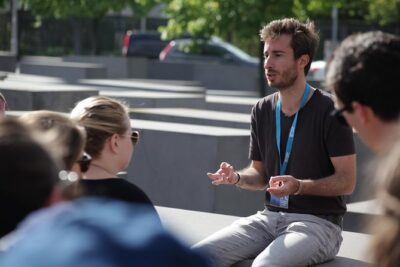
Berlin City walk Government District and Places of Democracy
Read our review →