Reviewed · BERLIN TOURS & ACTIVITIES
Privat: Berlin: Prenzlauer Berg Bicycle Tour in German
Prenzlauer Berg has a Wall story on every corner. This private bike tour turns big Berlin moments into an easy ride, starting right at Bornholmer Straße and following the path of the Berlin Wall through today’s parks and neighborhoods. I love how the tour connects memory to real streets, from the fall-out-of-history feeling at the Platz des 9 November 1989 to the divided street Bernauer Straße.
What makes it especially enjoyable is the pace and the human scale. You’re on a small group max, and a live German guide keeps the stops clear and practical, with past guides like Steffen and Ferrenz praised for solid, well-explained context. One drawback to consider: you’ll be moving for about 3.5 hours, so this is best if you’re comfortable biking for stretches and keeping luggage out of the way, since large bags are not allowed.
In This Review
- Key highlights to look for
- Why Prenzlauer Berg by bike makes sense
- Starting at Bornholmer Straße, where the Wall drama begins
- Following the Wall line through Mauerpark and Bernauer Straße
- The breweries zone: Kulturbrauerei and Kollwitzplatz’s Zille connections
- Dicker Hermann’s time stamp, Berlin’s oldest water tower
- Märchenbrunnen and the fairy-tale architecture Ludwig Hoffmann designed
- Velodrom and Europasportpark: sports venues you can feel
- Zeiss Major Planetarium and The Palm’s unexpected current reality
- Price, pacing, and value for a private group
- Who this tour is best for
- Should you book this Prenzlauer Berg bicycle tour?
- FAQ
- What language is the tour guide?
- How long is the Prenzlauer Berg bicycle tour?
- Where does the tour start?
- What is the price and group size?
- What is included in the tour price?
- Is food included during the tour?
- What should I bring?
- What is not allowed?
- What if it rains?
Key highlights to look for
- Bornholmer Straße, 9 November 1989: start at the former border crossing and see why this exact spot matters.
- Mauerpark and Bernauer Straße: ride from the Wall line into the divided-street memory stretch.
- Breweries era storytelling: pass through the area tied to late 19th-century beer power, including today’s Kulturbrauerei.
- Dicker Hermann (Fat Hermann): stop at Berlin’s oldest water tower, completed in 1877.
- Märchenbrunnen: a big neo-Baroque fairy-tale fountain complex designed by Ludwig Hoffmann.
- GDR-era landmarks to close strong: Velodrom, Europasportpark, Ernst-Thälmann sites, and the Zeiss Major Planetarium.
Why Prenzlauer Berg by bike makes sense
Prenzlauer Berg is one of those Berlin districts where the present looks tidy, but the ground still holds old tension. On foot, you can get the outline. On a bike, you get the rhythm, and the stories land faster because you’re moving through the same corridors where history happened.
This tour is built around that idea. It uses a simple format: ride between major points, pause to understand what you’re seeing, then ride again. With a guide speaking German, you’ll get the sense that the city is being explained as a place, not a list of monuments.
Also holding a platform in Berlin
- Berlin: Reichstag, Dome and Government District Guided Tour
★ 4.7 · 18,288 reviews - Berlin: 1-Hour City Tour by Boat with Guaranteed Seating
★ 4.3 · 16,993 reviews - Berlin: TV Tower Standard Entrance Ticket
★ 4.4 · 15,883 reviews
Starting at Bornholmer Straße, where the Wall drama begins
You begin at Bornholmer Straße 75 at the Rad – zu Fuß Führungen & Fahrradverleih meeting point. The route starts on historic ground at the former border crossing Bornholmer Straße, which first opened on November 9th, 1989. That date is the headline, but the value is what the guide helps you notice on the street itself, not just in a textbook.
Today, the Platz des 9 November 1989 is there to mark that moment. You’ll get the feeling of why this location became a turning point. It’s also a good way to start because it gives you a mental map early. After you understand where the Wall’s pressure system was releasing, the later stops feel more connected.
Practical note: the tour includes bicycle rental fees and rain capes if the weather gets spicy. Still, wear what you can comfortably bike in, and bring the basics you’re asked for, like your ID and sunglasses.
Following the Wall line through Mauerpark and Bernauer Straße
From the beginning, the ride keeps leaning into one theme: the Wall wasn’t just a barrier, it was a line that structured daily life. You’ll cycle along the former course of the wall, and then you’ll cross into Mauerpark, also known as Wall Park.
Mauerpark is famous for Sunday energy. On Sundays, you might see flea markets plus karaoke and musical improvisations. Even if your day isn’t a Sunday, the park still reads as a former edge that Berlin has repurposed into public space. You learn to see how a Wall trace can turn into normal street life again.
Then you ride to Bernauer Straße, a street divided from 1961 to 1989. This is where your understanding changes from abstract history to street-level geography. The lesson here is simple and important: you can stand in one spot today and still feel how separation reshaped movement.
If you’re the type who likes photos, bring your camera. The tour runs long enough that you’ll have chances to capture details, like the contrast between restored urban life and the memory of the division.
The breweries zone: Kulturbrauerei and Kollwitzplatz’s Zille connections
After the Wall themes, the tour shifts gears into everyday Berlin power. The route moves through the area tied to breweries that grew during the late 19th century. You’ll pass the once largest brewery in Germany, which today is Kulturbrauerei.
I like this part because it shows another kind of Berlin identity: not political drama, but industry, neighborhoods built by work, and architecture that outlasted the original purpose. When you see Kulturbrauerei now, it can be easy to think it’s just an entertainment venue. The guide helps you connect it to what it used to be.
Next comes Kollwitzplatz and its tenements, including the connection to Heinrich Zille, whose illustrations captured the area’s character. Zille’s name matters because it links art and urban life, and that helps you read the street as more than scenery.
This stop also works as a pacing reset. You’ve spent time on heavy history. Now you can look at details like façades and street corners while still getting guided context.
Dicker Hermann’s time stamp, Berlin’s oldest water tower
You’ll reach Berlin’s oldest water tower, the Dicker Hermann, completed in 1877. Even if you’re not a tower person, this is a great stop because it’s tangible. A building like this puts a date on the city in a way that feels real, not just symbolic.
The guide’s value here is interpretation. You learn how infrastructure shaped daily city living long before the Wall, and that helps balance the emotional weight of the earlier parts. It’s like switching from the headline to the working chapters of the city.
If it’s sunny, don’t forget that your eyes will be scanning façades and sky. Sunglasses and a sun hat make a real difference on a bike tour.
Onward connections from Berlin:
Märchenbrunnen and the fairy-tale architecture Ludwig Hoffmann designed
From the Dicker Hermann, you bike to the Märchenbrunnen, also called the Fountain of Fairy Tales. This fountain complex is huge for what it looks like at first glance, measuring 34 by 54 meters. It was constructed by architect Ludwig Hoffmann in a neo-Baroque style.
What I like about this stop is how it turns a “nice fountain” into a story about Berlin tastes. You’re not just seeing water and sculpture. You’re seeing a design language, and you learn how architects used style and storytelling to shape public space.
This stop is also a practical breather. You can take a moment, look for details, and then get back on the bike with less mental load. It’s a nice contrast inside a tour that started with borders and ended with major institutions.
Velodrom and Europasportpark: sports venues you can feel
Next you’ll head toward Velodrom, a track cycling arena and one of Berlin’s biggest concert venues. The name alone tells you what it is, but the tour context adds why it belongs in this route.
From there you’ll pass the Schwimm- und Sprunghalle im Europasportpark, an indoor swimming pool. Again, this is one of those stops where a guided explanation helps you see it as part of Berlin’s built environment, not just a building with a sign.
Then you’ll connect these sports landmarks to the Ernst Thälmann area, cycling past the Ernst Thälmann Monument and reaching the Ernst Thälmann Park. This is one of the tour’s quieter “politics in public space” segments. You’re not only seeing places linked to a figure, you’re seeing how a city gave public prominence to certain ideals.
If you prefer history that sits in plain sight, this section will satisfy you. It’s visible, and it’s close enough that you don’t have to hunt for it.
Zeiss Major Planetarium and The Palm’s unexpected current reality
You’ll reach the Zeiss Major Planetarium, a prestigious building from GDR times. This stop feels like a reminder that culture and science were part of identity building, not separate from politics. The guide helps you see the building as a product of its era, and that changes how you read it.
The ride ends with a stop near The Palm, Berlin’s largest social building complex built in 1886. It got its name from a potted palm tree in an anteroom at the time. Today, the building serves as a homeless shelter with 5,000 sleeping places across 40 dormitories.
That final contrast is powerful. After Wall sites, industrial power, and GDR institutions, you arrive at a building where the “public good” idea is lived right now, with all its real-world complexity. It’s not just history. It’s contemporary Berlin in one location.
For your photos, this is one place where you might want to slow down and frame carefully. The size is big enough that angles matter.
Price, pacing, and value for a private group
The price is $224 per group up to 5, and the experience runs 210 minutes, about 3.5 hours. That’s not the cheapest way to see Prenzlauer Berg by bike, but it’s also not trying to be mass tourism.
The value comes from three things:
- You’re with a guide for the whole time, in German, which matters when you want the “why” behind what you’re seeing.
- You don’t have to fight crowds to stop and learn, since the group is small (maximum 8 persons).
- Bike rental fees and VAT are included, plus rain capes if the weather turns.
If you’re traveling with family or friends, this kind of private-group pricing can start looking very reasonable. Even with up to 5 people bundled under the stated group price, the tour still caps at a small size overall, so you keep the attention.
One more consideration: it’s not a “wander and snack” tour. Food isn’t included at possible stops. I recommend you plan your own simple break, like a small snack before you start, and then eat after the ride.
Also, large bags and luggage are not allowed. If you’re coming straight from the airport with heavy gear, you’ll want to sort that before the tour so you’re not stressed.
Who this tour is best for
This is a great choice if you want history that’s active, not museum-still. You get Wall memory (Bornholmer Straße, Mauerpark, Bernauer Straße) plus district identity through breweries, tenements, and major public buildings.
You’ll also like it if you enjoy bike travel and you’re okay with moving through different neighborhoods without stopping to wait for long periods. The time commitment is real, but the flow helps.
It’s less ideal if you’re mainly looking for relaxation or if you get tired quickly on bikes. The route is timed, so you should be ready to ride, not just observe from one spot.
Finally, because the tour guide is German, it helps if you’re comfortable reading along visually, even if you don’t speak fluent German. Clear context makes a difference, and past guests highlighted how well guides explained things.
Should you book this Prenzlauer Berg bicycle tour?
I’d book it if you want Prenzlauer Berg with structure and meaning. Starting at Bornholmer Straße and following the Wall line is a smart approach, and the tour keeps it from becoming heavy by balancing sports venues, architecture, and public spaces like Märchenbrunnen and The Palm.
You should also book it if you value small group attention. The repeated praise for guides like Steffen and Ferrenz points to the kind of experience you’re buying, clear explanations and good timing.
Skip it if you want a very casual ride with minimal biking. This is about seeing and learning on the move. If that sounds like your style, it’s a strong way to spend a half day in Berlin.
FAQ
What language is the tour guide?
The live tour guide speaks German.
How long is the Prenzlauer Berg bicycle tour?
The duration is 210 minutes.
Where does the tour start?
The meeting point is Bornholmer Straße 75, 10439 Berlin-Prenzlauer Berg.
What is the price and group size?
It costs $224 per group up to 5, and it’s a small private group with a maximum of 8 persons.
What is included in the tour price?
The tour includes bicycle rental fees, a guide, value-added tax, and rain capes for emergencies.
Is food included during the tour?
Food is not included at possible stops.
What should I bring?
Bring your passport or ID card, sunglasses, a sun hat, and a camera.
What is not allowed?
Luggage or large bags are not allowed.
What if it rains?
Rain capes are included for emergencies, so you should be prepared to continue even if the weather changes.
Fresh on the arrivals board for Berlin
Berlin Tours & Activities, compared.
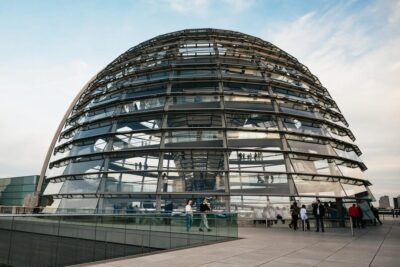
Reichstag, Dome and Government District Guided Tour
Read our review →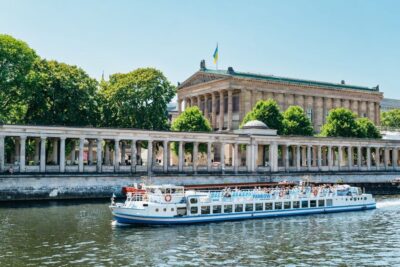
1-Hour City Tour by Boat with Guaranteed Seating
Read our review →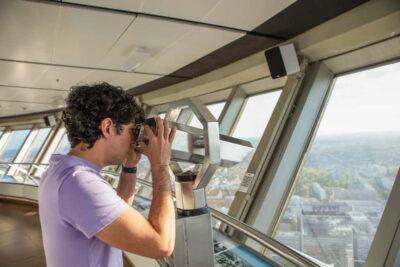
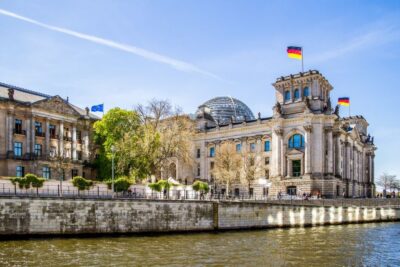
Berlin City walk Government District and Places of Democracy
Read our review →