Reviewed · BERLIN TOURS & ACTIVITIES
Path of Resistance: Berlin’s Hidden Holocaust Stories
Berlin’s Holocaust story is often missing the resistors.
This walking tour highlights how ordinary people opposed Nazi rule, from hidden Jewish memorials to the 1933 book burning site at Bebelplatz.
I love the focus on human stories over dry facts, and the way the guide brings names and choices to the center of the walk. One thing to consider: this is emotionally heavy material, and you should plan for a steady 150-minute walk in whatever weather Berlin brings.
In This Review
- Key reasons this tour works
- A walking tour that keeps the people in focus
- Your guide and why the delivery style matters
- Starting at the Former Imperial Post Office, then into Berlin’s Jewish center
- The cemetery stop: remembrance without turning it into a checklist
- Otto Weidt’s workshop: rescue that looks almost ordinary
- Rosenstraße and the Block of Women: resistance with witnesses
- Museum Island and Neue Wache: how Berlin marks memory today
- Bebelplatz and the 1933 book burning: when ideas become targets
- Trains to Life, Trains to Death: the mechanics behind deportation
- Stolpersteine and hidden memorial moments in the old quarter
- Finishing at Berlin Friedrichstraße, with the city changed in your eyes
- Practical tips so the tour feels smooth, not stressful
- Price and value: what $57 buys you
- Who should book this tour
- Should you book Path of Resistance?
- FAQ
- How long is the Path of Resistance tour?
- Where does the tour start?
- What time should I arrive?
- What sites are included on the route?
- What language is the tour guide?
- Is this tour wheelchair accessible?
- What should I bring?
- Is food included in the price?
- Is cancellation free, and can I pay later?
Key reasons this tour works
- WWII specialist guidance that keeps the context clear while staying respectful
- Small group size for quieter questions and a more personal pace
- Rare stops tied to resistance, survival, and defiance in Berlin’s older Jewish quarter
- Concrete history points, like the Otto Weidt workshop and Bebelplatz book burning
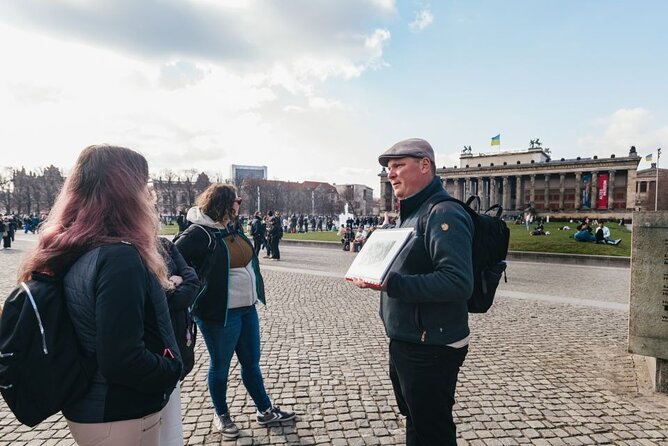
- Discussion time with Then & Now photos and historical maps to connect past and present
- A route with meaning, ending near Friedrichstraße so you can keep exploring afterward
A walking tour that keeps the people in focus
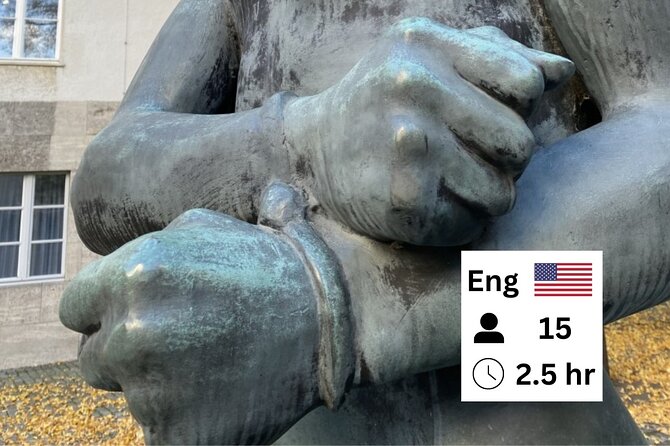
The best Berlin history tours do two things at once: they teach you what happened, and they make sure you remember the people. Path of Resistance is built around that idea. Instead of treating the Holocaust as only a timeline of horror, the walk highlights resistance in its different forms, including quiet acts and public defiance.
You cover Berlin’s Jewish quarter through sites that still feel close, even when the buildings have changed. Cobblestones, plaques, and courtyards create small moments where the story feels local rather than distant. And because the tour follows a planned route, you are not left trying to connect dots you might miss on your own.
Two parts of this approach really matter for your experience. First, you get the full arc of antisemitism becoming state policy, not just the final catastrophe. Second, you learn the uncomfortable truth that resistance was not only a few famous heroes, but also ordinary choices, sometimes made at great personal risk.
Also holding a platform in Berlin
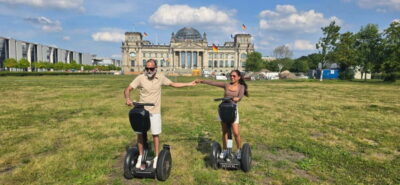
- Berlin: Reichstag, Dome and Government District Guided Tour
★ 4.7 · 18,288 reviews - Berlin: 1-Hour City Tour by Boat with Guaranteed Seating
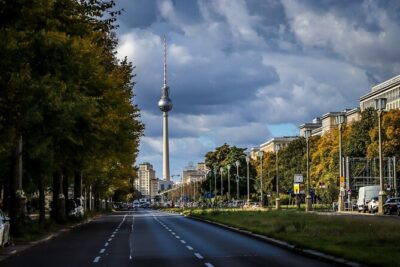
★ 4.3 · 16,993 reviews - Berlin: TV Tower Standard Entrance Ticket
★ 4.4 · 15,883 reviews
Your guide and why the delivery style matters
This is led by professional WWII historians and storytellers, and that shows in how the information lands. In particular, Johan has strong praise for making history both clear and grounded, with an emphasis on how German Jewish life and origins connected to Berlin. That matters because Berlin was not only a place where oppression happened. It was a place with community life, education, work, and daily routines that Nazis tried to break.
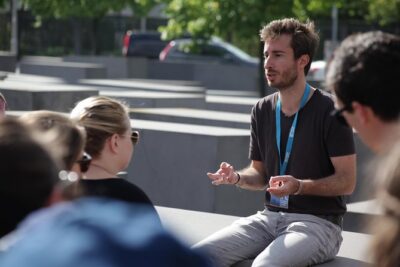
You also get a format that invites questions. The tour includes interactive discussion and Q&A, plus Then & Now photographs and historical maps. That means you spend less time passively listening and more time building a mental picture of how Berlin looked before and how it remembers today.
A practical tip: keep a few questions ready as you go. If something feels unclear, ask. The tour pace is designed for back-and-forth, not a speed run.
Starting at the Former Imperial Post Office, then into Berlin’s Jewish center
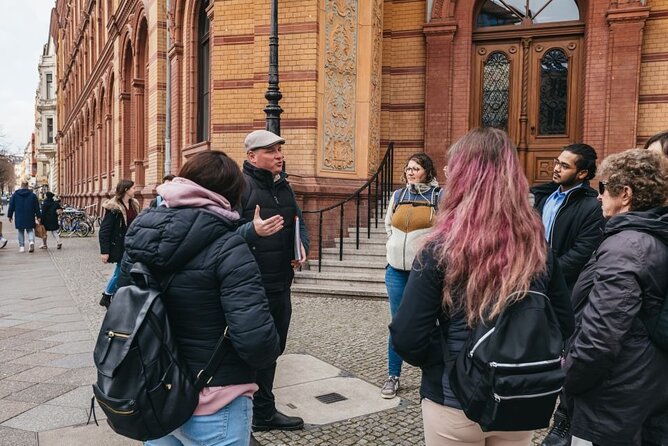
The walk begins at the Former Imperial Post Office, and you’ll recognize the guide at the main entrance holding a blue umbrella. Arrive about 10 minutes early so you can start calmly, not sprinting in with wet shoes and a half-read schedule.
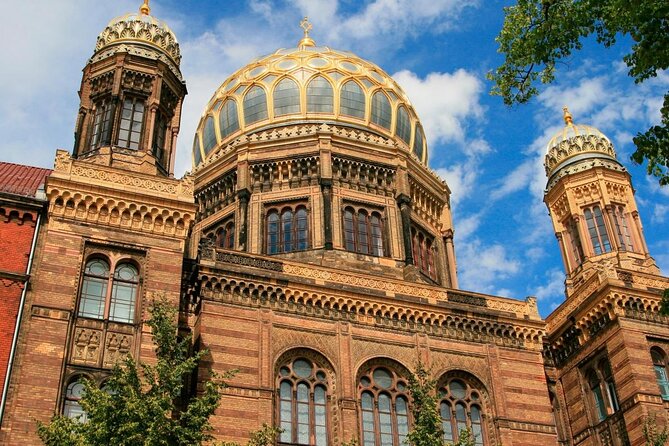
From there, the tour heads toward the New Synagogue Berlin, also tied to the Jewish Centre. This stop sets the tone: Berlin’s Jewish life was not abstract. It had institutions, learning spaces, and public presence. Even in a tour focused on resistance and tragedy, starting with community anchors the story in real life, where people had routines long before deportations began.
Next comes the Jüdisches Gymnasium Moses Mendelssohn. This is where education enters the story. It helps you understand how the Nazis attacked not only bodies, but also identity, learning, and the future.
If you like history that explains the how and why, these early stops are important. They help you see that genocide was not sudden. It was the end of escalating policies, propaganda, and exclusions that reshaped daily life step by step.
The cemetery stop: remembrance without turning it into a checklist
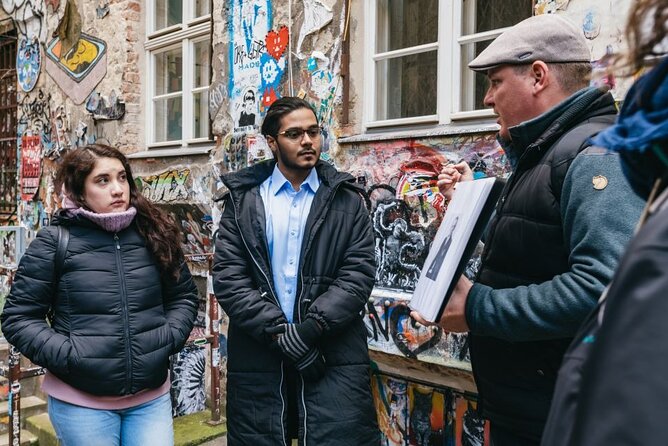
You also visit the Grosse Hamburger Strasse Cemetery. A cemetery stop can go two ways on a tour: it can feel like a quick photo opportunity, or it can become a quiet, meaningful pause. This one is structured as a guided visit, so you get context while still allowing space to process.
What I like about a stop like this is how it changes your thinking. In a walking tour about resistance, it is easy to focus on action. A cemetery forces a shift back to names and lives. It also supports the tour’s central message, that survival and loss were experienced in human ways, not just through historical categories.
A practical drawback to keep in mind: cemeteries and memorial sites ask you to slow down mentally, not only physically. If you’re the type who tries to power through emotions quickly, give yourself permission to linger.
Otto Weidt’s workshop: rescue that looks almost ordinary
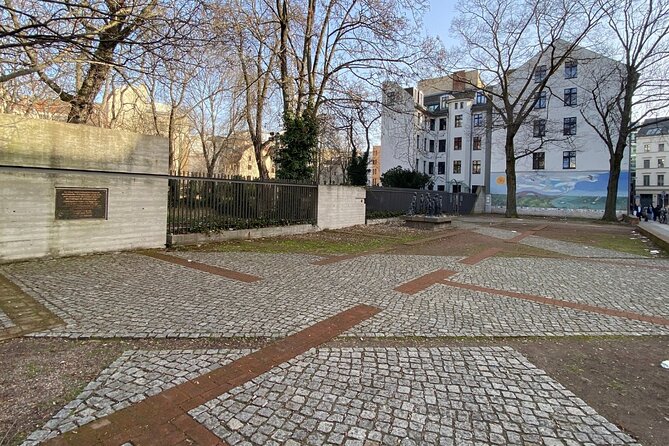
One of the most compelling stops is Otto Weidt’s Workshop for the Blind. This is where resistance stops being a concept and starts looking like choices in real workspaces.
The story connected to the workshop is specific and grounded. Otto Weidt shielded blind and deaf Jewish workers from persecution. You are not just learning that someone helped. You are being shown how help could be hidden inside everyday labor, in a city where the Nazis controlled so much.
This stop works especially well if you want resistance stories that are not all dramatic gunfire or espionage movie scenes. It’s rescue through protection, through making someone harder to target, through careful daily decisions.
Onward connections from Berlin:



Rosenstraße and the Block of Women: resistance with witnesses
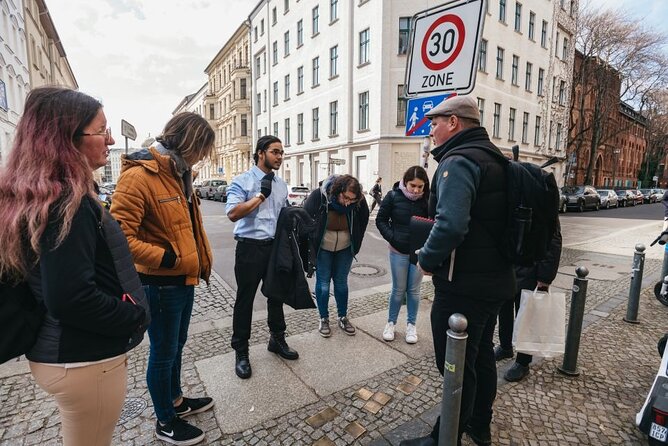
Next you reach the Block of Women, tied to the Rosenstraße protest site. This part of the tour gives you a rare angle on resistance: public pressure.
You hear the story of German women who bravely demanded the release of their Jewish husbands. The Rosenstraße protest matters because it shows resistance as collective action, not only isolated acts. People gathered, they spoke up, and they forced the regime to confront something it preferred to keep invisible.
When you stand at the memorial point, it becomes easier to understand how the Nazis’ ideology played into everyday cruelty. The walk also keeps returning to the Nazis’ belief in Aryan superiority and their idea of sub-races, the twisted logic that justified persecution and deportation.
A consideration here: Rosenstraße is not a place for casual chatter. The tour keeps it respectful, but you should still be emotionally ready for what you are learning.
Museum Island and Neue Wache: how Berlin marks memory today
The itinerary then reaches Museum Island and later Neue Wache. These stops shift the focus from individual sites of resistance to the broader question of how Berlin remembers.
Museum Island gives you a connection point to what survived and what is preserved. Neue Wache functions as a memorial stop, prompting reflection on war, loss, and the meaning of public remembrance. This pairing helps you see the difference between a site connected to events and a site connected to ongoing memorial culture.
You get guided context so you are not left interpreting signs on your own. And because the tour uses Then & Now photos and historical maps, you can compare what you see now with what the city used to be.
Bebelplatz and the 1933 book burning: when ideas become targets
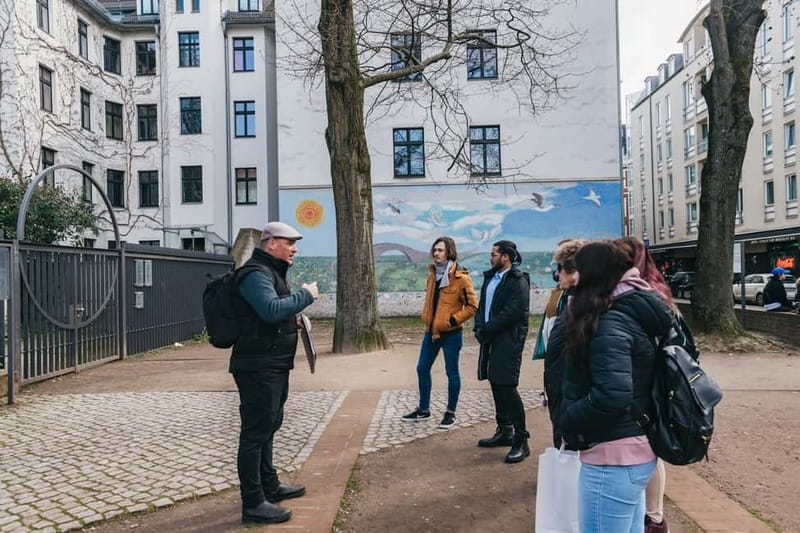
Bebelplatz is where the tour turns toward the Nazis’ attack on free thought and intellectual freedom, through the 1933 book burning site.
This is a stop that can feel surprising at first, because it reminds you that Nazi control began well before the machinery of mass death. Books, universities, and public ideas were targeted because they shaped how people think, question, and resist. Reading about persecution can stay abstract. Standing at the place tied to book burning makes the policy feel immediate.
I also appreciate that the guide doesn’t treat this like a separate topic. The tour connects it back to the broader system of antisemitism and the Nazi attempt to control who counted as human and who did not.
If you’re the kind of traveler who loves political history as much as personal stories, this stop is a strong highlight.
Trains to Life, Trains to Death: the mechanics behind deportation
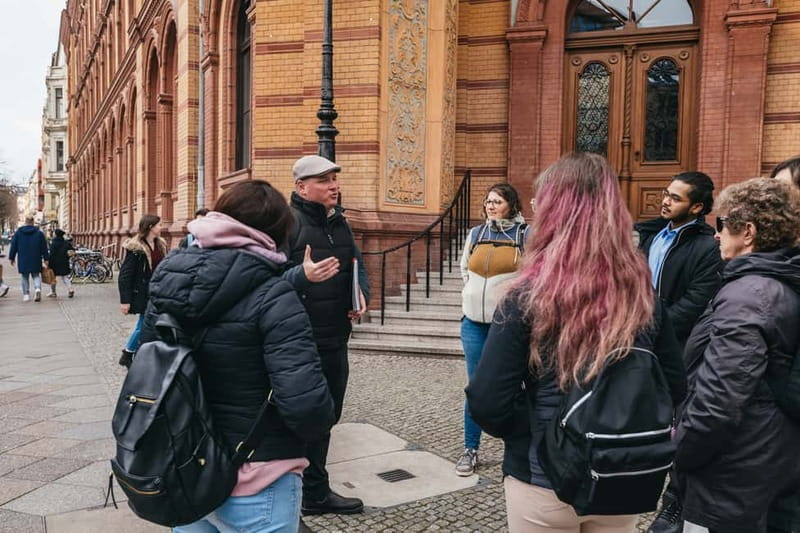
The tour includes the stop called Trains to Life, Trains to Death. This area is meant to help you understand the machinery of deportation, not just its outcome.
The name itself gives you a clue about how the Nazi system framed travel and transport while hiding the reality of what deported people faced. The tour keeps the focus on the human impact and the policy decisions that made mass murder operational.
This is one of those sections where the guide’s background really matters. The information is heavy, and the delivery has to stay clear and structured so you can absorb it without feeling lost.
Stolpersteine and hidden memorial moments in the old quarter
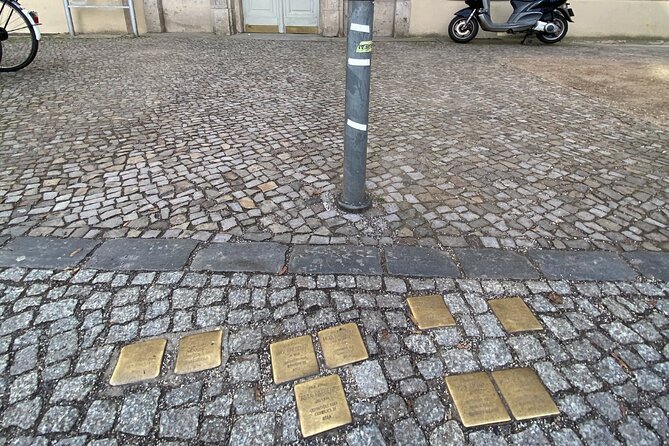
You also encounter hidden Jewish memorials in Berlin’s old quarter, including Stolpersteine memorials. These are small, street-level reminders that bring history out of museums and into the everyday walking route.
That placement is the point. You are not only visiting large monuments. You are noticing the traces of lives disrupted, as you walk past normal Berlin streets. The guide frames these moments so they connect to the larger story of deportation, survival, and resistance.
If you enjoy quiet discovery, Stolpersteine stops are where you slow down the most. If you prefer big dramatic sites only, these small memorials might not feel as visually striking, but they tend to stick in your memory because of their everyday scale.
Finishing at Berlin Friedrichstraße, with the city changed in your eyes
You end at Berlin Friedrichstraße station. Ending in a major transit hub makes sense for practical travelers because you can reconnect to the rest of your day easily.
But the real value is mental. After 150 minutes focused on resistance and persecution, Friedrichstraße stops being just a stop on the map. You now understand that trains, routes, stations, and paperwork were part of how the Nazis exerted control.
When you leave, you’re likely to notice Berlin differently. You might spot plaques and realize they are not decoration. They are an index to choices, risks, and consequences.
Practical tips so the tour feels smooth, not stressful
This is a 150-minute walking tour. It runs in all weather conditions, so plan clothing for rain or sun. Bring comfortable shoes, an umbrella, and water. Food and drinks are not included, so if you’re doing this near another activity, plan a snack before or after.
It’s also wheelchair accessible, which is a major plus for people who need mobility support. Since it’s a walking route, ask the organizer how route segments handle sidewalks and entrances if that matters for your chair or walker.
One more practical note: alcohol and drugs are not allowed. Berlin nights can be tempting, but this is a serious subject, so keep it clear-minded.
Finally, the group stays small, limited to 10 participants. That usually means you get a better question experience, and you are less likely to feel herded past sensitive memorials.
Price and value: what $57 buys you
At $57 per person for about 2.5 hours, the value comes from three things you can’t replicate easily on your own.
First, you get expert guidance from WWII historians and storytellers, not just a walking route. Second, the price includes entry to museums and memorials, so you are not constantly stopping to pay extra. Third, you get real teaching tools, Then & Now photographs and historical maps, plus interactive discussion and Q&A.
If you were to cobble together these stops yourself, you might manage the geography. But it’s the interpretation that makes this tour worthwhile, especially because the story includes both resistance and the Nazi ideological framework, including the belief in Aryan superiority and the concept of sub-races.
For me, that’s where the ticket price turns into a real bargain: you save time and you gain understanding.
Who should book this tour
Book Path of Resistance if you want Berlin history that centers resistance, not only victims. It suits people who like guided context, meaningful stops, and structured conversations. It’s also a strong fit for first-time Berlin visitors who want the city’s Jewish quarter and key memory sites without piecing everything together.
Skip it if you’re looking for a light, relaxed sightseeing stroll. This tour includes deportation related history, resistance stories, and memorial reflection, so you should be ready for heavy themes.
Should you book Path of Resistance?
Yes, if you want a guided walk through Berlin that gives you names, motivations, and context. The combination of WWII specialists, small group size, and carefully chosen stops like Otto Weidt’s workshop, Rosenstraße, Bebelplatz, and Trains to Life, Trains to Death is exactly the kind of mix that turns facts into understanding.
If you’re careful with your pace and you come prepared with comfortable shoes, an umbrella, and a willingness to reflect, this is the sort of tour that stays with you long after the walk ends.
FAQ
How long is the Path of Resistance tour?
The tour lasts 150 minutes.
Where does the tour start?
It meets at the Former Imperial Post Office.
What time should I arrive?
Please arrive 10 minutes before the activity starts.
What sites are included on the route?
The tour includes stops such as the New Synagogue Berlin, Otto Weidt’s Workshop for the Blind, the women’s protest site at Rosenstraße, the 1933 Nazi book burning memorial at Bebelplatz, and Trains to Life, Trains to Death, plus other Jewish memorial locations and cemeteries.
What language is the tour guide?
The tour is in English.
Is this tour wheelchair accessible?
Yes, the tour is listed as wheelchair accessible.
What should I bring?
Bring comfortable shoes, an umbrella, and water.
Is food included in the price?
No, food or drinks are not included.
Is cancellation free, and can I pay later?
You can cancel up to 24 hours in advance for a full refund, and you can reserve now and pay later.
Fresh on the arrivals board for Berlin



Berlin Tours & Activities, compared.

Reichstag, Dome and Government District Guided Tour
Read our review →
1-Hour City Tour by Boat with Guaranteed Seating
Read our review →
Berlin City walk Government District and Places of Democracy
Read our review →