Reviewed · BERLIN TOURS & ACTIVITIES
Path of Resistance: Berlin’s Hidden Holocaust Stories
Berlin has resistance scars you can still trace. This walking tour stitches together Holocaust-era landmarks and lesser-known acts of defiance across central Berlin, with stops built around how ordinary people survived, resisted, and remembered. You cover major sites on foot, and you’ll get photos and maps to connect what you see today with what happened there.
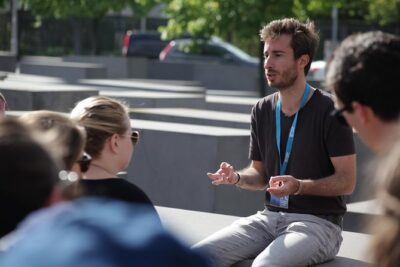
I especially like how it’s a small-group route. With a maximum of 15 people and an expert guide, you can ask questions and move at a human pace, not a herd-speed pace.
One thing to plan for: it’s mostly standing and walking for about 2.5 hours. If your legs need breaks, bring comfy shoes and expect some busy-city footwork.
In This Review
- Key takeaways before you go
- The point of this Berlin walk: resistance you can actually locate
- Price and timing: what $48.01 buys you in 2.5 hours
- Where you start and how the route finishes (easy transit afterward)
- Stop 1: Stiftung Neue Synagoge Berlin and the Centrum Judaicum story
- Stop 2: Jüdisches Gymnasium Moses Mendelssohn and the mechanics of deportation
- Stop 3: Jewish cemetery destruction, mass graves, and the weight of memory
- Stop 4: Museum Blindenwerkstatt Otto Weidt, where resistance looked like daily survival
- Stop 5: Denkmal Rosenstraße and the power of protest
- Stop 6: Lustgarten and how Nazi power crushed the right to protest
- Stop 7: Zeughaus and the attempted blow-up tied to resistance plans
- Stop 8: Neue Wache as a central memorial for victims of war and tyranny
- Stop 9: Bebelplatz book burning and the cultural attack on freedom
- Stop 10: Trains to Life, Trains to Death and the Kindertransport contrast
- Comfort and pacing: how to get the most from a resistance walking route
- What makes the guiding style so highly rated
- Should you book this Berlin resistance walk?
- FAQ
- How long is the tour?
- Is the tour offered in English?
- How big is the group?
- Are admission tickets included for the stops?
- What’s included in the price?
- What if the weather is bad?
Key takeaways before you go
- Small group, max 15 people makes it easier to ask questions and keep up.
- Then-and-now photos and maps help you spot changes across war, rubble, and rebuilding.
- Major memorials plus quieter testimony gives you both scale and personal stakes.
- Resistance themes run through every stop including protests, hiding, and sabotage attempts.
- All stops are on foot and in central areas, so timing and comfort matter.
The point of this Berlin walk: resistance you can actually locate
Berlin can feel like a museum you have to decode. This tour fixes that problem by taking you to real addresses and then explaining what happened at each one. You’ll see how Nazi rule tightened control, and you’ll also see how people pushed back in ways that were risky, stubborn, and sometimes painfully brief.
What makes this route stand out is its focus on resistance and survival, not just tragedy. You’ll move from a restored synagogue story to the brutality of deportations, then to protest sites and places tied to plots and memory. Even if you think you know Berlin’s Holocaust geography, you’ll likely leave with stronger connections between locations and the people linked to them.
At $48.01 per person for about 2 hours 30 minutes, it’s also good value when you compare it to the cost of doing this on your own. Many of the stops are listed with free admission, so you’re paying mainly for the guide, the structure, and the context that turns scattered memorials into a coherent story.
Also holding a platform in Berlin
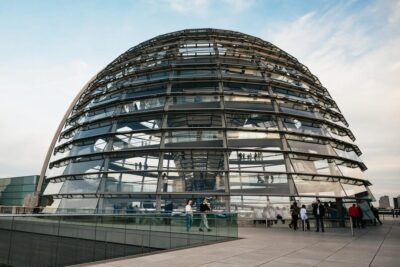
- Berlin: Reichstag, Dome and Government District Guided Tour
★ 4.7 · 18,288 reviews - Berlin: 1-Hour City Tour by Boat with Guaranteed Seating
★ 4.3 · 16,993 reviews - Berlin: TV Tower Standard Entrance Ticket
★ 4.4 · 15,883 reviews
Price and timing: what $48.01 buys you in 2.5 hours
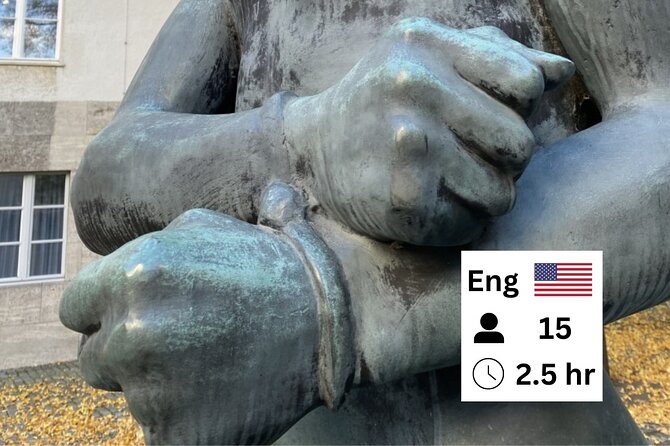
The tour is priced at $48.01 per person and runs roughly 2 hours 30 minutes. It’s offered in English and uses a mobile ticket, which is handy if you prefer to keep everything on your phone.
You’ll also benefit from how the tour is designed: small group size, “then and now” photos, and a walking route that hits multiple key wartime and memorial locations. That combination matters because Holocaust sites are emotionally heavy, and random self-guided wandering can turn confusing fast. With a guide, you get a chronological and thematic flow, so the details actually stick.
You should know there’s a weather requirement for this experience. If it gets canceled for poor weather, you’ll be offered another date or a full refund. Since the tour is on foot, that’s not a small detail.
Where you start and how the route finishes (easy transit afterward)
You start at Oranienburger Str. 36, 10117 Berlin, at Stiftung Neue Synagoge Berlin, also known as the Neue Synagoge or New Synagogue. The tour ends at Friedrichstraße Georgenstraße 14/17, 10117 Berlin, near the S+U Friedrichstraße rail hub, which is a major connection point.
This is practical for your day. If you plan dinner, museums, or a train connection right afterward, Friedrichstraße is about as convenient as it gets in central Berlin. If you’re trying to chain sights, this ending point helps a lot.
The tour is also described as near public transportation, and service animals are allowed. It’s listed as an accessible tour as well, though the walking and standing time still matter. If you have mobility limits, it’s worth thinking through how you’ll handle a dense, central-city route.
Stop 1: Stiftung Neue Synagoge Berlin and the Centrum Judaicum story
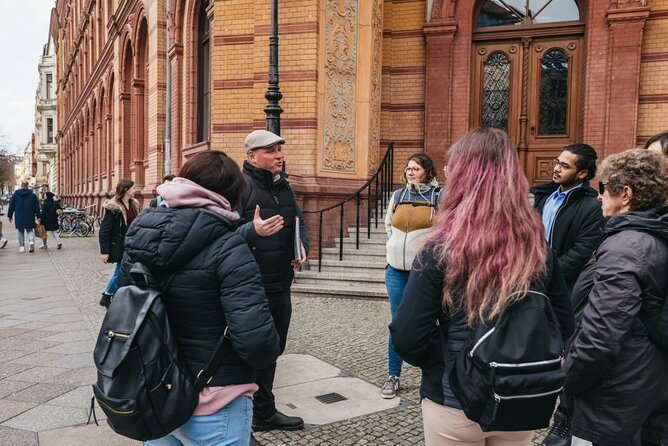
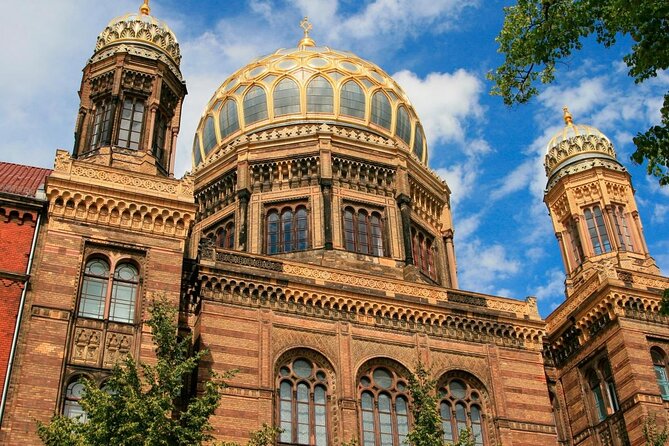
Your first stop is the Neue Synagoge Berlin, tied to the Centrum Judaicum foundation today. The building was constructed in 1866 and was once the largest and most prominent synagogue in Berlin, reflecting the size and strength of the Jewish community in the city.
From a visitor’s perspective, this stop does two important jobs. First, it gives you a sense of what was lost, not just how people died. Second, it shows how quickly the world shifted: the synagogue was used until 1940, then confiscated and repurposed by the Army for military uniforms, before Allied bombing in 1943 severely damaged the building.
The story doesn’t end in ruins. The main hall was torn down in 1958, partly rebuilt in 1988, and officially reopened in 1995. Today, the synagogue houses the Centrum Judaicum foundation, which focuses on preserving Jewish memory and tradition. That means you’re starting with remembrance and continuity, not only with wartime destruction.
Stop 2: Jüdisches Gymnasium Moses Mendelssohn and the mechanics of deportation
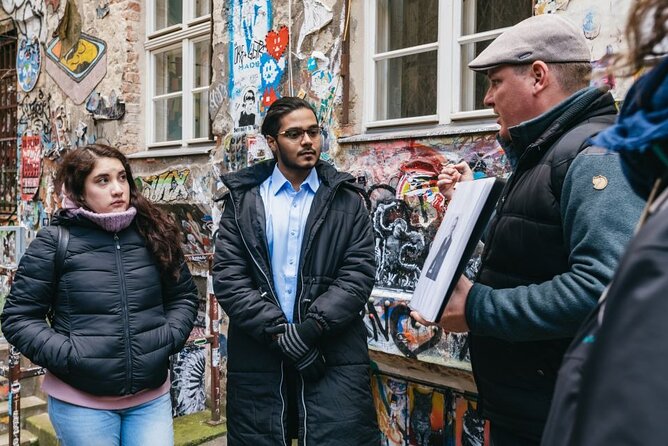
A short walk brings you to the Jüdisches Gymnasium Moses Mendelssohn. Founded in 1779, it was the first Jewish school in Germany without fees. The school was open to all faiths and promoted liberal Jewishness, and it even accepted female students in 1931.
Then the tour pivots to how persecution tightened into policy. In the fall of 1941, deportations of Jews to territories in the East led to banning Jewish schools. In 1942, the SS-linked Reich Main Security Office turned the building into a transit camp, with barred windows and Jews crammed inside to await deportation.
This stop is hard, but it’s also clear. You’re seeing an educational space turned into a holding space. That shift from normal life to logistics of removal is one reason this tour helps your understanding. It’s not just numbers and dates; it’s the way institutions were repurposed to make terror work.
Onward connections from Berlin:
Stop 3: Jewish cemetery destruction, mass graves, and the weight of memory
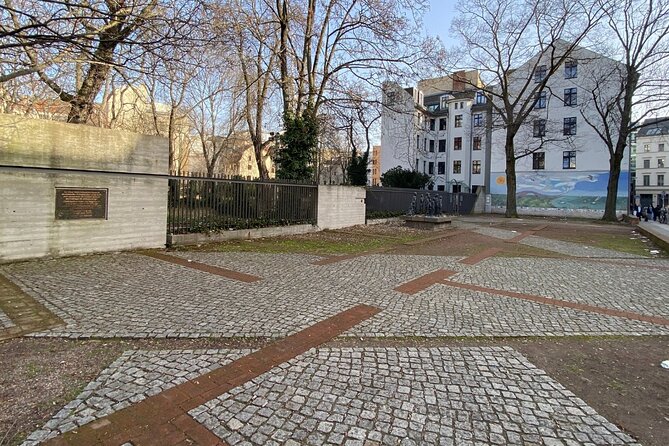
Next is the Jewish Cemetery and Holocaust Memorial, tied to a cemetery used between 1672 and 1827, where around 12,000 Jewish community members were buried. You’re reminded that the site is not only a war memorial. It’s a long record of generations.
The violence here is described in chilling detail. In 1943, the Gestapo ordered the SS to destroy the cemetery, smashing thousands of gravestones, discarding remains, and even playing football with skulls. The tour does not shrink from brutality, but it keeps anchoring you back to what the site represents: desecration as a method of dehumanization.
Then it shifts again to aftermath. In April 1945, burials resumed, including mass graves for nearly 2,500 German soldiers and Berlin civilians killed during the fighting or shot for hanging white flags from their windows by the SS.
Even if you’ve visited other memorial sites in Berlin, this stop hits differently because it connects Jewish victimhood, wartime civilian death, and Nazi punishment for passive resistance. It’s a lot to take in in just a few minutes, so give yourself a mental breather as you move on.
Stop 4: Museum Blindenwerkstatt Otto Weidt, where resistance looked like daily survival
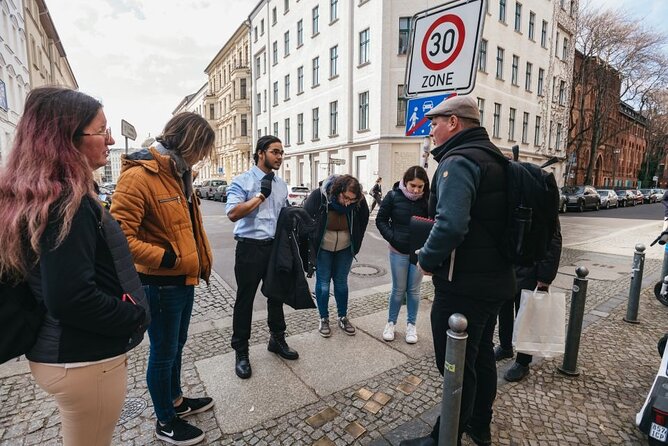
In a hidden courtyard, you’ll find the Museum Blindenwerkstatt Otto Weidt. Otto Weidt’s workshop employed more than 30 blind and deaf Jewish workers between 1940 and 1945, and the tour focuses on how Weidt and his wife Else tried to protect their employees as danger increased.
This stop is one of the most personal and human parts of the route. It’s resistance that doesn’t rely on big speeches or weapons. Instead, you hear about bribing Gestapo officers, falsifying documents, and taking extraordinary risks to save someone from deportation. The story includes an attempted breakout connected to Auschwitz: Weidt traveled there to try to free one of his employees.
That combination is powerful. You’ll see how resistance can be bureaucratic, practical, and painfully risky. And because the workshop is physically tucked away in a courtyard, it also gives you a sense of how hidden these lives could be.
Stop 5: Denkmal Rosenstraße and the power of protest
At the Denkmal Rosenstraße, you’ll learn about arrests on February 27, 1943, when the Gestapo, Waffen-SS, and Berlin police arrested about 2,000 Jewish men married to non-Jewish German women. The names and numbers matter, but what gives this stop its energy is what happened next.
The wives of those detained gathered to protest. The tour explains that threats of being shot if the women did not disperse were met with persistence. Even when the crowd scattered briefly, it returned in larger numbers to continue protesting. Eventually, Goebbels authorized release under mounting pressure.
If your Holocaust understanding mostly focuses on deportations and camps, this stop expands the picture. It shows that public pressure could sometimes change outcomes, even inside a terror machine. It also explains how “resistance” wasn’t only clandestine. It could be collective and visible, at terrible personal cost.
Stop 6: Lustgarten and how Nazi power crushed the right to protest
From Rosenstraße, you shift to a symbolic protest space: Lustgarten. The square is framed by the Berlin Cathedral, the Altes Museum, and the Zeughaus. Before the Nazis, it was a favorite gathering place for speeches and protests, including huge demonstrations soon after Hitler became Chancellor, when around 200,000 Berliners protested the new government.
Then you see how control tightened. Nazi regulations restricted the right to protest, with heavy fines and arrests for those who spoke up. By 1934, Lustgarten was paved over to make room for Nazi propaganda rallies and ceremonies, including swearing-in events and military parades.
This stop is valuable because it shows the social shift, not only the violence. You’re seeing how public space gets reengineered to produce obedience. And it helps you interpret later memorials, including sites connected to propaganda and censorship.
Stop 7: Zeughaus and the attempted blow-up tied to resistance plans
Next is the Zeughaus, an important architectural anchor on Unter den Linden. Built in 1730 as an artillery arsenal, it becomes part of the Nazi war machine in a different way during 1943. On March 21, 1943, it hosted an exhibit of captured Soviet weapons.
The tour connects this location to a Wehrmacht resistance figure: Major General Rudolf Christoph Freiherr von Gersdorff. He was selected to lead the exhibit, and it’s here that the story of assassination planning comes in. After 27 failed assassination attempts on Hitler, Gersdorff agreed to attempt a self-sacrifice explosive plan involving concealed British mines, with the goal of triggering the explosion around Hitler.
A key value here is that you’re not just hearing that resistance existed. You’re seeing how resistance attempts intersected with Nazi display, military staging, and public events. Berlin’s geography made those intersections possible, and this stop explains why.
Stop 8: Neue Wache as a central memorial for victims of war and tyranny
Neue Wache is a moving pause in the middle of a busy city. It’s described as Germany’s central memorial for victims of war and tyranny, and the tour uses it as a moment to reset your focus.
This isn’t just a photo spot. It’s a reminder that the story you’re hearing is larger than one policy or one year. War and tyranny span victim types and contexts, and the tour uses Neue Wache to help you hold onto that wider view without losing the specific Jewish-centered sites you visited earlier.
Stop 9: Bebelplatz book burning and the cultural attack on freedom
At Bebelplatz, you’ll see the memorial tied to book burning on May 10, 1933. Nazi student organizations and professors gathered near Humboldt University for a nationwide action against the un-German spirit.
They burned upwards of 25,000 volumes of books labeled un-German. The tour places this in the same story of tightening control you saw at Lustgarten. Protest gets crushed, and culture gets targeted. That connection makes the censorship feel less abstract and more like an early stage of the same system that later enabled deportation and mass violence.
This stop also helps if you’re the type who likes to understand how authoritarian power grows. It rarely starts with death camps. It often starts with controlling ideas, then controlling people.
Stop 10: Trains to Life, Trains to Death and the Kindertransport contrast
The tour ends with Trains to Life, Trains to Death, an almost life-size sculpture. It shows two groups of Jewish children with contrasting fates during the Nazi era. The children face in opposing directions, representing those saved by the Kindertransport to England and those who suffered deportation to concentration camps.
The sculptor is Frank Meisler, and the tour notes that he was among those rescued by the Kindertransport traveling from here to England in 1939. That detail gives the final stop a personal grounding, not just symbolic design.
This ending works because it brings the story into the realm of choices, escape routes, and life-saving networks. Even though the subject is still painful, you finish with a clearer sense of how survival sometimes depended on doors that opened for a few and closed for many.
Comfort and pacing: how to get the most from a resistance walking route
Because most stops are short entries, the walking and standing time is what will define your comfort level. A few review highlights specifically mention that there’s a lot of standing. So do yourself a favor: wear shoes you can stand in, and bring a small bottle of water if you can. The tour does not include food or drinks, so plan for a pre-tour snack or a post-tour meal.
Group size matters too. With up to 15 travelers, you’re not packed shoulder-to-shoulder, but you are still moving as a group. If you’re traveling with kids, it may still work well since it’s structured and central, but bring patience. This is heavy material, and the tour is designed to keep it respectful and focused.
Finally, note the tour includes an accessible experience, and service animals are allowed. Still, the tour is hands-on and on foot, so if you have mobility constraints, check your personal stamina in advance.
What makes the guiding style so highly rated
This tour’s reputation centers on how guides explain difficult material clearly without turning it into a dry lecture. Many of the guide names that come up as standouts include Scott, Benjamin, Johan, Jochen, and Jorg, and the common thread is that they bring the locations to life.
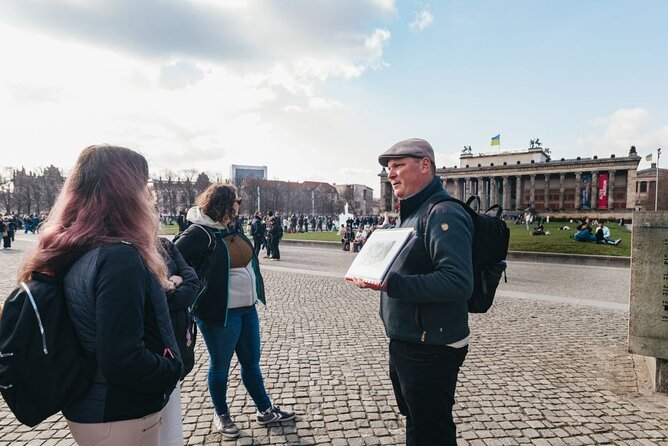
I also like the practical method used on this route: the guide uses maps and then-and-now photos so you can orient yourself fast. You’re not just learning facts, you’re learning how to see. After a stop or two, you start noticing what changed, what was rebuilt, and what memory got placed where.
That matters for value. A Holocaust tour can become either too broad or too list-like. Here, the structure keeps the story moving and makes each location feel like a piece of the same moral puzzle.
Should you book this Berlin resistance walk?
Book it if you want a small-group Berlin walk that connects memorial sites to real acts of resistance, protest, and survival. It’s a strong fit if you plan to spend time in central Berlin anyway, because the start and finish locations line up well with public transit.
Skip it or choose a different style of tour if you know you struggle with standing for a long stretch or if your schedule is tight and weather is uncertain. The topic is heavy, and the experience is designed as a walking route, not a sit-down museum session.
If your goal is to understand Berlin not only as a backdrop but as a set of places where choices were made, this one is a solid way to get there. You’ll leave with names, locations, and connections you can carry into the rest of your trip.
FAQ
How long is the tour?
It runs for about 2 hours 30 minutes.
Is the tour offered in English?
Yes, it is offered in English.
How big is the group?
The maximum group size is 15 travelers.
Are admission tickets included for the stops?
The stops are listed with admission ticket free.
What’s included in the price?
The tour includes an expert tour guide, an exclusive small group tour, then-and-now photographs and maps, and an accessible tour. Food and drinks are not included.
What if the weather is bad?
The tour requires good weather. If it’s canceled due to poor weather, you will be offered a different date or a full refund.
Fresh on the arrivals board for Berlin
Berlin Tours & Activities, compared.
Reichstag, Dome and Government District Guided Tour
Read our review →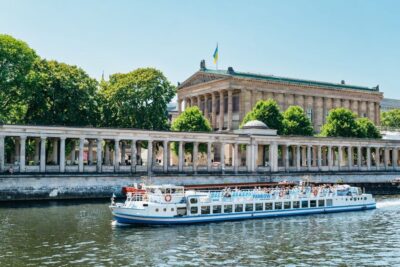
1-Hour City Tour by Boat with Guaranteed Seating
Read our review →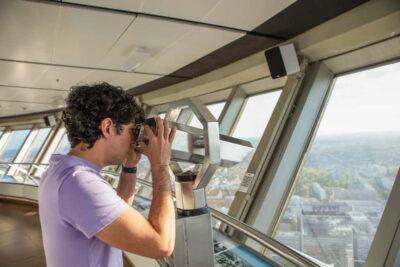
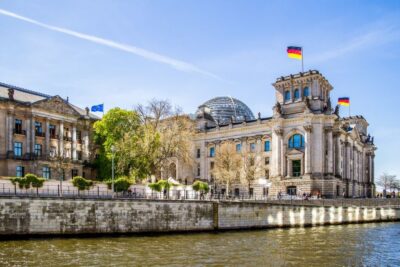

Berlin City walk Government District and Places of Democracy
Read our review →