
Reviewed · WALKING TOURS
Passau Private Walking Tour With A Professional Guide
You can cover Passau fast, but still feel the stories land. This private walking tour mixes big sights, river views, and the Prince-Bishopric era in a way that actually makes the city click. I particularly loved St. Stephen’s Cathedral and how your private guide can steer the walk toward what you care about most.
The one catch is simple: it is not long, and the route includes a fair bit of walking, so comfy shoes matter more than usual for a one-time 1.5 to 2 hour plan.
In This Review
- Key Highlights I Would Plan Around
- The Value of a Private Passau Walk (And When It Makes Sense)
- Meeting at Domplatz, Then Getting Oriented Fast
- St. Stephan’s Cathedral, Where the City Wears Its Confidence
- The Royal Promenade, Barbarossa, and Sissi’s Passau Footsteps
- Bishop’s Residence to Town Hall, Plus the River Power Story
- Luitpold Bridge Crossings and the Three-River Moment
- Veste Oberhaus, the Fortified Lookout You Will Remember
- Customization on the Spot, So You Actually Leave Informed
- Who This Tour Is Best For (And Who Might Prefer Something Else)
- Practical Tips to Get More From the Walk
- Should You Book This Private Walking Tour of Passau?
- FAQ
- How long is the Passau private walking tour?
- Is the tour private or shared?
- What language is the tour offered in?
- Where does the tour start and end?
- Do I need transportation during the tour?
- How much walking is involved, and is it easy?
- Are admission tickets included for stops like the cathedral?
- Can I customize what we focus on during the tour?
- What is the cancellation policy?
Key Highlights I Would Plan Around
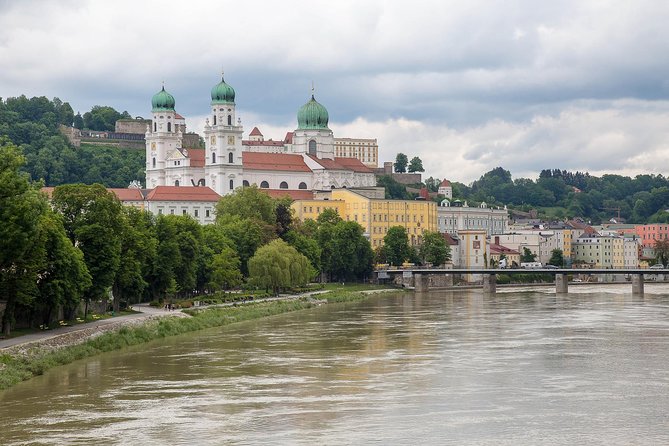
- St. Stephen’s Cathedral as the first real anchor: largest baroque cathedral north of the Alps, plus the largest pipe organ in all of Europe.
- A guided walk through Passau’s Royal Promenade: you follow steps linked to Barbarossa and Empress Elisabeth “Sissi.”
- The Danube moment, up close: cross the Luitpold Bridge and get positioned for views over the river valley.
- Veste Oberhaus viewpoint: walk to the fortified bishop’s residence for the kind of panorama you remember.
- You can customize on the spot: ask your guide to shift the story toward your interests.
- Easy pace with a private group: easy walking, suitable for any age, and no transport needed.
The Value of a Private Passau Walk (And When It Makes Sense)
Passau is the kind of place where a guided route pays off. Streets look charming, but without context you can miss what connects the buildings, river crossings, and power history. With this tour, you get a local guide who stays with your group only, so the conversation stays relevant instead of turning into a lecture for a big crowd.
Now, let’s talk price in a way that helps you decide. You pay about $351.80 per group for up to 15 people. That sounds steep if you are traveling solo, but it becomes much more reasonable if you are splitting with friends, family, or a small travel crew. For larger groups, it can be a cost-effective way to buy attention, timing, and better wayfinding in one package.
I also like that the experience is offered in English and uses a mobile ticket, which keeps your day straightforward. And since the walking is labeled easy and no transportation is needed, you are not building extra logistics into an already busy travel schedule.
More German cities at walking speed:
- Passau: City Highlights Guided Walking Tour
★ 4.7 · 568 reviews - Passau: 1-Hour Guided City Walking Tour
★ 4.3 · 274 reviews - Die Kulinarische Stadtführung durch Passau
★ 4.4 · 13 reviews
Meeting at Domplatz, Then Getting Oriented Fast
The tour starts at Domplatz in Passau-Alstadt, right where you want to be to feel like you are actually inside the old center. Starting here matters because Passau is visual and layered. When you begin near the cathedral square, every turn feels purposeful, not random.
From the start, the guide’s pacing is designed for a short walk with strong payoff. In practice, that means you are not wandering for long stretches waiting to reach the next “big moment.” You get a steady sequence of architecture, river links, and story beats that help you understand the city’s shape.
This is also a helpful choice if you want to see a lot without a long day. With roughly 1 hour 30 minutes to about 2 hours, it fits nicely between other plans like a meal, a boat ride you might already have on your list, or a simple afternoon of wandering.
St. Stephan’s Cathedral, Where the City Wears Its Confidence
St. Stephen’s Cathedral is the showstopper, and it should be. It is the largest baroque cathedral north of the Alps, and it is also home to the largest pipe organ in all of Europe. Even if you do not care about pipe organs, the sheer scale signals why this city mattered.
What I like about beginning here is that it gives you a landmark that anchors everything else. Your guide can connect what you see with the Prince-Bishopric era, so you start to understand how religious power, civic identity, and art all fed each other.
There is a practical side too. When you know the cathedral is your first major reference point, you can later look back at the route and recognize how the river shaped the city’s development. That is the kind of mental map you want on day one, not after you leave.
The Royal Promenade, Barbarossa, and Sissi’s Passau Footsteps
After the cathedral square, the walk follows the Royal Promenade, and that is where the storytelling becomes more than just dates on a plaque. The route is described as following steps of Barbarossa and Empress Elisabeth “Sissi” of Austro-Hungary, and your guide ties these figures to the cultural impact of the Prince-Bishopric state.
This is one of the most valuable parts of the tour because it explains the “why” behind the scenic parts. In many historic cities, a promenade is just a pretty walkway. In Passau, it becomes a guided thread linking power, architecture, and the movements of important people through time.
If you like history but you get bored with dry timelines, this is the style of tour that helps. You are not just looking at a building, you are learning what kind of authority used it, what kind of culture it supported, and why that still shapes what you see today.
Bishop’s Residence to Town Hall, Plus the River Power Story
As the walk continues, you head toward the former Bishop’s Residence. This section matters because it bridges the sacred and the civic. Your guide can discuss how the Prince-Bishopric state shaped the city’s cultural identity, which helps you interpret why Passau looks the way it does.
Then you reach the wonderful town hall. One standout detail is that it is mainly built in the late 14th century on the banks of the river. That is the kind of clue you can actually use later as you explore on your own. When you see older buildings pressed near the water, you understand it is not accidental. River access meant trade, movement, and influence.
Look for the 19th-century tower and the largest carillon in Bavaria. Even if you do not hear it during your walk, knowing it is there gives you a sense of how civic life once had its own public soundtrack. It is a reminder that history is not only in palaces and cathedrals. It is also in everyday institutions like a town hall that served real communities.
Also holding a platform in Passau



Luitpold Bridge Crossings and the Three-River Moment
Crossing the Danube is a big part of the experience, and you do it by way of the Luitpold Bridge. I love river crossings on guided walks because they naturally force you to change your angle. You stop thinking only about buildings and start noticing how waterways organize city life.
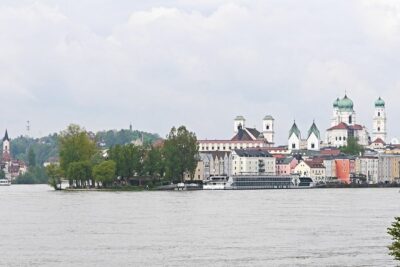
On the bridge area, your guide also sets you up for the dramatic geography Passau is famous for: the tip of land where the three rivers join to form the mighty Danube. This is one of those moments that photographs well, but the guide’s context makes it much more than a nice picture. You begin to understand why this location drew power and activity in the first place.
One practical tip: give yourself time to pause. The tour does not rush you through this portion. You are encouraged to take your time to enjoy the surroundings before moving back toward the old city. If you like capturing river views, this is where you slow down and frame shots from the best angles without feeling like you are holding up the group.
Veste Oberhaus, the Fortified Lookout You Will Remember
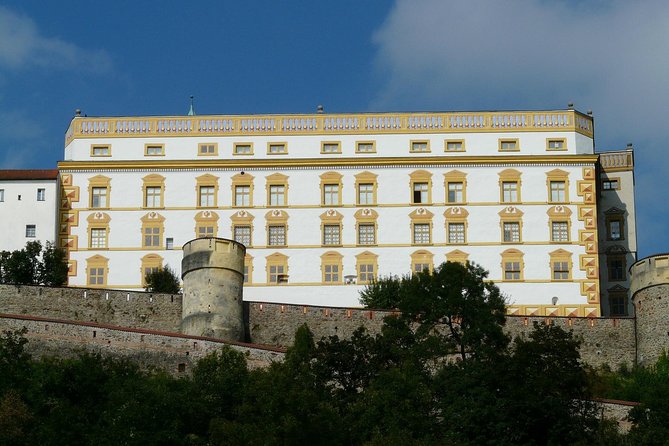
Next comes the walk up the path to Veste Oberhaus. This served as the fortified residence of the bishop of Passau, and you feel that defensive purpose in the way the area sits above the city. Even on a short tour, reaching a viewpoint like this changes your understanding of the place.
What you get here is the bigger-picture view of Passau and the river valley. From ground level, streets and rooftops can feel like a patchwork. From a fortified lookout, the city reads like a system, built around waterways, authority, and control.
This is also a smart stop for photo lovers because it is not just a scenic view. It is a viewpoint with meaning, and your guide can point out what to notice based on what you already saw near the cathedral, town hall, and bridge. The tour builds momentum, and Oberhaus is where it clicks.
If you have mobility limits, this part is worth considering. The tour is rated easy overall, but it does include a walk up a path to the lookout. I would bring that up early with your guide if you want the lightest possible route within the same stops.
Customization on the Spot, So You Actually Leave Informed
One of the best parts of this tour is that you can discuss customizing on the spot. That means you can steer the guide toward your preferences while you still have momentum and context.
If you care most about architecture, you can focus on the cathedral and how the baroque style fits the Prince-Bishopric era. If you want a more river-focused story, you can put more emphasis on the bridge, crossings, and the three-river confluence. And if you are a history person who likes people and power, you can ask for more about figures tied to the Royal Promenade.
I also found it helpful that guides in this format often provide local, practical recommendations. In the experiences I read, Petra and Leonie both gave extra help, including dinner recommendations and shopping tips. That is a real value add because it turns the tour into a launchpad for your next decisions in town.
Who This Tour Is Best For (And Who Might Prefer Something Else)
This tour is a strong fit if you want a concentrated Passau overview without committing to a whole day. It is also ideal when you value a private guide, not just a set route. With only your group participating, you can ask questions freely and adjust pace.
It is suitable for any age and labeled easy, so it works for families, couples, and multigenerational groups who want guided context without a strenuous plan. It is also great if you are in Passau for a short stop and want to understand why the city looks the way it does.
If you are the type who loves to linger at museums for long periods, you might find the time window tight. Still, you can use this tour to set direction, then go back on your own for deeper exploration once you know what matters.
Practical Tips to Get More From the Walk
A short private tour works best when you help it with the basics. Wear comfortable shoes since you will be moving through old streets and up toward viewpoints. Bring a water bottle if you tend to get thirsty, especially if the weather is warm.
You will also get more from the experience if you come with one or two interests. For example, decide whether you want the focus to lean architecture, river geography, or the Prince-Bishopric era and its cultural impact. Then you can tell your guide early on what you care about, and you will get a more satisfying flow.
Finally, give yourself a little buffer time before and after the tour. When you start with big landmarks like St. Stephen’s Cathedral and end with a viewpoint like Veste Oberhaus, the day has a natural rhythm. You will enjoy it more if you can keep your schedule calm.
Should You Book This Private Walking Tour of Passau?
I think this is worth booking if you want a high-touch guide and you like being oriented quickly in historic cities. The combination of St. Stephen’s Cathedral, the Royal Promenade story trail, river-crossing views on the Luitpold Bridge, and the Veste Oberhaus lookout makes this a compact plan with big emotional payoff.
Book it especially if you are traveling with others and can share the group price. If you are solo, it may feel pricey, but you can still justify it if you want real-time tailoring and you value a private guide over audio tours or self-guided wandering.
If you want to feel why Passau matters, not just what it looks like, this private walk is a smart, efficient choice.
FAQ
How long is the Passau private walking tour?
The tour lasts about 1 hour 30 minutes (approx.).
Is the tour private or shared?
It is private. Only your group will participate.
What language is the tour offered in?
The tour is offered in English.
Where does the tour start and end?
It starts at Domplatz, 94032 Passau-Alstadt, Germany, and ends at 94 Passau, Germany.
Do I need transportation during the tour?
No. For this walk tour, no transportation is needed.
How much walking is involved, and is it easy?
The activity level is easy, and it is suitable for any age.
Are admission tickets included for stops like the cathedral?
Admission tickets are not included (an admission ticket is noted as not included).
Can I customize what we focus on during the tour?
Yes. You can discuss customizing the tour with your local guide on the spot.
What is the cancellation policy?
You can cancel for free up to 24 hours in advance of the experience start time for a full refund. If you cancel less than 24 hours before, the amount paid will not be refunded.
Fresh on the arrivals board for Passau

Walking Tours, compared.
Berlin City walk Government District and Places of Democracy
Read our review →
Berlin’s Best: 2 Hour Walking Tour Third Reich and the Cold War
Read our review →
Browse the lists this tour appears in