
Reviewed · PASSAU TOURS & ACTIVITIES
Passau – Classic Guided tour
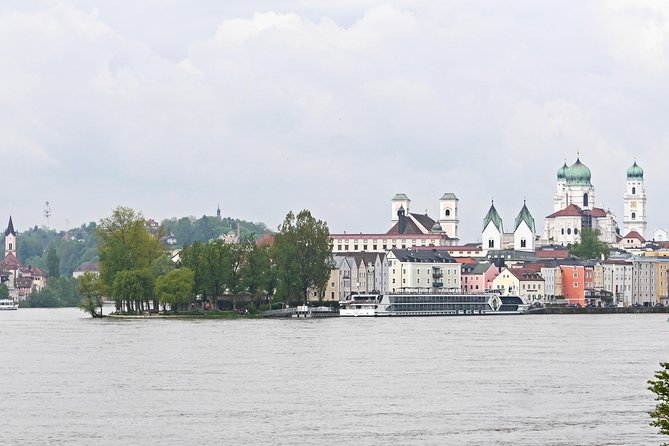
Passau feels like a story with river views. In about two hours, this private tour walks you through Passau landmarks and ends at the Oberhaus fortress viewpoint.
I like the focus on real sights, not just photos, so you leave with a clear sense of the city layout and what shaped it.
I love two things most: the chance to see St. Stephen’s Cathedral and its famous organ, and the way the guide helps you read the city through the paintings and flood marks inside the Old Town Hall.
It is also the kind of tour where guides like Guido and Sylvia are praised for excellent English and for keeping the group engaged, even when there is a teen in the mix.
One possible drawback: you climb up to Veste Oberhaus, and a few stops do not include admission, so budget a little extra and wear shoes you trust.
If you are hoping for a slow, stroller-friendly stroll, this one may feel a bit active.
In This Review
- Key highlights to watch for
- Getting Oriented Fast in Passau’s Old Town
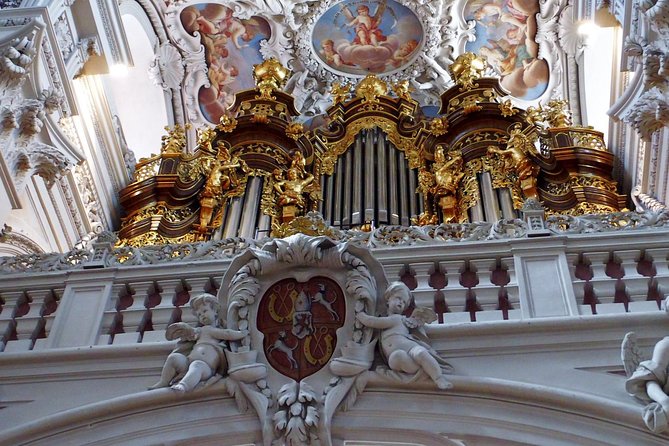
- Stop 1: Dom St. Stephan and Its Cathedral Organ With Six Consoles
- Stop 2: Neue Bischöfliche Residenz and the Power of Late Baroque
- Stop 3: Altes Rathaus Neo-Gothic Paintings and Real Flood Clues
- Stop 4: Pilgrimage Church Mariahilf and Its 321 Steps
- Stop 5: Climbing to Veste Oberhaus for the Three-River Panorama
- Price and Group Value: When $385.48 Feels Like a Deal
- What I’d Do to Get the Most From Each Stop
- Should You Book This Passau Classic Guided Tour?
- FAQ
- How long is the Passau Classic Guided tour?
- Is this tour private?
- Where do I meet the guide, and where does the tour end?
- Is this tour good for moderate physical fitness levels?
- What tickets are included?
- How do I get my ticket?
- Can I get a refund if I cancel?
Key highlights to watch for
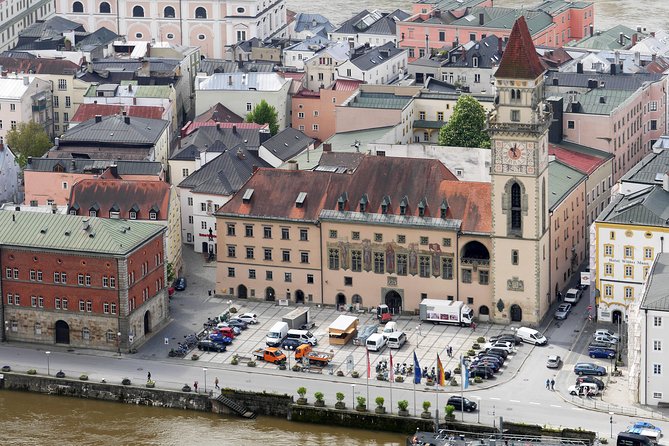
- St. Stephen’s Cathedral (Dom St. Stephan) and the world-famous cathedral organ with multiple consoles
- Altes Rathaus interior paintings plus flood height markings that explain Passau’s river risk
- Pilgrimage Church Mariahilf founded by Domdekan Marquard von Schwendi, with 321 pilgrimage steps
- Oberhaus Fortress for the big panorama, including the meeting point of three rivers
- Private, flexible pacing for your group of up to 15, led by guides with strong English
Getting Oriented Fast in Passau’s Old Town
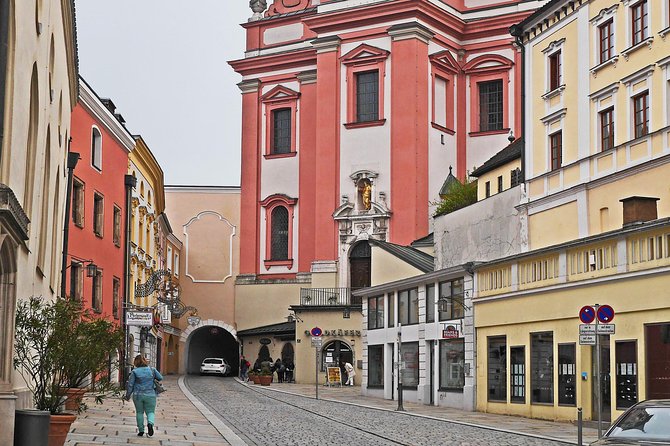
This tour is designed for your first real look at Passau, especially if you want to connect the dots between church power, town governance, and the rivers that run the show. You meet at St. Stephan’s Cathedral on Domplatz, then move through the old town on foot, finishing at Veste Oberhaus (Oberhaus 125).
The timing matters. You have roughly 1 hour 30 minutes to 2 hours, with short guided stops built into the route. That means you can see a lot without feeling like you are rushing through everything at top speed. It is also private, so the guide can adjust pacing if your group wants to linger for a view or ask extra questions.
One more practical note: it is a mobile ticket experience and you start near public transportation. That makes it easier to fold into a Passau day without complicated planning.
Also holding a platform in Passau
- Passau: Crystal Ship Sightseeing Cruise
★ 4.6 · 705 reviews - Passau: City Highlights Guided Walking Tour
★ 4.7 · 568 reviews - Passau: Floating City Highlights Tour on the Danube and Inn
★ 4.5 · 452 reviews
Stop 1: Dom St. Stephan and Its Cathedral Organ With Six Consoles
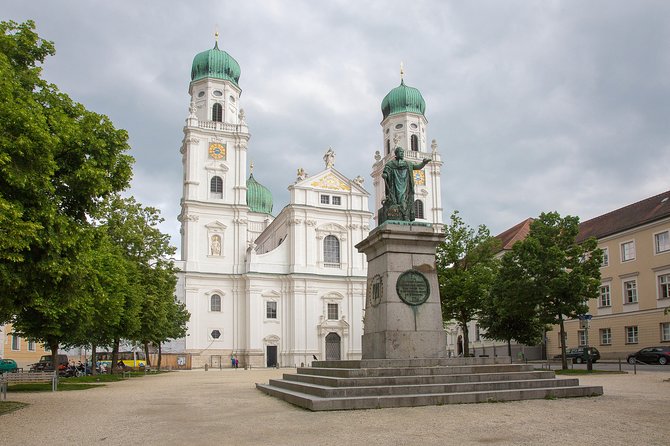
Your first stop is Dom St. Stephan, a Baroque church dedicated to Saint Stephen. The current cathedral dates to 1688, but the site has hosted churches since 730, which gives you immediate perspective on how long Passau has mattered as a religious center.
Beyond the architecture, the main draw here is the cathedral organ, described as the world’s largest cathedral organ. The guide can point you to how it works: there is a five-manual general console in the gallery, and the cathedral has six consoles total.
Even if you are not an organ nerd, this stop rewards you. You get a clear sense of why a city would invest in something this complex. Pipes and consoles are not just musical gear, they are part of how a bishop’s seat projects status and brings the community together.
Admission is free for this stop, and the visit is about 15 minutes. Use that time to look up and around, not only at the front. Baroque interiors often hide details in the sides and ceilings that you miss when you only look forward.
Stop 2: Neue Bischöfliche Residenz and the Power of Late Baroque
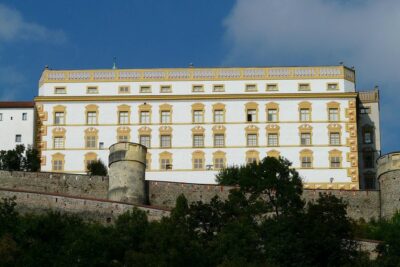
Next you head toward Residenzplatz, where the Neue Bischöfliche Residenz (New Episcopal Residence) stands. This palace complex was built from 1712 to 1730 in the Viennese late Baroque style, which helps explain why Passau does not look like a frozen-in-time Bavarian town. It reflects influence and taste that travelled with the political and ecclesiastical world.
This stop is shorter, around 15 minutes, and admission is not included. In practice, that means you may mostly be focusing on what you can see from the outside and any guided look the schedule allows.
The value here is not just the building itself. It is the way the guide can explain what episcopal residences signaled. A cathedral is public-facing faith, but a residence is where authority lives, negotiates, and plans. If you like understanding the “who had the power” behind what you see, this is a good moment in the route.
Stop 3: Altes Rathaus Neo-Gothic Paintings and Real Flood Clues
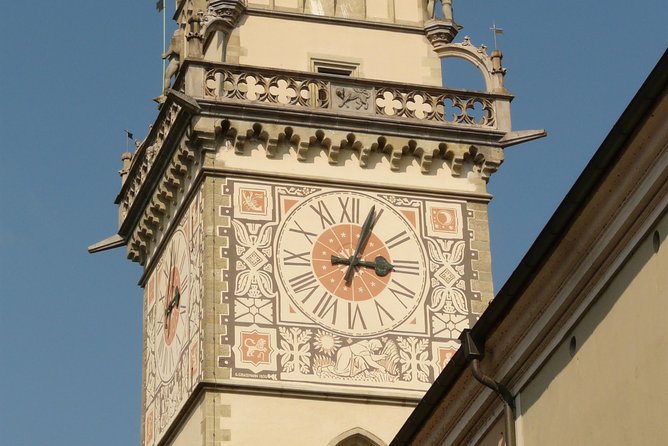
At Altes Rathaus, the old city hall, you step into the civic side of Passau. The building dates back to the 14th century and uses Neo-Gothic style elements. That blend of age and style is part of what makes it worth a guided visit.
Inside, the walls feature lavish paintings tied to local legends. If you have ever walked through a historic room and felt like you were missing the story, this is where a guide earns their fee. The murals are not just decoration, they help you connect Passau to the people and ideas that shaped daily life.
Then comes one of the most practical and memorable details: look for the water marks on the side of the building. These markings show the heights and dates of floods that occurred over time. Passau sits where rivers matter, and this is your visual proof. You stop seeing “pretty rivers” and start thinking about what the city had to survive.
This stop runs about 20 minutes, and admission is not included. If you want maximum value, use this time to ask the guide what you should pay attention to first: the paintings, the flood marks, or both.
Also, you are in an area where it is easy to grab something to drink or eat before you continue upward. Even if you do not stop, it helps to know where your next snack will come from after the cathedral and town hall details.
Stop 4: Pilgrimage Church Mariahilf and Its 321 Steps
After the city hall stop, the route moves toward a quieter kind of spectacle: the Pilgrimage Church Mariahilf. This church was founded in 1622 by Domdekan Marquard von Schwendi, and the name literally points to its purpose: Mary help us.
One standout detail is the 321 pilgrimage steps. That number is not a random statistic. It connects the church to a devotional tradition where movement is part of the ritual, not just a means to an end. Even if you only climb part of the steps, you are still participating in a path that has a long cultural memory.
The church is also described as offering magnificent views, which is exactly what you want after earlier architectural stops. A view gives your brain somewhere to rest. It also helps you picture what you will see later from Oberhaus, since the two viewpoints are connected by the city’s river terrain.
This stop is about 15 minutes, and admission is free. If you are traveling with mixed ages, this is often an easier moment than it sounds, because you can choose your effort level without breaking the flow of the tour.
Onward connections from Passau:
Stop 5: Climbing to Veste Oberhaus for the Three-River Panorama
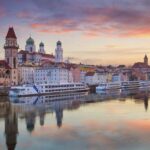
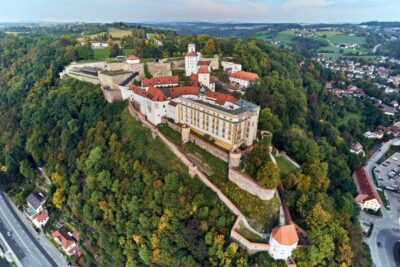
The final and biggest payoff is Veste Oberhaus. This fortress is Passau’s bastion, with a museum, and it is the place where the city’s geography turns into a real view.
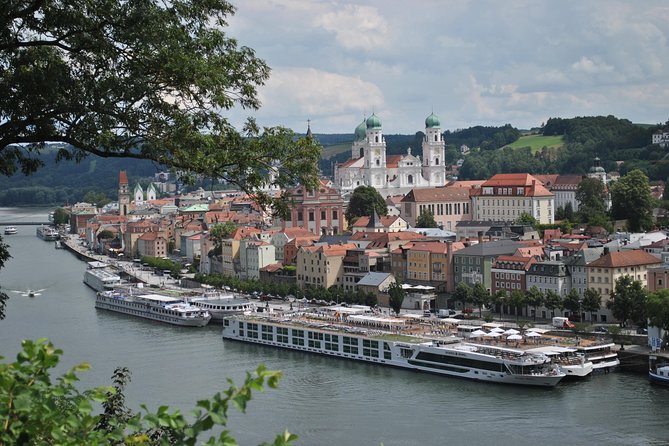
You will hike up as part of the tour, and the time allocation is about 45 minutes. For many people, this is the highlight, because the scenery opens up in a big way. From up here you can see Passau stretching out with green hills, red roofs, colorful houses, and churches. The guide can also help you spot the meeting point of the three rivers, which is the geography that makes Passau so distinctive.
Admission here is not included, and the museum is part of what you might access depending on the route the guide follows. Either way, plan for the possibility of extra entry costs if you want to go inside.
This is also the moment where the guide’s pacing matters. Some groups climb fast and enjoy the view briefly, others take it slow and point out details. Because it is private, you are not stuck with the pace of strangers.
Price and Group Value: When $385.48 Feels Like a Deal
The price is $385.48 per group, with a maximum group size of 15. That matters because you are not paying a per-person rate. In practical terms, the value depends on how many people are in your group.
If you have a group of friends or family, this can work out very well. You essentially buy a guided, ticket-aware route for a fixed amount, and you can split the cost among several people. If you are traveling solo or as a couple, the price can feel harder to justify since you are not leveraging the group cap.
Duration is about 1 hour 30 minutes to 2 hours, which is also part of the value equation. You are not committing a half-day or more, but you do get a structured arc: cathedral, civic power, civic art and flood realities, pilgrimage tradition, then the fortress panorama.
Another small clue about planning: this tour is often booked around 80 days in advance on average. That suggests demand, especially if you are traveling in peak season. I would not treat it as a last-minute option.
The upside is that it is a private tour, so you are getting personal attention and flexibility. In towns like Passau, where the center is walkable but the stories are not obvious at first glance, that guide help is the difference between seeing buildings and understanding why they are there.
What I’d Do to Get the Most From Each Stop
This is one of those tours where small choices help. Here are a few ways to get the best results without overthinking it.
First, prepare for a short physical climb. The route includes hiking up to Oberhaus, and the tour notes moderate physical fitness. Comfortable shoes beat good intentions.
Second, come ready with one or two questions. Ask about what the guide considers the most important detail at each stop, like how the organ console setup matters or what the flood marks reveal. The guides praised for strong English, including Guido and Sylvia, are clearly comfortable answering follow-ups and adjusting pacing.
Third, use the order of sights. The route goes from the cathedral’s seat of power, to an episcopal residence, to the civic old town hall with its flood evidence, then to a pilgrimage church, and finally to the fortress viewpoint. That sequence builds a mental map. By the time you reach Oberhaus, you can connect what you learned earlier to what you are seeing from above.
Finally, plan for separate admissions where listed as not included. Stops like Neue Bischöfliche Residenz, Altes Rathaus, and Oberhaus note admission is not included. You do not need to panic about it, just keep a little extra budget in mind so you can say yes if the guide recommends going in.
Should You Book This Passau Classic Guided Tour?
Book it if you want a smart, efficient orientation to Passau with a guide who can explain what you are seeing, and you are happy doing a moderate walk ending with a fortress viewpoint. The combination of St. Stephen’s Cathedral, Altes Rathaus flood marks and legend paintings, and the Oberhaus three-river panorama is exactly the mix that turns a quick visit into a memorable one.
Skip it if you want a fully flat route or if you dislike group walking with climbs, even when the schedule is gentle. Also consider whether you are likely to pay extra for the stops marked as admission not included.
If your ideal Passau day is part architecture, part geography, and part storytelling about how the rivers shaped daily life, this private classic tour is a very solid fit.
FAQ
How long is the Passau Classic Guided tour?
It runs about 1 hour 30 minutes to 2 hours.
Is this tour private?
Yes. It is a private tour/activity, and only your group participates, with a maximum group size of up to 15 people.
Where do I meet the guide, and where does the tour end?
The meeting point is St. Stephan’s Cathedral, Domplatz, 94032 Passau, Germany. The tour ends at Veste Oberhaus, Oberhaus 125, 94034 Passau, Germany.
Is this tour good for moderate physical fitness levels?
The tour is listed for travelers with a moderate physical fitness level. There is a hike up to Veste Oberhaus.
What tickets are included?
Admission is free for St. Stephen’s Cathedral (Dom St. Stephan) and the Pilgrimage Church Mariahilf. Admission is not included for Neue Bischöfliche Residenz, Altes Rathaus, and Veste Oberhaus (including its museum).
How do I get my ticket?
You receive a mobile ticket.
Can I get a refund if I cancel?
No. The experience is non-refundable and cannot be changed for any reason.
Fresh on the arrivals board for Passau

Passau Tours & Activities, compared.
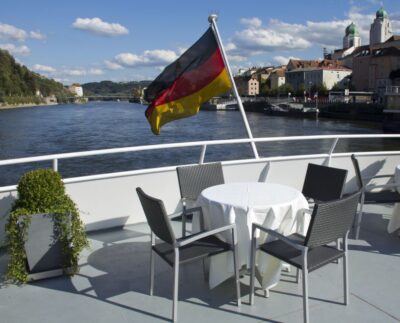
Floating City Highlights Tour on the Danube and Inn
Read our review →
Private Transfer From Passau To Munich With a Stop In Dachau
Read our review →Browse the lists this tour appears in