Reviewed · BERLIN TOURS & ACTIVITIES
Karl-Marx-Allee Tour: Life and Architecture in East Berlin
East Berlin tells stories in concrete. This small-group walking tour turns Karl-Marx-Allee, and the sights around it, into an easy-to-follow timeline of East Germany’s plans, propaganda, and everyday life. You cover major landmarks tied to Herman Henselmann, Hans Scharoun, and the political events that shaped the city in the 1950s and beyond.
I especially like two things. First, the expert local guide does more than point at buildings, they explain the why behind the design, including how architecture served the state. Second, the stop list is tightly focused: you get big ideas at every turn, from early socialist planning to the June 17, 1953 uprising.
One thing to consider: this is a 2-hour walk with multiple outdoor stops, and it works best in good weather. If you want a slow pace or lots of indoor time, you may wish for a longer program.
In This Review
- Key highlights I’d plan around
- A 2-hour walk that turns Karl-Marx-Allee into a timeline
- Meeting at U Frankfurter Tor and finishing near Strausberger Platz
- Frankfurter Tor: the socialist street idea made visible
- Laubenganghäuser and Hans Scharoun: utopia that didn’t last
- Hochhaus an der Weberwiese: the luxury prototype and the propaganda engine
- June 17, 1953: when workers nearly changed the regime
- Café Sibylle and the Joseph Stalin connection up to 1961
- The Karl Marx bust: ideology measured in daily life
- Strausberger Platz after the Berlin Wall: stories that don’t end
- Why the 30.01 price feels fair for what you get
- What type of traveler this tour is perfect for
- FAQ
- How long is the Karl-Marx-Allee walking tour?
- How much does the tour cost?
- Is the tour offered in English?
- What is the group size limit?
- Where does the tour start?
- Where does the tour end?
- Do I need a printed ticket?
- Is admission included for the stops?
- Is the tour suitable for most people, and can service animals join?
- What should I do about weather?
- Should you book this Karl-Marx-Allee tour?
Key highlights I’d plan around
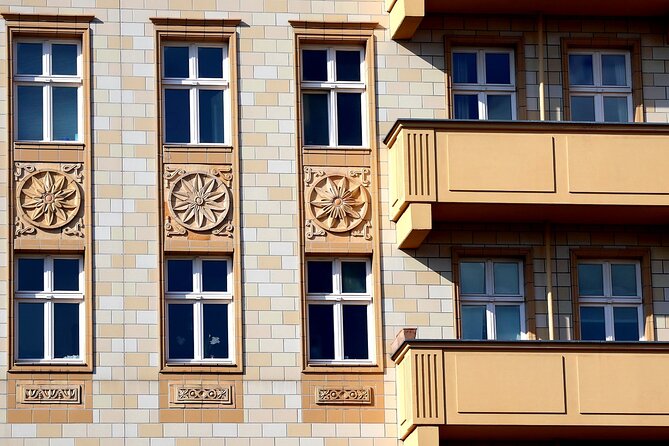
- Frankfurter Tor and its symmetry, plus how early 1950s socialist street plans were shaped by mass rebuilding efforts
- Hans Scharoun’s Laubenganghäuser, including utopian urban ideas that the East German regime quickly rejected
- Hochhaus an der Weberwiese, a prototype for Karl-Marx-Allee with an early taste of luxury, and a strong propaganda role
- Gedenkstätte Arbeiteraufstand 17 Juni 1953, where the June 1953 uprising nearly toppled the socialist government
- Café Sibylle and the Joseph Stalin statue link, including the nearby landmark history up to 1961
- Strausberger Platz, continuing the story after the Wall and showing how the area reads today
A 2-hour walk that turns Karl-Marx-Allee into a timeline
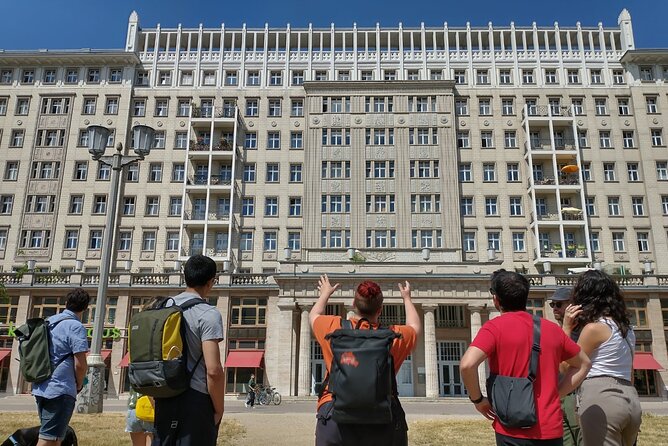
This is the kind of tour I recommend when your Berlin time is tight but you still want meaning, not just photos. In about two hours, you cover a concentrated stretch of architecture and memory, with an expert guide guiding the pacing and the story.
What makes it satisfying is how the tour connects design to politics. You are not only learning names like Karl Marx and Joseph Stalin, you are seeing how ideology showed up in planning, housing style, and even the mood of public space.
With a maximum group size of 15, the walk stays conversational. That matters on a topic this complex, because you can ask practical questions and get direct answers without feeling rushed.
Also holding a platform in Berlin
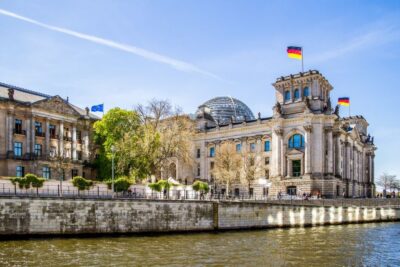
- Berlin: Reichstag, Dome and Government District Guided Tour
★ 4.7 · 18,288 reviews - Berlin: 1-Hour City Tour by Boat with Guaranteed Seating
★ 4.3 · 16,993 reviews - Berlin: TV Tower Standard Entrance Ticket
★ 4.4 · 15,883 reviews
Meeting at U Frankfurter Tor and finishing near Strausberger Platz
The walk starts at U Frankfurter Tor (10243 Berlin). You end at Strausberger Pl., in the eastern side of the Strausberger Platz roundabout, about a 10-minute walk from Alexanderplatz.
That location setup is handy. It keeps you central for transit, and it also means you can stitch this tour into a day that includes museums, food, and a wander through nearby streets afterward.
You get a mobile ticket, and the tour is offered in English. Service animals are allowed, and the tour is described as suitable for most people, so it is a good option even if you are not planning a fitness-heavy day.
Frankfurter Tor: the socialist street idea made visible
Frankfurter Tor is a strong starting point because you can literally see order in the design. You will look at the symmetry of the towers built by Herman Henselmann, then the guide connects that look to the early 1950s goal of creating what was described as the first socialist street in Germany.
What I like here is the combination of big-scale planning and human reality. The story includes the success of a national rebuilding program that mobilized thousands of volunteers, so the buildings feel less like abstract ideology and more like a labor movement with consequences.
One small drawback at this stop: since you are outside and focused on architecture, you might need to pay attention to details to get the full payoff. If you already enjoy reading buildings like documents, you will likely feel right at home here.
Laubenganghäuser and Hans Scharoun: utopia that didn’t last
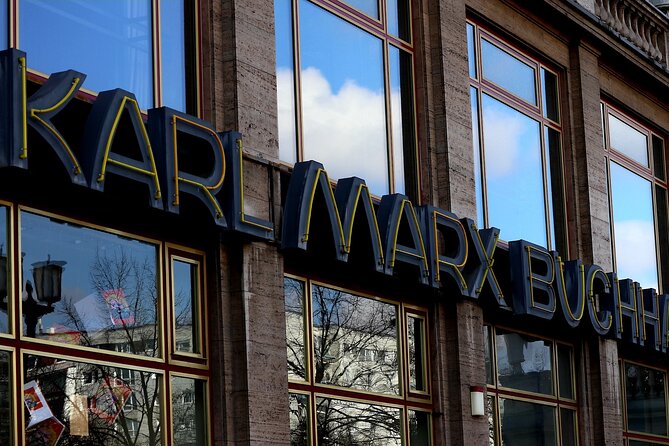
Next comes the Laubenganghäuser, and the tone shifts. These buildings show modernist architecture from the immediate post-WWII years, created by Hans Scharoun, and the guide explains his utopian urbanist ideas born out of destroyed Berlin.
This stop is valuable because it adds friction to the storyline. Instead of presenting East German planning as a single straight line, you see that ideas competed, and not everything survived the new regime’s priorities.
You will also learn why these kinds of designs got rejected. That context changes how you view the structures in front of you, because you start noticing what was considered useful, acceptable, or politically risky.
Hochhaus an der Weberwiese: the luxury prototype and the propaganda engine
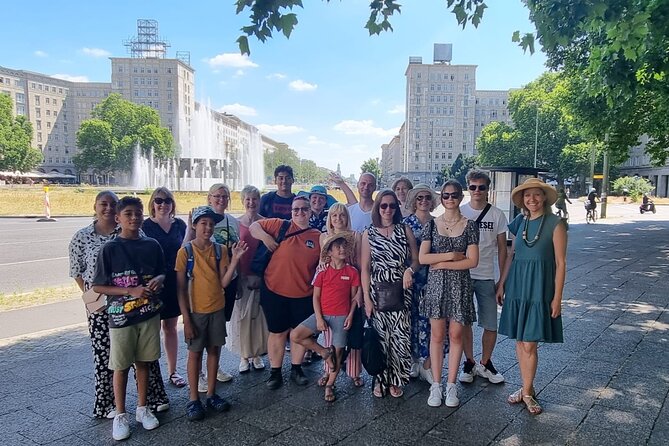
At Hochhaus an der Weberwiese, the tour moves into a more surprising chapter. You see a building that acted as a prototype for the rest of the socialist Karl-Marx-Allee and learn how it offered its first tenants unprecedented luxury.
Then the guide adds the political layer. The project becomes a propaganda tool, and it also turns into a magnet for Western architects. That angle is important because it shows how the East German state sought legitimacy and attention beyond its own borders.
If you care about the intersection of politics and design, this is one of the stops that makes the tour click. You start seeing architecture as communication, not just construction.
Onward connections from Berlin:
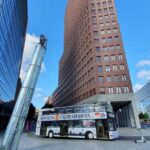

June 17, 1953: when workers nearly changed the regime
The walk then reaches Gedenkstätte Arbeiteraufstand 17 Juni 1953, tied to the June 1953 uprising. The guide explains that disgruntled workers began a mass movement that almost toppled the socialist government of East Germany.
This stop is emotional and tense, and it also includes a built-in complication. There is a controversial monument dedicated to the uprising, and the guide’s framing helps you understand why symbolism can be disputed even after the events are long over.
I recommend slowing down mentally here. Spend a minute looking at the monument as an argument, not only as a marker of history. That mindset makes the rest of the tour more coherent.
Café Sibylle and the Joseph Stalin connection up to 1961
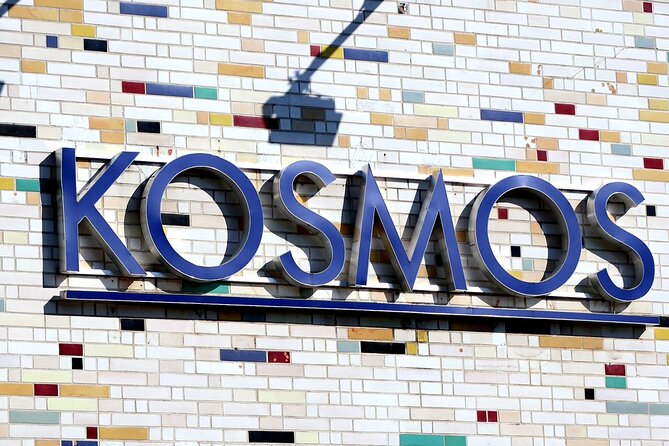
At Café Sibylle, you get a change of pace that still stays political. You learn how one of the most exclusive cafés on Karl-Marx-Allee in East Berlin is connected with Joseph Stalin’s statue, which stood nearby until 1961.
Even if you never order a coffee, this stop helps you understand how the state’s influence showed up in everyday choices. Place names, social life, and who felt welcome all became part of the atmosphere.
A practical note: cafés can turn into clutter fast, so keep your focus on the guide’s points and then you can decide if you want to grab a drink later on your own.
The Karl Marx bust: ideology measured in daily life
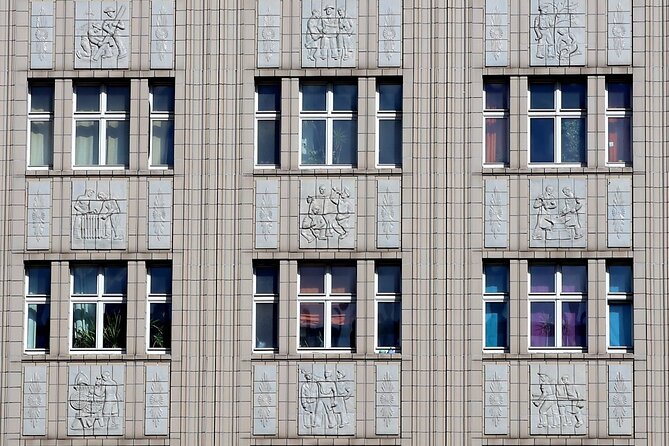
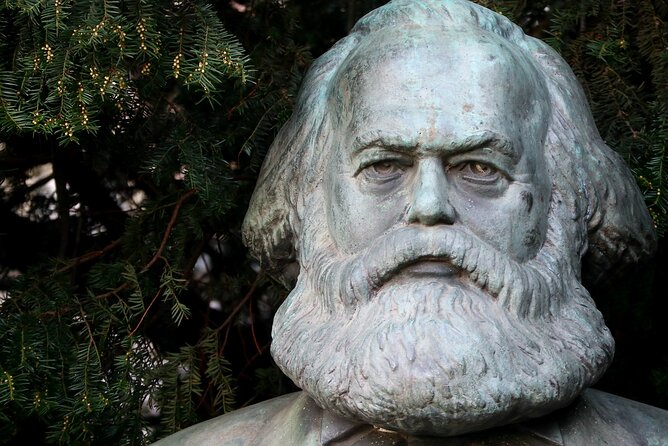
The tour continues at Karl-marx-bustendenkmal, where you meet the author of The Communist Manifesto. This stop is where the guide connects ideology to the routines people actually faced in East Berlin.
I like this part because it prevents history from turning into pure architecture trivia. You start thinking about propaganda as something people lived with, not only something they witnessed from a distance.
If you are the type who likes your history with specifics, this segment tends to land well. You get the bridge from symbols to daily life, without losing the walking-tour pace.
Strausberger Platz after the Berlin Wall: stories that don’t end
The finish line is Strausberger Platz, and the guide ties the area to life after the Fall of the Berlin Wall and today. You also get another example of Hermann Henselmann’s style, which helps you connect the opening and closing points of the route.
This last stop matters because Karl-Marx-Allee is still a functioning part of Berlin. The tour does not treat the past like a sealed exhibit. Instead, it helps you see how the same buildings can be read differently across regimes and decades.
If you have energy after the tour, this is a good place to keep walking. You will already have a framework in your head for what to notice next.
Why the 30.01 price feels fair for what you get
The price is $30.01 per person for about two hours. On paper that might sound like a quick tour, but the structure makes sense: multiple major landmarks, guided explanations, and a small group size of up to 15.
You also get an expert local guide, and every listed stop shows admission ticket free in the tour outline. That means you are not buying separate entry fees at each location while you walk.
The biggest value is the story organization. The guide turns a long boulevard into a sequence of ideas you can remember later, especially when Berlin’s history can feel overwhelming.
One more practical factor: this tour is often booked in advance, so if you are traveling during peak season, it helps to reserve early.
What type of traveler this tour is perfect for
This experience is ideal if you want to understand East Berlin without spending your whole day inside. It also works well if you like architecture but you want political and social context, not only design descriptions.
You will probably enjoy it most if you:
- have limited time and want a guided timeline in two hours
- enjoy walking and want a structured route
- care about how governments shape cities and public space
- like asking questions and hearing direct explanations
If you only want a light scenic stroll, you may find the political material more intense than expected. Still, the tour’s main strength is balance, it keeps returning to how these choices affected real people’s lives.
FAQ
How long is the Karl-Marx-Allee walking tour?
It’s about 2 hours.
How much does the tour cost?
The price is $30.01 per person.
Is the tour offered in English?
Yes, the tour is offered in English.
What is the group size limit?
The tour has a maximum of 15 travelers.
Where does the tour start?
It starts at U Frankfurter Tor, 10243 Berlin.
Where does the tour end?
It ends at Strausberger Pl., 10243 Berlin, near the Strausberger Platz roundabout.
Do I need a printed ticket?
No, it uses a mobile ticket.
Is admission included for the stops?
The tour lists each stop as admission ticket free.
Is the tour suitable for most people, and can service animals join?
The tour is described as suitable for most travelers, and service animals are allowed.
What should I do about weather?
The tour requires good weather, and if it is canceled due to poor weather, you will be offered a different date or a full refund.
Should you book this Karl-Marx-Allee tour?
I would book it if you want a fast, organized way to understand East Berlin through its buildings and the events around them. The route is compact, the themes are clear, and the small-group format helps the guide explain the tricky parts without drowning you in details.
If you prefer total silence, purely visual sightseeing, or lots of indoor time, look for a different style of tour. But if you want East Germany’s architecture as a story you can follow, this one is a strong fit.
Fresh on the arrivals board for Berlin
Berlin Tours & Activities, compared.
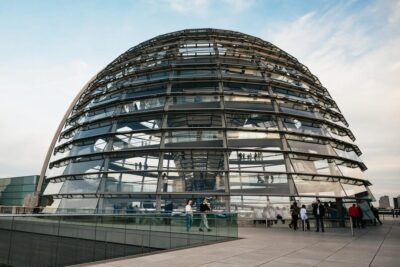
Reichstag, Dome and Government District Guided Tour
Read our review →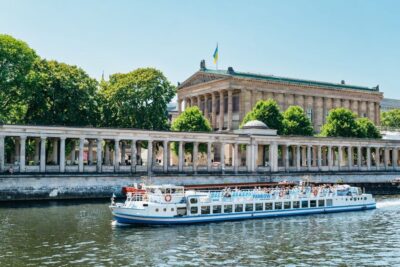
1-Hour City Tour by Boat with Guaranteed Seating
Read our review →
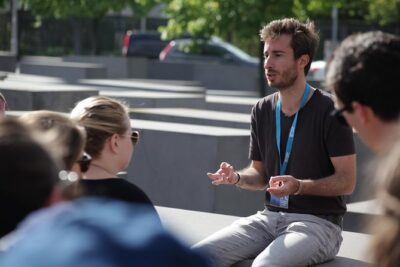
Berlin City walk Government District and Places of Democracy
Read our review →