
Reviewed · CITY TOURS
Individual City Tour – Rickshaw Sightseeing in Berlin
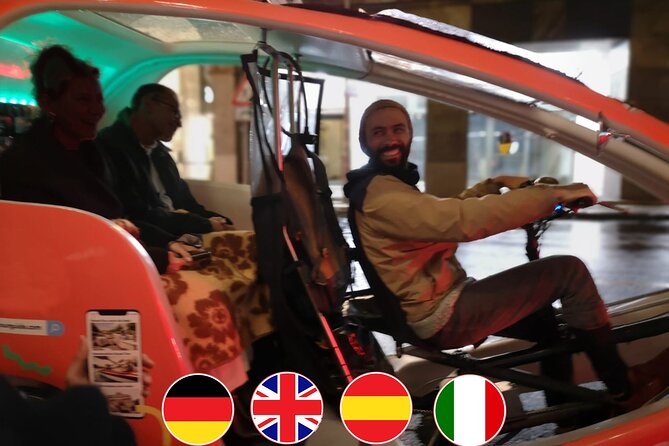
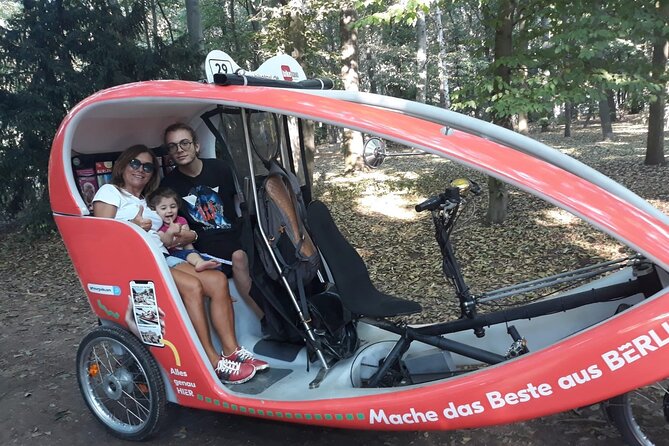
Berlin by rickshaw feels like cheating, politely. You glide between major landmarks with a guide’s commentary, then warm up with a blanket for cold weather while the city unfolds around you. It is a private outing, so your group sets the pace and you do not get stuck in a crowd shuffle.
Two things I like a lot: the route gives you an efficient hit list from medieval Berlin to postwar checkpoints, and you get the kind of up close sightseeing that normally takes longer on foot. I also love that the tour is meant to be personalized, plus you can request music if that helps set the mood.
One drawback to consider: it is not a sit-down, ticket-heavy museum day. You get short stops for photos and quick orientation, and a few sites have admission charges not included, like parts around Museum Island.
In This Review
- Key highlights in plain terms
- Why a private rickshaw beats bus hopping in Berlin
- Meeting at World Time Clock, then getting your bearings fast
- Alexanderplatz to Nikolaiviertel, where medieval Berlin still shows through
- Museum Island area, Prussian ambition, and what is worth paying for
- Hackesche Höfe to Palace of Tears, small spaces with big meaning
- Bebelplatz book burning memorial, then Gendarmenmarkt for a visual reset
- Checkpoint Charlie to Topography of Terror, Cold War realism up close
- Potsdamer Platz and Tiergarten, modern city flow plus Berlin’s green heart
- Victory Column, Bellevue Palace, and the government district views
- Brandenburg Gate, the final landmark, and how to time it
- Price, comfort, and value for your time
- Who this rickshaw tour is for
- Should you book this private Berlin rickshaw tour?
- FAQ
- How long is the Rickshaw Sightseeing in Berlin tour?
- Is this a private tour?
- What is the meeting point?
- Is hotel pickup included?
- What language is the tour in?
- What cold weather items are provided?
- Which sites require admission tickets not included?
- Can I request music during the tour?
- Are drinks included?
- What is the cancellation policy?
Key highlights in plain terms
- Private, door to sights style: only your group on the rickshaw, no joining strangers mid-route
- Cold weather comfort built in: warm blanket included, with extra warmth sometimes added on freezing days
- A route that covers Berlin’s big eras fast: GDR and Cold War sites plus central highlights
- Stops stay photo friendly: each location is timed so you can look, take pictures, and move on
- Music by request: a small touch that can make the ride feel more like your own plan
Why a private rickshaw beats bus hopping in Berlin
Berlin is huge, but most first-time plans feel like a race. A rickshaw tour changes that. You still cover a lot of ground, but you do it with less walking fatigue and more time looking at street level details.
The private format matters. If you have kids, older relatives, or just people who get tired easily, you avoid the awkward moments where you all have to keep up with someone else’s schedule. Your guide can also steer the conversation, not just recite facts off a script.
And yes, comfort is part of the deal. The tour includes a warm blanket for cold days. When it is icy outside, that small addition can turn a sightseeing mission into something you actually enjoy.
Also holding a platform in Berlin
- Berlin: Reichstag, Dome and Government District Guided Tour
★ 4.7 · 18,288 reviews - Berlin: 1-Hour City Tour by Boat with Guaranteed Seating
★ 4.3 · 16,993 reviews - Berlin: TV Tower Standard Entrance Ticket
★ 4.4 · 15,883 reviews
Meeting at World Time Clock, then getting your bearings fast
You start at the World Time Clock on Alexanderplatz. It is a busy, iconic meeting point that makes the beginning of the tour easy. From there, your ride swings toward the city’s older core, so you feel the shift from modern Berlin into the layers beneath it.
Expect a quick transition at the start. The tour is paced for orientation: you get a look at what you are about to see, then you move. If you are the type who likes to understand the geography before you go deeper later, this format helps.
Two early stops set the tone right away. Weltzeituhr is a good “from here, everything connects” point, and then you head to Nikolaiviertel, which helps you start thinking in timelines instead of just landmarks.
Alexanderplatz to Nikolaiviertel, where medieval Berlin still shows through
Stop 1 is Weltzeituhr, a popular meeting area where tourists and locals intersect. It is also a useful reference point for understanding Berlin’s expansion, because the area connects the medieval border story to the later center of the GDR capital.
Then comes Nikolaiviertel. This is tied to Berlin Cölln, one of the oldest settlement areas in the twin city story. Much of it was destroyed during World War II, then rebuilt for the city’s 750th anniversary. That means you get a place that feels old, but also carries the reality of 20th century history.
A quick note on how to enjoy this section: Nikolaiviertel works best if you slow down for a minute and look at the street layout, not just the buildings. Even with the short stop timing, you can catch the vibe of an older quarter.
Museum Island area, Prussian ambition, and what is worth paying for
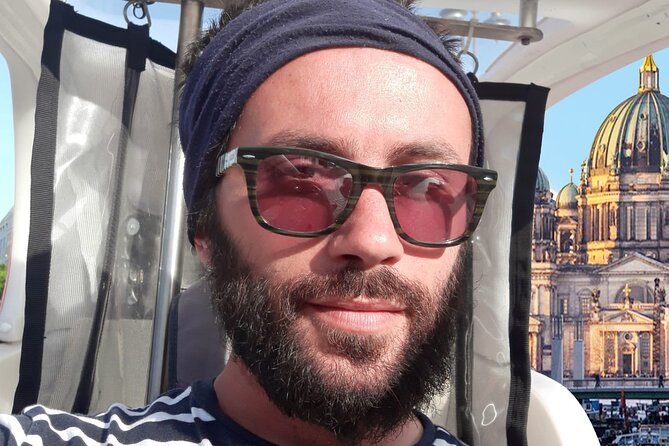
Next you roll up to Museum Island, one of the most important cultural zones in Berlin. The key detail here is that it was commissioned by Prussian kings, and it has been on the UNESCO World Heritage List since 1999. Nearby you can also spot major landmarks like the Berlin Cathedral and the new Berlin Palace.
What to plan for: Museum Island is timed as a short stop, and admission is not included. So if you want to go inside a museum or spend serious time at the exhibits, you will need a separate plan after this tour.
If you are wondering whether this tour still makes sense with that caveat, it does. Even without paid entry, you get context for where you might want to return. This is the kind of orientation that saves you time later.
Hackesche Höfe to Palace of Tears, small spaces with big meaning
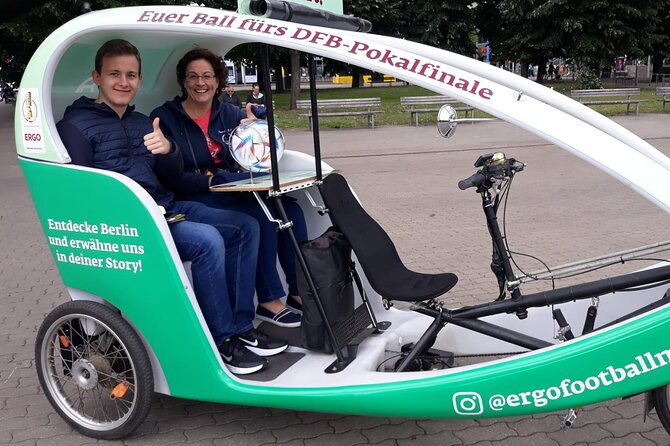
Then you head into Die Hackeschen Höfe, a standout for anyone who likes street-level Berlin. This enclosed courtyard area is considered the largest of its kind in Germany. You see a mix of youth-style facades and pretty backyards, which makes it a great contrast to the larger squares and monuments you will see later.
After that, the mood shifts at Palace of Tears. This was the former exit hall at the border crossing at Bahnhof Friedrichstraße. You can still walk through parts of the control counters, which makes the history feel physical rather than abstract.
A practical way to handle these two stops: Hackesche Höfe is about atmosphere, so bring your camera and take your time with the back courtyard views. Palace of Tears is about documentation and memory, so listen closely as your guide points out what you are seeing in the space.
Onward connections from Berlin:
Bebelplatz book burning memorial, then Gendarmenmarkt for a visual reset
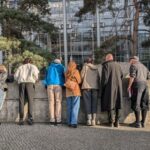
At Bebelplatz, history is front and center. This square has a memorial tied to the burning of books on 10 May 1933. The standout detail is the empty library feature that commemorates that event. It is a powerful stop because it makes the absence visible.
Then you go to Gendarmenmarkt, which is almost like a reset button for your eyes. This is one of Berlin’s prettiest squares, known for a coordinated ensemble of concert hall and churches, including towers that make the architecture feel ceremonial.
If you are photographing, do two different things here. At Bebelplatz, take your time for the memorial framing. At Gendarmenmarkt, widen out for the symmetry and tower lines. The contrast is part of what makes this section memorable.
Checkpoint Charlie to Topography of Terror, Cold War realism up close
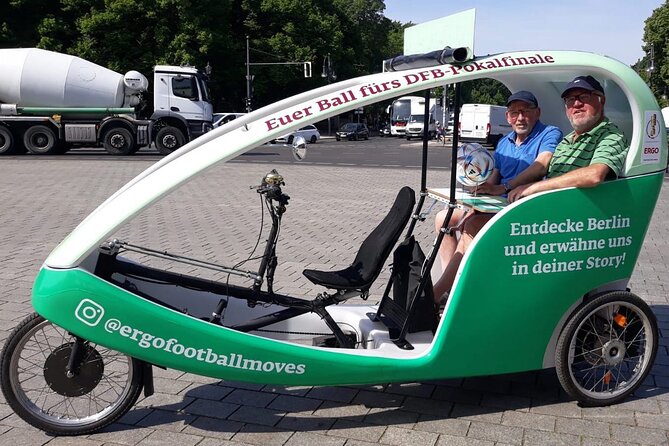
Next is Checkpoint Charlie, the former border crossing that became a reminder of a divided Berlin and the Cold War. It is also tied to tragic escape attempts, which is why your guide’s framing here matters. You are looking at more than a photo-op spot, you are looking at a symbol of real human risk.
From there you go to Topography of Terror. The key draw is that the longest remaining section of the Berlin Wall stands here in its original state. Even as a short stop, it gives you a clear sense of where the wall cut through city life.
A small practical tip: for these stops, plan to listen even if you are tired. This part clicks when you understand what you are standing beside. The rickshaw gets you close, and the guide helps you connect the dots.
Potsdamer Platz and Tiergarten, modern city flow plus Berlin’s green heart
Then you arrive at Potsdamer Platz, once one of the most important traffic junctions of the last two centuries. Division destroyed much of the old place, but elements are still hidden today. The modern buildings around it make it easier to imagine what changed and why the reconstruction shaped Berlin’s look.
After Potsdamer Platz, you enter Tiergarten, Berlin’s green heart. This stretch gets about 30 minutes, which is longer than most stops. Along the way, your route passes landmarks such as the Victory Column, the Office of the Federal President, the House of World Cultures, the Carillon, and the Soviet Memorial.
This is also a great section for photos that look less like monuments and more like everyday Berlin. Even if you only stop briefly at certain viewpoints, the park walk time gives you a chance to breathe.
If you want to maximize the experience here, do not just rush for photos. Look for bridges and sightlines. Berlin’s park-and-city mix is one of the reasons the city feels walkable even when you are riding.
Victory Column, Bellevue Palace, and the government district views
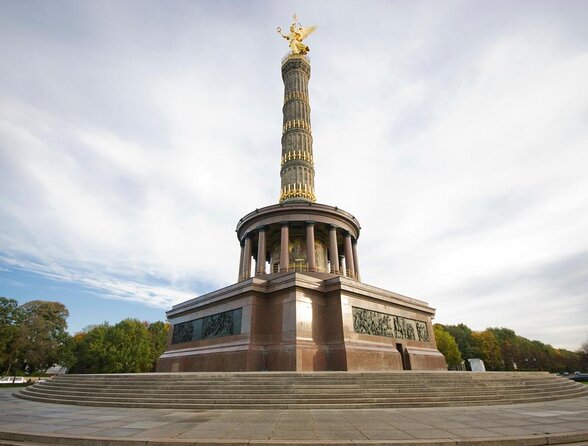
A key landmark after the park is the Victory Column. It commemorates three Prussian victories, and the area has interesting details like gilded cannons nearby. Admission is not included if you want to go inside or spend extra time, so treat this as a look and photo stop unless you have a separate plan.
Next comes Bellevue Palace, which has served as the first official residence of the German Federal President since 1994. Again, this is not an interior visit stop unless you arrange something on your own.
Then you pass through the Government District, a modern quarter built around the year 2000 along the Spreebogen, directly by the historic Reichstag building. This part helps you see how Berlin presents itself today, side by side with the older power centers you saw earlier.
Brandenburg Gate, the final landmark, and how to time it
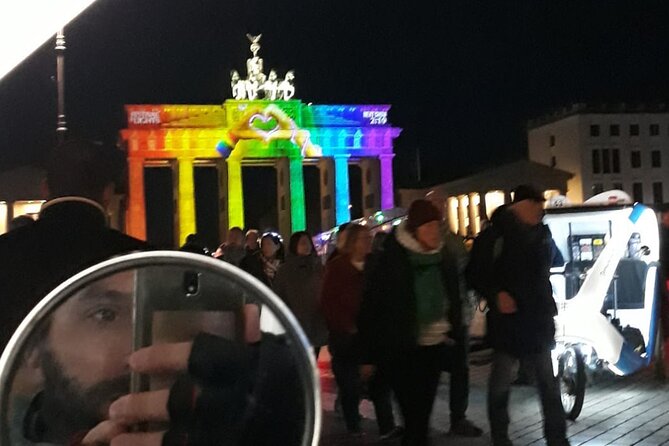
Your route ends at Brandenburg Gate, at the end of Unter der Linden. It is the only surviving city gate in Berlin. It has worn many meanings over time, serving as a memorial to division, then later a symbol of unity, and today it is a national symbol.
Timing is worth thinking about. In colder months or evenings, you may prefer the ambient light for photos and the lower crowds for a calmer viewing moment. If you are planning on an afternoon, you often get a balance of daylight and comfortable temperatures.
Since the tour returns to the meeting point at World Time Clock, you are not left stranded with transit hassles. You can jump on public transportation or walk toward your next planned meal without the stress of a complex end location.
Price, comfort, and value for your time
The price is $53.21 per person, and the duration runs about 1 to 3 hours. That range matters because Berlin sightseeing can balloon when you start adding walking, transit, and waiting. This tour is built to cut that time.
What makes it good value is the combo of:
- a private ride for your group
- an expert guide who explains what you are looking at during the ride
- short, focused stops at major sites, so you get orientation fast
- cold weather comfort with a warm blanket included
Drinks are not included, but you can order separately. That is normal for tours like this, and it gives you control over what you actually want to drink.
Pickup can also add real value. If you are staying within 2 km from Museum Island, pickup is free. Beyond that, it is 5 €/km for additional distance. For many hotels in central areas, that setup can save you both time and hassle.
Who this rickshaw tour is for
This is a smart choice if you want to:
- see a lot without racking up heavy walking
- get a clear first overview of Berlin’s major districts and historical anchors
- travel as a family, or with mixed ages and mobility levels
- appreciate story context, not just photos
Guides like Leo are known for keeping the ride warm and the explanations moving, and sometimes Jakob is mentioned as part of the experience. On freezing days, blankets are part of the plan, and some cold-weather comfort extras like hot water bottles may show up too.
If you hate tight schedules, this still works because your route can be flexible based on what interests your group. The stops are timed, but the day is not fixed in stone.
Should you book this private Berlin rickshaw tour?
I would book it if you are starting your trip and want fast, guided orientation that hits big Berlin moments from medieval beginnings to Cold War memory to modern government views. It is also a strong pick for winter or shoulder season because the cold comfort is built in.
Skip it or plan extra time if you want long museum visits or long interior experiences at the stops that require separate admission. This tour is about seeing and understanding, then helping you decide what to return to later.
If your goal is a comfortable, photo-friendly, history-focused sweep of central Berlin, this private rickshaw route is a very practical way to do it.
FAQ
How long is the Rickshaw Sightseeing in Berlin tour?
It runs for about 1 to 3 hours, depending on how your route is paced.
Is this a private tour?
Yes. It is private, so only your group participates.
What is the meeting point?
The start and end point is the World Time Clock at Alexanderpl. 1, 10178 Berlin, Germany.
Is hotel pickup included?
Pickup is offered for hotels or other locations within a radius of 2 km from Museum Island at no charge. Additional distance is charged at 5 €/km.
What language is the tour in?
The tour is offered in English.
What cold weather items are provided?
A warm blanket is provided. Some cold days include extra warmth like hot water bottles based on experience shared for this tour.
Which sites require admission tickets not included?
Museum Island, Victory Column, and Bellevue Palace are listed as admission not included. Other stops on the route are listed as free.
Can I request music during the tour?
Yes, music is available by request.
Are drinks included?
No. Drinks can be ordered separately.
What is the cancellation policy?
You can cancel for a full refund up to 24 hours in advance. Canceling less than 24 hours before the start time is not refunded.
Fresh on the arrivals board for Berlin

City Tours, compared.
1-Hour City Tour by Boat with Guaranteed Seating
Read our review →
Berlin City walk Government District and Places of Democracy
Read our review →
City History Canal Sightseeing Tour on a Motorboat
Read our review →
Browse the lists this tour appears in