
Reviewed · WALKING TOURS
Erfurt: Old Town Guided Walking Tour
Old Town Erfurt tells stories at walking pace. I love the way the guide turns stone and streets into a readable timeline, and you’ll see key landmarks like Krämerbrücke and the Cathedral of St. Mary without wasting time. One thing to consider: the tour is in German, so non-German speakers may catch less of the storytelling even if the sights are still impressive.
I also like the mix of big monuments and small details, especially the patrician townhouses, half-timbered buildings, and all the churches that make the whole center feel like a picture-book. You’ll spend two hours in a compact area, starting at Denkmal Eulenspiegel, ending with a stronger sense of how this city grew. If you’re sensitive to wet weather, plan for rain or shine.
In This Review
- Key things that make this tour worth your time
- Meeting at Denkmal Eulenspiegel, then getting your bearings
- Krämerbrücke and the Merchants Bridge area: where the walk really comes alive
- Cathedral of St. Mary exterior views and the Gloriosa bell legend
- Patrician townhouses, half-timber alleys, and church-filled streets
- Town Hall Gothic Revival and the University District angle
- Two hours in a 1,270-year-old city: timing that actually works
- Price, language, and value for your time in Erfurt
- Who this tour is best for (and who might want to think twice)
- Practical tips for smoother walking in Old Town Erfurt
- Should you book the Erfurt Old Town guided walking tour?
- FAQ
- Where does the tour meet?
- How long is the Erfurt Old Town guided walking tour?
- How much does it cost?
- What is included in the tour?
- Is hotel pickup or drop-off included?
- What language is the live guide?
- Does the tour run in bad weather?
- Is the tour wheelchair accessible?
- Can I cancel for a full refund?
- Do I need to pay right away?
- Does the tour help with ticket lines?
Key things that make this tour worth your time
- Denkmal Eulenspiegel meeting point gets you oriented fast in the Old Town core
- Krämerbrücke shows you why this bridge matters in Erfurt’s merchant-era identity
- Gloriosa bell at the Cathedral of St. Mary adds a real-world sound story to the sightseeing
- Patrician townhouses and half-timber framing connect wealth, architecture, and daily life
- Gothic Revival Town Hall and church-filled streets give you a clear German history snapshot
- Strong guide feedback includes praise for humor and clarity, including guides named Nick and Frau Messerschmidt
Meeting at Denkmal Eulenspiegel, then getting your bearings
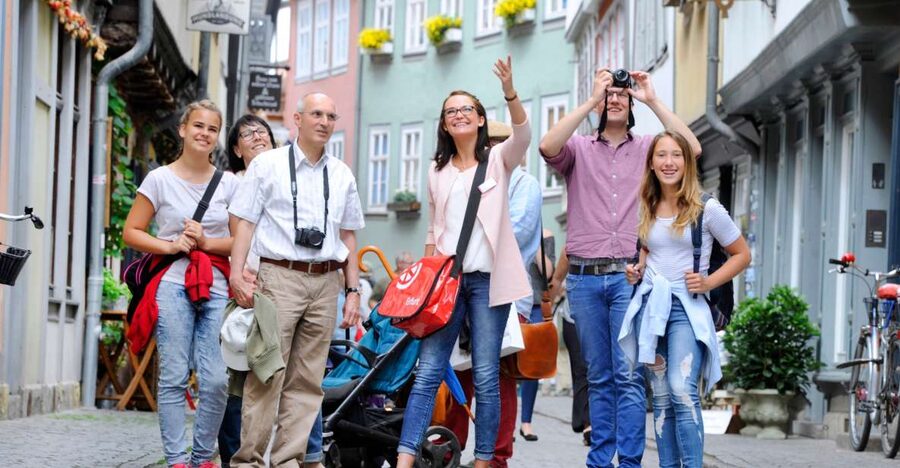
The tour starts behind the Erfurt Tourist Information at Benediktsplatz 1, at the Denkmal Eulenspiegel monument. That’s a smart way to begin, because you’re not hunting for your group in a maze of side streets. Once you spot the meeting point, you can settle in and focus on the walk.
From the start, you’re in the kind of Old Town where small turns matter. Erfurt’s center is compact, and the best payoff comes when you have a guide explaining what you’re looking at. The meeting point makes it easy to arrive a few minutes early and get settled, even if you’re coming from another part of town on foot.
One practical note: there’s no hotel pickup or drop-off. You’ll want to plan to reach Benediktsplatz on your own. The good part is that you control your timing, and you can start cleanly without waiting around for transport.
More German cities at walking speed:
- Discover Berlin Half-Day Walking Tour
★ 5.0 · 9,624 reviews - Berlin City walk Government District and Places of Democracy
★ 4.7 · 8,467 reviews - Berlin: Third Reich & Cold War Guided Walking Tour
★ 4.9 · 8,378 reviews
Krämerbrücke and the Merchants Bridge area: where the walk really comes alive
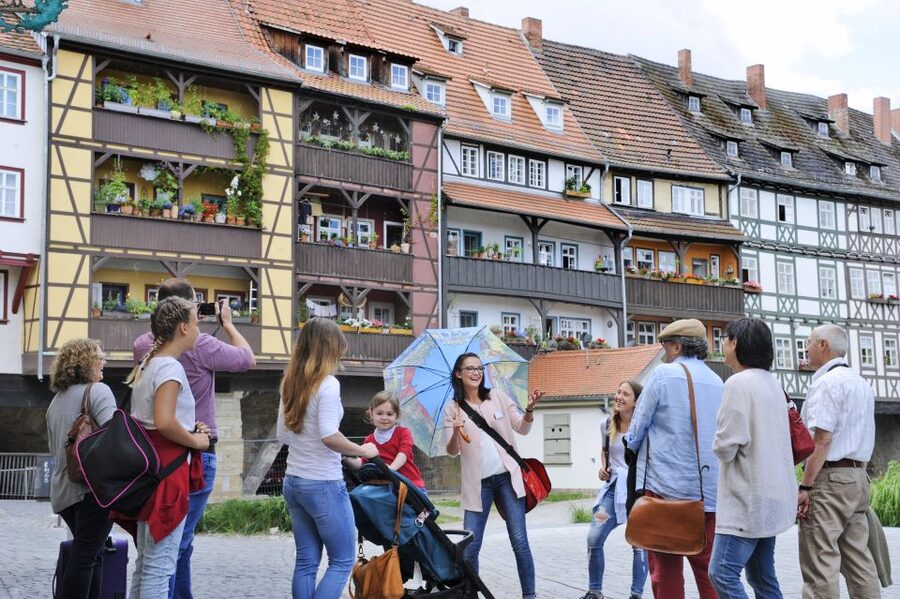
A highlight here is the Krämerbrücke, the famous merchants’ bridge you’ll pass by during the tour. Even if you’ve seen photos, it hits differently when you’re walking through the surrounding streets and looking at how the bridge fits into the Old Town layout.
Why this matters: bridges were not just crossings in medieval and later city life. They helped concentrate trade, movement, and identity. Having a guide point out what to notice turns it from a “pretty bridge” into a clue about Erfurt’s economic story.
You’ll also notice how the bridge connects you to the urban texture around it. The tour flows through streets lined with traditional buildings, and that helps you understand why the bridge became a landmark rather than just infrastructure. If you like architecture with context, this is one of the best parts of the full route.
Cathedral of St. Mary exterior views and the Gloriosa bell legend
Next, you’ll focus on the Cathedral of St. Mary, at least from the outside. That might sound limiting, but it works well for a short walk because it gives you a big, recognizable centerpiece to anchor the rest of the tour.
The standout detail is the Gloriosa bell, described as a 500-year-old bell famous for the beauty of its tone. Hearing a city’s history through a bell story is a great trick. It shifts your attention from “how old is this building?” to “how did people experience the city day to day?” Bells shaped timekeeping, religious life, and public moments.
Even without going inside, you’ll have a stronger reason to look closely at what you’re seeing. Cathedral exteriors are full of cues, and a guide helps you connect those cues to the city’s longer arc. If you’re the type who likes to understand why something is famous, the bell reference is exactly the kind of specific detail that makes a walking tour feel worth the money.
Patrician townhouses, half-timber alleys, and church-filled streets
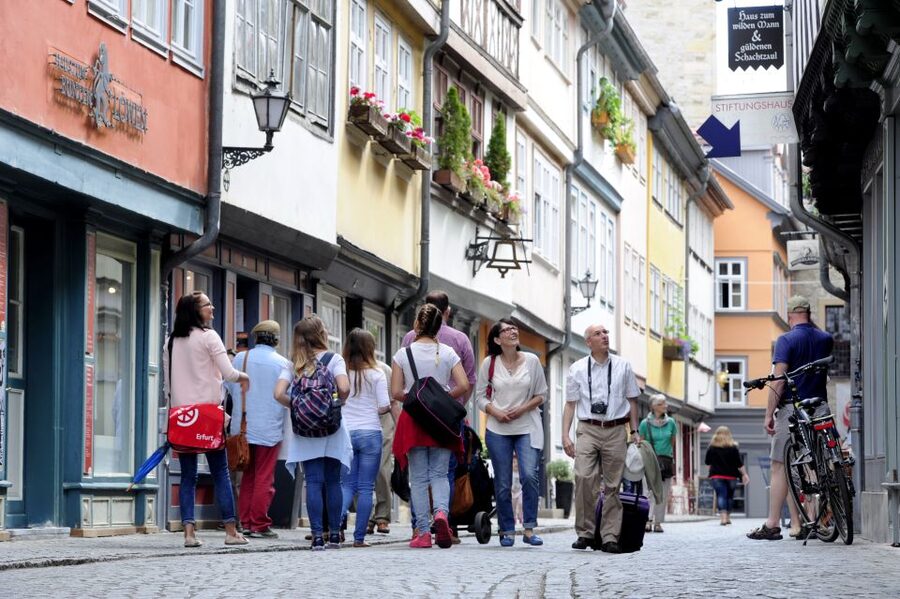
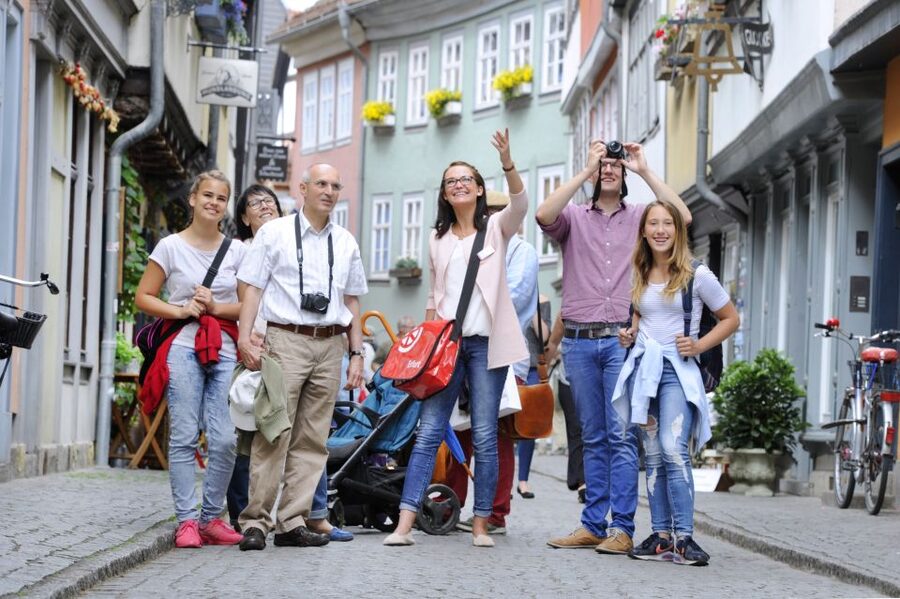
This is where the tour earns its reputation for turning wandering into learning. You’ll walk through quaint alleys and streets lined with wealthy patrician townhouses and half-timbered buildings. The point isn’t just to admire the façades. It’s to understand what these forms suggest about wealth, craft, and civic identity.
Look for the contrast: some buildings show formal, display-ready prosperity from earlier urban elites, while half-timbered structures give you the feel of everyday craft traditions. When a guide ties these together, you start seeing the Old Town not as one style, but as a timeline of changes and influences.
You’ll also pass a great many churches. That matters because churches in German city centers often function like historical markers. You get a visual map of power, community life, and evolving architecture traditions. The tour’s pace makes this manageable. In two hours, you’re not trying to do everything. Instead, you get the highlights plus enough explanation to connect them.
If you’re photographing, this is the section where you’ll want to slow down. The tour isn’t about speed. It’s about noticing patterns in doorways, window shapes, roof lines, and the way streets open up around landmarks.
Town Hall Gothic Revival and the University District angle
The walk includes the Town Hall with its Gothic Revival architecture, described as 19th-century. That’s a valuable stop because it gives you a later chapter of Erfurt’s story, not just medieval-era landmarks. Gothic Revival also helps you understand how cities revisit older aesthetics to project identity, pride, and stability.
Then there’s the University District, another cue for how Erfurt’s role evolved over time. Even if you don’t go into specific buildings, the district setting helps explain why the city has a mix of old sacred architecture and more civic or institutional energy. It’s a good reminder that a 1,270-year-old city isn’t stuck in one era. It layers centuries on top of each other.
This part of the tour is especially good if you like when guides connect architecture to people and function. The more you understand what a building or area was used for, the more those façades make sense. And since you’re only walking for two hours, you need those connections to keep the stop-to-stop flow meaningful.
Also holding a platform in Erfurt




Two hours in a 1,270-year-old city: timing that actually works
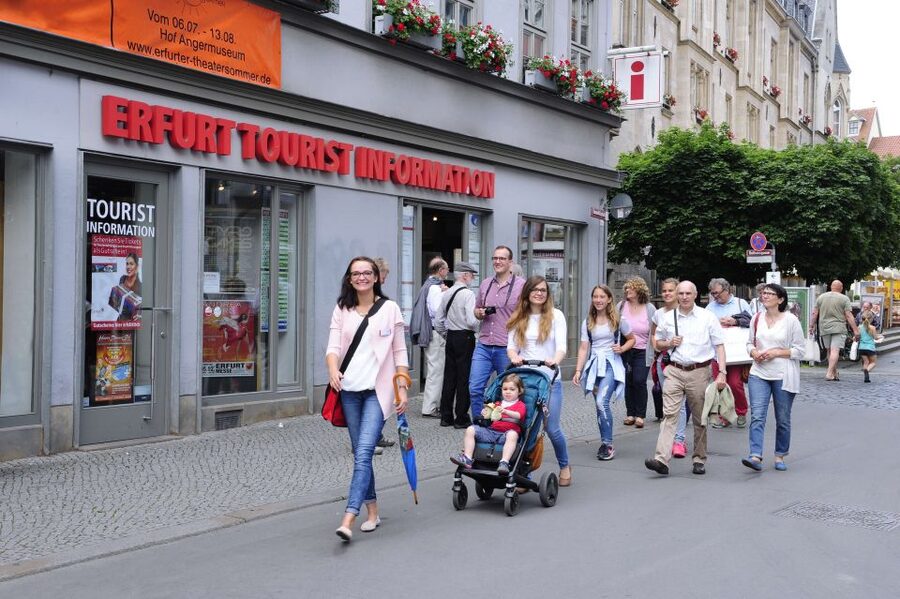
A 2-hour Old Town walking tour is a sweet spot. It’s long enough to see multiple major sights, but short enough that you’re not exhausted before the rest of your day. Erfurt’s Old Town is made for walking, and a guided route helps you avoid spending most of your time figuring out where to go next.
You’ll start at Denkmal Eulenspiegel, then move through the merchants’ bridge area, the Cathedral of St. Mary, and the clusters of historic architecture, churches, townhouses, the Town Hall, and the University District. The end result is a tour that feels like a guided route through layers of the city, rather than a random sampler.
Also, the tour takes place rain or shine. That means you should treat it as weather-proof, not weather-dependent. If you’re visiting in shoulder seasons or winter, you’ll feel less stressed because the plan doesn’t pause for conditions. Bring weather-appropriate clothing and be ready to walk even if it’s wet.
Price, language, and value for your time in Erfurt
At about $15 per person, this tour is priced for real value. Two hours with a live guide who focuses on stories and architectural context is usually where you either get a bargain or you feel disappointed. Here, the cost-to-time ratio is strong, mainly because you’re not just walking past landmarks, you’re getting specific explanations tied to the sights.
The guide language is German. If your German is limited, you’ll still benefit from the overall architecture and the route, but the storytelling will be harder to follow. If you want the full effect, consider pairing this with a little pre-reading about the Cathedral of St. Mary and the Gloriosa bell, so even a partial understanding pays off.
One more value note: it includes the guided walking tour, and it also includes a skip-the-ticket-line benefit. Even for outdoor-focused routes, that kind of small efficiency matters. It can prevent the “standing around” time that eats into your sightseeing day.
Finally, there’s wheelchair accessibility. That’s important for trip planning. You should still expect walking, but it’s good to know the experience is designed to be usable for people who need mobility access.
Who this tour is best for (and who might want to think twice)
You’ll probably love this tour if you want an Old Town overview with enough context to make the architecture feel personal. It’s ideal for:
- First-timers in Erfurt who want the landmarks connected into one story
- People who enjoy guided storytelling, not just sightseeing photos
- Visitors who like architectural variety, from Gothic Revival to half-timbered streets
- Travelers in a time crunch who still want a meaningful look at the city
You might want to think twice if:
- You don’t speak German and you strongly prefer deep narrative explanations over general sightseeing
- You want a long, slow, museum-style experience. This is a walking tour, so the focus stays on visible highlights and interpretation.
Practical tips for smoother walking in Old Town Erfurt
Since the tour runs rain or shine, your best strategy is simple: dress for wet weather and plan for steady walking. Weather-appropriate clothing helps you keep your energy up and your attention on the guide, not on adjusting your layers every few minutes.
If you care about photos, wear shoes that handle uneven surfaces comfortably. The Old Town streets and alleys can be charming, but they’re not always flat like modern plazas.
Also, arrive near the meeting point a few minutes early. Meeting at Denkmal Eulenspiegel behind the tourist office is straightforward, but you still want time to find your guide and settle before the route starts.
Finally, if you’re pairing this with other sightseeing, try not to schedule back-to-back activities with complicated travel. Two hours can pass quickly, especially if the guide is funny and engaging. Recent feedback especially praised humor and the way the stories flow, including guides named Nick and Frau Messerschmidt, so the tour can feel lively.
Should you book the Erfurt Old Town guided walking tour?
I think you should book it if you want a fast, focused introduction to Erfurt’s historic center with strong context. The best part is how the route links major landmarks like the Cathedral of St. Mary and Krämerbrücke to the smaller textures of patrician townhouses, half-timbered streets, churches, and civic architecture like the Town Hall.
If you speak or understand German, the experience will likely feel even richer because the stories are part of the main value. If you don’t, you can still enjoy the sights, but set your expectations for how much narration you’ll catch.
For $15 and about two hours, it’s a tidy way to get oriented and leave with a clearer sense of what shaped this city over centuries.
FAQ
Where does the tour meet?
Go behind the Erfurt Tourist Information at Benediktsplatz 1 and meet at the Denkmal Eulenspiegel monument.
How long is the Erfurt Old Town guided walking tour?
The tour lasts 2 hours.
How much does it cost?
The price is $15 per person.
What is included in the tour?
It includes a guided walking tour.
Is hotel pickup or drop-off included?
No, hotel pickup and drop-off are not included.
What language is the live guide?
The live tour guide is German.
Does the tour run in bad weather?
Yes, the tour takes place rain or shine.
Is the tour wheelchair accessible?
Yes, the tour is wheelchair accessible.
Can I cancel for a full refund?
Yes, you can cancel up to 24 hours in advance for a full refund.
Do I need to pay right away?
You can reserve now and pay later.
Does the tour help with ticket lines?
Yes, it includes skipping the ticket line.
Fresh on the arrivals board for Erfurt




Walking Tours, compared.

Berlin City walk Government District and Places of Democracy
Read our review →


Berlin’s Best: 2 Hour Walking Tour Third Reich and the Cold War
Read our review →
Browse the lists this tour appears in