
Reviewed · WALKING TOURS
Düsseldorf Walking Tour: Explore Top Sights & Hidden Gems
Düsseldorf gets stylish fast. This 2-hour walk links big-city icons with local rituals, from Konigsallee glamour to the Rhine promenade.
I love the tight mix of culture and photo stops, and I love that the tour stays in a small group (max 15), so you can actually hear the guide and ask questions.
One consideration: it runs on good weather, and English delivery can vary by guide and day, based on past experiences.
In This Review
- What You Can Expect at a Glance
- Getting Your Bearings on a 15-Person Düsseldorf Walk
- Meeting Points That Fit Real Plans
- Konigsallee: Düsseldorf’s Fashion Boulevard in Motion
- Bolkerstrasse: Old Town Energy and Altbier Culture
- Old Town Hall and the Carnaval Kickoff on 11 November
- Et Kabuffke Killepitschstube: The 90-Herb Spirit Stop
- River Rhine Promenade: Media Hafen, Oberkassel, and Saint Lambertus
- Carlsplatz Markt and the Surprise Stops Along the Way
- Price and Value: Why $32 Feels Fair for Two Hours
- Guide Style, Humor, and the Names You Might Hear
- Photo Stops and What to Shoot at Each Stage
- Who This Tour Suits Best (and Who Should Rethink It)
- Should You Book This Düsseldorf Walking Tour?
- FAQ
- How long is the Düsseldorf walking tour?
- What is the price per person?
- Is the tour offered in English?
- How big is the group?
- Where does the tour start and end?
- Does it use a mobile ticket?
- What kinds of sights are included?
- Is there a good-weather requirement?
- Are service animals allowed?
What You Can Expect at a Glance
- Small group, big focus: max 15 people for a smoother pace and better interaction.
- Photo-friendly route: multiple stops built for quick snapshots and city context.
- Altbier and Düsseldorf classics: you’ll pass the party lane and learn what locals order.
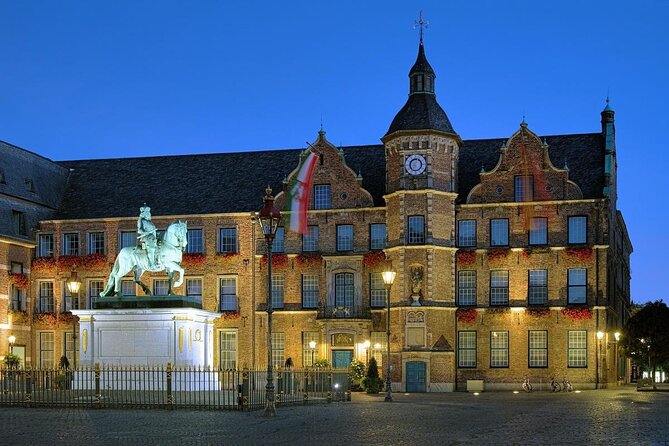
- Carnaval timing, explained: Old Town Hall connects to the city’s November kickoff.
- A liqueur stop with a story: Killepitsch, a 90-herb signature pour.
- Rhine views plus neighborhood contrasts: Media Hafen, Oberkassel, and church tower lines.
Getting Your Bearings on a 15-Person Düsseldorf Walk
This tour is designed for that first-day feeling, when you want to understand what Düsseldorf is about without burning half your day on transit. You start in the city center area and end down by the Kasematten on the riverfront, so it also works if you plan to keep exploring after.
The pace is built around short stays, roughly 20 minutes per main stop. That means you spend more time looking, less time rushing. And because it is a group limit of 15, the experience tends to stay conversational rather than lecture-like.
If you are traveling alone, have limited time, or just want a clean story of the city you can remember later, this is a very practical format.
More Walking Tours in Dusseldorf
- Düsseldorf: Altbier-Safari Beer Walking Tour
★ 4.4 · 1,150 reviews - Düsseldorf: Sweet Treats Guided Walking Tour of Old Town
★ 4.7 · 66 reviews - Düsseldorf: Guided City Architecture Walking Tour
★ 4.6 · 61 reviews
Meeting Points That Fit Real Plans
The meeting point is near Neustraße 42, 40213 Düsseldorf. The tour finishes close to Kasematten Düsseldorf, at Untere Rheinwerft / Rheinuferpromenade (Rheinuferpromenade).
That end location matters. Ending on the riverfront is useful because it gives you an easy next step: walk along the promenade, grab a drink, or connect to other neighborhoods from there. If you hate figuring out routes on your first day, you will like this layout.
You also get a mobile ticket, which is convenient on a phone when you are already juggling maps, weather, and dinner reservations.
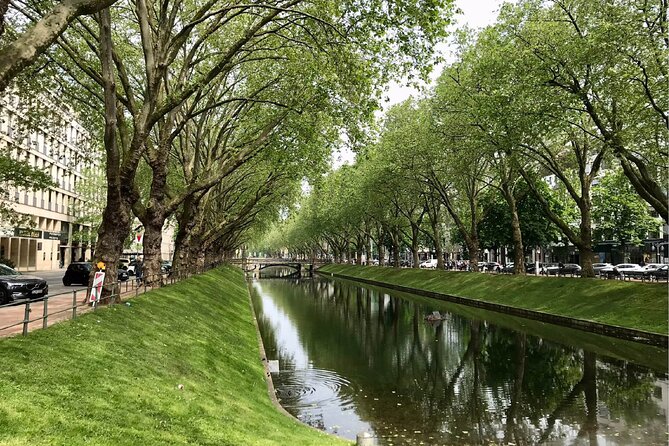
Konigsallee: Düsseldorf’s Fashion Boulevard in Motion
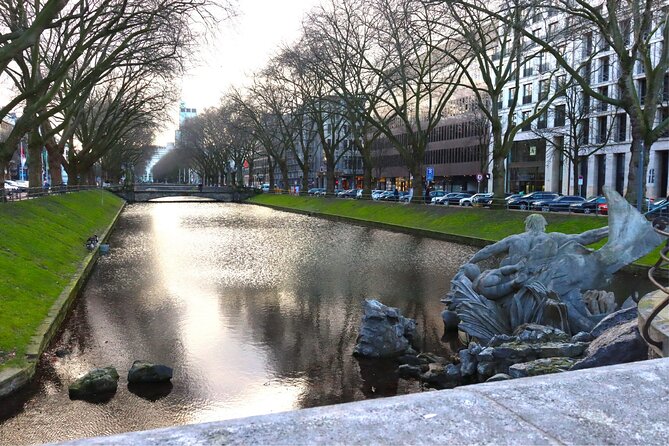
Konigsallee is where Düsseldorf shows its polished side. This elegant avenue sits in the city center, and it is famous as a fashion hub in Germany. As you walk, you pass the kind of storefronts that signal luxury retail, with examples like Gucci, Praga, Channel, and Rolex.
What I like about this first stop is the way it frames Düsseldorf right away. It is not just pretty buildings. It is a real clue to the city’s identity: the people here pay attention to style, and the city is set up to reflect it.
Practical tips for this part:
- Bring your camera early. The avenue is made for quick wide shots.
- If you are cold or raining, this stop can be a good reset point because it is still central and straightforward.
A possible drawback: Konigsallee is very much an exterior, “walk and look” experience. If you expected interiors, shopping access, or major museum time, you may find it lighter than those tours.
Bolkerstrasse: Old Town Energy and Altbier Culture
Next comes Bolkerstrasse, the old town “party street” where the weekend crowds gather. This is where you will find the bars that serve Altbier, the classic Düsseldorf beer style.
This stop is valuable because it connects architecture to behavior. You are not just seeing streets, you are understanding what makes them social: the density of nightlife spots and the local pride around Altbier.
Photo-wise, Bolkerstrasse is good for street scenes. Just keep in mind that it can feel lively if you are here on a weekend evening. On a calmer weekday, it still gives you that sense of where people go when the city turns social.
One small consideration: this part can be less about quiet sightseeing and more about atmosphere. If you prefer museum-level focus only, balance your day by pairing this tour with something quieter afterward.
Old Town Hall and the Carnaval Kickoff on 11 November
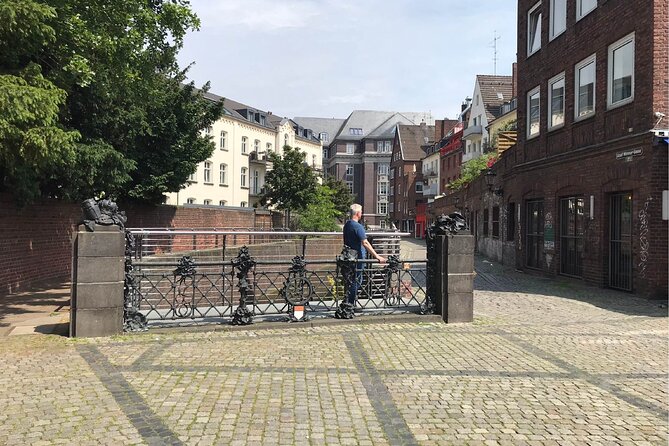
At Old Town Hall, the story shifts from fashion and nightlife to tradition. This is described as the place where Düsseldorf’s Carnaval starts every 11th of November, and the tour frames Carnaval as one of the city’s biggest celebrations.
Even if you are not there in November, the cultural angle helps you read the city. Carnaval is more than a costume event. It is part of how locals mark time and community, and learning the kickoff location gives the dates meaning.
What you can do here:
- Look at the building like a stage, not a backdrop. The tour’s emphasis on the kickoff helps you imagine the event flow.
- Use this stop to ask questions about how Düsseldorf traditions work, since the guide will likely connect the dots between past and present.
A drawback, if you dislike festivals or big public events, is that this stop leans into the celebration angle. Still, the historical context is the point, not the party.
More German cities at walking speed:

Et Kabuffke Killepitschstube: The 90-Herb Spirit Stop
Then you hit a very Düsseldorf moment: Et Kabuffke Killepitschstube, a place associated with Killepitsch, the city’s typical liqueur.
The tour explains that Killepitsch is made with 90 different types of herbs. The taste is described as similar to Jägermeister, which helps you calibrate if you have tried that style before.
This is a stop that does more than name-drop. It gives you a local flavor reference you can use later, whether you buy a bottle to bring home or you order it at a bar and want to know what makes it different.
Photo tip: alcohol places are great for signage shots, but keep it respectful. Quick pictures, then move along.
One practical note: the tour says admission is free, but it is still a liqueur shop. If you do not want to purchase anything, you can still learn the story from the guide and enjoy the stop as a cultural checkpoint.
River Rhine Promenade: Media Hafen, Oberkassel, and Saint Lambertus
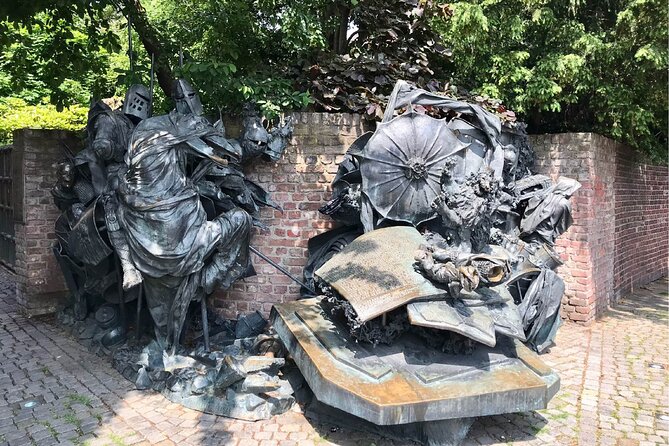
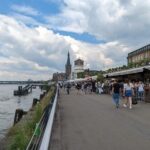
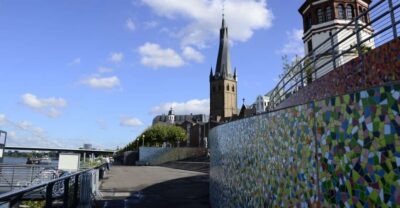
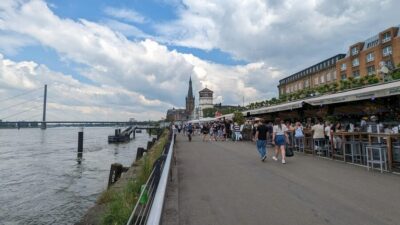
Now you get the payoff view. The tour walks you to the Rhine promenade, a place where you can see multiple “this is Düsseldorf” landmarks from one stretch.
From here, the left side view connects to the Media Hafen district. Looking ahead brings Oberkassel into view. And to the right, you can see the tower of the castle and Saint Lambertus church.
This stop is worth it because it helps you understand the city’s layout. Düsseldorf is often described through districts, but on a normal walk you might miss how they relate spatially. The promenade angle turns the Rhine into a natural map.
What to do at this stop:
- Take wide shots first, then zoom in on church and tower silhouettes.
- If the weather is clear, this is where you’ll get the best “I get it now” feeling about where you are.
A possible drawback: the tour duration is short, so you will not have time to wander far into each district. Use the Rhine stop to get oriented, then decide later where you want to go next.
Carlsplatz Markt and the Surprise Stops Along the Way
After the main sightseeing anchors, the tour points you toward Carlsplatz Markt. The route includes additional short stops, but the tour keeps those as a surprise to make the walk more fun.
That “surprise” approach can actually be practical. It reduces the risk of your brain getting bored by repetition and it keeps you alert for small details: streetscape views, interesting corners, and extra photo opportunities.
Carlsplatz Markt is also a smart midpoint for people who like markets or daily-life scenes. Even without long museum time, it gives you a different texture than the fashion boulevard or nightlife lane.
If you like structure and a strict checklist, this might feel vague. If you like a bit of spontaneity, it helps the tour feel lighter.
Price and Value: Why $32 Feels Fair for Two Hours
At $32 per person, this tour is positioned as a budget-friendly introduction rather than a premium, attraction-only day. For that price, you get:
- a guided route through several central areas
- an English-speaking guide
- a format that stays around 2 hours
- multiple stops that are described as free admission
Value here is not just cost. It is time. If you only have a day or two in Düsseldorf, paying for a well-paced walk can save you hours of guessing which streets matter. It also lowers your “planning tax” on a first trip, which is where tours like this quietly win.
Group size also supports value. With a maximum of 15, the guide can manage the group better and the tour does not feel like an assembly line.
The only way the price would feel off is if you already know the city well, or if you want deep museum interiors and long stays at ticketed attractions. This is built for orientation plus local flavor.
Guide Style, Humor, and the Names You Might Hear
The tour is offered in English, and the guide is credited with helping people understand local culture and history. That matters because Düsseldorf is not a city that shouts its story at you. The guide’s job is to connect what you see to why it matters.
You may hear guides like Ricky, Ronny, Ricardo, Ronnie, or Donny. Past experiences describe an energetic style, a good sense of humor, and guides who share personal context, family stories, and practical tips. That blend is what makes a short tour memorable instead of forgettable.
One caution based on past feedback: while English is part of the offering, communication quality can vary by day and guide. If speaking clarity is your top priority, you might want to build in a bit of patience and keep your questions short and direct.
Photo Stops and What to Shoot at Each Stage
This is a tour built for pictures, but the key is knowing what each stop is “for.” Here is how I would think about it so you walk out with useful photos:
- Konigsallee: wide fashion avenue shots and storefront detail frames.
- Bolkerstrasse: street atmosphere and bar signage energy.
- Old Town Hall: building symmetry and any event-related signage or details you spot.
- Killepitsch stop: shop frontage, liqueur branding, and a close-up of anything labeled Killepitsch.
- Rhine promenade: skyline lines, church towers, and the layered district views.
You do not need fancy gear. A phone works fine if you take a couple wide shots early and a couple closer frames later.
Who This Tour Suits Best (and Who Should Rethink It)
This walking tour is a strong fit if you:
- are a first-time visitor or need a quick orientation
- want culture and history explained in plain terms
- like food and drink context, not just buildings
- prefer a small group format
It is also a good option for solo travelers. The group stays small, the route is compact, and the guide can answer questions without the tour turning chaotic.
If you want long indoor stops, ticketed attractions, or a deep museum day, this may feel too light. It is a smart starter, not a full city takeover.
Should You Book This Düsseldorf Walking Tour?
I would book it if your goal is simple: get oriented fast, learn a few Düsseldorf-specific details, and end with a great riverfront place to continue on your own. The mix of fashion, Altbier culture, Carnaval context, and the Killepitsch liqueur story gives you variety in just two hours.
I would think twice only if:
- you are sensitive to weather and the walk might be unpleasant
- you need guaranteed expert English delivery without any day-to-day variation
- you are looking for museums or ticket-heavy attractions
If you’re visiting Düsseldorf for the first time and want your time to count, this is one of the easiest ways to do it.
FAQ
How long is the Düsseldorf walking tour?
The tour lasts about 2 hours.
What is the price per person?
It costs $32.00 per person.
Is the tour offered in English?
Yes, it is offered in English.
How big is the group?
The tour has a maximum of 15 travelers.
Where does the tour start and end?
It starts at Neustraße 42, 40213 Düsseldorf and ends near Kasematten Düsseldorf, Untere Rheinwerft / Rheinuferpromenade (Rheinuferpromenade).
Does it use a mobile ticket?
Yes, the tour includes a mobile ticket.
What kinds of sights are included?
You will walk by Konigsallee, Bolkerstrasse, Old Town Hall, Et Kabuffke Killepitschstube, the Rhine promenade, and Carlsplatz Markt.
Is there a good-weather requirement?
Yes. The experience requires good weather, and if it is canceled due to poor weather you will be offered a different date or a full refund.
Are service animals allowed?
Yes, service animals are allowed.
Fresh on the arrivals board for Dusseldorf
Walking Tours, compared.

Berlin City walk Government District and Places of Democracy
Read our review →
Berlin’s Best: 2 Hour Walking Tour Third Reich and the Cold War
Read our review →
Browse the lists this tour appears in